Cycling is a sport of numbers, but the most critical one is the rhythm your heart sets. Relying on a wrist-based optical sensor that slips or lags under sweat and vibration leaves you guessing your effort zone, wasting intervals, and potentially overtraining. A dedicated sensor strapped to your chest or arm delivers the real-time, beat-by-beat data you need to pace a climb, recover on a descent, and structure your training week with actual physiological feedback.
I’m Emma — the founder and writer behind Baby Bangs. I’ve spent years sorting through the compatibility lists, accuracy studies, and battery claims of cycling-specific heart rate monitors to find the units that actually hold a stable ANT+ connection from mile one to mile one hundred.
Whether you are chasing a new FTP, dialing in zone two endurance, or simply want to know your effort on a group ride, this guide to the best bicycle heart rate monitor breaks down the top contenders by accuracy, connectivity, and real-world reliability.
How To Choose The Best Bicycle Heart Rate Monitor
Cycling presents a unique challenge for heart rate monitors: continuous vibration from the road, sweat accumulation, and the need to pair with a handlebar-mounted computer or smart trainer. The right choice depends on sensor technology, connectivity, battery management, and how the unit handles the specific conditions of riding.
Chest Strap vs. Optical Armband
Chest straps use ECG (electrocardiography) to detect the electrical signal of your heart. This method is the gold standard for accuracy, especially during high-intensity efforts, intervals, and standing climbs where motion artifacts can confuse optical sensors. The trade-off is comfort: some riders find the strap restrictive over long hours in the saddle. Optical armbands sit on your forearm or bicep and use photoplethysmography (PPG) to measure blood flow. They are generally more comfortable and easier to put on, but they can lag during rapid heart rate changes and lose accuracy when tightened against the handlebar or when the arm is flexed.
Connectivity Protocols: ANT+ and Bluetooth
For cycling, ANT+ is the workhorse protocol. Most bike computers (Garmin, Wahoo, Bryton) and smart trainers rely on ANT+ for a stable, low-latency connection. A monitor that lacks ANT+ severely limits compatibility with cycling-specific hardware. Bluetooth is a secondary protocol that is useful for pairing with a smartphone for live streaming to apps like Zwift or for recording data without a head unit. The best monitors support both protocols simultaneously, allowing you to broadcast to a bike computer and a phone at the same time.
Battery Life and Rechargeability
Cyclists who log long weekend rides or multi-day tours need a monitor that keeps pace. Replaceable coin-cell batteries (like the CR2025 in the Polar H10) offer a long life of several hundred hours but require you to carry spares on a tour. Rechargeable lithium-ion monitors are more convenient for daily training but introduce failure points with the charging port and degrade over years. Consider your ride patterns: rechargeable units with over 50 hours of life are suitable for most riders, but ultra-endurance cyclists may prefer the longevity of a replaceable battery.
Quick Comparison
On smaller screens, swipe sideways to see the full table.
| Model | Category | Best For | Key Spec | Amazon |
|---|---|---|---|---|
| COOSPO BC107 | Bundle | Budget GPS computer with HR | ANT+ only, IP67, 2.4″ LCD | Amazon |
| Magene H613 | Chest Strap | Multi‑color zone LED feedback | 100h battery, dual BT/ANT+, IPX7 | Amazon |
| Scosche Rhythm+ 2.0 | Armband | Armband comfort + HRV data | 24h battery, IP68, dual BT/ANT+ | Amazon |
| COOSPO HW9 | Armband | ±1BPM accuracy, zone vibration | 35h battery, BT 5.0, ANT+, IPX6 | Amazon |
| iGPSPORT HR70 | Armband | 65h battery for long rides | 65h battery, Type-C mag, ±1BPM | Amazon |
| Wahoo TRACKR | Chest Strap | Premium chest strap, 200h life | 200h battery, USB‑C, dual BT/ANT+ | Amazon |
| Polar H10 | Chest Strap | ECG gold standard, 400h battery | 400h (CR2025), 30m waterproof, int. memory | Amazon |
In‑Depth Reviews
1. Polar H10 Heart Rate Monitor Chest Strap
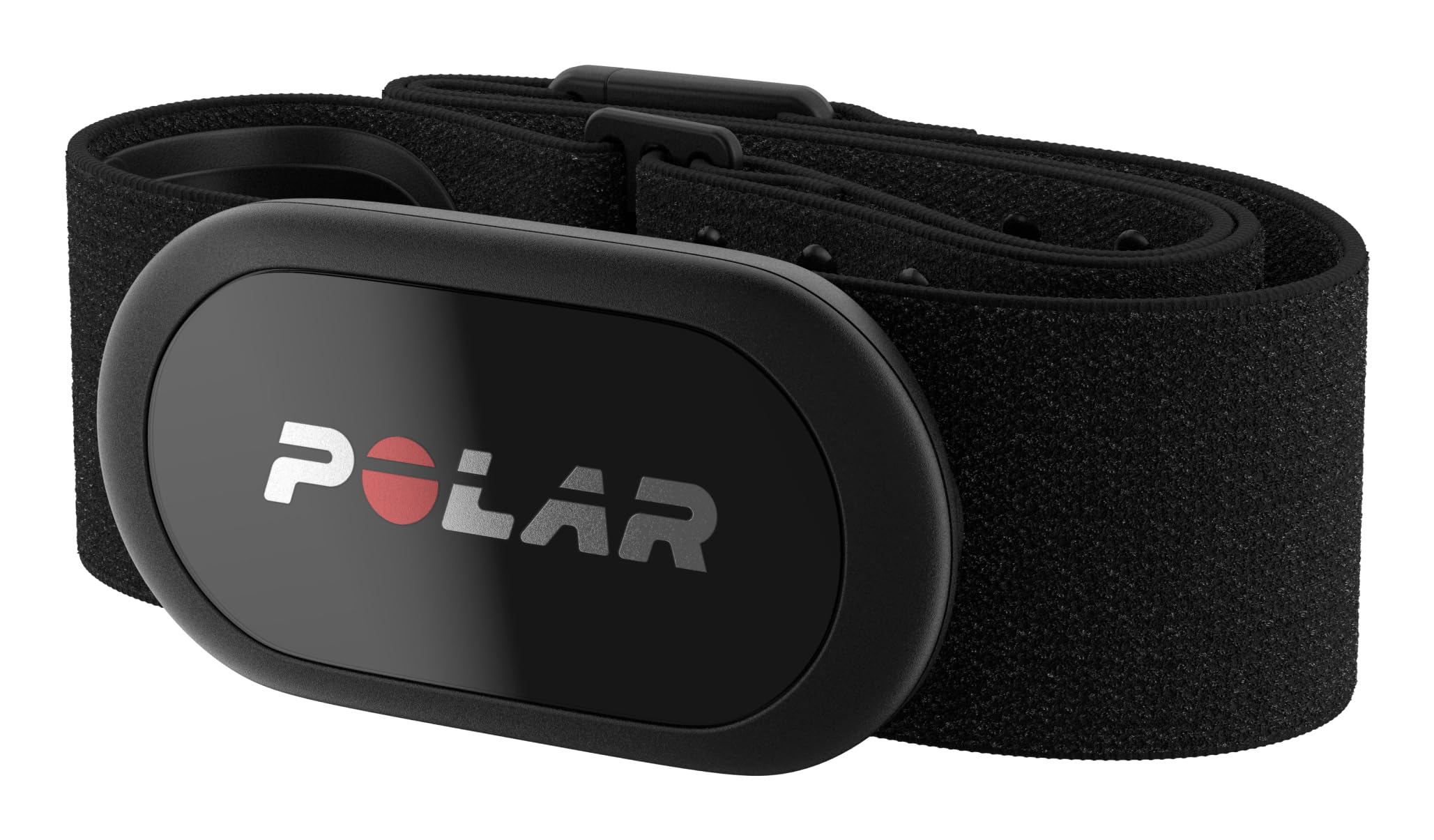
The Polar H10 is the benchmark for cycling heart rate accuracy, using a chest strap ECG sensor that has been validated against 12-lead medical EKGs. Data from customer reviews shows it achieves 99.3% accuracy during cycling activities, outperforming wrist-based and armband optical sensors during high-effort climbs and interval sprints. The sensor supports simultaneous dual Bluetooth connections plus ANT+ and the legacy 5 kHz GymLink, making it compatible with virtually any bike computer, smart trainer, or fitness app on the market.
The included Polar Pro Chest Strap features silicone dots and improved electrodes that keep the sensor stable and interference-free, even under heavy perspiration over a three-hour ride. The H10 is fully waterproof to 30 meters and contains internal memory for recording one workout without a phone or head unit — a critical feature for riders who train in the backcountry or races where phone storage is impractical. A CR2025 replaceable battery delivers up to 400 hours of use, and the unit weighs only 60 grams.
Some users report that the standard strap size (M-XXL) may be too small for riders with a chest circumference over 42 inches, requiring a separate XXXL strap available directly from Polar. The button cell battery, while long-lived, requires the user to carry a spare for multi-month tours. Overall, for the rider who prioritizes data integrity over convenience, the H10 is the most trusted tool in this category.
Why it’s great
- ECG gold-standard accuracy validated for cycling (99.3% accuracy in studies)
- Dual Bluetooth plus ANT+ for simultaneous connections
- 400-hour battery life with common CR2025 coin cell
- Internal memory for one workout without a phone or computer
Good to know
- Standard strap may be too short for larger chests; longer strap sold separately
- Requires replaceable coin battery — must carry spares on extended tours
2. Wahoo TRACKR Heart Rate Monitor

The Wahoo TRACKR is a chest strap heart rate monitor designed for the modern cyclist who values convenience and ecosystem integration. It uses a slim, soft strap that keeps the sensor securely in place during intense efforts on the bike. The unit connects via ANT+ and Bluetooth, pairing instantly with Wahoo bike computers, Zwift, and most other training platforms. LED indicators on the pod confirm heart rate detection, battery status, and connection status, so you know your data is live without glancing at a phone.
Its high-capacity rechargeable battery delivers up to 200 hours of active use, which translates to roughly six to eight weeks of riding for a daily cyclist. The USB-C charging port is a major upgrade over proprietary cables, allowing you to top off your monitor with the same charger you use for your phone or bike lights. Users report that the strap is comfortable for long rides and that the monitor stays reliably connected, with no dropouts even during hard intervals. The pod is fully water-resistant and can be cleaned with soap and water.
While the TRACKR is a premium unit, the included strap may not fit larger riders. Users with a chest circumference over 42 inches have reported needing a third-party strap for a secure fit. The pod itself is also slightly bulkier than the Polar H10 sensor. For the dedicated cyclist who wants a rechargeable, hassle-free monitor that lives inside the Wahoo ecosystem, the TRACKR is an excellent choice.
Why it’s great
- USB-C rechargeable, 200-hour battery life — no coin cells to replace
- Integrates seamlessly with Wahoo computers and Zwift
- Comfortable, soft strap for long rides
- LED indicators for instant status feedback
Good to know
- Strap may be too small for riders with chests over 42 inches
- Pod is slightly bulkier than competitor chest strap sensors
3. Scosche Rhythm+ 2.0 Heart Rate Monitor Armband

The Scosche Rhythm+ 2.0 is an optical armband sensor that offers a compelling alternative to chest straps for cyclists who prioritize comfort. It sits on your forearm, bicep, or tricep with a lightweight, breathable strap that stays put during high-intensity intervals and sprint efforts. It uses dual-band Bluetooth and ANT+ to pair with bike computers, smart trainers, and apps like Peloton, Zwift, and Wahoo. The sensor also supports HRV mode, capturing RR interval data for apps like HRV4Training and Welltory, which is useful for recovery tracking.
With an IP68 rating, the Rhythm+ 2.0 is fully waterproof and built to withstand sweat, rain, and washing. Its 24-hour battery life is sufficient for multi-day rides, though it falls short of the endurance of the top chest straps. Users have validated its accuracy against 12-lead EKG during a medical stress test, noting it outperforms wrist-based trackers. The armband format requires no electrode gel, it is easy to put on and remove, and it causes no chafing during long road rides.
Some users report occasional Bluetooth disconnections after several weeks of use, and the unit lacks a true auto-off feature, which can drain the battery if the user forgets to power it down manually. During interval training, the optical sensor can lag behind a chest strap by a few seconds in response to rapid heart rate changes. For steady-state cycling and recovery tracking, it is an outstanding choice, but interval-focused riders may prefer an ECG chest strap.
Why it’s great
- Comfortable armband design, no electrodes or chest strap needed
- HRV mode supports RR interval data for recovery apps
- IP68 waterproof, durable for all weather riding
- Validated accuracy comparable to medical EKG
Good to know
- Optical sensor may lag during interval training
- No auto-off, can drain battery if left on
- Occasional Bluetooth disconnections reported after extended use
4. Magene H613 Heart Rate Monitor Chest Strap

The Magene H613 is a chest strap heart rate monitor that stands out for its multi-color LED zone indicator, which provides real-time visual feedback on your effort level directly on the sensor. The LEDs glow in different colors corresponding to warm-up, fat-burning, aerobic, threshold, and anaerobic zones, allowing you to adjust your intensity without glancing at your bike computer. The unit uses an advanced self-developed algorithm for accurate HR tracking and supports both Bluetooth (up to three devices) and ANT+ for maximum compatibility.
The H613 offers up to 100 hours of battery life via magnetic charging, which is excellent for daily training. It also features 17 hours of offline storage, recording data directly to the sensor when you ride without a phone or computer. This data syncs to the OnelapFit app when you return. The strap comes in three sizes to fit a wide range of body types, from 140 cm teens to 210 cm athletes. The unit also includes customizable heart rate alerts with a buzzer to prevent overexertion.
A design issue noted by users involves the connection between the sensor pod and the strap. The rubber tab at the connection point can cause the pod to pop off during intense movement. Magene customer service has been responsive in replacing affected units. The strap is also not as widely available as Polar or Garmin replacements, which may be an issue for long-term ownership. For riders who want a coach-like feedback system with visible zone guidance, the H613 is a thoughtful option.
Why it’s great
- Multi-color LED shows heart rate zone at a glance
- 100-hour battery life with magnetic charging
- 17 hours of offline storage for rides without a phone
- Adjustable strap sizes fit a wide range of body types
Good to know
- Design flaw with pod-strap connection can cause pod to pop off
- Replacement straps less common than Polar or Garmin options
5. iGPSPORT HR70 Heart Rate Monitor Armband
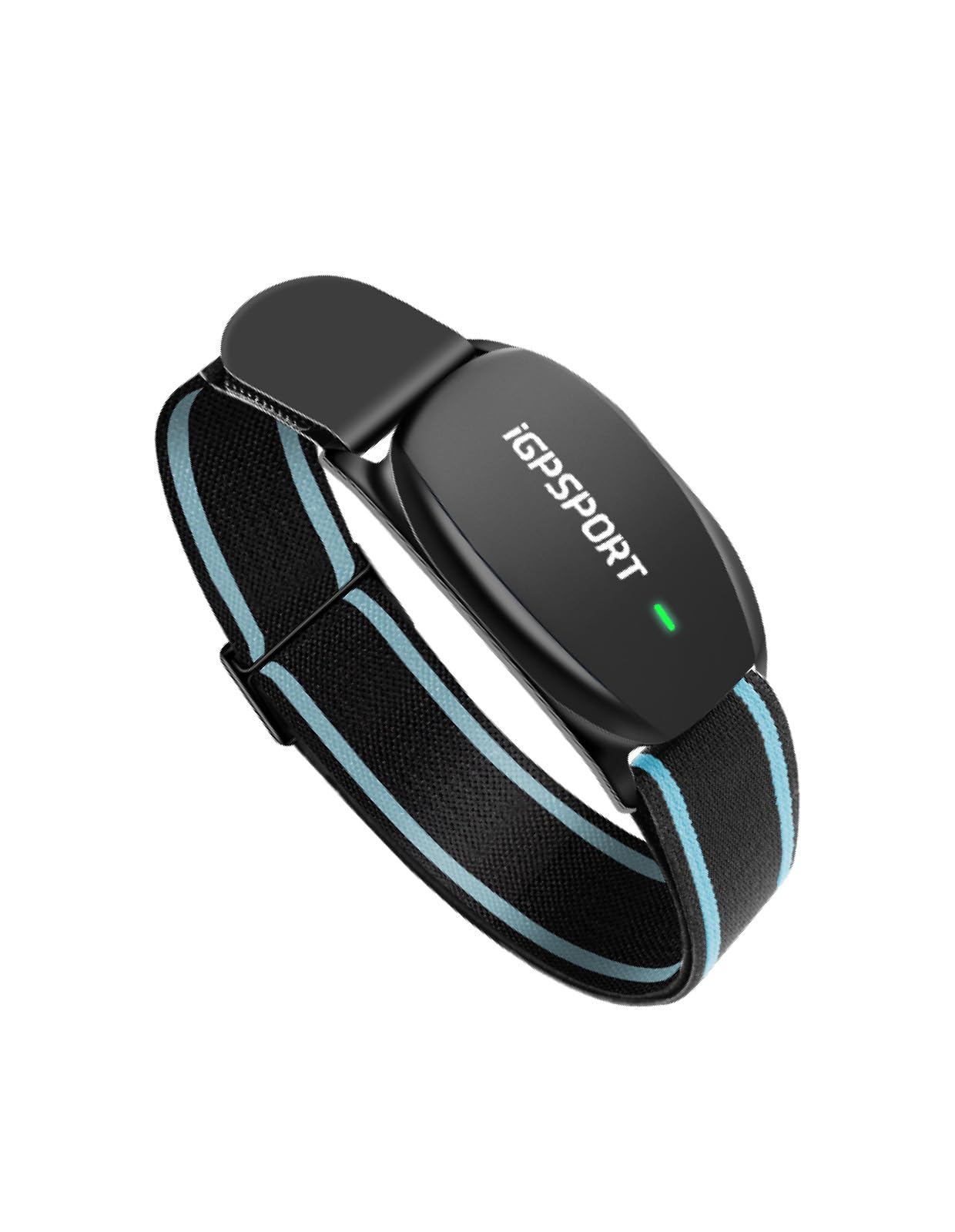
The iGPSPORT HR70 is an optical armband monitor that prioritizes battery endurance without sacrificing accuracy. It offers an incredible 65 hours of battery life on a single charge, making it the longest-running rechargeable armband in this roundup. This endurance is ideal for multi-day touring cyclists, ultra-endurance racers, or riders who forget to charge before every ride. The unit uses a Type-C magnetic charging port that is secure and easy to connect.
The HR70 achieves a monitoring error of ±1 BPM using its photoelectric sensor. It supports Bluetooth 5.0 and ANT+, ensuring compatibility with 99% of cycling computers and fitness apps. The armband features a soft, breathable, adjustable strap that stays comfortable over long hours. It also includes heart rate zone monitoring via LED indicator lights and a haptic vibration warning when your heart rate exceeds your max threshold. The sensor has a five-minute auto-off feature to conserve power when not in use.
Some users have reported a defect where the polarity of the magnetic charging cable repels the connection after about a year, preventing the unit from charging. This appears to be a manufacturing quality issue. Additionally, a small number of users report the unit turning itself off every 1.5 hours, though a restart resolves it. For riders who prioritize battery life above all else and who are willing to accept a slight gamble on long-term durability, the HR70 is a top-tier endurance choice.
Why it’s great
- Best-in-class 65-hour battery life for ultra-endurance riding
- Type-C magnetic charging with stable connection
- ±1 BPM accuracy, verified by pulse count
- Auto-off feature to save battery when idle
Good to know
- Magnetic charging cable polarity can fail after extended use
- Some units experience random shutoffs every 1.5 hours
6. COOSPO HW9 Heart Rate Monitor Armband

The COOSPO HW9 is a feature-packed optical armband monitor that brings smart zone coaching and vibration alerts to the table. It uses optical technology to deliver a monitoring error of ±1 BPM, and supports Bluetooth 5.0 and ANT+ for stable connections to bike computers, fitness equipment, and 200+ apps including Wahoo, Strava, and DDP Yoga. The unit includes a five-color LED indicator that shows your current heart rate zone at a glance, helping you pace your effort without looking at a screen.
The HW9 also includes a unique vibration warning function: when your heart rate exceeds your custom max threshold, the armband vibrates to alert you, acting as an invisible coach. The rechargeable battery provides 35 hours of use, which is sufficient for a week of daily rides. The arm strap is soft, breathable, and adjustable, and the sensor is lightweight at just 10 grams. It supports heart rate variability (HRV) function for recovery tracking and works with the Coosporide app for customizing max heart rate and zone colors.
Customer feedback indicates that the unit is extremely comfortable for long rides and accurate for steady-state cycling. However, some units have failed after only five weeks, with the sensor reporting wildly low heart rates (50 bpm) during actual exertion. Customer support has been inconsistent in resolving these issues. The strap also tends to stretch over time and the monitor lacks an auto-off feature. For riders who value the vibration alert and want a comfortable armband for general training, the HW9 offers great features, though durability is a concern for some users.
Why it’s great
- Five-color LED zone indicator for instant effort feedback
- Vibration warning when heart rate exceeds set threshold
- Very lightweight (10 grams), comfortable armband
- Dual Bluetooth 5.0 and ANT+ with 200+ app compatibility
Good to know
- Some units fail prematurely (5 weeks), with low HR readings
- No auto-off feature — must be manually powered down
- Armband stretches over time, reducing fit security
7. COOSPO BC107 GPS Bike Computer with Heart Rate

The COOSPO BC107 is not a heart rate monitor itself, but an all-in-one GPS bike computer that supports ANT+ heart rate sensors. It is included here because it represents a cost-effective entry point for cyclists who need a dedicated head unit with heart rate data display. The BC107 has GPS and BeiDou positioning, a 2.4-inch LCD screen with auto-backlight, and an IP67 waterproof rating. It connects to ANT+ heart rate monitors, speed/cadence sensors, and power meters.
The unit is compact, lightweight (140 grams), and has an impressive battery life — users report 500 miles over 10 days with 75% battery remaining. It pairs with the CoospoRide app for data analysis and can sync .fit files to Strava. The BC107 is ideal for the rider who is building their first electronic setup and wants a dedicated bike computer for a fraction of the cost of a Garmin or Wahoo, while still getting accurate GPS tracking and the ability to display heart rate from a separate sensor.
Key limitations: the BC107 only supports ANT+ connections for sensors — it does not support Bluetooth sensors. This means you cannot pair a Bluetooth-only heart rate monitor. The initial setup can be confusing, with some users reporting a steep learning curve for pairing sensors and navigating the interface. The recent app update also broke auto-sync with Strava, requiring a manual file upload. For the budget-conscious cyclist who is willing to troubleshoot and wants a GPS computer that can display heart rate without a phone, this is a solid foundation.
Why it’s great
- Affordable GPS computer with heart rate display capability
- Long battery life — weeks of riding between charges
- IP67 waterproof, compact and lightweight
- ANT+ sensor support for HR, cadence, speed, power
Good to know
- Only supports ANT+ sensors — no Bluetooth HR monitor pairing
- App setup and sensor pairing can be confusing initially
- Recent app update broke Strava auto-sync, requires manual upload
FAQ
Do I need a chest strap or armband for cycling?
Can I use my Bicycle Heart Rate Monitor with a smart trainer?
How do I connect my heart rate monitor to a Garmin or Wahoo bike computer?
What battery life should I look for in a cycling heart rate monitor?
Why does my armband heart rate monitor lose connection during a ride?
Final Thoughts: The Verdict
For most cyclists who demand gold-standard accuracy and maximum compatibility with bike computers and smart trainers, the best bicycle heart rate monitor winner is the Polar H10 because it delivers ECG-level accuracy (99.3% in cycling), supports ANT+ and dual Bluetooth, and offers a 400-hour replaceable battery for multi-month touring. If you want the convenience of rechargeability and a slimmer strap that integrates perfectly with the Wahoo ecosystem, grab the Wahoo TRACKR. And for the rider who prioritizes armband comfort and HRV recovery data over chest straps, nothing beats the Scosche Rhythm+ 2.0.