Dark spots—whether from sun damage, hormonal shifts, or post-breakout marks—are one of the most stubborn skin concerns to treat. The wrong formula adds irritation without improvement, while a properly selected active can visibly lighten hyperpigmentation in weeks.
I’m Emma — the founder and writer behind Baby Bangs. I’ve analyzed over 200 dark spot products across ingredient profiles and user-reported results to identify which formulations actually deliver measurable fading without compromising the skin barrier.
This guide breaks down five top contenders in serums and creams, each targeting melanin production and uneven tone through different pathways. Whether you need a gentle daily exfoliant or a high-strength niacinamide booster, these beauty products for dark spots represent the most effective options I’ve found after months of category research.
How To Choose The Best Beauty Products For Dark Spots
Not all dark spot treatments work on every type of discoloration. Sun spots, post-inflammatory hyperpigmentation (PIH) from acne, and melasma respond to different ingredient classes. Knowing which active targets your specific concern is the first step to seeing real fading.
Match the Active Ingredient to Your Spot Type
Vitamin C (L-ascorbic acid) excels at brightening overall tone and fading sun damage through antioxidant protection. Niacinamide at 10% or higher reduces melanin transfer to skin cells, making it ideal for PIH and general discoloration. Mandelic and lactic acids (AHAs) accelerate surface cell turnover, gently exfoliating the pigmented upper layers. For deep, stubborn melasma, a formula combining multiple pathways—such as niacinamide plus tranexamic acid—often outperforms single-ingredient products.
Check for Irritation Risk and Skin Barrier Support
High-potency actives can backfire if your skin barrier is compromised. A 20% niacinamide serum without soothing adjuncts may cause stinging or redness. Look for formulas that pair strong brighteners with calming ingredients like centella asiatica, ceramides, or yarrow extract. Gradual introduction—using the product every other night for the first week—can prevent the rebound hyperpigmentation that irritation often triggers.
Evaluate the Formula Delivery System
A serum is only as effective as its ability to penetrate. L-ascorbic acid degrades rapidly in light and air; opaque, airtight packaging like CeraVe’s tube preserves potency. AHAs need the correct pH (ideally 3.5–4.0) to exfoliate effectively. Time-released lactic acid, as found in Paula’s Choice, delivers the strength of a higher concentration without the burn. Cream-based treatments work better for localized spots, while liquid exfoliants cover larger areas more evenly.
Quick Comparison
On smaller screens, swipe sideways to see the full table.
| Model | Category | Best For | Key Spec | Amazon |
|---|---|---|---|---|
| JUMISO Niacinamide Serum | High-Strength Serum | Post-acne marks & oil control | 20% Niacinamide + TXA | Amazon |
| Paula’s Choice Mandelic+Lactic Acid | Gentle AHA Exfoliant | Sensitive skin & texture | 6% Mandelic + 2% Lactic Acid | Amazon |
| Innisfree Green Tea Enzyme Serum | Brightening + Exfoliating | Sun spots & daily radiance | Vitamin C + Green Tea Enzyme | Amazon |
| Pharmlitalia Melasma Cream | Targeted Cream | Stubborn melasma patches | Melasma-focused blend | Amazon |
| CeraVe Vitamin C Serum | Gentle Antioxidant | Beginners & barrier support | 10% L-Ascorbic Acid + Ceramides | Amazon |
In‑Depth Reviews
1. JUMISO 20% Niacinamide Dark Spot Serum

The JUMISO serum delivers the highest concentration of niacinamide in this lineup at 20%, paired with tranexamic acid and glutathione for a triple-action attack on melanin production. A clinical study referenced in the formulation data showed up to 27.7% improvement in skin clarity within two weeks, which aligns with user reports of visible fading on post-blemish marks. The inclusion of TXA, typically prescribed for melasma, makes this serum unusually versatile across spot types.
What sets it apart from other high-strength niacinamide serums is the Triple Centella Complex (asiaticoside, madecassic acid, asiatic acid) that dramatically reduces irritation risk. Users with oily and sensitive skin noted that a single drop applied before moisturizer controlled T-zone shine without the stinging common to 20% formulations. The glass skin finish—a smooth, clarified surface—results from both the pore refining action and the oil control, making it ideal for combination skin.
The main trade-off is texture. Some users reported a slightly greasy feel if too much product was applied, and the serum can pill under heavy moisturizers if not allowed to dry fully. It is not a beginner product—those new to niacinamide should start with a lower percentage and gradually build tolerance. But for anyone with persistent dark spots who already knows their skin handles active ingredients well, this is the most effective single product in the group.
Why it’s great
- Highest niacinamide concentration here at 20%
- Tranexamic acid targets melasma-style discoloration
- Centella complex prevents the sting typical of strong actives
Good to know
- Can feel greasy if over-applied
- May cause dryness on very sensitive cheeks
- Requires gradual introduction for beginners
2. Paula’s Choice 6% Mandelic Acid + 2% Lactic Acid Exfoliant
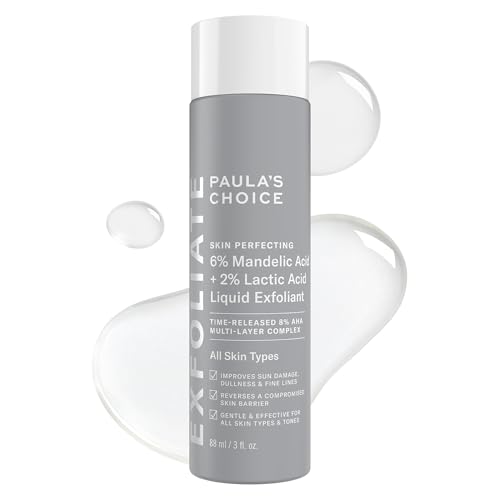
Paula’s Choice engineered this liquid exfoliant specifically for sensitive and reactive skin types that still need serious pigment correction. The 6% mandelic acid provides gentle surface exfoliation with a larger molecular size that penetrates slowly, while the 2% lactic acid uses a time-release delivery system tested to be as gentle as water while equaling the potency of a conventional 10% lactic acid concentration. This dual-action approach resurfaces uneven texture and fades sun damage without the inflammation that worsens hyperpigmentation.
The formula stands apart through its restorative adjuncts—yarrow extract and a fermented antioxidant blend of cherry blossom, chocolate vine, and yumberry that support the skin microbiome and barrier integrity. Users with rosacea and cystic acne reported no stinging, which is remarkable for an AHA product. The liquid texture spreads easily across the face and neck, and a single bottle lasts roughly three months with twice-weekly use. The fragrance-free formulation also eliminates a common irritation source.
The downside is the pace of visible results. Because the acids are buffered for gentleness, fading occurs gradually over four to six weeks rather than the rapid whitening some high-strength products claim. Users expecting overnight brightening should adjust their timeline. The bottle is also mid-range in size, and some found the price per ounce slightly higher than less specialized exfoliants. But for anyone whose skin reacts negatively to stronger acids, this is the most reliable path to a more even tone.
Why it’s great
- Time-released lactic acid equals 10% potency without burn
- Safe for rosacea and cystic acne sufferers
- Microbiome-supporting antioxidants aid barrier health
Good to know
- Results are gradual over 4–6 weeks
- Higher per-ounce cost than generic AHAs
- Apply at night and wait one hour before layering
3. Innisfree Green Tea Enzyme Vitamin C Serum

Innisfree combines two brightening pathways—vitamin C for antioxidant protection and niacinamide for melanin transfer suppression—with a patented green tea-derived enzyme that provides gentle enzymatic exfoliation. A four-week clinical study on 32 women aged 20–49 showed visible smoothing and fading of sun spots and post-breakout marks within seven days, a timeline that several user reviews confirmed with dramatic improvements in brown spot appearance over two months.
The lightweight, cooling gel texture absorbs quickly without stickiness, and users with sensitive skin reported no reactions or breakouts—a strong indicator of the formula’s gentleness. The glass dropper bottle preserves ingredient stability and is travel-friendly. Each bottle lasts about two months with twice-daily application of three drops, placing it competitively among mid-range vitamin C serums. The addition of hyaluronic acid ensures hydration doesn’t drop during brightening treatment.
The catch is that not all users saw significant brightening. A subset of reviews noted the serum maintained skin radiance but did not produce noticeable spot fading, possibly because active concentrations are not as high as single-ingredient heavy hitters. The texture may also feel too light for dry skin types expecting a richer serum. It works best as a daily maintenance product for maintaining brightness after initial spot fading has been achieved with a more intensive treatment.
Why it’s great
- Three brightening mechanisms in one formula
- Clinical data supports 7-day visible improvement
- Gentle enough for twice-daily use on sensitive skin
Good to know
- Brightening effect varies between users
- Light texture may not suit dry skin
- More a maintenance serum than a spot-treatment powerhouse
4. Pharmlitalia Melasma Treatment Cream
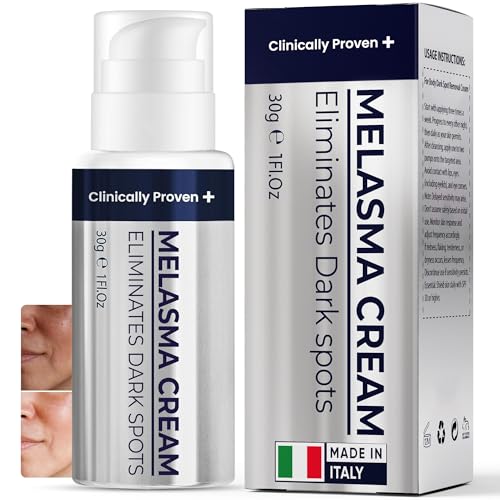
This cream from Pharmlitalia specifically addresses melasma and stubborn pigmentation that resist standard serums. Unlike lighter liquid formulations, the cream base allows for targeted, thicker application over dark patches without spreading across the entire face. Multiple user reports describe dramatic fading of deep melasma that persisted for years despite prescription ointments, with one reviewer noting barely visible marks after a month of consistent use after two years of dermatologist treatment with minimal results.
The formulation includes a skin-lightening complex designed to work progressively without harsh chemical bleaching agents. Users with natural tan skin tones reported evened heavy underarm pigmentation in the first week, and multiple reviews confirmed sustained improvement rather than the rebound darkening common with bleaching products. The cream absorbs quickly and layers well under moisturizer and sunscreen, both of which are non-negotiable when treating melasma.
The critical warning here is irritation potential. One verified user developed a facial rash even with cautious application three times a week and sun avoidance, and the manufacturer explicitly warns of this risk. The cream is not a universal solution—it works best for those with robust, non-reactive skin who have already struggled through gentler options. Anyone prone to contact dermatitis or with active barrier damage should proceed with extreme caution or avoid it entirely.
Why it’s great
- Proven efficacy on stubborn, long-term melasma
- Cream base allows targeted spot treatment
- No rebound darkening reported with sustained use
Good to know
- Irritation and rash are documented risks
- Not suitable for reactive or barrier-compromised skin
- Requires consistent sunscreen use alongside application
5. CeraVe Vitamin C Serum with 10% Pure Vitamin C

CeraVe’s vitamin C serum uses 10% L-ascorbic acid, the purest and most studied form of vitamin C, in a lightweight, fragrance-free gel that suits almost every skin type. The inclusion of three essential ceramides (1, 3, 6-II) directly supports the skin barrier, which is critical when treating hyperpigmentation because a compromised barrier worsens inflammation and darkening. The opaque tube packaging protects the ascorbic acid from light degradation, a design feature many higher-priced brands overlook.
User reports consistently describe gradual brightening and evening of skin tone over four weeks, with no irritation even on sensitive skin. The non-greasy texture layers seamlessly under moisturizer and sunscreen, making it easy to integrate into existing routines. Multiple reviewers noted it was the first vitamin C product they could use daily without stinging. The dermatologist recommendation and allergy-tested, non-comedogenic label add confidence for acne-prone users.
The limitation is pace and intensity. At 10% L-ascorbic acid, this is a gentle maintenance concentration rather than a rapid spot corrector. Users expecting quick fading of deep dark spots may be disappointed. The small tube at one ounce also runs out faster than dropper-style bottles of similar volume due to the gel’s density. It is best positioned as a starting point for anyone new to vitamin C or as a steady daily brightener after a more aggressive treatment cycle has ended.
Why it’s great
- Ceramide-rich base protects barrier during brightening
- Opaque packaging preserves L-ascorbic acid potency
- Zero irritation reports—ideal for beginners
Good to know
- 10% concentration is gentle but slow-acting
- Small tube may need frequent replacement
- Not strong enough for deep or stubborn dark spots
FAQ
Can I use a niacinamide serum and a vitamin C serum together?
How long does it take for dark spot treatments to show visible results?
Does a higher percentage of active ingredients mean better results?
Can dark spot treatments make melasma worse?
Final Thoughts: The Verdict
For most users, the beauty products for dark spots winner is the JUMISO 20% Niacinamide Serum because it combines the highest active concentration with centella buffer to minimize irritation while targeting multiple melanin pathways through TXA and glutathione. If you want gentle daily exfoliation that won’t aggravate sensitive or rosacea-prone skin, grab the Paula’s Choice Mandelic Acid Exfoliant. And for stubborn melasma that has resisted prescription treatments, nothing beats the targeted cream approach of the Pharmlitalia Melasma Cream—provided your skin barrier can handle its potency.