The sting of removal isn’t the real issue — it’s the raw, red aftermath. For anyone with skin that reacts, peels, or tears at the mere presence of standard adhesive, finding a bandage becomes a medical necessity, not a convenience.
I’m Emma — the founder and writer behind Baby Bangs. I’ve spent years analyzing wound care adhesives, focusing on the specific polymer formulations and backing materials that determine whether a bandage protects or damages fragile skin.
After testing dozens of options, I’ve isolated the five that truly deliver on the promise of gentle adhesion. This guide to the bandage for sensitive skin breaks down which silicone, bamboo, and hypoallergenic formulas actually hold without harming you.
How To Choose The Best Bandage For Sensitive Skin
Standard adhesive bandages use acrylic glues that bond aggressively to the top layer of skin — the stratum corneum. For sensitive, thin, or allergic skin, that bond is too strong, stripping cells on removal. The right bandage uses an adhesive chemistry designed to release without trauma.
Adhesive Type: Silicone vs. Acrylic
Silicone adhesives are the defining feature of a quality sensitive-skin bandage. They stick to dry skin but not to itself, enabling painless removal without pulling hair or tearing epidermis. Acrylic-based adhesives, even those labeled “gentle,” can still cause contact dermatitis or mechanical skin stripping in reactive individuals.
Backing Material: Breathability and Flexibility
A non-woven fabric or bamboo fiber backing allows moisture vapor to escape, preventing maceration — a common cause of secondary irritation. Flexible backing materials conform to the joints and curves of fingers and heels without creating stress points that tug at the skin. Avoid plastic films that trap heat and sweat.
Latex and Common Irritant Content
Latex allergies are widespread, and many budget bandages contain latex in the adhesive or the elastic wrapping. A true sensitive-skin bandage must be explicitly latex-free and free from rubber accelerators like thiurams and carbamates, which are common contact allergens. Check for documentation from the manufacturer, not just a label claim.
Quick Comparison
On smaller screens, swipe sideways to see the full table.
| Model | Category | Best For | Key Spec | Amazon |
|---|---|---|---|---|
| Hysimedy Silicone Bandages | Premium Pick | Long-term wear & post-procedure | 60 count with 4-sided pad seal, non-stick center | Amazon |
| CareUs Silicone Bandages | Mid-Range | Elderly & fragile skin | XL size 1.63×4 inches, waterproof, 24-hour hold | Amazon |
| G+ GUIGABUL Silicone Bandages | Mid-Range | Repositioning & water resistance | 55 count assortment, 0.75×3 inch & 1.63×4 inch | Amazon |
| Hansaplast Sensitive Plaster | Budget-Friendly | Custom-cut sizing & hypoallergenic needs | 1 meter x 6 cm roll, cut-to-size, dermatologist-tested | Amazon |
| PATCH Bamboo Bandages | Budget-Friendly | Eco-conscious & natural material preference | 100 piece pack, organic bamboo fiber, compostable | Amazon |
In‑Depth Reviews
1. Hysimedy Silicone Bandages for Sensitive Fragile Skin

The Hysimedy Silicone Bandages stand out for their 4-sided sealed wound pad design — a rare feature that completely isolates the wound from the adhesive ring. This prevents the absorbent pad from migrating or sticking to new epithelial cells during changes, a major advantage for healing surgical sites or skin biopsies where repeated dressing swaps are required. The silicone adhesive is repositionable, allowing you to lift and re-seat the bandage to fine-tune placement without losing tack.
The hospital-grade construction includes FDA and CE certifications, which reassures users who have had reactions to unbranded imports. The padded dressings are non-stick to the wound itself, so exudate absorption happens without fusing to the tissue. Testers reported that a single bandage stayed securely on an elbow crease for six days during chemotherapy — a testament to the adhesive’s endurance even when skin becomes extremely fragile.
Adhesion can be temperamental on oily or freshly moisturized skin. Some users noted that two of the ten bandages in a pack would detach within an hour if the application site wasn’t perfectly dry and degreased. Slightly finicky prep is the price for adhesive that doesn’t damage your skin.
Why it’s great
- 4-sided seal keeps wound pad from sticking to healing tissue
- Repositionable silicone holds up to several days on flat skin
- Certified hospital grade with FDA and CE documentation
Good to know
- Poor adhesion on oily or lotioned skin without thorough prep
- Some users experienced early edge lifting on very active joints
2. CareUs Silicone Adhesive Bandages Large Sizes

The CareUs bandages are explicitly engineered for elderly and post-surgical skin, and the XL dimension of 1.63 by 4 inches provides substantial coverage for sensitive surgical sites like skin cancer excision closures or large abrasions. The silicone adhesive is heavy-duty enough to remain waterproof through multiple hand washes, yet removes without tearing the paper-thin dermis common in older adults.
The fabric backing is flexible, conforming to body contours without bunching or creating pressure points. Each bandage is individually wrapped and sterile, which is critical for protecting fresh wounds from contamination. The manufacturer holds FDA, CGMP, and BSCI certifications, and the adhesive is explicitly latex-free, making it a safe option for those with known adhesive allergies.
The 32-count pack splits into four 8-count sleeves, which is convenient for travel or distributing between home and car kits. However, the adhesive’s strength means it can leave a slight residue on very delicate skin if left on beyond 24 hours. Removal is still painless, but the residual tack requires a gentle soap wash to clear.
Why it’s great
- Extra-large size perfect for covering surgical closures and large cuts
- Waterproof hold lasts through hand washing without peeling
- Individually sterile wrapped with robust certification trail
Good to know
- Silicone residue may remain if worn longer than 24 hours
- Not as breathable as bamboo fiber options for prolonged wear
3. G+ GUIGABUL Painless Removal Silicone Bandages
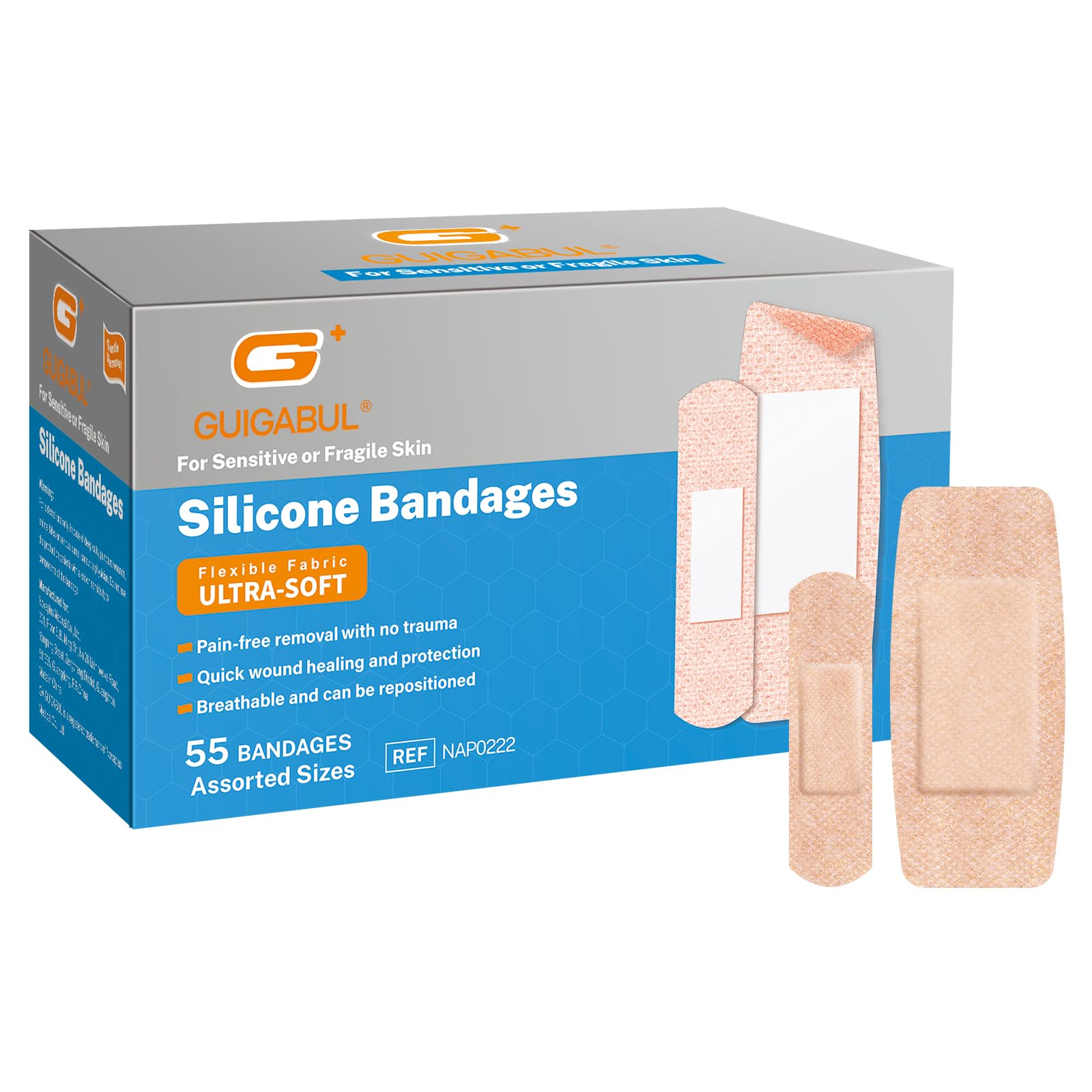
G+ GUIGABUL offers the most pragmatic assortment in the mid-range tier — 40 medium strips (0.75 by 3 inches) and 15 extra-large strips (1.63 by 4 inches) in one pack. The standout feature is the repositionable silicone adhesive: if you misalign the pad over the wound on the first try, you can lift and reapply without losing grip or irritating the surrounding skin. This is a significant practical advantage for users with arthritis or those applying bandages to hard-to-see areas.
The medium strips have a waterproof PU film surface, while the extra-large ones are water-resistant, giving you a choice depending on the exposure risk. The 4-sided seal pad prevents exudate from wicking out the edges, keeping the wound bed clean. The adhesive is non-latex and has proven effective for users with thin, age-damaged skin who previously experienced skin ripping with regular drugstore bandages.
Some users reported that the extra-large strips are only water-resistant, not fully waterproof, meaning they may lift at the edges during extended submersion like dishwashing. Additionally, the adhesive can lose hold on very hairy skin, so a small trim may be needed for optimal stick.
Why it’s great
- Repositionable adhesive allows precise placement without skin damage
- Generous 55-count assortment covers multiple wound sizes
- Waterproof medium strips and water-resistant XL strips mixed in one pack
Good to know
- Extra-large strips may not survive prolonged water exposure
- Adhesion can struggle on hairy skin without prior trimming
4. Hansaplast Sensitive 100 x 6 cm Plaster
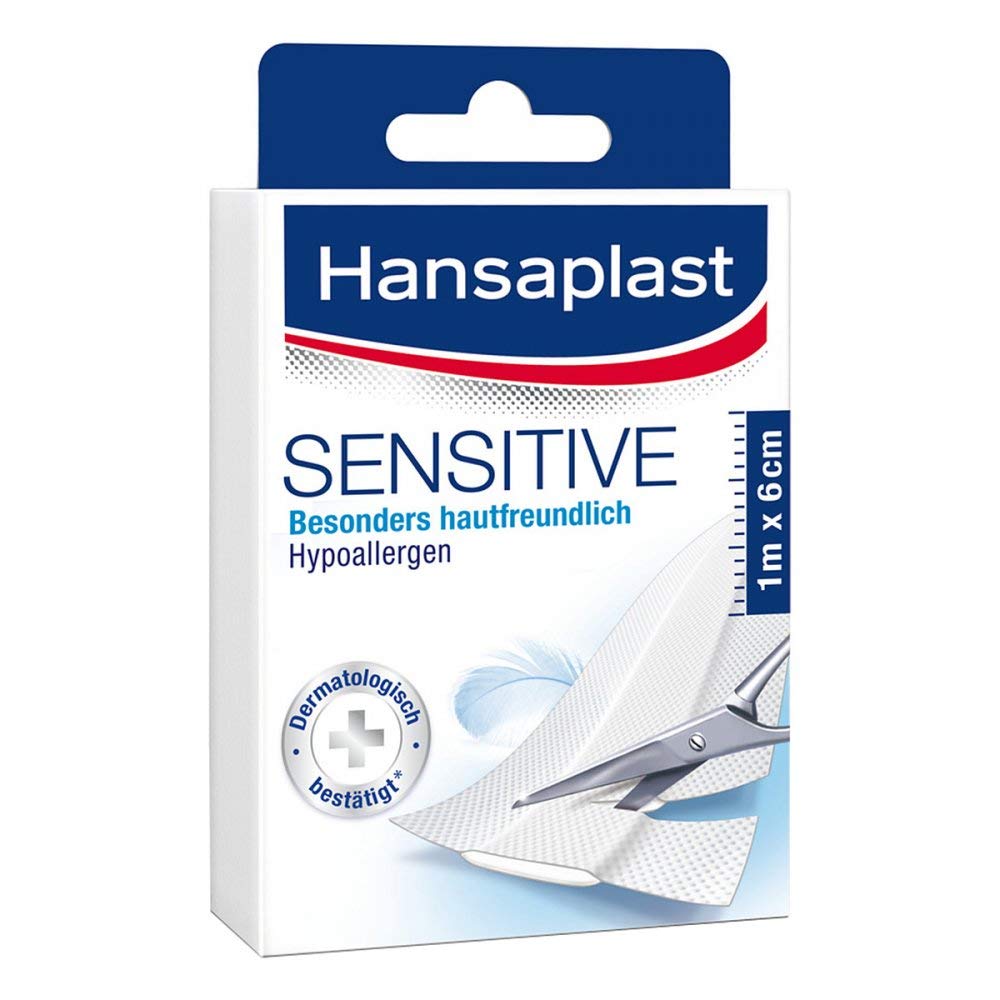
Hansaplast Sensitive is a roll plaster, sold as a 1-meter by 6 cm continuous strip that you cut to your exact dimensions. This is the most versatile option in the budget-friendly tier — you can create a 2 cm square for a small fingertip nick or a full 6 cm by 10 cm rectangle for a knee scrape. The adhesive is dermatologically tested and explicitly hypoallergenic, with multiple user reports confirming it causes no reaction even in people with severe adhesive allergies to brands like Band-Aid or Nexcare.
The material is a soft, breathable non-woven fabric that flexes with movement. The plaster includes 10 pre-scored 10 cm x 6 cm strips as a starting point, but you are free to ignore the scores and custom-cut. Imported from Germany, the product dates back over a decade on the market, indicating a stable formulation that hasn’t changed recipes. Users specifically cite the latex-free claim as the reason they can use this product.
Ordering from international stock means delivery can take up to two weeks or more. The adhesive strength is moderate — it holds well on flat areas like forearms and shins but may not survive a full day on oily or flexed joints like fingers. It is also not waterproof, so it requires replacement after hand washing.
Why it’s great
- Customizable length and width for any wound location
- Dermatologist-tested hypoallergenic formula with documented latex-free status
- Proven track record of safe use even in severe adhesive allergy cases
Good to know
- International shipping takes longer than domestic brands
- Not waterproof and moderate hold on oily or moving skin
5. PATCH 100 Piece Value Pack Bamboo Bandages

PATCH Natural is a bamboo fiber bandage that appeals to the eco-conscious buyer without compromising on skin safety. The material is 100% organic bamboo, and the adhesive is a mineral-based pressure-sensitive formulation — free from latex, plastic, and common irritating chemicals. The backing is compostable, breaking down in garden soil within weeks, which addresses the waste guilt associated with traditional single-use bandages.
The breathability of the bamboo fiber is superior to synthetic fabric bandages, reducing the moisture buildup that can cause maceration and secondary irritation. Users with long-term healing wounds reported that repeated use of PATCH bandages did not cause the red marks or skin peeling they experienced with conventional brands. The 100-piece value pack provides an ample supply at a budget-friendly per-unit cost.
The mineral-based adhesive is gentler than synthetic silicone, but that gentleness comes at a cost: the bandages are not waterproof and will lift easily during hand washing or showering. Some users with oily skin also reported edge curling within a few hours. This is not a high-adhesion bandage — it’s a compromise for those prioritizing material purity and biodegradability above all else.
Why it’s great
- 100% organic bamboo fiber with mineral-based, toxin-free adhesive
- Compostable and biodegradable, addressing environmental impact
- Excellent breathability reduces moisture-related skin maceration
Good to know
- Not waterproof and may lift during hand washing or showering
- Adhesive is mild; oily skin may cause early edge curling
FAQ
How do silicone bandages differ from standard fabric bandages for sensitive skin?
Can I use sensitive skin bandages on wounds that need daily dressing changes?
Why do some hypoallergenic bandages still cause irritation on my skin?
Final Thoughts: The Verdict
For most users, the bandage for sensitive skin winner is the Hysimedy Silicone Bandages because they combine repositionable silicone adhesive, hospital-grade certification, and a 4-sided wound seal that protects healing tissue — all in a 60-count pack that balances value with premium performance. If you want a waterproof, extra-large option ideal for elderly skin, grab the CareUs Silicone Bandages. And for an eco-friendly, toxin-free alternative that breathes beautifully, nothing beats the PATCH Bamboo Bandages.