A kitchen grab, a stray spark, a hot pan handle — seconds of contact can leave you with a throbbing, angry burn that demands immediate care. The wrong bandage can stick to the wound, tear fragile new skin, and turn a small injury into a long, painful recovery. What you need is a dressing designed specifically for burns: one that cools the heat, protects the blister, and creates a moist healing environment without ripping the wound when it’s time to change.
I’m Emma — the founder and writer behind Baby Bangs. I’ve spent years analyzing first-aid hardware, from basic adhesive strips to advanced hydrogel and honey-based dressings, focusing on the materials and sterile technologies that actually improve burn recovery outcomes.
This guide breaks down the best options for managing thermal, friction, and minor chemical burns at home. After reviewing dozens of products, I’ve found five standouts that deliver real cooling relief, superior absorption, and gentle removal — the marks of a truly effective bandage for burns.
How To Choose The Best Bandage For Burns
A burn is not a cut. Standard adhesive bandages with absorbent pads are unsuitable for thermal injuries because the pad can fuse to the weeping wound bed. The ideal burn dressing cools the tissue, maintains a moist environment, and lifts away cleanly. Here’s what to check before you buy.
Dressing Material: Hydrogel vs. Absorbent vs. Honey
Hydrogel dressings (like Water Jel) deliver immediate cooling and are ideal for first-degree and small second-degree burns. Super-absorbent pads (like MedVance) are better for burns with heavy exudate because they lock fluid away and prevent maceration. Medical-grade manuka honey gauze (like Kastormed) creates a sterile, moist environment that supports autolytic debridement — useful for slower-healing wounds and burns at risk of infection.
Sterility and Packaging
Fresh burns are vulnerable to bacterial colonization. Always choose dressings labeled “sterile” and packaged in individually sealed foil or peel-open pouches. Multi-dressing boxes should have each unit wrapped separately so the remaining supply stays sterile after the first use. Shelf life matters too — some gel dressings last up to five years in storage, making them smart additions to emergency kits.
Size and Conformability
Burn locations vary widely — a curled finger, a flat forearm, a joint. Look for dressings that can conform to irregular contours without gapping. Hydrogel sheets and honey gauze are flexible enough to wrap around curved surfaces, while oversized absorbent pads (8×8 inches) can be cut or folded to cover larger trunk or thigh burns without excessive overlap.
Quick Comparison
On smaller screens, swipe sideways to see the full table.
| Model | Category | Best For | Key Spec | Amazon |
|---|---|---|---|---|
| Water Jel Dressing | Gel Soaked | Immediate cooling of minor burns | 4×4 inch gel pad | Amazon |
| RHINO RESCUE Burn Kit | All-in-One Kit | Comprehensive burn first aid | 23-piece emergency kit | Amazon |
| Dimora Hydrogel Ointment | Hydrogel | Hydrating dry burn wounds | 6oz gel tube | Amazon |
| MedVance Super Absorbent Dressing | Absorbent Pad | High-exudate 1st/2nd degree burns | 8×8 inch pad | Amazon |
| Kastormed Manuka Honey Gauze | Honey Gauze | Infection-prone and slow-healing burns | Medical-grade manuka honey | Amazon |
In‑Depth Reviews
1. First Aid Only 4″ X 4″ Water Jel Burn Dressing

The Water Jel 4×4 is the gold standard for immediate burn first aid — a sterile, gel-soaked dressing made of medical-grade non-woven material that actively cools the burn site on contact. Customers consistently report that the water-based gel stops the stinging pain within minutes and prevents blisters from fully forming. This is the dressing you want within arm’s reach of the stove or grill, especially if you have kids in the house.
Each foil pack contains one 4×4 inch square, ideal for palm-sized burns. The gel does double duty: it cools the damaged tissue and creates a physical barrier against airborne contaminants. Reviewers describe using a single dressing in shifts (changing every 8 hours) with dramatic reductions in blistering and scarring. The five-year shelf life means you can stash several packs in a kitchen drawer, camping kit, or car glovebox without worrying about expiration.
The only realistic limitation is pack size — each purchase gets you three individually sealed dressings, which is enough for one moderate burn event or a few smaller incidents. For larger burn surfaces, you may need multiple packs or a larger format dressing. That minor point aside, this product delivers exactly the cooling, protection, and gentle removal that a burn dressing should provide.
Why it’s great
- Cools and soothes burn pain almost immediately
- Sterile, foil-packed with 5-year shelf life
- Non-woven material won’t stick to the wound
- Helps minimize blistering and scarring
Good to know
- Only 3 dressings per box
- Best suited for palm-sized or smaller burns
2. RHINO RESCUE Burn Kit
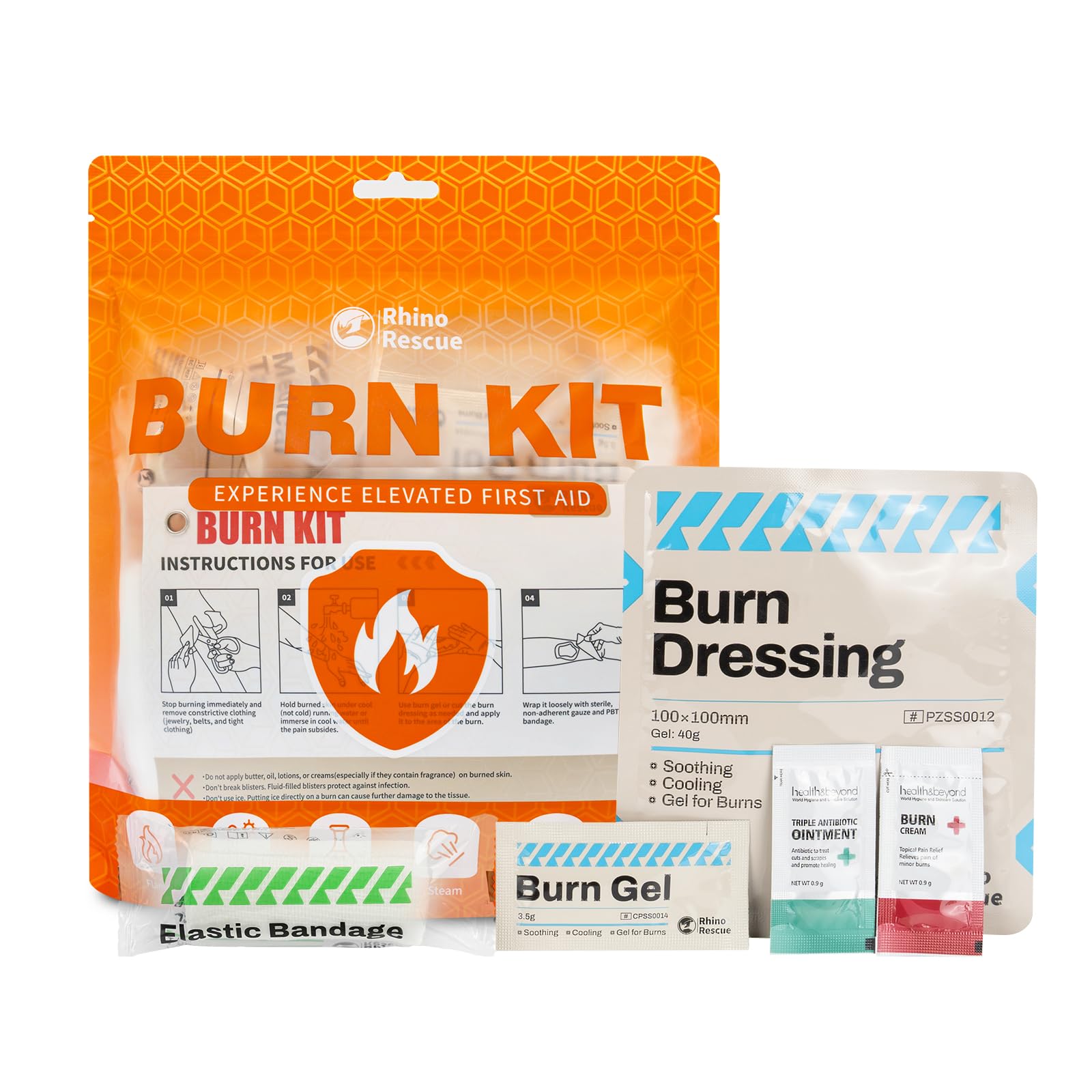
This comprehensive burn care kit bundles 4 hydrogel dressings, 8 individual gel packets, non-adherent bandages, PBT wrap, tape, scissors, and nitrile gloves into one organized package. The gel dressings are soaked in a water-based, biodegradable cooling gel that begins working instantly on the burn site, making the kit a complete solution from initial cooling through wound coverage. Paramedic-grade design shows in the sterile packaging and focus on contamination-free application.
Customers praise the kit’s completeness for household use — one reviewer treated a second-degree burn, had it checked by a doctor, and was told the dressing protocol was correct. The gel packets are particularly useful for field use because they let you apply cooling gel directly to a burn without opening a full dressing. The included scissors and gloves are a thoughtful touch for sterile handling in emergency situations.
Consider this kit if you want a ready-to-grab solution for road trips, camping, or home emergencies. However, the included supplies are sufficient for one large burn or 2-3 small ones over roughly two days — you may need supplementary gauze and tape for extended care. Some users also recommend adding a Coban wrap for better compression.
Why it’s great
- All-in-one kit with dressings, gel, and tools
- Water-based gel cools immediately on contact
- Sterile, medical-grade components
- Ideal for camping, emergency kits, and home use
Good to know
- Supplies run out after 2 days for a single burn
- Bag design may not be intuitive to open quickly
3. Dimora 2 Packs 6oz Hydrogel First Aid Ointment

Dimora’s hydrogel is an oil-free, water-based gel that comes in a squeeze tube — a fundamentally different approach from pre-soaked pads. You apply the gel directly to the burn or wound, then cover with a separate sterile dressing. This format shines for awkward locations like cracked fingers, nail gaps, or joint surfaces where a rigid pad won’t stay put. The gel conforms to every contour and creates a long-lasting moist environment that promotes autolytic debridement.
Real-world users report success with post-surgical incisions, blistered heels, and even private-area comfort after procedures. The 6-ounce tubes are generously sized — you get two tubes per pack, giving you enough gel for multiple burn events or a full course of wound care. The manufacturer recommends changing the dressing when the gel bulges and turns white, signaling it has absorbed wound exudate and softened necrotic tissue.
Note that this product is not suitable for heavy-draining wounds, as the hydrogel cannot absorb large volumes of fluid. Some users with surgical wounds found it less effective than traditional antibiotic ointments. If your burn is weeping heavily, layer this gel under a super-absorbent pad like the MedVance dressing listed below for a combined approach.
Why it’s great
- Conforms to any body contour including joints and fingers
- Generous 6-ounce tube — two per pack
- Oil-free formula keeps wound hydrated without sticking
- Excellent for blisters, cracked skin, and post-op incisions
Good to know
- Not designed for heavy exudate wounds
- Requires a secondary dressing for full coverage
4. MedVance Super Absorbent Dressing 8×8
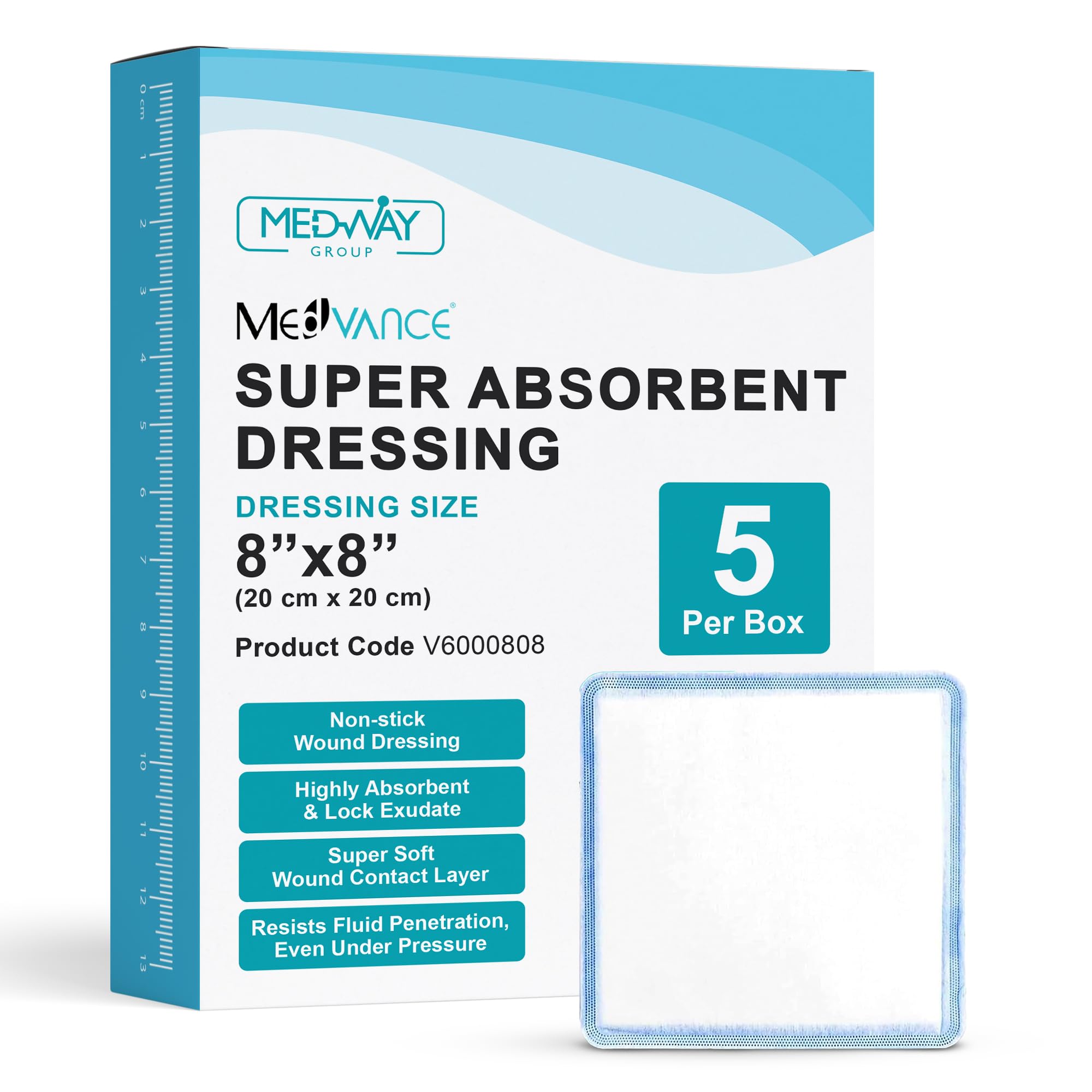
When a burn is exudating heavily — common with second-degree burns where blisters have ruptured — you need a dressing that absorbs fluid and locks it away without letting it leak back onto healthy skin. The MedVance Super Absorbent Dressing does exactly that, with a core that holds up to 11 times its weight in fluid. The 8×8 inch format is large enough to cover substantial trunk, thigh, or shoulder burns while the rounded edges minimize irritation on surrounding skin.
Reviewers specifically note that this dressing outperforms other “super absorbent” pads on the market, managing heavy exudate without needing mid-day changes. One customer with a chronic wound avoided a wound care center visit entirely by switching to these pads. The dressing is sterile and works well for post-surgical incisions, pressure ulcers, and diabetic foot ulcers in addition to burns.
Be aware that these pads are not non-stick. On drying wounds, the absorbent material can adhere to the tissue and cause tearing on removal. Use a silicone or petrolatum contact layer underneath if your burn is starting to dry. The super absorbent core also means the pad can become heavy when fully saturated, so secure it well with tape or wrap.
Why it’s great
- Exceptional absorbency — holds 11x its own weight
- Large 8×8 size covers major burn areas
- Liquid stays locked in even under pressure
- Rounded edges prevent skin irritation
Good to know
- Not non-stick — requires contact layer on drying wounds
- Can become heavy when fully saturated
5. Kastormed Manuka Honey Gauze Dressing

Medical-grade manuka honey has a well-established track record in wound care for its antibacterial properties and its ability to create a moist healing environment. The Kastormed Honey Gauze Dressing embeds manuka honey into a sterile, breathable mesh tulle that releases honey onto the wound bed as exudate enters the dressing. This is particularly valuable for burns that are slow to heal, have developed slough, or are at high risk of infection — including diabetic foot burns and pressure wounds.
Each pack contains 10 individually wrapped 4×4 inch gauzes, making it a good value for ongoing treatment. Users report that the honey effectively stops pain from brown recluse spider bites and helps surgical wounds heal faster when standard dressings aren’t enough. The gauze is designed to be removed painlessly — it won’t stick to the wound bed like plain gauze can.
Some customers found the gauze too dry on arrival, resulting in it sticking to the wound despite labeling. The manufacturer recommends moistening the dressing with sterile saline before applying it to dry wounds. If you prefer to apply medical-grade honey separately with a non-stick pad, this product may not replace that workflow. But for a ready-to-use, honey-infused dressing, this is a solid choice.
Why it’s great
- Medical-grade manuka honey fights bacteria
- Individually wrapped and sterile
- Designed for painless removal
- Good for slow-healing and infection-prone burns
Good to know
- May be too dry for wounds with low exudate
- Moisten with saline before use on dry burns
FAQ
Can I use a regular adhesive bandage on a burn?
How often should I change a burn dressing?
Is manuka honey better than hydrogel for burns?
What size burn dressing should I buy?
Can I put burn gel on a blister and cover it?
Final Thoughts: The Verdict
For most users, the bandage for burns winner is the Water Jel 4×4 Burn Dressing because it delivers instant cooling, stays sterile for years, and lifts off without tearing sensitive burn tissue. If you want a complete emergency solution with dressings, gel, and tools in one organized kit, grab the RHINO RESCUE Burn Kit. And for a slow-healing or infection-prone burn where antibacterial action matters most, nothing beats the Kastormed Manuka Honey Gauze Dressing.