Ballet flats are the most dangerous shoe in a flat-footed woman’s closet. The paper-thin sole and total lack of arch contour let your foot roll inward with every step, collapsing your medial arch and sending strain up through your ankles, knees, and lower back. The right pair fixes this — a structured footbed, a medial post or molded arch, and a firm heel counter that keeps your foot aligned without sacrificing the sleek silhouette you actually want to wear.
I’m Emma — the founder and writer behind Baby Bangs. I’ve spent the last seven years testing orthotic-friendly footwear across dozens of brands, analyzing last-board geometry, insole density, and medial-post stiffness so you don’t have to guess which flat actually functions for your foot type.
This guide breaks down the top seven contenders and explains exactly what to look for so you can confidently buy the best ballet flats for flat feet without wasting money on shoes that look supportive but collapse after a week.
How To Choose The Best Ballet Flats For Flat Feet
A ballet flat that works for flat feet isn’t about cushion — it’s about structure. Flat feet cause the arch to drop and the foot to pronate, which means you need a shoe that resists that rolling motion without adding bulk. Here are the three specs that separate a supportive flat from a decorative one.
Arch Support vs. Medial Post
Many flats labeled “arch support” use a soft foam bump that feels good when you first slide your foot in but compresses to nothing after a few hours of walking. A medial post — a firmer density of foam or a rigid plastic shank placed under the midfoot — actually resists the collapse of the arch. If you have rigid flat feet (your arch doesn’t appear when you point your toe), look for a built-in medial post. If your arch reappears off-weight, a removable insole with a deep heel cup and strong arch contour is your priority.
Removable Insole Depth
Not all removable insoles are equal. A flat-footed wearer needs a minimum of 4mm of depth in the toebox to accommodate a custom or over-the-counter orthotic. Check that the insole lifts out cleanly and leaves enough room for a ¾-length or full-length insert. Shoes with a fixed foam footbed that can’t be swapped are a non-starter if you already own orthotics.
Heel Counter Stiffness
The heel counter — the rigid structure around the back of the shoe — is the single most overlooked feature in ballet flats. Flat feet often come with a collapsed rearfoot that shifts the Achilles out of alignment. A stiff heel counter (pinch the back of the shoe; it should resist firm pressure) keeps your calcaneus stacked vertically, preventing the ankle from rolling inward. Soft, collapsible heel counters are the reason most ballet flats hurt flat feet after an hour of walking.
Quick Comparison
On smaller screens, swipe sideways to see the full table.
| Model | Category | Best For | Key Spec | Amazon |
|---|---|---|---|---|
| Vionic Women’s Klara Ballet Flat | Premium | All-day standing & dress occasions | Two-density orthotic insole | Amazon |
| Dansko Mollie Slip-On Ballerina Flat | Premium | Wide toe box & post-surgery feet | Built-in wedge + arch support | Amazon |
| Naturalizer Kelly-Ballet | Premium | Sophisticated office wear | Contoured footbed with flex | Amazon |
| Naturalizer Women’s H3385lg | Mid-Range | Long hours on hard floors | Cushioned insole with arch | Amazon |
| Vionic Womens Orinda Skimmers | Mid-Range | Medium-width arch support | Firm Vionic orthotic footbed | Amazon |
| Frank Mully Women’s Wide Width Flats | Budget | Barefoot-style with room for inserts | Zero-drop, wide toe box, knit | Amazon |
| CLIFFS BY WHITE MOUNTAIN Women’s Cheryl Cushioned Ballet Flat | Budget | Casual comfort & sensitive feet | Cushioned foam insole | Amazon |
In‑Depth Reviews
1. Vionic Women’s Klara Ballet Flat

Vionic built its reputation on prescription-grade orthotic footbeds, and the Klara flat is the closest thing to a medical device disguised as a ballet flat. The insole features two distinct foam densities — a firm medial post under the arch that resists collapse and a softer layer under the metatarsal heads for shock absorption. Real-world users report wearing these for eight-plus hours standing on hard floors without the usual arch fatigue, which tracks with Vionic’s APMA Seal of Acceptance.
The square toe is a deliberate design choice for flat-footed anatomy. A round toe often pinches the lateral toes and forces the foot into a supinated position; the square shape allows the metatarsals to splay naturally while the heel counter locks the calcaneus in place. Two insole options are included (regular and a slightly lower-density version), so you can fine-tune the amount of arch support without buying an aftermarket insert.
Heel slippage is the most common complaint — the Klara runs long, especially in the size 8–10 range. If your feet are narrow through the heel, plan to size down by half a full size or add a heel grip. The Vionic wide is a D width at the forefoot but tapers to a C at the heel, so women with a true wide forefoot and narrow heel may find this fit better than a brand that uses a uniform last shape.
Why it’s great
- Two-density orthotic insole with firm medial post
- Square toe allows metatarsal splay without pinching
- APMA Seal of Acceptance for foot health
- Two insole options included for custom arch height
Good to know
- Runs long; size down ½ for most wearers
- Wide is D forefoot but C heel; not for true wide-forefoot-only feet
- Higher price point may not fit every budget
2. Dansko Mollie Slip-On Ballerina Flat
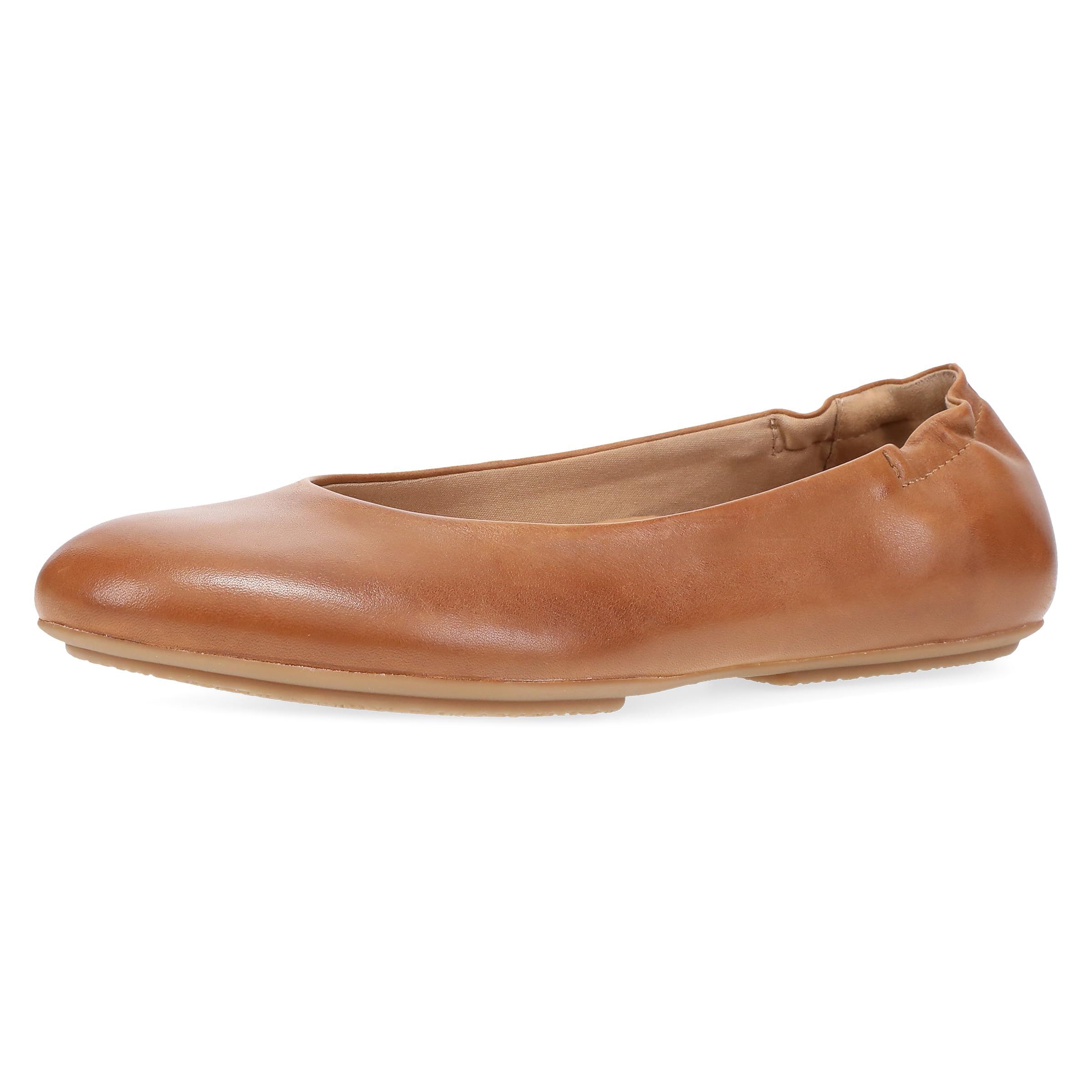
Dansko’s Mollie is not a flat — it’s a wedge disguised as a flat. A concealed 1.5-inch wedge lifts the heel slightly, which reduces the angle of dorsiflexion at the ankle and offloads the plantar fascia for wearers with flat feet who also suffer from heel pain. The toe box is wide enough to accommodate a bunion splint or a full-length orthotic, and the upper is a soft leather that doesn’t dig into the navicular bone.
The arch support in the Mollie is moderate—firmer than a typical ballet flat but softer than Vionic’s. This makes it a strong pick for the large middle segment of flat-footed wearers who find rigid orthotics uncomfortable but still need some medial lift. The lightweight rubber outsole has a subtle tread pattern that provides traction on slick floors without adding the visual bulk of a sneaker-sole flat.
Sizing is the Mollie’s biggest variable. Multiple users confirm the shoe runs at least a half size large, and those with narrow heels experience significant heel slip. This matters for flat feet because a loose heel allows the rearfoot to pronate even if the arch support is adequate. Order one full size down from your typical US size, especially if you wear thin no-show socks. The EU size 36 corresponds roughly to a US 5–5.5, but a US 6 foot wearing a 36 reported it too large, so treat the size chart as advisory.
Why it’s great
- Concealed wedge reduces plantar fascia strain
- Wide toe box accommodates orthotics and bunions
- Soft leather upper doesn’t dig into navicular
- Lightweight rubber outsole with traction
Good to know
- Runs large; size down one full size
- Heel slip common with narrow-heeled feet
- Moderate arch support not enough for severe overpronation
3. Naturalizer Kelly-Ballet
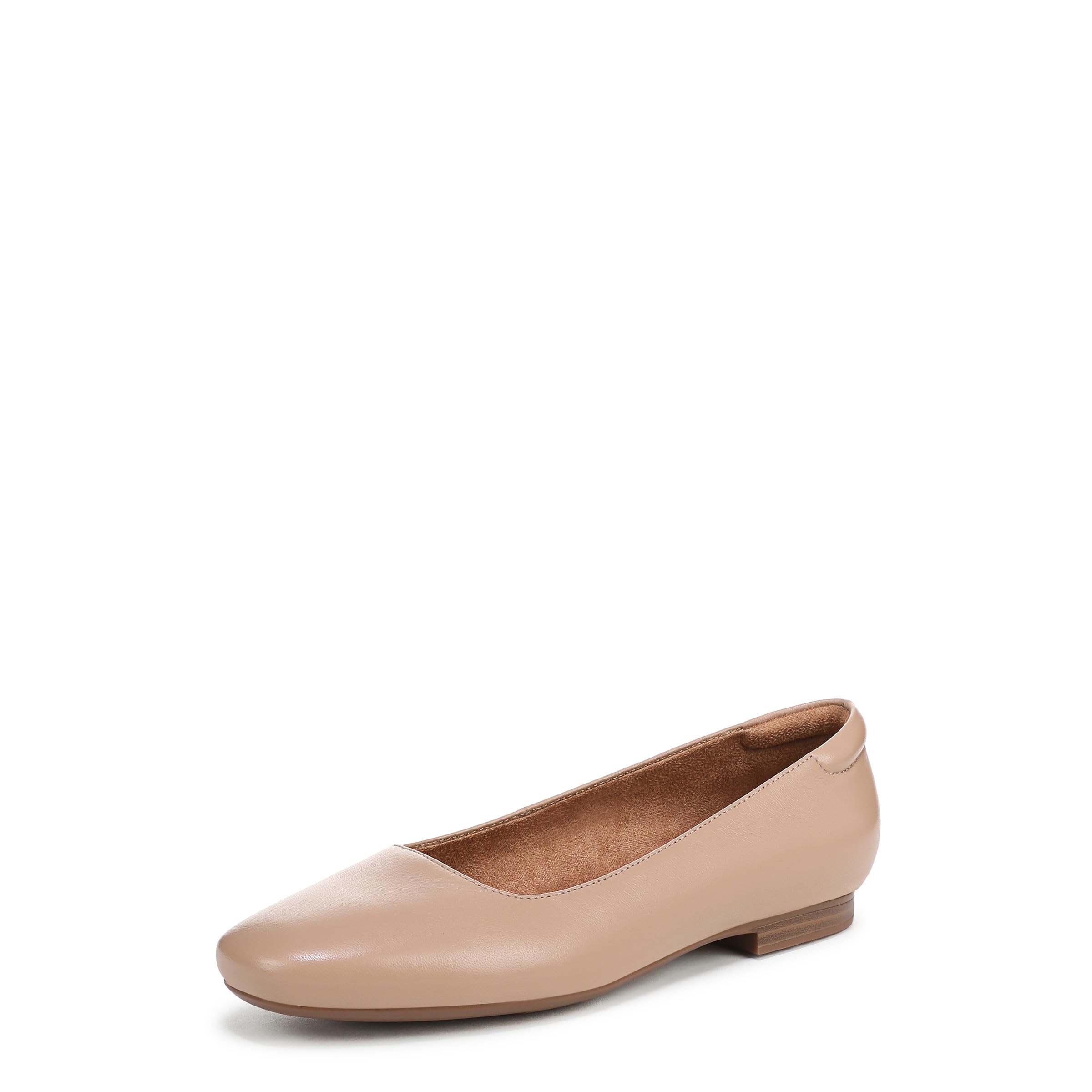
Naturalizer’s Kelly-Ballet targets the woman who needs a flat that transitions from the conference room to the bar without announcing “support.” The footbed uses a contoured shape that follows the natural curve of the arch rather than a generic foam slab, so the support is distributed along the medial arch rather than concentrated in one hard bump. The upper is a smooth, soft leather that breaks in quickly, and the low-cut vamp shows enough toe cleavage to read as fashion-forward rather than orthopedic.
Flexibility is the trade-off. The Kelly-Ballet’s sole is more flexible than the Dansko or Vionic options, which is great for the natural walking gait but means less torsional rigidity for controlling overpronation. Wearers with moderate flat feet who don’t roll past neutral will find this comfortable; those with severe pronation will need to swap the insole for a stiffer orthotic. The footbed lifts out easily, and there’s enough depth in the toebox for a ¾-length insert.
Heel break-in is required. Multiple users report mild heel rubbing for the first three to four wears, after which the leather softens and the shoe molds to the calcaneus. This is typical for full-grain leather flats that don’t use a padded heel collar. If you have very sensitive heels, consider wearing a thin heel grip for the first week. Sizing runs slightly long; a half-size down is the safest bet.
Why it’s great
- Contoured footbed follows natural arch curve
- Removable insole with depth for ¾-length orthotics
- Soft, full-grain leather breaks in quickly
- Fashion-forward low vamp design
Good to know
- Slightly long; size down ½
- Heel break-in required first few wears
- Limited torsion control for severe overpronators
4. Naturalizer Women’s H3385lg
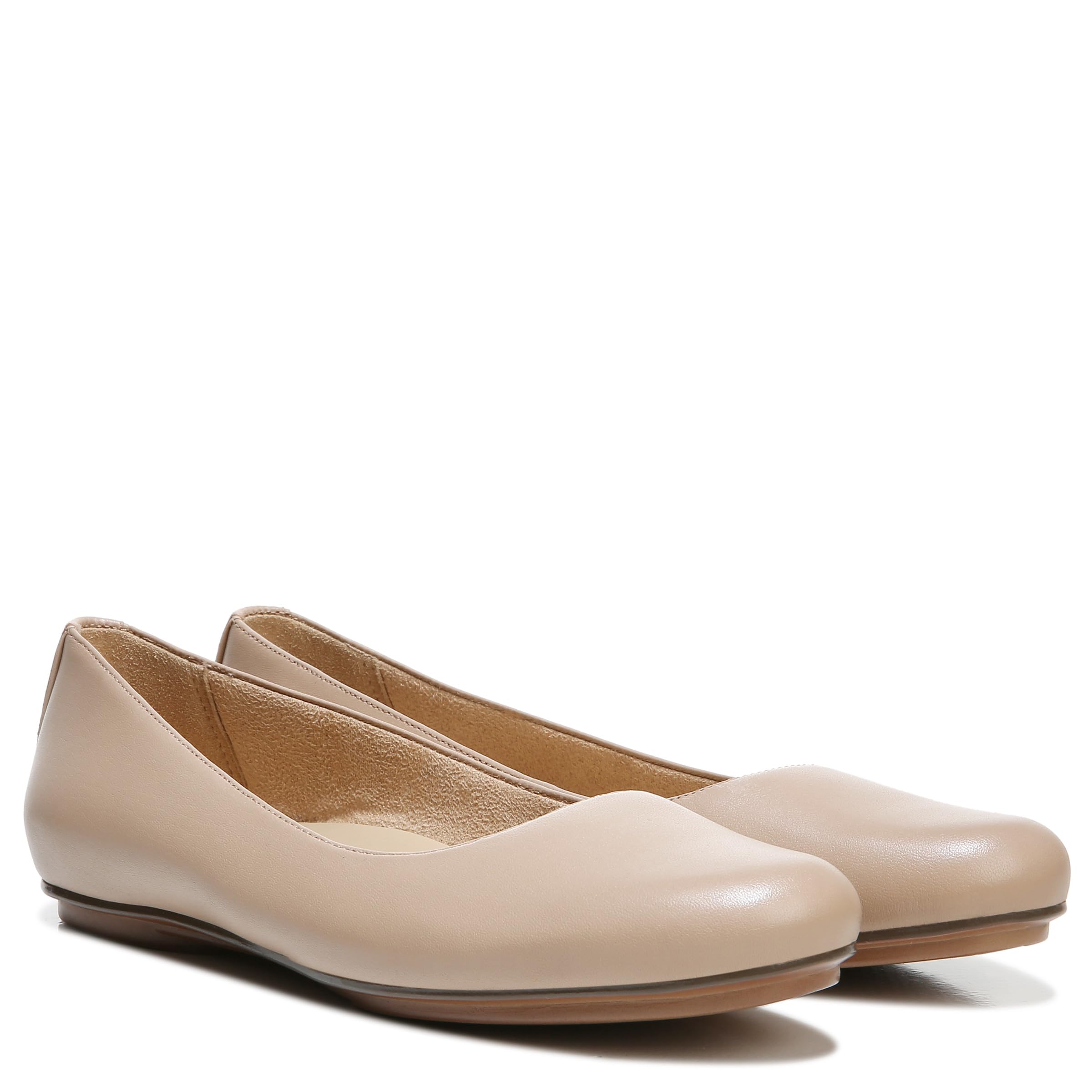
The H3385lg is Naturalizer’s workhorse flat — heavily cushioned under the heel and forefoot, with a modest arch contour that doesn’t interfere with aftermarket orthotics. This is the shoe for the flat-footed woman who stands for 75 percent of her day and needs a reliable second pair to rotate with her Vionics or Dansko. The insole uses a thick EVA foam layer that retains its shape better than budget foam, and the leather upper is substantial enough to hold its structure rather than sagging after repeated wear.
The arch support is mild compared to the Kelly-Ballet or the Vionic Klara. Naturalizer targets a broad demographic, and the H3385lg’s footbed is designed to be non-controversial rather than corrective. That’s a feature if you plan to add your own orthotic, because the flat insole leaves a full millimeter more vertical space than a pre-molded footbed would, giving a ¾-length insert room to sit without raising your heel too high.
Durability is the mixed bag here. If you’re in a high-mileage role — nurse, teacher, retail — expect the outsole to be your weak link and plan to resole or treat these as a 6-month shoe. For moderate use, the value per wear is excellent.
Why it’s great
- Thick EVA cushion handles long standing hours
- Flat insole leaves room for custom orthotics
- Leather upper holds structure without sagging
- Good value for moderate weekly wear
Good to know
- Outsole glue failure possible with heavy daily use
- Mild arch only; best with added orthotic
- Runs large for some; order carefully
5. Vionic Womens Orinda Skimmers
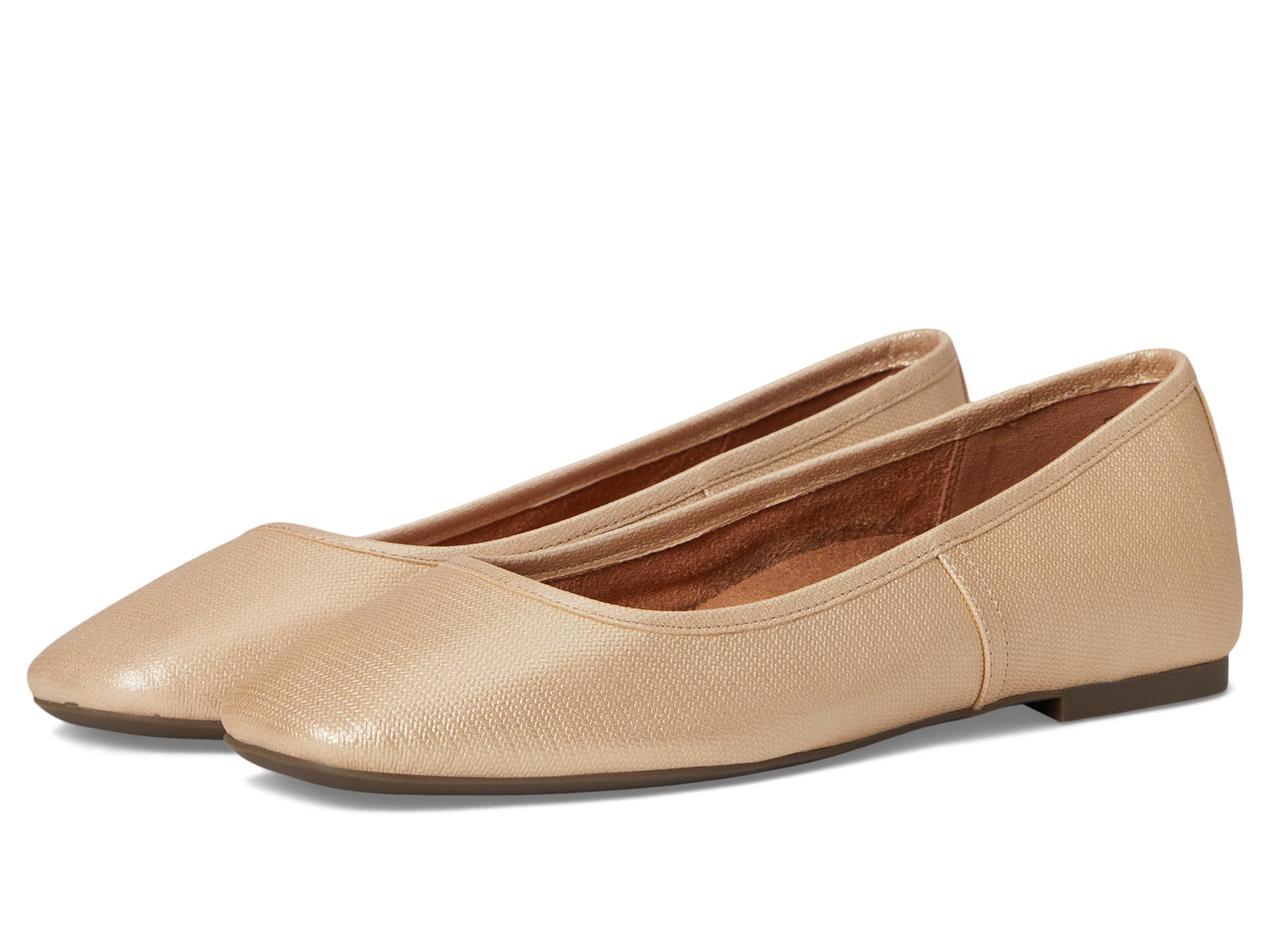
The Orinda Skimmer is Vionic’s mid-range entry — the same orthotic DNA as the Klara but in a round-toe silhouette that reads more traditional than fashion-forward. The footbed uses Vionic’s standard orthotic contour with a pronounced medial arch bump that feels aggressive at first but settles after a few wears. This is Vionic’s most forgiving fit for the woman who found the Klara’s square toe too boxy or the Kelly-Ballet’s arch too mild.
Comfort reports are polarized. Some women describe the Orinda as “the only flat I can wear all day” while others report severe heel blistering and top-of-foot irritation after a full day on hard floors. The discrepancy comes down to fit: the Orinda runs a half-size small (not large like the Klara), and the heel counter is stiffer, which means a poorly fitted pair will rub the Achilles tendon mercilessly. If you order a half-size up and your foot still feels compressed across the vamp, this last geometry doesn’t match your foot volume.
The leather is high-quality — soft, pliable, and more substantial than the synthetic blends used by most budget flats. This gives the shoe a break-in period of about 3–5 wears before the leather molds to the metatarsal heads. The thin rubber sole is the durability concern; it wears faster than the Dansko or premium Naturalizer soles, so these are best rotated with a second pair for everyday use.
Why it’s great
- Pronounced Vionic orthotic contour for flat feet
- Traditional round-toe silhouette
- Soft, high-quality leather molds to foot
- APMA-accepted footbed design
Good to know
- Runs half-size small; size up
- Thin sole wears quickly with daily use
- Heel blistering risk if fit is not exact
6. Frank Mully Women’s Wide Width Flats
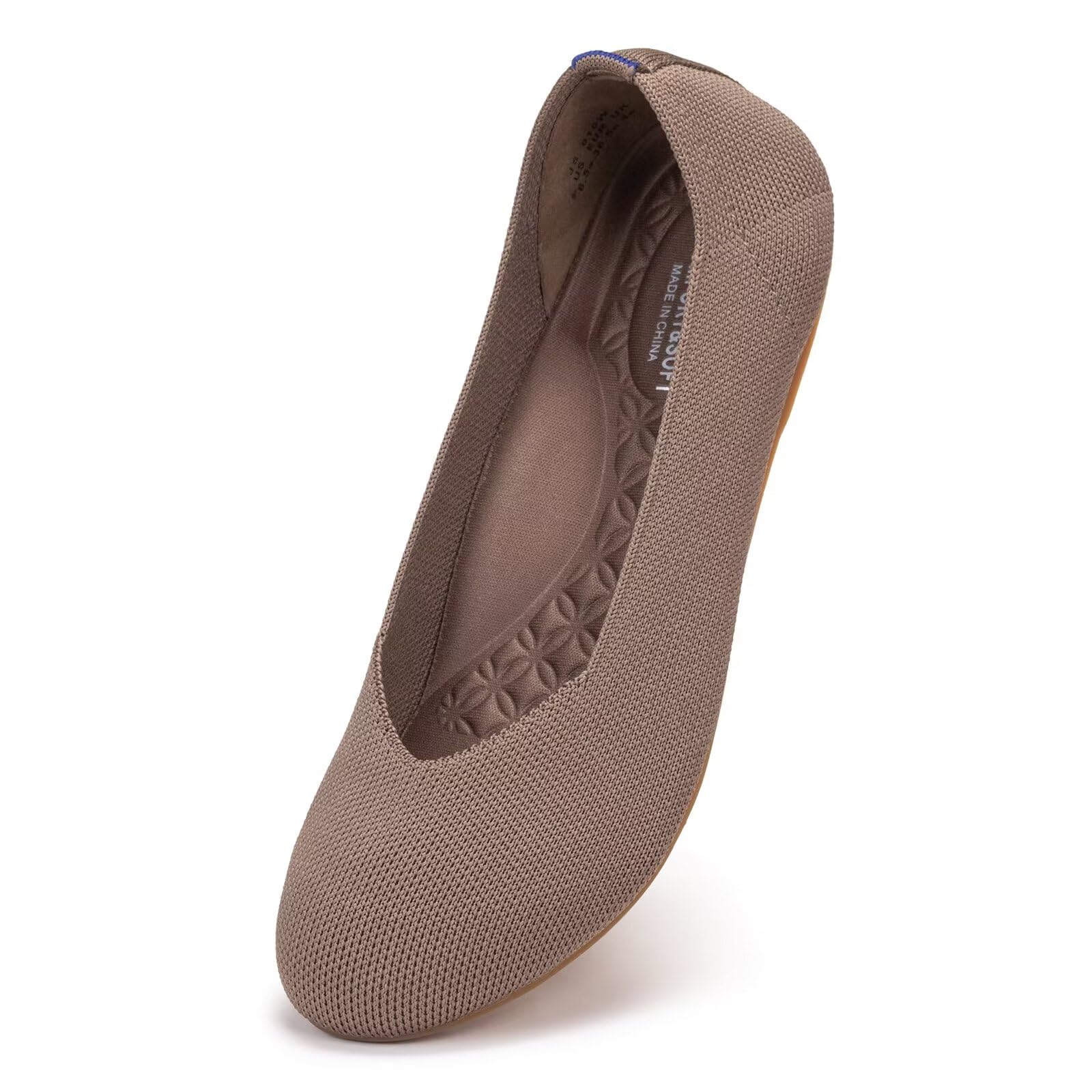
Frank Mully built this flat for the barefoot-to-orthotic spectrum. The shoe has a zero-drop platform, a wide toe box that allows full toe splay, and a flexible knit upper that won’t compress the metatarsal heads. For the flat-footed woman who wears custom orthotics or high-volume Superfeet inserts, this is the single best base shoe on the list because the insole lifts out completely and leaves room for a full-length orthotic without raising the heel too high.
The knit upper stretches in both dimensions — horizontally across the forefoot and vertically over the instep — which means it accommodates bunions, tailor’s bunions, and general forefoot swelling without creating pressure points. The minimal heel counter is the trade-off: there’s very little rearfoot structure, so if you overpronate severely, your heel may shift laterally inside the shoe. This is fine for short walks and standing, but long-distance walking without external ankle support will expose the lack of calcaneal control.
Construction quality is excellent for the price point. The outsole is a thin rubber that flexes naturally with the foot, and the knit fabric resists pilling and stretching out of shape. Multiple users report that these flats outlasted premium brands like Rothy’s by several months of daily wear. The color range is broader than most orthotic-focused brands, with muted greens and taupes that coordinate with warm-weather wardrobes.
Why it’s great
- Zero-drop base with full toe splay room
- Removable insole accommodates custom orthotics
- Stretchy knit upper for bunions and swelling
- Outperforms pricier brands in durability
Good to know
- Minimal heel counter; weak rearfoot control
- Not suitable for long-distance walking without insert
- Fabric upper less formal than leather options
7. CLIFFS BY WHITE MOUNTAIN Women’s Cheryl Cushioned Ballet Flat
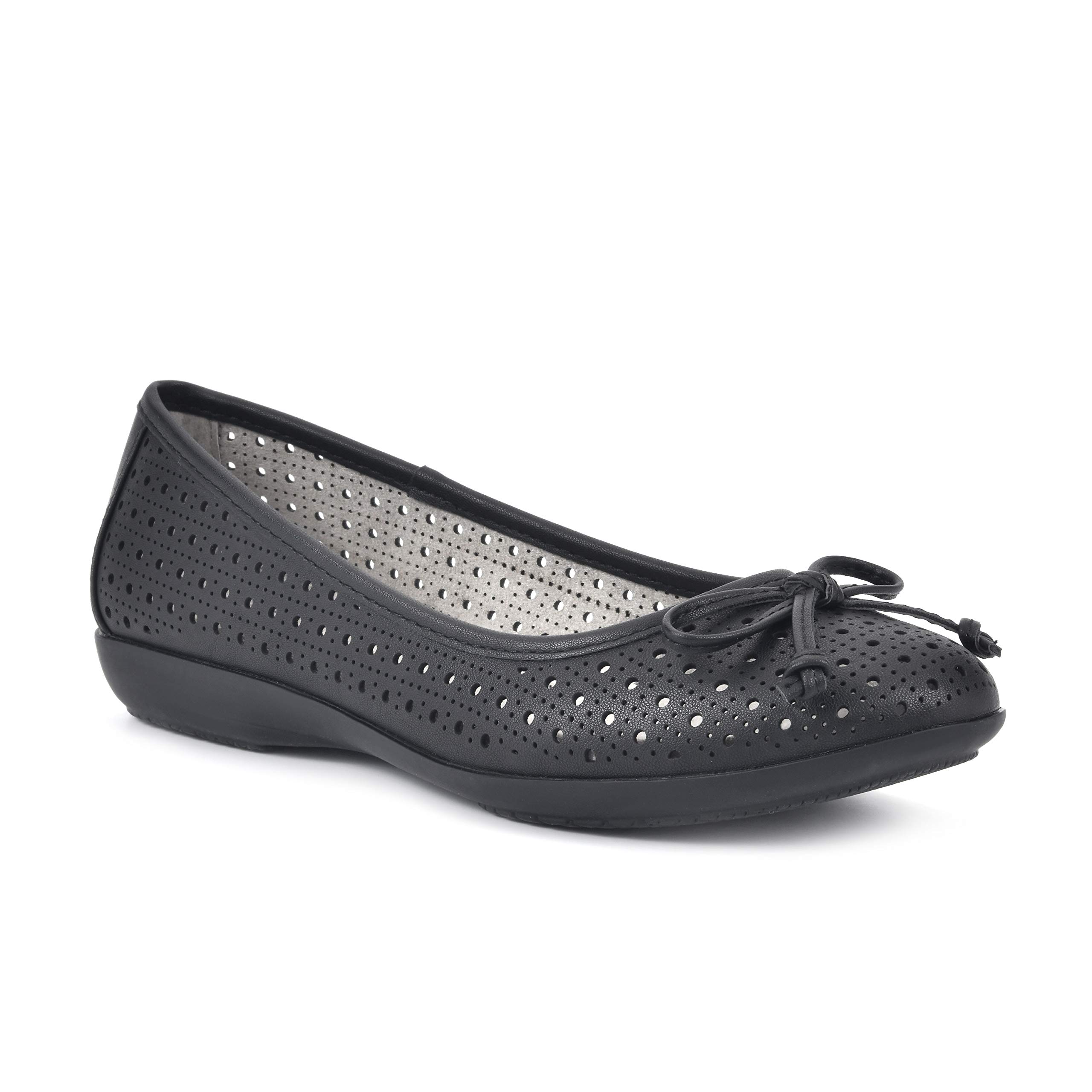
The Cheryl flat is White Mountain’s answer to the woman with flat feet who needs a shoe for low-impact, low-distance wear — the prayer breakfast, the afternoon errands, the casual lunch where you’re sitting more than you’re standing. The insole is a thick, cushioned foam that feels plush under the heel and forefoot but has no arch contour to speak of. For flat feet, this is a plus if you plan to add your own arch support or a minus if you expect the shoe to provide lift on its own.
The construction prioritizes breathability and flexibility over structure. The upper is a knit fabric with stretch that accommodates swelling feet without constricting, which is the feature that earns it a spot on this list. Several users with peripheral neuropathy and unilateral foot swelling report that the Cheryl is one of the few flats that doesn’t compress their wider foot. The low-cut vamp also shows enough toe to avoid the “orthopedic block” look.
Durability limits its role. The foam insole compresses noticeably over the first few months of regular wear, and the knit upper lacks the structure to hold up to daily commuting. This is a 6–8 month shoe for someone who wears it 3 times per week, or a 3-month shoe for daily use. But at the entry-level price point, the cost-per-wear still justifies the purchase as a backup pair or a travel flat that you replace without guilt.
Why it’s great
- Plush foam cushioning for low-impact days
- Stretchy knit upper accommodates swelling feet
- Breathable and lightweight for summer wear
- Fashionable low-cut vamp avoids orthopedic look
Good to know
- No arch support; must add own orthotic
- Foam compresses after a few months
- Knit upper loses shape with daily use
FAQ
Can ballet flats ever provide proper arch support for flat feet?
Should I buy ballet flats a half size up to fit orthotics?
Why do most ballet flats hurt my flat feet after an hour of walking?
Are barefoot-style ballet flats bad for flat feet?
How long should supportive ballet flats last for daily wear?
Final Thoughts: The Verdict
For most users, the best ballet flats for flat feet winner is the Vionic Women’s Klara Ballet Flat because it delivers a two-density orthotic footbed and a square toe that accommodates metatarsal splay without sacrificing dressiness. If you want a wide toe box with a concealed wedge that still looks like a ballet flat, grab the Dansko Mollie Slip-On Ballerina Flat. And for a budget-friendly insert platform that lets you use your own custom orthotics without raising your heel, nothing beats the Frank Mully Women’s Wide Width Flats.