Standard back braces dig in, roll up at the edges, and simply don’t reach around larger midsections, turning pain relief into a frustrating wrestling match. The right support should stabilize your spine without cutting off circulation or bunching fabric under your clothes. That means finding a brace built with extended sizing, rigid stays that won’t curl, and breathable panels that prevent sweat buildup during a full work shift.
I’m Emma — the founder and writer behind Baby Bangs. I’ve spent years dissecting product specs and analyzing user feedback to find supportive gear that actually fits real bodies, not just the generic medium.
When the wrong fit can worsen sciatica or cause new pressure points, choosing the right back brace for overweight makes the difference between real relief and a disappointing shelf-waster.
How To Choose The Best Back Brace For Overweight
A back brace that doesn’t fit properly won’t deliver the spinal support you need, and it can create new discomfort around the abdomen. Overweight wearers face specific challenges: rolling edges, insufficient strap length, and narrow support panels that miss key muscle groups. Focus on these four areas to find a brace that stays put and actually reduces pain.
Extended Waist Measurement vs. Pants Size
Don’t trust your jeans tag. Measure your waist at the level of your navel using a cloth tape measure. Many braces run 2-4 inches smaller than their stated range, so read reviews about true fit. Look for models that offer sizes starting at 44 inches and scaling up to 60+ inches, with adjustable compression straps that can tighten symmetrically without creating gaps or digging in.
Roll Resistance and Stay Material
The number one complaint from larger users is that the bottom edge of the brace curls inward when bending or sitting. A brace with at least four rigid stays — preferably aluminum or reinforced plastic rather than flexible wire — resists rolling. Memory-aluminum stays that contour to your body shape without losing rigidity provide the best balance of support and comfort for extended wear.
Breathability and Moisture Management
Wearing a thick neoprene brace against a larger torso for eight hours creates trapped heat and sweat, leading to skin irritation. Prioritize braces with honeycomb mesh panels or perforated neoprene zones that promote airflow. Some models include anti-slip silicone strips that also reduce friction, but make sure the fabric wicks moisture away rather than absorbing it like a sponge.
Strap Adjustment and Closure System
Dual-tension straps allow you to set different compression levels at the top and bottom of the brace, which is critical for a comfortable fit around a curved midsection. Hook-and-loop closures should extend across a large surface area so the strap end doesn’t hover in mid-air. Avoid braces with a single pull-cord system — they tend to dig into the belly instead of distributing pressure evenly.
Quick Comparison
On smaller screens, swipe sideways to see the full table.
| Model | Category | Best For | Key Spec | Amazon |
|---|---|---|---|---|
| FEATOL 5-Stay Brace | Premium | Maximum roll resistance | 5 reinforced stays (3 memory-aluminum + 2 plates) | Amazon |
| NEENCA Lower Back Brace | Premium | Slim fit under clothes | Up to 65″ waist (XXL) | Amazon |
| DARLIS Plus Size 5XL/6XL | Premium | Heavy lifting with suspenders | 6 metal stays + 2 flexible springs | Amazon |
| changenow Ultra Breathable | Mid-Range | Physically demanding jobs | 4 aluminum support bars + anti-slip strips | Amazon |
| Bracepost 360° Support | Mid-Range | Hot/cold therapy plus massage | 26° bionic curvature support + 3D pad | Amazon |
| ASPEN Lumbar Support | Mid-Range | Medical-grade pulley compression | Patented 4:1 tightening system (43″-52″) | Amazon |
| cybryeh Thin & Lightweight | Budget | Light daily activities | Breathable mesh, 4″ width, 5.5 oz | Amazon |
In‑Depth Reviews
1. FEATOL Lower Back Brace with 5 Reinforced Stays
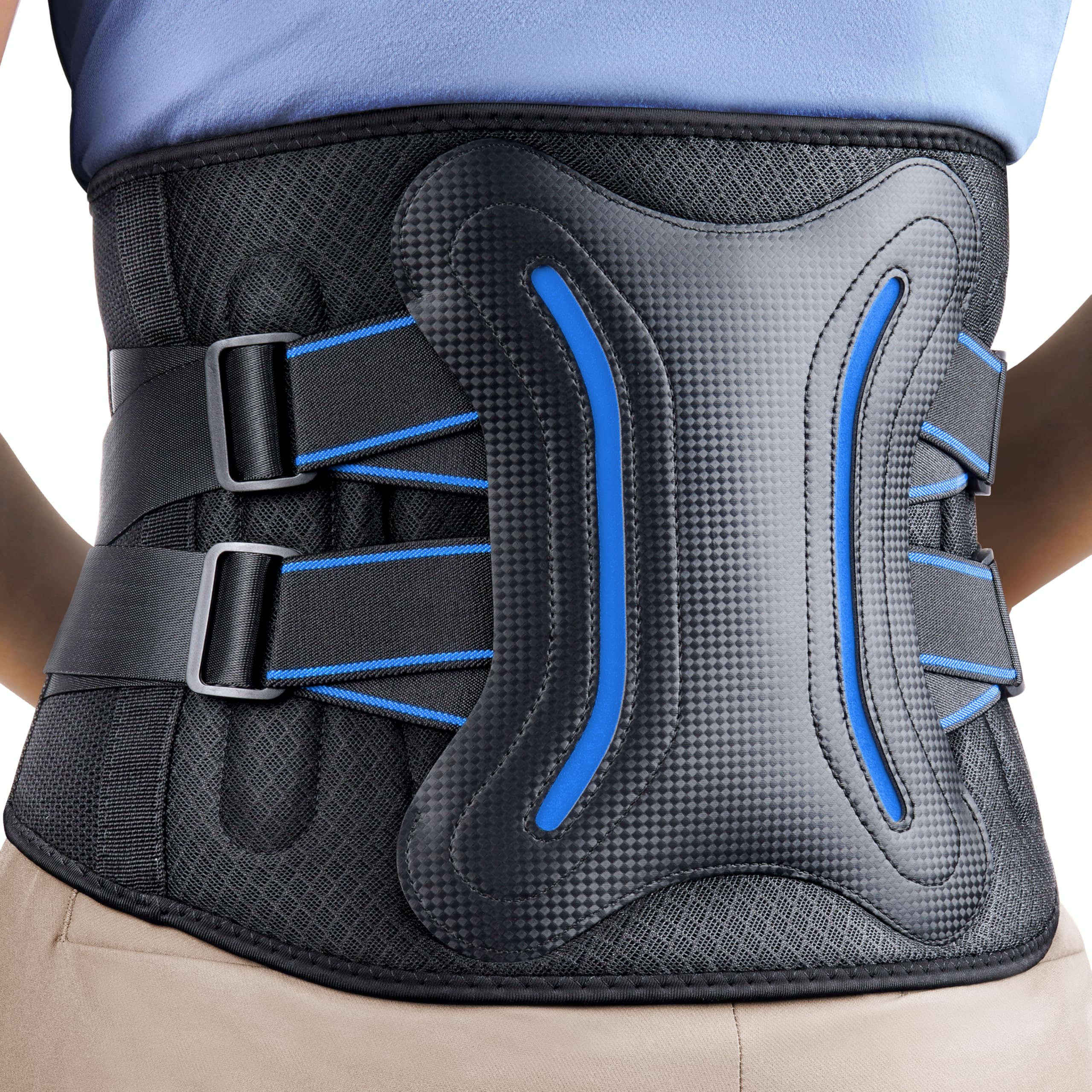
The FEATOL brace stands apart for users with larger frames because 3 memory-aluminum stays plus 2 support plates create a rigid frame that simply refuses to roll or curl at the edges. Sizes extend from 2XL (44.1–48.4 inches) up to 5XL (57.6–65 inches), giving overweight wearers a true extended fit rather than a stretched standard pattern. The breathable elastic material and dual-tension straps allow you to tighten the top and bottom independently, which prevents the brace from digging into the belly while still locking the lumbar region in place.
Reviewers with chronic conditions like sciatica and degenerative disc disease report immediate stability that allows confident bending and lifting without sharp pain. The “no-roll” design lives up to the claim — even after sitting for hours or twisting during daily chores, the brace maintains its position. Multiple users note that the tensioning straps arrive with a cloth covering on the Velcro that needs to be removed before first use, a small oversight that doesn’t affect long-term performance.
One user with a 36-inch waist found the size Large fit perfectly, while another with arthritis praised how easy the brace is to put on and adjust independently. The only practical downside is bulk: this brace is not invisible under thin clothing, so it’s better suited for work, home, or layered wear than for form-fitting outfits.
Why it’s great
- Five rigid stays eliminate curling at the bottom edge
- Extended sizing up to 65-inch waist
- Dual-tension straps allow customized compression
Good to know
- Bulky under tight clothing
- Remove protective Velcro covering from straps before first wear
2. NEENCA Lower Back Brace for Lower Back Pain Relief

The NEENCA brace hits a sweet spot for overweight users who need full lumbar support without the bulk of a heavy-duty work brace. It stretches up to a 65-inch waist (XXL), and the high-quality breathable mesh fabric prevents the sweaty, sticky feeling that plagues neoprene braces during all-day wear. The multi-point support system uses an integrated plastic curvature stay that keeps the spine in proper alignment whether you’re sitting at a desk or recovering from a herniated disc.
Buyers with serious spinal histories — including multiple disc fragments, broken vertebrae, and spinal cord implants — consistently rate this brace higher than insurance-provided alternatives and previous purchases spanning nearly a decade. The Velcro straps hold firmly, and the adjustable tabs allow you to fine-tune the compression level throughout the day as pain levels fluctuate. The design sits comfortably mid-back without digging in when you lean forward, a common failure point for braces with poorly shaped stays.
Some users note that the brace runs slightly smaller than expected, so measure carefully at the navel and size up if you fall at the high end of a range. The low-profile fit is slim enough to disappear under loose shirts but still stiff enough to prevent poor posture during heavy lifting or prolonged standing.
Why it’s great
- Thin profile hides under most clothing
- Antimicrobial mesh stays comfortable for hours
- Plastic curvature support keeps spine straight when seated
Good to know
- Sizes run slightly small; measure navel circumference
- Not as rigid as models with multiple aluminum stays
3. DARLIS Plus Size 5XL/6XL Work Back Brace
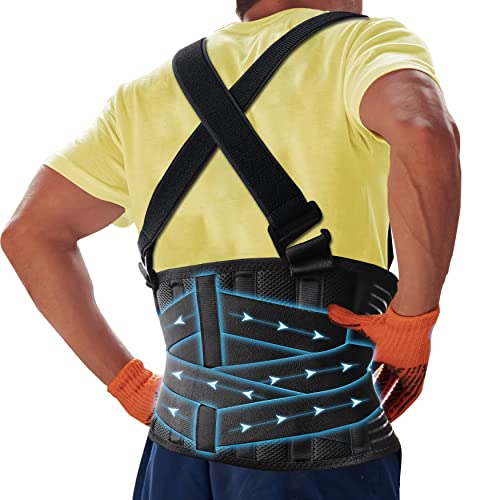
The DARLIS brace is built specifically for overweight individuals who work in physically demanding jobs — construction, warehouse, moving — where a standard brace slips out of place after a few minutes of bending. Six metal stays plus two flexible springs wrap around the lower back with a level of structural support that few competitors match. The removable crossover suspender straps serve a dual purpose: they keep the brace from sliding down when you’re on your feet all day, and they also pull the shoulders back for active posture correction.
Customers report immediate pain relief from herniated discs and sciatica, with some describing it as the best back brace they’ve ever purchased. The breathable nylon elastic mesh holds up to daily abuse without fraying or losing tension, and the two customizable elastic compression straps distribute pressure evenly across a larger contact area. This is crucial for overweight wearers because a narrow strap tends to create a pressure line across the belly, while the DARLIS design spreads the load.
A few orders arrived with missing suspenders or with the belt opened inside the Amazon packaging, so inspect the box upon arrival. The brace can be worn with or without the shoulder harness depending on the activity level, but the suspenders add noticeable stability during heavy lifting. The trade-off for this level of support is weight — at 1.5 pounds, it’s one of the heavier options on this list.
Why it’s great
- Eight-stay system (6 metal + 2 springs) for extreme support
- Removable suspenders prevent sliding and improve posture
- Breathable nylon mesh withstands heavy labor conditions
Good to know
- Slightly heavier than comparable braces
- Check package for all components upon delivery
4. changenow Ultra Breathable Work Back Brace

The changenow brace targets the hot, sweaty reality of physical labor with a super-soft mesh fabric that maximizes airflow while still delivering 4 aluminum support bars for spinal stability. The patent-level strap system wraps 360 degrees around the waist, which prevents the brace from migrating upward or twisting during repetitive bending tasks in warehouses or construction sites. Anti-slip strips on the interior side grip against clothing and skin, solving the “riding up” issue that plagues cheaper braces on larger midsections.
An 80-year-old reviewer specifically mentioned how this brace helped with gardening — digging and bending — without restricting movement, and other users confirm that the breathable paneling keeps them cool even during an entire shift. The removable shoulder straps offer flexible usage: attach them for heavy lifting days or remove them for seated desk work. The upgraded materials show solid stitching that holds up to daily flexing without coming apart at the seams.
The main complaint involves the shoulder strap design — the back crossover sits too close to the neck for some users, and the front-only strap adjustment makes it hard to fine-tune without assistance. The wide brace covers the entire lower back, but the ends can fold slightly when bending at extreme angles. This is a minor issue for most daily tasks but worth noting for those who need maximum edge rigidity.
Why it’s great
- Aluminum bars + anti-slip strips prevent shifting during movement
- Breathable mesh reduces sweat buildup
- Compatible with or without shoulder straps
Good to know
- Shoulder strap back crossover may sit high for some users
- Edges can curl slightly under extreme bending
5. Bracepost Back Brace with 360° Support & Hot/Cold Compress

The Bracepost brace stands out because it combines structural support with a reusable medical-grade hot/cold pack and a detachable 3D massage pad — features rarely found in braces that accommodate larger sizes. The 26-degree bionic curvature support aligns with the natural spinal curve, and the XXL size fits users who need extended reach without sacrificing the built-in therapy elements. The dedicated pocket on the inner side holds the gel pack securely, allowing you to microwave it for heat therapy on cold mornings or chill it for inflammation after a long day.
One family reviewer described how this brace prevents back spasms during barn chores in 10°F weather, with the microwavable gel pad maintaining warmth while allowing full mobility for lifting hay and carrying water. Another user with Ehlers-Danlos syndrome, a spinal fusion, and multiple bulging discs reports that this brace helps them get through daily tasks with noticeably less pain. The 3D massage pad provides passive acupressure that can reduce muscle tension without needing an electric vibration mechanism.
A few customers found that the sizing runs small — one reviewer with a 43-inch waist barely fit the XL size (rated for 43.5–50.5 inches). The aluminum frame provides structure but can feel rigid against the chest for some users, and the Velcro attachment points show wear after several months of daily use. The brace itself is well-constructed, but the included therapy accessories add some bulk that makes it less discreet under clothing than simpler models.
Why it’s great
- Reusable hot/cold pack integrated into the brace design
- Removable 3D massage pad adds acupressure relief
- 26° spinal curvature support aids posture correction
Good to know
- Sizes run small; measure carefully and consider sizing up
- Velcro shows wear after several months of heavy use
6. ASPEN Lumbar Support Back Brace

The ASPEN brace is a medical-grade option often prescribed by doctors, but available over the counter at a fraction of the clinic price. The patented 4:1 pulley system allows you to independently adjust the top and bottom sections of the brace, delivering targeted compression exactly where you need it most — critical for overweight wearers who may have disproportionate pain in the lower lumbar versus the upper belt line. The inelastic polyester panels limit excessive movement while the pulley mechanism provides a cinching force that elastic straps alone cannot match.
Buyers consistently note that this brace provides effective support for acute flare-ups, muscle spasms, and disc-related pain without the bulk of a rigid exoskeleton brace. The XX-Large size spans 43 to 52 inches, and users stress that these sizes run small, so measuring accurately is essential. One female reviewer specifically chose this over a bulkier prescription model because it fits more discreetly under clothing while still delivering comparable medical-level stabilization.
The main drawback is that the belt width is narrower than some competing models, which can cause the edges to curl slightly on individuals with larger abdominal circumferences. The 4:1 mechanism requires a small learning curve for first-time users, and the tension cables add complexity that may fail over very long-term use. For those who need a standardized, clinically-proven brace without gimmicks, the ASPEN remains a reliable benchmark.
Why it’s great
- Patented 4:1 pulley provides precise, independent top/bottom tension
- Medical-grade construction trusted by healthcare professionals
- Low-profile enough to wear under most work clothes
Good to know
- Narrower belt width may curl at edges on larger waists
- Sizing runs small; size up for accurate fit
7. cybryeh Thin & Lightweight Back Brace
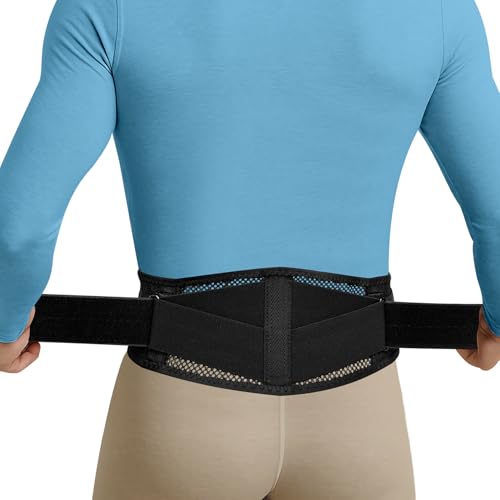
The cybryeh brace is the entry-level option for overweight individuals who need light stabilization during walking, yoga, or household chores rather than heavy-duty support for lifting. At just 0.08 inches thick and 5.5 ounces, it’s the most discreet brace on this list — it disappears under a loose shirt and won’t interfere with movement. The honeycomb ventilation system and perforated panels create genuine airflow, making it the coolest option for warm climates or indoor activities.
The L/XL size fits waists from 42 to 53 inches, and the pulley tension system allows simple one-handed adjustment. Users praise the ease of wear and the fact that it stabilizes the lower back without creating the bulky “armor” feeling of thicker braces. One reviewer with a chronic disc condition found it comfortable for everyday use but noted it didn’t provide enough support for gym workouts, confirming that this is a light-duty tool rather than a heavy-lifting solution.
The trade-off for the slim profile is reduced structural support: the flexible stays offer less rigidity than aluminum or reinforced plastic bars, and the 4-inch width covers less surface area than full-width work braces. Some users with larger midsections found the narrow bandwidth insufficient for significant pain relief during strenuous activity. This brace works best as a daily posture reminder and minor support layer, not as a primary treatment for substantial disc issues.
Why it’s great
- Extremely lightweight and thin for discreet daily wear
- Excellent breathability with honeycomb ventilation mesh
- Simple pulley system for easy tension adjustment
Good to know
- Lacks rigid stays for heavy lifting or acute pain support
- Narrow 4-inch width covers less surface area than competitors
FAQ
Will a back brace actually help with pain from a herniated disc if I am overweight?
How tight should I fasten the compression straps on a larger waist?
Can I wear a back brace under my clothes during warehouse work without it showing?
What causes a back brace to roll up at the bottom and how do I prevent it?
How long can I safely wear a back brace each day as an overweight person?
Final Thoughts: The Verdict
For most users, the back brace for overweight winner is the FEATOL Lower Back Brace because its five reinforced stays eliminate the edge-rolling problem that makes other braces useless on larger frames, and the sizing extends to 65 inches without losing compression. If you need a slim profile that hides under clothes, grab the NEENCA Lower Back Brace. And for heavy lifting jobs requiring active posture correction, nothing beats the DARLIS Plus Size 5XL/6XL Work Back Brace with its eight-stay system and removable suspenders.