Few sounds hit a parent harder than the sharp cry of a baby struggling with trapped gas. The knees pulled to the chest, the arching back, the restless squirming — it is a nightly battle that leaves everyone exhausted. The right formula can mean the difference between hours of pacing the nursery and a baby who settles after a feed.
I’m Emma — the founder and writer behind Baby Bangs. After analyzing hundreds of ingredient labels, customer reviews, and digestion-specific formulation data for the newborn to 12-month range, I have pinpointed which formulas actually deliver on their gas-reduction claims.
This guide walks you through the top contenders for every feeding situation so you can confidently choose the baby formula for gas that quiets your little one’s belly and your nerves.
How To Choose The Best Baby Formula For Gas
Not all “gas relief” formulas are created equal. Some attack the problem by breaking down milk proteins into smaller pieces, while others rely on probiotics to balance gut bacteria. Understanding the mechanism behind each approach helps you pick the formula that matches your baby’s specific digestive trigger.
Protein Hydrolysis Level
Partially hydrolyzed formulas — like those labeled “Gentle” or “Gentlease” — use enzymes to chop cow’s milk proteins into smaller fragments. This process makes the proteins easier for a newborn’s immature digestive system to handle, reducing the amount of gas produced during breakdown. Extensively hydrolyzed formulas, found in the hypoallergenic category, break the proteins down even further and are typically reserved for babies with confirmed cow’s milk protein allergy or severe reflux.
Probiotic and Prebiotic Additions
The strain Limosilactobacillus reuteri (L. Reuteri) has clinical backing for reducing infant fussiness and colic episodes — one study showed a significant drop in daily crying time by the third week. Prebiotic blends like galacto-oligosaccharides (GOS) and fructo-oligosaccharides (FOS) mimic the fiber profile of human breast milk, feeding good bacteria in the gut and promoting softer, more regular stools that pass without painful gas buildup.
Lactose Content vs. Sensitivity
True lactose intolerance is rare in infants, but lactose sensitivity can cause gas, bloating, and watery stools. Low-lactose or lactose-free formulas (sometimes listed as “Sensitive”) remove or reduce the sugar that ferments in the gut. If gas is accompanied by green frothy diapers or a rash around the diaper area, a sensitive formula may be the better route than a protein-based gas formula.
Quick Comparison
On smaller screens, swipe sideways to see the full table.
| Model | Category | Best For | Key Spec | Amazon |
|---|---|---|---|---|
| Good Start Soothe Pro | Probiotic Gas Relief | Gas and fussiness within first bottle | L. Reuteri probiotic + 2-step hydrolysis | Amazon |
| Happy Baby Organics Stage 1 | Organic Prebiotic | Digestive support and regular poops | Probiotic + prebiotic clinical blend | Amazon |
| Mama Bear Gentle Premium | Gentle Hydrolyzed | Budget-friendly gentle option | 2’-FL HMO + partially hydrolyzed protein | Amazon |
| Similac Alimentum | Hypoallergenic | Colic from cow’s milk protein allergy | Extensively hydrolyzed + 2’-FL HMO | Amazon |
| Baby’s Only A2 Organic | A2 Organic Gentle | Organic A2 protein with less gas | A2 beta-casein protein only | Amazon |
| Pepticate Hypoallergenic | Extensively Hydrolyzed | Cow milk allergy and colic relief | eHF + prebiotic GOS/FOS blend | Amazon |
| Similac Go & Grow Sensitive | Toddler Sensitive | Lactose sensitivity in older babies | 5-HMO blend + low lactose | Amazon |
In‑Depth Reviews
1. Good Start Soothe Pro

Good Start Soothe Pro hits the sweet spot where formulation meets real-world results. The two-step hydrolysis process breaks whey proteins down to roughly one-tenth the size of standard cow’s milk proteins, which dramatically reduces the undigested protein load that ferments into gas in the lower gut. It is the only mass-market formula that pairs this gentle protein architecture with the clinically studied probiotic strain L. Reuteri — and parent reports confirm a measurable drop in fussiness within the first day or two of switching.
The 100-percent whey protein base avoids the casein curd that often triggers spit-up and trapped air. Users switching from European imports like Kendamil consistently note that Soothe Pro resolved projectile gas and explosive stools that other “gentle” formulas couldn’t touch. The 30.6-ounce can provides roughly ten more ounces than standard tubs, which reduces repurchase frequency despite the mid-range per-unit investment.
One recurring complaint is the powder’s tendency to clump and froth during mixing, requiring a bit more swirling than a typical powder. The can also lacks a built-in scoop leveler, which adds a minor inconvenience during late-night prep. Still, the formula’s low osmolality — roughly 207 mOsm/kg at standard dilution — means less osmotic pull on the gut, which directly translates to fewer watery stools and less gurgling discomfort after feeds.
Why it’s great
- Clinically backed L. Reuteri reduces colic and gas within days
- 2-step hydrolysis creates 10x smaller proteins for easier digestion
- Larger 30.6-ounce can provides better value per ounce
- Low osmolality minimizes water-drawn stools and cramping
Good to know
- Powder clumps and bubbles during mixing, needs extra shaking
- No scoop storage or leveling ridge inside the can
- Iron content can produce darker, smellier stools
2. Happy Baby Organics Stage 1

Happy Baby Organics Stage 1 carves out a unique niche as the only USDA and EU certified organic formula on this list that delivers both probiotics and prebiotics in a single formula. The patented blend combines live cultures with a prebiotic fiber profile that mimics the oligosaccharide composition in breast milk — a feature that places it closer to the gold standard of human milk than most organic competitors. Clinical data backing the formula shows softer, more frequent stools that pass without the straining that leads to trapped gas.
Parents transitioning from breast milk report exceptionally smooth acceptance here, with fewer refusals and less gassiness compared to standard organic options like Earth’s Best. The milk-based iron and DHA profile meets the European requirements for docosahexaenoic acid, which is higher than the U.S. minimum and aligns with what breastfed babies typically receive. The formula also carries Clean Label Project certification, meaning it has been independently screened for heavy metals and industrial contaminants.
The 22.9-ounce can size is smaller than Soothe Pro, but the subscription offering through Amazon drops the per-can cost noticeably, making it one of the more economical organic routes for families committed to non-GMO ingredients. The powder mixes cleanly with minimal clumps and has a noticeably mild, non-fishy aroma — a small but appreciated detail when you’re smelling formula at 3 AM.
Why it’s great
- Only USDA organic formula with both probiotics and prebiotics
- Clinical backing for softer, more regular stool production
- Made in Europe under stricter EU manufacturing standards
- Mixes smoothly with minimal odor and clumping
Good to know
- Smaller 22.9-ounce can means more frequent repurchases
- Contains soy and fish allergens listed in the ingredient panel
- Premium-tier pricing before subscription discounts
3. Mama Bear Gentle Premium

Mama Bear Gentle Premium is the Amazon brand’s answer to Enfamil NeuroPro Gentlease, and the formulation mirrors the key mechanics that make the name brand work — namely, partially hydrolyzed milk proteins and the immune-supporting prebiotic 2’-FL HMO. The protein structure here is broken down enough to reduce the gassy fermentation that comes from intact casein curds, yet not so extensively that it strips away the natural mouthfeel that babies accustomed to standard formulas recognize. Multiple parent reviews confirm seamless swaps from Enfamil with zero digestion regression.
Where Mama Bear truly shines is the ingredient transparency for the price point. You get a non-GMO formula with no artificial growth hormones, certified kosher by the Orthodox Union, and a DHA-choline pair that supports brain development — all at roughly two-thirds the per-ounce cost of the leading hypoallergenic options. The 21.5-ounce can includes a scoop dock built into the neck of the container, a small ergonomic win that prevents you from digging through powder at 2 AM.
The main trade-off is availability. Because this is an Amazon-exclusive product, you can’t grab a spare can at a local grocery during a shortage, and shipping without Prime can be sluggish. But for families with predictable consumption patterns, the Subscribe & Save option locks in a steady rhythm and shaves off additional dollars per can.
Why it’s great
- Near-identical composition to Enfamil Gentlease at a lower cost
- Contains prebiotic 2’-FL HMO for immune and digestive support
- Scoop dock built into the neck for easy access
- Non-GMO and no artificial growth hormones
Good to know
- Exclusive to Amazon — not available in physical stores
- Slow shipping without an active Prime membership
- Some users note the powder settles and requires vigorous shaking
4. Similac Alimentum
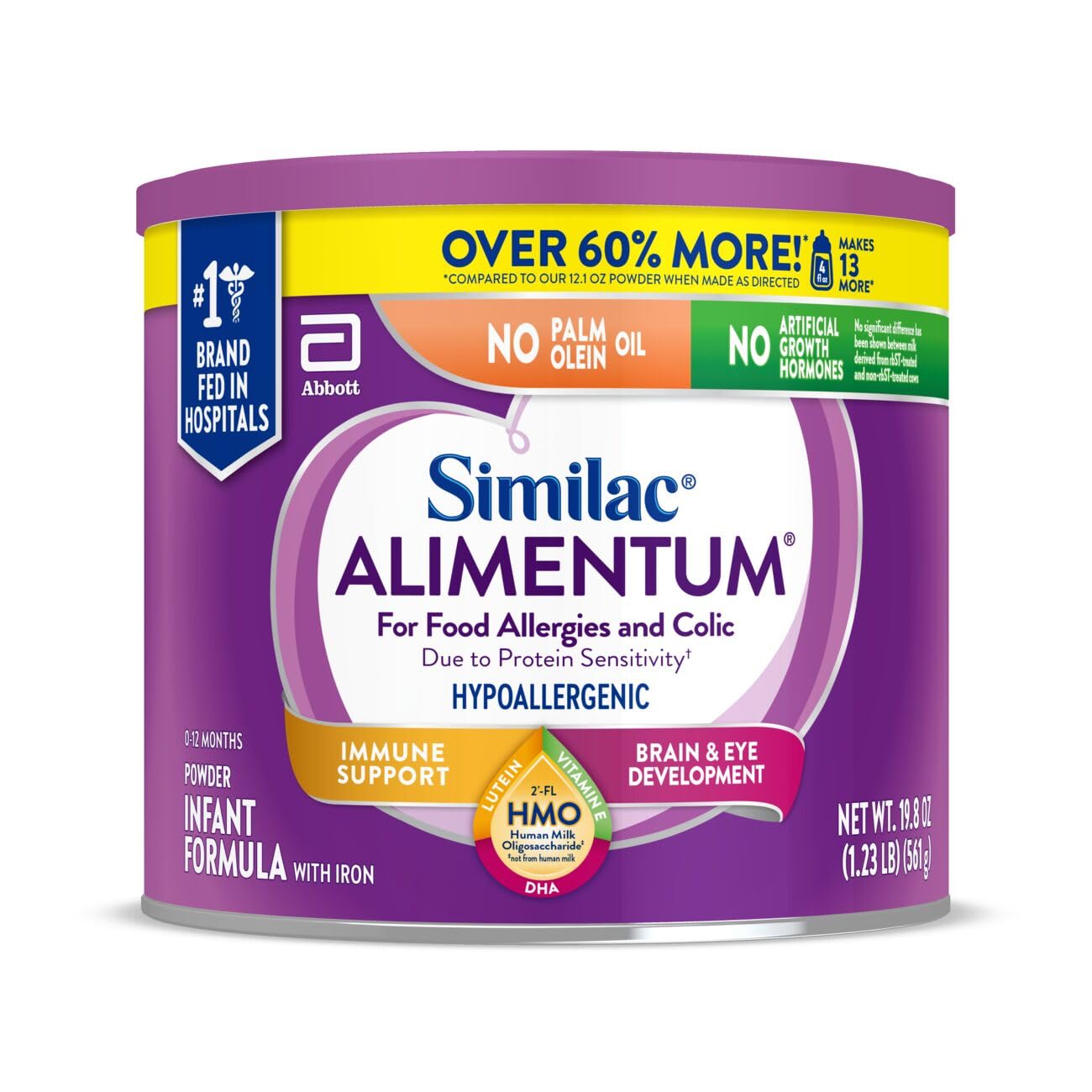
Similac Alimentum occupies the heavy-artillery position in the gas-relief arsenal. Its claim to fame is extensively hydrolyzed cow’s milk protein — broken into fragments so small that the vast majority of babies with cow’s milk protein allergy (CMPA) do not react to them. Clinical data from Abbott shows that most infants with colic due to protein sensitivity show symptom reduction within the first 24 hours of switching, a turnaround speed that few other formulas match.
The 2023 update added 2’-FL HMO, making this the first hypoallergenic formula on the U.S. market with that specific prebiotic. That addition matters because babies on extensively hydrolyzed formulas often miss out on the immune-nourishing effects that HMOs provide in breast milk. This version closes that gap. The powder form is significantly more affordable than the ready-to-feed liquid, though the ready-to-feed version remains the best option for nighttime convenience since it requires zero mixing.
The primary friction point is the cost. Across the board, Alimentum sits at the top of the expense spectrum for standard infant formulas, and the 19.8-ounce can goes through a newborn’s supply faster than larger tubs. Some babies also reject the taste — it is noticeably bitter compared to partially hydrolyzed formulas because the heavier protein breakdown exposes more sulfur-based amino acids. Warming the bottle slightly can mask the flavor enough to keep feeding on track.
Why it’s great
- Proven 24-hour reduction in colic symptoms from protein sensitivity
- First hypoallergenic formula with added 2’-FL HMO prebiotic
- Extensively hydrolyzed for confirmed CMPA cases
- Also available in ready-to-feed for zero-mess convenience
Good to know
- Bitter taste from extensive protein breakdown — may need warming
- Small can size means more frequent repurchases
- Premium cost can strain budgets without insurance coverage
5. Baby’s Only A2 Organic

Baby’s Only A2 Organic takes a fundamentally different approach to gas reduction than the hydrolyzed-protein formulas. Instead of breaking proteins down artificially, it sources milk exclusively from cows that produce the A2 beta-casein variant — a protein structure that lacks the A1 beta-casein peptide linked to digestive inflammation and gas production in sensitive infants. The result is a formula that relies on the milk’s natural protein shape rather than enzymatic processing to be gentle on the stomach.
The fat blend here is also worth noting. Baby’s Only uses a proprietary mix of organic oils and the milk’s own fat to avoid palm olein, which has been associated with reduced calcium absorption and harder stools in some studies. Parents transitioning from breast milk report that this formula produces bowel movements that resemble breastfed baby poop — yellow, seedy, and passed without grunting or straining. The formula is made in small batches at an Ohio facility with rigorous third-party testing protocols.
The 21-ounce can delivers solid value within the organic segment, though it is important to note that this is a “toddler formula” by legal definition — it does not meet the FDA’s complete nutrition requirements for infants under 12 months. The manufacturer stipulates that it is intended for babies over 12 months, and while many parents use it earlier with pediatrician approval, the label makes that distinction clear.
Why it’s great
- Uses A2 beta-casein for naturally gentle digestion
- No palm olein oil — supports softer, breastmilk-like stools
- Small-batch production with rigorous purity testing
- Affordable within the USDA organic formula category
Good to know
- Labeled for toddlers 12+ months, not a complete infant formula
- Availability fluctuates and stockouts are common
- Contains soy lecithin and tree nut traces
6. Pepticate Hypoallergenic
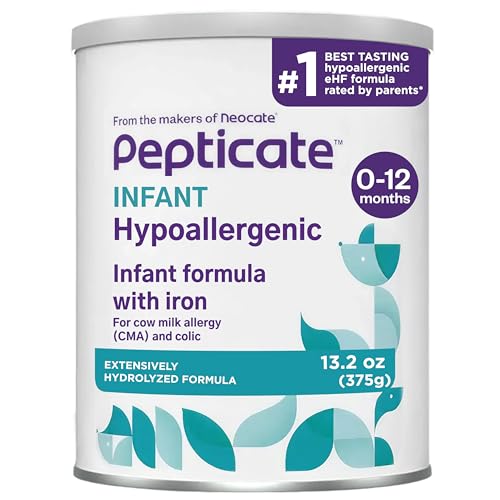
Pepticate is the extensively hydrolyzed formula from Nutricia (Danone) that has dominated the European market for over 30 years and is now making serious inroads with U.S. parents whose babies fail standard hypoallergenic options. What sets Pepticate apart from competitors like Alimentum and Nutramigen is the prebiotic fiber blend of galacto-oligosaccharides and fructo-oligosaccharides — designed to mimic the prebiotic profile of breast milk. No other extensively hydrolyzed formula in this price tier includes GOS/FOS as a standard ingredient.
Parent reports on Pepticate are almost startlingly positive for a formula category that typically tastes bitter and carries a distinct odor. Multiple verified reviewers who cycled through nine or more formulas — including Similac Alimentum, Nutramigen, and various goat milk and amino acid options — found that Pepticate stopped projectile vomiting, diarrhea, and chronic spit-up within 24 to 48 hours. The taste is rated as the most palatable among extensively hydrolyzed formulas, which reduces the bottle refusal fight that often accompanies CMPA management.
The catch is the can size. At 13.2 ounces, this is the smallest container on the list, and the cost per ounce is higher than the larger Alimentum tub. For a heavy eater, you will be ordering frequently. The powder does mix easily with a standard 1:1 ratio — no special scoop math required — but the small footprint means the can runs out faster than most parents expect.
Why it’s great
- Only extensively hydrolyzed formula with added GOS/FOS prebiotics
- Best-tasting eHF formula according to parent surveys
- Proven relief for CMPA symptoms including gas, reflux, and colitis
- Trusted European brand with 30+ years of safety data
Good to know
- Small 13.2-ounce can depletes quickly with a hungry newborn
- Higher cost per ounce compared to larger hypoallergenic tubs
- Limited availability in some regions; often requires online ordering
7. Similac Go & Grow Sensitive

Similac Go & Grow Sensitive targets a slightly older demographic — toddlers aged 12 months and up — but its formulation addresses the same lactose-related gas that plagues younger infants. The key differentiator here is the five-HMO blend, which is the most comprehensive prebiotic profile among all the formulas reviewed. These human milk oligosaccharides feed specific strains of gut bacteria that crowd out gas-producing pathogens, and the diversity of the blend matters because different HMOs feed different bacterial species.
The lactose level is reduced compared to standard toddler formulas, making this a strong option for the older baby who has grown out of infant stage-specific formulas but still experiences bloating and flatulence after milk feeds. Parents report a clear reduction in audible stomach gurgling and nighttime restlessness within a few days of switching. The powder mixes cleanly without clumps, and the 23.3-ounce can provides a reasonable supply at a mid-range price point that sits well below the hypoallergenic options.
The main limitation is the age window. This is nutritionally complete for toddlers but does not provide the full infant nutrient profile required for babies under 12 months — specifically, it contains lower levels of iron and vitamin D than an infant formula. Parents should not use this as a primary nutrition source before the first birthday unless their pediatrician specifically authorizes it.
Why it’s great
- Five-HMO blend offers the broadest prebiotic support on this list
- Milk-based sensitive formulation reduces lactose-related gas
- Mixes cleanly with no clumping or frothing
- Budget-friendly for the toddler sensitive category
Good to know
- Designed for toddlers 12+ months — not suitable for younger infants
- Lower iron content compared to infant-stage formulas
- Not a sole-source nutrition option under 12 months
FAQ
How quickly should I see gas relief after switching formulas?
Can I switch formulas cold turkey or should I transition slowly?
What is the difference between gas from lactose sensitivity and gas from protein sensitivity?
Is organic formula better for reducing gas in infants?
Can I mix breast milk with a gas relief formula?
Final Thoughts: The Verdict
For most users, the baby formula for gas winner is the Good Start Soothe Pro because it combines a clinically backed probiotic with a two-step hydrolysis process that directly attacks the root causes of infant gas without the high cost of hypoallergenic medical formulas. If you want USDA organic certification with a proven prebiotic blend that mimics breast milk, grab the Happy Baby Organics Stage 1. And for babies with confirmed cow’s milk protein allergy or severe colic that has not responded to gentle formulas, nothing beats the rapid 24-hour relief provided by Similac Alimentum or the European-formulated Pepticate.