Mixing baby cereal with formula is the classic first solid for a reason — it delivers familiar taste, gentle texture, and a nutritional bridge your baby already trusts. But choosing the wrong cereal can mean clumpy bowls, fussy feedings, or missed iron.
I’m Emma — the founder and writer behind Baby Bangs. I’ve spent years dissecting baby food labels, comparing iron fortification levels, and testing how different cereals emulsify with formula to prevent separation and lumps.
Whether you are transitioning at four months or managing reflux with a thicker bottle, the right choice depends on texture, purity, and nutrition density. This guide breaks down the best baby cereal to mix with formula for every stage of the journey.
How To Choose The Best Baby Cereal To Mix With Formula
Mixing cereal into formula changes the caloric density, flow rate from the nipple, and digestive load. You need a cereal that blends smooth, won’t clog the bottle, and supplies the iron baby needs once stores deplete around six months.
Iron Fortification
Baby cereal’s primary job after four months is to replenish diminishing iron reserves. Look for a product that provides at least 45 percent of the daily value per serving to support brain development, oxygen transport, and learning capacity.
Grain Structure and Solubility
Instant or pre-cooked grains dissolve faster in warm formula without clumping. Whole grain blends offer more fiber and a slower glucose release, but require a bit more stirring. Multi-grain options add varied amino acid profiles for adventurous palates.
Certifications and Additives
Organic certification ensures no synthetic pesticides, while Non-GMO verification rules out genetically modified grains. Avoid cereals with added sugars, honey (risk of infant botulism), or artificial flavors that mask the formula’s familiar taste.
Quick Comparison
On smaller screens, swipe sideways to see the full table.
| Model | Category | Best For | Key Spec | Amazon |
|---|---|---|---|---|
| Earth’s Best Organic Multi-Grain | Organic Multi-Grain | Daily staple with organic integrity | Whole grain oat, spelt, barley flour blend | Amazon |
| Gerber Stage 2 Fruit & Cereal Variety | Pre-Mixed Puree | On-the-go convenience with added fruit | 60% DV iron per serving | Amazon |
| Amara Organic Oats & Berries | Freeze-Dried Pouches | Travel and delayed weaning transitions | Patented low-heat processing | Amazon |
| Nestle Nestum 5 Cereals | Multi-Grain Instant | Bulk feeding high iron needs | 80% DV iron per 2 servings | Amazon |
| Nestle Nestum Wheat & Honey | Instant Granules | Thicker consistency for older infants | Dissolves instantly without cooking | Amazon |
In‑Depth Reviews
1. Earth’s Best Organic Multi-Grain Baby Cereal
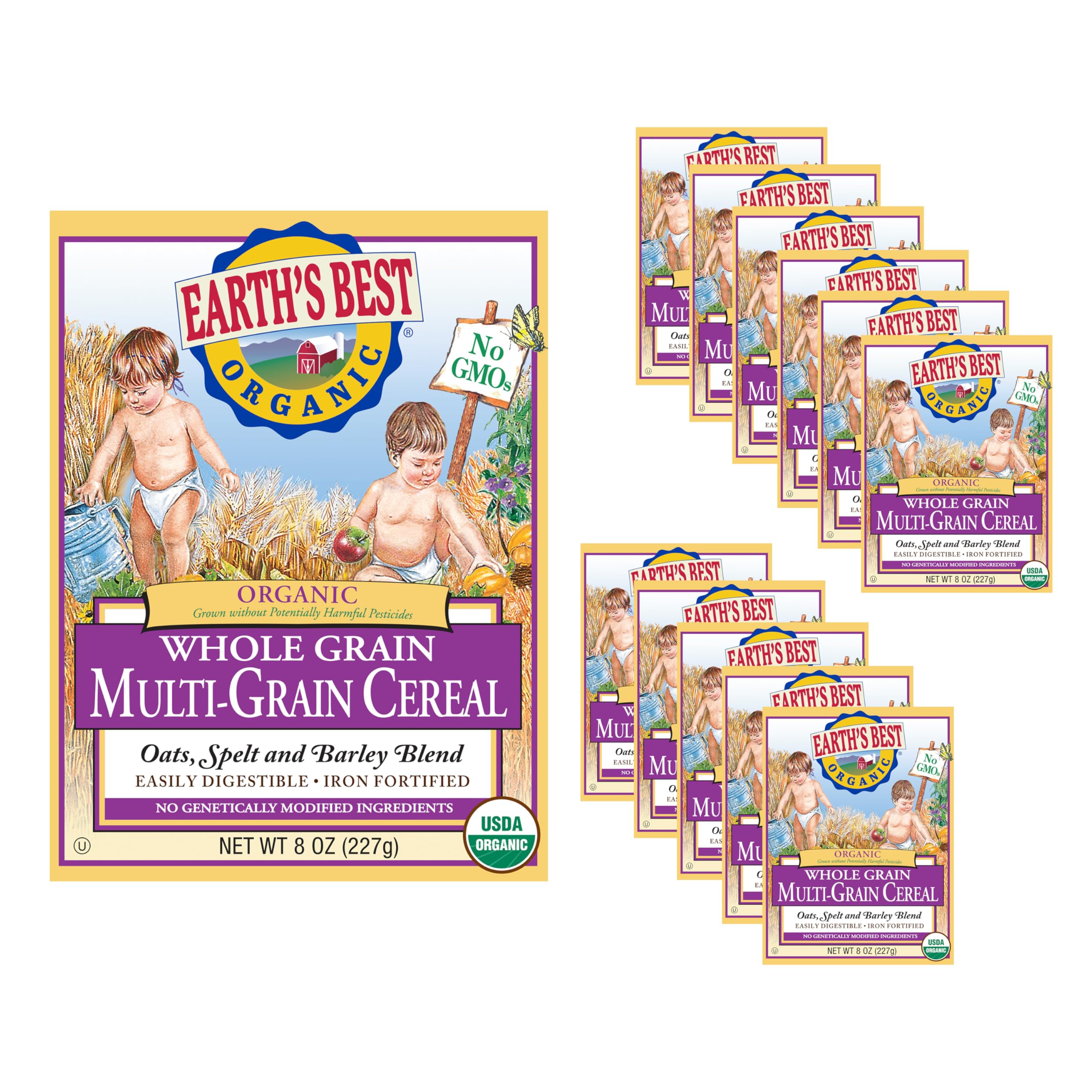
Earth’s Best combines organic whole grain oat, spelt, and barley flour in one flaked cereal that mixes seamlessly with formula, breast milk, or water. The gentle grain blend provides a gradual introduction to diverse textures while the iron fortification supports the hemoglobin surge babies need after six months.
Parents report less gassiness compared to single-grain rice cereals, likely because the whole grain fiber promotes steady digestion. The twelve-box bulk packaging offers exceptional value for families looking to transition an infant between four to six months without switching brands.
The only complaint involves slack-fill in the boxes — about half the container is air, so you use the product faster than the box size suggests. Keep a pantry organizer ready and plan to restock every two to three weeks with daily feedings.
Why it’s great
- Certified organic whole grains with Non-GMO verification
- Blends lump-free with warm formula in under a minute
- Versatile enough for spoon feeding or bottle thickening
Good to know
- Significant slack-fill reduces perceived quantity
- Multi-grain may trigger oat or barley allergies in sensitive infants
2. Gerber Stage 2 Fruit & Cereal Variety Pack
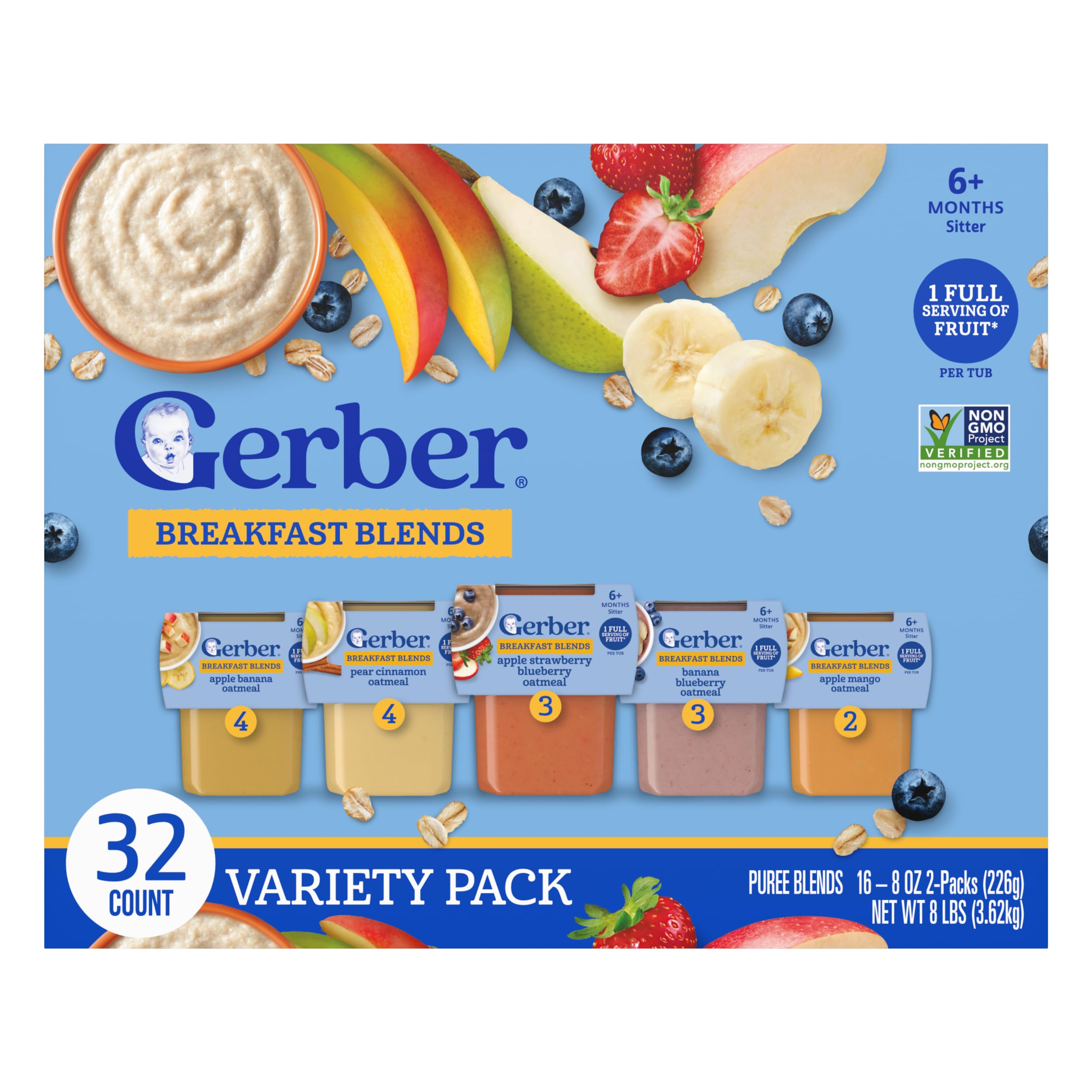
Gerber’s Stage 2 tubs blend fruit puree with oatmeal or mixed cereal, delivering 60 percent daily value of iron plus 45 percent vitamin C per serving. The ready-to-eat format means no measuring, stirring, or guessing — just pop the lid, scoop, and feed for a quick breakfast or travel meal.
The flavor variety includes apple banana oatmeal, pear cinnamon oatmeal, and apple mango oatmeal, which helps babies accept fruit profiles early. Each tub is BPA-free and contains no added sweeteners or artificial flavors, keeping the ingredient panel clean for stage two weaning.
Because these are pre-mixed purees rather than dry cereal, you cannot adjust the thickness as you would with a powder. Babies ready for chunkier textures may outgrow the smooth consistency quickly, and the single-serving tubs generate more waste than bulk boxes.
Why it’s great
- Zero prep — ideal for diaper bags and outings
- High iron and vitamin C content supports absorption
- Five different fruit-cereal combos prevent taste fatigue
Good to know
- Pre-mixed texture limits custom thickness for bottle feeding
- Contains oat and wheat — not suitable for gluten-sensitive babies
3. Amara Organic Oats & Berries
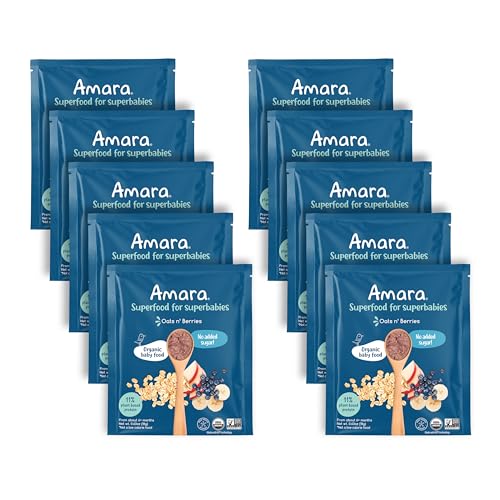
Amara uses a patented low-heat process that retains more nutrients than traditional jarred baby food. The freeze-dried Oats & Berries pouch contains just organic oats, apple, banana, and blueberries — no concentrates, gums, or preservatives — and rehydrates instantly when you add formula, breast milk, or water.
The texture starts flaky and transforms into a smooth puree that mimics fresh-blended food. Parents traveling appreciate the lightweight pouches that don’t require refrigeration before opening, and the customizable consistency makes it a strong choice for babies who resisted jarred cereals.
At ten pouches per box, the price per serving leans higher than bulk dry cereals. Some babies accustomed to very sweet fruit blends may reject the subtler berry flavor, and the freeze-dried format requires a bit more effort to stir completely compared to instant flakes.
Why it’s great
- Nutrient-dense freeze-drying preserves vitamins better than heat processing
- Four-ingredient label with no hidden fillers or sugars
- Travel-friendly packaging needs no refrigeration
Good to know
- Higher per-serving cost compared to conventional powdered cereals
- Requires thorough stirring to avoid dry powdery spots
4. Nestle Nestum 5 Cereals
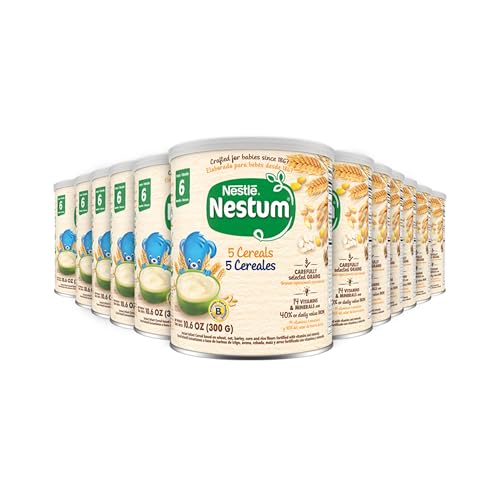
Nestum 5 Cereals blends wheat, rice, corn, oat, and barley into a fine granule that dissolves instantly in warm formula without any clumping. Two servings per day deliver 80 percent of the daily value of iron, making this one of the highest iron-density options for babies who need rapid catch-up growth or are transitioning from breast milk with low iron stores.
The twelve-canister pack reduces the cost per serving dramatically compared to single-box organic brands. The neutral taste allows you to mix in mashed fruit or vegetable purees without competing flavors, and the canisters store neatly in the pantry without taking up much shelf space.
Buyers should check expiration dates carefully upon arrival — some shipments arrive with only two months of shelf life, which is nearly impossible for a single baby to finish across twelve canisters. Rotate stock by opening only one can at a time and freezing extras if needed.
Why it’s great
- Instant dissolve texture eliminates lumps completely
- Highest iron fortification among the cereals reviewed
- Twelve-pack offers substantial savings per serving
Good to know
- Short shelf life on bulk orders requires immediate consumption planning
- Not certified organic — conventional grain sourcing
5. Nestle Nestum Wheat & Honey
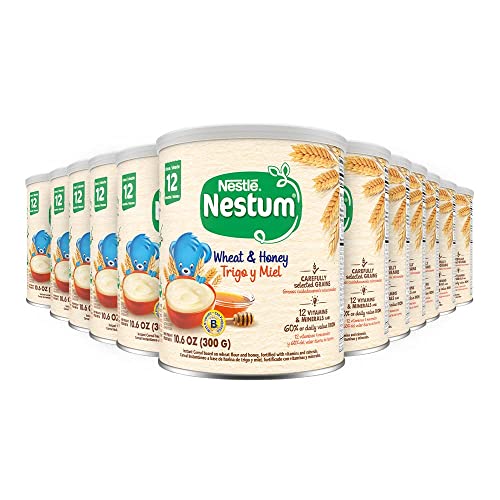
Nestum Wheat & Honey is marketed for the whole family but its fine granule structure makes it a reliable thickener for formula bottles of older infants. The honey provides a gentle sweetness that helps mask the slightly bitter taste of fortified cereals, though caregivers of babies under twelve months should note that honey is not recommended due to botulism risk — use this only after the first birthday or substitute with mashed fruit puree for younger babies.
The canister packaging keeps the granules fresh and the no-cook preparation means you can mix directly into warm formula in seconds. It works particularly well for babies with reflux who need a slightly thicker feed to keep contents down, and the mild flavor rarely triggers rejection.
The wheat base contains gluten, ruling it out for infants with celiac disease or wheat sensitivity. The honey component also means a small amount of added sugar, so this cereal works best as an occasional treat or transition food rather than a daily iron source.
Why it’s great
- Instant granules mix without any cooking or clumping
- Pleasant honey flavor makes it easy to introduce
- Works well as a bottle thickener for reflux management
Good to know
- Contains honey — not safe for babies under twelve months
- Wheat gluten limits use for gluten-sensitive infants
FAQ
Can I mix any baby cereal with formula in a bottle?
Does adding cereal to formula help with reflux?
How much iron does baby cereal need to provide for formula-fed infants?
Final Thoughts: The Verdict
For most users, the best baby cereal to mix with formula winner is the Earth’s Best Organic Multi-Grain because it combines certified organic whole grains with reliable iron fortification and a smooth blend that works for both spoon and bottle feeding. If you want grab-and-go convenience with built-in fruit flavors, grab the Gerber Stage 2 Variety Pack. And for bulk feeding with the highest iron density, nothing beats the Nestle Nestum 5 Cereals.