Your kitchen drawer has three loose Band-Aids and a tube of toothpaste masquerading as burn cream. That is not a plan — it is a bet against a Saturday afternoon with a mandoline slicer or a kid’s skinned knee. A proper at-home first aid kit is the difference between a messy search for supplies and a clean two-minute patch job that lets you get back to the day.
I’m Emma — the founder and writer behind Baby Bangs. I spend dozens of hours cross-referencing product listings, verifying included components, and reading real verified-purchase feedback so you know exactly what each kit actually delivers before you add it to your cart.
The goal is a list you can trust. After sorting through cases, piece counts, compartment layouts, and real-world user gripes, I landed on a clear picture of what makes a solid at home first aid kit — and exactly which models earn their spot on your shelf.
How To Choose The Best At Home First Aid Kit
A first aid kit is a safety net you hope to never need, but when a cut or burn happens, the quality of that net determines whether you resolve the issue in seconds or waste precious time digging through a bag. Here is what actually matters when comparing kits for household use.
Piece Count vs. Usefulness of Contents
A 500-piece kit sounds impressive until you realize 400 of those pieces are identical small bandages. Look past the aggregate number and scan the specific included components. A good home kit balances adhesive bandages (various sizes), sterile gauze pads, rolled gauze, medical tape, antiseptic wipes, antibiotic ointment packets, burn cream, a cold pack, gloves, scissors, tweezers, and a CPR face shield. If the count is padded with 100 single-use alcohol pads you never needed, the kit is less useful than a smaller, more thoughtfully curated set.
Case Material and Compartment Organization
When bleeding is involved, you cannot afford to hunt. Kits with hard EVA shells or tear-resistant 1680D polyester cases that have labeled internal compartments allow you to grab the right supply in seconds. Soft-sided pouches without dividers turn into black holes. For home use, a case that stands open on a counter and has clear, fixed compartments is far superior to a loose bag where everything shifts into one pile.
Medication Inclusion and Expiration Awareness
Many comprehensive kits include acetaminophen, ibuprofen, aspirin, or antacids. These are convenient, but they expire — typically within 12 to 24 months from manufacture. A smart buyer checks the date codes printed on the packaging upon arrival and sets a calendar reminder to replace those items. If you prefer to manage your own medication supply, look for a kit that leaves a small empty zone for personal additions rather than forcing included pills into every crevice.
Portability and Mounting Options
An at-home kit might stay in a kitchen cabinet, but if you also want to grab it for a road trip or toss it in a camper, size and carry features matter. Kits with a handle and a carabiner loop are easier to relocate. Some premium kits include a MOLLE-compatible back for attaching to a pack or vehicle seat. Check the packed dimensions against your intended storage spot — a 12-inch by 8-inch case will not fit in a standard glove compartment.
Quick Comparison
On smaller screens, swipe sideways to see the full table.
| Model | Category | Best For | Key Spec | Amazon |
|---|---|---|---|---|
| GEVOKE 500 Piece | Premium | Family home & vehicle | 500 pieces; 1680D polyester case | Amazon |
| 330 Piece Premium Kit | Mid-Range | Outdoor & travel ready | 330 pieces; labeled compartments | Amazon |
| Be Smart Get Prepared 398pc | Mid-Range | Organized storage & bonus mini bag | 398 pieces; hard EVA case | Amazon |
| First Aid Only 298 Piece | Budget | Compact shelf storage | 298 pieces; soft-sided zippered case | Amazon |
| Adventure Medical Kits Hiker | Budget | Ultralight day hikes & car | 66 pieces; waterproof bag | Amazon |
In‑Depth Reviews
1. GEVOKE Professional 500 Piece Emergency First Aid Kit

This is the largest kit in the roundup by piece count, and it earns its premium status through more than just volume. The outer bag is constructed from tear-resistant 1680D polyester with a waterproof coating — the same material grade used in high-end tactical packs. An integrated MOLLE system on the front and sides allows you to attach it to a backpack, a vehicle seat, or a bug-out bag, making this kit equally viable for a home closet or a camping rig.
Internally, the compartments are labeled and separated so you can locate a tourniquet, a CPR face shield, or a cold pack without dumping everything on the floor. The included inventory covers advanced wound care items (trauma pads, elastic bandages) that most budget kits skip entirely. Verified buyers consistently mention the sturdy build and the ability to add personal medications in the extra space without overstuffing. At roughly 4 pounds fully loaded, it is not ultralight, but it is the most complete single-bag solution for a household that wants to handle everything from splinters to larger cuts.
One caveat: the sheer capacity means the bag is about 12 inches wide, so measure your intended shelf or cabinet before buying. Some users noted that the included medications had expiration dates roughly 18 months out — set a replacement reminder on your phone.
Why it’s great
- Highest piece count with genuinely useful variety including trauma pads
- 1680D waterproof polyester with MOLLE system for versatile mounting
- Labeled internal compartments prevent panic-induced fumbling
Good to know
- Larger footprint may not fit shallow drawers or tight cabinets
- Pre-packed medication expiration dates require monitoring
2. 330 Piece Premium Waterproof Compact Trauma Medical Kit
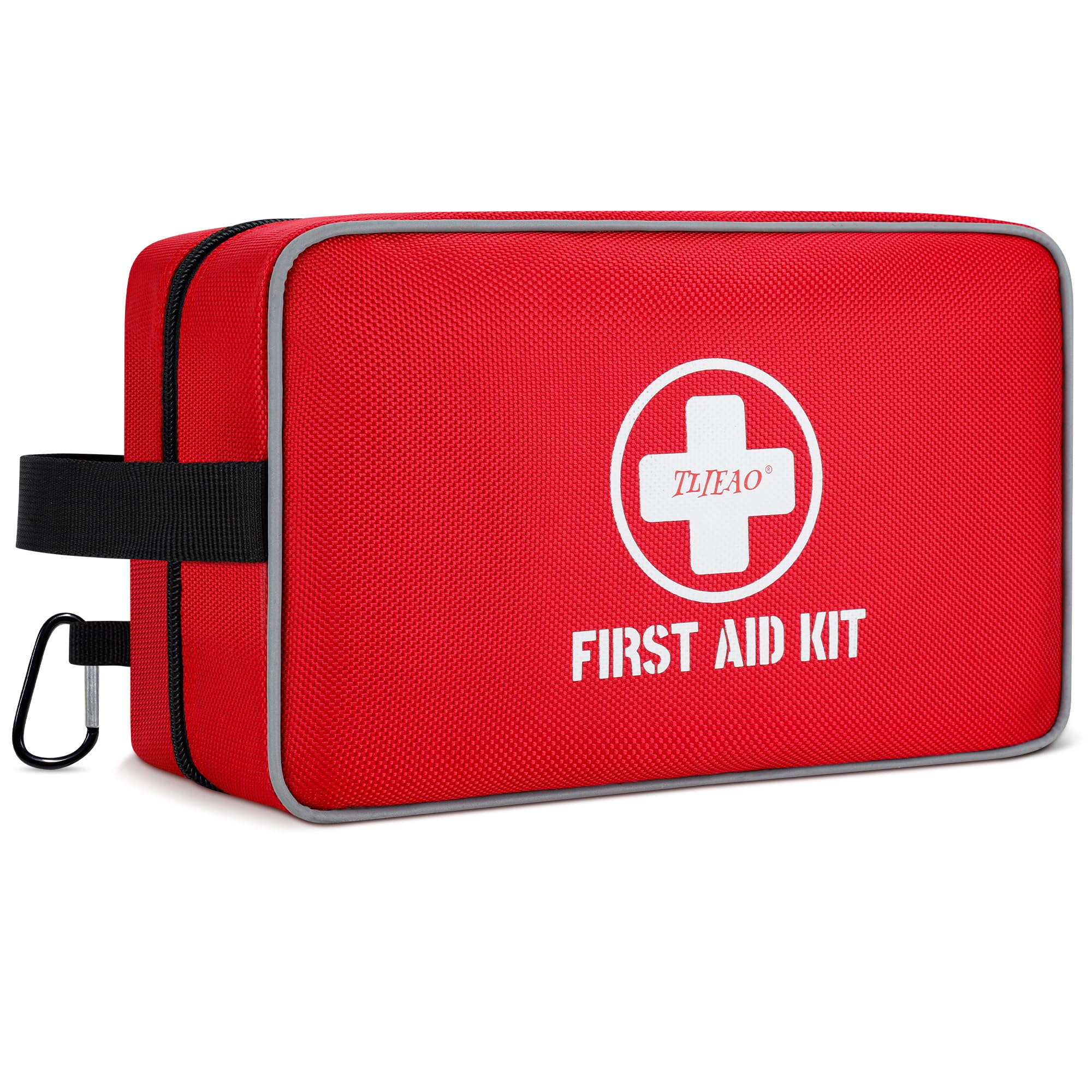
Striking a strong balance between supply depth and physical footprint, this kit packs 330 items into a case that measures roughly 9.5 by 6 inches and weighs just over 2 pounds. The outer shell uses the same 1680D polyester found on the GEVOKE, so water resistance is solid, and the double-stitched zippers hold up well under repeated use. Reflective piping on the front helps you spot it in a dark car trunk or a dimly lit garage.
What sets this kit apart at its price tier is the compartment labeling system. Each internal pouch is clearly marked — bandages here, antiseptics there, trauma supplies in a separate zone. Verified buyers frequently point out that this organization is a genuine time-saver during minor emergencies. The kit includes a CPR face shield and a tourniquet, items that are typically absent from similarly priced alternatives. Latex-free construction is a thoughtful detail for households where allergies are a concern.
On the downside, the assortment of bandages is slightly skewed toward smaller sizes, so if your household deals with larger wounds regularly, you may want to add a pack of 4×4 gauze pads. Most reviewers reported expiration dates on the included medications extending past the three-year mark, which is better than average.
Why it’s great
- Compact footprint fits car glove boxes and small cabinets
- Labeled compartments with CPR face shield and tourniquet included
- Latex-free components suit allergy-prone households
Good to know
- Bandage mix favors smaller sizes — consider supplementing gauze
- Relatively new on the market with fewer long-term reviews
3. Be Smart Get Prepared 398pc Emergency First Aid Kit
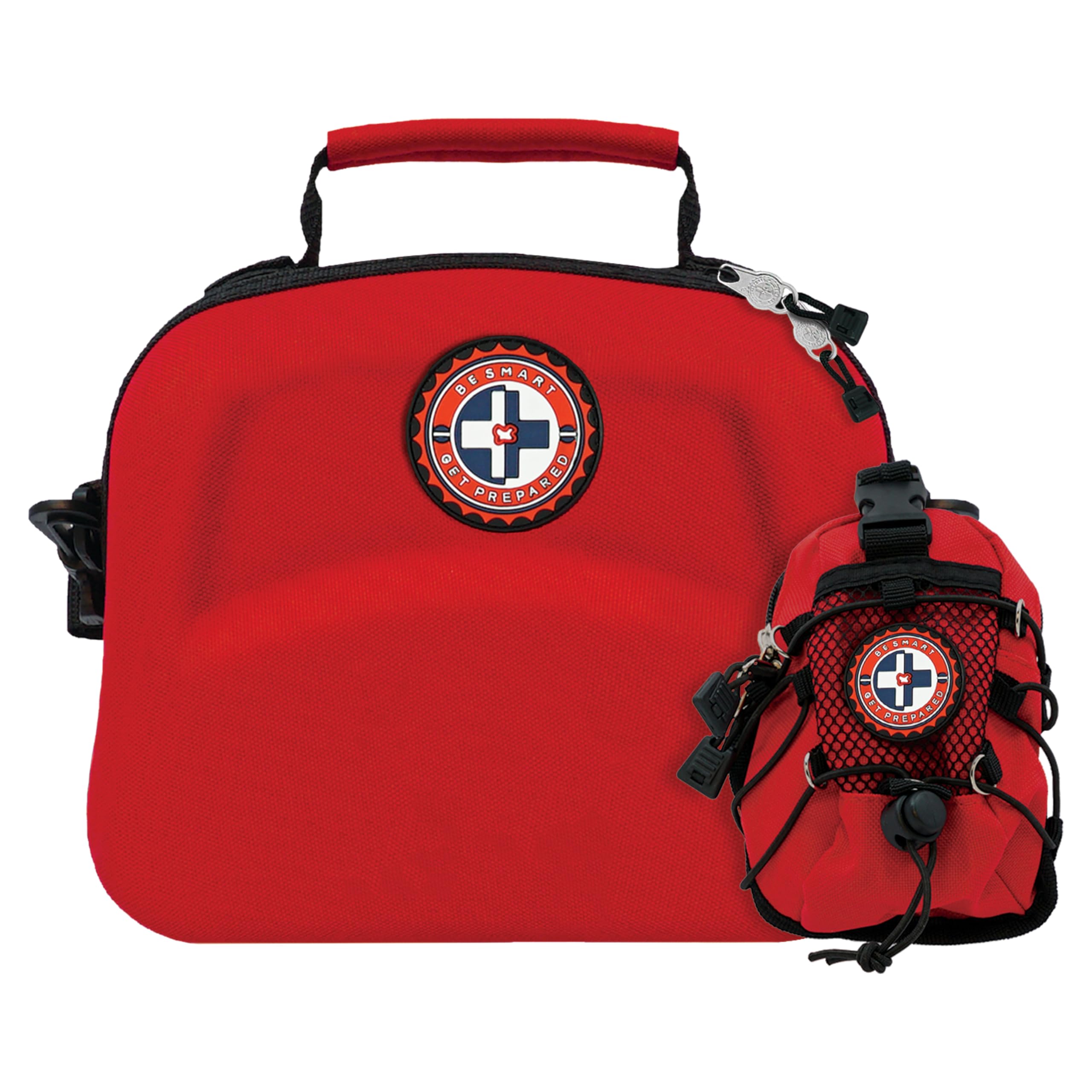
The hard EVA case is the defining feature of this kit. Unlike soft-sided pouches that bulge or collapse, this rigid shell maintains its shape and protects the contents from crushing. The interior is organized into fixed compartments with a clear layout — when you open the kit, every item is visible and accessible. That structural advantage makes it a favorite for vehicle storage where other bags get buried under gear. It also comes with a bonus mini backpack that has a bungee closure, a genuinely useful extra for a child’s day out or a short hike.
With 398 pieces, the supply list is thorough: multiple bandage sizes, antiseptic wipes, antibiotic ointment, gloves, scissors, tweezers, a cold pack, and an emergency blanket. The case dimensions (8.5 by 7 by 3.5 inches) are compact enough to slide into a desk drawer or a backpack side pocket. Verified buyers consistently note the kit’s sturdiness and the fact that it can be refilled easily once supplies run low.
A few caveats: the plastic tweezers are weak and may struggle with deep splinters — many users swap in a metal pair. The bonus mini backpack arrives with a NASCAR logo that some find visually loud. The included medications should be checked immediately for expiration dates, as older stock can have shorter remaining shelf life.
Why it’s great
- Hard EVA case protects contents from crushing and keeps organization fixed
- Bonus mini backpack is genuinely useful for short trips or kids
- Compact size fits desk drawers, glove boxes, and backpacks
Good to know
- Included tweezers are plastic and not sturdy enough for splinters
- Medication expiration dates vary — verify upon arrival
4. First Aid Only 298 Piece All-Purpose Emergency First Aid Kit

This kit has been in production since 2007, and its longevity on the market is a testament to its reliable formula. The soft-sided zippered case opens to reveal two layers with clear plastic pockets, keeping bandages, wound closures, and tools visible at all times. With 298 pieces, the contents are well-rounded: fabric and plastic bandages, antibiotic ointment, BZK antiseptic towelettes, burn cream, gauze roll and pads, a cold pack, scissors, and a thermometer.
The real strength here is the piece-to-value ratio. This is consistently one of the most budget-friendly kits per item, and HSA/FSA eligibility adds practical savings. The compact footprint (9.25 by 3 by 7 inches, 1 pound) means it tucks into a glove box, a dorm drawer, or a kitchen cabinet with zero effort. Verified buyers repeatedly call it the “best bang for your buck” and note that it covers the vast majority of minor household injuries without excess.
The flip side: the soft-sided case lacks the crush protection of a hard shell, and the plastic tweezers are essentially useless for splinter removal — you will want to replace them on day one. Medications (acetaminophen, aspirin, ibuprofen) expire roughly a year out, so replacing them promptly is essential. The case is not waterproof, so keep it away from damp basements or leaky car trunks.
Why it’s great
- Excellent piece-count-to-price ratio with HSA/FSA eligibility
- Compact and lightweight — fits virtually any storage spot
- Long market presence with thousands of positive reviews
Good to know
- Plastic tweezers are too weak for splinter removal
- Soft-sided case provides minimal crush and water protection
5. Adventure Medical Kits Mountain Series Hiker Kit
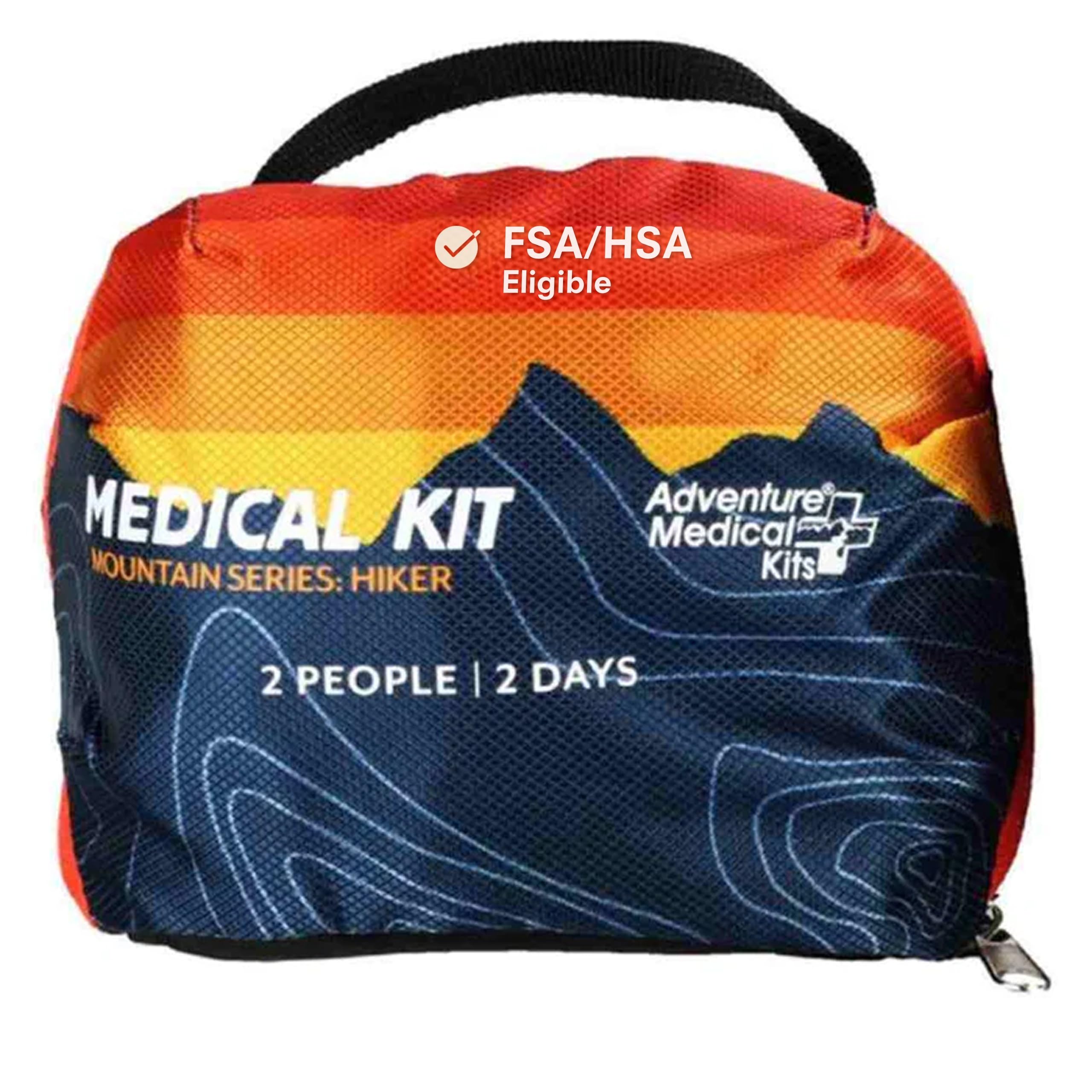
This is not a full household stockpile — it is a purpose-built, ultralight kit designed for two people for two days of backcountry travel. At 66 pieces packed into a water-resistant bag, the Hiker kit prioritizes weight savings and organization above raw piece count. The Easy Care organization system uses clearly labeled pockets inside the bag so you can find wound care supplies, medications, or tools without unrolling everything in the rain.
What makes this kit notable is the inclusion of a full-color wilderness first aid guide. That booklet, paired with a trauma pad and an elastic bandage, provides real utility beyond the basic bandage-and-antiseptic formula. The kit weighs almost nothing and fits into the top lid of a backpack or a daypack side pocket. Verified buyers who have used the brand for years consistently praise the reliability of the components and the fact that the bag is refillable.
The obvious limitation is scale: 66 pieces will not cover a family of four for a week at home. The included medications also expire relatively quickly (12–20 months in some batches). This kit is ideal as a supplement to a larger home kit — keep it in the car for day trips or toss it in your hiking bag. It is not a primary home solution, but for its niche, it is excellent.
Why it’s great
- Ultralight and compact — perfect for day hikes and car toss-and-go
- Included wilderness medical guide adds real educational value
- Water-resistant bag with clearly labeled internal pockets
Good to know
- Low piece count unsuitable as a primary home kit
- Medication expiration dates can be as short as 12 months
FAQ
How often should I replace the medications in my at home first aid kit?
What is the ideal piece count for a family of four at home?
Can I add my own prescription medications to a pre‑packed first aid kit?
Is a waterproof case necessary for a home first aid kit?
Final Thoughts: The Verdict
For most users, the at home first aid kit winner is the GEVOKE 500 Piece because it combines the highest supply diversity with a durable, waterproof, MOLLE-compatible case that covers family needs at home and on the road. If you want organized storage in a hard case that resists crushing, grab the Be Smart Get Prepared 398pc. And for a compact, ultra-budget-friendly solution that still delivers real utility, nothing beats the First Aid Only 298 Piece.