An at-home chemical peel should resurface your skin without the sting of a mistake. The difference between a luminous complexion and a week of regret often comes down to acid concentration, formulation pH, and your skin’s tolerance. This guide isolates the real performers from the overhyped irritants across strengths and textures.
I’m Emma — the founder and writer behind Baby Bangs. I’ve spent years parsing ingredient decks and comparing clinical trial data to find which at-home peels actually deliver visible resurfacing without sending skin into a reactive spiral.
Each formula here was evaluated for its active acid profile, user-reported irritation rate, and real-world results. This is your data-backed roadmap to the best at-home chemical peel for your specific skin concerns and tolerance level.
How To Choose The Best At-Home Chemical Peel
A smart peel purchase starts with knowing your skin’s tolerance and your primary goal — whether that’s fading hyperpigmentation, smoothing texture, or unclogging pores. The wrong acid type or concentration can reverse weeks of progress, so treat this decision like a lab experiment.
Match Acid Type to Your Skin Concern
Glycolic acid (AHA) penetrates deeply for fine lines and uneven tone, but it tingles more than lactic acid (AHA), which hydrates as it exfoliates. Salicylic acid (BHA) is oil-soluble, making it the go-to for congested pores and blackheads. If you have sensitive skin, mandelic acid (AHA) or polyhydroxy acids (PHAs) offer gentler resurfacing with less sting.
Concentration vs. pH — The Real Strength Story
A 30% glycolic acid peel at pH 4.0 is weaker than a 20% glycolic peel at pH 2.5 because lower pH drives more free acid into the skin. Manufacturers often tout high percentages but buffer the formula to a neutral pH to reduce liability. Look for peels that list both the acid percentage and the formulation pH, or check independent lab results if available.
Application Format Matters for Control
Liquid peels (drops applied with fingers or a brush) allow precise placement on specific problem zones like the chin or forehead. Pre-soaked pads offer even coverage and prevent over-application but can dry out mid-jar. Gel-based peels, like those from Real Chemistry, rely on physical clumping rather than acid concentration, making them interesting for acid-averse users.
Brand Ethics and Ingredient Sourcing
Non-GMO, cruelty-free, and vegan certifications may not affect exfoliation power, but they indicate a brand’s formulation philosophy. Mad Hippie and Dr. Dennis Gross explicitly avoid parabens, sulfates, and phthalates, which matters if you have contact sensitivities to preservatives or fragrances.
Quick Comparison
On smaller screens, swipe sideways to see the full table.
| Model | Category | Best For | Key Spec | Amazon |
|---|---|---|---|---|
| Paula’s Choice 25% AHA + 2% BHA | Rinse-Off Liquid | Maximum resurfacing & texture smoothing | 25% AHA blend + 2% salicylic acid | Amazon |
| Dr. Dennis Gross Ultra Gentle Daily Peel | Two-Step Pad | Sensitive skin daily exfoliation | 3 AHA/BHA acids plus antioxidants | Amazon |
| philosophy microdelivery resurfacing kit | Two-Step Scrub | Dry skin & texture refinement | Lactic acid + sunflower seed oil | Amazon |
| Real Chemistry Luminous 3-Minute Peel | Acid-Free Gel | Rosacea & reactive skin types | Water-activated protein clumping | Amazon |
| EXUVIANCE Performance Peel AP25 | Pre-Soaked Pad | Quick weekly pore refinement | Glycolic + mandelic + polyhydroxy acids | Amazon |
| Hydro-Glo Peel Pads 40% | High-Strength Pad | Budget-friendly brightening & exfoliation | 40% blend including kojic & glutathione | Amazon |
| Mad Hippie AHA Exfoliating Peel | Leave-On Serum | Acne-prone skin & gentle daily exfoliation | Glycolic + lactic acid with niacinamide | Amazon |
In‑Depth Reviews
1. Paula’s Choice Skin Perfecting 25% AHA + 2% BHA Face Exfoliant Peel
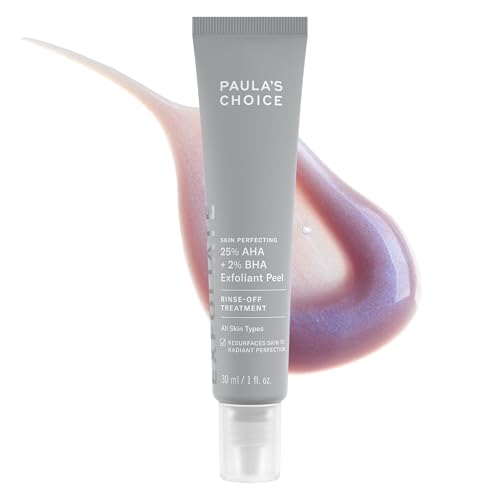
This is the strongest rinse-off peel in the lineup — a 25% blend of five alpha hydroxy acids (glycolic, lactic, mandelic, tartaric, malic) plus 2% salicylic acid. The 10-minute contact time is non-negotiable; leaving it longer increases irritation without improving results. Clinical self-assessment studies report 98% of users saw softer skin after a single use, which matches the user feedback about a “glowy” appearance 48 hours post-treatment.
The liquid-gel texture spreads evenly across the face, but the formula has a distinct sulfuric smell that some find unpleasant. That smell comes from the active acids, not added fragrance — Paula’s Choice deliberately leaves the product unscented to minimize sensitization risk. Users with oily or combination skin report the most dramatic improvements in pore appearance and whitehead reduction.
This peel is not designed for sensitive or reactive skin. The initial tingling can escalate to a burning sensation if applied to compromised barriers. Weekly use is standard, but some users alternate with off-weeks to prevent over-exfoliation. If you have tolerant skin and want maximum resurfacing power in a controlled at-home format, this is the gold standard.
Why it’s great
- Highest combined AHA/BHA concentration in a single rinse-off product
- Clinically validated results with 91% reporting brighter complexion
- Fragrance-free formula reduces sensitization risk
Good to know
- Strong odor from active acids
- Not suitable for sensitive or compromised skin barriers
- Strict 10-minute max contact time must be observed
2. Dr. Dennis Gross Alpha Beta Ultra Gentle Daily Peel
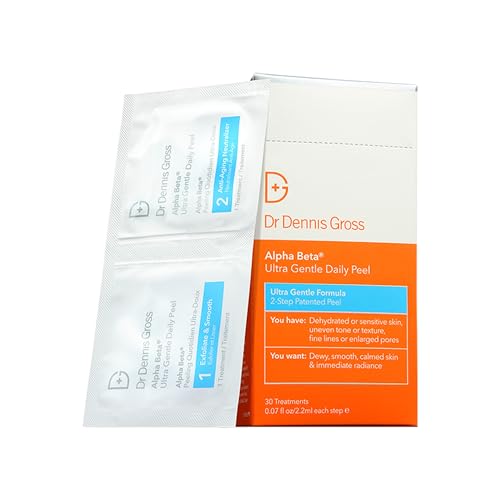
This two-step peel pad system is engineered specifically for dehydrated or sensitive skin types that cannot tolerate standard acid peels. Step 1 contains a trio of lactic, glycolic, and salicylic acids at a low, buffered concentration, while Step 2 provides a neutralizing antioxidant blend to calm and hydrate post-exfoliation. The entire process takes about two minutes.
The “Ultra Gentle” label is earned — multiple users with rosacea-prone and reactive skin report zero tingling or redness. Each pad is generously soaked, and users often cut them in half to extend the supply to 60 treatments. The formula includes vitamins C and E, which support collagen synthesis and photoprotection when paired with daily sunscreen.
The gentleness comes with a trade-off: it is less effective for deep sebum plugs or stubborn hormonal acne compared to the brand’s Extra Strength version. But for maintenance exfoliation that keeps skin smooth without the risk of a freak-out reaction, this is the most reliable daily option on the market.
Why it’s great
- Two-step system with built-in neutralizing buffer
- Safe for rosacea-prone and reactive skin types
- Pads can be cut in half for extended value
Good to know
- Less effective for deep cystic or hormonal acne
- Higher per-treatment cost than single-step pads
- Neutralizer step adds an extra skincare step
3. philosophy microdelivery vitamin c resurfacing peel kit

This two-step kit combines a fine crystal scrub (Step 1) with a lactic acid–based activating gel (Step 2) to create a physical-chemical hybrid exfoliation. The crystals manually lift dead surface cells while the lactic acid chemically dissolves intercellular bonds, making it one of the most immediate-result formulas in this guide. Users report visibly softer, glossier skin after the very first shower application.
The lactic acid concentration is not disclosed, but the formula includes sunflower seed oil, which buffers irritation and leaves a non-stripped feel — ideal for dry or dehydrated skin. Step 2 contains salicylic acid for pore-clearing, which generates a mild warming sensation that some users find pleasant and others find alarming. The entire process is designed for use in the shower, which means the steam opens pores and enhances penetration.
One significant drawback is the price per ounce versus the number of treatments. The kit lasts about four months with twice-weekly use, which puts it in the premium bracket. But for users who want the sensory experience of a professional facial without leaving home, this kit delivers a texture improvement that justifies the cost.
Why it’s great
- Immediate visible smoothness after one use
- Shower-friendly application enhances absorption
- Sunflower seed oil buffers irritation for dry skin
Good to know
- Higher per-treatment cost than single-product peels
- Physical crystals may irritate if pressed too hard
- Warming sensation from salicylic acid may concern some users
4. Real Chemistry Luminous 3-Minute Peel

This is not a chemical peel in the traditional acid sense — it uses a water-activated protein-binding technology that physically clumps dead skin cells into visible balls as you massage it onto damp skin. The absence of AHAs, BHAs, or any acid means zero sting, zero tingling, and zero downtime, making it the safest entry point for users with active rosacea, perioral dermatitis, or post-procedure skin.
The gel texture is clear and thin, and it transforms into small protein clusters within 60 seconds of rubbing. Those clusters are dead skin cells and excess protein being lifted off the epidermis, which rinse away cleanly. Multiple users with sensitive skin report that this is the only exfoliant they can tolerate without redness or rebound breakouts. The hyaluronic acid in the formula pulls moisture into the skin during the process, preventing the tight, parched feeling that acid peels often leave behind.
The biggest caveat is that this product does not provide any chemical resurfacing — it cannot address hyperpigmentation, deep wrinkles, or sebaceous hyperplasia the way an acid peel can. It is purely a surface-level detangling agent. For those who want glow without any chemical risk, this is the holy grail.
Why it’s great
- Zero acids — safe for rosacea and reactive skin
- Visible dead skin cell removal in 3 minutes
- Contains hyaluronic acid for hydrating finish
Good to know
- Does not treat hyperpigmentation or deep wrinkles
- Requires damp skin for activation
- Protein clumping may be off-putting for new users
5. EXUVIANCE Performance Peel AP25
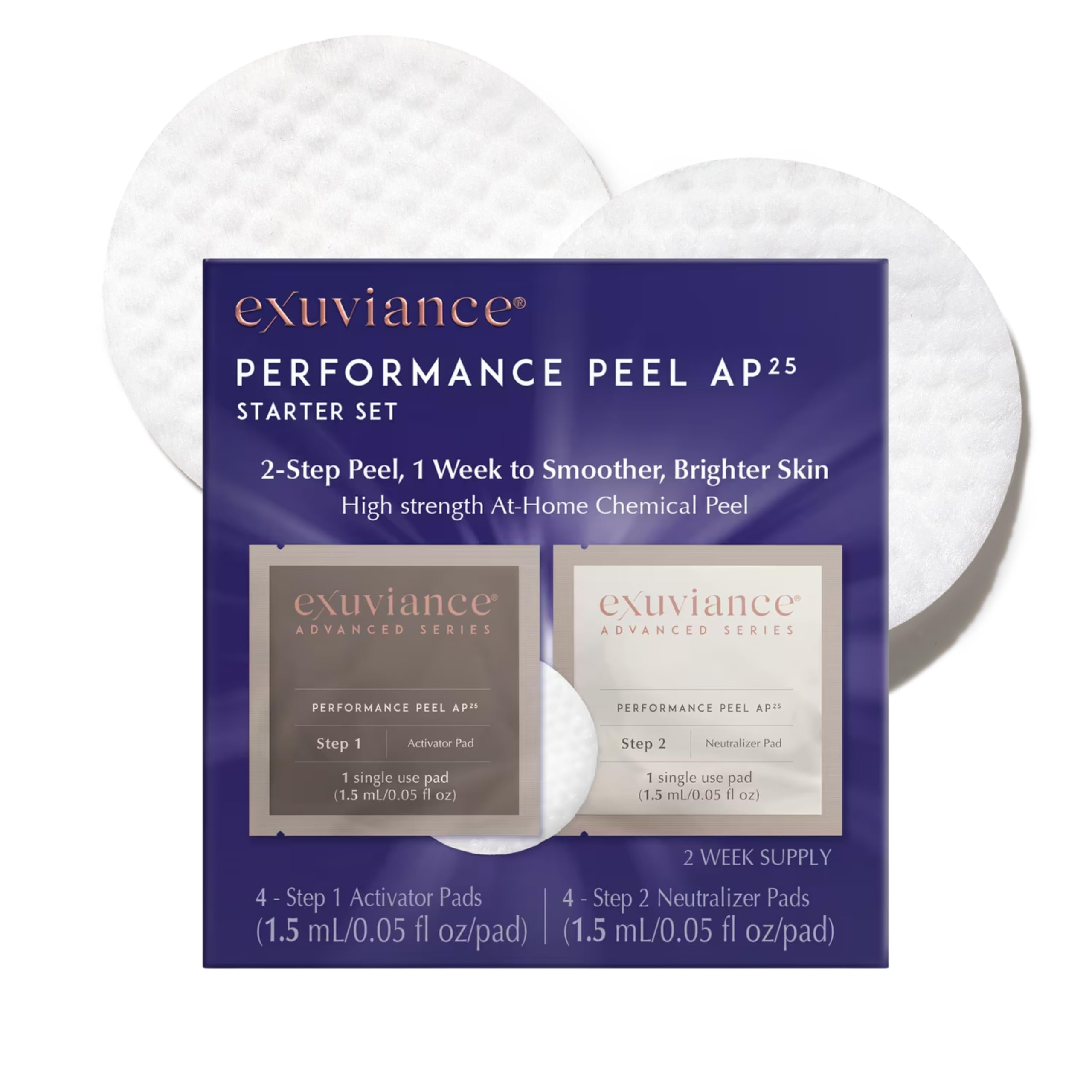
EXUVIANCE AP25 is a pre-soaked pad system that combines glycolic acid for deep resurfacing, mandelic acid for gentle brightening, and polyhydroxy acids (PHAs) for moisture-binding humectant effects. The “AP25” designation likely refers to the total acid percentage, though exact breakdowns are proprietary. Users report visible improvements in pore size, sun spot fading, and overall texture within two to three weeks of twice-weekly use.
The pads are unscented and saturated with a low-viscosity liquid that spreads evenly across the face and neck. Mandelic acid’s larger molecular weight means it penetrates more slowly than glycolic, reducing the sting — users consistently describe the sensation as a mild tingle rather than a burn. This makes AP25 a strong candidate for first-time peel users who want measurable results without an aggressive experience.
The pad format carries a convenience cost: each jar contains only four treatments, which translates to a two-week supply if used twice weekly. The single-use pads are not resealable, and some users found the adhesive closure on the jar weak enough to let the remaining pads dry out. For the price per treatment, the packaging durability should be better.
Why it’s great
- Triple-acid blend with polyhydroxy acids for hydration
- Mandelic acid provides gradual penetration with less sting
- Visible pore and texture improvement in 2-3 weeks
Good to know
- Only 4 pads per jar — limited supply
- Weak adhesive seal can dry out pads
- Higher per-treatment cost than similar pad formats
6. Hydro-Glo Peel Pads – Enhanced with Kojic, Mandelic, Glutathione, Licorice, Papaya, Pineapple, Bearberry Extracts (40% Strength)

Hydro-Glo markets its 40% strength aggressively, but that percentage refers to a proprietary blend of kojic acid, mandelic acid, lactic acid, glutathione, licorice root, papaya enzyme, pineapple extract, and bearberry extract — not free acid concentration. The formula leans into brightening and melanin-inhibition mechanisms rather than aggressive epidermal peeling. Users with sun damage, melasma, and hormonal hyperpigmentation report significant fading after consistent use.
The pads are generously sized and saturated, allowing for two passes across the face. The inclusion of fruit enzymes (papain from papaya, bromelain from pineapple) adds enzymatic exfoliation that works at a different pH range than the acids, making this a multi-modal brightener. However, the 40% strength is too harsh for some users with melasma — multiple reviews note that it worsened dark patches when applied directly over active hyperpigmentation, requiring cessation of use.
Starting with a one-minute contact time and gradually building to five minutes is essential. The value proposition is strong for a budget-conscious buyer: the jar contains a significant number of treatments compared to the premium two-step kits. For normal skin without active inflammatory pigmentation, this is an effective and affordable brightening tool.
Why it’s great
- Multi-modal brightening with acids, enzymes, and melanin inhibitors
- Generous pad saturation allows two passes
- Strong value for cost of treatment per jar
Good to know
- 40% strength can worsen active melasma in some users
- Proprietary blend percentage not directly comparable to free acid peels
- Requires gradual build-up from 1 to 5 minutes
7. Mad Hippie AHA Exfoliating Peel – Lactic & Glycolic Acid Peel

Mad Hippie’s AHA peel is a leave-on serum, not a rinse-off treatment, which changes the calculus entirely. The formula contains glycolic and lactic acids at a concentration low enough to be safe for daily use — it is closer to an exfoliating toner than a traditional peel. Users apply it after cleansing and follow with moisturizer, and the gradual exfoliation builds over weeks rather than hours.
The inclusion of Matrixyl Synthe’6 (a peptide complex) and goji berry extract adds anti-aging and antioxidant support that most acid-only products lack. Niacinamide and hyaluronic acid provide barrier support and hydration, which is critical for acne-prone skin that tends to over-produce oil when stripped. Multiple users with persistent breakouts report that this formula reduced hyperpigmentation from old acne marks without triggering new breakouts.
The main limitation is patience: this delivers results over a longer timeline than rinse-off peels. Users expecting an instant glow or texture change will be disappointed. It also has a slightly tacky finish after application, which some find uncomfortable under makeup. For acne-prone, reactive skin that cannot tolerate high-concentration peels, this is the most sustainable long-term exfoliation option in the guide.
Why it’s great
- Leave-on serum allows daily gradual exfoliation
- Contains peptides, niacinamide, and hyaluronic acid for barrier support
- Non-GMO, cruelty-free, vegan formulation
Good to know
- Results require consistent use over weeks
- Tacky finish after application
- Not a true “peel” — closer to an exfoliating serum
FAQ
Can I use an at-home chemical peel if I have active acne breakouts?
What is the correct order to apply my skincare after a chemical peel?
How long should I wait before increasing the contact time of my peel?
Final Thoughts: The Verdict
For most users, the best at-home chemical peel winner is the Paula’s Choice 25% AHA + 2% BHA because it delivers the highest free acid value in a controlled 10-minute rinse-off format that produces visible resurfacing after a single treatment. If you have sensitive or reactive skin, grab the Dr. Dennis Gross Ultra Gentle Daily Peel for its two-step neutralizing system that eliminates risk. And for a truly zero-acid option that still removes dead skin, nothing beats the Real Chemistry Luminous 3-Minute Peel.