Whether you are battling recurring bicep tendonitis, recovering from a minor strain, or simply trying to keep your pitching arm warm between innings, the right arm sleeve delivers a distinct physical edge. A poorly fitted sleeve that slides down mid-game or one that fails to provide adequate compression is worse than wearing nothing at all.
I’m Emma — the founder and writer behind Baby Bangs. I’ve spent the last several months parsing customer reviews, manufacturer spec sheets, and fabric composition data across dozens of arm compression models to identify which sleeves actually hold their compression fit and which ones lose tension after a few wears.
This guide breaks down five distinct options so you can confidently choose the perfect arm compression sleeves for your sport, recovery needs, or daily pain management routine.
How To Choose The Best Arm Compression Sleeves
Arm compression sleeves are not a one-size-fits-all accessory. The right choice depends heavily on your primary use case — whether you need medical-grade graduated compression for lymphedema or a moisture-wicking sleeve for baseball season. Below are the three most critical factors to evaluate before buying.
Compression Level and Graduation
Compression strength is measured in millimeters of mercury (mmHg). Over-the-counter sleeves typically range from 15-20 mmHg (light support for sports fatigue) to 20-30 mmHg (medical-grade for edema, lymphedema, post-surgery swelling). A graduated sleeve is tighter at the wrist and gradually loosens toward the bicep, actively pushing fluid upward. If your goal is pain relief from tendonitis or strain recovery, aim for the 20-30 mmHg range. For general sports performance, a lighter, non-graduated fitness sleeve may be more comfortable for extended wear.
Fabric Composition and Breathability
The blend of nylon, spandex, polyester, or elastane directly dictates how well the sleeve breathes and how long it holds its tension. High-nylon blends (around 78%) offer superior durability and a smooth, silky feel against the skin, while spandex provides the necessary stretch and recovery. Cheap polyester-heavy blends tend to lose their compression fit after a handful of washes. If you sweat heavily during workouts or sports, look for moisture-wicking claims in the fabric description — flat-lock seams also reduce chafing during repetitive motion.
Fit and Anti-Slip Design
A sleeve that rolls down or bunches at the elbow defeats its purpose. The two most common anti-slip technologies are silicone grip dots printed on the inner cuff and built-in soft springs on the sides of the bicep band. Measure your bicep circumference with a flexible tape while your arm is straight to match the brand’s size chart — guessing based on height or weight leads to returns. If you are between sizes, sizing down increases compression but makes the sleeve harder to put on; sizing up offers comfort but risks sliding.
Quick Comparison
On smaller screens, swipe sideways to see the full table.
| Model | Category | Best For | Key Spec | Amazon |
|---|---|---|---|---|
| Ailaka Medical Compression | Medical Grade | Post-surgery & edema recovery | 20-30 mmHg graduated | Amazon |
| Bruce Bolt Graduated | Premium Sports | Baseball & athletic performance | Graduated compression hold | Amazon |
| ITHW Bicep Tendonitis Sleeve | Therapy Support | Tendonitis & strain recovery | Side springs for non-slip | Amazon |
| EvoShield Solid Compression | Youth Sports | Young baseball/softball players | Flat-lock seam durability | Amazon |
| Nike Dri-Fit UV Solar | Everyday Fitness | UV protection & light activity | UV solar protection layer | Amazon |
In‑Depth Reviews
1. Ailaka Medical Compression Arm Sleeves

The Ailaka sleeve hits the highest compression rating in this roundup at 20-30 mmHg, and it delivers true graduated compression — meaning the fabric is measurably tighter at the wrist and loosens as it moves up the forearm and bicep. This specific gradient actively assists venous return and fluid movement, which is why it is the top choice for lymphedema, post-surgery edema, and conditions like cellulitis or thrombophlebitis. The 78% nylon / 22% spandex blend feels dense and smooth, and reviewers note the silicone grip dots on the top cuff prevent the slip that plagues lesser sleeves during active movement.
Multiple verified purchasers report using this sleeve for burn scar compression, Dystonia tremor management, and general post-operative recovery — use cases that require consistent, reliable tension rather than a loose fit. The fabric is lightweight enough to wear under clothing or during daily tasks like driving and gardening. A few users with latex sensitivities flagged that the silicone grip dots caused minor skin irritation, so if you have very sensitive skin, consider wearing a thin cotton liner underneath.
For the combination of medical-grade graduated compression, breathable fabric, and durable build quality, the Ailaka sleeve earns the top spot. It outclasses the sports-focused options in this guide for anyone whose primary need is genuine pain relief and recovery support, not just a warm-up accessory.
Why it’s great
- True medical-grade 20-30 mmHg graduated compression proven for edema and lymphedema relief
- High nylon/spandex ratio holds tension far better than polyester-blend sleeves
- Silicone grip dots on the top cuff keep the sleeve locked in place during active movement
Good to know
- Requires a bit of effort and technique to pull on, especially for users with limited hand strength
- Silicone grip dots may cause skin reactions in individuals with latex or adhesive allergies
2. Bruce Bolt Graduated Compression Arm Sleeve
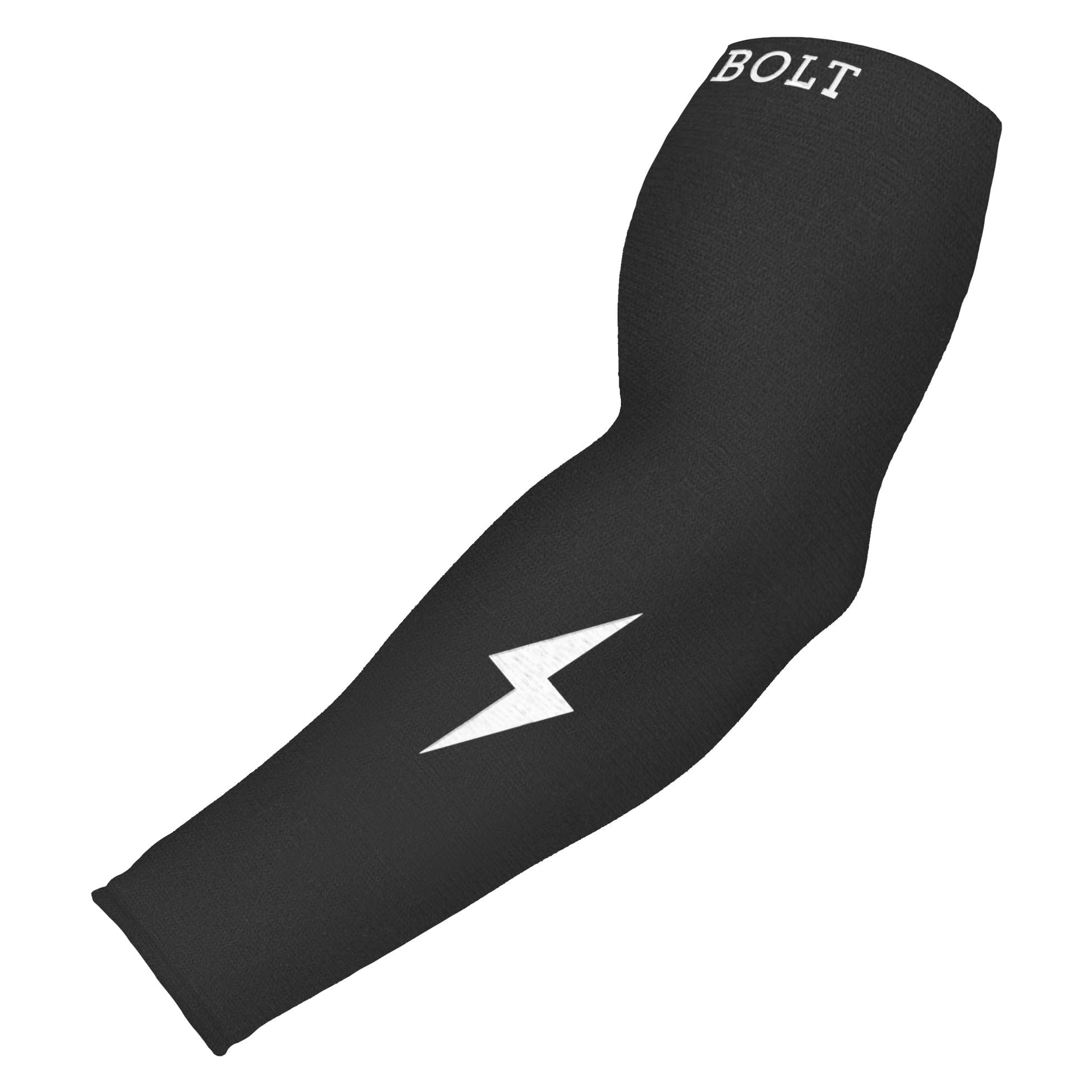
Bruce Bolt is a name that carries weight in the baseball community, and this graduated compression sleeve reinforces that reputation. The fabric holds its shape remarkably well — reviewers consistently note that even after multiple wears and washes, the sleeve does not bag out at the elbow or lose its snug feel at the wrist. It is designed with a graduated compression profile that supports the forearm and bicep without cutting off circulation, which makes it a strong companion for pitching reps, batting practice, or throwing sessions.
A key advantage of this sleeve is its accurate sizing. The adult small was noted by one reviewer to fit a 12-year-old, 5’1″, 120-pound athlete perfectly — proof that the sizing chart is reliable rather than arbitrary. The material feels soft against the skin yet supportive, without the restrictive tightness that makes some medical sleeves uncomfortable for extended wear during a full game. Several buyers describe it as expensive but justifiable because the construction quality outlasts cheaper alternatives that stretch out within a season.
If you are an athlete who values a premium, durable sleeve that stays tight without digging in, the Bruce Bolt is a category leader. The trade-off is the lack of any anti-slip silicone band — the compression itself does the holding, so if your arm tapers significantly from bicep to wrist, this may require occasional adjustment during high-intensity activity.
Why it’s great
- Fabric retains its shape and compression tension across many washes and wears
- Accurate sizing chart eliminates the guesswork when ordering for youth or adult arms
- Smooth, soft interior feels comfortable during full games and long training sessions
Good to know
- No silicone grip dots or anti-slip band, so it may slide on arms with less taper
- Premium pricing places it at the top end of the market for a single pair of sleeves
3. ITHW Bicep Tendonitis Sleeve

The ITHW sleeve stands apart from the others due to its built-in dual soft springs on either side of the bicep band. This is a unique engineering choice that addresses a very specific pain point — the sleeve falling down during overhead pressing, pull-ups, or combat sports like BJJ and boxing. The springs create a gentle gripping frame around the upper arm that prevents migration without needing aggressive silicone bands. It is sold as a pair, which is a notable value addition given that most competitors in this price range sell single sleeves.
Designed specifically for bicep tendonitis, strains, and muscle tears, this sleeve uses a 3D-knitted nylon and spandex material that is breathable and odorless. Multiple reviewers recovering from bicep strains report that wearing this sleeve eliminated post-workout tenderness and allowed them to return to full rep capacity within weeks. However, the sizing is tricky — some users found that the large lacked sufficient compression while the medium was quite snug, recommending that you size down at least one step if you want a therapeutic squeeze rather than a light support.
For its targeted bicep and triceps support, the side-spring anti-slip design, and the inclusion of a second sleeve for the other arm, the ITHW is a smart pick for gym-goers and martial artists dealing with localized upper arm pain. The main reservation is that the thick, robust material may feel too warm for extended wear in hot environments.
Why it’s great
- Dual soft springs on the bicep band provide excellent non-slip hold without adhesive
- Comes as a two-pack, offering strong value for coverage on both arms
- 3D-knitted nylon material is breathable and holds its structural integrity during intense training
Good to know
- Sizing runs generous — you may need to order one to two sizes smaller than your measurement for therapeutic compression
- Thick fabric can trap heat during prolonged wear in warm conditions or indoor training
4. EvoShield Solid Compression Arm Sleeve

The EvoShield Solid Compression Sleeve is built on an 82% polyamide, 18% elastane knit that prioritizes moisture management and lightweight feel over heavy-duty compression. This makes it a solid entry-level option for youth baseball and softball players who need a sleeve primarily for warmth between innings and a mild muscle stabilization effect — not for therapeutic recovery. The flat-lock seams add a meaningful durability upgrade compared to budget sleeves that blow out at the stitching after a few practices.
Customer feedback from parents is largely positive, with consistent 5-star ratings from buyers whose 11-to-15-year-old athletes wear the sleeve for pitching and everyday field play. The youth size is fairly large, however — one parent of an 8-year-old reported it was too big despite the youth designation, so this sleeve is best suited for older kids and teenagers rather than young children. The sleeve stretches well and cleans easily, which is a practical concern for parents dealing with grass stains and sweat after every game.
For the parent looking for an inexpensive, low-commitment entry into arm sleeves for a young athlete, the EvoShield is the obvious pick. It is not designed for medical issues or high-compression needs, but for sports use on a developing arm, it does exactly what is asked of it without breaking the bank.
Why it’s great
- Flat-lock seams significantly improve durability versus stitched alternatives in the same tier
- Moisture-wicking polyamide fabric keeps young athletes dry and comfortable during games
- Priced affordably as an introductory sleeve for youth sports without sacrificing basic quality
Good to know
- Youth sizing runs large and may not fit children under 10 or smaller-framed kids
- Compression is light — do not expect therapeutic-grade support for injuries or pain relief
5. Nike Dri-Fit UV Solar Arm Sleeves

The Nike Dri-Fit UV Solar Arm Sleeve leans fully into sun protection as its primary feature, making it a different product category than the compression-focused options above. It offers a compression fit and the same sweat-wicking Dri-FIT technology found in Nike’s performance apparel, but the real reason to buy these is the integrated UV solar protection layer — useful for runners, cyclists, outdoor workers, and track athletes who spend hours in direct sunlight. The small/medium size fits a thin build nicely, as noted by a parent whose son uses them for track season.
Where this sleeve falls short compared to the others is in compression hold. Multiple reviewers mention that the bicep side starts sliding down during activity, which suggests that the elastic tension on the upper band is not strong enough to anchor the sleeve on a less muscular arm. The fabric itself is comfortable and breathable, and the Nike branding carries recognition, but for the price point, you are paying more for the logo and UV tech than for robust compression or anti-slip engineering.
The Nike UV Solar sleeve is best viewed as a sun-protective garment with light compression on the side, not as a pain-management or recovery tool. If your primary goal is shielding your arms from UV rays during outdoor cardio, this is a reasonable choice. If you need sleeve that stays put during a baseball game or weightlifting session, the competitors above offer superior grip and tension.
Why it’s great
- Integrated UV solar protection layer is ideal for outdoor runners, cyclists, and field athletes
- Nike Dri-FIT fabric is breathable and comfortable for prolonged wear in warm conditions
- Unisex sizing with a small/medium option that fits slender builds well
Good to know
- Upper bicep band lacks sufficient tension and tends to slide down during active movement
- Compression level is mild — not suitable for therapeutic recovery or significant muscle support
FAQ
What compression level do I need for bicep tendonitis recovery?
How should I measure my arm for a compression sleeve?
Why do my arm compression sleeves keep sliding down?
Final Thoughts: The Verdict
For most users, the arm compression sleeves winner is the Ailaka Medical Compression sleeve because it delivers true 20-30 mmHg graduated pressure that works for both medical recovery and active pain relief. If you want a premium athletic sleeve that holds its shape over a full season, grab the Bruce Bolt Graduated sleeve. And for targeted bicep tendonitis support with a non-slip spring band design, nothing beats the ITHW Bicep Tendonitis Sleeve.