Finding a tennis shoe that actually supports your arch can feel like a losing rally—most court shoes prioritize speed or durability over the medial support your foot craves during lateral cuts and quick stops. The wrong pair leaves your plantar fascia screaming after a single set, while the right one keeps you moving pain-free through tiebreaks and third-set sprints.
I’m Emma — the founder and writer behind Baby Bangs. I’ve spent years analyzing court shoe geometry, foam formulations, and outsole wear patterns to separate marketing claims from real structural support athletes need.
After evaluating cushioning systems, heel counters, and midfoot shanks across seven top contenders, I’ve identified the models that deliver genuine arch support without sacrificing court feel or durability. Keep reading for a complete breakdown of the best arch support tennis shoes that actually absorb impact and stabilize your stride.
How To Choose The Best Arch Support Tennis Shoes
Not every cushioned shoe qualifies as an arch support shoe. Court movement demands torsional rigidity, a stable heel counter, and a midfoot shank that prevents the shoe from twisting during push-offs. Here’s what to check before you buy.
Pronation Control Technology
Overpronation—your arch collapsing inward on impact—is the primary cause of plantar fasciitis and shin splints on court. Look for shoes with a medial post (denser foam on the inner side) or a GuideRails system that extends the heel counter to guide your foot through a neutral stride. Foam density alone cannot replicate the stability these features provide during lateral cuts.
Heel-Toe Drop and Stack Height
A lower drop (around 6-8mm) encourages a midfoot strike and reduces strain on the Achilles, but too low a drop can aggravate high arches. A higher stack (over 30mm) offers more impact absorption but reduces ground feel and stability during quick direction changes. Tennis-specific models typically land between 8-12mm drop to balance these demands.
Midfoot Shank Rigidity
Twist the shoe in your hands—if the midfoot bends easily, arch support is likely inadequate during lateral movements. A rigid shank (often visible as a plastic insert under the insole) prevents the arch from collapsing and maintains energy transfer from heel to toe. Court shoes without this shank feel comfortable standing still but fail during active play.
Outsole Wear Pattern
Hard court play wears through outsoles fast, especially under the ball of the foot and heel. Shoes with a full-length herringbone tread or a 6-month guarantee on sole wear indicate the manufacturer trusts their rubber compound. Worn-out outsoles reduce traction and force your foot to compensate, increasing arch fatigue.
Quick Comparison
On smaller screens, swipe sideways to see the full table.
| Model | Category | Best For | Key Spec | Amazon |
|---|---|---|---|---|
| Hoka Bondi 9 | Premium | Maximum shock absorption + arch cradle | 38mm stack height | Amazon |
| Brooks Adrenaline GTS 24 (Men’s) | Premium | Heel strikers and overpronators | GuideRails support system | Amazon |
| Brooks Adrenaline GTS 24 (Women’s) | Premium | Narrow feet needing lateral stability | 39mm stack, GuideRails | Amazon |
| Skechers Viper Court Pro | Mid-Range | Pickleball + indoor court play | Breathable mesh upper | Amazon |
| ASICS Game FlyteFoam | Mid-Range | Heavy court use (10+ hrs/week) | FlyteFoam heel cushioning | Amazon |
| ASICS Gel-Dedicate 8 | Mid-Range | Entry-level court support + value | Rearfoot GEL cushioning | Amazon |
| Dr. Scholl’s Be True Court | Budget | Casual walking + light court use | Antimicrobial insole | Amazon |
In‑Depth Reviews
1. Hoka Bondi 9

The Hoka Bondi 9 sits at the premium end of the arch support spectrum with a 38mm stack height that delivers what wearers describe as “fantastic shock absorption.” Multiple reviews highlight zero break-in period and all-day comfort for standing jobs and long walks—both scenarios that stress the arch heavily. The thick midsole foam creates a stable platform that prevents your foot from rolling inward on impact, which is the exact mechanical failure that triggers plantar fasciitis pain.
Users consistently note that the Bondi 9 fits true to size and eliminates foot, knee, and back pain associated with high-impact activities. The level of cushioning, however, reduces ground feel, which some tennis players find undesirable for quick lateral cuts on hard courts. If your priority is impact absorption and arch protection over court feedback, this shoe delivers without requiring an orthotic insert.
The outsole rubber covers high-wear areas with a strategic lug pattern that provides reliable traction on pavement and indoor surfaces. Several buyers mentioned they wish they had ordered a second pair immediately, indicating satisfaction with both the support and durability. This is a recovery-day or match-day shoe for players whose primary complaint is foot pain, not speed.
Why it’s great
- Immediate arch support with no break-in period reported
- 38mm stack absorbs impact better than any competitor here
- True-to-size fit eliminates heel slippage
Good to know
- Reduced ground feel may not suit aggressive court movers
- Higher price point compared to dedicated court models
2. Brooks Adrenaline GTS 24 (Men’s)
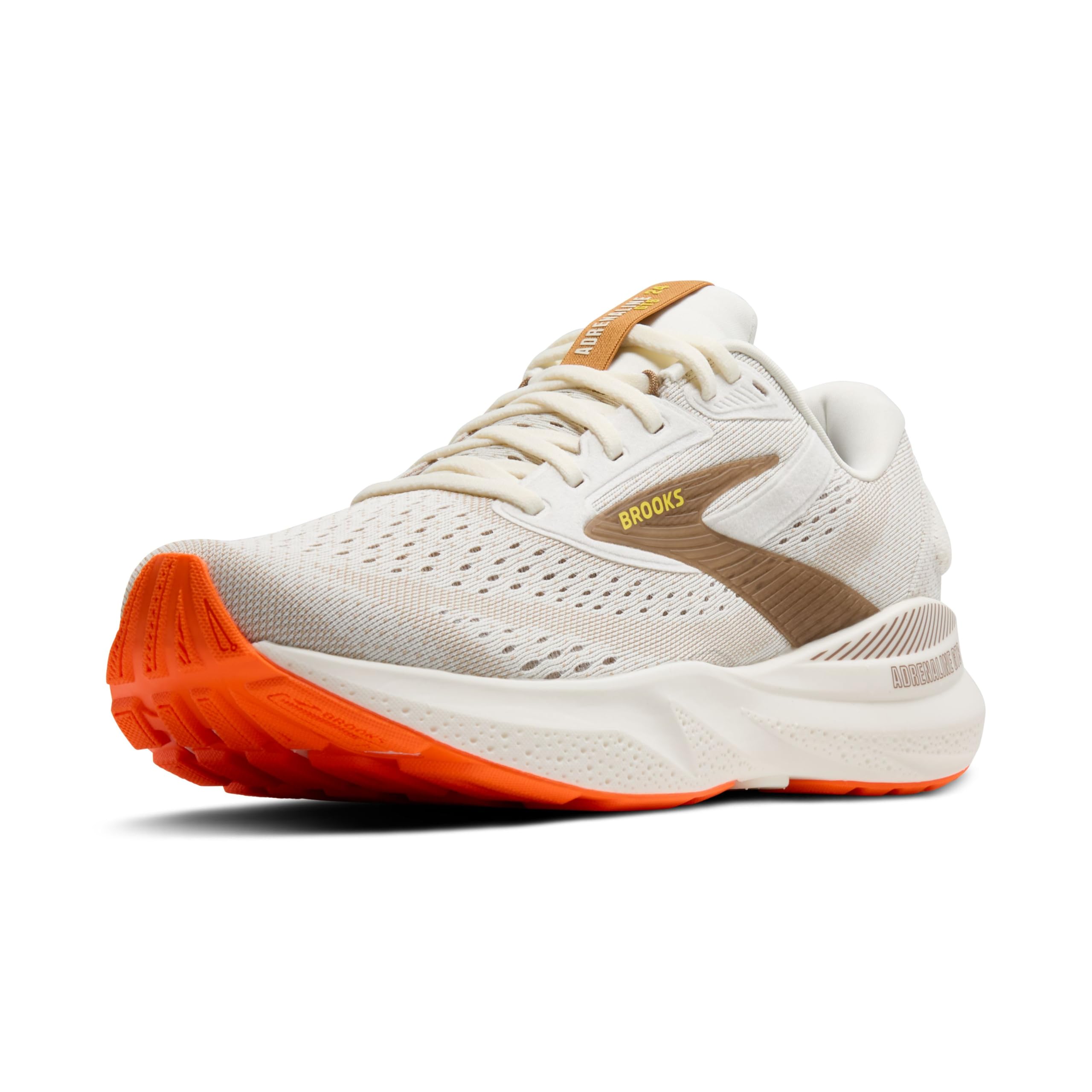
The Brooks Adrenaline GTS 24 uses GuideRails—a raised medial and lateral heel counter—to keep your foot aligned through the gait cycle. This is not a soft cushion; reviewers describe it as “supportive without being too soft,” which is ideal for heel strikers and overpronators who need structure, not squish. One user logged hundreds of miles across running, walking, and boot camp and reported reduced foot, knee, and back pain—the same mechanical chain that arch support tennis shoes must address.
The men’s version features a 12mm heel-toe drop, which encourages a heel-first strike and reduces strain on the Achilles during court movements like split steps and lunges. Multiple buyers noted the shoe works well with custom orthotics, which is a crucial compatibility test for any arch support shoe—if the insole is too deep or shallow, orthotics shift and cause blisters. The lace-up closure allows precise tension adjustment across the midfoot.
Traction on turf and pavement held up well after months of use according to several reviews, though one buyer mentioned the cushioning loosens after about six months of daily wear. For moderate court use combined with walking or gym sessions, the Adrenaline GTS 24 offers a rare combination of arch support, durability, and motion control that dedicated tennis shoes often miss.
Why it’s great
- GuideRails system actively prevents arch collapse during lateral movement
- Compatible with custom orthotics for personalized arch support
- 12mm drop reduces Achilles strain on hard courts
Good to know
- Cushioning may soften noticeably after six months
- Some users report needing to size up for adequate toe room
3. Brooks Adrenaline GTS 24 (Women’s)

The women’s Adrenaline GTS 24 shares the same GuideRails architecture as the men’s but with a 39mm stack height that provides even more impact absorption—critical for players with high arches who need to reduce ground reaction forces. One reviewer with long, narrow feet (size 11 AA-AAA) reported a perfect fit without inserts or blister bandages, which is a strong endorsement for the women’s last geometry that accommodates slim heels and narrower midfoot volumes.
Plantar fasciitis and neuropathy sufferers specifically praised the “GoTo” support bar visible on the inner side—this is the medial post that prevents arch collapse during the heel-toe transition. The wide toe box was also noted by buyers who previously experienced toe crowding in other stability shoes, which often narrow aggressively at the toe to reduce weight. Brooks kept the forefoot room without sacrificing the snug heel counter that controls pronation.
Traction on turf and pavement held up well for a teacher and referee who logged daily walking on multiple surfaces. The outsole compound shows moderate wear after several months, but the support structure—which depends on the midsole foam, GuideRails, and shank—remains intact long after the rubber starts thinning. This makes the GTS 24 a smart pick for players who rotate court sessions with daily walking.
Why it’s great
- GuideRails cradle the heel while the medial post supports the arch
- Wide toe box accommodates foot swelling during long matches
- Designed for narrow feet without requiring custom inserts
Good to know
- Laces run slightly short according to multiple reviewers
- Some buyers found the toe base too narrow for their foot shape
4. Skechers Women’s Viper Court Pro Pickleball Sneaker

The Skechers Viper Court Pro is purpose-built for pickleball, which means it sees the same lateral demands as tennis but at a lower intensity with more quick stops. Reviewers consistently praise the “excellent support” and lightweight construction, with one user noting it reduced ankle twist risk during rapid direction changes—a direct sign that the shoe’s heel counter and midfoot shank are doing their job.
Several buyers with plantar fasciitis reported the Viper Court Pro works well with heel cushions, though two reviewers noted the toe box is narrow and caused calluses on their little toes. This is a critical spec check for arch support: if the toe box constricts the forefoot, your arch will compensate by collapsing or cramping during lateral slides. The breathable mesh upper helps with temperature regulation during long doubles sessions.
Traction on indoor courts was rated excellent, but one buyer reported a squeaking issue that began after a few months—a common complaint with rubber compounds that develop uneven wear patterns. The shoe held up for nearly a year of rigorous weekly play before showing significant tread wear. For players who prioritize grip and court feel over maximum plushness, this mid-range option delivers consistent arch support.
Why it’s great
- Excellent lateral support reduces ankle roll risk
- Works well with plantar fasciitis heel inserts
- Lightweight mesh upper keeps feet cool during extended play
Good to know
- Narrow toe box can cause calluses on smaller toes
- Some pairs develop squeaking after several months
5. ASICS Men’s Game FlyteFoam Tennis Shoes
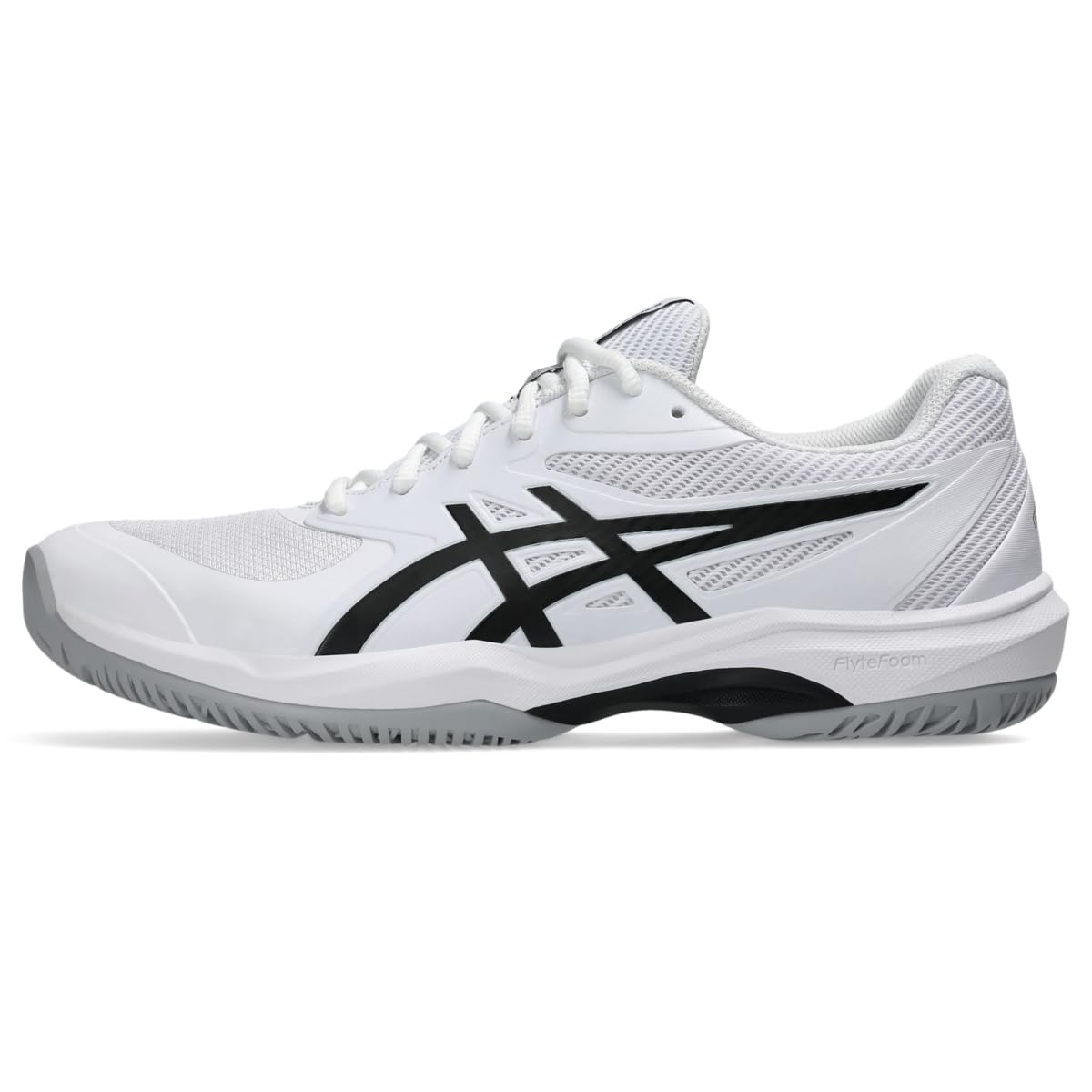
The ASICS Game FlyteFoam is built for players who log serious court hours—one reviewer reported 10 hours per week and estimated 75% sole wear after three months, which is consistent with hard court abrasion. The FlyteFoam compound in the heel provides responsive cushioning that compresses less than traditional EVA, meaning the arch support structure (midfoot shank + medial post) maintains its position longer without sinking into degraded foam.
Multiple reviewers praised the ankle and arch support specifically, describing the shoe as “sturdy” and noting that traction grips both indoor and outdoor courts effectively. The classic white colorway keeps the shoe looking clean during sweaty matches, and the true-to-size fit means you don’t need to compensate with thicker socks that would alter arch support. One constructive note: the heel cushioning could be more substantial for heavier players, and buyers seeking maximum plushness should consider the Solution Swift FF 2 variant instead.
Minor wear at the upper-sole junction near the ball of the foot was reported by one heavy user, but this is within normal limits for a court shoe that sees hard stops and pivots. The outsole is a full herringbone pattern that provides consistent grip without the squeaking issue reported in other models. For the combination of arch support, court feel, and durability at a mid-range price, this ASICS model holds its own against more expensive competitors.
Why it’s great
- FlyteFoam heel cushioning resists compression for long-term arch support
- Excellent traction pattern for multi-surface court play
- True-to-size fit eliminates the need for break-in period adjustments
Good to know
- Heavy users may see sole wear at ~3 months with 10+ hours/week play
- Heel cushioning could be denser for heavier players
6. ASICS Men’s Gel-Dedicate 8 Tennis Shoes
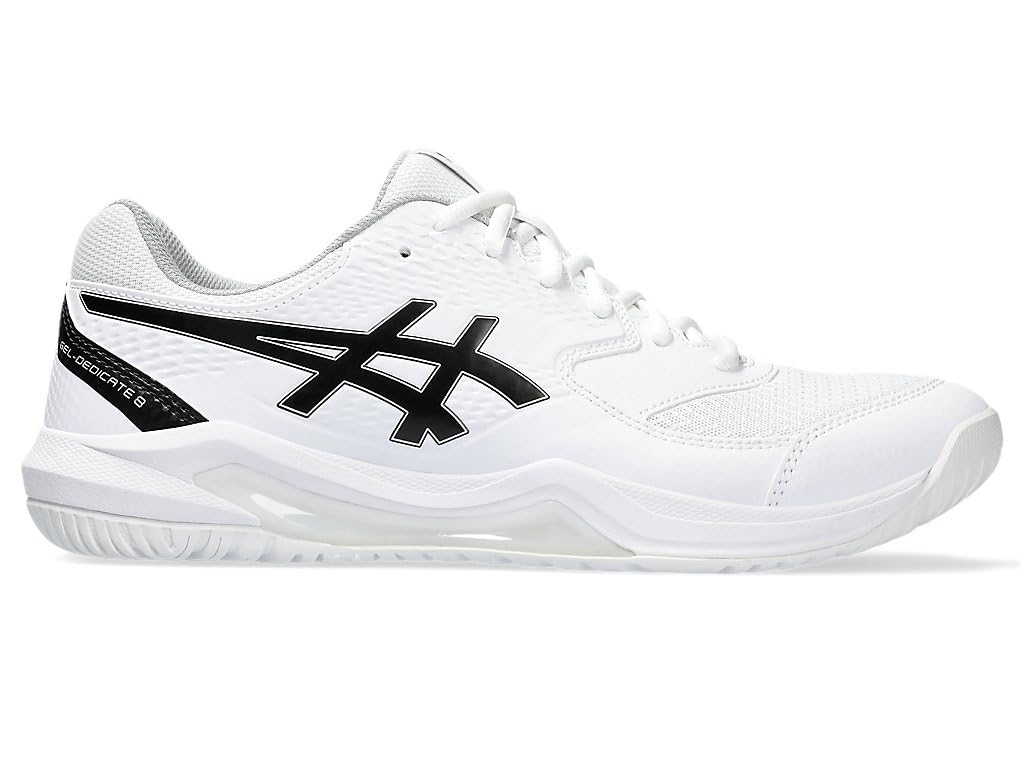
The ASICS Gel-Dedicate 8 is the entry-level gatekeeper for players who need reliable arch support without investing in premium foam systems. The rearfoot GEL technology inserts a silicone-like pad in the heel that absorbs shock during landing—this reduces the impact that travels up through the arch and into the knee, which is the exact mechanical benefit arch support shoes aim to provide. One reviewer noted the shoe felt tight initially but stretched after a few matches, which is typical for ASICS’ court last construction.
Reviewers described the support as “very good” and the shoe as durable, breathable, and lightweight. The wide version was explicitly praised for accommodating broader feet without losing heel lock. However, one buyer reported the laces are short, and the shoe runs tighter than previous ASICS models—so ordering a half-size up or opting for the wide version is recommended if you have a higher volume foot. The GEL cushioning is effective for recreational to intermediate play, but competitive players who need maximum energy return may find the foam less responsive than premium options.
Outsole durability on hard courts was noted as the primary weakness—one enthusiast called it “one of my favorite tennis shoes of all times” but lamented that it wears out quickly on hard surfaces. For weekend doubles or practice sessions, the Gel-Dedicate 8 delivers solid arch support at a price that leaves room for upgrading to a more durable model after the outsole wears. It’s a low-risk starting point for anyone unsure about their arch support needs.
Why it’s great
- Rearfoot GEL reduces knee and arch impact during landings
- Wide version available for broader feet without compromising arch support
- Lightweight and breathable construction for multi-set matches
Good to know
- Outsole wears faster on hard courts compared to premium models
- Initial tightness requires break-in—size up if between sizes
7. Dr. Scholl’s Be True Court Inspired Shoes
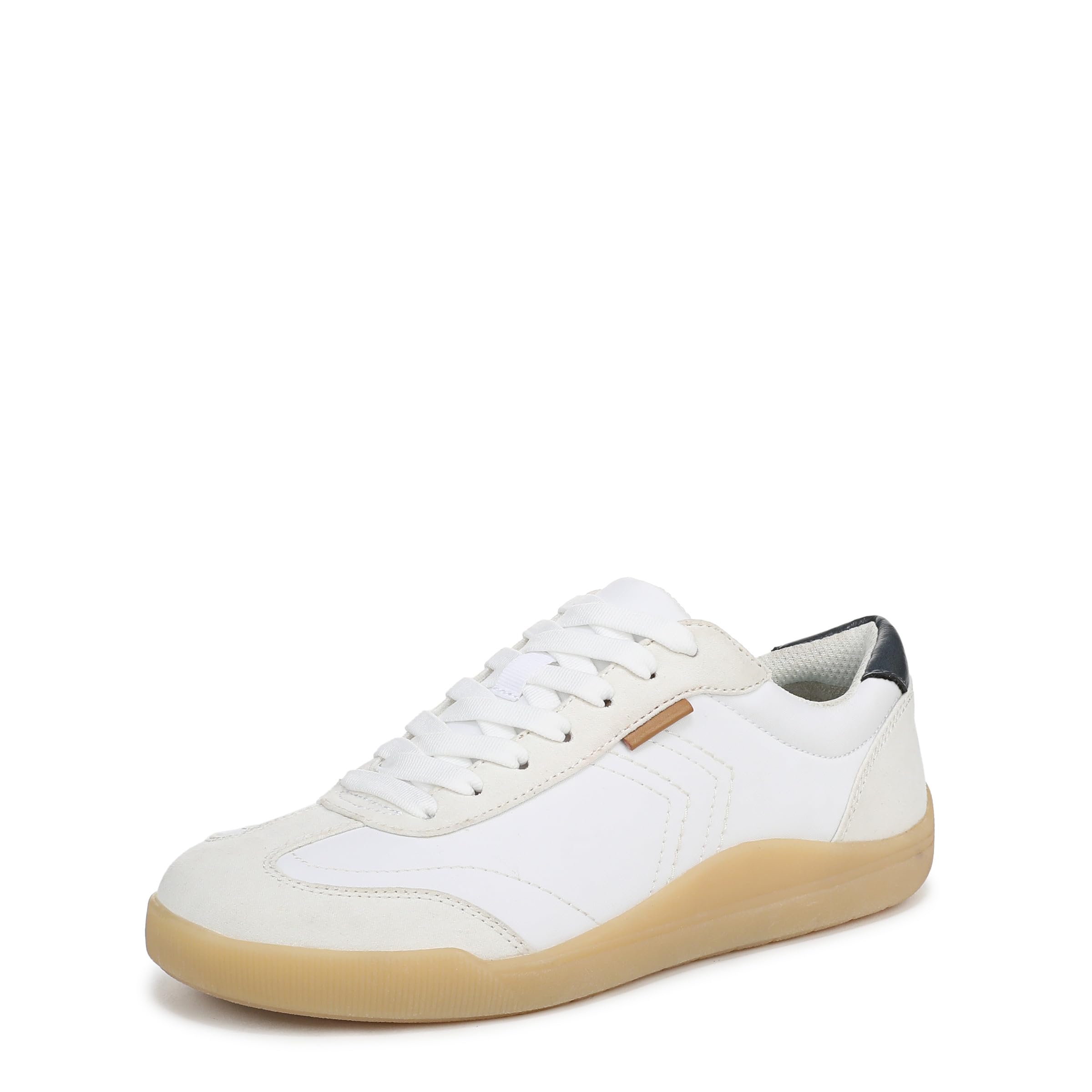
The Dr. Scholl’s Be True Court Inspired shoes bridge the gap between casual walking footwear and court-adjacent support. While not designed for competitive tennis, the antimicrobial insole and rounded toe box provide a spacious environment for arch support inserts, making this a strong choice for recreational players who prioritize comfort over lateral stability. One reviewer reported walking 8 miles daily while traveling, noting the shoe remained comfortable and stylish enough for dresses and casual wear alike.
Multiple buyers highlighted the wide toe box as a key feature for foot health—this prevents the toes from being crammed together, which can exacerbate arch strain by altering your natural gait. The shoe holds up well after washing, and several users ordered additional pairs for everyday use, indicating satisfaction beyond the court. The flat heel and minimal midfoot shank mean this shoe lacks the torsional rigidity needed for hard pivots and lateral slides, but for casual doubles or warm-up drills, the arch support from the insole system performs adequately.
The gold accent on the back was not visible in product photos according to one buyer, but overall quality and style received high marks. For players whose primary court activity is walking, gentle volleying, or teaching lessons where you’re on your feet for hours without sprinting, the Be True Court provides a budget-friendly entry into arch support footwear. It’s not a replacement for a true court shoe, but it fills a specific niche for low-impact use.
Why it’s great
- Wide toe box accommodates orthotics and natural toe splay
- Machine washable with durable construction after multiple cleanings
- Stylish enough for all-day wear off the court
Good to know
- Lacks the lateral support and shank rigidity for competitive play
- Not designed for hard pivots or aggressive court movement
FAQ
Can I use running shoes with arch support for tennis?
How do I know if a tennis shoe has a rigid enough midfoot for my arch type?
Will better arch support shoes help my plantar fasciitis during tennis?
Should I size up or down in arch support tennis shoes?
Final Thoughts: The Verdict
For most players, the arch support tennis shoes winner is the Hoka Bondi 9 because its 38mm stack height and zero break-in requirement provide instant relief for overpronators and plantar fasciitis sufferers alike. If you want dedicated lateral stability and GuideRails pronation control, grab the Brooks Adrenaline GTS 24 (Men’s) or the Women’s version. And for heavy court use at a mid-range investment, nothing beats the ASICS Game FlyteFoam for its responsive cushioning and true-to-size fit that keeps your arch supported through the 50th game.