That dull ache along your arch after a few hours on your feet isn’t something you have to live with. For anyone with flat feet, the right insole can mean the difference between a day that drains you and one where your feet simply don’t cross your mind. The problem is that most insoles are either too soft to correct overpronation or so rigid they feel like a rock under your midfoot.
I’m Emma — the founder and writer behind Baby Bangs. I’ve spent countless hours analyzing the biomechanics, material stacks, and real-world user feedback on orthotic insoles to separate the ones that truly stabilize the foot from those that just add a squishy layer.
This guide cuts through the noise to deliver a clear, practical take on the arch support for flat feet that actually holds up over a full shift, a long run, or a week of daily wear.
How To Choose The Best Arch Support For Flat Feet
Flat feet lack a natural arch, which causes the foot to roll inward (overpronate) during movement. This throws your entire kinetic chain off, leading to shin splints, knee pain, and lower back strain. The right insole doesn’t just pad the foot — it repositions it. Here are the three specs that matter most.
Heel Cup Depth and Stability
A deep U-shaped heel cup cradles the calcaneus (heel bone) and limits its side-to-side wobble. For flat feet, a shallow heel cup lets the foot continue pronating inside the shoe, defeating the purpose of the insole. Look for a cup that rises at least 8-10mm around the heel. This locks the rearfoot in place and creates a stable foundation for the arch correction to work.
Arch Profile and Material Rigidity
Not all arches are the same height, and a one-size-fits-all dome can cause more pain than it solves if it jams into a fallen arch at the wrong angle. The best supports use a semi-rigid material like TPU (thermoplastic polyurethane) in the arch cradle, which resists collapse under body weight without being so hard it causes pressure points. The arch should feel supportive, not like you’re stepping on a bottle cap. A 20-26mm arch height is the sweet spot for moderate to severe flat feet.
Shock Absorption vs. Support Balance
Pure support without cushioning transfers impact straight to your knees and hips. Pure cushioning without support lets your arch collapse. High-performance insoles layer a shock-absorbing material like PORON or Ortholite foam under the forefoot and heel, while the arch and heel cup use a stiffer material. This dual-layer approach absorbs ground impact while maintaining structural integrity under the midfoot.
Quick Comparison
On smaller screens, swipe sideways to see the full table.
| Model | Category | Best For | Key Spec | Amazon |
|---|---|---|---|---|
| Psveb Heavy Duty Orthotics | Mid-Range | Heavy users, long shifts | Dual PORON cushioning + deep U-shaped heel cup | Amazon |
| Cloudflo Plantar Fasciitis Insoles | Mid-Range | All-day standing on hard floors | TPU arch frame + Ortholite cushioning | Amazon |
| BestHalo Heavy Duty Insoles | Mid-Range | High arches with flat feet overlap | Biomechanical arch + EVA/gel cushioning | Amazon |
| Copper Fit Arch Relief Orthotics | Premium | Adaptive fit across all arch types | Memory foam + adaptive arch plate | Amazon |
| OUOKK Low Arch Support Inserts | Premium | Thin profile for tight shoes | 3/4 length, 26mm TPU arch, no trimming needed | Amazon |
In‑Depth Reviews
1. Psveb Heavy Duty Support Pain Relief Orthotics

This is the insole that flat-footed users who spend 9-10 hour shifts on concrete floors swear by. The dual-layer PORON cushioning provides an unusual blend of impact absorption and rebound that doesn’t pack down after weeks of use. The “Golden Triangle” design distributes support across the forefoot, arch, and heel simultaneously, which directly counteracts the sprawl of a collapsed arch.
The deep U-shaped heel cup is the standout feature for controlling overpronation. Reviewers weighing over 275 lbs report immediate improvement in foot fatigue and lower back pain, with no flattening of the arch dome after a month of daily wear. The foam construction is thick enough to require looser lacing in some shoes, but the trade-off is genuine structural correction rather than a temporary cushion.
One thing to note: the medium arch profile fits most flat feet well, but users with extremely low or zero arches may find the dome feels more aggressive than expected in the first 48 hours. The skin-friendly, sweatproof top layer keeps feet dry during long shifts, and the insole trims easily with scissors for a custom fit in work boots or sneakers.
Why it’s great
- Dual PORON layers absorb shock without losing shape
- Deep heel cup effectively locks the rearfoot
- Holds up for heavy users (230+ lbs) after weeks of use
Good to know
- Thicker profile may not fit low-volume shoes
- Medium arch may feel high for severely flat feet initially
2. Cloudflo Plantar Fasciitis Insoles
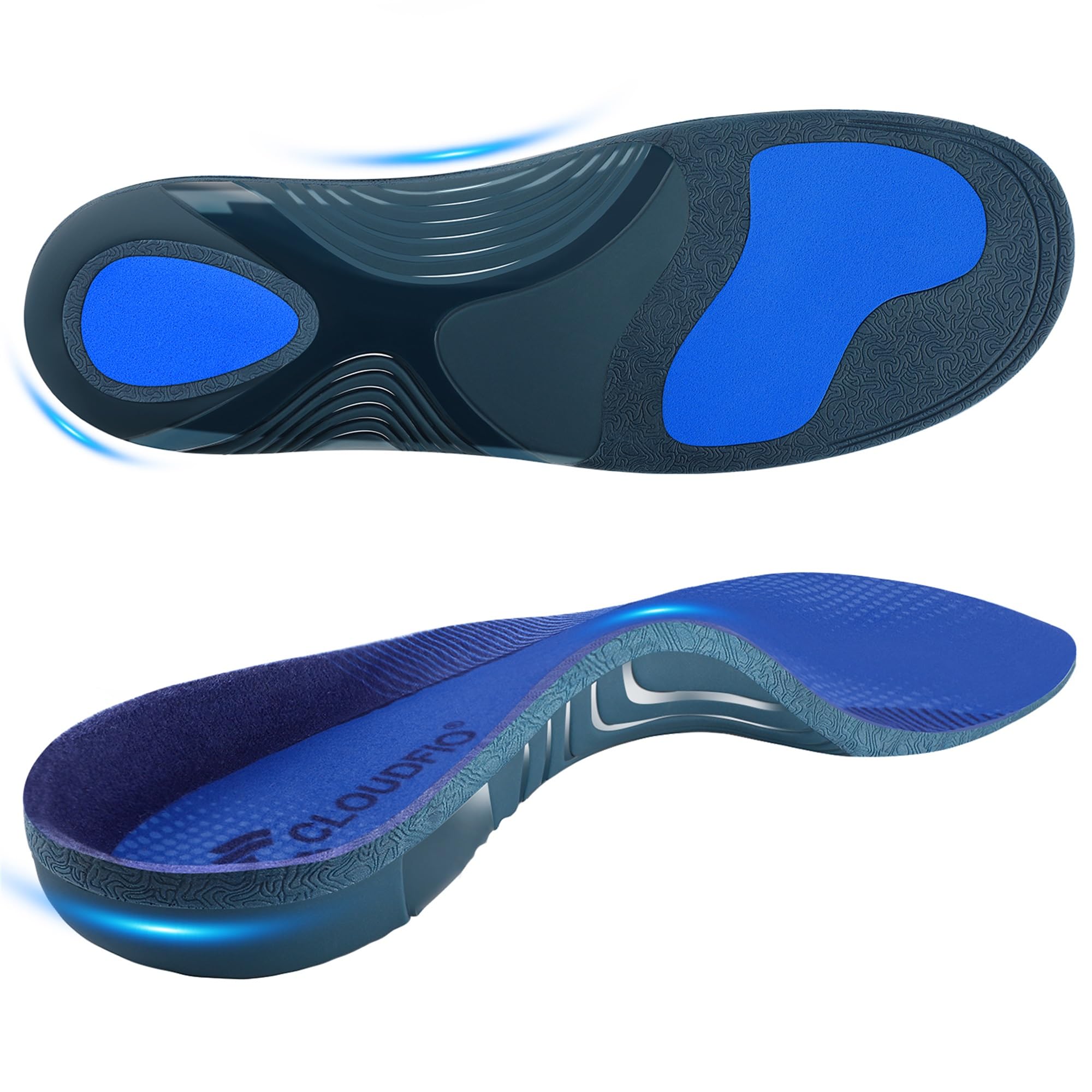
Cloudflo’s design philosophy centers on a hard TPU arch frame paired with a thick Ortholite foam layer. This combination gives the insole a firm, unyielding arch support that resists collapse under heavier loads while the foam provides a forgiving step-in feel. It’s a smart approach for flat feet because the rigid TPU prevents the foot from rolling inward over the arch, while the cushioning keeps the heel and forefoot comfortable.
Multiple customer reports confirm this insole eliminated severe heel pain and plantar fasciitis symptoms within days, even after other treatments failed. The deep heel cup and rigid arch work together to reduce the strain on the plantar fascia, allowing users to walk 4+ miles without the sharp pull under the heel. The velvet top layer is breathable and washable, which helps manage odor during 10+ hour shifts.
Be aware that the TPU frame is hard — you will feel it under the arch immediately. This is by design, but users accustomed to all-soft insoles may find the transition jarring for the first few wears. The size chart should be followed carefully, as the rigid arch does not flex to accommodate a mis-sized fit. Works best in sneakers, work boots, and athletic shoes with removable insoles.
Why it’s great
- Rigid TPU arch frame prevents overpronation
- Ortholite foam provides lasting cushion without packing down
- Washable, breathable top layer for all-day wear
Good to know
- Firm arch may feel uncomfortable if not sized perfectly
- Less cushioning than all-foam competitors for low-impact use
3. BestHalo Heavy Duty Plantar Fasciitis Insoles
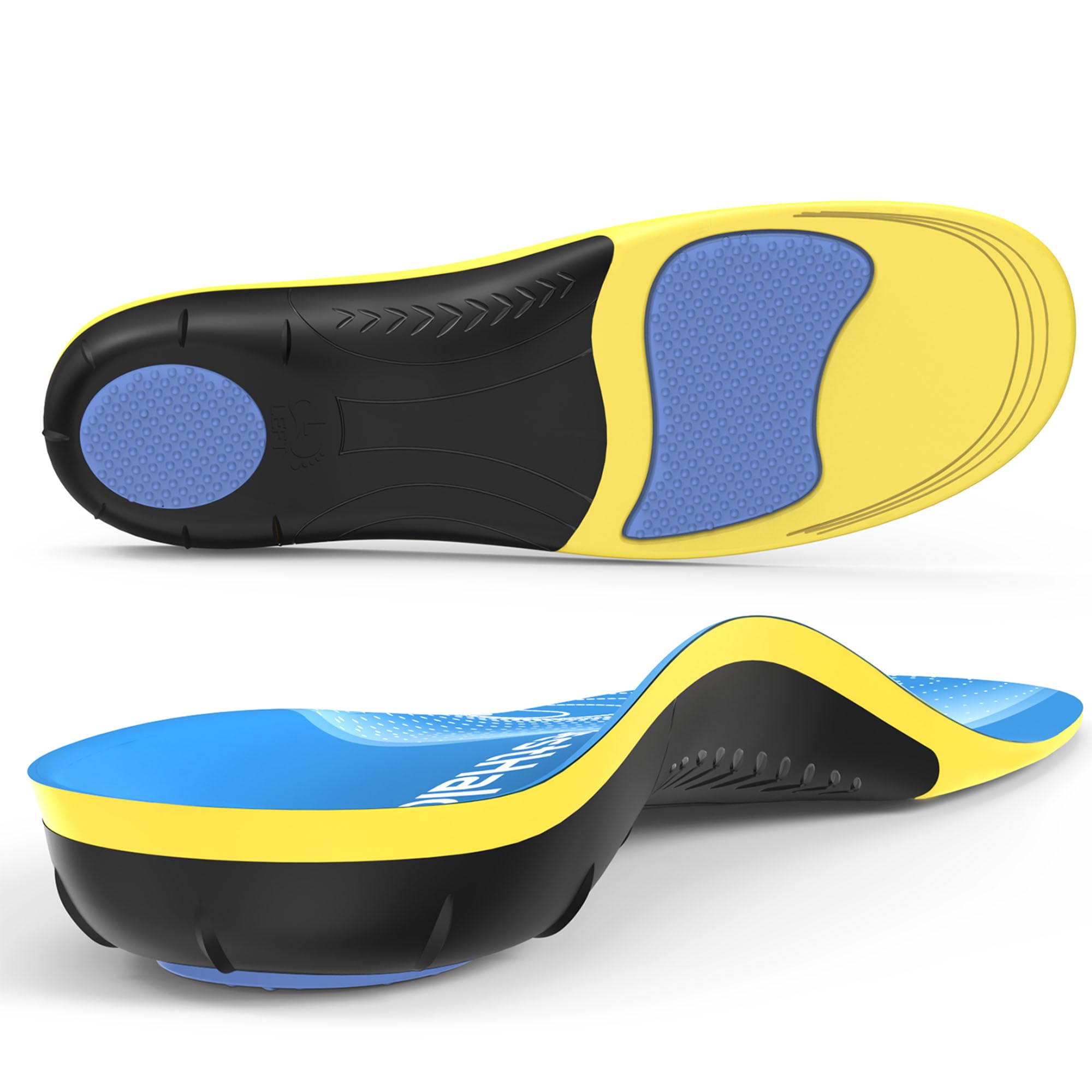
BestHalo targets a specific overlap — people with flat feet who also have a pronounced natural arch when not bearing weight, or those whose flat feet cause pain that radiates up to the hips. The biomechanical design uses an elevated arch profile combined with a contoured heel cup to re-align the entire lower kinetic chain. Users report the insole eliminated post-surgery foot-to-hip pain that had persisted despite other orthotics.
The EVA foam and gel cushioning system softens impact at heel strike, while the structured arch maintains its shape under load. This makes it a solid choice for anyone weighing over 220 lbs who needs both shock absorption and arch stability. The trim-to-fit design adapts to most athletic shoes and work boots, and the deep heel cup helps manage supination and pronation equally.
The primary trade-off is the arch height — it is genuinely high. Some users with very flat feet experienced new foot aching and lower back pain after two weeks, suggesting the dome was too aggressive for their arch type. BestHalo recommends a gradual break-in (2-3 hours daily for 3 to 7 days), which is standard for rigid orthotics but may frustrate those wanting instant relief.
Why it’s great
- High arch profile effectively realigns foot and hip
- EVA and gel cushioning absorb shock well
- Affordable compared to podiatrist-grade inserts
Good to know
- Arch may be too high for severely collapsed flat feet
- Break-in period required for comfort
4. Copper Fit Arch Relief Orthotics
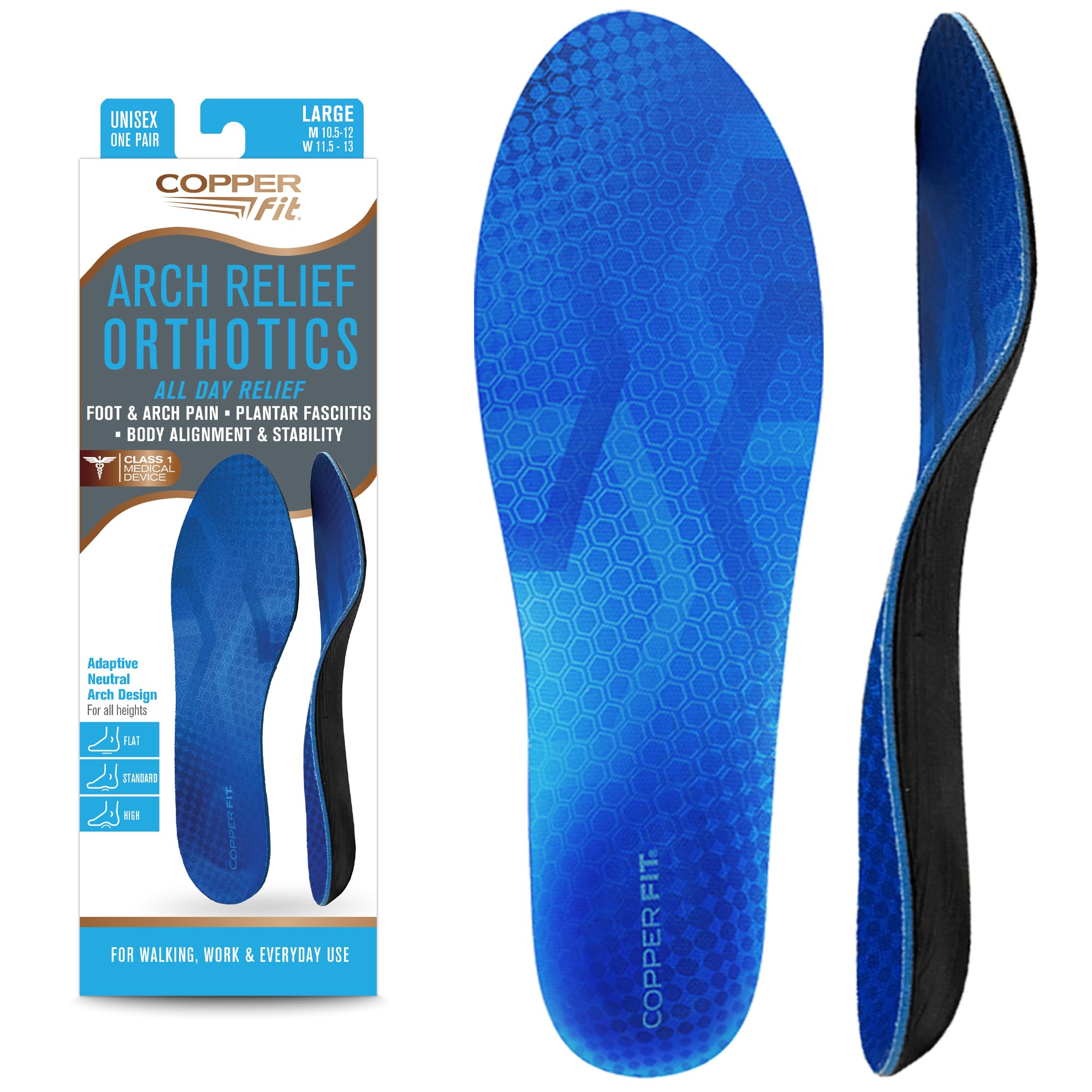
Copper Fit’s approach stands apart because the insole is designed to adapt to your existing arch shape rather than imposing a fixed dome. The memory foam layer conforms to the foot’s contour while the stabilizing heel cup and shock-absorbing heel pad work together to manage overpronation. This makes it a rare option that can accommodate low, medium, and even high arches in a single product.
Users with fallen arches report dramatic relief — some describe it as the most effective insert they have found for managing flat feet and plantar fasciitis. The low-profile design allows it to slide into dress shoes, casual sneakers, and work shoes without feeling bulky, which is a major advantage for users who need support across multiple footwear types. The break-in period is minimal; several reviewers found them comfortable straight out of the box.
The downside is durability over the long term. Memory foam, while comfortable, is less resilient than TPU or PORON and may compress faster under heavy daily use. Users who weigh over 220 lbs or stand on concrete floors for full shifts may find the foam loses its rebound within a few months. This insole is best suited for lighter daily activity or as a rotating option between more rigid orthotics.
Why it’s great
- Adapts to individual arch height for a custom-like fit
- Low profile fits dress shoes and casual footwear
- Minimal break-in period required
Good to know
- Memory foam may compress faster than rigid foam alternatives
- Less structural support for very heavy users
5. OUOKK Low Arch Support Inserts
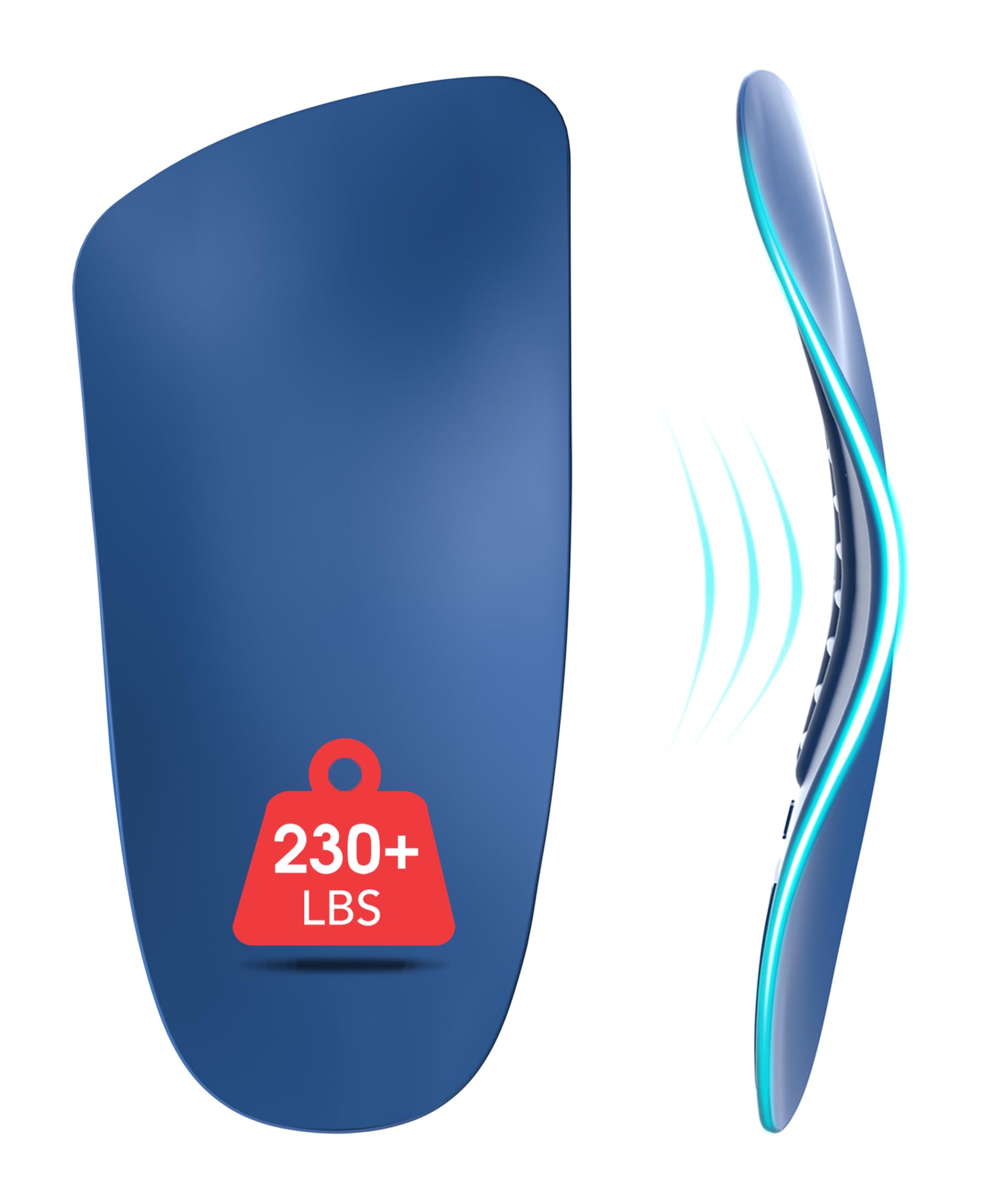
This is the answer for anyone whose flat feet need strong correction but who can’t fit a full-length insole into their preferred shoes. The 3/4 length design stops before the toes, making it thin enough to slide into loafers, high heels, hiking boots, and other footwear where space is tight. Despite the slim profile, the 26mm TPU arch cradle provides heavy-duty support rated for users over 230 lbs.
Reviewers with extremely high arches and hammer toes also report success, as the firm arch cradle relieves plantar fasciitis pain by lifting and stabilizing the midfoot without adding bulk under the toes. The premium TPU material is rated to last over two years, which outpaces most foam-based competitors significantly. The absence of a forefoot section also means no curling or bunching in shoes with narrow toe boxes.
The trade-off is a firmer feel and less heel and forefoot cushioning since the pad ends at the midfoot. Users switching from full-length gel insoles may find the ride too rigid. Additionally, the insert can shift inside shoes without a full-length base underneath, though most reviewers found it stayed in place with snug footwear. The no-trim design simplifies sizing but requires careful selection from the size chart.
Why it’s great
- 3/4 length fits tight and narrow shoes
- Durable TPU arch lasts over 2 years
- No trimming needed for most sizes
Good to know
- Firm support with less forefoot cushioning
- May shift in shoes without a snug fit
FAQ
How long does it take to adjust to rigid arch supports for flat feet?
Can I use full-length insoles in my work boots and 3/4 length in dress shoes interchangeably?
What is the difference between EVA foam and TPU for arch support?
Final Thoughts: The Verdict
For most users, the arch support for flat feet winner is the Psveb Heavy Duty Orthotics because it delivers the critical balance of deep heel stabilization, dual PORON cushioning, and a medium arch that suits the widest range of flat-footed walkers without an overly aggressive break-in. If you need an insole that can slide into tight dress shoes and still provide heavy-duty correction, grab the OUOKK Low Arch Support Inserts. And for those who want a more adaptive, softer step with minimal break-in, nothing beats the Copper Fit Arch Relief Orthotics.