One misstep on a hard court can mean weeks on the sideline. For volleyball players, ankle instability isn’t just a nuisance—it’s a career interruption that changes how you approach every jump, every slide, every landing. The difference between staying in the game and watching from the bench often comes down to the wrap around your joint.
I’m Emma — the founder and writer behind Baby Bangs. I’ve spent years analyzing athletic support gear, comparing stabilizer designs, and breaking down the mechanical specs that separate a flimsy sleeve from a true brace.
Whether you need post-sprain protection or preventative reinforcement for a previously rolled ankle, finding the right ankle brace for volleyball means matching your support needs to a brace that actually fits inside a court shoe without slipping.
How To Choose The Best Ankle Brace For Volleyball
Volleyball demands explosive lateral movement and repeated vertical loading. A brace designed for general walking or running often lacks the anti-roll resistance needed for a hard court. You need a stabilizer that mimics athletic taping—locking the joint without crushing the forefoot.
Support Level: Prevention vs. Recovery
A compression sleeve offers minimal resistance—fine for mild awareness, useless if your ankle already buckles. Look for a lace-up or strap design that adds mechanical resistance against inversion rolls. If you are post-sprain or post-surgery, removable side splints provide the rigid stop that prevents re-injury during a hard landing.
Fit Inside Your Court Shoe
Bulky braces that require sizing up two full shoe sizes kill your court feel. Prioritize low-profile models with an open heel that sits flat inside a standard volleyball shoe. Check user reports for whether the brace fits inside sneakers without forcing the foot forward—that forward slide causes toe jamming and blisters.
Closure System: Lace vs. Quick-Strap
Traditional laces let you dial in tension from forefoot to shin, but they take longer to adjust between plays. Hook-and-loop quick-lace systems trade some precision for speed, letting you tighten or remove the brace between rotations. If you practice in blocks, fast on-off matters. If you want match-grade stability, sacrificial lace time is worth the control.
Durability Over a Season
The velcro patches on figure-8 straps lose grip after repeated sweat exposure. Check whether the brace uses reinforced laces and silicone printing on the sole to keep straps anchored during slides. A brace that loosens after two hours of play is worse than no brace—it gives a false sense of security while your ankle is actually free to roll.
Quick Comparison
On smaller screens, swipe sideways to see the full table.
| Model | Category | Best For | Key Spec | Amazon |
|---|---|---|---|---|
| AGPTEK Ankle Brace | Mid-Range | Quick on/off during practice | Dual splints + X-cross straps | Amazon |
| Vive Lace Up Ankle Brace | Mid-Range | Everyday wear plus light court use | Figure-8 dual straps, finger loops | Amazon |
| Fitomo Triple-Lock Brace | Mid-Range | Transitioning from boot to court | Triple-Lock: top strap + splints + cross | Amazon |
| Ultra 360 Lace Up Brace | Premium | Competitive volleyball, match play | Figure-8 straps mimic trainer taping | Amazon |
| Active Ankle AS1 Pro | Premium | Loose ankles needing flexible mobility | Non-slip silicone sole, speed laces | Amazon |
In‑Depth Reviews
1. AGPTEK Ankle Brace
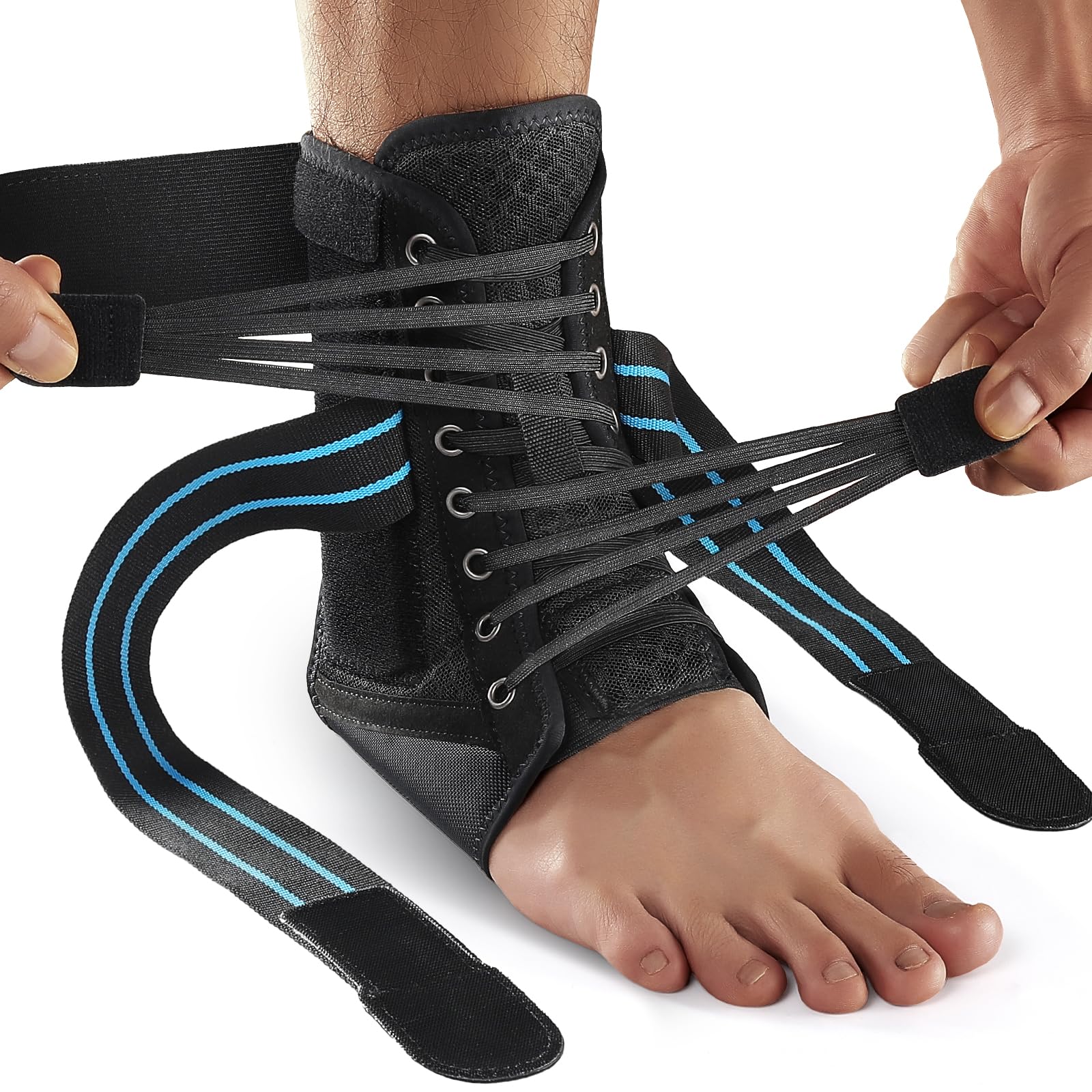
The AGPTEK brace earns the top spot because it solves the two biggest frustrations volleyball players face: speed of application and customizable support. The quick-lace system with dual-direction hook-and-loop fasteners lets you go from bag to court in under ten seconds—critical when you have two minutes between drills. The reinforced Oxford nylon with honeycomb ventilation zones prevents the sweat buildup that usually makes straps slide after an hour.
What sets this apart for volleyball is the removable lateral splints. Many players need rigid protection during the first weeks back from a sprain but want more freedom once scar tissue matures. The AGPTEK lets you peel out the splints without buying a second brace. The open heel design also sits flat inside a standard Mizuno or Asics court shoe, so you won’t feel that forward tilt that throws off your jump approach.
User feedback consistently highlights better support than doctor-provided braces, with several reviews noting post-surgery stability that rivals orthopedic-grade hardware. The medium size accommodates women’s 10W easily, and the large fits men’s shoe size 9 with a stretchable shoe. The only quibble is that the sizing runs slightly small—if you are between sizes, size up.
Why it’s great
- One-second fastening saves time between rotations
- Splints removable for step-down support as injury heals
- Breathable fabric prevents sweat slippage during long matches
Good to know
- Runs slightly small; size up if between sizes
- Splints may feel rigid during first few wears
2. Vive Lace Up Ankle Brace

The Vive brace positions itself as the everyday stabilizer that bridges recovery with low-impact volleyball. The medium support level works well for players who have mild instability or are returning from a low-grade sprain but still want to participate in warm-ups and light hitting. The finger loops on the figure-8 straps let you pull the lateral and medial supports tight without needing a second person to adjust your brace.
One feature that stands out for court use is the bilateral design—it works on either foot, so you can flip it if you prefer a specific strap orientation. The low-profile, open-heel construction means it fits inside Vans and standard sneakers, though some users report it feels bulky when paired with narrow court shoes. The elastic cuff that holds the laces and straps in place prevents the dreaded mid-game loosening that plagues cheaper lace-only braces.
Where this brace falls short for competitive volleyball is the bulk factor. Multiple reviews note that even the medium size feels thick inside running shoes, which can cause your foot to sit higher off the ground and reduce court feel. It’s a solid pick for practice and recovery days, but players who need maximum stability for match-level play may want a more streamlined option.
Why it’s great
- Finger loop straps allow solo tightening without help
- Works on left or right foot for versatile use
- Doctor-recommended for post-boot transition
Good to know
- Bulky profile may not fit snugly in narrow court shoes
- Sizing chart inconsistent; order two sizes to test
3. Fitomo Triple-Lock Brace
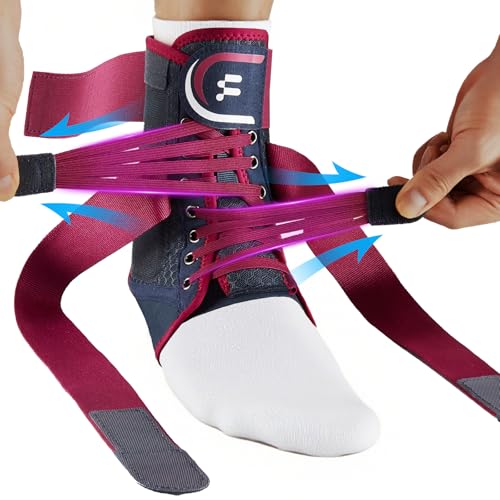
The Fitomo brace is built for the player who just graduated from a walking boot and needs to ease back into court movement without relapsing. The Triple-Lock system combines a top compression strap, dual removable side stabilizers, and cross straps that create a cradle around the talus. This three-layer approach provides the most mechanical resistance to inversion of any brace in this group, which is exactly what you need during those first nervous practices.
The figure-8 adjustable strap design lets you fine-tune tightness between drills—looser during warm-up, tighter during scrimmage. The stabilizers are removable, so as your ligament strength returns, you can drop the rigid protection and keep wearing the same brace with just the straps engaged. Users report the brace stays secure without readjusting, even during basketball and volleyball sessions, thanks to the polyester-nylon blend that grips the skin better than neoprene.
Several reviews highlight the brace’s effectiveness for post-ORIF recovery and stroke-related inversion, which speaks to its structural integrity. The lightweight feel (0.19 kg) and low-profile design mean it slides into ankle socks without bunching. The main drawback is price—it sits at the top of the mid-range tier, and some users expected a two-pack for that cost. But for a single brace that handles both recovery and return, it delivers.
Why it’s great
- Triple-Lock system provides high mechanical roll resistance
- Stays in place without slipping during multi-hour sessions
- Fits inside sneakers without bulk, works with ankle socks
Good to know
- Higher price point, single unit per purchase
- Velcro may need pressing to avoid tangling in storage
4. Ultra 360 Lace Up Brace
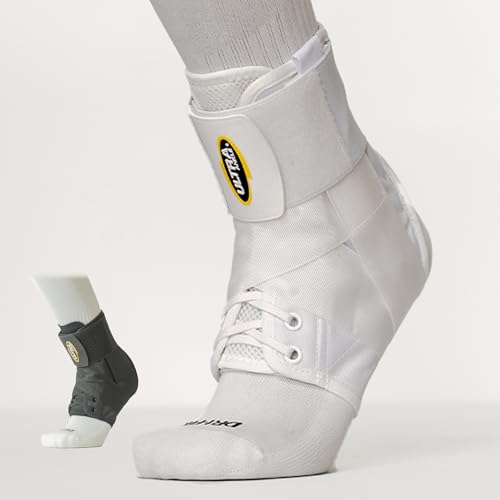
The Ultra 360 is what you grab when you need your brace to feel like an extension of your ankle, not a foreign object strapped to your leg. The lace-up design with adjustable figure-8 straps is engineered to mimic the exact basket-weave and heel-lock techniques athletic trainers use—that familiar, reliable tension that tells your brain the joint is locked. For volleyball players who have been taped before competition, this brace recreates that mental confidence as much as the physical restraint.
The low-profile, breathable nylon construction is the thinnest in this lineup, making it the most compatible with high-top court shoes and cleats. Users confirm it fits inside boots and sneakers without raising the heel, which preserves your natural jump mechanics. The medical-grade materials qualify for FSA/HSA eligibility, and the lightweight feel (0.06 kg) means you barely notice it during a five-set match.
Customer feedback from volleyball players is overwhelmingly positive—one review describes it as a “very important ankle saver” that prevented a severe sprain during a tournament. The fit requires minor lace adjustments to balance tightness; overtightening can cause forefoot numbness, while under-tightening leaves too much play. The top strap could be slightly longer for wider ankles, but overall, this is the closest you will get to a professional tape job in a reusable package.
Why it’s great
- Mimics professional athletic taping technique precisely
- Ultra-low profile fits all court shoes without lift
- FSA/HSA eligible, medical-grade build quality
Good to know
- Tension balancing requires trial and error
- Top strap may be short for wide ankles
5. Active Ankle AS1 Pro
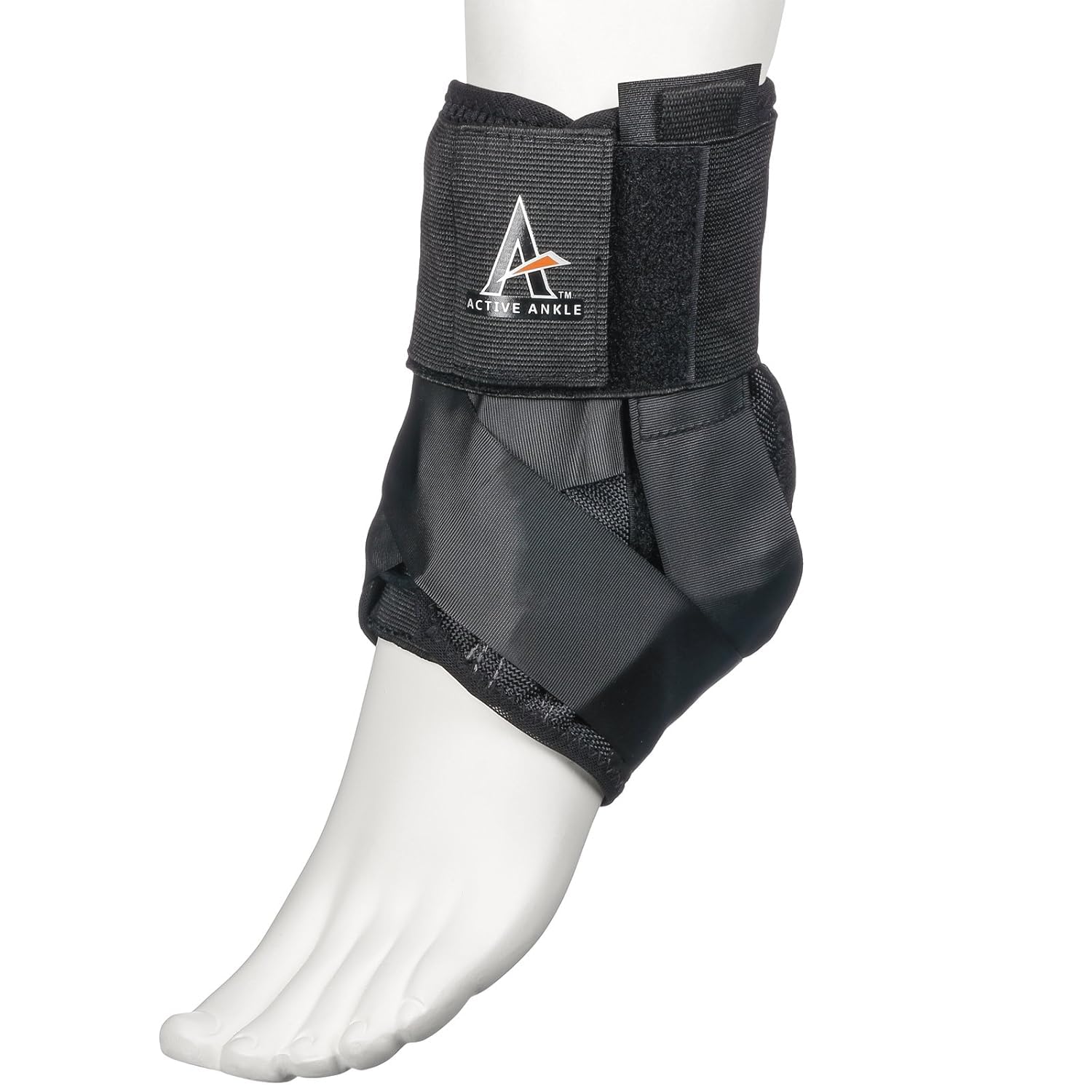
The Active Ankle AS1 Pro is the brace that keeps coming up in conversations with volleyball coaches and orthopedic specialists. Cramer, the manufacturer, has been making athletic taping products for decades, and the AS1 Pro applies that knowledge to a reusable brace. The speed lacing eyelets reduce hot spots on the top of the foot—a common complaint with traditional lace braces that dig into the extensor tendons during plantarflexion (toe point for a spike).
The non-slip silicone printing on the sole is a game-changer for volleyball. When you dive for a ball or slide after a block, most braces shift inside the shoe. The silicone grips the insole, keeping the figure-8 and circumferential straps locked in position. The non-stretch vertical straps imitate the basket weave and heel lock—the same finish an athletic trainer would apply with tape—which provides the lateral stability you need without restricting the plantarflexion required for jumping.
User reviews highlight extreme durability—some players report only two brace purchases in five years of competitive volleyball. The brace allows more mobility than semi-rigid options like the McDavid while still providing sufficient protection for loose ankles. The main trade-off is that the criss-cross straps loosen over time and require re-tensioning mid-session, and the brace runs snug, so careful sizing is essential. For players who value natural movement with targeted support, this is the benchmark.
Why it’s great
- Silicone sole printing prevents brace shift during slides
- Speed laces reduce pressure on foot tendons
- Exceptional durability, lasts multiple seasons
Good to know
- Criss-cross straps loosen and need mid-play adjustment
- Snug fit, must size carefully for comfort
FAQ
Can I wear an ankle brace for volleyball inside my court shoes without sizing up?
How tight should I adjust the figure-8 straps for volleyball?
Should I wear the brace on both ankles if only one has been injured?
Final Thoughts: The Verdict
For most users, the ankle brace for volleyball winner is the AGPTEK Ankle Brace because it combines a fast on-off system, dual removable splints, and a breathable fabric that stays put during long practices. If you want professional tape-level precision for match day, grab the Ultra 360. And for players with chronically loose ankles who need flexible mobility with targeted support, nothing beats the Active Ankle AS1 Pro.