The pivot that wins the game is the same pivot that buckles your ankle. Every lateral cut on turf, every sharp stop-and-go, every contested header — they all load the ankle complex with forces that a standard sleeve simply cannot manage. The right brace doesn’t just compress; it actively resists the inversion and eversion that end seasons. This is the difference between playing through the second half and sitting out four weeks.
I’m Emma — the founder and writer behind Baby Bangs. I’ve analyzed hundreds of ankle support designs across multiple sports, focusing specifically on how brace geometry, strapping systems, and material density translate into real-world stability during high-agility movement.
Use this guide to find the best ankle brace for soccer that fits your specific return-to-play timeline or prevention goal.
How To Choose The Best Ankle Brace For Soccer
Soccer demands a unique balance from an ankle brace: it must be stout enough to stop a rolled ankle during a 1v1 dribble, yet thin enough to fit inside a snug synthetic cleat without creating pressure points. Choosing wrong means either inadequate protection or a brace that bunches and shifts with every touch on the ball. Focus on these three criteria for a decision that holds up over a full season.
Strapping Architecture: Figure-8 vs Lace-Up Only
The single most important mechanical feature is how the brace controls lateral roll. A simple lace-up brace provides circumferential compression but does little to stop the talus from inverting. A figure-8 strap — one that wraps under the heel and crosses over the instep — specifically locks the subtalar joint. For soccer, where most ankle injuries happen during lateral cutting, a brace with a figure-8 design or integrated heel-lock strap is the minimum effective starting point.
Profile and Cleat Compatibility
A bulky brace with thick padding on the sides will not fit inside a standard soccer cleat. The heel pocket of most firm-ground boots is tight. Look for a brace with a low-profile, open-heel construction and minimal material buildup around the malleoli. If the brace forces you to go up a full shoe size, you lose the snug fit that allows sharp directional changes. The best soccer braces compress the ankle without expanding the shoe.
Weight and Breathability
Soccer involves 90 minutes of continuous movement. A brace that traps heat or absorbs sweat becomes a distraction — and a distraction during a high-speed tackle is a liability. Neoprene-heavy braces retain moisture and break down faster. Nylon or knit-based braces with honeycomb ventilation or 3D AirKnit fabric wick moisture, reduce odor, and maintain structural integrity through repeated wash cycles. Lightweight construction also matters for maintaining explosive acceleration off the plant foot.
Quick Comparison
On smaller screens, swipe sideways to see the full table.
| Model | Category | Best For | Key Spec | Amazon |
|---|---|---|---|---|
| Med Spec ASO Ankle Stabilizer | Lace-up + Figure-8 | Match-ready lateral control | Figure-8 elastic straps | Amazon |
| DonJoy Stabilizing Speed Pro | Speed Lace-up | Quick changes & Achilles support | 800D ballistic nylon + stays | Amazon |
| MUELLER The One Ankle Brace | Speed Lace + Figure-8 | Return-to-play rehab | Integrated speed lacing system | Amazon |
| Ossur FormFit Ankle Brace | Lace-up + Figure-8 | Long-term prevention | Figure-8 inversion/eversion control | Amazon |
| Bauerfeind Sports Ankle Support Dynamic | Compression Sleeve | Mild support & proprioception | 3D AirKnit medical compression | Amazon |
| Vive Lace Up Ankle Brace | Lace-up + Strap | Budget mid-range support | Figure-8 stabilizing straps | Amazon |
| AGPTEK Ankle Brace | Lace-up + Splints | Entry-level budget buy | Removable lateral splints | Amazon |
In‑Depth Reviews
1. Med Spec ASO Ankle Stabilizer
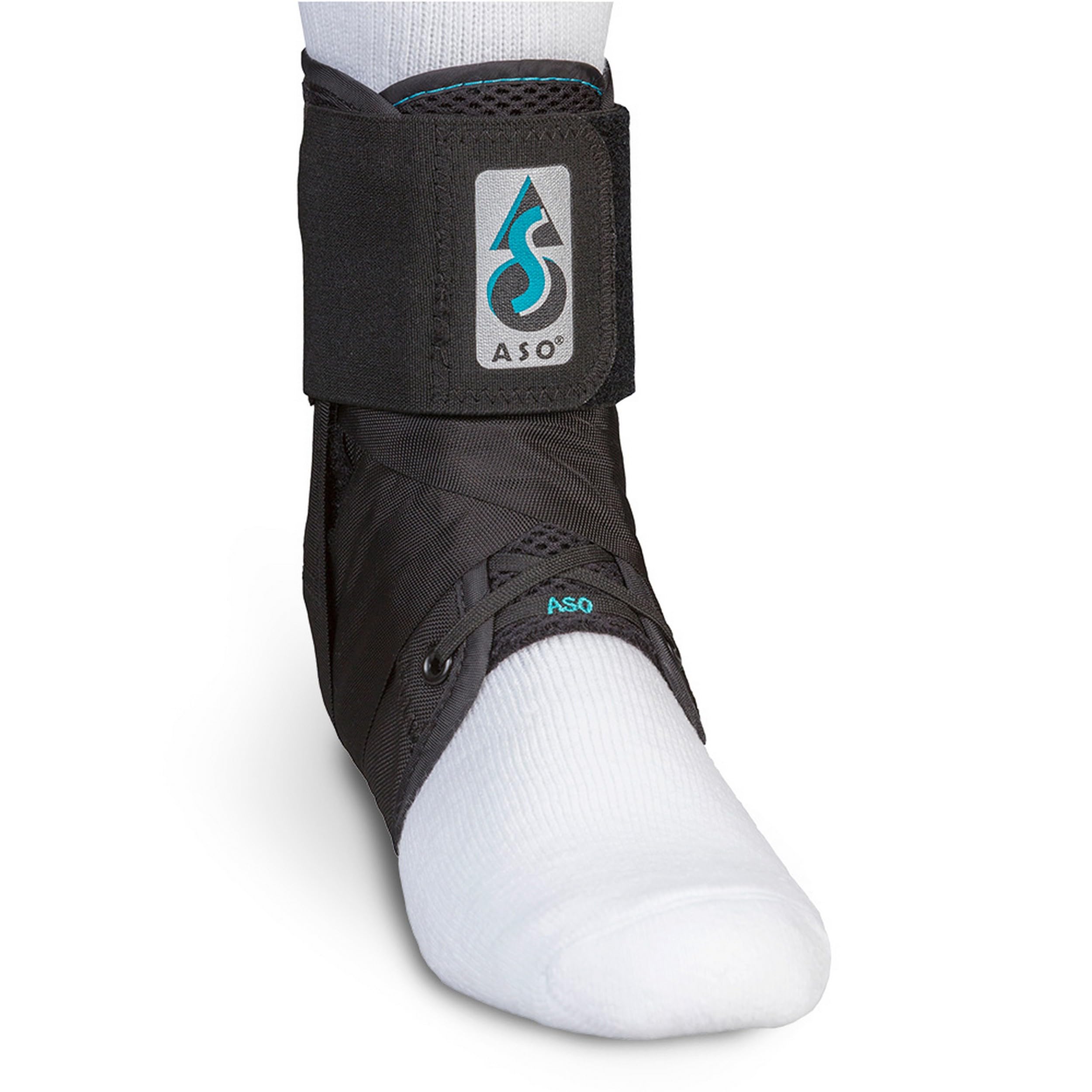
The ASO Ankle Stabilizer has been a staple in athletic training rooms for years, and the reason comes down to its twin elastic figure-8 straps. Those straps wrap independently under the heel and across the dorsum of the foot, creating a mechanical block against the inversion roll that accounts for the vast majority of soccer ankle sprains. The lace-up base provides even circumferential compression across the malleoli, while the CoolFlex tongue and ventilated nylon side panels prevent the sweat-soaked breakdown common with full neoprene braces. Users consistently report that this brace offers a stable, confidence-inspiring fit that does not slip during lateral movement.
Fit within a cleat is a genuine consideration here. The profile sits relatively low across the sides, but the heel wrap adds some material under the Achilles area. Most players will find it fits best in a standard-cut turf shoe or a wider-profile leather cleat rather than an ultra-slim synthetic speed boot. The XX-Small through Large size range covers youth and adult, so it can match a midfielder through a fullback across different foot volumes. The lack of rigid stays means it relies entirely on fabric tension and strapping geometry for stability — a design choice that favors natural ankle mechanics over brute-force immobilization.
For the player returning from a grade 2 sprain who wants to re-enter 11v11 play without taping every session, the ASO hits the sweet spot between professional-grade lateral control and everyday wearability. The breathable tongue and padded interior reduce irritation over 90 minutes, and the bilateral design works on either foot without needing separate left/right models. Durability holds up through a full season of weekly matches, though the elastic straps may lose some snap after six months of heavy use.
Why it’s great
- Dual figure-8 straps provide targeted inversion/eversion control
- Low-profile CoolFlex padding fits inside most cleats
- Trusted staple in athletic training rooms
Good to know
- Heel wrap may feel snug in narrow synthetic boots
- Straps can lose elasticity with intensive weekly use
2. DonJoy Stabilizing Speed Pro Ankle Support Brace

The DonJoy Speed Pro changes the game for players who hate fumbling with traditional laces in the locker room. Its integrated speed-lace system uses dual Velcro pull tabs that tighten the entire chassis in seconds, with a circumferential elastic strap at the top that locks the heel and provides additional tibia-fibula compression. The 800D ballistic nylon build is noticeably tougher than nylon-based competitors — it stands up to the scraping and abrasion of artificial turf without developing frayed edges or losing structural tension. Removable medial and lateral articulated stays add a proprioceptive layer that helps the brain recalibrate joint position during high-speed cuts.
Achilles tendonitis sufferers have reported outsized benefits from the Speed Pro because the top cuff distributes load up the lower leg, reducing direct stress on the tendon insertion point. The open-heel design keeps the calcaneus free, but the D-rings on the side of the brace can create a pressure point against the lateral malleolus in narrower feet. Users report that the brace runs slightly warm during extended play due to the dense nylon construction, so pairing it with a moisture-wicking sock is advisable. The universal fit works on both feet, and the medium accommodates most male foot sizes 8-10 without causing a significant shoe volume mismatch.
For the player who transitions from a cam boot to active play, the Speed Pro offers a bridge between full immobilization and free motion. The rigid stays can be removed as the ankle regains strength, allowing a gradual step-down approach. The abrasion resistance also makes it a strong choice for centers and defenders who spend more time on artificial turf surfaces. The trade-off is marginal bulk — it occupies slightly more lateral space than sleeve-style braces, so an accommodating cleat is recommended.
Why it’s great
- Speed-lace system with Velcro tabs for rapid on/off
- Removable articulated stays allow progressive rehab
- 800D ballistic nylon resists turf abrasion
Good to know
- D-rings may press on the lateral ankle bone
- Runs warm during extended match play
3. MUELLER Sports Medicine The One Ankle Brace Premium

Mueller’s The One is a direct response to the most common complaint about lace-up braces — they take too long to put on. The integrated speed-lacing system uses fewer eyelets and flat, tangle-resistant laces that allow a player to cinch the brace tight in under fifteen seconds. A grip coating on the interior heel area prevents the brace from migrating south during lateral shuffles and explosive starts, a problem that plagues many entry-level lace-ups. The figure-8 strapping system is built into the chassis rather than added as an aftermarket strap, which creates a more integrated wrap that does not dig into the instep.
The medium size fits a men’s shoe 9-11 and a women’s 10-12, placing it comfortably within the range of most adult soccer players. Users recovering from a broken ankle or a high-grade sprain report that the brace provides enough structural integrity to allow weight-bearing walking drills and passing exercises without the ankle feeling unstable. The flat laces distribute pressure evenly across the top of the foot, avoiding the hot spots that round laces can create under the tongue of a tight cleat. After a year of daily use, the foot trim piece may show wear at the seam, but the core strapping and lacing mechanisms hold up well through repeated washing.
Where The One distinguishes itself is in the rehab-to-return transition. The adjustable nature of both the laces and the figure-8 straps allows a player to gradually reduce compression as the joint recovers, without switching to a completely different brace. The grip coating also helps it remain stable during low-intensity jogging and cutting drills before the player is ready for full match load. For an athlete coming off a significant ankle injury who wants a single brace to carry them through the entire return-to-play protocol, this is the most versatile option available.
Why it’s great
- Speed-lacing system enables fast adjustment on the sideline
- Interior grip coating prevents migration during play
- Adjustable strapping adapts across the rehab timeline
Good to know
- Foot trim piece may show seam wear after a year
- Not as low-profile as a pure compression sleeve
4. Ossur FormFit Ankle Brace with Figure 8 Strapping

Ossur is a name that carries weight in orthopedic bracing, and the FormFit demonstrates why. The figure-8 strapping is engineered specifically to control inversion and eversion — the two planes of motion that cause the vast majority of soccer ankle sprains during cutting and landing. The material is lightweight and feels almost like a stiff fabric sleeve rather than a bulky orthopedic device, which gives it an advantage in cleat fit. Users report that it slides easily into standard soccer shoes without requiring a full size up, and the open-heel design allows for natural Achilles movement during sprinting.
Durability is a standout feature: multiple users have reported getting three to four years of consistent weekly use out of a single FormFit. The quality of the knit construction and the resilience of the figure-8 straps mean the brace does not lose its stabilizing tension after a season of washing and drying. The low-profile build also contributes to comfort during prolonged wear — players have worn it through full 90-minute matches and reported no bunching, no slipping, and no pressure points on the bony prominences of the ankle. The one caveat is sizing: the brace may feel large for a skinny, narrow foot, and users with very slim ankles should consider sizing down.
For the player who prioritizes prevention over intensive rehab support, the FormFit is the strongest daily-driver brace in this lineup. It does not offer the same rigid stabilization as a brace with integrated stays, but it provides enough mechanical resistance to prevent the joint from rolling past its safe range of motion during dynamic play. The breathable material also manages moisture effectively, reducing the risk of skin irritation during back-to-back training sessions in humid conditions.
Why it’s great
- Proven durability — users report 3-4 years of play
- Low-profile build fits easily in standard cleats
- Figure-8 design effectively limits inversion range
Good to know
- May feel oversized for very narrow or skinny ankles
- No rigid stays for those wanting maximum immobilization
5. Bauerfeind Sports Ankle Support Dynamic
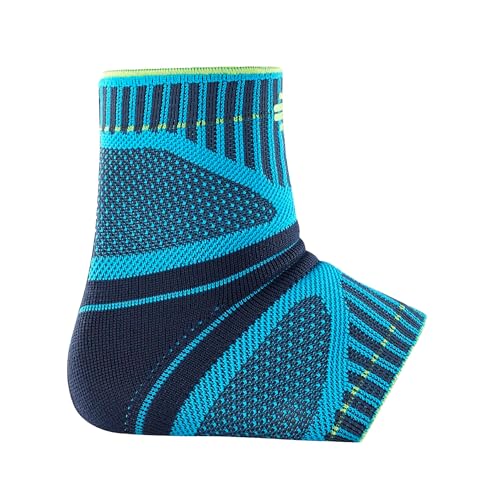
The Bauerfeind Sports Ankle Support Dynamic takes a fundamentally different approach from the lace-up braces on this list. It is a pull-on compression sleeve that uses medical-grade gradient compression and 3D AirKnit fabric to improve proprioception and stabilize the ankle without mechanical straps or rigid panels. The knit is crafted in Germany and is noticeably superior to standard neoprene — it retains its elasticity through repeated machine washing, does not absorb odor the way foam-lined sleeves do, and allows for significantly better airflow. For a player who experiences mild instability or wants preventative support without a bulky chassis, this is the most comfortable option available.
The lack of a figure-8 strap or lace-up tension means the Dynamic does not provide the same mechanical block against inversion as a traditional stabilizer. It relies on compression and enhanced sensory feedback to prevent the ankle from rolling — a strategy that works well for players with good muscular control who need an extra layer of confidence. Users recovering from an acute sprain report that it allowed them to bear weight and walk within minutes of rolling the ankle, which suggests the compression effectively limits excessive swelling. However, it is not a substitute for a lace-up stabilizer during high-intensity match play for a player with a history of recurring sprains.
The cleat fit is exceptional because there is no extra material at the sides or the heel. The sleeve hugs the ankle tightly and disappears inside the shoe without adding any noticeable volume. The sizing system is more precise than most — Bauerfeind provides a detailed circumference-based guide, and an incorrect size will result in either inadequate compression or circulation restriction. For the player who values feel of the ball and unrestricted range of motion over rigid lockdown, and who has a mild-to-moderate ankle history, this brace is the best-performing sleeve on the market.
Why it’s great
- Medical-grade compression improves proprioception and recovery
- 3D AirKnit fabric is breathable, washable, and odor-resistant
- Virtually invisible inside cleats — no bulk added
Good to know
- No mechanical inversion block — not for severe instability
- Requires precise circumference sizing for proper compression
6. Vive Lace Up Ankle Brace

The Vive Lace Up Ankle Brace is a straightforward entry into the lace-up-with-figure-8-straps category. It features dual Velcro straps that wrap over the foot and under the heel, creating a stabilizing figure-8 effect that provides medial and lateral support similar to taping. The lacing system allows the wearer to dial in the exact amount of circumferential compression across the midfoot and ankle joint. The bilateral design means it works on either foot, and the breathable nylon construction prevents the excessive heat retention that plagues neoprene-heavy competitors in this tier.
The biggest trade-off with the Vive is bulk. Multiple users have reported that the brace takes up noticeable volume inside a shoe, particularly around the sides of the foot. It fits best in sneakers or wider athletic shoes rather than snug soccer cleats. Players with narrow feet or low-volume foot shapes may find the brace shifts during directional changes. The sizing can also be inconsistent — the small is quite snug even with a thin sock, while the medium may feel too large for some foot shapes. It is best suited for training sessions, pre-game warmups, or daily wear rather than competitive match conditions where cleat fit is critical.
For the player on a tighter budget who wants the functional benefits of a figure-8 stabilizing system, the Vive delivers acceptable support at a modest investment. It works well for managing chronic ankle instability during walking and light jogging, and the Velcro finger loops make it easy to pull the straps tight without assistance. The durability is unproven beyond a few months, but for the price point it offers a reasonable introduction to the lace-up stabilizer format without the commitment of a premium model.
Why it’s great
- Dual Velcro figure-8 straps mimic taping support
- Fully adjustable lace-up compression
- Budget-friendly entry to lace-up stabilizer format
Good to know
- Noticeable bulk makes it tight inside most cleats
- Sizing can be inconsistent across foot shapes
7. AGPTEK Ankle Brace
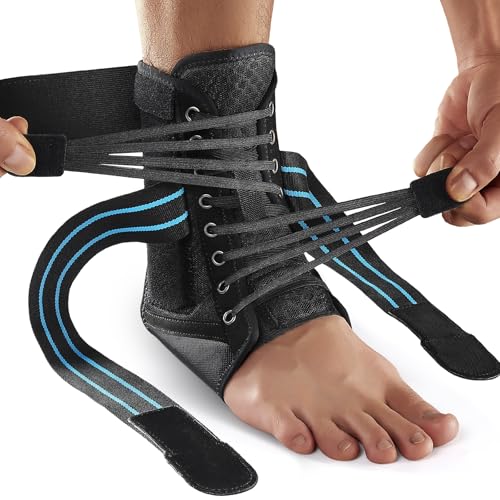
The AGPTEK Ankle Brace enters the conversation as a feature-packed entry-level option that punches above its weight class in terms of included functionality. It combines an X-cross compression strap system with removable lateral splints and a quick-lace hook-and-loop fastening that can be secured in under a second. The splints are stiffer than the fabric-only stabilizers found in most budget braces, providing genuine mechanical resistance against inversion and eversion that is rare at this entry point. The honeycomb ventilation panels on the nylon Oxford fabric keep the brace breathable during extended wear.
Users coming off foot surgery or moderate ankle fractures have reported that the AGPTEK brace provides superior support compared to the standard medical brace dispensed by their orthopedic surgeon. The ability to remove the splints for lighter activity and reinsert them for higher-intensity sessions adds a layer of adaptability that is uncommon in this tier. However, the quick-lace system uses a side hook-and-loop tab rather than a traditional lace-through structure, which means the tension is distributed differently across the foot — some users may not be able to achieve the same targeted midfoot compression as a full lace-up design provides.
For the youth player or recreational adult who needs basic ankle stabilization without the investment of a premium orthotic device, the AGPTEK is a functional starting point. It offers more structural features than a simple sleeve but less refined fit than a dedicated athletic stabilizer like the ASO. The open-heel design accommodates natural movement, and the breathable construction holds up well to moderate weekly use. It is not the first choice for a high-level competitive player, but for a training brace or a second-string option, it delivers solid value.
Why it’s great
- Removable lateral splints allow adjustable stabilization
- Quick-lace hook-and-loop system for fast application
- Honeycomb ventilation improves breathability during play
Good to know
- Quick-lace system distributes tension differently than full lace-up
- Fit and finish not as refined as premium athletic stabilizers
FAQ
Can I wear an ankle brace with soccer cleats or do I need to size up?
How tight should a soccer ankle brace be during a match?
Will a brace prevent all ankle sprains in soccer?
How often should I wash a soccer ankle brace?
Final Thoughts: The Verdict
For most soccer players, the best ankle brace for soccer winner is the Med Spec ASO Ankle Stabilizer because its dual figure-8 straps provide the most effective balance of lateral control, cleat compatibility, and all-match breathability. If you want speed-lace convenience and the option to progress from rigid stays to free motion, grab the DonJoy Stabilizing Speed Pro. And for a minimalist low-profile option that prioritizes feel and proprioception over mechanical strapping, nothing beats the Bauerfeind Sports Ankle Support Dynamic.