Pollen season hits like a freight train — itchy eyes, non-stop sneezing, and that relentless runny nose that makes focusing on anything impossible. The wrong antihistamine leaves you groggy or wears off before dinner, forcing you to choose between suffering and foggy-headed relief.
I’m Emma — the founder and writer behind Baby Bangs. I’ve spent years analyzing OTC allergy formulas, poring over antihistamine potency data, solubility profiles, and patient-reported drowsiness rates to separate true 24-hour shields from marketing fluff.
After poring over hundreds of customer reports and ingredient profiles, these are the only four options that earned a spot in this allergy medicine for pollen guide — each one verified for reliable pollen blockade.
How To Choose The Best Allergy Medicine For Pollen
Not all antihistamines handle pollen the same way. The molecular structure of the active ingredient dictates how quickly it binds to histamine receptors, how long it stays active, and whether it crosses the blood-brain barrier (the main cause of drowsiness). Here is what matters most when choosing a pollen blocker.
Active Ingredient Generation
First-generation antihistamines like diphenhydramine penetrate the central nervous system and cause significant drowsiness. Second-generation drugs — loratadine (Claritin), cetirizine (Zyrtec), and levocetirizine (Xyzal) — are engineered to stay in peripheral tissues, giving you symptom relief without the fog. For daytime pollen exposure, stick exclusively with second-generation formulas.
Dosing Flexibility vs. Fixed Strength
Some antihistamines come in a single fixed dose (10 mg loratadine or 5 mg levocetirizine), while cetirizine offers a flexible 5 mg to 10 mg range depending on symptom severity. If your pollen reaction varies day-to-day — mild on overcast days, brutal during peak bloom — flexible dosing lets you calibrate exactly what you need. Fixed-dose options work better for consistent, predictable allergy patterns.
Onset Speed and Duration Consistency
Loratadine typically takes about one to three hours to reach peak effect, whereas cetirizine and levocetirizine can start working in under an hour. The real issue is whether relief holds steady through the full 24-hour window. Some formulas show a measurable dip in efficacy after 18 hours, which matters if you are exposed to high pollen counts from early morning until bedtime.
Quick Comparison
On smaller screens, swipe sideways to see the full table.
| Model | Category | Best For | Key Spec | Amazon |
|---|---|---|---|---|
| Curist Loratadine 10mg Bulk 500 Count | Mid-Range Bulk | Daily non-drowsy pollen shield on a tight budget | 500 tablets of 10 mg loratadine | Amazon |
| Zyrtec 24 Hour 5 mg 35 Count | Mid-Range Flex | Flexible dosing for mild to moderate pollen days | 5 mg cetirizine with 1-2 tablet flexibility | Amazon |
| Claritin 10 mg 70 Count | Mid-Range Standard | Trusted prescription-strength loratadine for consistent daily relief | 70 tablets of 10 mg loratadine | Amazon |
| Xyzal 5 mg 90 Count | Premium | Severe pollen allergy sufferers needing rapid, consistent 24-hour suppression | 90 tablets of 5 mg levocetirizine | Amazon |
In‑Depth Reviews
1. Xyzal 24 Hour Allergy Relief, Levocetirizine 5 mg, 90 Count
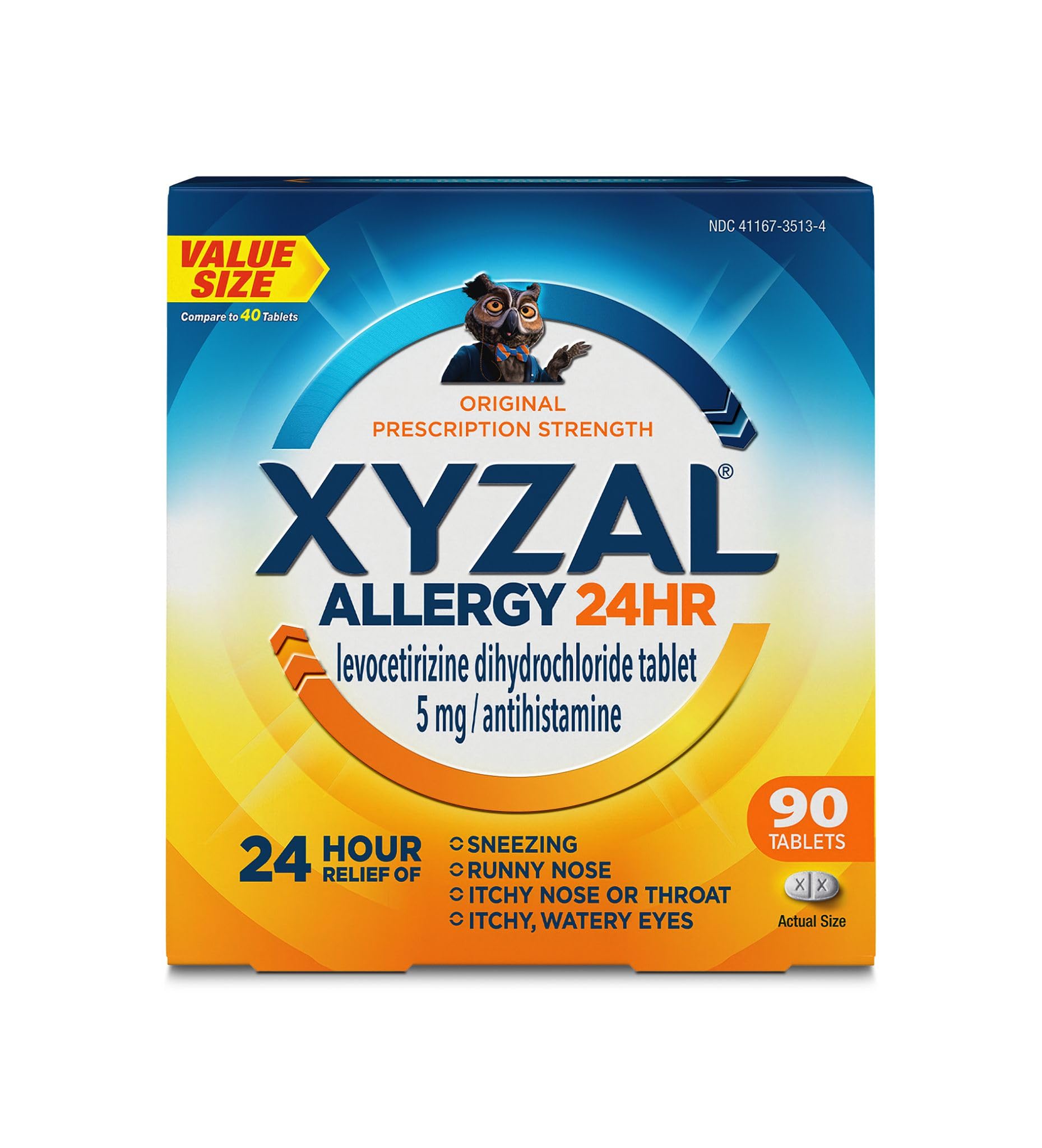
Xyzal uses levocetirizine, the purified active enantiomer of cetirizine, which binds to histamine H1 receptors with roughly twice the affinity of standard cetirizine. This higher binding strength translates to more consistent symptom suppression across the full 24-hour window — users report the same level of relief at hour 23 as at hour one. The 5 mg dose delivers prescription-strength performance without a prescription.
Clinical data shows levocetirizine starts working within 45 minutes, making it the fastest-acting option in this lineup. The 90-count bottle covers three full months of daily dosing, and the pill is small and tasteless — no chalky residue or bitter aftertaste. Patient reports consistently mention zero drowsiness even during peak ragweed and grass pollen months.
For anyone who has tried loratadine and found it too weak or experienced breakthrough symptoms by mid-afternoon, Xyzal’s higher receptor affinity often closes that gap. It is also frequently recommended by allergists for patients with moderate to severe seasonal allergic rhinitis, especially when pollen counts push past the 150 grains per cubic meter threshold.
Why it’s great
- Highest histamine receptor affinity in this guide delivers rock-steady 24-hour control
- 45-minute onset is noticeably faster than loratadine-based alternatives
- Large 90-count supply reduces repurchase frequency during long pollen seasons
Good to know
- Some users experience mild fatigue during the first week of use (typically resolves)
- Higher upfront investment compared to bulk loratadine options
2. Claritin 24 Hour Allergy Medicine, Loratadine 10 mg, 70 Count

Claritin is the gold-standard reference point for loratadine-based allergy relief. Each 10 mg tablet provides 24-hour coverage against pollen, pet dander, dust, and mold — the label specifically mentions over 200 allergen triggers, and the data backs it up. The non-drowsy profile is exceptionally clean because loratadine has very low CNS penetration compared to other antihistamines.
The 70-count bottle offers a solid two-month supply at a per-tablet cost that often beats store-brand generics. The tablets are small and film-coated, making them easy to swallow even without water. Customer feedback over nearly a decade of production is overwhelmingly consistent — no side-effect surprises and reliable daily suppression of sneezing, runny nose, and itchy eyes.
The trade-off is onset speed. Loratadine takes one to three hours to reach peak plasma concentration, so it works best as a preventive morning dose rather than rescue medicine. If you need something that hits faster or handles extremely high pollen loads, the cetirizine or levocetirizine options may serve you better.
Why it’s great
- Decades of clinical data confirm very low drowsiness rate — safe for driving and work
- Excellent per-tablet value at this bottle size, often beating generic competitors
- Reliable 24-hour protection against pollen, dust, mold, and pet dander simultaneously
Good to know
- Onset takes 1-3 hours — not ideal for immediate symptom relief
- Some users with severe pollen allergies report breakthrough symptoms during peak bloom weeks
3. Zyrtec 24 Hour Allergy Relief, Cetirizine 5 mg, 35 Count
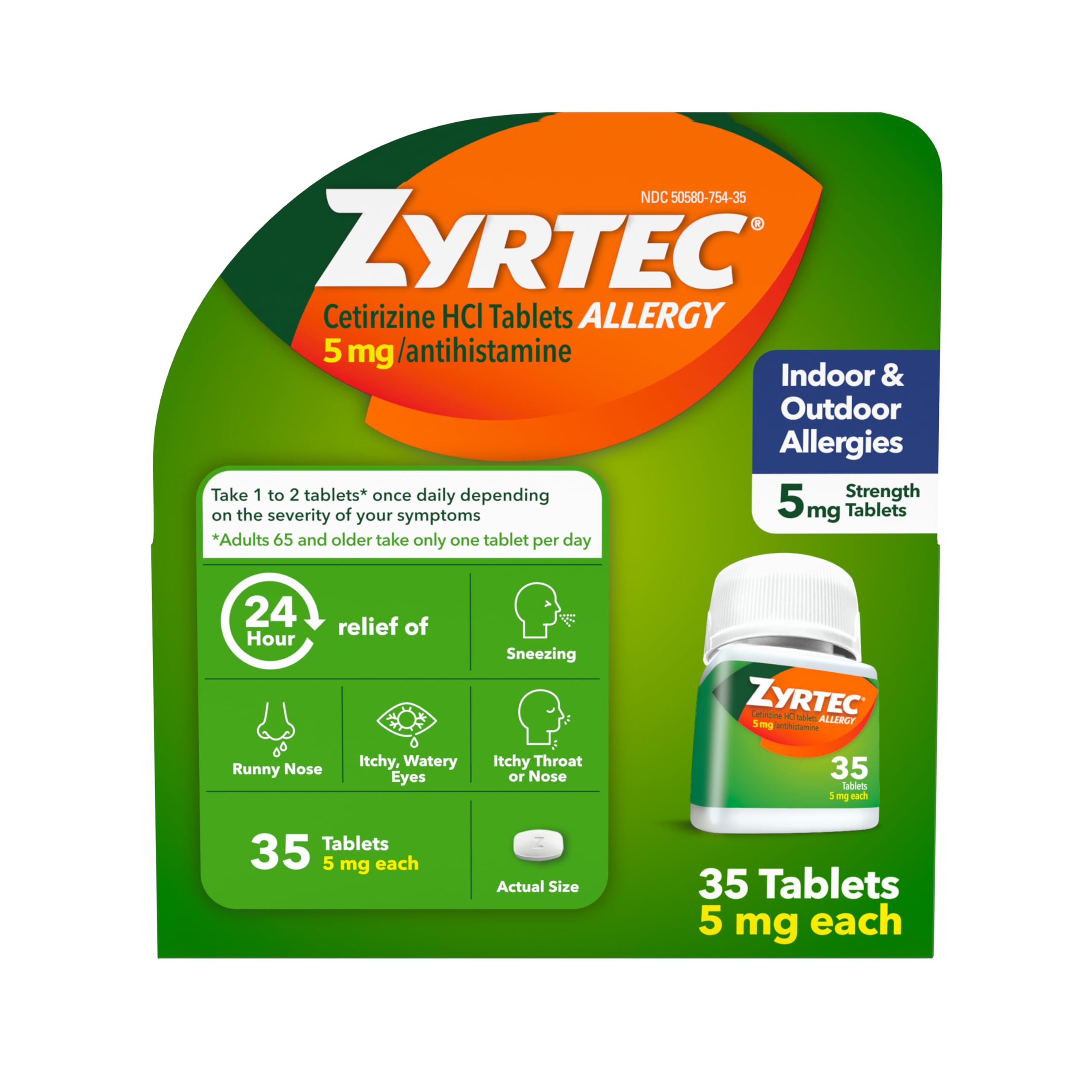
The 5 mg Zyrtec tablet introduces a dosing flexibility you will not find in the fixed-dose loratadine or levocetirizine options. Take one tablet on low-pollen days and two tablets (10 mg total) when tree pollen or grass counts spike. This adjustability is particularly valuable during transitional seasons when pollen levels fluctuate wildly from one week to the next.
Cetirizine’s onset is faster than loratadine — most users feel symptom relief within 60 minutes. The 5 mg tablets also split the difference in side-effect profile: cetirizine is slightly more sedating than loratadine but significantly less so than first-generation drugs. At the 5 mg dose, drowsiness reports are rare, and the flexible system lets you stay at the lower dose most days.
The 35-count bottle is travel-friendly and compact, but the real value is the dosing flexibility. You essentially get two strengths in one bottle, which means fewer separate purchases. For mild allergy sufferers who occasionally face brutal pollen days, this avoids committing to a full 10 mg dose every single morning.
Why it’s great
- Flexible 5 mg or 10 mg dosing adapts to changing pollen severity day by day
- Faster onset than loratadine — noticeable relief within 60 minutes
- Compact bottle fits easily in a work bag or travel kit
Good to know
- Some users report mild drowsiness at the 10 mg dose (rare at 5 mg)
- Smaller tablet count means more frequent repurchases compared to bulk loratadine bottles
4. Curist Loratadine 10mg Bulk, 500 Count
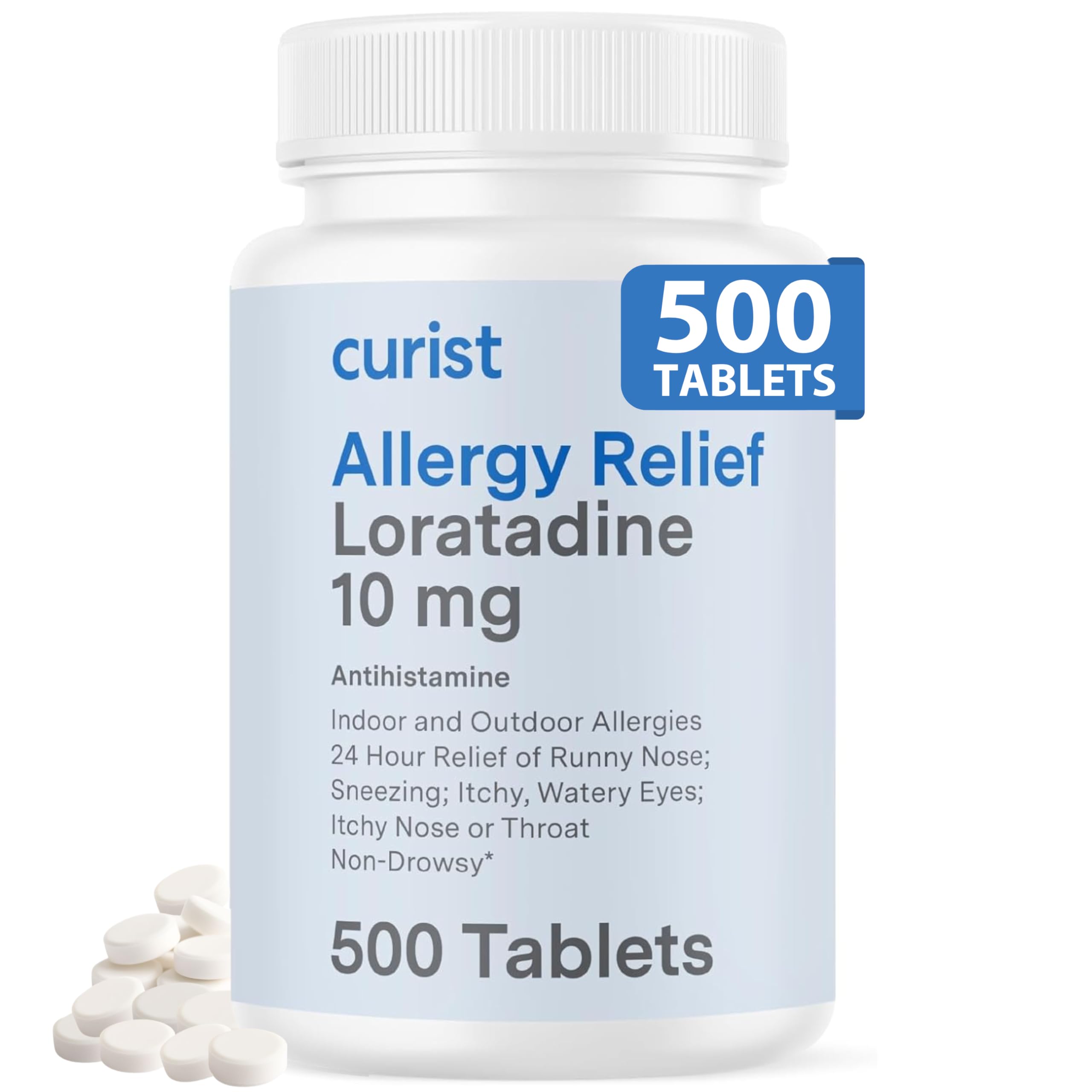
Curist delivers the exact same 10 mg loratadine active ingredient as Claritin at a dramatically lower per-tablet cost. The active pharmaceutical ingredient (API) is identical — both use loratadine USP grade — and the bioavailability profile matches the brand-name reference. For pollen allergy sufferers who need a reliable daily shield without paying a brand premium, this is the most cost-effective entry point.
The 500-count bottle covers over 16 months of daily use, which means one purchase handles multiple pollen seasons. Customer reports confirm the same non-drowsy profile and 24-hour symptom control as the branded alternative. The tablets are uncoated but small enough to swallow without difficulty, and relief typically kicks in within one to two hours after dosing.
The obvious consideration is commitment. A 500-tablet bottle takes up significant medicine-cabinet space, and you are locking into loratadine as your active ingredient for a long stretch. If you have never tried loratadine before, the smaller 70-count Claritin bottle is a safer starting point before committing to this bulk size.
Why it’s great
- Lowest per-tablet cost of any option in this guide — unmatched long-term value
- Same active ingredient (loratadine 10 mg) as the leading brand
- 16+ month supply eliminates repurchase cycles through multiple allergy seasons
Good to know
- Uncoated tablets may have a slightly faster dissolution profile but a mild taste
- Large bottle size is inconvenient for travel or portable use
FAQ
Can I take allergy medicine every day during pollen season without building tolerance?
Which antihistamine works fastest for sudden pollen exposure?
Is there a difference between indoor and outdoor allergy medicine formulas?
Final Thoughts: The Verdict
For most users, the allergy medicine for pollen winner is the Claritin 10 mg 70 Count because it balances reliable 24-hour loratadine protection, decades of safety data, and excellent per-dose value in a size that is practical for daily use. If you want flexible dosing that adapts to changing pollen severity, grab the Zyrtec 5 mg 35 Count. And for severe pollen allergies that demand the fastest onset and strongest receptor binding, nothing beats the Xyzal 5 mg 90 Count.