A cold, hard ground transfers heat and pressure straight through a thin sleeping pad, turning a night under the stars into a restless shiver-fest. The wrong airbed for camping leaves you waking every two hours to add air, shift hips, or pull on another layer. The right one delivers a warm, stable platform that holds pressure from dusk till dawn.
I’m Emma — the founder and writer behind Baby Bangs. I’ve spent years analyzing outdoor gear specifications, from foam density and R-value claims to valve durability and packed weight, so you don’t have to guess which pad actually performs.
After sorting through dozens of models across budget, mid-range, and premium tiers, these seven picks represent the strongest, most reliable options for the airbed for camping category you’ll find right now.
How To Choose The Best Airbed For Camping
The single biggest mistake campers make is buying on thickness alone. A 4-inch pad with an R-value of 2 will still suck heat out of your body on a 40°F night. Focus on insulation first, then comfort, then portability.
R-Value: The Real Temperature Rating
R-value measures resistance to heat loss through the ground. For three-season camping, aim for 4.5 or higher. For winter trips, you need 6 or above. Pads that advertise “all-season” should provide third-party verified R-value numbers, not just marketing claims. The difference between a 2.0 pad and a 9.5 pad is the difference between shivering at midnight and sleeping through until sunrise.
Inflation Type: Self-Inflating vs. Air-Only
Self-inflating pads contain open-cell foam that expands when you open the valve, drawing air in automatically. They’re heavier but more durable and resistant to punctures. Pure air pads are lighter and pack smaller but require a pump sack or manual breath — and breath adds moisture inside the pad that can reduce insulation over time. For car camping, self-inflating is the lower-fuss choice. For backpacking, a lightweight air pad with a pump sack saves ounces.
Size, Weight, and Packed Volume
Car campers can prioritize width and thickness without penalty. Backpackers need to watch packed size closely — an extra 10 ounces and a roll that’s 12 inches long can mean the difference between a comfortable carry and a cramped pack. Measure your tent’s floor space and your body length before buying. A 72-inch pad is standard for average-height adults, but taller campers need 77 or 80 inches to keep their feet off the ground.
Quick Comparison
On smaller screens, swipe sideways to see the full table.
| Model | Category | Best For | Key Spec | Amazon |
|---|---|---|---|---|
| Hikenture Comfort Plus (4″) | Mid-Range | Warmth & Comfort | 9.5 R-Value / 4″ Thick | Amazon |
| Therm-a-Rest LuxuryMap XL | Premium | Spacious Luxury | 6 R-Value / 30″ Wide | Amazon |
| Therm-a-Rest Basecamp | Premium | Year-Round Durability | 6 R-Value / WingLock Valve | Amazon |
| Hikenture 3″ Self-Inflating | Mid-Range | All-Season Value | 9.5 R-Value / Built-In Pillow | Amazon |
| Sea to Summit Camp Plus | Mid-Range | Car Camping Comfort | 4.3 R-Value / 2.6″ Foam-Air | Amazon |
| TREKOLOGY UL R7 | Budget | Lightweight Insulation | 7.2 R-Value / 2 lbs | Amazon |
| Therm-a-Rest Trail Scout | Budget | Entry-Level Reliability | 1″ Self-Inflating Foam | Amazon |
In‑Depth Reviews
1. Hikenture Comfort Plus 4″ Self Inflating Sleeping Pad

The Hikenture Comfort Plus hits the sweet spot between luxury thickness and real insulation. At 4 inches thick with a 9.5 R-value, this pad keeps you off the cold ground even in sub-freezing conditions. The 80-by-28-inch surface fits taller sleepers without heels hanging off the edge.
Self-inflation takes just a few minutes, and the included pump sack lets you top off the pad without introducing moist breath into the foam core. Owners report the non-slip polyester top fabric stays quiet during movement — no crinkling or rustling that wakes a partner in a shared tent.
The patented two-way valve makes deflation straightforward, and the 6.5-pound weight is reasonable for car camping or short carries to a walk-in site. The memory foam and air hybrid design compresses smaller than a traditional all-foam pad of similar thickness.
Why it’s great
- 9.5 R-value insulates through winter conditions
- Generous 80×28-inch size fits tall and broad sleepers
- Quiet surface fabric doesn’t crinkle during movement
Good to know
- Too heavy for ultralight backpacking
- Requires full 2-4 hour expansion before first use
2. Therm-a-Rest LuxuryMap Self-Inflating Foam Camping Sleeping Pad X-Large

The LuxuryMap X-Large is the closest you’ll get to a home mattress inside a tent. At 30 inches wide and 77 inches long, it offers enough room for restless sleepers to turn without an elbow sliding onto bare ground. Pressure-mapped foam zones provide extra support under the hips and shoulders while keeping the legs area plusher.
With a 6 R-value, this pad delivers genuine four-season insulation. Owners report using it comfortably in temperatures down to the mid-30s Fahrenheit without any bottom chill. The TwinLock valve system separates inflation and deflation into dedicated ports, making it easy to fine-tune firmness without losing air.
At 5 pounds 2 ounces, this is a dedicated car camping or glamping pad — you won’t take it backpacking. The polyester and PE construction feels robust, and the PFAS-free DWR coating on the stuff sack is a thoughtful environmental touch.
Why it’s great
- 30-inch width provides exceptional sleeping space
- Pressure-mapped foam zones target support where needed
- Dual TwinLock valves prevent accidental air loss
Good to know
- Heavy at over 5 pounds — car camping only
- Actual foam area is slightly narrower than fabric edge
3. Therm-a-Rest Basecamp Self-Inflating Camping Sleeping Pad

The Basecamp from Therm-a-Rest is built for campers who want proven durability over flashy specs. The 6 R-value delivers year-round ground insulation, and the open-cell foam core self-inflates reliably. The WingLock valve offers three times the airflow of older Therm-a-Rest valves, cutting setup time noticeably.
At 2 inches thick, this pad doesn’t match the plush height of thicker competitors, but the foam density prevents bottoming out. Owners weighing over 230 pounds report no hip or shoulder contact with the ground, even on rocky tent sites. The 72-by-20-inch regular size is adequate for most sleepers under 6 feet tall.
The Basecamp weighs 2 pounds 8 ounces — manageable for short backpacking trips but really shines in car camping. The polyester fabric resists punctures, and the included pump sack lets you finish inflation without moisture buildup.
Why it’s great
- Proven Therm-a-Rest build quality with WingLock valve
- 6 R-value insulates effectively in cold weather
- Durable fabric handles rough ground without punctures
Good to know
- 2-inch thickness may feel thin for side sleepers
- Regular size is short for campers over 6 feet
4. Hikenture 3″ Self Inflating Sleeping Pad with Pillow

This Hikenture pad brings the same 9.5 R-value found in their thicker model but at a 3-inch profile that packs slightly smaller. The built-in pillow eliminates the need to carry a separate camping pillow, saving space and weight. The memory foam surface molds to body contours and the non-slip grip print keeps your sleeping bag from sliding on uneven tent floors.
Customer reviews highlight exceptional durability — one owner reported over 100 nights of use on floors and sofas without any leaks. The self-inflation valve works smoothly, requiring only a few breaths to reach full firmness. The rectangular 77-by-27.6-inch shape provides enough room for most sleepers to stretch out.
At 6.6 pounds, it’s suited for car camping or cot use rather than backpacking. The included carry bag has a large opening for easy packing, though some users wish the bag had compression straps for a tighter roll.
Why it’s great
- 9.5 R-value provides excellent cold-weather insulation
- Integrated pillow saves packing a separate item
- Non-slip base stays stable on uneven ground
Good to know
- Pillow height is low at about 1 inch
- Valves can be stiff to open at first
5. Sea to Summit Camp Plus Self-Inflating Foam Sleeping Mat
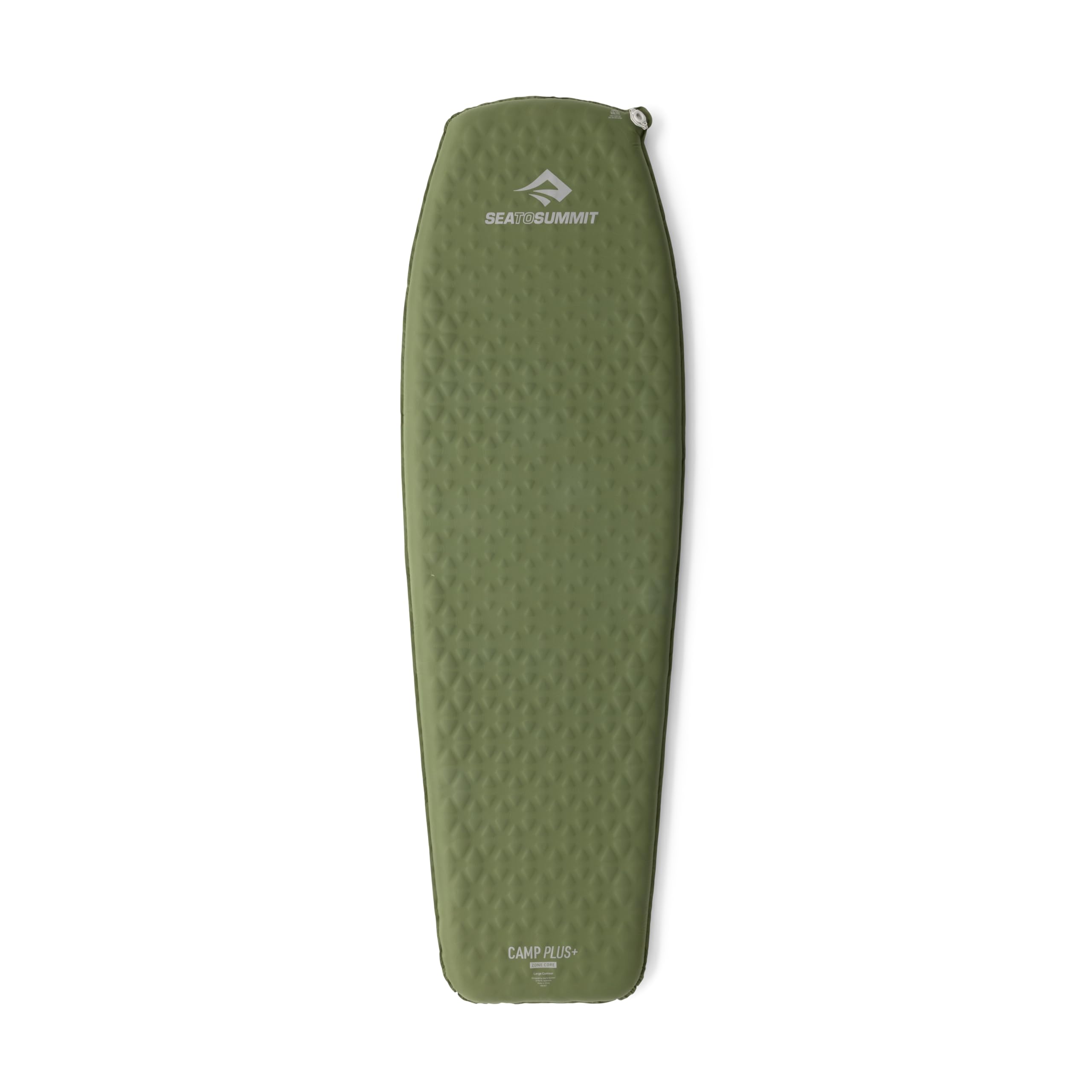
The Camp Plus uses a clever foam-air hybrid design that keeps body-contact areas warm and supported while reducing bulk where it isn’t needed. At 2.6 inches thick with a 4.3 R-value, this pad suits three-season car camping and warmer-weather trips. The 75D polyester face fabric feels soft and holds up to repeated rolling and unrolling.
The multi-function reversible valve allows fast inflation and one-way deflation. Owners note that the foam core takes time to fully expand after storage — expect to leave the valve open for several hours before the first use. Once expanded, the pad provides a firm, stable sleeping surface with a memory-foam feel.
At 2.3 pounds, the Camp Plus is one of the lighter self-inflating options and can double as a guest bed at home. The tapered shape adds 12 percent more sleep surface area compared to rectangular pads of the same length.
Why it’s great
- Foam-air hybrid reduces bulk while maintaining warmth
- Soft 75D polyester fabric feels comfortable against skin
- Reversible valve simplifies inflation and deflation
Good to know
- 4.3 R-value is marginal for winter camping
- Foam needs long expansion time after storage
6. TREKOLOGY UL R7 Sleeping Pad
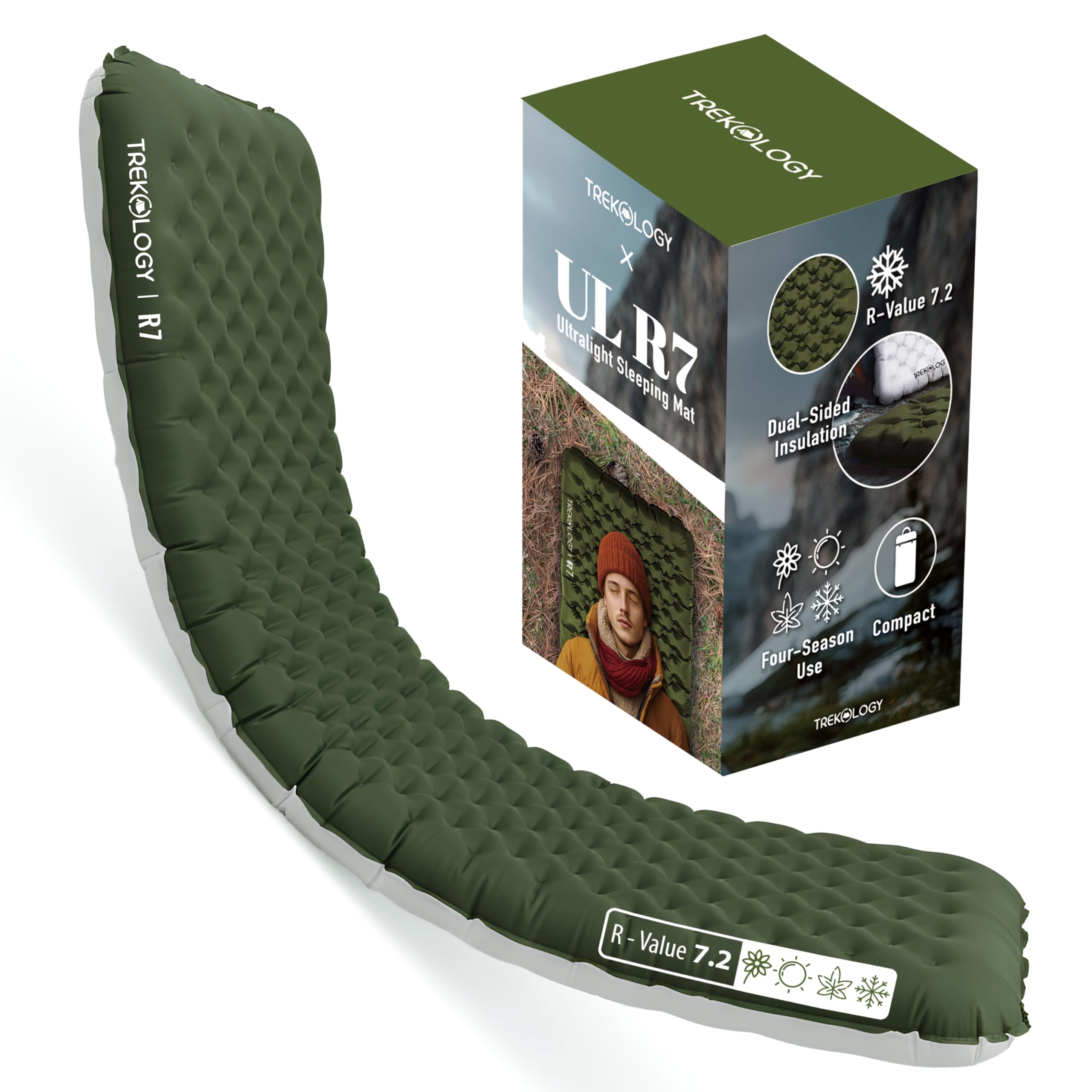
The TREKOLOGY UL R7 delivers an impressive 7.2 R-value at just 2 pounds, making it one of the best insulation-to-weight ratios in this lineup. The 40D ripstop nylon with TPU coating resists punctures, and the patented anti-leak valve keeps air locked in overnight. Packs down to roughly the size of a water bottle — ideal for backpackers counting every cubic inch.
At 4 inches thick, this pad provides serious ground separation. Side sleepers report that hips and shoulders stay off the ground, though some larger users note partial bottoming out when lying sideways. The 70.8-by-24-inch surface fits adults up to about 6 feet tall comfortably.
Owners have used this pad in temperatures as low as 22°F with proper tent and bag systems, confirming the insulation claim holds in real conditions. The surface is slightly slippery — a thin shelf liner or sleeping bag with a non-slip bottom helps keep things in place.
Why it’s great
- 7.2 R-value at only 2 pounds is exceptional for backpacking
- Packs water-bottle small for easy storage
- 4-inch thickness provides genuine ground separation
Good to know
- Surface can be slippery without a grippy bag
- Short for campers over 6 feet 2 inches
7. Therm-a-Rest Trail Scout Self-Inflating Sleeping Pad
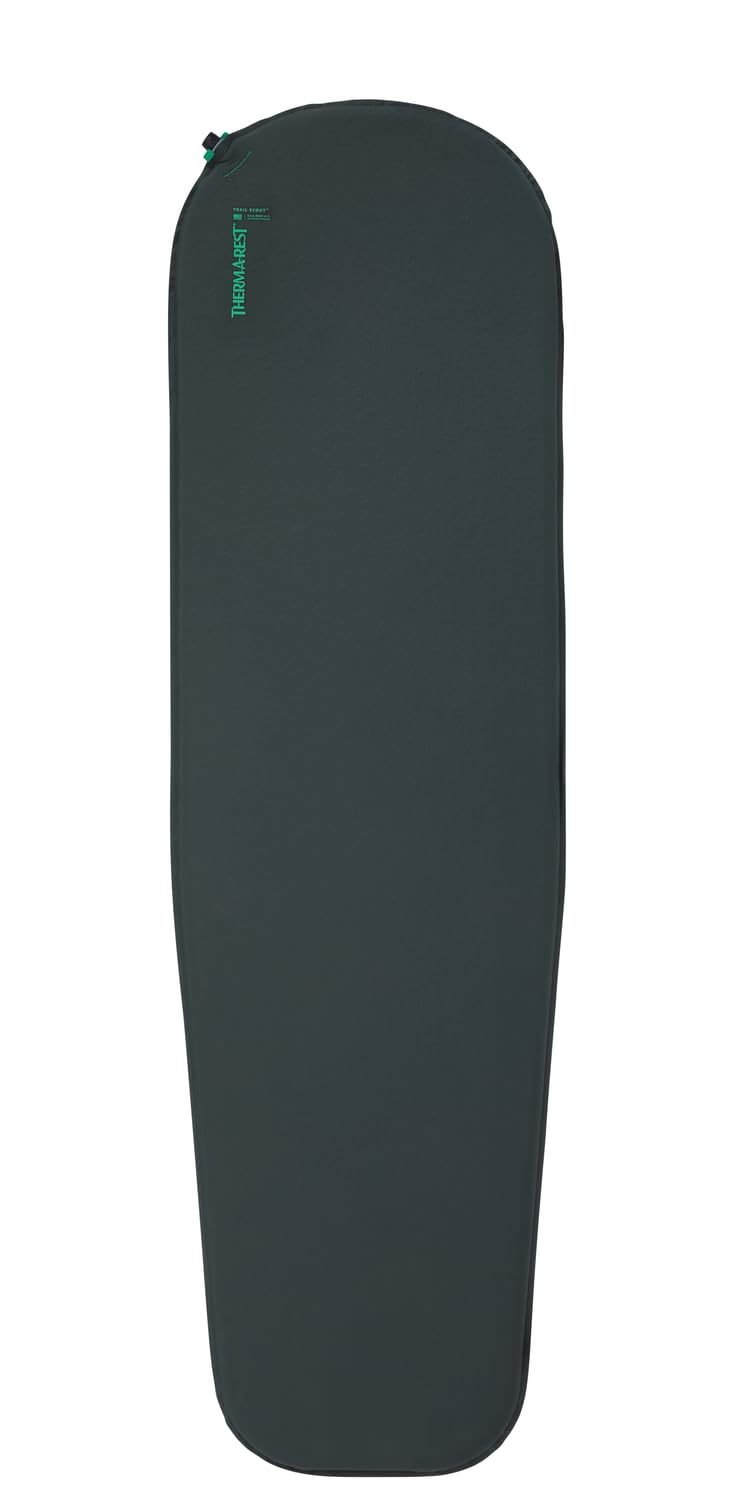
The Trail Scout is Therm-a-Rest’s entry-level self-inflating pad, and it brings the same basic foam core and woven fabric construction that has defined the brand for decades. At just 1 inch thick, it’s the thinnest option here, but the open-cell foam provides enough insulation for three-season use when paired with a proper sleeping bag.
The WingLock valve — the same one used on Therm-a-Rest’s higher-end pads — delivers three times the airflow of classic valves. Owners appreciate not having to fumble with tiny stoppers in the dark. The pad self-inflates to about 80 percent capacity; a few breaths through the one-way valve bring it to full firmness.
At 24 ounces and packing to 11 by 7.8 inches, the Trail Scout is light enough for backpacking and small enough to fit in a daypack as a sit pad. The main trade-off is thinness — side sleepers may feel rocks and roots through the pad, and it’s noticeably less cushioned than the 3- and 4-inch options.
Why it’s great
- Lightweight at 24 ounces for backpacking trips
- WingLock valve provides fast, easy inflation
- Reliable Therm-a-Rest build at an accessible price
Good to know
- 1-inch thickness offers minimal cushioning
- Runs short for campers 6 feet or taller
FAQ
How do I store a self-inflating camping pad to extend its life?
Can I use a camping airbed on snow without extra insulation?
Final Thoughts: The Verdict
For most users, the airbed for camping winner is the Hikenture Comfort Plus 4″ because it combines a 9.5 R-value with 4 inches of thickness at a mid-range price that outperforms pads costing twice as much. If you want spacious luxury for car camping, grab the Therm-a-Rest LuxuryMap XL. And for ultralight backpacking with serious insulation, nothing beats the TREKOLOGY UL R7.