A cold, uneven patch of dirt beneath your tent floor is the fastest way to ruin a weekend outdoors. Every pebble, root, and temperature drop travels straight through a thin sleeping bag, leaving you stiff, tired, and cursing the gear you brought. The right pad changes all of that instantly.
I’m Emma — the founder and writer behind Baby Bangs. I’ve spent years analyzing foam densities, R-value testing protocols, and valve engineering to separate marketing hype from real insulation performance.
This guide breaks down eight pads across different build types and firmness levels so you can confidently select the best air mattress for camping that matches your sleep style and terrain demands.
How To Choose The Best Air Mattress For Camping
Not every thick pad performs the same when the temperature drops or the ground turns rocky. Three specs separate a supportive night from a restless toss-and-turn session: insulation rating, foam thickness, and inflation mechanism.
R-Value and Seasonal Insulation
This number measures thermal resistance. An R-value of 2 or below works for summer only. For three-season camping, look for 4 to 6. Once you hit 9.5, the pad insulates against freezing ground through winter. That high rating also prevents the ground from pulling your body heat overnight, so your bag does less of the work.
Foam Thickness and Bottom-Out Resistance
Two inches of foam lifts your hips and shoulders off bumps, but it still lets you feel roots and divots. A 3- to 4-inch layer creates a buffer that absorbs uneven terrain. Hybrid air-and-foam constructions add height without the weight penalty of solid memory foam, making them a smart choice for car campers who want plush support without stuffing a 10-pound roll into the trunk.
Inflation Method
Built-in electric pumps handle setup in under a minute, but they add battery weight and a charging step. Self-inflating pads use open-cell foam that expands when you open the valve, then you top off with a few breaths or a pump sack. Foot pumps and manual inflation sacks keep the weight low but require a minute of effort. Match your preference to the trip style: electric suits car camping where outlets or power banks are available; manual works for quick overnight stops.
Quick Comparison
On smaller screens, swipe sideways to see the full table.
| Model | Category | Best For | Key Spec | Amazon |
|---|---|---|---|---|
| PineHike 4″ Memory Foam | Hybrid Foam/Air | All-season car camping | R-Value 9.5 / 4″ thick | Amazon |
| AKUDY 4″ with Pillow | Hybrid Foam/Air | Convenience + integrated pillow | R-Value 9.5 / Built-in USB-C pump | Amazon |
| CYMULA 3″ Memory Foam | Pure Memory Foam | Washable foam for cot use | 3″ foam / removable cover | Amazon |
| Sea to Summit Camp Plus | Self-Inflating Foam | Compact self-inflating reliability | R-Value 4.3 / 2.6″ thick | Amazon |
| Wise Owl 4″ Electric Pump | Hybrid Foam/Air | Car camping with removable pump | 4″ thick / USB-C charging | Amazon |
| Hikenture 4″ Self-Inflating | Self-Inflating Foam | Long, wide winter comfort | R-Value 9.5 / 80″x28″ | Amazon |
| EUHAMS Double Pad | Memory Foam | Two-person car camping | R-Value 9.5 / foot pump | Amazon |
In‑Depth Reviews
1. PineHike 4″ Ultra-Thick Memory Foam Camping Mat

The PineHike pad uses a 4-inch hybrid construction that combines a high-resilience 50D sponge core with a separate air chamber, delivering a 9.5 R-value that handles frozen ground without drafting cold upward. The built-in electric pump runs off a 2400mAh rechargeable battery that provides up to seven inflation cycles per charge, inflating the 78.74-by-29.13-inch surface in roughly 50 seconds. The one-touch deflate function reduces the packed volume by 50 percent, so the 6.6-pound pad fits easily into a duffel or trunk corner.
Campers consistently report the 4-inch loft eliminates ground feel completely, with side sleepers noting no pressure point collapse at the hips or shoulders. The double-sided 50-denier fabric limits noise during movement — no crinkling when you shift positions overnight. The 660-pound load capacity means two smaller campers can share it in a pinch or a larger single user can spread out without bottoming out the foam.
The only real friction point is the initial charge: the pump needs a full 3-4 hour charge before first use, and the first inflation cycle will run longer as the vacuum-sealed foam fully expands. The included Type-C cable adds convenience for recharging at camp from a power bank.
Why it’s great
- 4-inch thickness with 9.5 R-value insulates against sub-freezing ground
- Built-in pump inflates in under a minute and stores internal battery
- Quick deflate reduces pack volume by half for easy transport
Good to know
- First inflation takes longer while foam expands from vacuum packaging
- Battery requires 3–4 hour initial charge before first camp use
2. AKUDY 4″ Self Inflating Sleeping Pad with Pillow
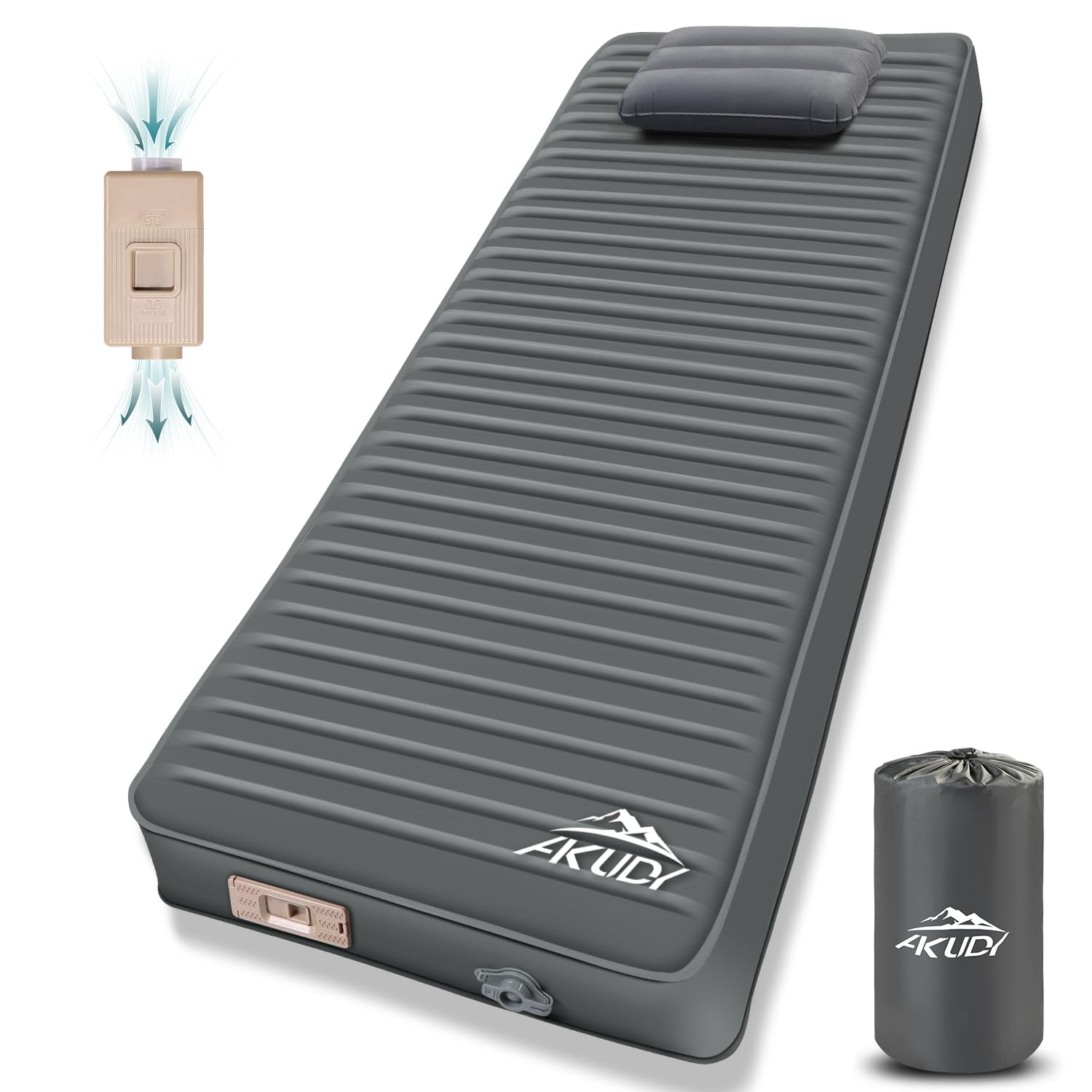
The AKUDY pad pairs an innovative 3D memory foam design with a built-in electric pump that operates via USB-C, enabling one-touch inflation to a firm, adjustable surface in about one minute. The 4-inch thickness and 9.5 R-value provide thermal isolation across all four seasons, with the foam core distributing weight evenly so elbows and knees never press through to the ground. The integrated inflatable pillow adds head elevation without packing a separate cushion.
At 5.5 pounds, this is the lightest 4-inch insulated pad in the roundup, making it easier to carry from car to tent site. Multiple reviewers note that the foam core remains silent when shifting position — no crinkling or squeaking — and the wide 25.6-inch width accommodates broad-shouldered side sleepers. The deflation valve operates with the same one-touch logic, collapsing the pad to roughly half its inflated size for storage.
The included inflatable pillow provides only modest support and some campers prefer to swap it for their own camp pillow. The pump is audible during operation, but the cycle is short enough that the noise doesn’t linger.
Why it’s great
- Built-in USB-C powered pump inflates pad completely in about one minute
- 3D memory foam stays silent during sleep, no crinkle or squeak
- Integrated pillow saves packing space and provides head elevation
Good to know
- Included pillow is relatively thin, some will want a separate camp pillow
- Pump makes noticeable noise during inflation cycle
3. CYMULA Memory Foam Camping Mattress Pad
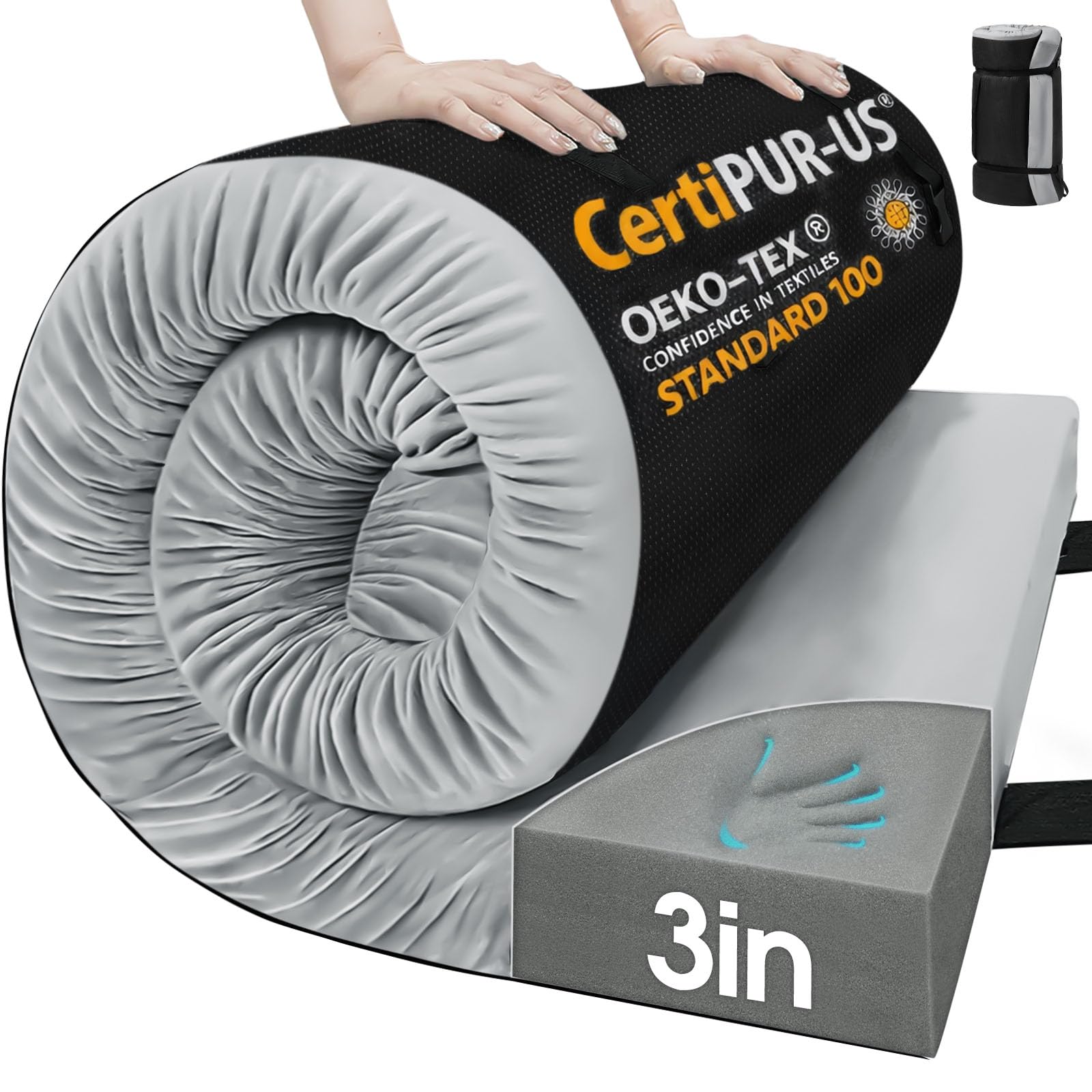
The CYMULA pad departs from the air-and-foam hybrid approach by using a solid 3-inch carbon fiber-infused memory foam layer that provides consistent support without relying on air pressure. The removable and machine-washable 100-percent cotton cover is a rarity in this category — most pads require spot cleaning — and the waterproof TPU bottom includes rubberized dots that grip tent floors and cot surfaces, preventing the pad from sliding during the night.
Because this is pure foam with no air chamber, it never leaks or loses pressure, and it delivers excellent warmth in temperatures down to 30 degrees Fahrenheit when used on a wooden platform or cot. The 8.1-pound weight and 75-by-30-inch dimensions make it a car-camping or cot specialist — it rolls up to about the size of a thick beach towel with integrated straps, but it is not a compact backpacking option. Campers praise the pressure relief for hip and back pain on hard surfaces.
The foam arrives vacuum-sealed and requires 6 to 24 hours to fully expand, so you cannot unbox it at the trailhead and use it immediately. There is also a strong chemical odor on first opening that dissipates after a few days of airing out.
Why it’s great
- Removable, machine-washable cotton cover keeps pad fresh over many trips
- Pure memory foam construction cannot develop air leaks over time
- Rubberized non-slip bottom stays put on cot or tent floor
Good to know
- Requires 6–24 hours to fully expand from vacuum packaging before use
- Chemical smell on first opening needs several days to air out
- 8.1-pound weight limits use to car camping or cot sleeping
4. Sea to Summit Camp Plus Self-Inflating Foam Sleeping Mat
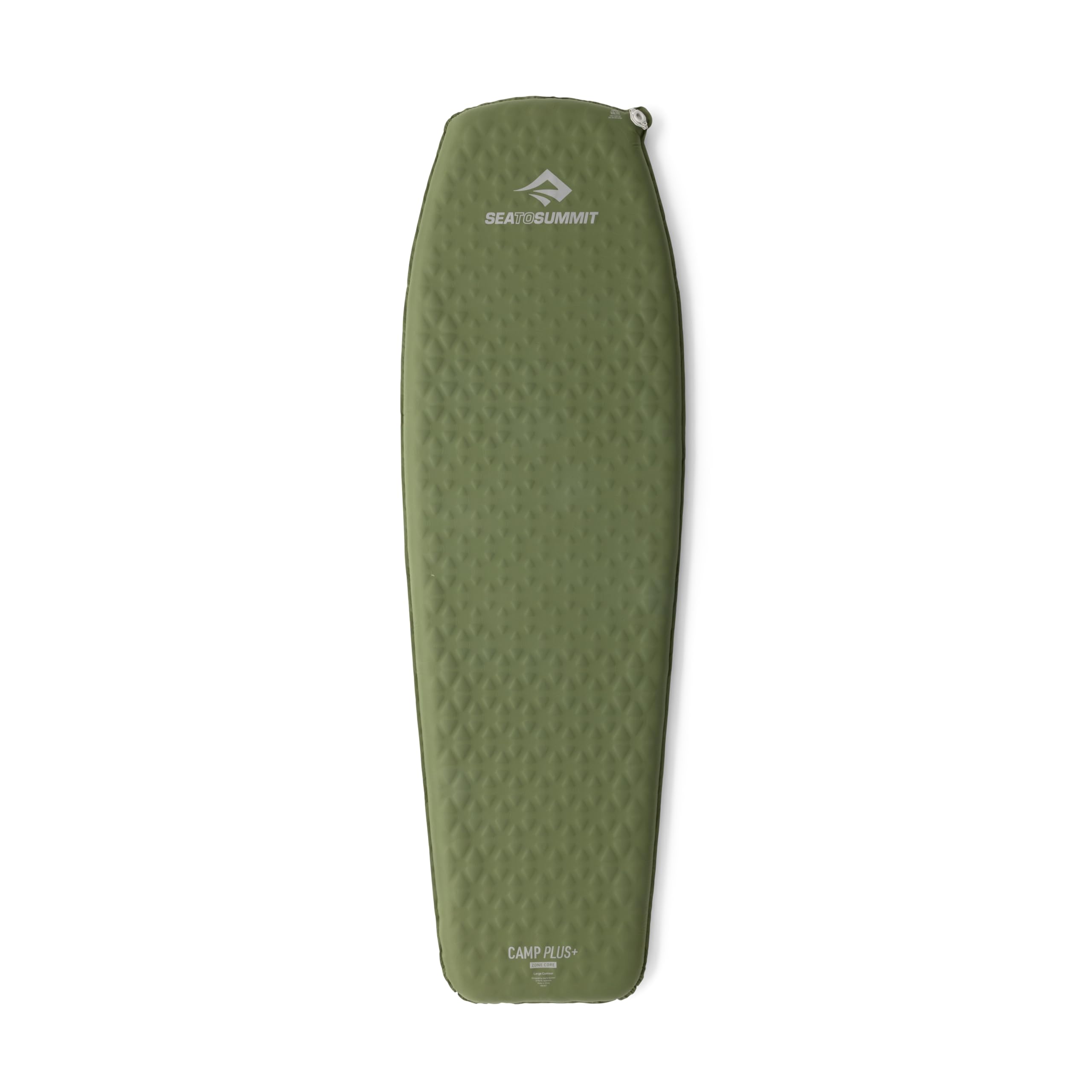
The Sea to Summit Camp Plus uses a foam-air hybrid construction with a multi-function reversible valve that manages inflation, one-way deflation, and fine-tune air pressure adjustments. The body-mapped air zone design concentrates insulation where your torso makes contact with the ground and reduces material where it is not needed, achieving a 4.3 R-value in a package that packs down to 11 by 6.3 inches and weighs just 2.4 pounds. The tapered regular shape measures 72 by 22 inches, adding 12 percent more sleep surface area than a standard rectangular pad.
Durable 75-denier polyester face fabric withstands repeated contact with tent floors, camp chairs, and rocky surfaces. The updated XPel valve allows tighter rolling than earlier versions, reducing pack volume further. PillowLock patches on the surface let you secure a Sea to Summit pillow so it stays in place overnight. The self-inflating foam core takes a few minutes to draw air, and most users add 10 to 15 breaths through the valve to reach full firmness.
At 2.6 inches thick, this pad does not provide the same ground isolation as a 4-inch model, so side sleepers on very uneven terrain may feel roots or rocks. The initial foam expansion from the factory vacuum takes two to three days to reach full loft.
Why it’s great
- Packs to 11×6.3 inches at 2.4 pounds — excellent for space-conscious setups
- Body-mapped air zones insulate torso contact areas and reduce bulk elsewhere
- XPel valve enables tighter roll and one-way deflation for quick pack-down
Good to know
- 2.6-inch thickness transmits ground irregularities more than 4-inch models
- Foam core takes 2–3 days to fully expand from factory packaging
- Not a full self-inflator; expect to add 10–15 breaths for ideal firmness
5. Wise Owl Outfitters Self Inflating Sleeping Pad with Electric Pump
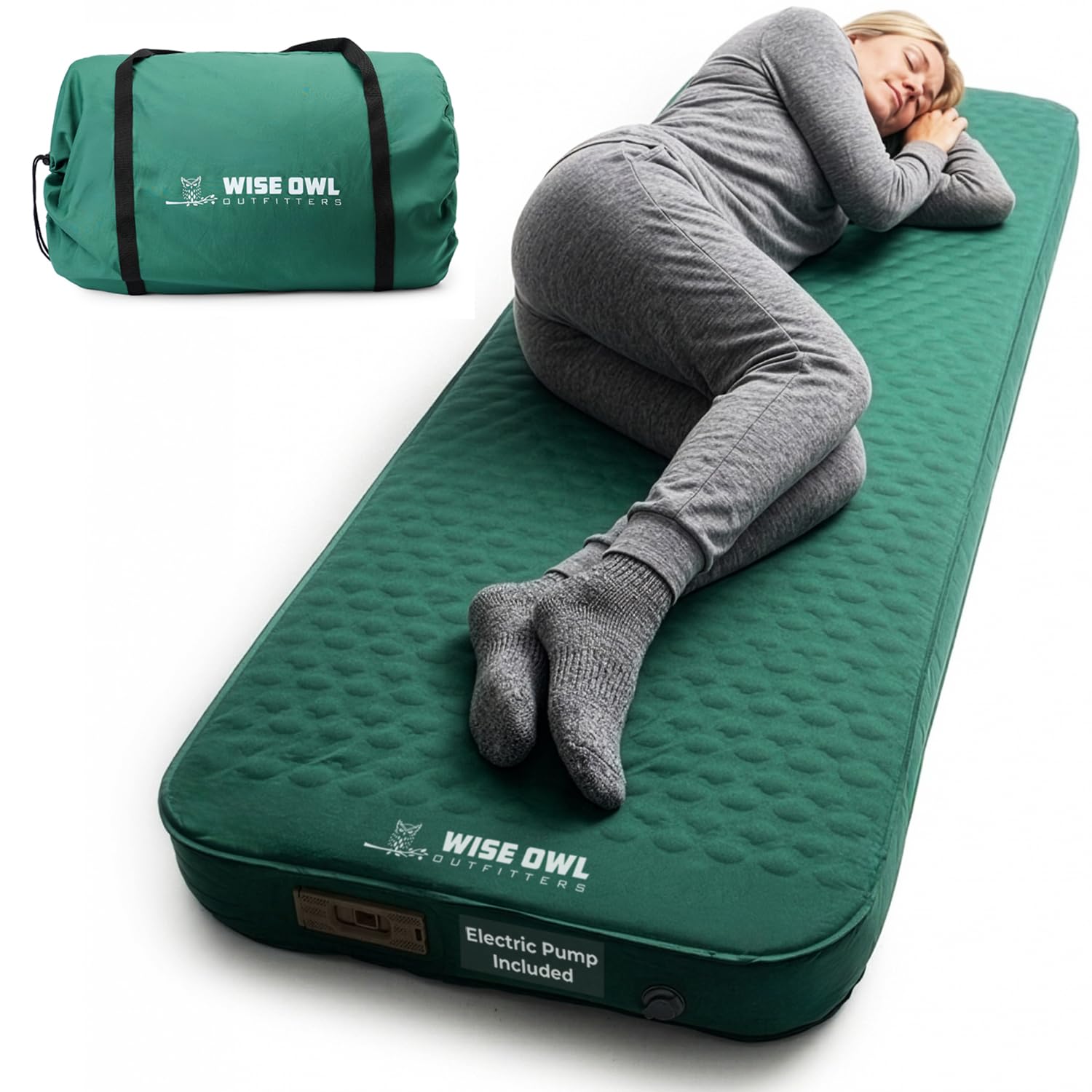
Wise Owl Outfitters designed this 4-inch pad around a removable electric pump that connects via USB-C, inflating the 78-by-28-inch surface in about 90 seconds. Once inflated, you can detach the pump and use it as a stand-alone blower for other gear, keeping the pad sealed without an attached pump block. The multi-layer construction combines an air chamber with a foam top layer, creating a cushioned feel that backs help support and stomach sleepers find comfortable without sinking too deep.
The 200-pound weight capacity means it supports most single sleepers fully, and the adjustable firmness lets you tweak the air pressure by hand as the pump runs. The pad deflates quickly when you reattach the pump and switch to deflate mode, then rolls into the compression strap for storage. At 4 pounds, it is lighter than several other 4-inch options, making it a strong choice for car campers who still want to watch total gear weight.
Some users report that the foam layer is thinner than the product imagery suggests, so the pad relies heavily on air pressure for support rather than foam density. If the seal around the pump detaches mid-trip, you lose inflation ability without a backup valve system.
Why it’s great
- Removable pump can detach after inflation for use as a separate blower
- 4-pound weight keeps it manageable for car-to-site carries
- Adjustable firmness lets you set soft or firm feel by hand
Good to know
- Foam layer is thinner than some competitors; relies on air chamber for comfort
- Losing pump or damaging seal mid-trip eliminates inflation capability
6. Hikenture 4″ Self Inflating Sleeping Pad

Hikenture developed this 4-inch pad with a patented two-way valve that allows the open-cell foam to self-inflate fully in a few minutes, after which you add a few pump-sack puffs to reach maximum firmness. The 80-by-28-inch surface is the longest and widest among the single pads reviewed, providing ample room for tall campers up to 6 feet 3 inches to stretch out without hanging off the edges. The 9.5 R-value and plush foam core insulate effectively through winter conditions while the 50-denier polyester face fabric resists tears from sharp ground features.
The foam-air combo design compresses smaller than traditional self-inflating mats, and the carry bag features a wide top opening that simplifies stuffing. The one-way deflate valve prevents air from re-entering during roll-up, so you can squeeze the pad flat without fighting back-pressure. Campers highlight the silent surface — no crinkling or foam squeak — and the consistent thickness retention over months of use with no leaks detected.
At 6.5 pounds, this is a car-camping or base-camp pad rather than a backpacking option. Deflation requires some effort to push air through the wide valve, and the pump sack takes a few cycles to top off the pad after the initial self-inflation phase.
Why it’s great
- 80×28-inch size comfortably fits tall campers and wide sleepers
- Patented two-way valve enables quick self-inflation and prevents air suck-back
- 9.5 R-value combined with 4-inch foam handles genuine winter camping
Good to know
- 6.5-pound weight is heavy for backpacking or multi-day carries
- Deflating fully requires physical effort to push air through the valve
7. EUHAMS Double Camping Sleeping Pad with Foot Pump
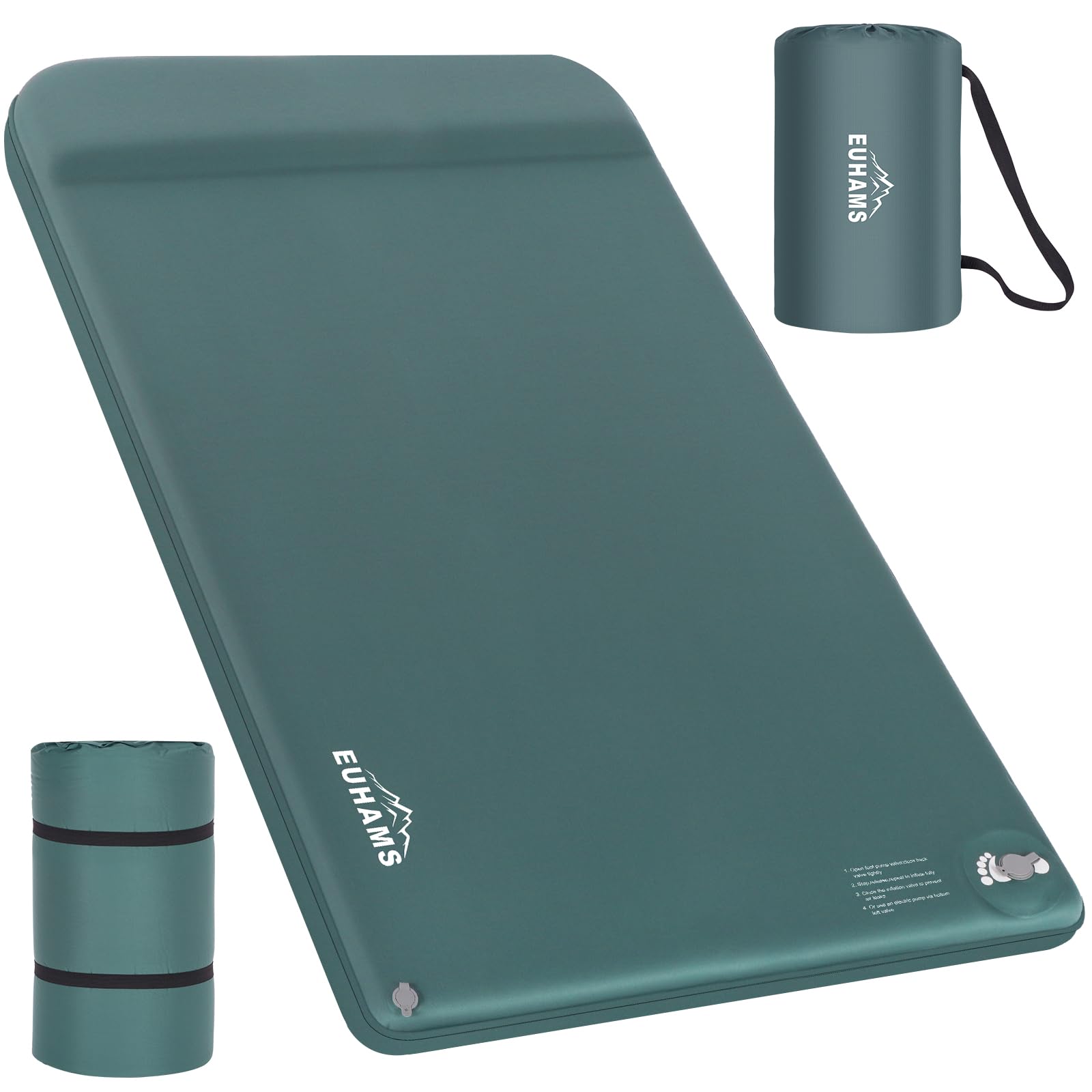
The EUHAMS double pad breaks from the single-person format by offering a full 78.7-by-50.7-inch sleep surface that accommodates two adults side by side. The 26D high-density memory foam core provides a 9.5 R-value for four-season insulation while the built-in foot pump inflates the pad in roughly one minute without requiring electricity or batteries. The dual-layer valves release air quickly when deflating, and the pad folds down to 23.6 by 13 inches for storage. The 50D stretch polyester cover with waterproof TPU coating resists moisture and tear damage.
At 2.3 inches thick, this pad does not match the 4-inch single pads for ground isolation, but the 8.3-pound total weight is reasonable for a double-size unit. Campers using it on cot frames and truck beds report the 2-inch foam blocks sharp rocks and roots effectively, and the foot pump system is quieter than an electric alternative. The integrated pillow area adds head contouring, though some users find it too low and prefer a separate pillow.
The first inflation after vacuum packaging takes 15 to 20 minutes as the memory foam expands, so you cannot rely on immediate setup directly after unboxing. The 2.3-inch thickness means side sleepers may feel ground contact through soft surfaces if the foam has not fully expanded.
Why it’s great
- Full double size supports two adults on a single insulated pad
- Built-in foot pump inflates in one minute with no batteries or electricity needed
- 9.5 R-value with waterproof TPU coating handles damp and cold conditions
Good to know
- 2.3-inch thickness transmits more ground feel than 4-inch single pads
- First inflation takes 15–20 minutes as foam expands from vacuum packaging
- Integrated pillow area is too low for some sleepers
FAQ
Can I use a camping air mattress directly on the ground without a tent?
How do I fix a slow leak in a camping air mattress?
Are electric pump pads worth the extra weight for car camping?
Do R-value ratings stack when I add a blanket underneath?
Final Thoughts: The Verdict
For most users, the best air mattress for camping winner is the PineHike 4″ Memory Foam because it combines a 9.5 R-value, a built-in electric pump, and 4-inch foam into a package that handles every season without leaking or sagging. If you want a lighter, more compact pad that still delivers strong insulation, grab the Sea to Summit Camp Plus. And for two-person car camping with no need for electricity, nothing beats the EUHAMS Double Pad with its foot pump and generous sleeping surface.