One wrong cut on turf and that searing pain shooting up your ankle can end a season in a split second. Cleats promising ankle support often sacrifice lockdown for flexibility, leaving athletes indecisive between mobility and protection. The difference between a stable base and a rolled ankle lives in the heel counter rigidity, midfoot shank density, and lacing system architecture—details most buyers gloss over until it is too late.
I’m Emma — the founder and writer behind Baby Bangs. I’ve spent years comparing chassis construction and traction patterns across hundreds of cleat models to identify which ones actually lock the foot in place during aggressive lateral movements.
This guide breaks down the specific structural elements that prevent excessive inversion and eversion so you can confidently choose from the top-rated cleats for ankle support on the market today.
How To Choose The Best Cleats For Ankle Support
Ankle support in a cleat is not about how high the collar goes—it is about how well the entire chassis resists lateral collapse under load. You need to evaluate three structural zones before anything else.
Heel Counter Rigidity
The heel counter is the internal cup wrapping the back of your foot. Squeeze the heel area of any cleat you consider. If it caves under moderate pressure, the shoe lacks the structural backbone to keep your calcaneus stable during direction changes. A rigid heel counter prevents your ankle from tipping sideways inside the shoe, which is the primary mechanism of inversion sprains.
Midfoot Shank & Chassis Torsion
Grab the cleat at the toe and heel and try to twist it like a towel. A cleat with good ankle support resists torsional twisting across the midfoot. A flexible shoe that twists easily forces your foot and ankle to absorb rotational forces alone, increasing sprain risk. Look for an embedded thermoplastic polyurethane (TPU) or carbon-fiber shank running under the arch.
Lacing System & Heel Lock
Your foot needs to stay planted on the footbed without sliding forward or side-to-side. Dynamic Fit collars, asymmetric lacing, and extra eyelets allow you to create a heel-lock lace pattern that cinches the midfoot and rearfoot independently. If your heel lifts inside the shoe during a cut, the ankle becomes the sole stabilization structure—exactly what you want to avoid.
Quick Comparison
On smaller screens, swipe sideways to see the full table.
| Model | Category | Best For | Key Spec | Amazon |
|---|---|---|---|---|
| Nike Alpha Menace Strong | Football | All-around locked-in feel | Rigid heel counter and midfoot plate | Amazon |
| Nike Vapor Pro 1 | Football | Speed with support | Lightweight chassis with lateral cage | Amazon |
| Nike Vapor Edge Elite 360 2 | Football | Premium lockdown on turf | 360-degree Dynamic Fit collar | Amazon |
| Nike Force Zoom Trout 8 Elite | Baseball | Metal cleat ankle stability | Reinforced heel and toe drag | Amazon |
| Nike Kyrie Infinity 1 | Basketball | Multi-directional lateral support | Outrigger and midfoot strap | Amazon |
| Nike Vapor Edge Speed 360 2 | Football | Entry-level stability | Speed chassis with moderate heel cup | Amazon |
| Nike Vapor Edge Pro 360 | Football | Elite top-end lockdown | Full-length plate with integrated lacing | Amazon |
In‑Depth Reviews
1. Nike Alpha Menace Strong

The Alpha Menace Strong delivers the most balanced stiffness-to-comfort ratio of any cleat in this pool. Its heel counter resists compression firmly when squeezed, and the midfoot plate creates noticeable torsional resistance when you try to twist the chassis. Reviewers consistently mention that these hold up through full seasons of football and rugby without the upper collapsing—a sign the structural bones of the shoe are built to last.
Testers note that the cleats require a brief break-in period before they shape to the foot. After about one hour of constant wear, some users report mild discomfort under the arch, suggesting the shank density prioritizes stability over plushness. That trade-off makes sense for athletes who need reliable lateral lockdown on every rep.
The outsole pattern bites evenly into both grass and turf surfaces, and the mid-weight build avoids the clunkiness of heavier lineman-focused cleats. For a mid-range price point that balances structural integrity with everyday wearability, this model earns the top slot.
Why it’s great
- Rigid heel counter and midfoot shank provide exceptional roll resistance
- True-to-size fit with minimal heel slip straight out of the box
- Durable upper and outsole survive multi-sport use
Good to know
- Needs a short break-in period before feeling fully dialed in
- Arch area can feel stiff during extended wear sessions
2. Nike Vapor Pro 1 Football Cleats
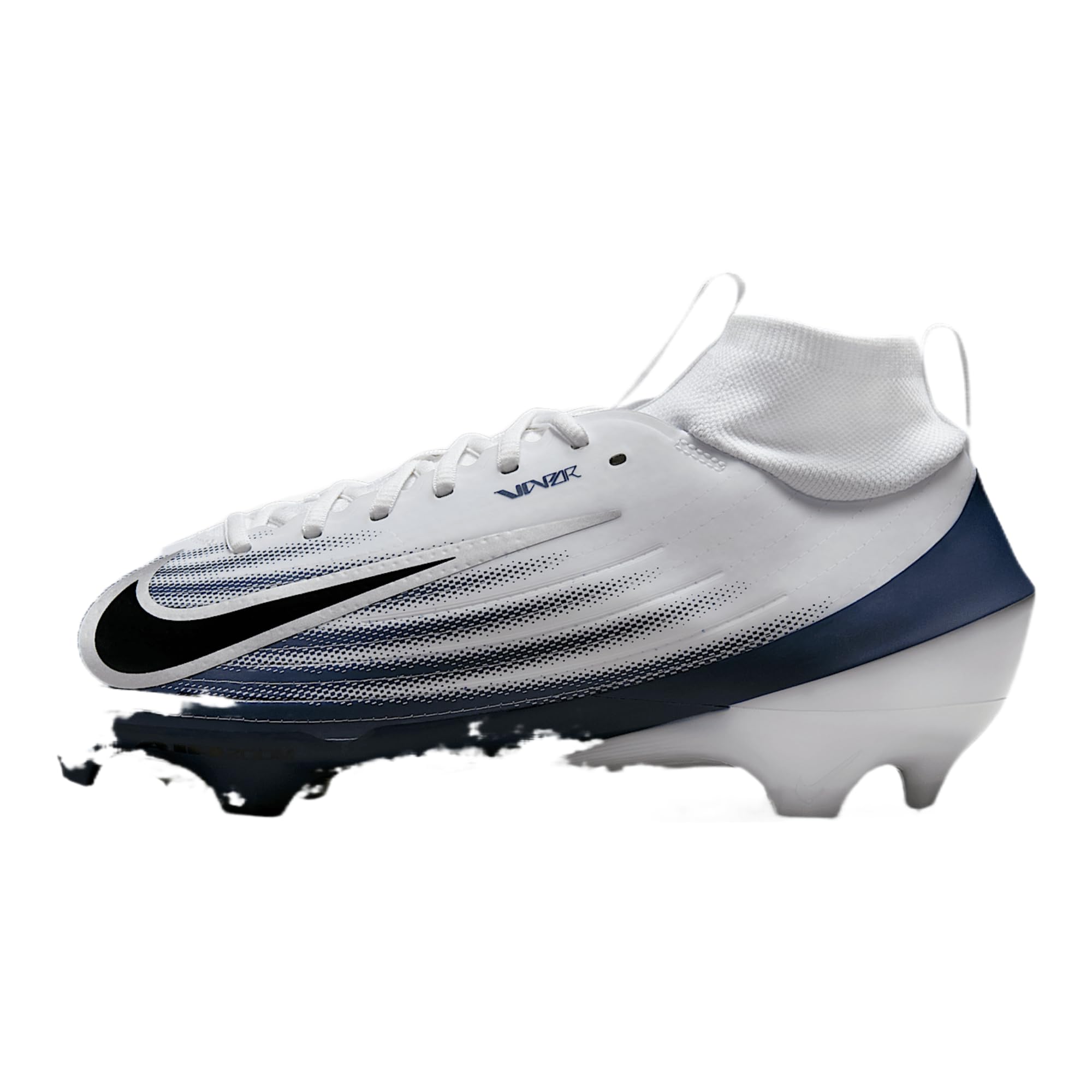
The Vapor Pro 1 manages to blend a lightweight speed chassis with a surprisingly supportive lateral cage. The synthetic upper wraps the foot tightly, and the external heel counter adds rigidity without adding noticeable weight. A review specifically calling out ankle support satisfaction confirms this model holds its own for athletes who refuse to choose between speed and stability.
Where this cleat divides opinions is in width accommodation. Multiple verified buyers warn that the toe box runs narrow, particularly for athletes with wider forefeet. The lateral cage that provides stability also creates pressure points on the pinky toe for some wearers, leading to blisters during extended use. Buyers with standard-to-narrow feet will find the fit secure; anyone needing a wide fit should look elsewhere.
On the positive side, the colorway options pop on field, and multiple users report their daughters using men’s sizing for flag football with excellent fit. The outsole pattern delivers multi-directional traction that complements the lateral support system well.
Why it’s great
- Lightweight build does not compromise lateral cage structure
- External heel counter adds noticeable rearfoot lockdown
- Multiple users confirm ankle support satisfaction during play
Good to know
- Narrow toe box causes blister issues for wide-footed athletes
- Box packaging may arrive damaged during shipping
3. Nike Vapor Edge Elite 360 2

The 360-degree Dynamic Fit collar on the Vapor Edge Elite 2 creates a sock-like integration that locks the ankle in place without the need for a rigid high-top cut. The collar works in conjunction with an internal heel stabilizer to prevent vertical lift during cuts. Multiple users specifically highlight that these cleats hold up through two-a-day practices and camps without breaking down structurally.
However, this premium model has a polarizing fit profile. Several reports indicate the cleat runs narrow, with some wearers unable to use them at all due to width constraints. One review notes that despite the advanced collar design, the shoe rubbed the ankle during the break-in period—contradicting the seamless-lockdown promise. The trade-off between the elite-level support architecture and a snug fit that alienates wide feet is real.
For athletes with standard-width feet who prioritize a connected feel between the lower leg and the footbed, the Elite 2 delivers a premium wrap that few competitors match. The outsole performs equally well on turf and natural grass, maintaining traction without feeling overly aggressive.
Why it’s great
- Dynamic Fit collar integrates with the ankle for seamless lockdown
- Internal heel stabilizer prevents vertical slip during cuts
- Durable construction holds up through intensive practice schedules
Good to know
- Narrow fit excludes athletes with wider feet entirely
- Some ankle rubbing reported during initial break-in period
4. Nike Force Zoom Trout 8 Elite Metal Cleats

In the baseball domain, the Trout 8 Elite stands out for its reinforced heel structure and targeted toe drag protection. The metal cleat configuration provides exceptional grip on dirt and grass, which indirectly stabilizes the ankle by preventing unwanted slide. The heel counter shows minimal flex under pressure, locking the rearfoot in place during explosive first-step movements from the batter’s box.
One buyer reported that after a poor experience with another baseball shoe, the Trout 8 Elite restored confidence in ankle stability. The cleat feels planted and secure during lateral movements in the outfield, and the midsole does not collapse under the load of a full game. The only uncertainty comes from long-term durability—one review remains cautious until months of use confirm the initial satisfaction holds.
It is worth noting that this model runs true to the standard Nike sizing, and the metal studs are league-approved for most competitive baseball levels. For position players who need both traction and rearfoot stability, this is the most baseball-specific option on the list.
Why it’s great
- Heel reinforcement provides exceptional rearfoot lockdown for baseball movements
- Metal cleats deliver reliable traction on dirt and grass surfaces
- True-to-size fit consistent with standard Nike baseball sizing
Good to know
- Long-term durability not yet confirmed by extended-use reviews
- Heavier than synthetic-molded cleats due to metal plate construction
5. Nike Kyrie Infinity 1

The Kyrie Infinity 1 brings a different support philosophy: an outrigger sole that flares out at the lateral edge and a midfoot strap that cinches the foot down against the footbed. This combination is designed specifically for the multi-directional cuts basketball demands. Multiple reviews confirm the shoes feel supportive and hold up well during games and training over a period of months.
Where this model shines is its ability to manage lateral stress without restricting ankle mobility entirely. The midfoot strap system allows you to dial in tightness around the arch, which indirectly stabilizes the subtalar joint. One cynic noted that for the price, the shoes feel worth it, but the initial fit runs tight—ordering a half-size up is recommended by many users, particularly those with wider feet.
The outsole pattern offers good grip on indoor courts, and the cushioning in the heel provides enough shock absorption for landings without feeling mushy. For basketball-specific movements, this remains a reliable choice for athletes who need lateral containment without a high collar.
Why it’s great
- Outrigger sole prevents foot roll during sharp lateral cuts
- Midfoot strap allows customizable arch and ankle lockdown
- Multiple reviews confirm months of durability during active play
Good to know
- Runs tight; ordering a half-size up is widely recommended
- Heavy use over 8 months leads to odor issues due to sweat retention
6. Nike Vapor Edge Speed 360 2

The Vapor Edge Speed 360 2 represents the entry point into Nike’s speed chassis line, and its ankle support capabilities reflect that budget-conscious design. The heel cup has moderate rigidity—enough to provide basic stability during straightforward running and cutting, but it does exhibit some flex when you apply lateral pressure at the collar. For younger athletes or those playing recreational-level ball, this level of support often suffices.
What these cleats do well is deliver immediate comfort. Multiple reviews from parents of middle school and high school players mention that their kids find these cleats comfortable straight out of the box, with no break-in complaints. The upper material adapts quickly to the foot shape, reducing the risk of blistering during early-season practices.
The trade-off is clear: the chassis lacks the torsional stiffness that more advanced athletes need for explosive multidirectional play. If your game involves heavy cutting on turf, the moderate heel counter and flexible midfoot will leave you wanting more containment. But for the price, the value proposition is strong for growing players who will outgrow the cleat before they outgrow its support limits.
Why it’s great
- Immediate out-of-box comfort with no break-in period needed
- Moderate heel cup provides adequate basic ankle stability
- Lightweight build suits younger or recreational-level athletes well
Good to know
- Heel cup flexes under strong lateral pressure—not for heavy cutters
- Midfoot lacks torsional rigidity for elite-level multidirectional play
7. Nike Vapor Edge Pro 360
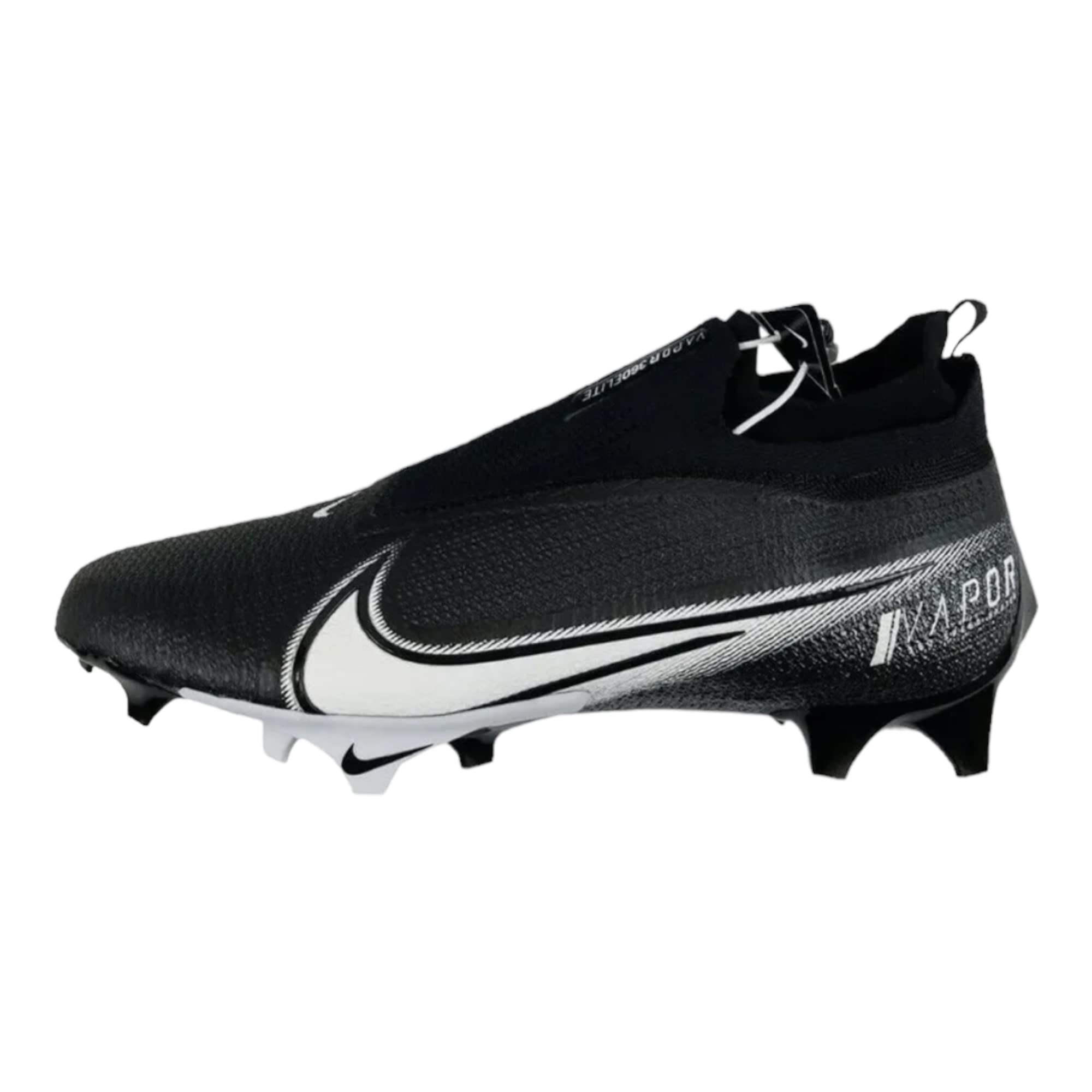
The Vapor Edge Pro 360 sits at the top of Nike’s premium cleat pyramid, and its integrated lacing system connects directly to a full-length plate that wraps under the entire foot. This design creates a unified chassis that resists twisting from heel to toe more effectively than any other model in this list. When you hold the shoe and apply torsional force, the resistance is immediate and complete.
The catch comes down to fit tolerance. Multiple reviews flatly state that this shoe runs extremely narrow—one user describes it as “not made for any lineman,” and another reports cuts on both feet after wearing them. The aggressive tapering of the toe box and midfoot means that only athletes with narrow to standard-width feet will experience the intended lockdown. For those with wider feet, the shoe actively causes pain rather than providing support.
For the right foot shape, the Pro 360 delivers a connected feel that makes you forget you are wearing a cleat. The plate stiffness translates every step into planted traction, and the integrated lacing eliminates pressure points across the top of the foot. But the fit specificity is severe enough that this cleat belongs in a narrow-use-case category rather than a universal recommendation.
Why it’s great
- Full-length integrated plate provides unmatched torsional rigidity
- Integrated lacing system eliminates top-of-foot pressure points
- Excellent traction feedback on both turf and natural grass
Good to know
- Extremely narrow fit causes pain and blisters for wider feet
- Not suitable for linemen or athletes with high-volume feet
FAQ
Do high-top cleats automatically provide better ankle support?
Can I replace the insole for better ankle support?
How tight should ankle-support cleats feel when new?
Final Thoughts: The Verdict
For most users, the cleats for ankle support winner is the Nike Alpha Menace Strong because it delivers a rigid heel counter and torsional midfoot resistance at a mid-range price that balances everyday wearability with real structural integrity. If you want a speed-focused build with a lateral cage, grab the Nike Vapor Pro 1. And for narrow-footed athletes who demand the most premium integrated plate on the market, nothing beats the Nike Vapor Edge Pro 360.