A daypack that shifts, bounces, or digs into your shoulders can ruin a good hike before you hit the first ridge. The right one disappears on your back, carrying your water, layers, and lunch without a whisper. This guide cuts through the noise to find the hiking pack that actually fits your torso and your trail style.
I’m Emma — the founder and writer behind Baby Bangs. I’ve spent years dissecting outdoor gear specs, from ripstop denier counts to bladder valve designs, so you don’t have to guess which pack earns its place on the trail.
Whether you need a hydration-ready hauler for a 5-mile loop or a minimalist frame for all-day ridge walks, the daypack for hiking that fits best comes down to torso length, suspension, and how you carry water.
How To Choose The Best Daypack For Hiking
A hiking daypack is more than a sack with straps. It’s a system that carries your load close to your spine and transfers weight to your hips. Ignore the hype around pocket count and start with fit and suspension — those two factors determine whether a pack feels comfortable at mile eight or gets abandoned at mile three.
Prioritize Torso Length Over Back Height
Most hikers assume their height determines pack size, but it’s the distance from your C7 vertebra (the bony bump at the base of your neck) to your iliac crest (the top of your hip bone) that matters. A pack that’s too long for your torso will sit below your hips, forcing the hipbelt to ride high and dump weight onto your shoulders. Brands like Osprey and Deuter offer multiple torso ranges in the same pack volume, so measure before you buy.
Suspension Dictates Comfort Above 10 Pounds
For light loads under 8 pounds, a simple foam back panel is fine. But once you add a full bladder, snacks, a rain shell, and a puffy, that pack can push 12-15 pounds. That’s where a tensioned mesh back panel (like Osprey’s AirSpeed) or a fabric-covered frame sheet (like the HDPE frame in the Kelty Asher) makes a real difference. These systems create a gap between your back and the pack, reducing sweat and keeping the load from shifting during scrambles.
Bladder Access and Pocket Layout Are Non-Negotiable
A dedicated hydration sleeve with a center hang loop keeps the bladder upright and prevents sloshing. Packs with a quick-release magnetic hose clip, like the Dakine Hot Laps, allow one-handed reattachment after a drink stop. For pocket strategy, look for waist belt pockets that fit a phone and a front shove-it pocket for a shell — you don’t want to stop and remove the pack just to grab a snack or answer a call.
Quick Comparison
On smaller screens, swipe sideways to see the full table.
| Model | Category | Best For | Key Spec | Amazon |
|---|---|---|---|---|
| Osprey Tempest 20L | Premium Women’s | Technical terrain | AirScape backpanel, 20L | Amazon |
| Osprey Hikelite 28L | Premium Unisex | All-day ventilation | AirSpeed suspension, 28L | Amazon |
| Eddie Bauer Adventurer 30L | Premium Hybrid | Travel & trail | FreeCool trampoline back, 30L | Amazon |
| Deuter Speed Lite 21L | Mid-Range Eco | Fast & light hikes | 100% recycled body, 470g | Amazon |
| Kelty Asher 24L | Mid-Range Frame | Budget frame support | HDPE frame, 720g | Amazon |
| Water Buffalo Sherpa 22L | Budget Bundle | Value with bladder | 2L bladder included, 22L | Amazon |
| Dakine Hot Laps 5L | Budget Hip Pack | Minimalist hydration | 2L reservoir, 5L total | Amazon |
In‑Depth Reviews
1. Osprey Tempest 20L Women’s Hiking Backpack
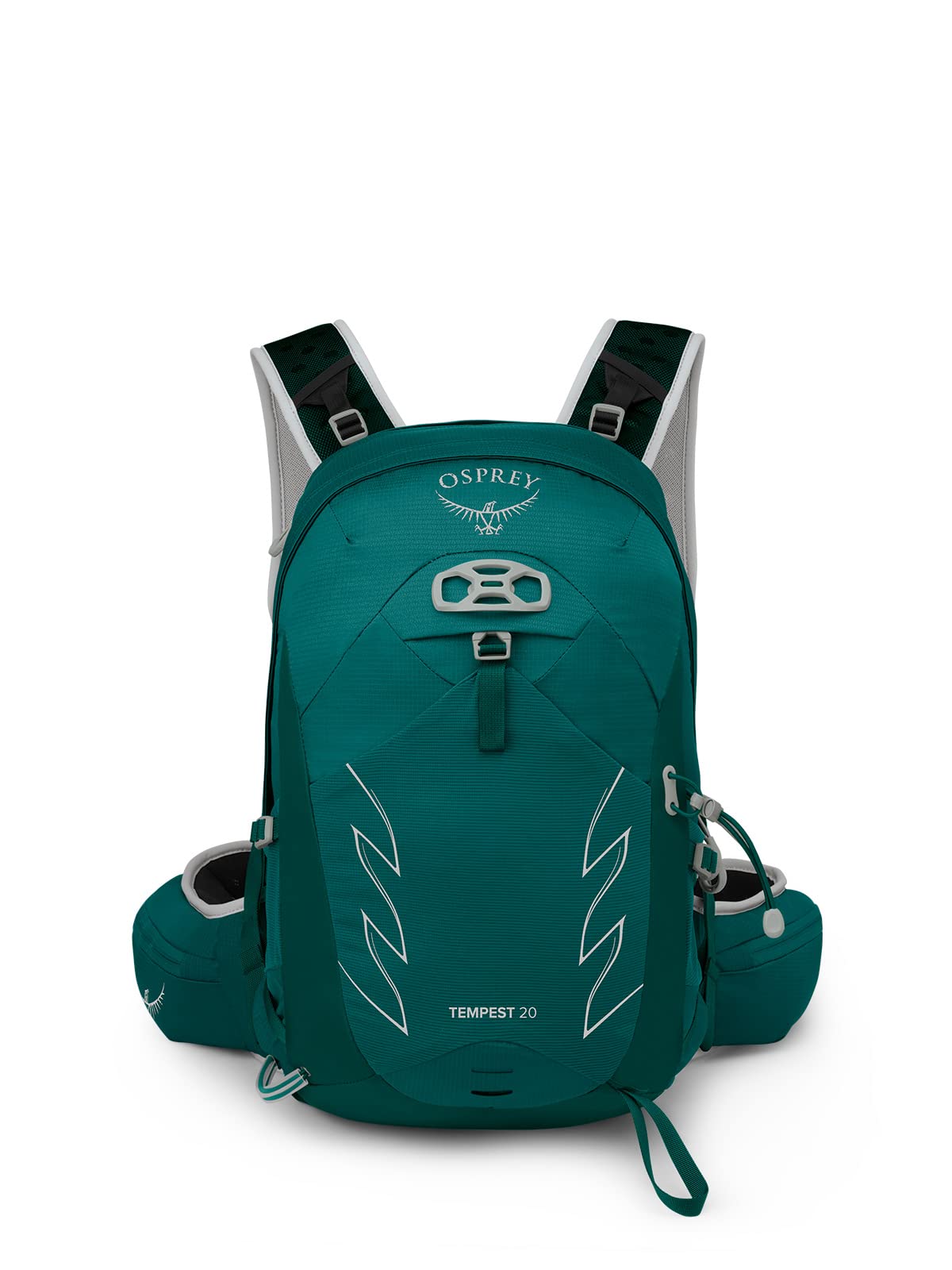
The Tempest 20L is the gold standard for women-specific daypack design. Its BioStretch harness and hipbelt use a continuous lumbar wrap that moves with your hips during sidehill traverses, and the injection-molded AirScape backpanel keeps the load close without trapping heat. The extended fit option accommodates hips up to 70 inches, which is rare in packs this size.
Dual-zippered panel access makes packing a cinch, and the large waist pockets swallow a Samsung S21 without squeezing. The internal reservoir sleeve fits a 2L Hydrapak, though the bladder pocket is snug and requires some maneuvering to insert. Reviewers consistently mention that weight distribution is excellent, with the hipbelt carrying the bulk of the load during full-day pushes.
If you hike technical terrain where a bouncing pack can throw off your balance, the Tempest’s stability is a genuine safety feature. The helmet lock and trekking pole loops add utility without bulk. The only real trade-off is that the torso range is fixed once you pick a size, so accurate pre-purchase measurement is critical.
Why it’s great
- Women-specific harness eliminates shoulder gap and hip slip
- AirScape backpanel breathes well and holds the load tight
- Panel-loading main compartment for easy access on the trail
Good to know
- Bladder sleeve is tight with a full 2L reservoir
- Fixed torso sizing requires accurate pre-purchase measurement
2. Osprey Hikelite 28L Lightweight Hiking Backpack

The Hikelite 28L brings Osprey’s AirSpeed suspension to a unisex daypack, creating a tensioned mesh backpanel that leaves a solid air gap between your spine and the pack body. This design is the undisputed champion of back ventilation for warm-weather hiking, and it keeps the load centered even during off-balance scrambles.
The panel-loading main compartment pairs with an internal reservoir sleeve and an Osprey Hydraclip for hanging the bladder upright. Side mesh pockets are tall enough to hold a 32oz Nalgene without drooping, and the front shove-it pocket swallows a rain shell. A raincover stows in a dedicated base pocket, and the BioStretch harness includes an emergency whistle on the sternum strap.
Where the Hikelite falls short is in hiking pole management — there are no integrated loops, so you’ll need to use compression straps or carabiners. Reviewers also note that the pack begins to feel heavy around 10 pounds of total load, so it’s best for lightweight day hiking rather than carrying a full overnight kit.
Why it’s great
- AirSpeed mesh backpanel offers class-leading ventilation
- Raincover included with bluesign APPROVED fabric
- Tall side pockets fit large water bottles securely
Good to know
- No built-in trekking pole holders
- Frame feels overloaded at 10+ pounds
3. Eddie Bauer Adventurer Backpack 30L

The Adventurer 30L splits the difference between a hiking pack and a travel backpack with a side-access laptop compartment and a FreeCool trampoline back panel that provides solid ventilation. At just 1lb 9oz, it’s impressively light for its volume, and the 70-denier shadow ripstop nylon resists abrasion on rocky trails.
Organization is a strong suit here: multiple exterior zippered pockets, gear loops, and a hydration sleeve that accepts a 2-3L bladder. The shoulder straps are well-padded, and the sternum strap helps stabilize the load on moderate terrain. Reviewers praise the comfort even when the pack is fully loaded with extra shoes, lunch, and a water reservoir.
The trade-off is that the shoulder strap padding can feel stiff and scratchy on bare skin, and the updated version changed the strap geometry to a flatter cut that some users find tilts inward. It’s also not ideal for aggressive off-trail use — the back panel foam is comfortable but lacks the structure of a framed pack for loads over 15 pounds.
Why it’s great
- 30L volume fits day gear plus a laptop for hybrid use
- FreeCool trampoline back reduces sweat on warm hikes
- Side-access laptop compartment for quick transitions
Good to know
- Shoulder straps can be scratchy on bare shoulders
- No frame sheet for loads above 15 pounds
4. Deuter Speed Lite 21L Backpack
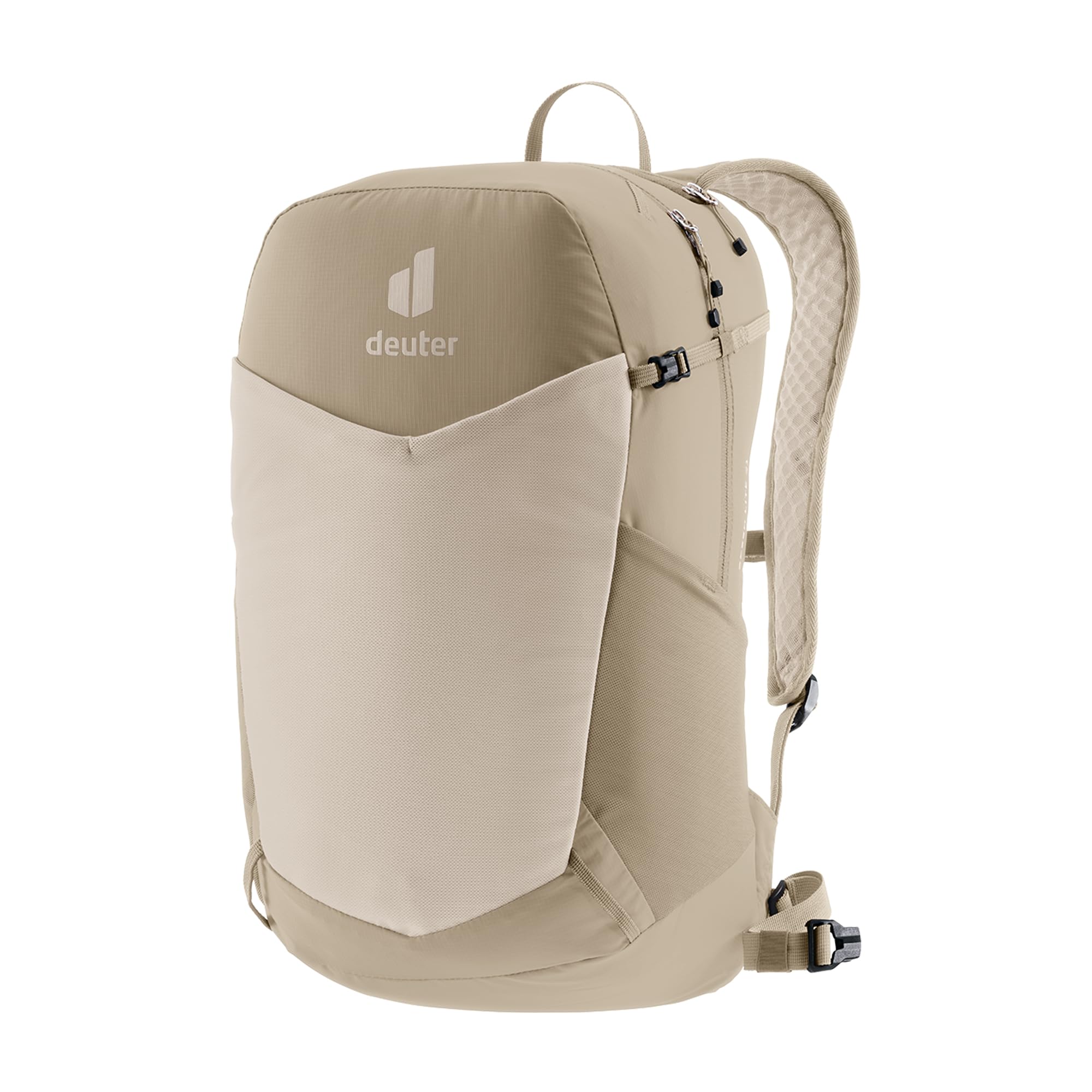
The Speed Lite 21L is a featherweight specialist designed for fast-moving hikers who prioritize weight savings over structure. The V-shaped body allows a full range of arm movement, and the precision-adjustable sternum straps and compression straps keep the load pinned to your back without restricting breathing. The 140D recycled polyamide fabric is thin but durable for its weight class.
Storage is minimal but well-considered: a front stretch pocket for gloves or a shell, stretch side pockets for bottles, a zippered top pocket with a key clip, and a glasses-stow loop on the shoulder strap. The detachable waist belt is more of a stabilizer than a load-bearing hipbelt, so the Speed Lite works best for loads under 10 pounds.
Reviewers love the lightweight feel and the fact that the body fabric meets the bluesign standard, but they also note the lack of internal organization — it’s essentially one main compartment with a small phone pocket. If you need structure or heavy load support, this is not the pack for you. If you want the lightest possible daypack for a trail run or a fast summit push, it’s exceptional.
Why it’s great
- Incredibly light at 470g for fast hikes
- V-shape design allows full arm swing
- 100% recycled body fabric with bluesign certification
Good to know
- No load-bearing hipbelt, best for sub-10lb loads
- Single main compartment with minimal organization
5. Kelty Asher Day Hiking Pack 24L
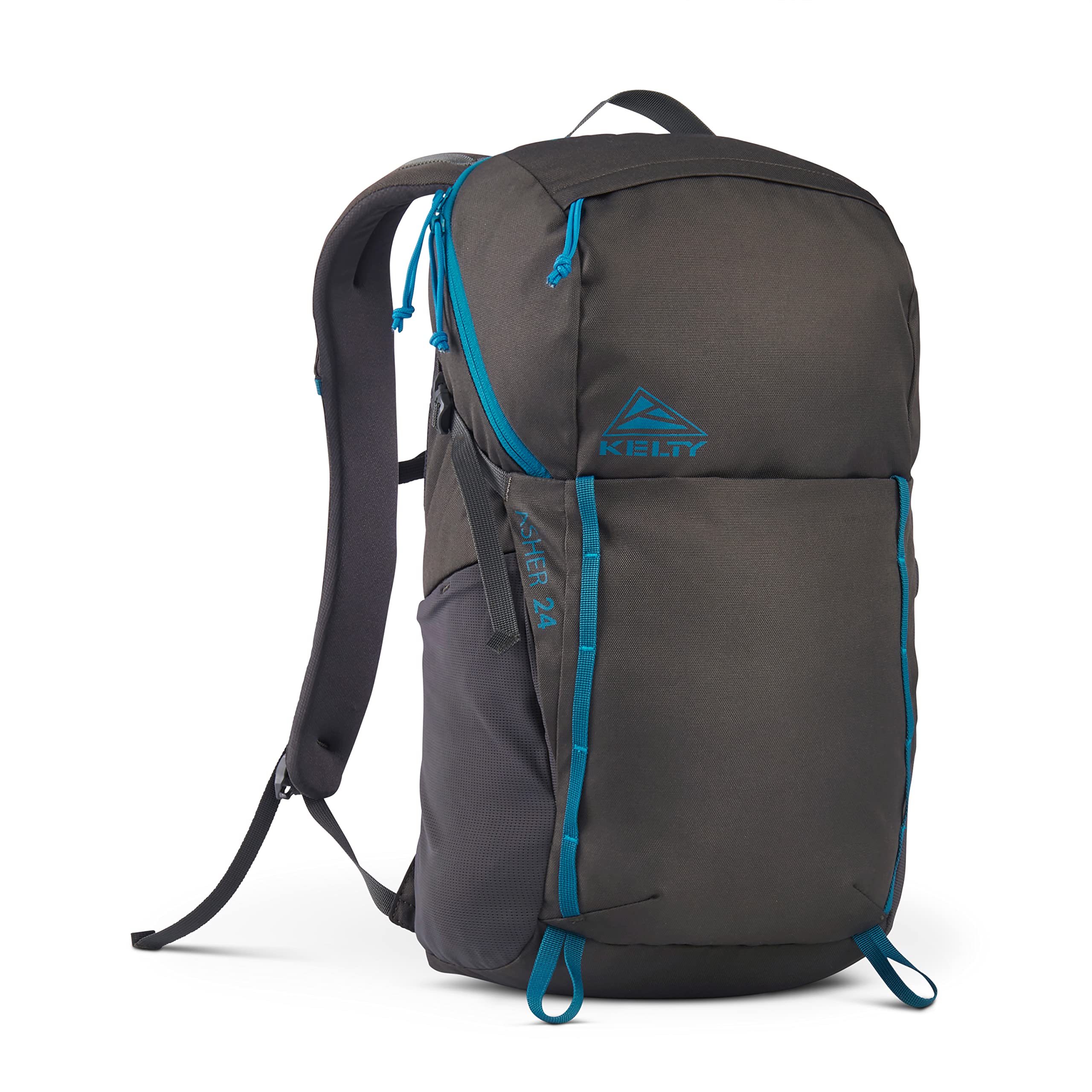
Kelty packs a surprising amount of load-bearing tech into the Asher 24L at a mid-range price point. The HDPE frame sheet provides structure and support that you typically won’t find in packs under this price tier, and the Amp Flow ventilated back panel channels air across your lower back to reduce sweat buildup. The 24L capacity is generous enough for a full day of gear, and the weight comes in at just 720g.
The pocket layout is streamlined and functional: a top zippered pocket with a soft-touch liner for a phone, a front shove-it pocket with side compression, dual stretch mesh side pockets, and a waistband stabilizer. Daisy chains give you attachment points for extra gear, and the hydration sleeve is compatible with most 2-3L bladders.
Reviewers note that the materials feel a little flimsy compared to premium brands — the polyester shell is not as tough as Osprey’s nylon — but the pack holds up well under normal day hiking loads. The hipbelt is basic and won’t transfer heavy loads like the Osprey’s, but for loads under 15 pounds, it’s a solid value choice with real frame support.
Why it’s great
- HDPE frame provides structure at a reasonable cost
- Amp Flow backpanel improves ventilation
- Light enough at 720g for long day hikes
Good to know
- Shell material feels less durable than premium alternatives
- Basic hipbelt limits load transfer for heavy carries
6. Water Buffalo Sherpa 22L Hydration Backpack
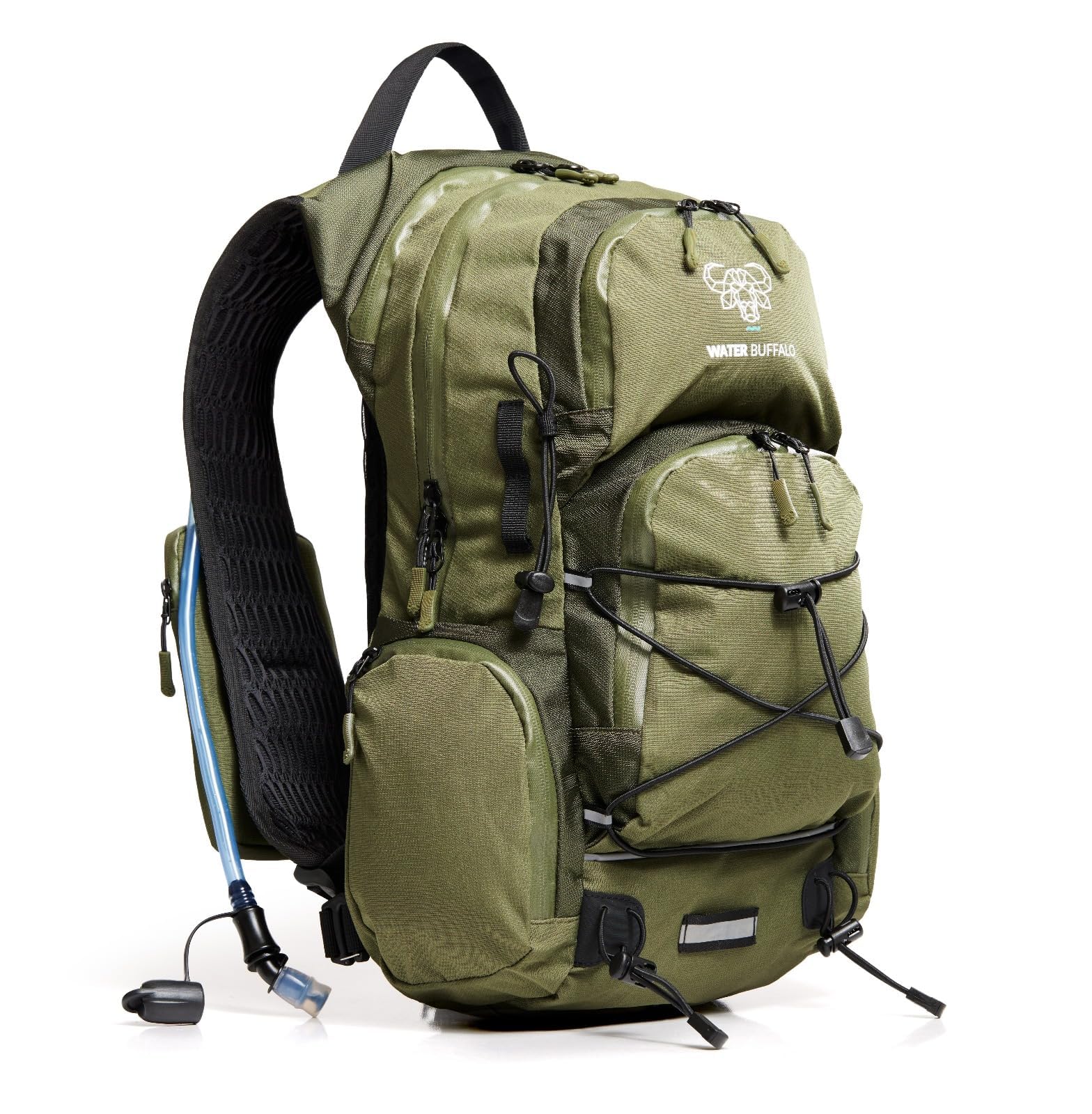
The Sherpa 22L from Water Buffalo delivers a ready-to-hike bundle that includes a BPA-free 2L bladder, a rain cover, and trekking pole holders — all at a budget-friendly price point. The main compartment offers six storage pockets, and the 150D ripstop polyester with 420D jacquard nylon reinforcement provides respectable abrasion resistance for weekend trail use. The adjustable hip and chest straps help reduce bounce during moderate-paced hikes.
Reviewers consistently praise the value — they compare it favorably to packs costing significantly more. The bladder features a wide opening for easy refills, and the insulated interior keeps water cool on warm days. The phone pocket on the shoulder strap fits larger phones, including the iPhone 17 Pro, and the detachable phone case can be moved to the waistband.
The main drawback is the bladder quality itself. Several users report that the bite valve is stiff, the tube threading is prone to wear, and the lack of a wide-mouth opening makes cleaning difficult. If you’re happy to replace the bladder with a higher-end option from Hydrapak or CamelBak, the pack shell itself is a solid choice. The lifetime warranty is a nice safety net.
Why it’s great
- Includes bladder, rain cover, and pole holders as a complete kit
- Insulated bladder pocket keeps water temperature stable
- Lifetime warranty provides long-term peace of mind
Good to know
- Included bladder lacks wide-mouth opening, hard to clean
- Bite valve and tube threading have durability concerns
7. Dakine Hot Laps Hip Pack 5L
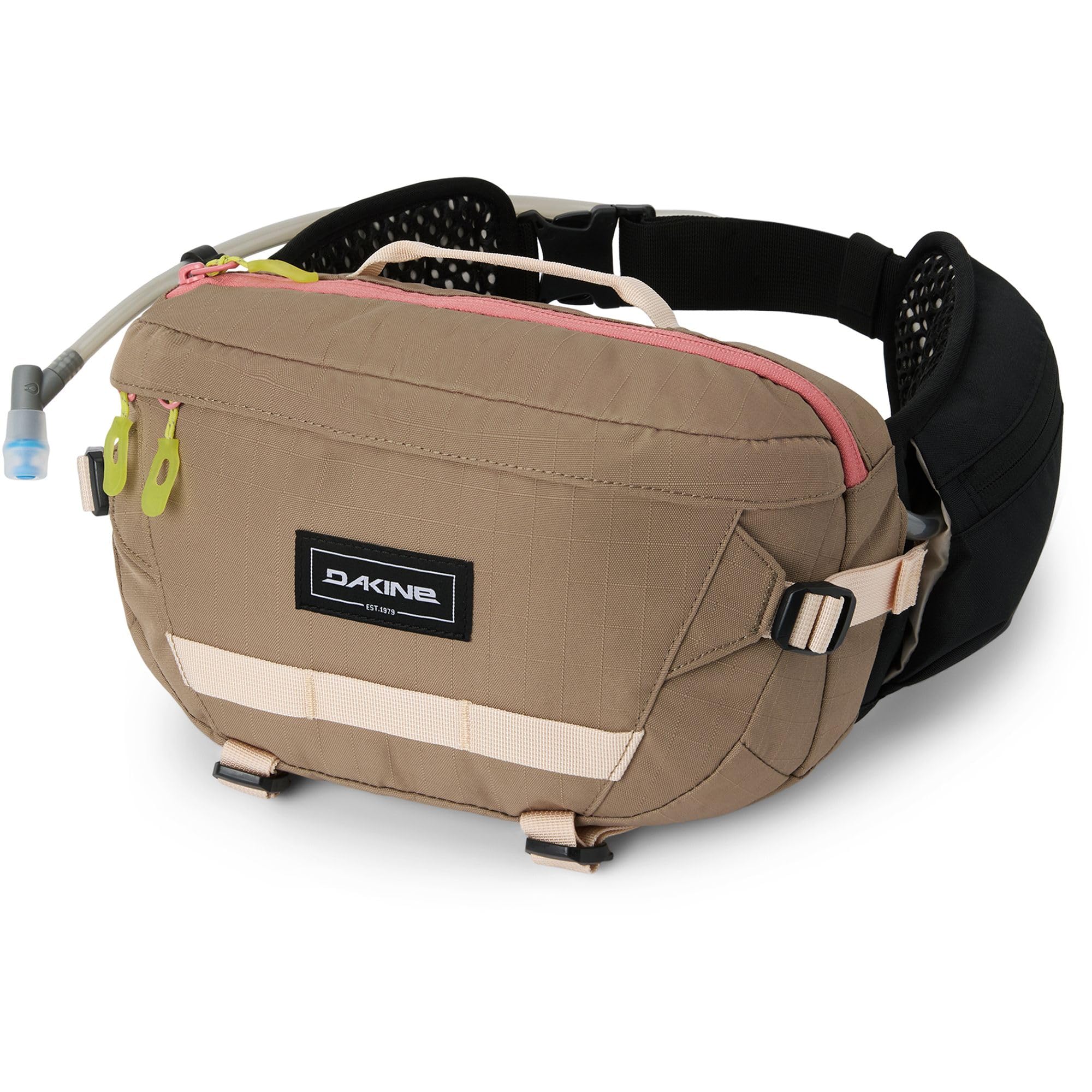
The Hot Laps Hip Pack is a category-defining alternative to a full backpack for hikers and mountain bikers who want to keep their back cool and free. The 2L / 70 oz Hydrapak vertical reservoir sits snugly against your lower back, and the magnetic hose clip auto-locates the Phaser bite valve to the waist buckle for one-handed drinking. The 25mm padded hip belt with side pockets keeps snacks, keys, and a phone within reach without slowing down.
The breathable air flow mesh back panel reduces sweat accumulation, and the internal organizer pockets help separate tools from food. For SUP paddlers and runners, the hands-free hydration and low profile make it ideal for activities where a full daypack would be overkill. Reviewers report it fits a 31-inch waist comfortably and holds enough water for 2-2.5 hours of exertion.
The main limitation is capacity. At 5L total, you won’t fit a rain shell, spare layers, a first aid kit, and lunch all at once. The main compartment is tight when the bladder is full, and the zipper lacks a waterproof flap, so mud and water can ingress on wet days. The bladder also lacks a quick-connect hose, making disassembly and cleaning more tedious than premium systems.
Why it’s great
- Magnetic hose clip enables one-handed hydration reattachment
- Low-profile design keeps back cool and free from sweat
- Hydrapak reservoir is a trusted brand for bladder reliability
Good to know
- 5L capacity won’t fit full day hiking gear
- Zipper is not waterproof, allows moisture ingress
FAQ
What is the ideal capacity for a hiking daypack?
Should I get a unisex or gender-specific daypack?
How do I measure my torso length for a daypack?
Can I use a hydration backpack for travel or everyday use?
Final Thoughts: The Verdict
For most users, the daypack for hiking winner is the Osprey Tempest 20L because its women-specific fit, AirScape backpanel, and stable hipbelt handle technical terrain without compromise. If you want maximum back ventilation on hot trails, grab the Osprey Hikelite 28L. And for a lightweight, eco-conscious daypack that disappears on your back with sub-10-pound loads, nothing beats the Deuter Speed Lite 21L.