Choosing the right cycling helmet means balancing weight, ventilation, and protection against rotational forces—three variables that directly affect how safe and comfortable you feel on every ride. Ignoring any one of them turns a simple purchase into a recurring headache.
I’m Emma — the founder and writer behind Baby Bangs. I have spent years analyzing the impact protection standards and fit-system engineering behind hundreds of helmet models to separate marketing claims from real head-safety value.
This guide cuts through the noise to help you find the best cycling helmets for men that actually fit well, breathe effectively, and absorb energy properly during a crash.
How To Choose The Best Cycling Helmets For Men
A cycling helmet’s job is to absorb crash energy, but its daily job is to disappear from your awareness. If it pinches, slides, or traps heat, you will stop wearing it — and a helmet you do not wear protects nothing. The three specs below determine whether a helmet earns a permanent spot on your head.
Rotational Impact Management (MIPS vs. KinetiCore vs. None)
Standard EPS foam absorbs linear impact energy, but angled falls generate rotational forces that stretch brain tissue. MIPS (Multi-directional Impact Protection System) uses a low-friction layer inside the shell to let the helmet rotate slightly relative to your head, redirecting those forces. LAZER’s KinetiCore uses crushable foam blocks embedded in the EPS to achieve similar results without a separate liner. Helmets without either still meet CPSC certification, but the rotational layer adds a meaningful safety margin for real-world crash scenarios.
Ventilation-to-Weight Ratio
A helmet that traps heat turns a pleasant ride into a sweat-drenched ordeal. Look for at least 14 vents connected by internal airflow channels — not just holes punched in the shell. Weight matters here too: a sub-350-gram helmet feels barely there, while anything over 450 grams can cause neck fatigue on longer rides. The magic zone for all-day comfort sits around 300 to 370 grams with 14 to 21 vents.
Dial Fit Systems and Head Circumference
Ignore the “one size fits all” label unless the helmet explicitly lists a measured head-circumference range in centimeters (54–61 cm is a common adult spread). A rear dial retention system — ErgoKnob, TurnSys, or similar — lets you micro-adjust tension with one hand while riding. The helmet should sit level on your head, the front edge one to two finger-widths above your eyebrows, and the straps should form a V around your ears. Anything that shifts more than a centimeter when you shake your head is too loose.
Quick Comparison
On smaller screens, swipe sideways to see the full table.
| Model | Category | Best For | Key Spec | Amazon |
|---|---|---|---|---|
| Giro Register II MIPS | Premium Road | Integrated rotational protection at a fair price | In-mold Hardbody shell + MIPS | Amazon |
| Fox Racing Mainframe MIPS | Premium MTB | Trail riding with extended rear coverage | MIPS integrated fit system | Amazon |
| Lumos Ultra Smart | Smart/Commute | Integrated turn signals and high visibility | USB-C rechargeable LEDs | Amazon |
| LAZER Tempo KinetiCore | Mid-Range Road | Rotational protection with a dial fit | Built-in KinetiCore EPS | Amazon |
| Wildhorn Corvair | Mid-Range MTB | Adjustable visor and large-head fit | 310 g weight | Amazon |
| Retrospec Rowan | Budget MTB | Solid protection without breaking the bank | ErgoKnob dial system | Amazon |
| FUNWICT Adult Helmet | Budget All-Round | Magnetic goggles and rechargeable tail light | 340 g / 21 vents | Amazon |
In‑Depth Reviews
1. Giro Register II MIPS
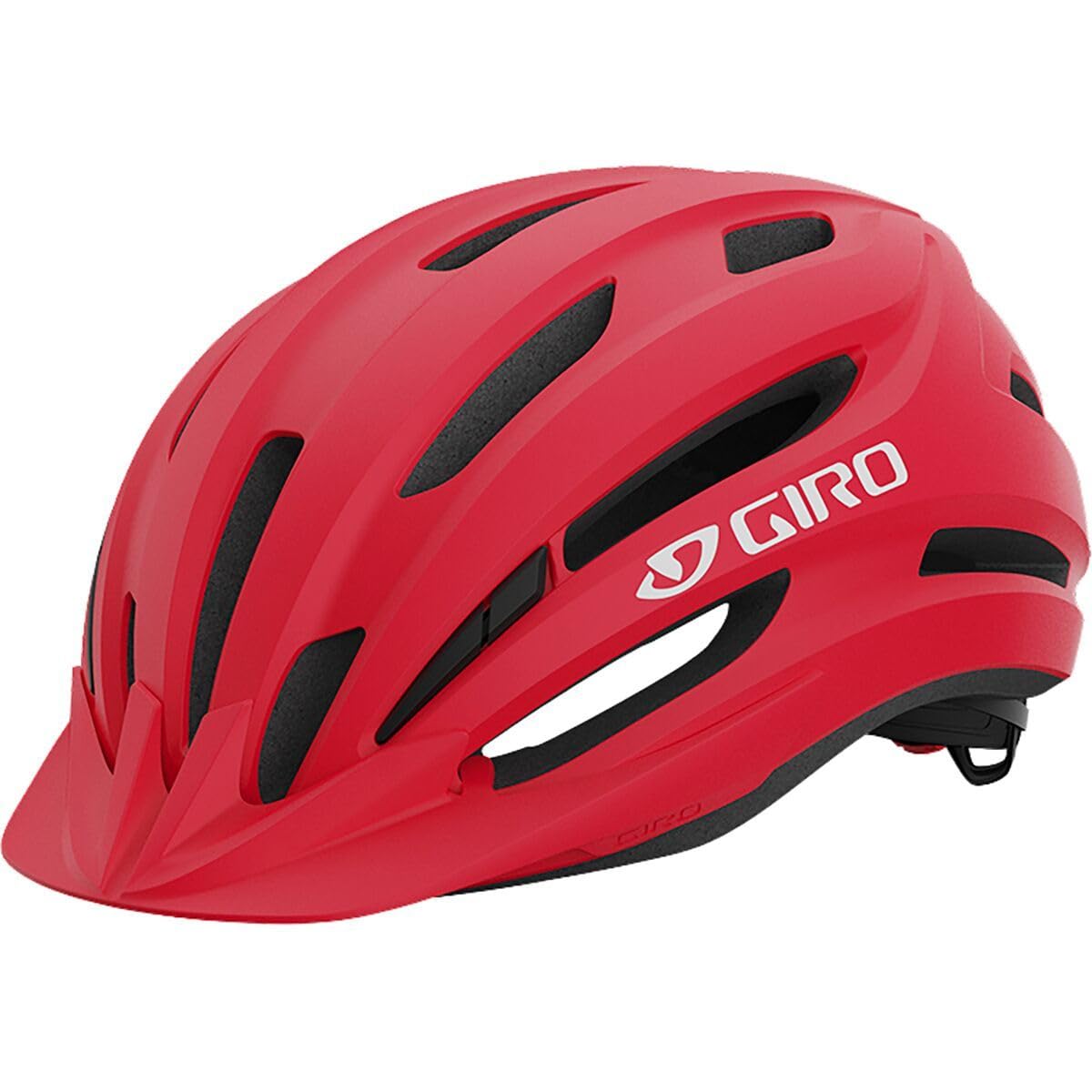
The Giro Register II MIPS hits the sweet spot where rotational-impact technology meets everyday affordability. Its two-piece shell fuses a tough outer hard shell with a polycarbonate lower wrap bonded directly to the EPS liner — that combo keeps weight reasonable while adding durability over a bare foam helmet. The integrated MIPS layer sits between the liner and the padding, allowing the shell to rotate slightly on angled impacts to reduce brain-tissue strain.
Universal Fit sizing means it comes in distinct shell shapes rather than a single oversized mold, so it sits level on most head shapes straight out of the box. The rear dial adjusts easily, and the bright white color option stands out in traffic, which adds another layer of passive safety during road riding. Ventilation is active enough for summer century rides, and the removable liner makes post-sweat cleanup simple.
Owners report that it feels as comfortable as helmets costing twice as much, and the MIPS certification gives it a legit safety edge over non-MIPS models at a similar price point. The only real concession to the lower price tier is a slightly bulkier look than top-end aero shells, but for the protection-to-weight ratio, this is the most balanced pick.
Why it’s great
- True MIPS rotational protection without the premium price tag
- In-mold Hardbody lower wrap adds shell durability
- Universal Fit shell shapes accommodate a wide range of head profiles
Good to know
- Not the most aero or streamlined profile for dedicated racers
- Visor not included for off-road use
2. Fox Racing Mainframe Mountain Bike Helmet MIPS
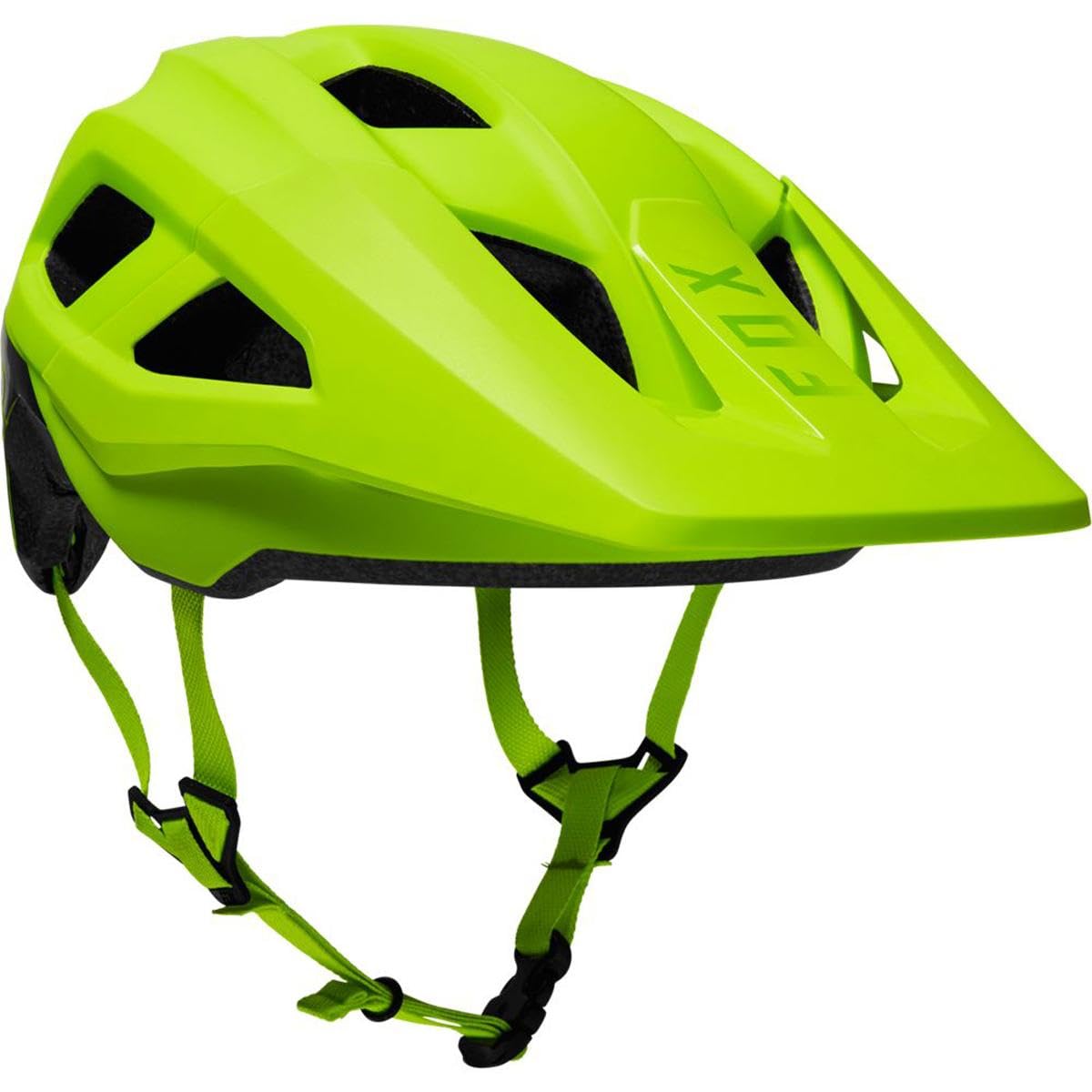
The Fox Racing Mainframe is built with extended rear coverage that wraps lower down the back of the skull — a design choice that matters when you are leaning back on a steep descent and the helmet’s job shifts from wind cheating to impact absorption. Its MIPS system is integrated directly into the fit system, which keeps the low-friction layer flush against the retention cradle rather than floating loose inside the shell.
Channeled EPS foam works with 14 vents to pull hot air out through the back, and the removable moisture-wicking liner survives repeated washings without pilling. At roughly 1.5 pounds, it lands on the heavier side compared to road-oriented helmets, but that extra mass comes from the extended shell profile and thicker EPS in the rear — exactly where mountain bikers need it most. The retention dial is gloved-hand friendly and clicks into micro-adjustments rather than coarse steps.
Riders consistently mention that the Mainframe feels secure even after hours of bumpy singletrack, and the MIPS layer does not create hot spots or pressure points. The TRVRS Flo Yellow color option provides strong contrast against green foliage, making you more visible to other trail users. The only downside is that the fixed visor, while adjustable, sits slightly higher than some prefer for aggressive chin-over-stem positions.
Why it’s great
- Extended rear coverage protects the occipital area during crashes
- MIPS integrated into the fit system — no floating liner
- Channeled EPS and 14 vents move heat effectively on climbs
Good to know
- Heavier than road-oriented helmets at around 1.5 pounds
- Fixed visor angle may not suit very low riding positions
3. Lumos Ultra Smart Bike Helmet
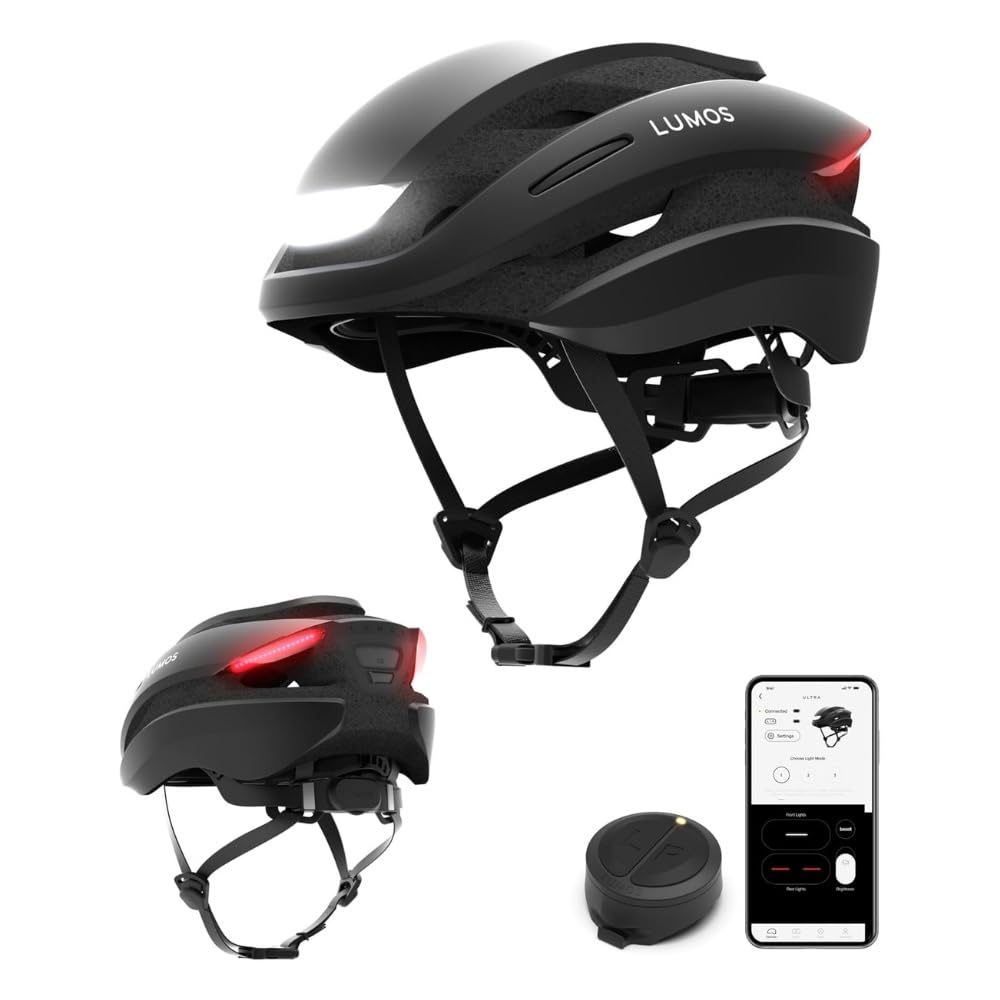
The Lumos Ultra redefines a cycling helmet’s primary job — it turns your head into a moving vehicle-signal system. Bright front and rear LED strips connect wirelessly to a handlebar remote, so a tap on the remote triggers left or right turn signals that drivers behind you see clearly even in glare. The LEDs are customizable through a smartphone app, and the USB-C rechargeable battery lasts up to 10 hours on moderate brightness settings.
Under the lights, the shell uses standard EPS foam with a polycarbonate outer, and you can choose a MIPS version for rotational-impact protection. At 390 grams, it is slightly heavier than a bare-bones road helmet, but the extra weight is entirely in the electronics and battery pack. Ventilation is adequate for commuting and moderate recreational riding, though the internal channels are not as deep as those on dedicated performance helmets. The M-L size covers 54 to 61 cm, and the rear retention dial provides a stable fit that does not shift during braking.
Commuting riders consistently report feeling more visible and confident at intersections, and the Team Sync feature lets groups coordinate light patterns for group rides. The matte black finish hides road grime well, and the strap system is comfortable against bare skin. The main trade-off is that the electronics add bulk, and the non-MIPS version lacks the rotational layer that many safety-conscious riders now expect.
Why it’s great
- Integrated LED turn signals improve car-driver awareness
- USB-C charging with 10-hour run time
- Smartphone app offers brightness control and ride tracking
Good to know
- Heavier than non-smart helmets due to electronics
- Ventilation is adequate but not as effective as deep-channel designs
4. LAZER Tempo KinetiCore Bike Helmet

LAZER’s KinetiCore system offers a different approach to rotational-impact protection — instead of a sliding MIPS layer, the EPS foam itself contains crushable honeycomb blocks that deform on angled impacts. This integration keeps the helmet simpler and slightly lighter than a MIPS equivalent. The Tempo is an entry-level road helmet that brings this technology down to a price point that competes with basic non-protected models.
The TurnSys dial provides a secure one-handed fit adjustment, and the one-size-fits-all design (54–61 cm) works for a broad range of head circumferences. Ventilation is respectable for the weight class, with 475 grams placing it on the heavier side of mid-range, but the comfort of the KinetiCore system means the extra grams go toward genuine impact performance. The shell is compatible with LAZER’s Universal LED light, which clips onto the rear for extra visibility.
Consumer Reports has rated the Tempo KinetiCore favorably, citing its balance of safety features and price. Owners note that it fits well even with a thin winter liner underneath and that the strap dividers stay in place during long rides. The main drawback is the weight — it is noticeably heavier than a sub-350-gram helmet — and the lack of a visor limits its utility for trail riding or sunny-road glare protection without add-on accessories.
Why it’s great
- KinetiCore rotational protection integrated into the EPS, no sliding liner
- TurnSys dial provides quick one-handed micro-adjustment
- Consumer Reports recommended for safety-to-price ratio
Good to know
- Heavier than many road helmets at 475 grams
- No built-in visor for sun or trail debris protection
5. Wildhorn Corvair Mountain Bike Helmet
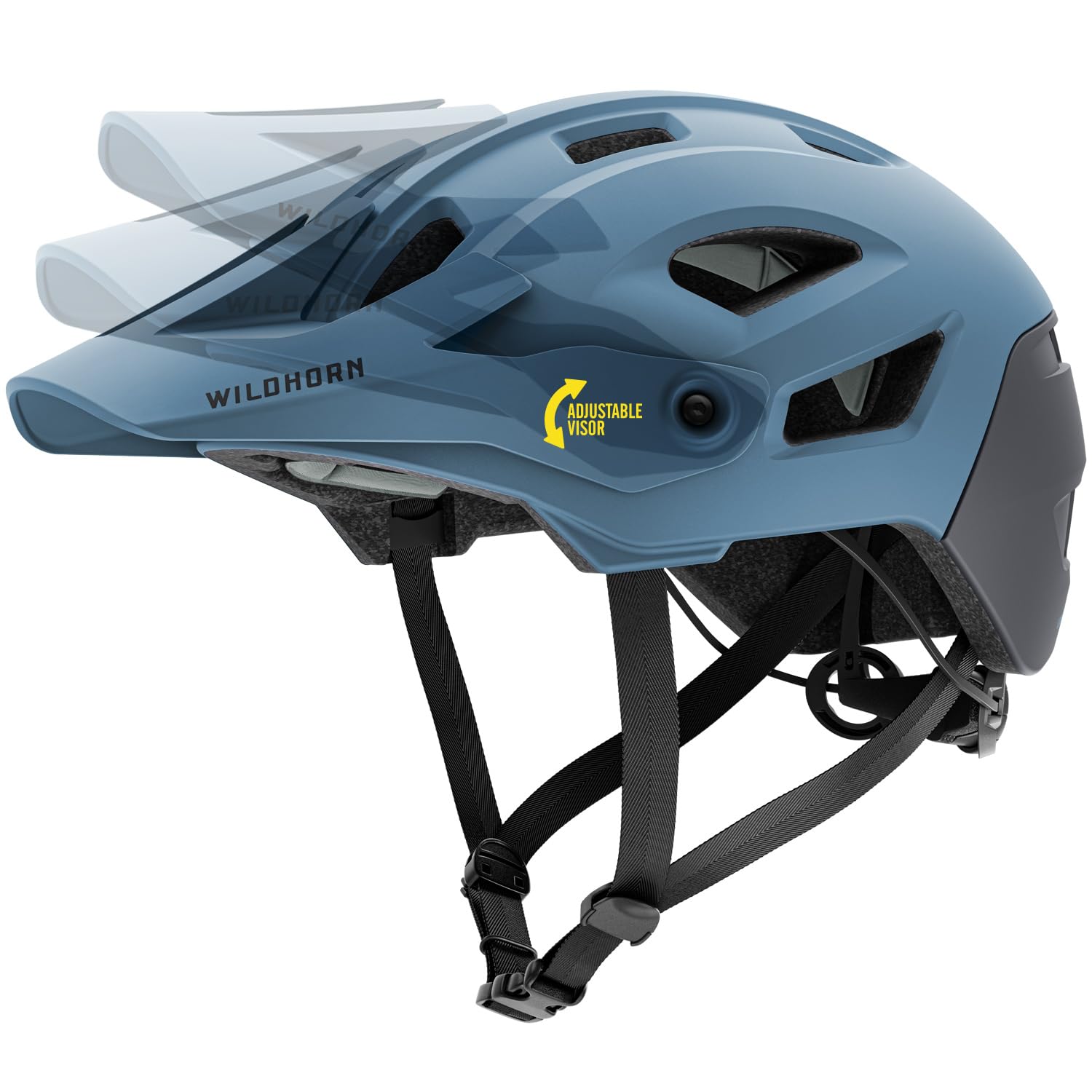
The Wildhorn Corvair is a standout option for riders who prioritize a featherweight feel without sacrificing trail-oriented features. At just 310 grams, it is one of the lightest mountain bike helmets on the market, yet it still includes a multi-position adjustable visor and a dial retention system. The ABS outer shell covers a standard EPS liner, meeting CPSC 1203 certification for cycling use, and the internal airflow channels connect multiple vents to keep your head cool on hot climbs.
The large/XL size fits head circumferences up to about 61 cm, and several owners with larger-than-average heads report that the Corvair is one of the few helmets that does not dig into the temples. The adjustable visor can be tilted up or down depending on sun angle, which is a genuine advantage on trails where tree cover and open sky alternate minute to minute. The rear dial clicks into precise positions and stays locked even during rough descents.
Compared to the Retrospec Rowan, the Corvair is significantly lighter and offers better ventilation, making it the better choice for riders who do long climbs or hot-weather riding. The trade-off is a slightly less robust shell — ABS rather than polycarbonate — and no MIPS or KinetiCore rotational layer. For trail riding where weight sensitivity is high and the risk of rotational impact is lower, this is a smart mid-range pick.
Why it’s great
- Extremely light at 310 grams — easy to forget you are wearing it
- Multi-position visor adjusts to changing sun and terrain conditions
- Large/XL size accommodates riders with wider head shapes
Good to know
- ABS shell is less impact-absorbent than polycarbonate alternatives
- No MIPS or KinetiCore rotational protection system
6. Retrospec Rowan Mountain Bike Helmet
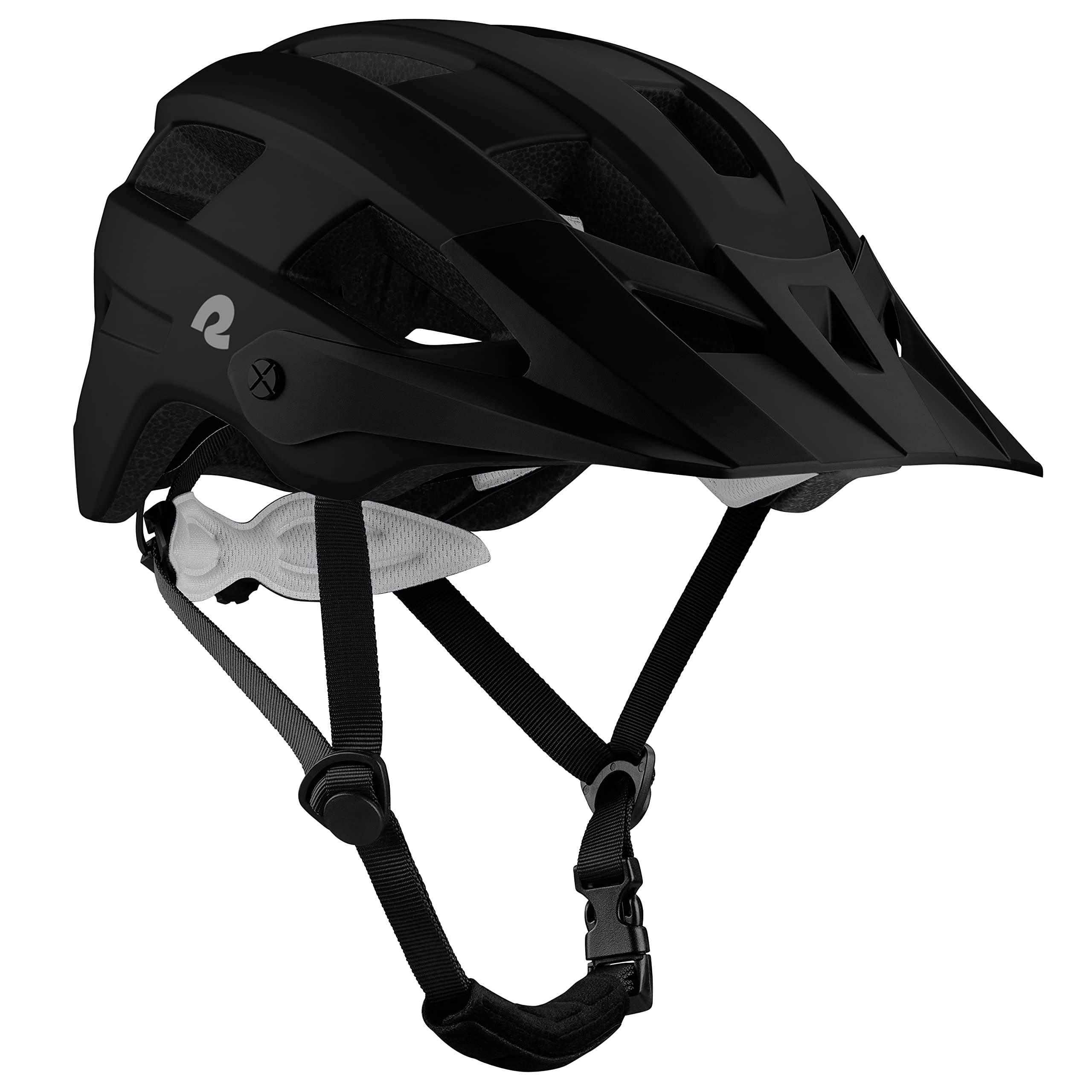
The Retrospec Rowan proves that a budget-friendly helmet can still meet modern safety expectations. It uses a dense EPS foam core bonded to an in-mold polycarbonate shell — the same construction method found in helmets costing two to three times as much. The 14 ventilation ports are strategically positioned to pull air through the front and exhaust it out the back, providing effective cooling for moderate trail use and road commuting alike.
The ErgoKnob dial system allows one-handed tension adjustment while riding, and the removable padding snaps out for washing. The visor is adjustable and sits low enough to block sun glare without interfering with goggles, a detail that riders frequently praise compared to budget helmets whose visors point upward instead of forward. The weight sits at roughly one pound, which is competitive for its price tier.
Several owners report that the fit runs slightly small, so ordering one size up from your usual measurement is recommended. The padding, while comfortable initially, can feel thin on longer rides above two hours, and the lack of any rotational-impact system means this is best suited to riders who prioritize solid basic protection over the latest safety tech. For upright commuting and cross-country trails, it delivers dependable performance without the premium price.
Why it’s great
- In-mold polycarbonate shell bonded to dense EPS foam for durability
- ErgoKnob dial system provides tool-free micro-adjustment
- Adjustable visor angles downward rather than skyward
Good to know
- Fit runs small — consider sizing up
- Thin padding may cause discomfort on rides over two hours
7. FUNWICT Adult Bike Helmet with Visor and Goggles

The FUNWICT helmet packs an unusual combination of accessories: a detachable sun visor, magnetic flip-down goggles, and a rechargeable LED rear light with three flashing modes — all at a cost that undercuts most basic helmets alone. The high-density PC shell with EPS foam liner meets standard impact requirements, and the 21 vent openings provide exceptional airflow, making it one of the most breathable options in this roundup. At 340 grams, it stays light despite the integrated hardware.
The magnetic goggles attach to the front of the helmet and can be flipped down over prescription glasses, a convenience that commuters and recreational riders appreciate for variable light conditions. The rear LED light is visible in daylight and recharges via the included USB cable, though the proprietary connector means losing the cable renders the light inoperable until you find a replacement. Three sizes (M, L, XL) cover head circumferences from 54 to 63 cm.
Owners consistently note that the XL size fits large heads well, and the magnetic shades work effectively for keeping wind, insects, and sun out of eyes. The main compromises are the visor, which some buyers find does not fit flush against the shell, and the light’s brightness, which is adequate for night-time visibility but not as powerful as dedicated aftermarket tail lights. For a budget all-rounder with above-average feature density, this is a smart entry-level purchase.
Why it’s great
- Magnetic flip-down goggles work over prescription eyeglasses
- 21 vents provide cooling suitable for hot climates
- Rechargeable LED rear light with steady and flashing modes
Good to know
- Rear light uses a proprietary charging cable, not standard USB
- Included visor may not align perfectly with the shell shape
FAQ
How tight should a cycling helmet feel when the dial is engaged?
Do I need MIPS for casual commuting or just trail riding?
How often should I replace a cycling helmet?
Can I wear a cycling helmet in winter with a beanie underneath?
Final Thoughts: The Verdict
For most riders, the cycling helmets for men winner is the Giro Register II MIPS because it delivers proven rotational protection through a well-ventilated, comfortable shell at a price that undercuts most premium MIPS helmets. If you want integrated lighting and turn signals for commuter safety, grab the Lumos Ultra Smart. And for trail riders who need extended rear coverage and a secure MIPS cradle, nothing beats the Fox Racing Mainframe.