Breastfeeding a newborn often feels like a life sentence to the rocking chair — you’re pinned down, your arms are full, and the moment you settle in, the baby’s hunger clock resets. A carrier designed for nursing changes that equation, letting you feed on the move while keeping your baby’s latch supported and your spine free of strain.
I’m Emma — the founder and writer behind Baby Bangs. I’ve analyzed over 50 baby carriers against real-world nursing scenarios, evaluating how each handle’s weight distribution, fabric stretch, and latch access at the precise moment a newborn needs to feed.
This guide breaks down the seven most capable options so you can confidently choose the carrier for breastfeeding newborn that fits your body, your baby’s age, and your everyday rhythm.
How To Choose The Best Carrier For Breastfeeding Newborn
Breastfeeding in a carrier isn’t about lowering your baby into the cradle position — it’s about creating enough slack in the fabric or panel to bring your baby’s mouth to nipple height without breaking the seal. Three factors decide whether a carrier makes that easy or awkward.
Fabric Stretch and Tension Control
Woven or knit wraps with moderate stretch (like the Moby’s featherknit) let you loosen one shoulder strap to drop baby’s head to breast level while the rest of the wrap stays snug. Too much stretch and the baby sinks; too little and you can’t get the angle right.
Panel Height and Head Support
A carrier that rises too high on the baby’s head blocks your nipple line. Look for a panel that ends at the baby’s ears or lower, or an adjustable hood you can tuck down. The BabyBjörn Mini’s adjustable head support is a standout here because it clips lower for older infants or folds flat for nursing access.
Waist Belt and Hip Seat Stability
If you’re nursing in a structured carrier, a firm hip seat (like the Momcozy 2-in-1 or BabbleRoo) acts as a shelf that keeps the baby’s weight off the latch zone. Without a rigid seat, the baby’s weight pulls down on the fabric, which can tug the nipple out of alignment mid-feed.
Quick Comparison
On smaller screens, swipe sideways to see the full table.
| Model | Category | Best For | Key Spec | Amazon |
|---|---|---|---|---|
| Moby Baby Wrap Carrier | Wrap | Hands-free nursing with newborn contact naps | 16.5 ft stretchy featherknit fabric | Amazon |
| Boppy ComfyFit | Hybrid | Fast setup between wrap and structured carrier | Padded waist belt with cross-back straps | Amazon |
| BabbleRoo 6-in-1 | Hip Seat | Nursing on the go with storage for pump supplies | Detachable hip seat, 50lb capacity | Amazon |
| Momcozy 2-in-1 | Carrier/Hip Seat | Long walks with active 5+ month old | 10mm thick hip seat cushion, 360° rotation | Amazon |
| BabyBjörn Baby Carrier Mini | Structured | Quick clicks for newborn-only use (7-15 lbs) | Adjustable head support, hip-healthy certified | Amazon |
| Bebamour Hip Seat | Hip Seat | Parents with back strain needing lumbar support | 16-inch waist extender, detachable hood | Amazon |
| Mabē Monarch | Structured | Premium everyday all-day wear from newborn to toddler | 90% cotton / 10% linen blend fabric | Amazon |
In‑Depth Reviews
1. Moby Baby Wrap Carrier Element
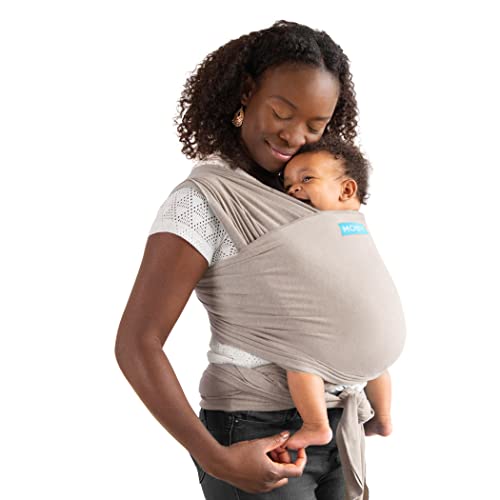
Moby’s Element Wrap uses a stretchy featherknit fabric that gives you precise tension control — you can loosen one shoulder pass to drop the baby’s head to breast height without losing wrap integrity elsewhere. That slack management is exactly what makes breastfeeding in a wrap possible: the baby stays deep in the pocket while you adjust the latch access point.
The 16.5‑foot length lets you wind a snug, multi‑layer cradle that distributes weight evenly across your shoulders and hips. Multiple reviews confirm that newborns settle into deep sleep almost immediately, which means you’re not fighting a fussy baby while trying to line up the latch. The breathable knit also reduces sweat buildup between your chest and the baby.
For nursing, you simply lower the top pass of fabric below your baby’s ears, shift your baby slightly to the side, and feed — no buckles to click, no panel to fold. It takes two or three tries to learn the drop‑and‑slide motion, but once you do, this wrap becomes the most feed‑friendly carrier in your rotation.
Why it’s great
- Stretchy fabric allows precise latch‑height adjustment
- Breathable knit keeps both parent and newborn cool during feedings
- Hands‑free design supports contact naps after nursing
Good to know
- Learning curve to tie and tension correctly for nursing
- Not ideal for quick on‑off errands
2. Boppy ComfyFit Adjustable Baby Carrier

The Boppy ComfyFit bridges the gap between a stretchy wrap and a structured carrier — it uses a padded waist belt with cross‑back shoulder straps that distribute the baby’s weight without the bulk of a heavy buckled panel. That design makes breastfeeding easier because you can loosen the shoulder straps enough to lower the panel edge to nipple height while the waist belt keeps the baby stable.
Parents report that the stretchy spandex blend fabric (88% Polyester, 12% Spandex) feels secure yet forgiving. One reviewer noted that their baby “falls asleep so comfy without bobbing around,” which matters during nursing because a bouncy baby loses latch quickly. The JPMA certification also assures you that the materials and buckle strength meet safety standards.
For nursing, you unclip one shoulder strap, slide the baby slightly toward the center, and feed. The lack of a rigid back panel means you can curl the fabric down — though you’ll need to re‑tighten the strap after the feed to restore support. It’s a bit slower than a wrap but much faster than fully unclipping a structured carrier.
Why it’s great
- Padded waist belt keeps baby weight off the latch zone
- Cross‑back straps prevent shoulder digging
- Machine washable with simple care instructions
Good to know
- Not as naturally nursing‑friendly as a wrap without re‑adjustment
- Strap adjustment takes a few tries to get right
3. BabbleRoo 6-in-1 Baby Carrier with Hip Seat
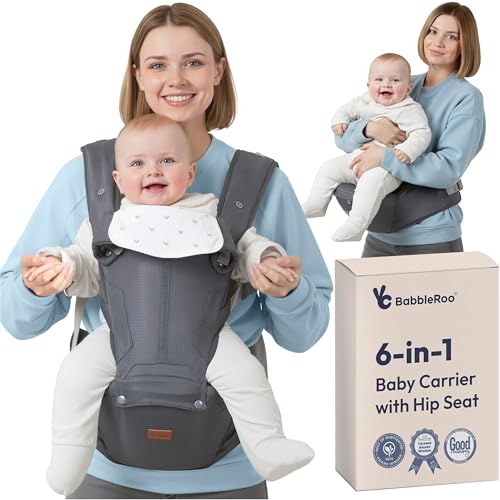
The BabbleRoo 6-in-1 distinguishes itself with a detachable hip seat that doubles as a quick nursing shelf. When you detach the structured carrier portion, the hip seat alone supports the baby’s weight during a sit‑and‑feed — you can sit down, keep the baby on the seat, and nurse with your hands free. For older newborns with head control, that’s a game‑changer for cluster feeding.
Parents highlight the “endless pockets” and bottle holder, which are rare in the nursing‑carrier category. Those storage options mean you can carry a burp cloth, a nipple cream, and a spare bottle without an extra bag. The thick Velcro waistband and breathable mesh panel also keep the carrier cool during longer feeding sessions.
When using the full carrier, you can lower the front panel slightly by loosening the shoulder straps, though the hood and bib accessories can get in the way if you don’t remove them first. The 50‑pound weight limit also means this carrier grows with your baby beyond the newborn phase, making it a long‑term investment.
Why it’s great
- Hip seat creates a stable platform for hands‑free nursing
- Multiple pockets and bottle holder for feeding gear
- Breathable mesh keeps both parent and baby cool
Good to know
- Hood and bib accessories can complicate nursing access
- Hip Velcro is tough to tighten one‑handed while holding baby
4. Momcozy Baby Carrier with Hip Seat

Momcozy’s 2‑in‑1 hip seat carrier is built for parents who take long walks or stand for extended periods. The 10‑mm thick hip seat cushion acts as a shock absorber, and the 3D contoured waist support redirects pressure away from your lower back. For nursing, the hip seat means the baby sits high enough that you can lean back slightly and bring the baby to breast without hunching.
One reviewer switched from an Ergobaby and Lillebaby to this model specifically because the leg holes are more comfortable for the baby and the carrier is less bulky — which matters when you’re trying to feed discreetly in public. The breathable material is rated for all seasons, and the X‑structure straps allow a quick one‑person setup.
To nurse, you unzip the center panel slightly or loosen one shoulder strap to drop the baby’s head to latch height. The carrier’s firm seat keeps the baby’s weight off your arms, so you can support your breast with one hand and keep the baby steady with the other. The only catch is the waistband maxes out at 45 inches, so larger parents may need an extender.
Why it’s great
- Thick hip seat provides a stable latch platform
- Breathable, skin‑friendly fabric for all‑day wear
- Roomy underseat storage for feeding accessories
Good to know
- Not ideal for plus‑size parents without an extender
- Strap adjustment while wearing can pinch baby’s arms if not positioned carefully
5. BabyBjörn Baby Carrier Mini
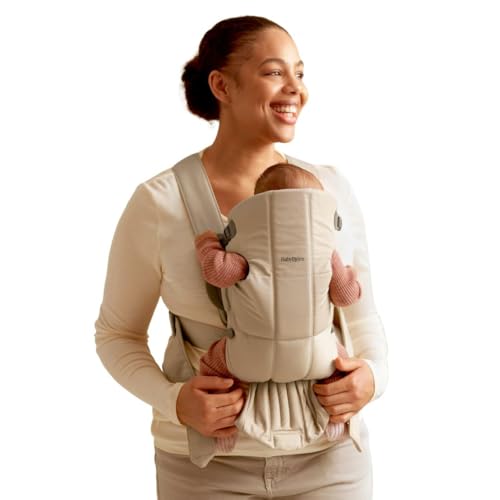
The BabyBjörn Mini is built exclusively for the first six months, wrapping your baby in a snug, structured seat without the bulk of a full‑sized carrier. Its adjustable head support clip is the standout nursing feature: you can unclip the support and fold the panel down to expose the baby’s head and neck fully, giving you a clear latch path without lowering the entire carrier.
Parents rave about the Mini’s ease of use — a single pull‑to‑open mechanism and two buckles mean you can have the baby in and latched in under twenty seconds. The satin‑woven cotton version is soft against the baby’s face, which matters when the baby’s mouth is pressed against the fabric during a feed. The International Hip Dysplasia Institute certification also assures hip‑healthy positioning.
The limitation is the tight weight cap: at 15 pounds, most babies outgrow it around 5‑6 months. If you plan to breastfeed beyond that window, you’ll need to transition to a larger carrier. But for the newborn exclusive phase, this is the most intuitive carrier for nursing because there’s no wrapping or strap loosening required.
Why it’s great
- Adjustable head support clips down for clear latch access
- Ultra‑quick buckle system for fast nursing setup
- Soft woven material is gentle on the baby’s skin
Good to know
- Only suitable up to 15 lbs — no toddler use
- No storage pockets for feeding supplies
6. Bebamour Baby Carrier with Hip Seat

Bebamour’s hip seat carrier targets lumbar support with a contoured waist belt that distributes weight away from your lower spine — a common complaint among breastfeeding parents who spend hours in a static hold. The 16‑inch waist extender accommodates sizes up to 62.5 inches, making it a rare inclusive option for larger body types.
For nursing, the detachable hip seat works as a feeding platform similar to the BabbleRoo. The baby sits high enough that you can nurse while standing or walking, and the padded shoulder straps reduce the neck tension that comes from leaning forward to maintain a latch. The included 3‑piece bib set and sun hood are practical additions, though the bibs’ lack of texture means drool can still bleed through to the carrier.
One reviewer called it the “best carrier for weak backs” and reported being able to carry for three hours without pain. If back fatigue is your primary barrier to nursing in a carrier, Bebamour’s lumbar‑first engineering is the most targeted solution in this list — especially for the newborn stage when feeding frequency is highest.
Why it’s great
- Lumbar support reduces back pain during extended nursing sessions
- Waist extender fits a wide range of body types
- Hip seat doubles as a feeding platform
Good to know
- Bib material lets drool bleed through to the carrier
- Best suited for 4+ months when baby has head control
7. Mabē Monarch Ergonomic Baby Carrier
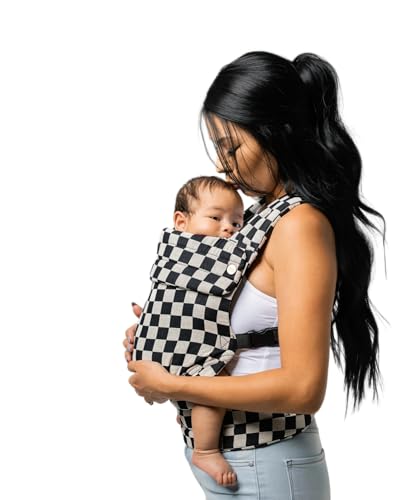
Mabē’s Monarch uses a premium cotton‑linen blend that feels like a well‑worn shirt from day one — soft, breathable, and structured enough to hold shape without stiffness. For breastfeeding, the deep “M” position seat lifts the baby high on your torso, so the baby’s mouth naturally aligns with your nipple line. You don’t need to loosen straps; just slide the baby slightly to the side and feed.
The padded shoulder straps distribute weight evenly without digging, and the adjustable sizing accommodates both slim and plus‑size frames (the brand markets it as a plus‑size friendly carrier). Parents report using it from the first month through toddlerhood, which makes the upfront cost easier to justify. The stylish patterns also get frequent compliments.
To nurse, you can either slide the baby to one side inside the panel or partially unclip one shoulder strap — though the panel’s height can block the latch if you don’t slide the baby low enough first. The fabric is machine washable, and spot cleaning with Oxiclean keeps it fresh between washes. It’s the most aesthetically refined option here, but the nursing access isn’t as instant as a wrap.
Why it’s great
- Deep M‑position seat naturally lifts baby to latch height
- Cotton‑linen fabric is breathable and soft against baby’s face
- Adjustable sizing works for multiple body types through toddler years
Good to know
- Panel height can block latch access without baby sliding
- Higher investment than wrap or hybrid options
FAQ
Can I breastfeed in any baby carrier or only special nursing carriers?
How do I get a deep latch when nursing in a carrier?
Does a hip seat carrier make breastfeeding easier?
Final Thoughts: The Verdict
For most users, the carrier for breastfeeding newborn winner is the Moby Baby Wrap Carrier because its stretchy fabric and multi‑layer wrap give you the most precise latch‑height control without buckles or clips. If you want a hip seat platform for hands‑free feeding on the go, grab the BabbleRoo 6-in-1. And for a premium everyday structured carrier that carries through toddlerhood, nothing beats the Mabē Monarch.