The wrong running shoe turns every stride into a punishment for your arches, but the right one makes your feet feel bulletproof even after mile ten. That difference comes down to how well the shoe cradles your medial arch and stabilizes your gait.
I’m Emma — the founder and writer behind Baby Bangs. I’ve spent years analyzing midsole geometry, stability frames, and motion-control features to separate the shoes that only look supportive from those that genuinely reduce arch fatigue.
This guide breaks down the nine most effective arch support running shoes for men, ranked by how well they prevent overpronation and cushion high-impact landings for daily runners and walkers alike.
How To Choose The Best Arch Support Running Shoes For Men
Choosing a running shoe for arch support goes beyond simply picking a shoe with a high arch. The real key is how the shoe controls overpronation and distributes impact forces across your foot’s natural structure. Here are the three most important factors to consider.
Stability vs. Motion Control vs. Neutral
A stability shoe uses a medial post or guide rails to correct overpronation, which is the primary cause of arch collapse during a run. Motion-control shoes offer a stiffer, more aggressive correction for severe flat feet. Neutral shoes provide no correction and should only be used by runners with high arches who need cushioning, not support. For most men seeking arch support, a stability shoe is the correct choice.
Midsole Density and Foam Type
The foam density determines how much the shoe resists compression under your arch. Soft foams like Fresh Foam X or DNA LOFT v3 feel plush but can allow the arch to flatten if not paired with a stability element. Firmer foams like EVA or PEBA-based blends offer more resistance against pronation. Look for a dual-density midsole where the inner side is firmer than the outer side; this creates a natural barrier against inward rolling.
Width and Toe Box Volume
A wide toe box allows your toes to splay naturally, which stabilizes the entire foot and reduces compensatory stress on the arch. If the shoe is too narrow, your foot overpronates to squeeze into the shoe, defeating the purpose of arch support. Many brands now offer 2E and 4E widths specifically for this reason. Always measure your foot at the end of the day when it is slightly swollen to find the right width.
Quick Comparison
On smaller screens, swipe sideways to see the full table.
| Model | Category | Best For | Key Spec | Amazon |
|---|---|---|---|---|
| New Balance 860 V14 | Stability | Overpronation & Plantar Fasciitis | Fresh Foam X, Medial Post | Amazon |
| Brooks Glycerin Stealthfit 22 | Neutral/Plush | High Arches & Cushioning | DNA LOFT v3 Midsole | Amazon |
| Saucony Hurricane 24 | Stability | Long-Distance Stability | PWRRUN PB Frame, Guide Rails | Amazon |
| Saucony Guide 18 | Stability | Everyday Walking & Casual Runs | PWRRUN Cushioning, Medial Post | Amazon |
| ASICS Gel-Cumulus 27 | Neutral | Wide Feet & Impact Absorption | PureGEL Inserts, FlyteFoam | Amazon |
| Mizuno Wave Inspire 21 | Stability | Shin Splint Prevention | Wave Plate, Cloudwave Midsole | Amazon |
| Hoka Arahi 8 | Stability | Lightweight Stability Running | J-Frame Support, Meta-Rocker | Amazon |
| New Balance 880v15 | Neutral | Daily Training & Wide Feet | Fresh Foam X, Wide Toe Box | Amazon |
| Hoka Bondi 9 | Cushion/Max | Plantar Fasciitis Recovery | Ultra-Plush Foam, Wide Base | Amazon |
In‑Depth Reviews
1. New Balance Fresh Foam X 860 V14
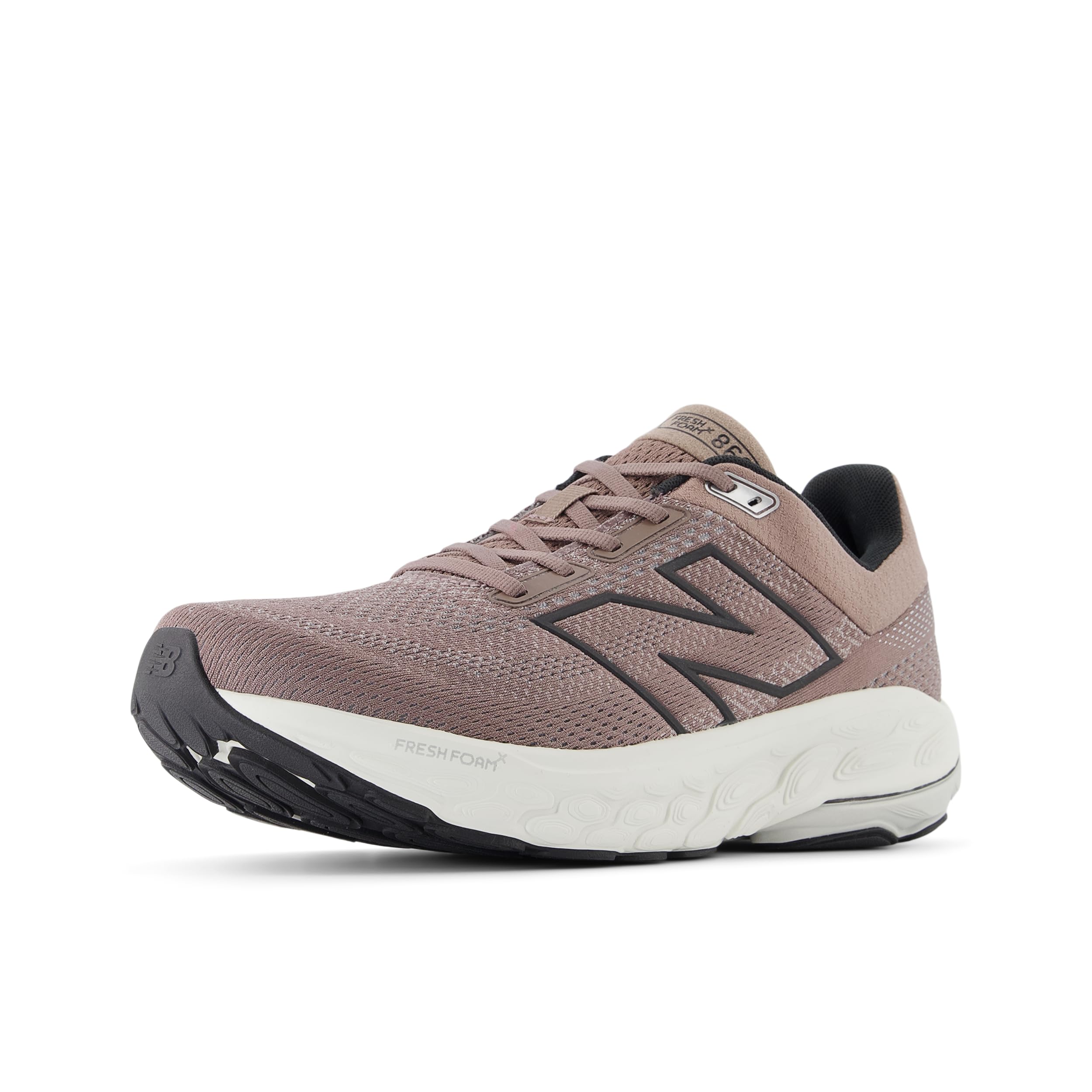
The 860 V14 is a classic stability shoe that combines a firm medial post with the plush Fresh Foam X midsole. This dual-density construction provides firm arch support that prevents the foot from rolling inward, while the foam itself absorbs shock for high-mileage runs. Podiatrists frequently recommend it for plantar fasciitis and overpronation because the arch cradle is pronounced enough to correct gait without feeling intrusive.
Runners report that after a short break-in period, the forefoot and midfoot pressure dissipates and the shoe molds to your foot. The heel fit is secure, which prevents slippage that often exacerbates arch strain. It performs well for daily walks, light runs (6–7 km), and even recovery runs after ankle surgery thanks to its low-cut collar that doesn’t rub sensitive areas.
The outsole uses blown rubber in high-wear zones, so the grip holds up over hundreds of miles. The shoe runs true to size, and wide models are available for those who need extra forefoot room. The standard insoles are functional but some users swap them for custom orthotics without issue.
Why it’s great
- Strong medial post prevents overpronation
- Fresh Foam X offers excellent impact absorption
- Podiatrist-recommended for arch pain
Good to know
- Requires a break-in period for full comfort
- Forefoot feels firm initially
2. Brooks Glycerin Stealthfit 22
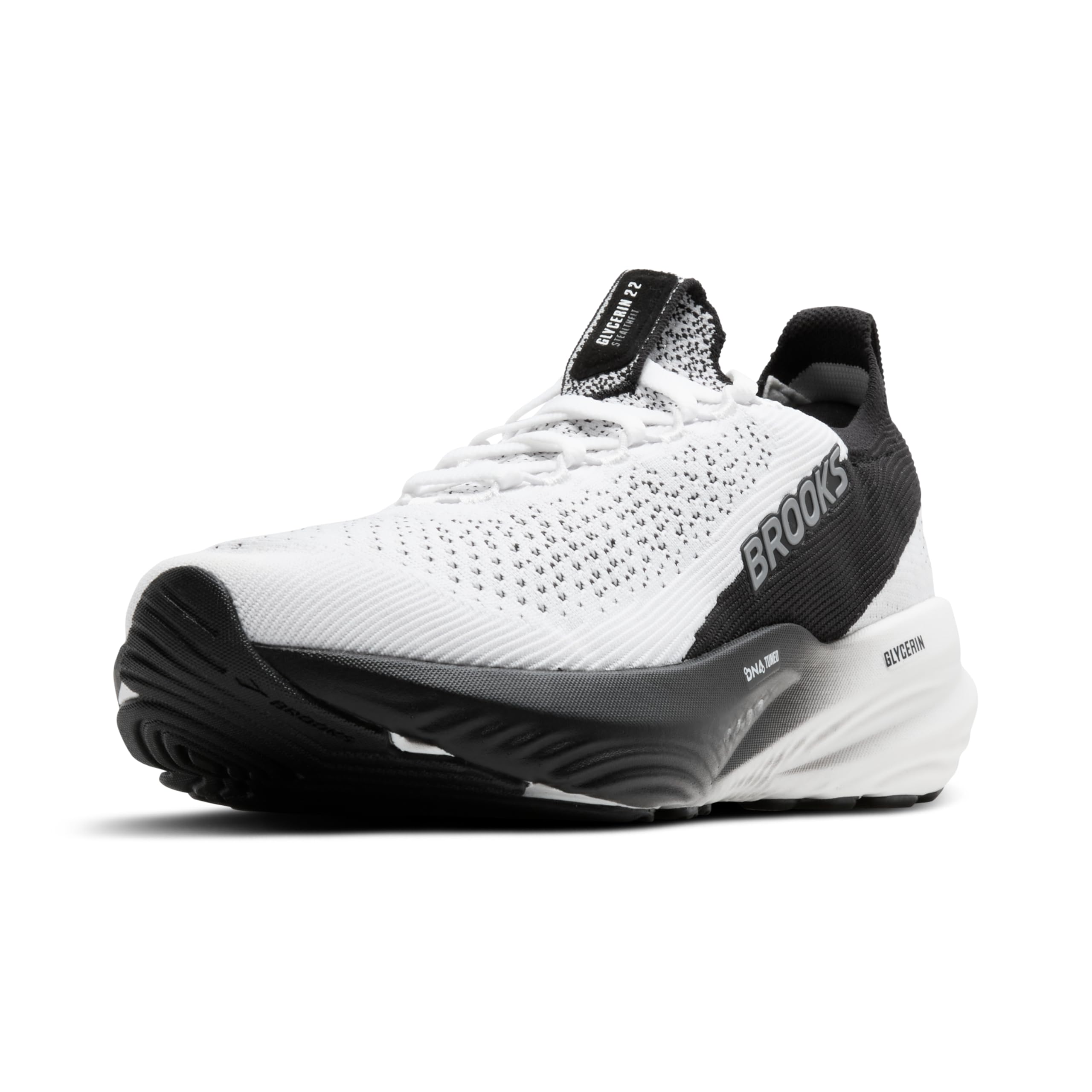
The Glycerin Stealthfit 22 is the plush-est neutral shoe in Brooks’ lineup, built specifically for runners with high arches who want cushioning without stability features. The DNA LOFT v3 midsole is incredibly soft and molds to the arch shape over the first few wears, providing a custom-fit sensation. There is no medial post, so this shoe works best for those who do not overpronate but still need arch comfort.
The Stealthfit upper is a sock-like knit that slips on easily and wraps the midfoot without pressure points. This design eliminates lace bite, which is common in runners with bony feet. The heel features generous padding, making it ideal for 12-hour shifts where cushioning under the calcaneus is critical. Reviewers note zero break-in time and excellent durability after six months of daily wear.
The outsole uses a carbon rubber compound that shows minimal wear even after hundreds of miles. The shoe runs slightly snug, so going half a size up is advisable for wider feet. It is not a stability shoe, but for high-arched runners needing maximum plushness, it delivers the best arch cradling in the neutral category.
Why it’s great
- No break-in required; immediate comfort
- Excellent heel padding for joint protection
- Durable construction lasts 6+ months
Good to know
- Not designed for overpronators
- Sock-like upper can feel warm in summer
3. Saucony Hurricane 24
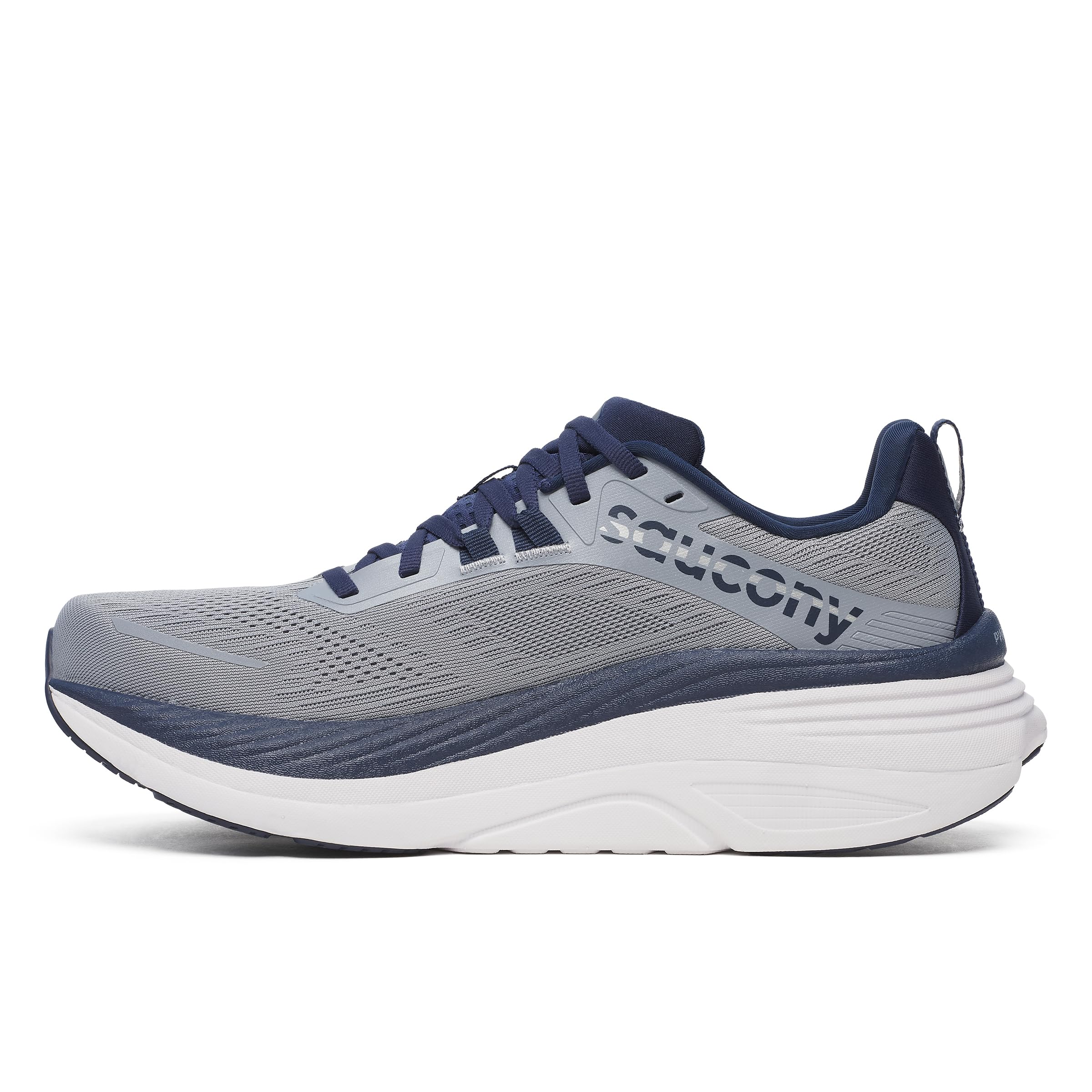
The Hurricane 24 is a max-stability shoe that uses Saucony’s PWRRUN PB foam paired with a non-intrusive guidance frame. Instead of a hard medial post, the foam density is gradually firmer on the inner side, creating a natural barrier against overpronation. This makes it one of the few stability shoes that feels cushioned rather than stiff under the arch.
Distance runners praise it for 20+ mile zone 2 runs because the arch support does not cause hotspots or numbness. The heel-to-toe rocker encourages a smooth transition, reducing the workload on the posterior tibial tendon. Some users note build inconsistency between pairs — ones made in Vietnam tend to be narrower and more comfortable, while Chinese-made pairs are wider and slightly firmer. Sizing up half a size helps if the forefoot feels tight.
The outsole is durable enough to last a full year of daily training. The shoe is heavier than average, so it is not ideal for 5K PR attempts, but for long, slow distance where arch support matters most, it excels. PWRRUN PB provides excellent energy return without sacrificing stability.
Why it’s great
- Non-intrusive guide rails correct pronation naturally
- Very durable for high-mileage runners
- Excellent for 20+ mile runs
Good to know
- Heavier than other stability options
- Inconsistent sizing between production batches
4. Saucony Guide 18
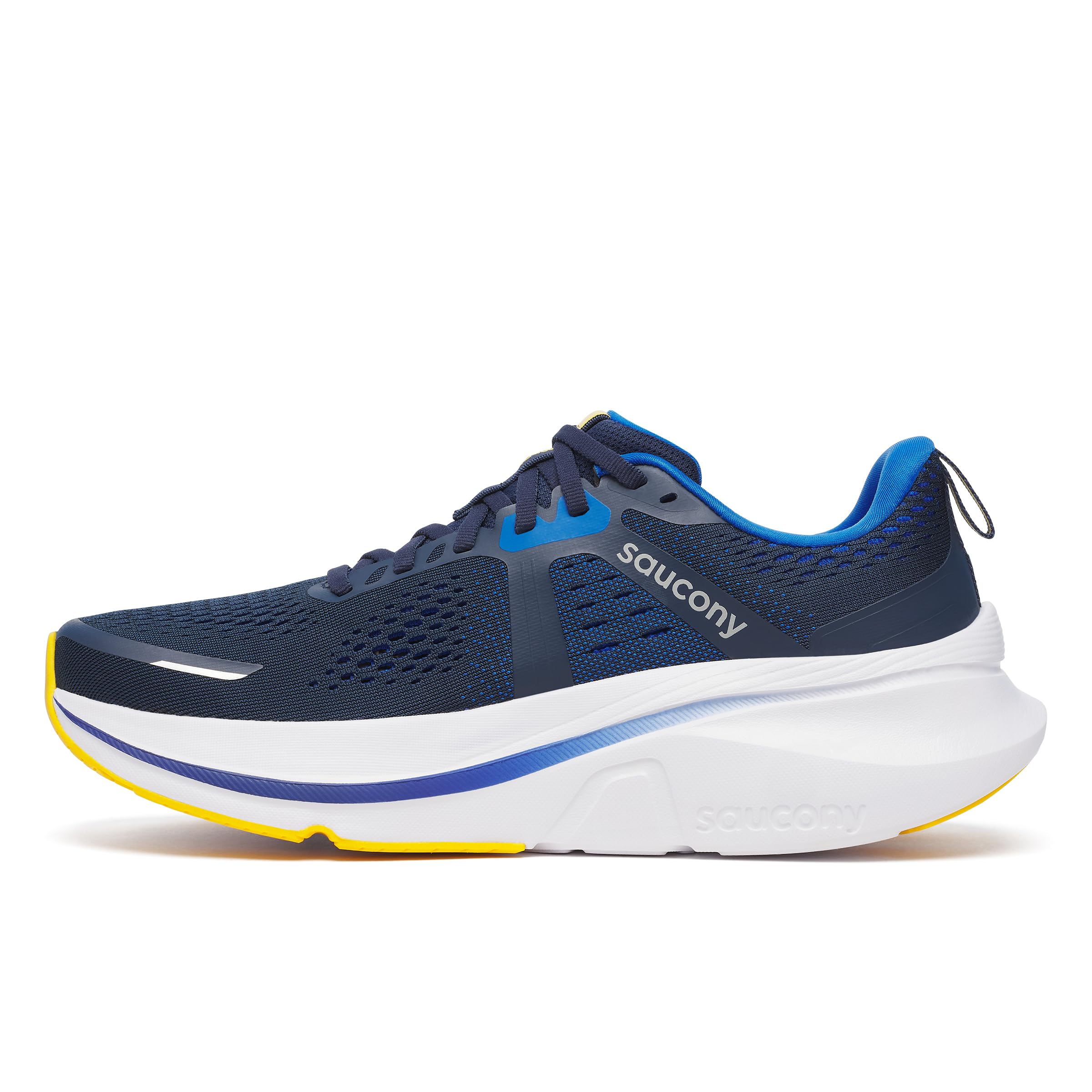
The Guide 18 is a moderate-stability shoe that offers a balanced medial post for flat-footed runners who need support without excessive stiffness. The PWRRUN midsole is firm enough to prevent arch collapse but soft enough for all-day standing on hard surfaces. This makes it an excellent daily driver for runners who also spend long hours on their feet at work.
The toe box has a slightly narrower shape than previous versions (Guide 14/15), so runners with wide feet should opt for the 2E width. The shoe has a generous midsole that provides good energy return, and the outsole features a durable rubber that grips well on pavement. The lace system uses long, grippy laces that stay tied without loosening mid-run.
Reviewers note that the shoe feels remarkably lightweight despite its stability features. It is not built for high-mileage long runs — it excels in the 3–8 mile range as a reliable training partner. The all-black and white colorways make it versatile for both running and casual wear.
Why it’s great
- Lightweight for a stability shoe
- Excellent for daily walking and short runs
- Good grip and durable outsole
Good to know
- Narrower toe box than previous models
- Not ideal for 10+ mile runs
5. ASICS Gel-Cumulus 27
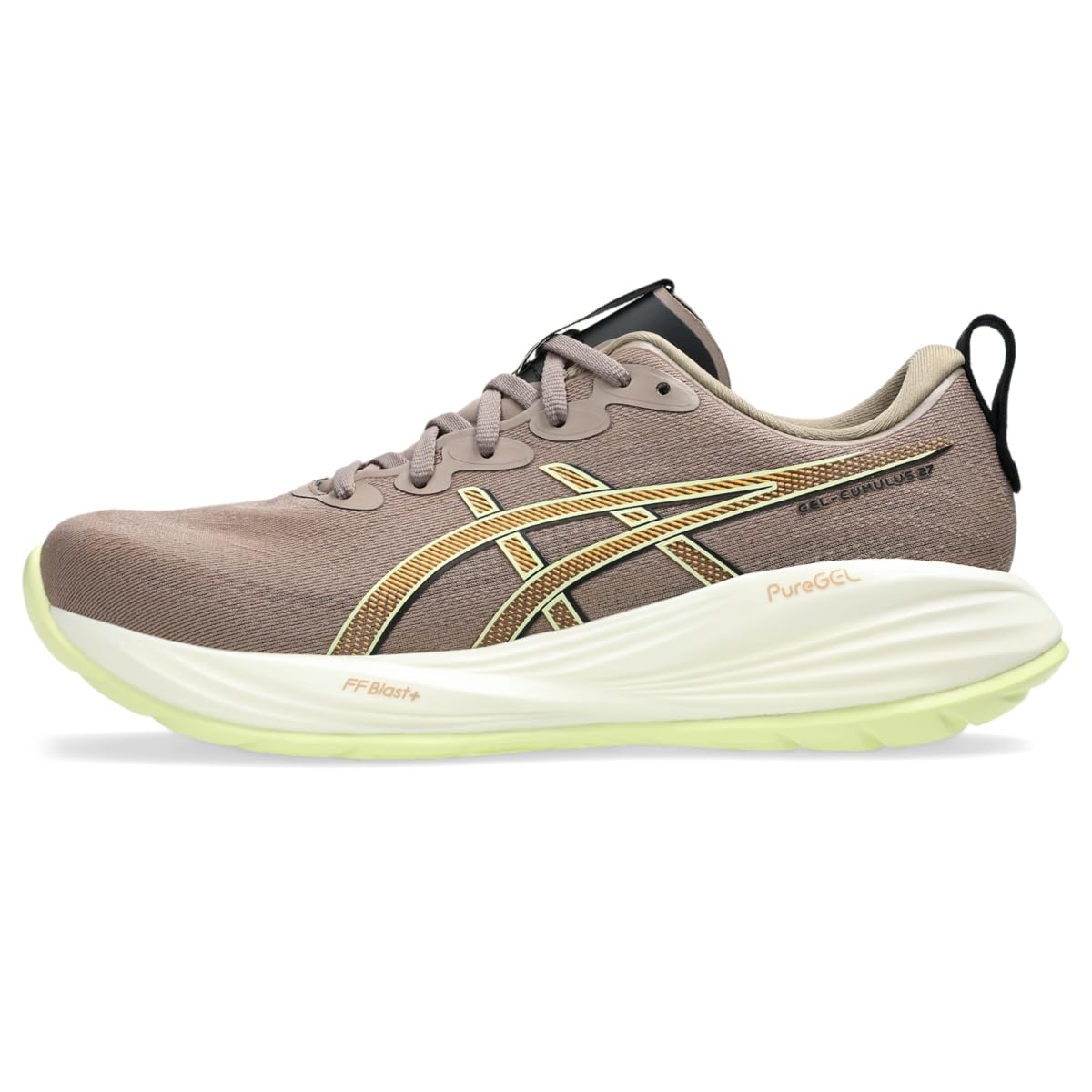
The Gel-Cumulus 27 is ASICS’ premium neutral daily trainer, designed for runners with normal to high arches who want reliable impact protection. The full-length FlyteFoam midsole is lightweight and responsive, while the PureGEL inserts in the heel absorb shock on hard landings. The arch area has a contoured footbed that provides passive support without a rigid post.
ASICS offers this model in wide (2E and 4E) sizes, making it one of the best options for men with wide feet who struggle to find arch support shoes that fit. The engineered mesh upper is breathable and stretches slightly to accommodate foot swelling during long runs. Reviewers with wide feet report that the 10.5 wide fits perfectly without pinching the arch.
The outsole features a colored blown rubber that wears well over time, though lighter colors show dirt faster. The lace pressure on the top of the foot can be an issue for some — wearing thicker socks solves this. Overall, it is a reliable neutral shoe that works well for running, walking, and gym workouts.
Why it’s great
- Available in multiple wide widths
- PureGEL inserts provide excellent heel absorption
- Lightweight and breathable upper
Good to know
- Lace pressure on top of foot for some
- No stability features for overpronators
6. Mizuno Wave Inspire 21
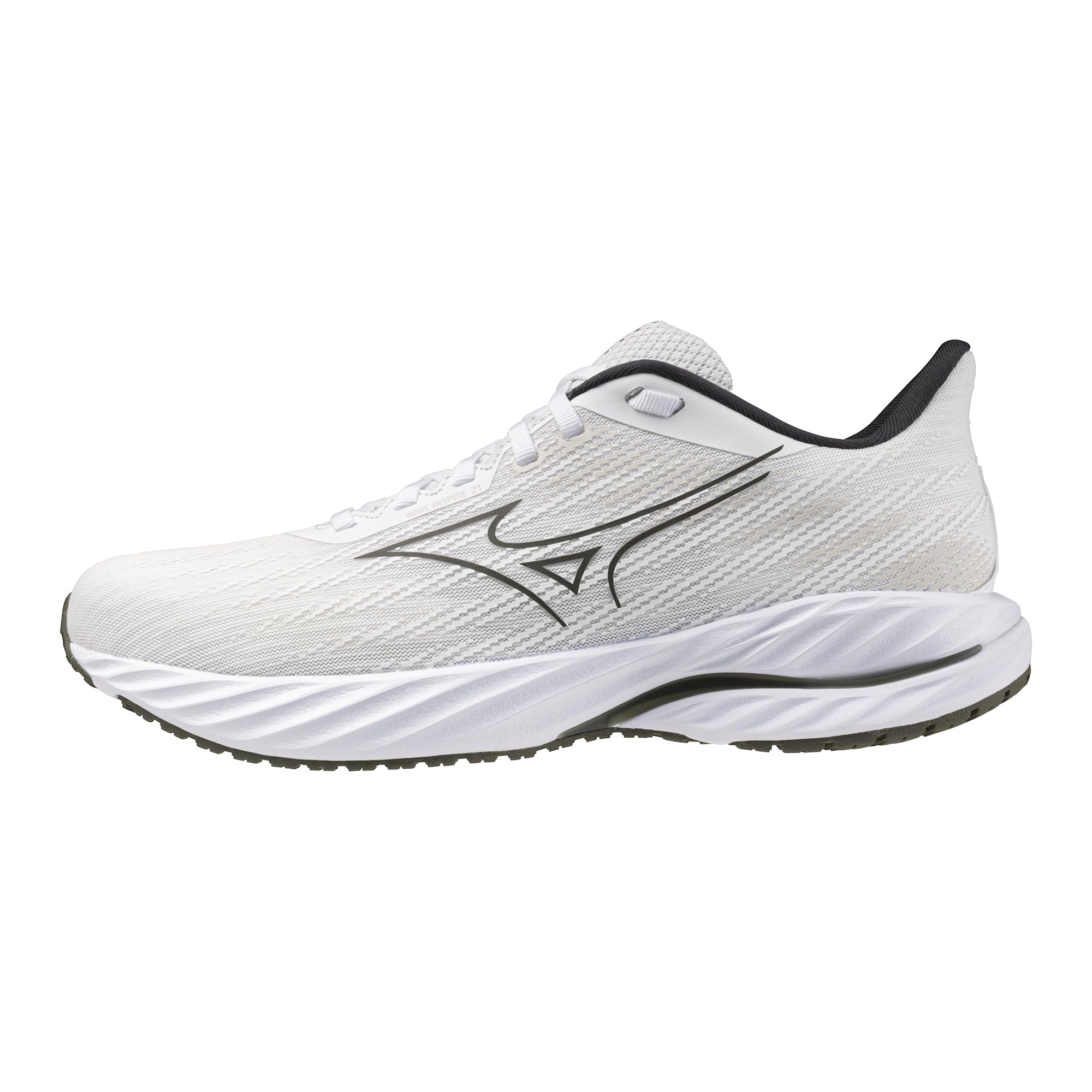
The Wave Inspire 21 uses Mizuno’s unique Wave Plate technology — a corrugated plastic piece embedded in the midsole that flexes on impact to provide both cushioning and stability. This plate creates a firm inner wall that prevents the arch from collapsing, which is especially beneficial for runners prone to shin splints. The Cloudwave midsole foam is more responsive than traditional EVA, providing a snappier feel at toe-off.
Long-term Mizuno users report that the Inspire series has been the only shoe that consistently alleviates their shin splints, thanks to the stiff medial support that keeps the foot from rolling inward during the stance phase. The shoe is built with a traditional bootie construction that gives a secure midfoot wrap. The outsole uses X10 carbon rubber, which is extremely durable and shows minimal wear after 300+ miles.
Reviewers note that the 21st iteration is the best-fitting version yet, with a more forgiving toe box than previous models. The shoe runs true to size and is available in wide widths. It is slightly heavier than pure neutral trainers but feels balanced thanks to the machined Wave Plate distributing weight evenly.
Why it’s great
- Wave Plate provides targeted arch support
- Excellent for preventing shin splints
- Very durable outsole construction
Good to know
- Heavier than average neutral shoes
- Break-in period for the Wave Plate
7. Hoka Arahi 8
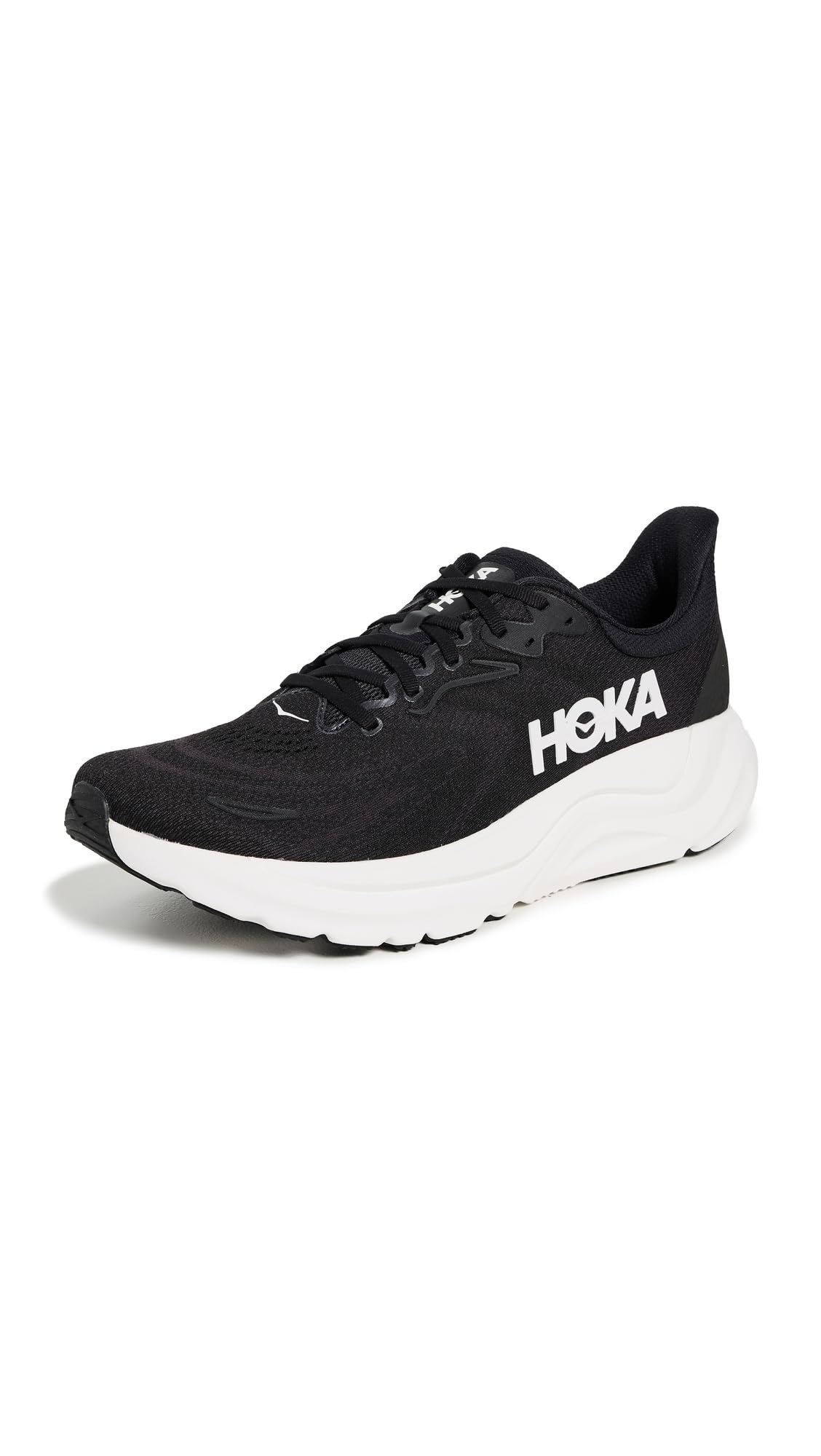
The Arahi 8 is Hoka’s lightweight stability shoe that uses a J-Frame design — a denser foam wrap on the inner side of the heel and midfoot — instead of a traditional medial post. This creates a smooth, cradle-like effect that guides the foot into neutral alignment without the stiff feeling typical of hard plastic posts. The result is a shoe that feels remarkably light for a stability model, weighing only around 10.5 ounces.
The Meta-Rocker geometry encourages a natural heel-to-toe transition, reducing the load on the posterior tibial tendon. The arch support is prominent but soft enough to accommodate custom orthotics if needed. Reviewers with sciatica and foot pain report significant relief after switching to the Arahi, as the J-Frame reduces compensatory gait changes. The heel bevel promotes a smooth strike, minimizing jarring impacts.
The upper uses a breathable engineered knit that wraps the foot without pressure points. The toe box is roomy, allowing natural splay that further stabilizes the arch. The outsole features strategic rubber placement that maximizes grip while minimizing weight. It is ideal for daily running and walking, though not built for heavy trail use.
Why it’s great
- Lightweight stability design
- J-Frame provides smooth overpronation control
- Meta-Rocker improves gait efficiency
Good to know
- Arch support may feel too prominent for low arches
- Not for heavy trail running
8. New Balance Fresh Foam X 880v15
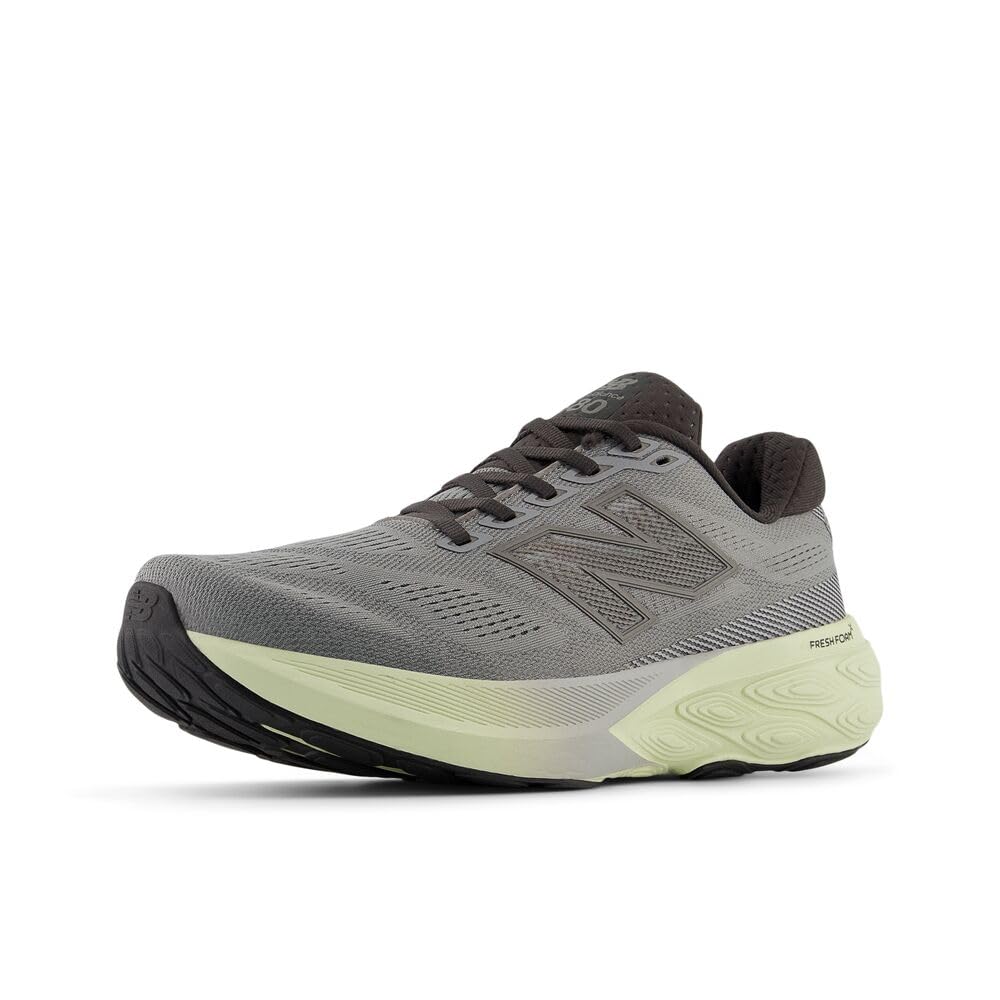
The 880v15 is New Balance’s neutral daily trainer that prioritizes comfort with a wide, accommodating fit and the plush Fresh Foam X midsole. The arch area is contoured but not aggressive, making it suitable for runners with normal to slightly low arches who do not need corrective stability. The shoe is notably wider than the 880 V14, with more volume in the toe box for natural splay.
Heavier runners (250 lbs+) appreciate the generous platform that provides good stability without a medial post. The shoe is one of the lightest in its class, with the Fresh Foam X providing excellent energy return. The outsole uses a durable rubber that holds up well, though some users note that version 15 deteriorates faster than version 14 in terms of foam compression after 300 miles. The shoe runs half a size small, so sizing up is recommended.
It works well as a recovery shoe, casual walking shoe, or general trainer for those who do not overpronate. The motion control feature listed is not a true stability post but rather the shoe’s overall geometry that guides the foot. If you need active arch correction, look at the 860 V14 instead.
Why it’s great
- Very generous toe box for wide feet
- Lightweight with excellent cushioning
- Great for daily wear and recovery runs
Good to know
- Foam compression may occur after 300 miles
- Not a true stability shoe for overpronators
9. Hoka Bondi 9

The Bondi 9 is Hoka’s max-cushion road shoe, built for runners who need the highest level of shock absorption combined with a stable platform. The ultra-plush midsole is incredibly soft under the arch, providing a pillow-like feel that relieves pressure on sensitive spots. Despite the stack height, the wide base keeps the foot centered, preventing excessive lateral movement that could strain the arch.
Runners with plantar fasciitis report that the Bondi 9 significantly reduced their heel pain within three months when combined with stretching exercises. The shoe does not have a medial post, but the sheer volume of foam and the meta-rocker geometry provide passive arch support by limiting how much the foot can sink into the midsole. The signature Hoka heel bevel encourages a smooth heel-to-toe transition, reducing load on the arch.
The shoe runs true to size and fits well in standard width, though wide sizes are available. The upper is a breathable engineered mesh with minimal overlays, reducing the weight despite the massive sole. Some users note that the Bondi 9 feels slightly unstable on uneven terrain due to the high stack, but on pavement it provides unmatched plushness. After 1 million steps, one reviewer found the shoe held up well, making it a durable if premium-priced option.
Why it’s great
- Maximum cushioning for plantar fasciitis relief
- Stable platform despite high stack height
- Durable construction for high-mileage
Good to know
- Higher price point in the category
- Less stable on non-pavement surfaces
FAQ
Do I need stability shoes if I have flat feet?
Can I use arch support insoles with these running shoes?
How often should I replace arch support running shoes?
What is the difference between motion control and stability shoes?
Do arch support shoes help with plantar fasciitis?
Final Thoughts: The Verdict
For most men, the arch support running shoes for men winner is the New Balance Fresh Foam X 860 V14 because it balances a strong medial post with plush Fresh Foam X cushioning, making it effective for both overpronation and daily comfort. If you want a lightweight stability option with a smooth ride, grab the Hoka Arahi 8. And for the ultimate max-cushion relief for plantar fasciitis, nothing beats the Hoka Bondi 9.