Swollen ankles after a long shift, heavy calves mid-flight, or that dull ache that creeps up after a morning run — your legs are telling you they need more support. Compression socks deliver graduated pressure that pushes blood upward, reducing fatigue and preventing fluid pooling where gravity works hardest.
I’m Emma — the founder and writer behind Baby Bangs. I’ve spent years analyzing circulation gear, dissecting material blends, mmHg ratings, and construction patterns to separate the socks that hold up from the ones that slide down by lunch.
This guide cuts through the noise to help you find the right pair for your actual daily grind. Whether you stand all day, log frequent flyer miles, or push through leg days, the compression socks for men you choose will determine whether your legs recover or revolt.
How To Choose The Best Compression Socks For Men
Not all compression socks are built the same. The wrong pair will wrinkle at the ankle, dig into the back of your knee, or lose elasticity after three washes. Here is what actually separates a good daily driver from a closet orphan.
Graduated Compression vs. Uniform Tightness
Genuine medical-grade socks use graduated compression — the fabric is tightest at the ankle and gradually loosens as it moves up the calf. This design actively assists venous return. Uniform-tightness socks feel snug everywhere but do not create the same upward pumping effect. Look for socks that state “graduated compression” on the label; if the pressure feels identical from toe to top band, you bought a fashion sock.
20-30 mmHg vs. 15-20 mmHg — What Your Day Demands
The mmHg (millimeters of mercury) rating tells you how much pressure the sock applies. For most men who stand, walk, or sit for extended periods, 20-30 mmHg is the sweet spot — strong enough to prevent swelling and fatigue, yet comfortable for all-day wear. The lighter 15-20 mmHg range works for minimal leg discomfort or casual travel, but men with larger calves or longer shifts consistently report better results from the higher tier. Do not exceed 30-40 mmHg without a doctor’s recommendation.
Calf Circumference Is the Real Sizing Key
Shoe size alone will lead you astray. The most critical measurement is your calf circumference at its widest point. A sock that fits your foot perfectly but constricts your calf will leave red indent lines and may even restrict circulation. Measure your calf, then match it against the brand’s specific size chart — not a generic small/medium/large guess. Brands like SB SOX provide clear calf ranges in inches; use them.
Fabric Blend Determines Longevity
The ideal compression sock is a nylon-spandex or polyamide-spandex blend. Nylon provides smooth texture and shape retention; spandex delivers the elastic pressure. Cheap cotton-heavy blends absorb moisture, stretch out, and lose compression after a few washes. Look for at least 15-20% spandex content. Latex-free options matter if you have sensitive skin or latex allergies — contact dermatitis behind the knee is a real complaint even from quality socks.
Quick Comparison
On smaller screens, swipe sideways to see the full table.
| Model | Category | Best For | Key Spec | Amazon |
|---|---|---|---|---|
| SB SOX 20-30 mmHg | Mid-Range | All-Day Wear & Daily Use | 80/20 Nylon/Spandex, XXL to 24″ Calf | Amazon |
| Bbfrey Medical 20-30 mmHg | Premium | Medical & Recovery | 3-Pair Set, Latex-Free, Machine Washable | Amazon |
| Physix Gear 20-30 mmHg | Mid-Range | 12-Hour Shifts & Running | Arch Support, Cushioned Heel | Amazon |
| CHARMKING 15-20 mmHg | Premium | Chronic Conditions & Long Wear | 8-Pair Set, Roomy Toe Box | Amazon |
| Bluemaple Copper 6-Pack | Budget | Value & Variety | 6-Pair Set, Graduated Compression | Amazon |
In‑Depth Reviews
1. SB SOX Compression Socks 20-30 mmHg

The SB SOX hits the hardest balance of durability, graduated pressure, and wide-calf availability at a reasonable price point. With over 54,000 reviews and a #2 ranking in Medical Compression Socks, this is the pair that nurses, runners, and frequent fliers consistently return to. The 80% nylon / 20% spandex blend holds its shape wash after wash — multiple long-term users report the same pair lasting over a year without significant elasticity loss.
The graduated compression is noticeably tightest at the ankle and eases up the calf without a harsh top band that cuts in. The reinforced heel and toe add cushion where you need it, while the foot bed remains breathable enough for 12-hour wear. Sizing runs from Small (11-14″ calf) to XX-Large (20-24″ calf), accommodating men with larger legs who struggle to find a snug fit in standard brands.
One caveat: the size chart must be followed exactly. Users who ignored calf measurements and went by shoe size alone occasionally reported the sock being too long, causing ankle wrinkles. Hand wash and air dry are recommended to preserve the elastic, though some users machine wash on gentle with success.
Why it’s great
- Proven durability — retains compression after months of regular use
- XX-Large option fits calves up to 24 inches
- Padded foot cushioning improves all-day comfort on hard floors
Good to know
- Single pair only — you will want multiple for rotation
- Hand wash recommended to maximize lifespan
2. Bbfrey Medical Compression Socks 20-30 mmHg (3 Pairs)
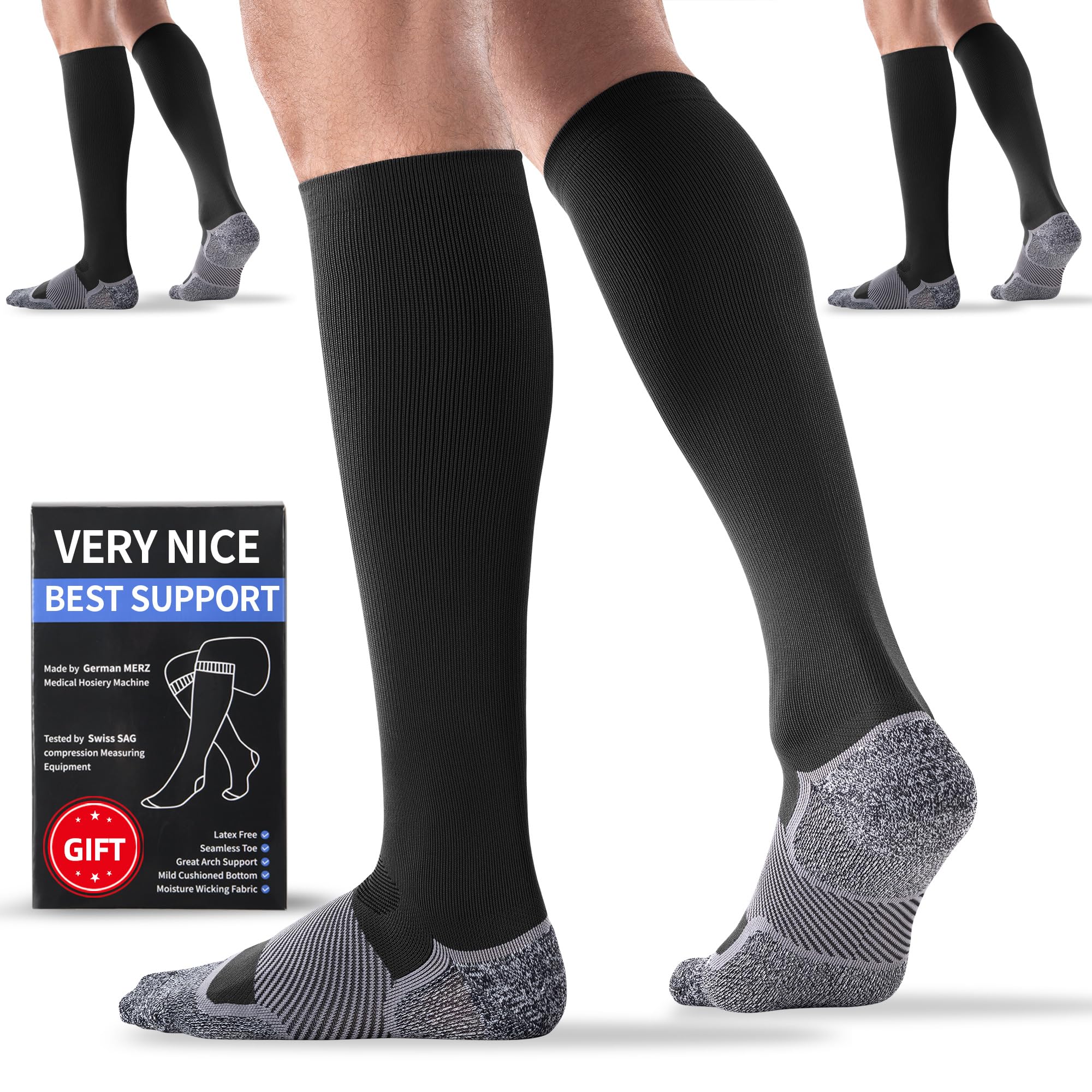
Bbfrey delivers a medical-grade compression sock built for the guy who rotates pairs during the week. This is a 3-pair set, which immediately solves the “I only have one good pair and it’s in the wash” problem. The fabric composition — 54% polyamide, 21% sweat-wicking polyamide, 15% polyester, 10% spandex — is latex-free, addressing the contact dermatitis issue that some users experience with other brands.
The graduated compression is strongest at the foot and ankle, lightening as it moves up, and the flat toe seam eliminates the pinching that can ruin a long shift. Users with size 10.5 feet and 14.5-inch calves report the S/M fits accurately without slipping or leaving deep marks. The top band stays put without being restrictive — a common failure point on cheaper socks.
The trade-off is visual variety. This set leans into solid, clinical colors rather than bold patterns. If you want your socks to make a statement, these are utilitarian. But for pure function — machine washable, stays up 11+ hours, no irritation — they outperform many pricier singles.
Why it’s great
- Three pairs per purchase — practical for daily rotation
- Latex-free construction reduces skin reaction risk
- Machine washable with line dry instructions
Good to know
- Limited color and pattern options compared to competitors
- Right and left foot labeled — requires attention during wear
3. Physix Gear Compression Socks 20-30 mmHg

Physix Gear positions itself as the active guy’s compression sock, and the construction backs that up. The fabric has a cushioned, sport-sock feel — thicker than the typical thin medical stocking — which provides extra padding inside the shoe. The integrated arch support is a standout feature for runners and anyone whose feet ache from prolonged standing on concrete.
Users working 12-hour shifts report that the sock eliminated ankle swelling and reduced knee pain associated with LCL and meniscus issues. The graduated compression stays consistent, and the sock does not slide down even during high-intensity movement. The XL size accommodates 15-16 inch calves and size 10-11.5 shoes comfortably, with enough toe wiggle room to avoid cramping.
The primary drawback is that this is sold as a single pair. At a price point that rivals multi-packs, you are paying for the performance and construction rather than volume. Some users also note that the sock runs slightly long — if your calf measurement is on the smaller side of the size range, the top band may reach into the back of your knee bend, causing fabric bunching at the ankle.
Why it’s great
- Arch support built into the compression design
- Cushioned fabric feels more like a sport sock than a medical stocking
- Stays up during running and 12-hour standing shifts
Good to know
- Single pair only — higher per-pair cost than multi-pack alternatives
- Length may be too long for shorter legs, causing ankle wrinkles
4. CHARMKING Compression Socks 15-20 mmHg (8 Pairs)

The CHARMKING set is for the guy who wants to outfit his entire sock drawer at once. Eight pairs at the 15-20 mmHg level provide lighter compression than the 20-30 mmHg socks above, which makes them a better fit for daily casual wear, light exercise, or users who find higher compression uncomfortable. The roomy toe and heel seam are a highlight — users with wider feet or longer toes report no pinching.
The compression is consistent rather than aggressive. For chronic conditions like POTS or for users who need 10-18 hour daily wear, the lighter pressure reduces pain and blood pooling without the strangling sensation that some experience at 20-30 mmHg. The fabric holds up well on hard floors and carpet, and the fun patterns distinguish each pair so you do not mix up left and right.
Some taller users (5’9″ and above) report the socks reach true knee height without falling short, but shorter users (around 5’0″) find the length just right. The lack of foot padding means you may want to wear a thin liner sock underneath for extra cushion during long walks. Quality control is solid — multiple washes produce no holes or color bleeding.
Why it’s great
- Eight pairs for daily rotation — great value for the quantity
- Roomy toe box accommodates wider feet comfortably
- Lighter 15-20 mmHg suitable for all-day wear and sensitive legs
Good to know
- Lacks foot padding — may need liner socks for cushion
- Lower compression rating not ideal for severe swelling or medical use
5. Bluemaple 6 Pack Copper Compression Socks

Bluemaple’s 6-pack is the entry-level option for men who want to try compression socks without a major investment. The graduated compression is effective enough to reduce swelling and provide relief for standing work, and the material is breathable with no itchiness reported by most users. The colorful patterns add personality that plain black socks lack.
The S/M size fits smaller foot sizes well — reviewers with women’s size 6 shoes found the fit accurate. The socks stay up during the day without sliding down, and they are easy to put on and take off compared to higher-compression models. Users report immediate relief from leg fatigue during long shifts on their feet, and the compression retains its shape after washing.
The main concern is a potential latex reaction. Several users developed contact dermatitis on the backs of their knees, suggesting the elastic band may contain latex. If you have sensitive skin or known latex sensitivity, this is a risk to weigh. The material also feels slightly less soft than premium blends, and the patterns may not appeal to men who prefer a more subdued, professional look.
Why it’s great
- Six pairs at a budget-friendly price point
- Effective graduated compression reduces swelling and fatigue
- Easy to put on and take off compared to tighter models
Good to know
- Potential latex content may cause skin irritation for sensitive users
- Fabric feels less premium than higher-tier competitors
FAQ
How tight should compression socks feel when I first put them on?
Can I wear compression socks while sleeping?
How do I measure my calf for the right size?
Why do my compression socks keep sliding down?
Final Thoughts: The Verdict
For most users, the compression socks for men winner is the SB SOX 20-30 mmHg because it combines proven durability, accurate graduated compression, and the widest calf size range at a fair single-pair price. If you want the convenience of a rotation-ready multi-pack, grab the Bbfrey Medical 3-Pair Set for its latex-free, machine-washable construction. And for the budget-conscious guy looking for a bulk wardrobe upgrade, nothing beats the CHARMKING 8-Pair Set for coverage across the week.