A backpacking daypack is the one piece of gear that can either make a summit push feel effortless or turn a ten-mile loop into a chore. The wrong pack traps heat, shifts weight to your shoulders, and leaves you digging for snacks. The right one disappears on your back, keeps your gear dry, and lets you move like the trail is flat.
I’m Emma — the founder and writer behind Baby Bangs. I’ve spent years analyzing trail-ready hardware, comparing suspension systems, fabric deniers, and hydration compatibility so you don’t have to guess what works.
After hours of cross-referencing weight, back-panel ventilation, storage architecture, and real-world durability data, these picks represent the most tested and trusted examples of a backpacking daypack available right now.
How To Choose The Best Backpacking Daypack
Choosing a daypack for backpacking is different from picking a casual commuter bag. You are trading weight against durability, pocket count against simplicity, and ventilation against weather protection. These are the specs you should prioritize before you click buy.
Suspension and Frame Type
A daypack’s suspension determines whether the load stays pinned to your hips or pulls on your shoulders. Frameless packs shave ounces but transfer all weight to your shoulders — fine for loads under about ten pounds. Packs with a framesheet or wire frame transfer weight to the hipbelt, which keeps the pack stable and comfortable over uneven terrain. Look for a tensioned-mesh backpanel if you hike in warm climates; it keeps the pack off your back and reduces sweat buildup.
Volume and Weight Tradeoffs
Most backpacking daypacks fall between 18 and 27 liters. Under 18 liters and you sacrifice room for a puffy layer, rain shell, and food. Over 27 liters and the pack itself starts to feel heavy before you load it. Target a dry weight under two pounds — every ounce you save on the pack is an ounce you can carry in water or snacks. The lightest packs use thin ripstop nylon and minimal foam, while heavier packs add abrasion-resistant fabrics and padded hipbelts.
Hydration Compatibility
A hydration sleeve is more than a pouch. Look for a dedicated sleeve with a hanging loop at the top and a port for the hose at the shoulder. The sleeve should sit close to your back to keep the weight centered. Check that the included or compatible bladder size is clearly stated — most daypacks fit a two- to three-liter reservoir. If the pack has twin hipbelt pockets, they become natural homes for your phone and snacks, leaving the main compartment for bulkier gear.
Quick Comparison
On smaller screens, swipe sideways to see the full table.
| Model | Category | Best For | Key Spec | Amazon |
|---|---|---|---|---|
| Osprey Hikelite 18 | Premium | Ventilated day hikes | Tensioned-mesh AirSpeed backpanel | Amazon |
| Deuter Futura 27 | Premium | Extended day trips | Aircomfort Sensic spring frame | Amazon |
| Mammut Lithium | Premium | Light & fast alpine missions | 14.1 oz, U-frame suspension | Amazon |
| Salomon Trailblazer 20 | Mid-Range | Fastpacking & trail running | 15.3 oz, YKK zippers | Amazon |
| Deuter Speed Lite 21 | Mid-Range | Ultralight day trips | 470g, recycled fabric | Amazon |
| Osprey Sportlite 20 | Mid-Range | All-around day hiking | Atilon foam framesheet | Amazon |
| Water Buffalo Sherpa 22 | Budget | Entry-level hydration pack | Includes 2L bladder and rain cover | Amazon |
In‑Depth Reviews
1. Osprey Hikelite 18

The Hikelite 18 uses Osprey’s tensioned-mesh AirSpeed backpanel, which keeps the entire pack body off your lower back and allows air to move freely. For hikers who sweat easily or hike in hot conditions, this design is a game-changer — it reduces contact surface area dramatically compared to foam pad systems. The pack weighs only 1.7 pounds, making it one of the lightest framed daypacks on the market, and the included rain cover is stitched from bluesign-approved fabric treated without PFAS.
The 18-liter volume sits at the sweet spot for a minimalist all-day setup. It comfortably holds a three-liter hydration reservoir, a light puffy, a rain shell, snacks, and a small first-aid kit. The dual stretch side pockets fit two standard water bottles, and the removable webbing hipbelt helps stabilize the load on faster terrain. The main compartment opens like a traditional panel loader, so you don’t have to dig for gear at the bottom.
The single downside is the lack of internal organization pockets. You’ll need packing cubes or stuff sacks if you want to separate small items. Some hikers also find the 18-liter volume too tight for a full layering system for winter day hikes. But for three-season use from spring through fall, this is the most comfortable, well-ventilated daypack at this size.
Why it’s great
- AirSpeed suspension keeps your back cool on sweaty climbs
- Includes a PFAS-free rain cover stored at the base
- Lightweight 1.7 lb frame with good load transfer
Good to know
- No internal zip pockets for small-item organization
- 18L is tight for winter layering or bulky gear
2. Deuter Futura 27
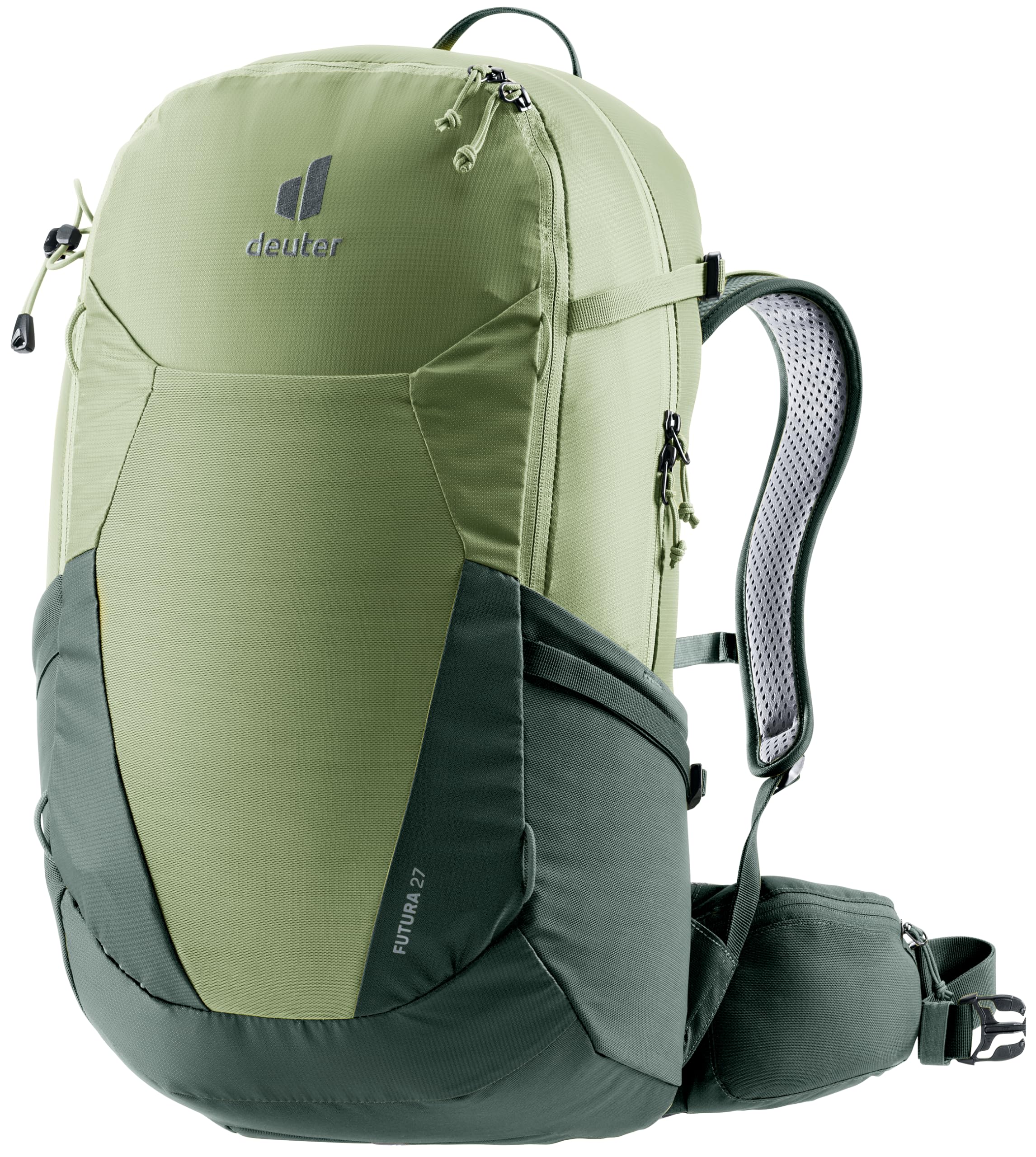
The Futura 27 is designed for hikers who want a full day’s worth of gear without stepping up to a multi-day pack. The Aircomfort Sensic Backsystem uses a flexible spring steel frame that tensions a mesh panel against your back, creating an air channel that Deuter says reduces perspiration by up to 25 percent. The mesh is separated from the pack body, so even when the pack is stuffed, you still get airflow.
The 27-liter volume fits a three-liter hydration bladder, a full change of clothes, a lunch, and a medium camera cube or drone in the main compartment. The lid has a zip pocket for small valuables, and the front shove-it pocket is perfect for stuffing a wet shell or gloves. The ActiveFit pivoting S-shaped shoulder straps adjust individually, so the pack sits correctly on different torso lengths. The removable rain cover is stored in its own zippered compartment at the base.
At over one and a half pounds, this is not the lightest pack on the list — but the frame adds stability for loads up to 20 pounds. A few users noted that the shoulder straps sit close together, which can feel constrictive for broader shoulders or larger chests. If the fit works for your anatomy, the Futura 27 is a beautifully ventilated, durable workhorse for long single-day outings.
Why it’s great
- Aircomfort frame reduces back sweat by up to 25%
- 27L fits a full layering system plus a lunch
- Adjustable S-shaped shoulder straps for individual fit
Good to know
- Shoulder spacing may feel tight for broad builds
- Heavier than minimalist frameless options
3. Mammut Lithium Climbing & Daypack
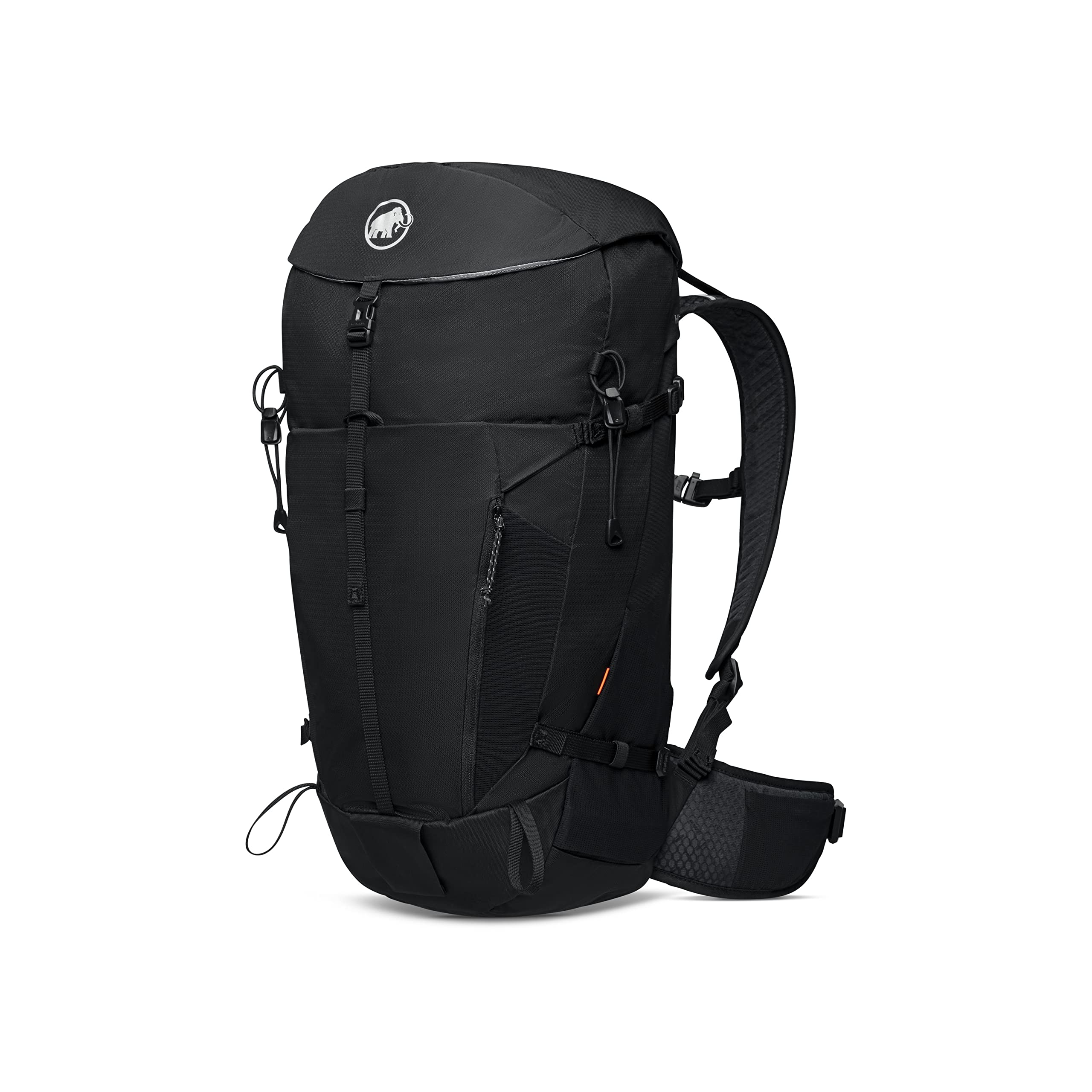
The Mammut Lithium is built for climbers and fast hikers who need a pack that disappears on their back. At just 14.1 ounces for the 20-liter version, it is the lightest pack on this list that still includes a U-frame for load transfer. The U-frame is a thin wire that runs around the pack perimeter — it stabilizes the load enough to carry gear to an alpine start without the pack sagging or shifting.
More than 89 percent of the main fabric is made from recycled materials, and the pack includes an integrated, detachable rain cover. The pocket layout is minimalist but clever: a fold-out cellphone pocket on the hipbelt, two stretch mesh side pockets for water bottles, and a small zippered top pocket for keys and a headlamp. The trekking pole carrier is a simple loop-and-hook system that secures poles without bouncing.
This pack sacrifices comfort padding in exchange for weight savings. The hipbelt is detachable but lightly padded, and the shoulder straps are thin. Loads over about ten pounds will start to dig in. Buy this pack if your priority is carrying the absolute minimum weight and you move fast enough that you’re not stopping to adjust gear. For most day hikers, the Mammut is best used as a second pack for summit pushes or multi-sport days.
Why it’s great
- Extremely light at 14.1 oz with a U-frame for stability
- 89% recycled fabric — eco-conscious build
- Hipbelt phone pocket is handy for quick access
Good to know
- Minimal padding — not comfortable for loads over 10 lbs
- Thin shoulder straps dig in with heavy gear
4. Salomon Trailblazer 20

The Salomon Trailblazer 20 is the pack for hikers who mix running with hiking — fastpackers and ultralight day trippers who value weight savings above all else. At 15.3 ounces, it is the lightest pack on this list that still uses a 3D padded back system. The perforated foam panel and 3D light harness shoulder straps are designed to keep the pack stable while you move fast, and the adjustable elastic sternum strap allows for chest expansion during heavy breathing.
The storage layout is versatile for a pack this light. It has a belt zippered pocket, a main zippered opening with an internal reservoir sleeve, a top pocket with a key holder, a trekking pole holder, an internal computer hanging sleeve, and two side stretch pockets. The fabric is a mix of polyamide and elastane with YKK zippers throughout, which adds durability despite the low weight. PFC-free fabric treatment makes it an eco-friendly pick.
The biggest tradeoff is the thin backpanel and minimal foam padding. On longer hikes with a fully loaded pack, the lack of structure becomes noticeable as weight shifts to the shoulders. The front pocket pouch is useful but sags when fully stuffed. This pack works best for day hikes where your total gear weight stays under ten pounds and you want the freedom to jog the downhill sections.
Why it’s great
- Extremely light at 15.3 oz — great for fastpacking
- YKK zippers and PFC-free fabric add durability
- Multiple pockets including a belt pocket and trekking pole holder
Good to know
- Thin padding — not comfortable for heavy loads
- Front pocket pouch sags when full
5. Deuter Speed Lite 21
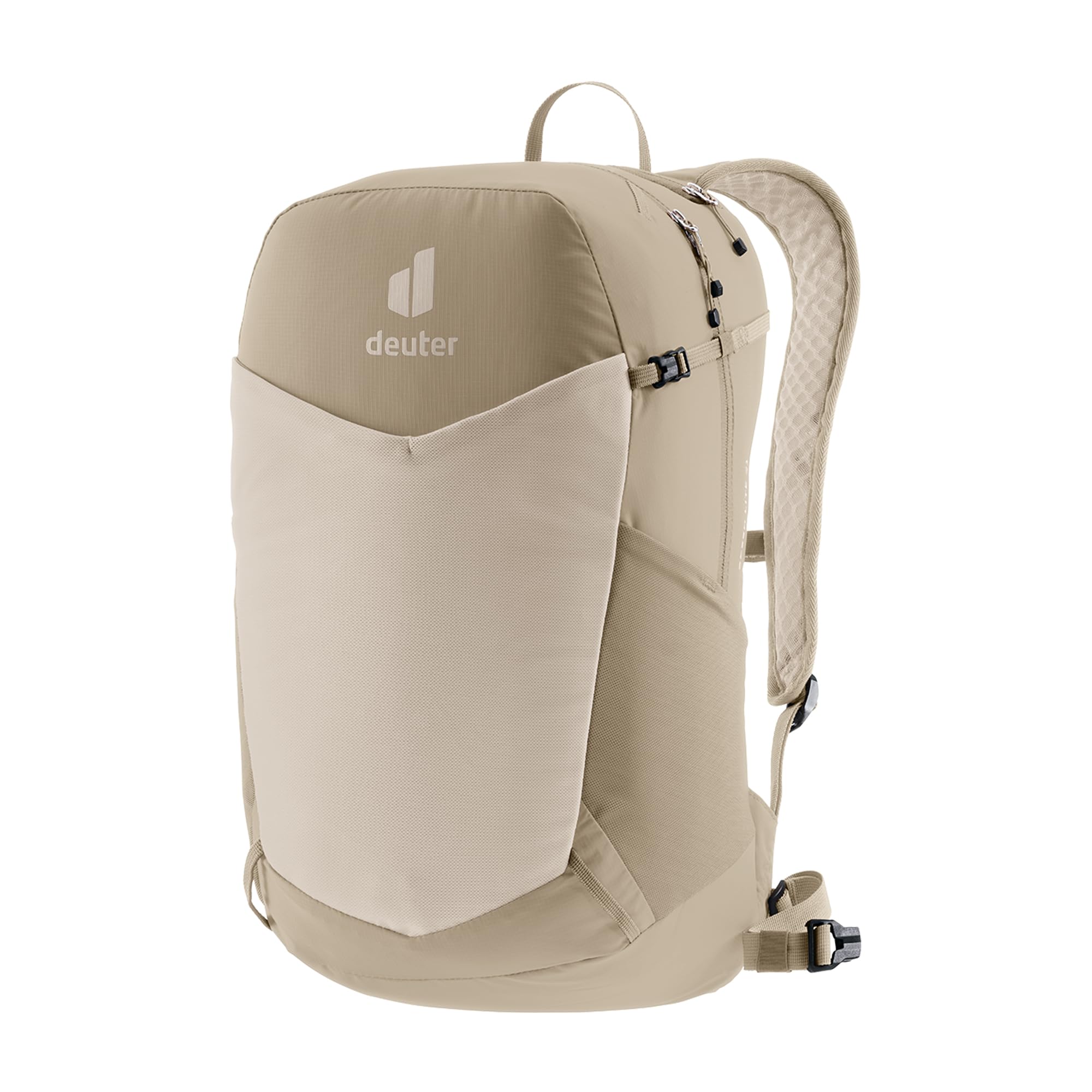
The Deuter Speed Lite 21 is the brand’s answer to hikers who want a pack that barely registers on a scale but still comes from a heritage outdoor manufacturer. Weighing 470 grams (about one pound), it is built with 100 percent recycled materials and carries the bluesign certification for low-impact textile manufacturing. The V-shape design is intended to maximize freedom of movement, especially on technical terrain where you need to reach up or twist.
The storage is simple but functional. You get two stretch side pockets, a large stretch mesh pocket on the front for stuffing a jacket or gloves, a zippered valuables pocket on top with a key clip, and a glasses stow system on the shoulder strap. The pack is compatible with Deuter’s two-liter hydration system. The detachable waist belt is surprisingly comfortable for a pack this light and helps transfer some load to the hips.
The tradeoff for the low weight is minimal structure. The backpanel has very little foam padding, and the pack has only one large main compartment with a small phone pocket and an open top pocket — no internal organization. It is best for hikers who pack like ultralighters, using a single stuff sack for all gear. If you need more pocket separation, look elsewhere. The Speed Lite 21 shines as a minimalist daypack for short to moderate day trips.
Why it’s great
- Extremely light at 470g with recycled fabric
- Bluesign certified — low environmental impact
- Detachable hipbelt for optional load transfer
Good to know
- Minimal backpadding — limited structure for heavy loads
- Single large main compartment with little organization
6. Osprey Sportlite 20
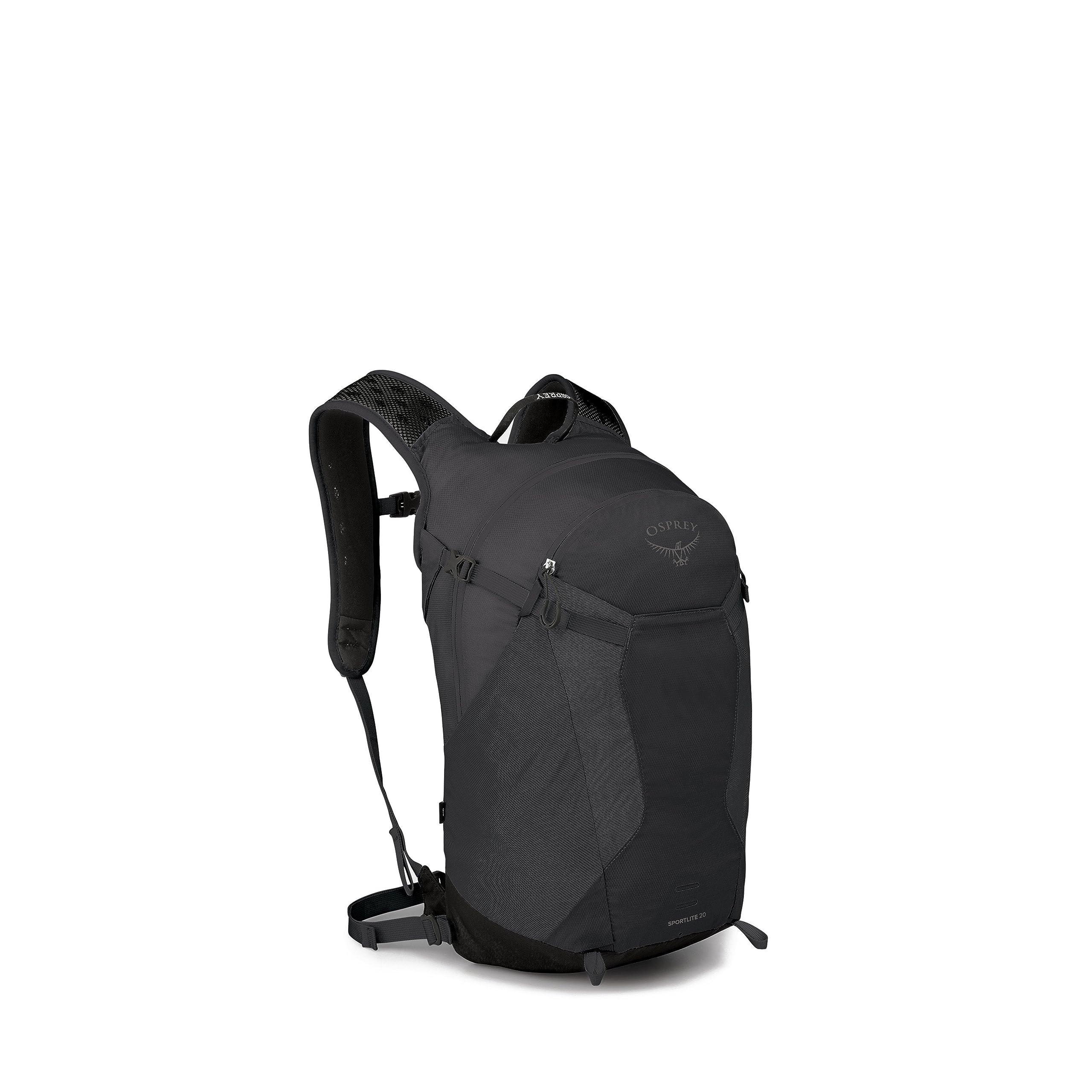
The Osprey Sportlite 20 is a no-surprises daypack built for hikers who value comfort and durability over extreme weight savings. The Atilon foam framesheet with a center air channel provides a stable platform that distributes weight evenly across the back. The pack is not vented like the Hikelite, but the foam channel does allow some airflow. The adjustable sternum strap includes a rescue whistle, a small safety detail that stands out.
The 20-liter main compartment is accessed via a traditional top-loading design with a drawstring closure and a floating top lid. The stretch side pockets are deep enough to hold two 32-ounce Nalgene bottles securely — a feature that earns praise from users who carry wide bottles. The quick-release upper compression straps help cinch down a light load and prevent bouncing on the trail.
The main weakness is the lack of a dedicated hydration port or sleeve — you can fit a bladder in the main compartment, but there is no internal sleeve or hanging loop, which means the bladder may shift as you move. The minimal waist strap is not padded enough to transfer heavy loads. This is a classic, straightforward daypack that works best for day hikes where you use water bottles rather than a hydration bladder.
Why it’s great
- Atilon framesheet provides stable load distribution
- Fits two 32 oz Nalgene bottles in side pockets
- Built-in rescue whistle on sternum strap
Good to know
- No hydration sleeve or hose port included
- Minimal waist strap — limited load transfer
7. Water Buffalo Sherpa 22
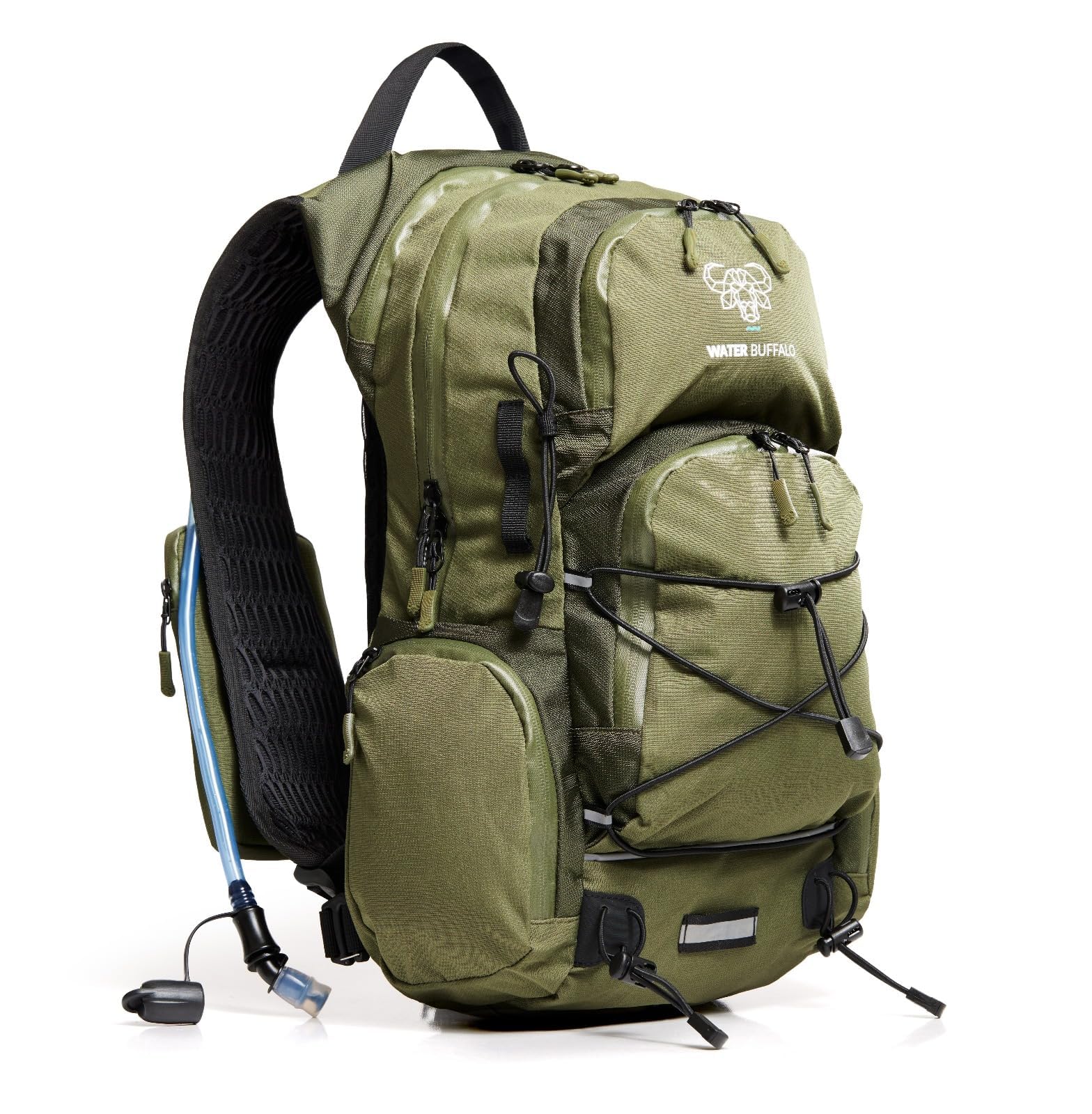
The Water Buffalo Sherpa 22 is the most affordable fully featured hydration pack on this list, bundling a 22-liter pack with a two-liter BPA-free bladder and a rain cover. The 150D ripstop polyester and 420D jacquard nylon construction is more durable than you typically see at this price point, and the waterproof zipper liners add genuine weather protection. The bladder uses a wide-mouth opening for fast refills, though some users report the tube threading and bite valve feel less refined than premium systems.
The pocket layout includes six storage compartments, including a front utility pocket, a phone pocket on the shoulder strap, and trekking pole holders. The adjustable hip and chest straps help stabilize the load and reduce bounce. At just over a pound, it is heavier than some premium packs but still reasonable for entry-level hikers. The lifetime warranty adds long-term value that budget packs rarely offer.
The biggest drawback is the included bladder. Multiple users note that it is difficult to clean, the tube is not insulated, and the bite valve can leak if not positioned correctly. Replacing the bladder with a better-quality reservoir from brands like CamelBak or Platypus solves the problem, but adds cost. If you are starting out and want a complete kit, the Sherpa 22 is a solid foundation. If you already have a hydration system, you may want to skip the bladder and use this as a dry pack.
Why it’s great
- Includes 2L bladder and rain cover out of the box
- Waterproof zipper liners and durable fabric mix
- Lifetime warranty — rare at this price level
Good to know
- Included bladder is hard to clean and the bite valve leaks
- Slightly heavier than premium alternatives
FAQ
Do I need a framed daypack for day hikes?
What size daypack do I need for backpacking?
Should I get a hydration bladder or use bottles?
Final Thoughts: The Verdict
For most users, the backpacking daypack winner is the Osprey Hikelite 18 because its tensioned-mesh backpanel offers the best ventilation in its class, the included rain cover is genuinely useful, and the 1.7-pound weight with a proper framesheet makes it comfortable for full-day carries. If you want more room for gear and a scientific approach to sweat reduction, grab the Deuter Futura 27. And for ultralight or alpine missions where every ounce counts, nothing beats the Mammut Lithium with its 14.1-ounce build and U-frame stability.