A child’s first steps are a milestone, but the wrong pair of walking shoes can turn that joy into frustration. Stiff soles that fight natural movement, narrow toe boxes that pinch developing feet, and straps that slip off mid-stride are the hidden regret many parents don’t anticipate. The right shoe disappears from your mind — your child simply walks better, longer, and with more confidence.
I’m Emma — the founder and writer behind Baby Bangs. I’ve analyzed hundreds of children’s shoe models, cross-referencing pediatric podiatry guidance with real-world parent feedback on durability, fit, and foot development support.
After comparing seven leading options against the benchmarks that matter most for growing feet, this guide narrows the field to the models that actually deliver. This is your expert resource for finding the best children’s walking shoes for your child’s unique foot shape, gait, and daily activity level.
How To Choose The Best Children’s Walking Shoes
Children’s walking shoes are not miniature versions of adult performance sneakers. The engineering priorities are fundamentally different: flexibility over cushioning, toe room over arch support, and strap security over speed lacing. Here is what the data and podiatric guidance reveal about making the right choice for your child.
Sole Flexibility and Zero-Drop Geometry
The single most important spec for a new walker is a sole that bends easily at the ball of the foot — ideally one that can be twisted and folded with minimal resistance. A zero-drop heel (the heel and forefoot sit at the same height) allows the Achilles tendon to develop naturally. Shoes with elevated heels, common in mainstream sneakers, can shorten the gait cycle and encourage toe-walking in toddlers. For preschoolers and older children who run frequently, a slightly thicker sole with light cushioning offers a good trade-off between ground feel and impact absorption.
Toe Box Width and Foot Shape Accommodation
A child’s foot is widest at the ends of the toes, not at the ball. Narrow toe boxes compress the metatarsals and can contribute to bunions later in life. Look for shoes explicitly described as having a “wide toe box” or “natural shape.” The thumb-test is simple: if you can feel the outline of your child’s toes through the upper material, the shoe is too narrow. Also consider that many children have wide feet relative to length, so unisex models or brands known for generous width (Stride Rite, STQ, New Balance) are safer choices.
Closure System and On/Off Ease
For children under four, a multi-point Velcro closure system is non-negotiable. It allows the shoe to be tightened differently across the forefoot and ankle, accommodating high insteps or narrow heels. Elastic laces (as seen on the adidas VL Court 3.0) work well for older children who can manage them independently but still need a secure fit. Slip-on walking sneakers are fine for low-key days but lack the adjustability needed for active play or wide-narrow foot combos.
Outsole Traction and Durability
TPR (thermoplastic rubber) outsoles offer the best grip-to-flexibility ratio for children’s walking shoes. They provide good traction on smooth indoor floors and outdoor pavement without adding stiffness. Avoid rubber that feels hard and non-yielding, as it reduces ground feedback and increases the risk of slips. For heavy-use school shoes, look for outsoles that show minimal wear after three months of daily wear — the Skechers Bounder and New Balance Fresh Foam models consistently pass this test.
Quick Comparison
On smaller screens, swipe sideways to see the full table.
| Model | Category | Best For | Key Spec | Amazon |
|---|---|---|---|---|
| STQ Wide Toe Box Toddler | Barefoot Style | New walkers needing natural foot development | Zero-drop sole, TPR outsole | Amazon |
| Stride Rite Nick | Structured Support | Early walkers with wider feet | Removable insole, flexible sole | Amazon |
| Bruno Marc Mesh Oxfords | Everyday Casual | School-aged boys needing dress sneakers | Breathable mesh upper | Amazon |
| adidas VL Court 3.0 | Casual Style | Versatile everyday wear for school and outings | Elastic lace with strap closure | Amazon |
| New Balance Fresh Foam Arishi V4 | Performance Cushion | Active play and running toddlers | Fresh Foam midsole cushioning | Amazon |
| STQ Lightweight Slip-On | Slip-On | Quick on/off for independent kids | Slip-resistant outsole | Amazon |
| Skechers Bounder Baronik | School Sneaker | Rough-and-tumble school day wear | Machine washable design | Amazon |
In‑Depth Reviews
1. STQ KIDS Wide Toe Box Toddler Shoes Barefoot Sneakers
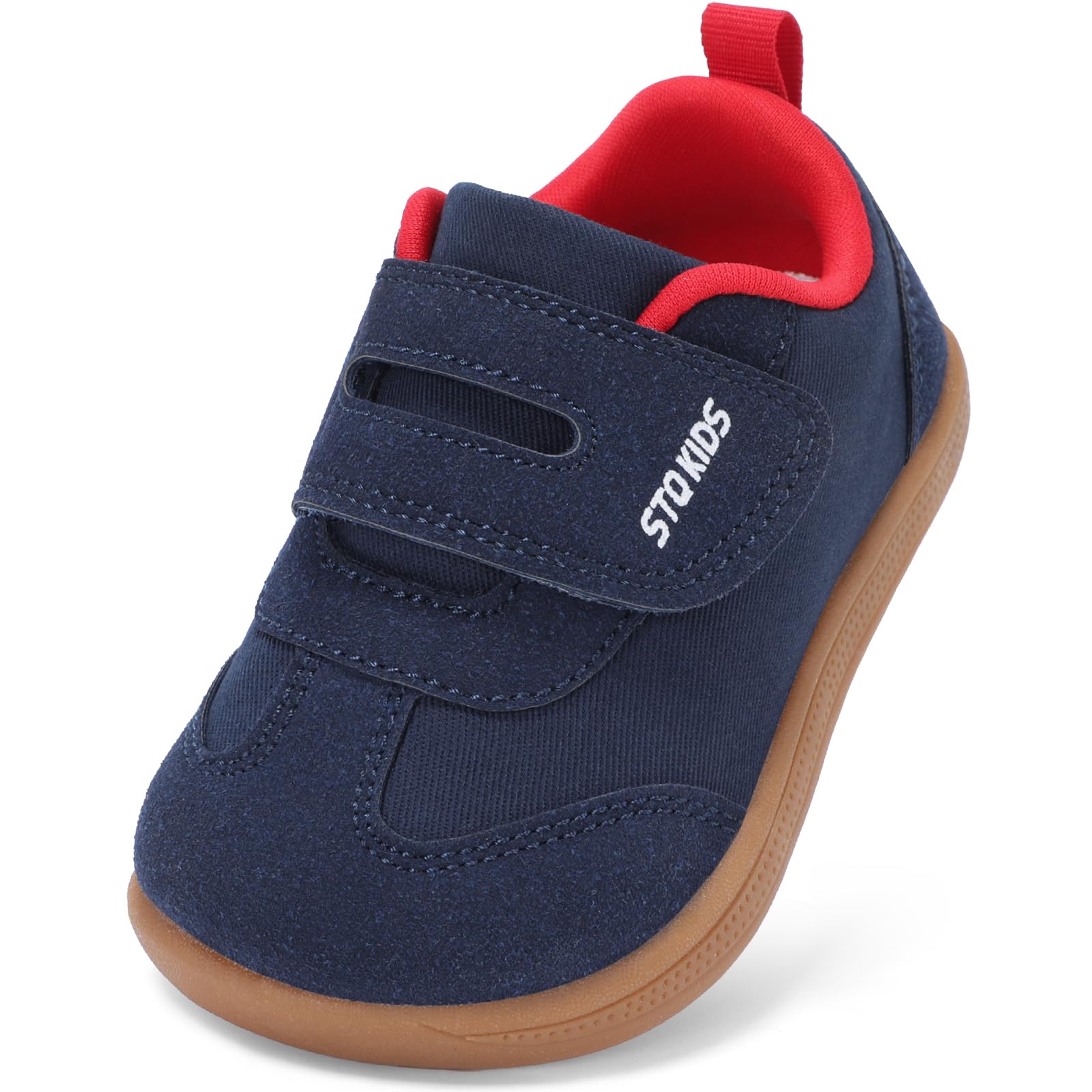
The STQ Wide Toe Box shoes deliver the exact combination that pediatric physical therapists recommend for new walkers: a zero-drop sole that keeps the foot flat, a wide toe box that allows toe splay for balance, and a TPR outsole that grips without resisting natural flexion. The multi-point Velcro system creates a secure hold across the instep and ankle without over-tightening. At roughly 26 dollars, this model undercuts many premium barefoot-style alternatives while matching their core design principles.
Parent reviews consistently highlight that children walk more confidently in these shoes compared to stiffer mainstream options. The flexibility is significant — you can easily bend the sole 90 degrees at the forefoot, which is the benchmark for toddler-appropriate footwear. The upper is lightweight and breathable, and the colors hold up well after multiple wears. Some parents note the sizing runs slightly long, so measure your child’s foot and compare to the brand’s size chart before ordering.
For parents who want a minimalist shoe that respects foot anatomy but don’t want to spend on boutique barefoot brands, this STQ model is the clear winner. It’s appropriate from first steps through the early running stage, roughly ages 6 months to 3 years depending on foot size. The only limitation is that the thin sole offers minimal cushioning for rough outdoor terrain — for playground use, you may want something with a bit more underfoot protection.
Why it’s great
- Zero-drop geometry supports natural gait development
- Wide toe box allows proper toe splay for balance
- Multi-point Velcro ensures a secure, adjustable fit
- Excellent value compared to branded barefoot shoes
Good to know
- Thin sole offers limited protection on rough surfaces
- Sizing runs slightly long — verify with foot measurement
2. Stride Rite Baby Boys’ Nick (Infant/Toddler)
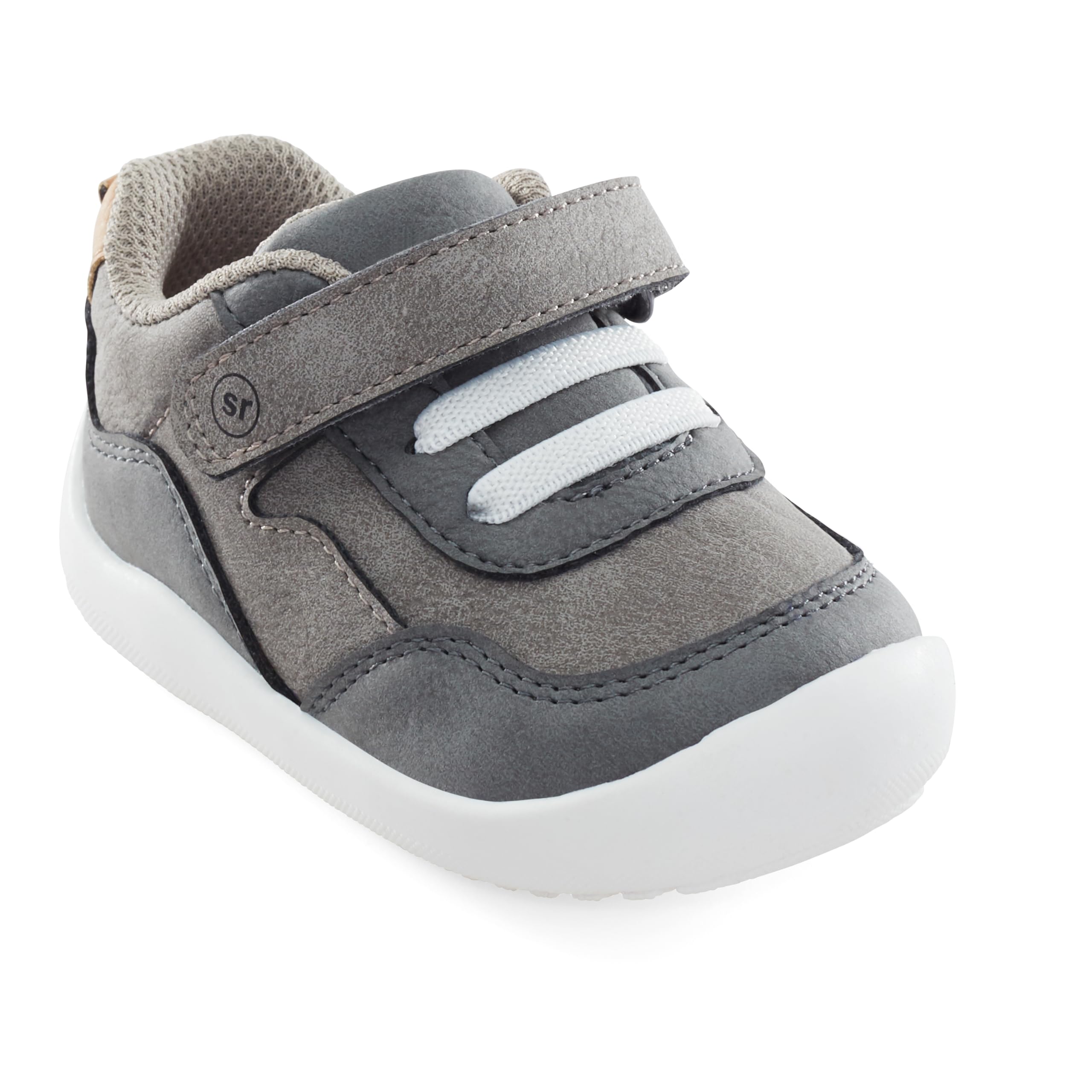
The Stride Rite Nick stands apart because it carries genuine physical therapist recommendations — multiple verified reviews mention that therapists specifically suggest this model for children working on gait improvement. The shoe features a wide toe box, a secure single strap, a flexible sole, and notably a sturdy heel counter that stabilizes the rear foot without restricting natural motion. The removable insole is a practical detail that lets parents check whether their child has outgrown the shoe without guesswork.
The construction quality is evident in the materials: the upper is durable enough to survive five months of daily wear with minimal visible wear, and the outsole shows even abrasion rather than bald spots. The shoe fits wide feet comfortably without being baggy, and the strap reaches across the instep cleanly without digging in. At roughly 28 dollars, it sits at a mid-range price point that undercuts many Stride Rite retail models while delivering the same core engineering.
The primary drawback is sizing availability — Stride Rite does not offer this model beyond toddler sizes (up to about size 7 or 8), so once your child’s foot grows past that range, you’ll need to switch brands. Additionally, the single strap design provides less adjustability than the STQ’s multi-point Velcro, which can be an issue for children with very narrow heels or high insteps. But for the early walking stage, this shoe is a remarkably reliable choice backed by clinical-level feedback.
Why it’s great
- Recommended by pediatric physical therapists
- Removable insole makes fit-checking simple
- Durable construction survives months of daily wear
- Sturdy heel counter provides rear-foot stability
Good to know
- Not available in larger child sizes
- Single strap limits adjustability for unusual foot shapes
3. Bruno Marc Boy’s Mesh Sneakers Oxfords Lace-Up
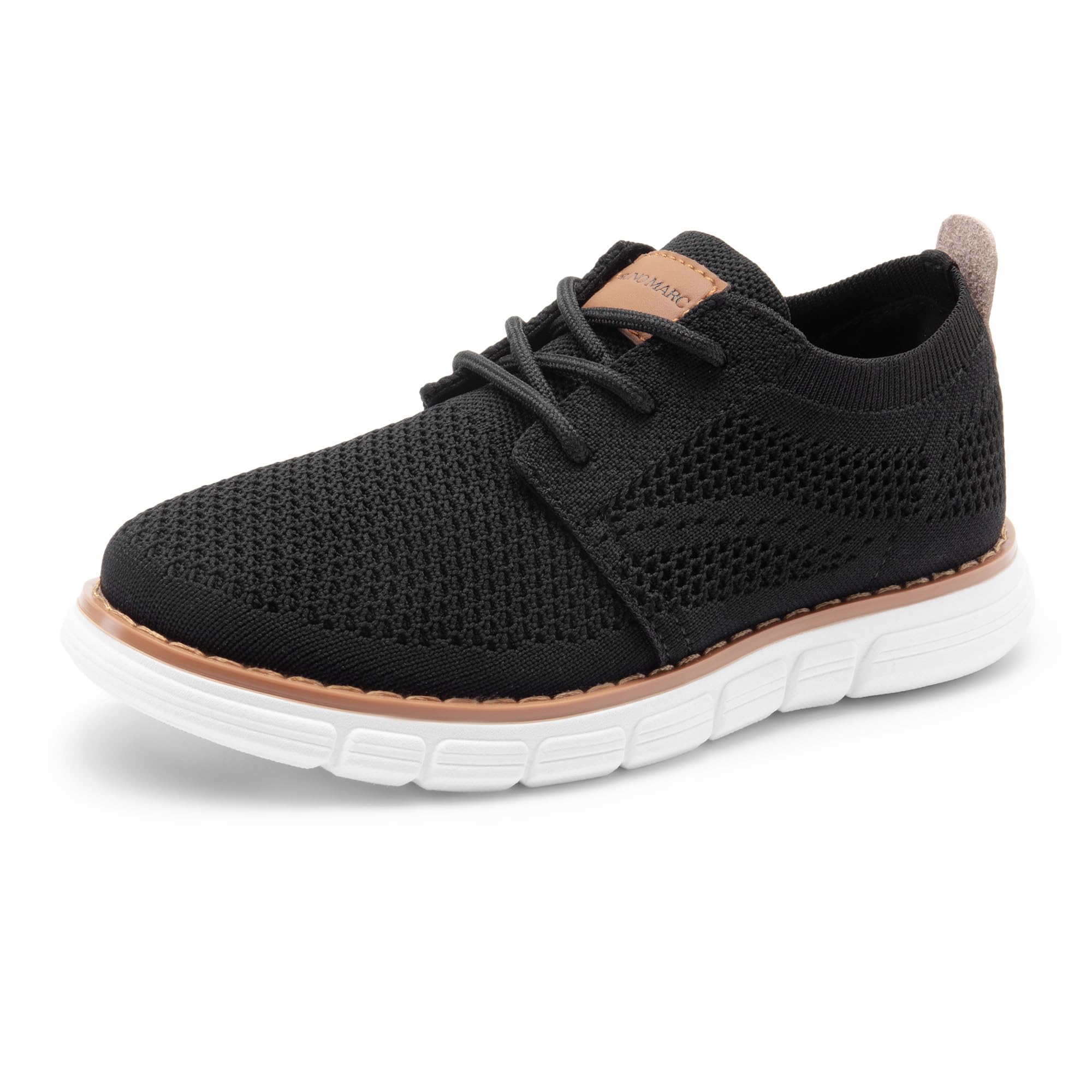
The Bruno Marc Mesh Oxfords fill a specific niche: a walking shoe that looks dressy enough for school uniforms or church but feels like a sneaker. The breathable mesh upper keeps feet cool during active play, and the lace-up closure allows fine adjustment across the midfoot — a feature that transitional walkers (ages 5 and up) can learn to manage independently. The outsole is lightweight and flexible, and reviewers note that the colors hold up well after repeated washing.
The construction quality is noteworthy for the price point. Parents of boys who are notoriously hard on shoes report that these survive multiple months of daily wear without peeling or delamination. The toe cap is reinforced enough to resist scuffing on pavement. One nuance: the shoe fits slightly narrow out of the box but expands as the mesh conforms to the foot, so if your child has wide feet, order a half size up. The laces are standard length and stay tied through a school day.
The mesh upper, while breathable, is less durable against sharp playground surfaces than leather or synthetic leather alternatives. If your child frequently crawls or drags their toes, the mesh may show wear more quickly. Also, the lace-up system is less convenient for children under 5 who haven’t mastered tying yet. But for school-aged boys who need a shoe that transitions from classroom to playground without looking either too sporty or too formal, the Bruno Marc Oxfords deliver solid value.
Why it’s great
- Breathable mesh upper prevents overheating
- Dress-shoe aesthetic with sneaker comfort
- Lace-up closure allows precise midfoot adjustment
- Reinforced toe cap resists scuffing
Good to know
- Runs slightly narrow — size up for wide feet
- Mesh upper less durable than leather options
4. adidas Unisex-Kids VL Court 3.0 Elastic Lace & Strap
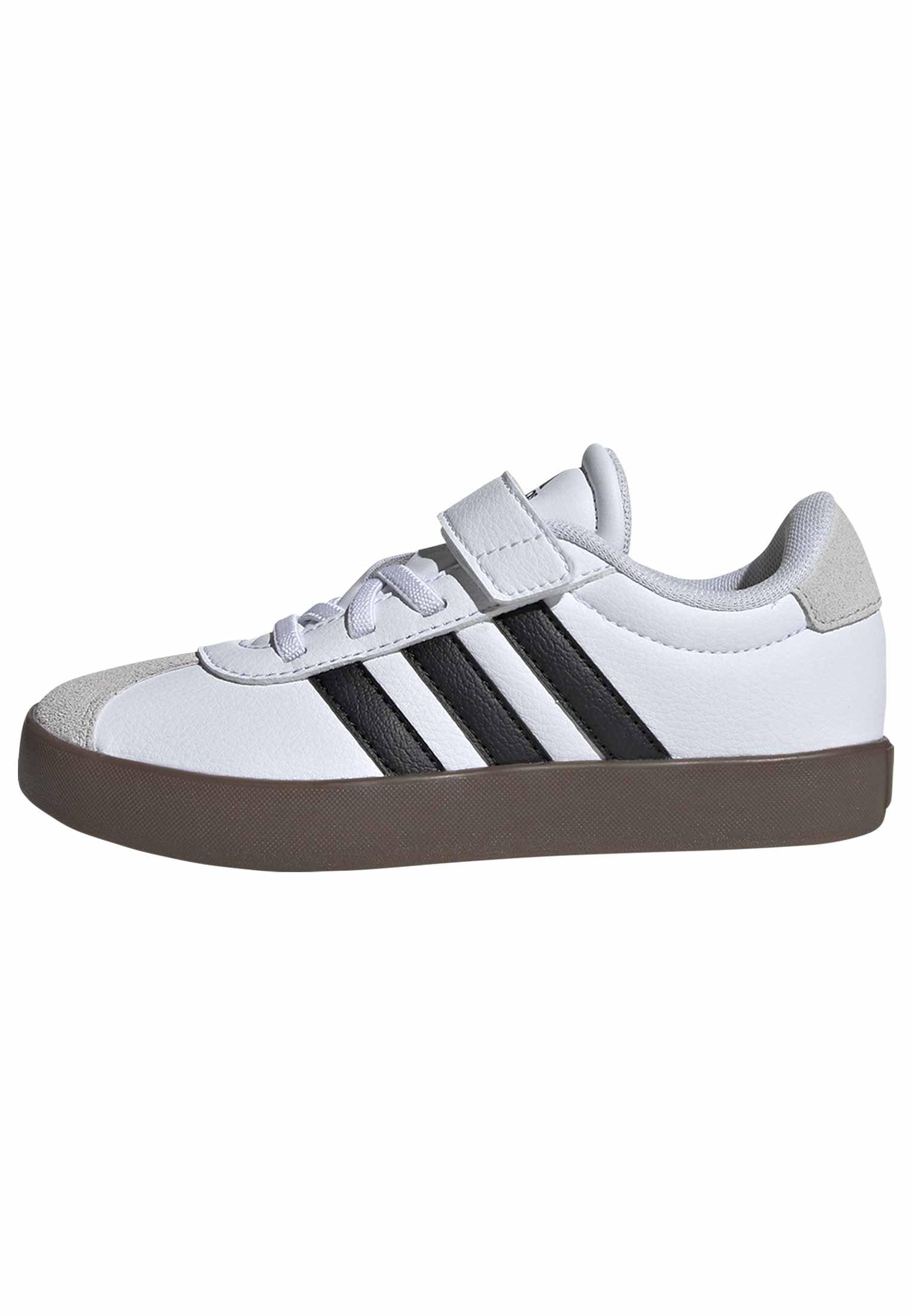
The adidas VL Court 3.0 solves a common parent frustration: finding a shoe that looks cool enough for a child to want to wear but is functional enough for active daily use. The elastic lace combined with a Velcro strap provides a snug fit that accommodates wide feet — multiple reviews from parents of wide-footed children confirm this works well — while remaining easy for young children to put on independently. The outsole is a classic court design with good grip on gym floors and pavement.
The build quality is typical adidas: the synthetic leather upper is durable and easy to wipe clean, and the stitching shows no signs of fraying after extended use. The shoe is lightweight, and the foam midsole provides moderate cushioning without being overly thick. Children as young as 4 can manage the elastic lace and strap system, which encourages independence. The shoe runs slightly small according to several reviewers, so ordering a half size up from your child’s measured foot length is advisable.
The front material — synthetic leather with a slight texture — is harder to clean than a smooth leather or mesh upper, and scuffs may be visible. The elastic laces, while convenient, can be tricky to tighten for children with very narrow feet. And the shoe’s design is more fashion-forward than biomechanically optimized — it lacks the wide toe box and zero-drop geometry of the specialist models. But for everyday wear where style matters as much as function, the VL Court 3.0 is a solid all-rounder.
Why it’s great
- Elastic lace plus Velcro is easy for kids to manage independently
- Accommodates wide feet comfortably
- Classic adidas design kids actually want to wear
- Lightweight with moderate cushioning for active play
Good to know
- Runs slightly small — order a half size up
- Front material is harder to clean than mesh
- Not optimized for barefoot-style gait development
5. New Balance Kids’ Fresh Foam Arishi V4 Bungee

The New Balance Fresh Foam Arishi V4 is the premium choice for parents who prioritize cushioning and impact absorption. The Fresh Foam midsole is noticeably softer than any other shoe in this comparison — it compresses visibly under pressure and returns energy, which active toddlers who run and jump will appreciate. The Velcro closure is straightforward and secure, and the outsole shows excellent durability after weeks of playground use. The shoe is also notably lightweight for its cushioning level.
The fit is generous, with multiple reviewers confirming that it works well for wide feet. The toe box is not as wide as the STQ or Stride Rite Nick, but it’s roomier than the adidas or Skechers alternatives. The colors are fun and vibrant, and the quality of materials is consistent with New Balance’s reputation. The price point is the highest of any shoe in this roundup, but parents who have bought these report that the durability justifies the investment — one reviewer noted still looking new after extended use.
There are two recurring concerns worth noting. First, the Velcro strap in larger sizes does not adjust as much as on smaller ones, which can make finding the perfect fit tricky for children with very narrow heels. One reviewer had to switch to Skechers because the Velcro on their second pair wore out. Second, the Fresh Foam midsole, while comfortable, provides less ground feedback than thinner soled alternatives — this shoe is less ideal for children who are still developing balance and need to feel the ground beneath them. Best suited for confident walkers and runners ages 2 and up.
Why it’s great
- Fresh Foam midsole provides exceptional cushioning for active play
- Generous fit works well for wide feet
- Durable construction that holds up over months of use
- Lightweight despite significant cushioning
Good to know
- Velcro strap adjustability decreases in larger sizes
- Less ground feedback — not ideal for new walkers
- Premium price point reflects the build quality
6. STQ Kids Lightweight Slip on Walking Sneakers
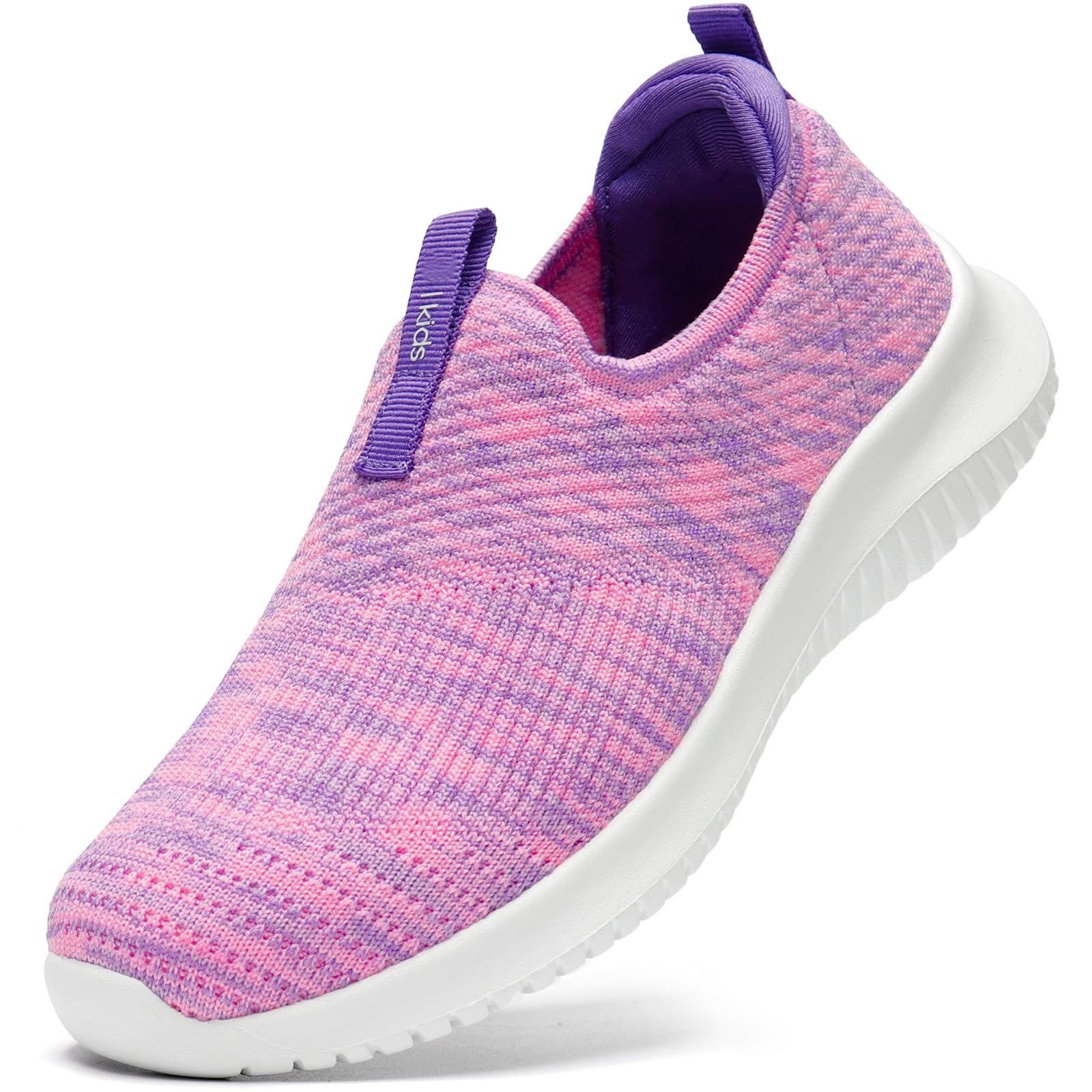
The STQ Lightweight Slip-On is designed for the on-the-go parent who values speed. The stretchy upper allows children to slide their feet in independently, making this a great choice for preschool mornings when every minute counts. The slip-resistant outsole provides reliable grip on smooth indoor floors and outdoor pavement. Multiple reviewers note that the shoe stays on during active play — a common failure point for cheap slip-ons — thanks to a carefully shaped heel cup that grips without rubbing.
The value proposition is strong: at roughly 30 dollars, you get a shoe that parents report surviving an entire school year without ripping. The colors are vibrant, and the upper is easy to clean with a damp cloth. The shoe is comfortable for all-day wear, and the lack of laces or straps means there’s nothing to adjust, no parts to break. For children who have outgrown the Velcro phase and want to dress themselves, this design fosters independence.
The significant caveat is sizing width. This shoe runs extremely wide — one reviewer who usually wears a certain size found the shoe too loose even when ordering a half size smaller. For narrow-footed children, the lack of adjustability means the shoe may feel baggy, leading to instability when walking. Additionally, the slip-on design offers less security for very active running or jumping compared to a Velcro-strapped alternative. This shoe works best for children with average to wide feet who need a quick, low-fuss option for daily wear.
Why it’s great
- Easy slip-on design promotes child independence
- Slip-resistant outsole works on multiple surfaces
- Durable enough to survive a full school year
- Easy to clean with a simple wipe down
Good to know
- Runs very wide — not suitable for narrow feet
- No adjustability for fine-tuning fit
- Less secure for very active running and jumping
7. Skechers Kids’ Bounder – Baronik
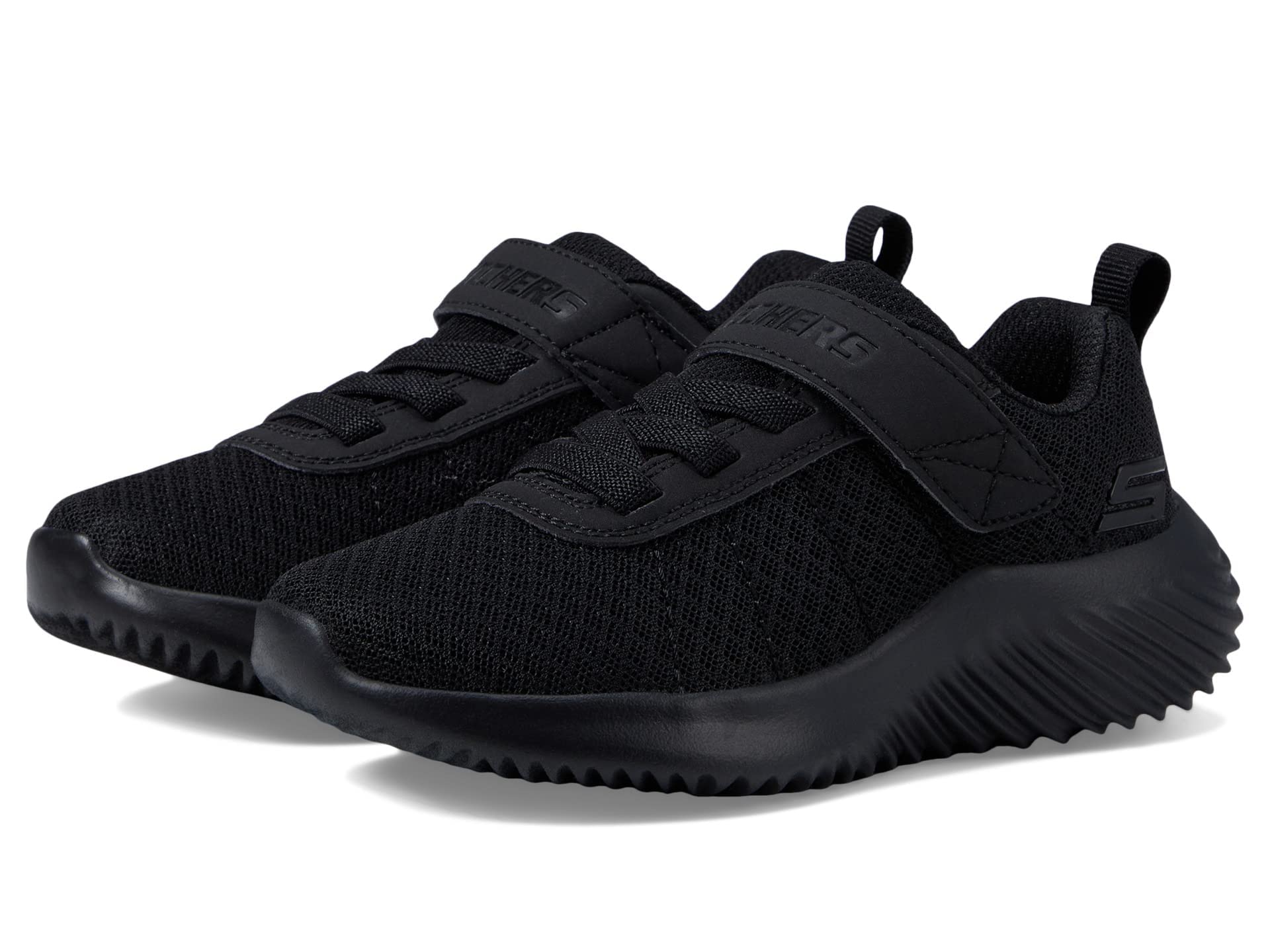
The Skechers Bounder Baronik is the durable workhorse of this list. One parent reported that their son wore these almost daily for a year and a half, and the shoes were still functional — that’s extraordinary for a children’s shoe at this price point. The flexible sole and lightweight construction make them comfortable for all-day school wear, and the Velcro closure is easy for young children to manage. The design is basic and goes with any casual outfit.
The machine-washable feature is a practical advantage: when these shoes inevitably get muddy or stained from playground dirt, you can toss them in the washing machine and they come out looking nearly new. The synthetic upper is durable and resists scuffing. Multiple parents of school-aged children (ages 3 to 9) report that their kids find these very comfortable compared to more expensive alternatives they’ve tried. The sizing runs slightly generous, giving room for growth without being sloppy.
The Bounder Baronik is not a biomechanically optimized walking shoe — it lacks the wide toe box and zero-drop geometry of the top-ranked models. The heel is slightly elevated compared to the forefoot, which is fine for confident walkers but less ideal for new walkers still developing their gait. Also, the sole is flexible but not as supple as the STQ barefoot-style shoes. This is a solid everyday sneaker for school-age children who have already mastered walking and need a durable, comfortable, low-maintenance option.
Why it’s great
- Exceptional durability — can last over a year of daily wear
- Machine washable for easy cleaning
- Lightweight and flexible for all-day comfort
- Generous sizing allows room for foot growth
Good to know
- Not ideal for new walkers — lacks zero-drop geometry
- Toe box and sole less flexible than barefoot-style shoes
- Basic design may not appeal to all kids
FAQ
Can my child wear barefoot-style walking shoes on all surfaces?
How do I know if my child’s walking shoes are too narrow?
When should I transition my child from a barefoot shoe to a structured sneaker?
How much room should I leave at the toe of my child’s walking shoes?
Are slip-on walking shoes safe for active toddlers?
Final Thoughts: The Verdict
For most users, the children’s walking shoes winner is the STQ Wide Toe Box Toddler because it delivers the exact biomechanical features that podiatrists recommend — zero-drop sole, wide toe box, and flexible TPR outsole — at a price that leaves room for the multiple size changes children go through. If you want a structured shoe with proven physical therapist backing, grab the Stride Rite Nick. And for active school-aged children who need durable, cushioned footwear, nothing beats the New Balance Fresh Foam Arishi V4.