Every sharp breath, every cough, every accidental twist reminds you that a cracked or fractured rib is a relentless injury that punishes even the smallest movements. The right compression brace is the difference between lying flat for weeks and being able to move through your day with controlled, guarded motion.
I’m Emma — the founder and writer behind Baby Bangs. I’ve spent years analyzing orthopedic recovery gear, and I know exactly which compression specs, material blends, and strap layouts actually stabilize rib fractures versus just squeezing your torso.
This guide walks through the essential design features that define a proper brace for broken ribs so you can choose the right level of thoracic support for your specific injury zone and recovery stage.
How To Choose The Best Brace For Broken Ribs
Selecting a rib brace is not about picking the tightest wrap you can find. The goal is controlled immobilization of the fractured area without restricting the deep breath capacity your lungs need to prevent pneumonia. Every design element — from width to strap material to the shape of the compression panel — directly affects your healing timeline.
Width and Coverage Zone
Rib braces come in two standard widths: a standard version around 6.7 inches and a wide version around 9.8 inches. A narrower brace targets the mid-rib area and works well for fractures located away from the sternum. A wider brace extends higher toward the armpit and lower toward the floating ribs, which is essential for multiple fractures or fractures near the sternocostal joints. The wrong width leaves either the upper or lower edge of the injury unsupported, creating a pivot point that aggravates the crack with every torso bend.
V-Shape Contour and Pressure Balance
The natural rib cage is wider at the bottom than the top. A shallow V-shaped brace that is narrower at the upper edge and wider at the lower edge distributes compression evenly across the entire rib surface. A straight-edged wrap concentrates pressure on the lower ribs and leaves the upper chest loose, which can cause the brace to ride up and shift during movement. Look for a brace that explicitly states an ergonomic V-contour.
Material Stack and Breathability
Broken ribs hurt for weeks, and you will wear this brace for extended daily sessions. Neoprene and sponge layers trap heat and moisture against the skin, leading to rashes and chafing exactly where you can least tolerate additional sensitivity. The best options use a two-section design: a fish-silk or filament mesh strap for the main tension band and an elastic webbing covered with soft fleece where the brace contacts the skin. Materials that are latex-free, sponge-free, and ultra-light prevent heat buildup during sleep or light activity.
Anti-Slip Stability
Because the rib cage moves with every breath, a brace that shifts even half an inch will lose its therapeutic compression and may actually pull on the injured area. The inner surface should have wave-pattern silicone strips or glue-grip elements that create friction against the skin. Silicone strips are less likely to leave indentations than raw glue patterns, but both are preferable to a bare fabric lining that migrates upward when you stand up from a seated position.
Quick Comparison
On smaller screens, swipe sideways to see the full table.
| Model | Category | Best For | Key Spec | Amazon |
|---|---|---|---|---|
| Velpeau Wide 9.8″ (Reg) | Rib Brace | Full-rib and sternum coverage | 9.8-inch width, V-shape | Amazon |
| Velpeau Wide 9.8″ (Large) | Rib Brace | Broader torso, full coverage | 9.8-inch width, large fit | Amazon |
| Sparthos Back Brace | Lumbar Support | Lower back with lumbar pad | Adjustable lumbar pad | Amazon |
| FREETOO Pulley Brace | Lumbar Support | Firm spinal stabilization | Pulley tension system | Amazon |
| TitanGuard Ultra-Thin | Back Brace | Low-profile under clothes | Ultra-thin mesh fabric | Amazon |
| Velpeau Standard 6.7″ | Rib Brace | Mid-rib specific fractures | 6.7-inch width, V-shape | Amazon |
| AVESTON Lower Back | Lumbar Support | Spine straightening support | 6 reinforced plastic bones | Amazon |
In-Depth Reviews
1. Velpeau Broken Rib Brace Wide Version 9.8″ (Reg)
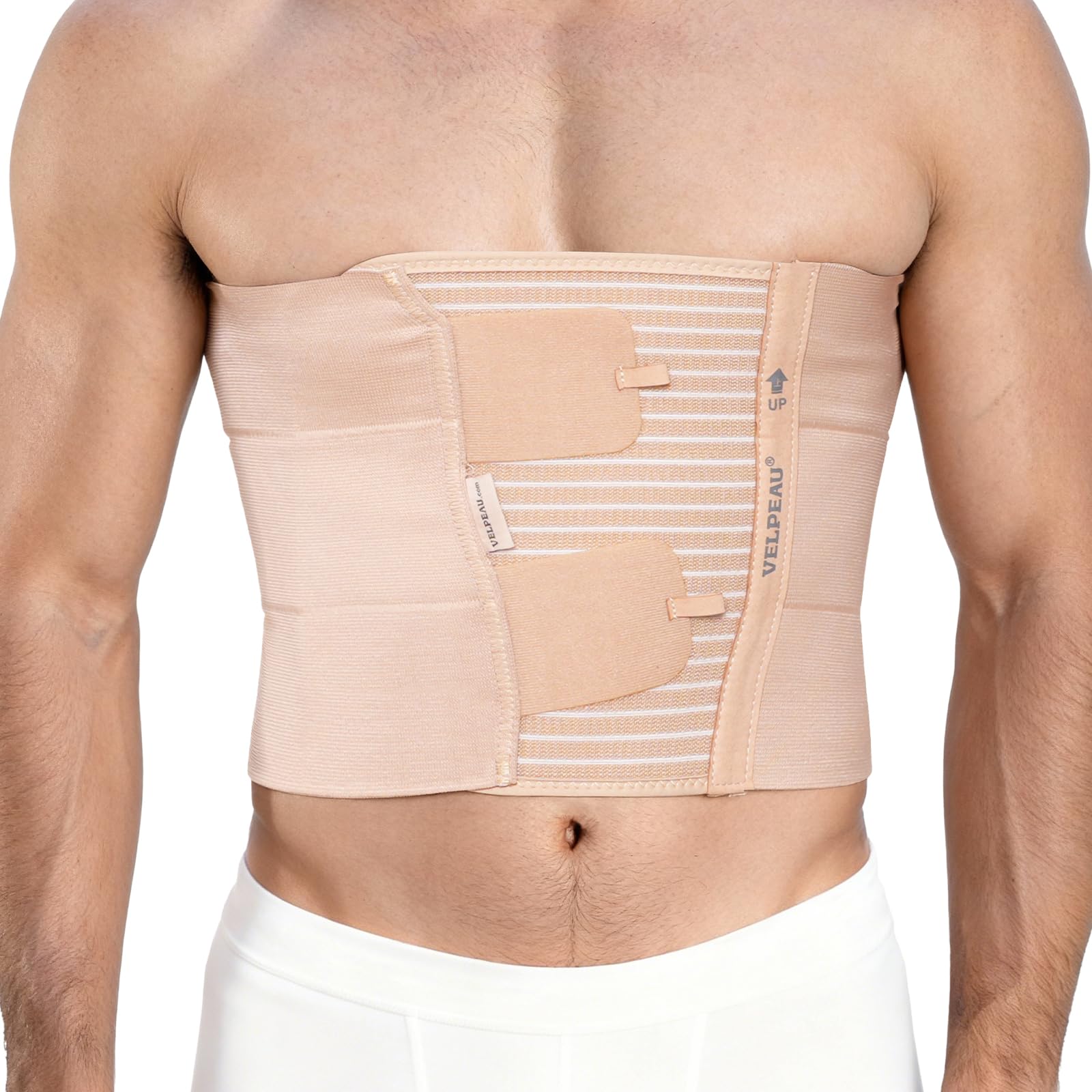
The Velpeau Wide 9.8-inch version is the most balanced rib brace for the widest range of rib injuries. Its shallow V-shaped profile matches the natural taper of the rib cage, so the compression is even from the sternum down to the floating ribs. The two-section design uses a fish-silk mesh strap for the tension band and a fleece-covered elastic webbing against the skin, which eliminates the heat-trapping sponge and neoprene that cause irritation during multi-day wear.
The wave-pattern silicone strips on the inner surface prevent the brace from crawling upward when you sit down or reach overhead. Users recovering from sternal fractures after heart surgery report that it holds the chest wall stable without creating a choking sensation under the arms. The regular size fits an underbust measurement of 27.5 to 35.5 inches, and the brand recommends sizing up if you are between sizes to avoid the brace cutting into the upper rib margin.
Some early reports indicate the Velcro tab can separate from the strap under high tension, so avoid overtightening beyond the point where you can still take a full, deep breath. The breathable material also means the brace is less bulky under clothing than traditional neoprene chest binders, making it practical for daytime wear during light activity around the house.
Why it’s great
- Ergonomic V-contour distributes pressure evenly from upper to lower ribs
- Sponge-free and latex-free construction prevents heat rash and skin sensitivity
- Anti-slip silicone strips keep the brace locked in place during movement
- Unconditional replacement within 6 months through the manufacturer
Good to know
- Velcro strap durability has been inconsistent on some units
- May sit too low for women with high rib injuries above the breast line
- Measuring tape included is only 5 inches long, which is too short for accurate sizing
2. Velpeau Broken Rib Brace Wide Version 9.8″ (Large)
The Large version of the Velpeau Wide brace extends the same V-contour and anti-slip design to underbust measurements between 35.5 and 47 inches. This is the right pick for larger frames where a standard 9.8-inch wide brace would not wrap far enough around the torso to create even compression across the full rib cage. The fish-silk mesh strap and fleece-lined elastic webbing remain the same, so the breathability and skin comfort are identical to the regular version.
Because the brace is wider than the standard 6.7-inch model, it provides additional vertical coverage that supports both the mid-ribs and the lower costal arch. This is particularly useful for multiple rib fractures or for patients who need post-surgical stabilization after sternotomy. The silicone grip strips are the same wave pattern, and they perform well even on hairier skin without excessive pulling during removal.
The same Velcro quality caveat applies — some users have reported the hook-and-loop tab delaminating from the strap within the first day of use. The manufacturer offers a six-month unconditional replacement, so while the issue is frustrating, it is covered. For the large-framed user who needs full rib coverage, this is the most direct match on the market at this price tier.
Why it’s great
- Extended length accommodates underbust up to 47 inches without gap
- Same V-shape ergonomic contour for even pressure across the whole rib cage
- Ultra-light materials prevent overheating during extended wear sessions
- Latex-free and sponge-free construction avoids skin reactions
Good to know
- Velcro strap separation reported on isolated units
- The brace is less effective for rib injuries located high under the armpit
- Some users note the internal grip material can leave temporary skin indentations
3. Sparthos Back Brace for Lower Back Pain

While the Sparthos is primarily marketed as a lower back brace, its adjustable lumbar pad and vertical support stays make it a useful option for postural unloading if your rib injury is compounded by lower thoracic or upper lumbar strain. The medium fits a waist measurement around 32 to 37 inches, and the dual-strap closure system allows independent tension adjustment for the upper and lower sections of the brace.
The breathable fabric is a clear upgrade over neoprene-heavy supports — it does not trap sweat against the skin during extended wear, and the slim profile means it fits discreetly under a loose shirt. The lumbar pad is removable, so you can configure the brace for pure compression without the extra gel insert pressing into your lower back if your injury is higher in the rib cage. Users recovering from spinal stenosis or disc issues alongside rib fractures report that this brace helps them maintain better posture, which indirectly reduces torque on the rib cage.
The main limitation for rib-specific use is the width. The front panel is only about 11 inches wide, which can create a wasp-waist effect that does not cover the full span of the ribs. This brace works best as a secondary support for the lower back rather than a primary rib immobilizer. If your rib fracture is isolated to the lower two ribs, it may provide enough compression, but for mid-rib or sternal fractures, a dedicated rib brace with a V-contour is a better fit.
Why it’s great
- Removable lumbar pad allows customizable compression configuration
- Breathable fabric prevents sweat buildup during all-day wear
- Dual-strap system lets you adjust upper and lower tension independently
- Very high customer satisfaction rating across tens of thousands of reviews
Good to know
- Width is too narrow for full rib cage coverage
- Designed for lumbar support, not thoracic or costal immobilization
- May roll up at the edges during prolonged seated posture
4. FREETOO Back Brace with Pulley System

The FREETOO brace brings a pulley tension system and a multi-stay frame (one bionic bone lumbar panel plus four memory-aluminum stays and two flexible springs) that deliver the most rigid support profile in this lineup. For a rib fracture patient who also suffers from a herniated disc or instability in the thoracolumbar junction, this brace provides a level of spinal immobilization that a simple elastic wrap cannot match.
The 3D knitted mesh material is genuinely breathable and conforms to the body shape without the stiff edges that dig into the skin. The removable lumbar pad cushions the lower back, and the pulley system allows you to dial in tension with fine granularity rather than guessing with a single pull strap. Users with L4-L5 disc issues alongside rib trauma report that this brace unloads the spine enough to reduce the involuntary muscle guarding that spasms the intercostal muscles.
The trade-off is bulk. The frame and stays make this brace noticeable under clothing, and the front panel can roll up at the bottom edge during extended sitting. It also targets the lumbar spine, not the thoracic rib cage, so if your fracture is in the upper ribs near the clavicle, this brace will not apply compression high enough to help. It is a niche pick for the specific scenario where lower back pathology and rib injury coexist.
Why it’s great
- Pulley system provides precise, incremental tension adjustment
- Removable lumbar pad and multiple stays for rigid spinal support
- Breathable 3D knit fabric prevents overheating during extended wear
- 12-month warranty and responsive US-based customer support
Good to know
- Bulky profile is visible under most clothing
- Front panel rolls up at the bottom during seated activity
- Targets lumbar spine, not upper rib cage or sternum
5. TitanGuard Ultra-Thin Back Brace
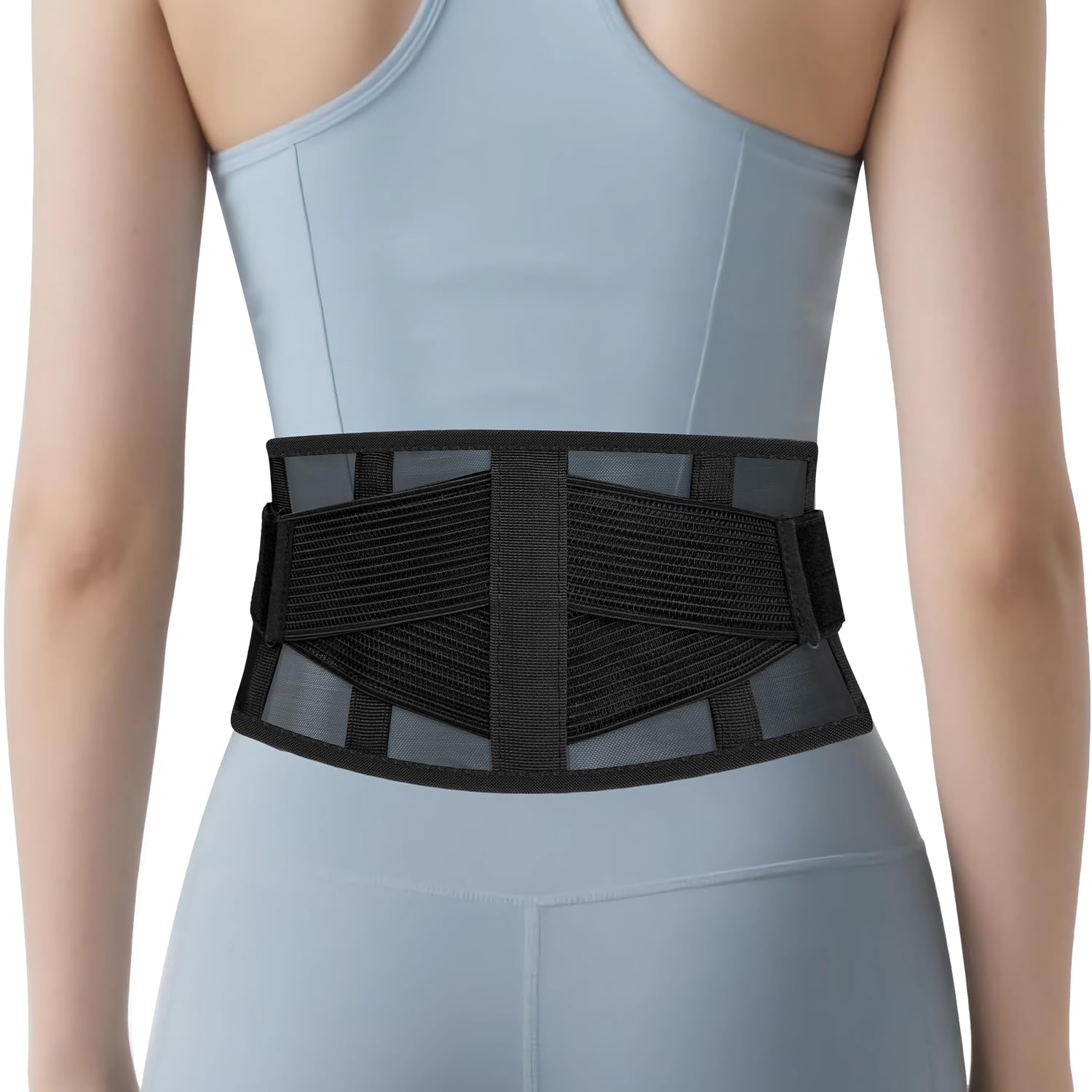
The TitanGuard brace is engineered from ultra-thin mesh fabric that is nearly invisible under a t-shirt, which makes it the most discreet option for returning to work or light daily activity while your ribs heal. The dual-sided hook-and-loop design with a pulley tension strap gives you independent tightening control, and the supportive stays provide targeted compression without the bulk of foam or neoprene panels.
The breathable mesh does an excellent job of wicking moisture, and the low-profile fit means you can wear it during light exercise or household chores without the brace shifting or bunching. The XS/S size fits a 27 to 33 inch waist, and the stretchy fabric conforms naturally to the body. Users recovering from mid-back strain alongside rib trauma find that this brace reminds them to maintain proper posture, which reduces the risk of compensatory twisting that can pull on a healing rib crack.
The trade-off for the ultra-thin profile is that the compression is mild compared to a dedicated rib brace with a V-contour and silicone grip. The brace does not have the wide vertical coverage needed to stabilize the full costal arch, and the stays are more flexible than the rigid bones in a lumbar support. For isolated lower back discomfort during rib recovery, it is a comfortable companion, but it is not a primary rib immobilizer.
Why it’s great
- Ultra-thin mesh is practically invisible under clothing
- Pulley strap system allows fine-grained tension control
- Highly breathable fabric prevents sweat and skin irritation
- Available in multiple sizes from XS/S to XXL
Good to know
- Compression is too mild to stabilize a rib fracture on its own
- Coverage is too narrow for full rib cage immobilization
- Flexible stays offer support but not rigid immobilization
6. Velpeau Broken Rib Brace Standard 6.7″ (Reg)
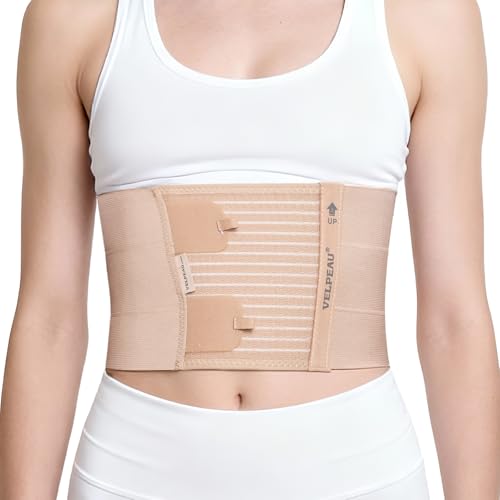
The standard 6.7-inch Velpeau brace shares the same V-shaped contour, fish-silk mesh strap, and anti-slip silicone strips as the wide version but in a narrower format that fits underbust measurements from 27.5 to 35.5 inches. This narrower width is the right choice for a single rib fracture in the mid-rib zone where you do not need coverage extending to the sternum or the lower costal arch.
The thinner profile makes it slightly easier to wear under a button-down shirt compared to the 9.8-inch version, and the breathability is identical since both use the same sponge-free, latex-free material stack. Users with costochondritis or a single cracked rib report that the narrow brace provides enough restriction of rib expansion to reduce pain during coughing and sneezing without limiting deep breathing capacity.
The same Velcro quality concern appears in the customer feedback, and because the brace is narrower, there is less strap surface area for the hook-and-loop to grab. If your underbust measurement is close to the upper limit of 35.5 inches, the wide version is a safer bet to ensure full overlap of the fastening zone. The standard version is a solid entry-level pick, but the wide version offers better value for most users.
Why it’s great
- Narrow profile fits discreetly under clothing
- V-shape contour provides even mid-rib compression
- Breathable, sponge-free materials prevent heat buildup
- Silicone grip strips keep the brace from slipping upward
Good to know
- Too narrow for full sternum or lower rib coverage
- Velcro strap durability is inconsistent across units
- May not provide enough immobilization for multiple fractures
7. AVESTON Back Support Lower Back Brace

The AVESTON brace uses six wide reinforced plastic bones and a patented thin fabric that is five times stronger than neoprene without the bulk. The design is specifically for lumbar support from T12 to S1, but its rigid spinal panel can offload the thoracic spine indirectly by keeping the entire back in a neutral position. For a rib fracture patient who also suffers from muscle spasms in the erector spinae, this brace reduces the spinal torque that can aggravate the intercostal space.
The medium fits a belly circumference of 32 to 37 inches, and the closure system uses strong Velcro with a three-layer elastic side panel for adjustable compression. Users report that the brace is comfortable enough for daily wear during light activity, and the rigid bones are lighter than metal stays, making it safe for airport security and MRI environments. The founder of the company provides personalized fitting support, which is a level of customer service that is rare at this price point.
The brace is not a rib immobilizer. It does not have the V-shaped contour or the wide vertical coverage needed to stabilize the costal arch. If you use it for a rib fracture, it will support your lower spine and improve your posture, but it will not directly compress the rib cage. It is a complementary tool for the recovery phase when your ribs are no longer acutely painful but your back is compensating for weeks of guarded movement.
Why it’s great
- Six reinforced plastic bones provide rigid spinal immobilization
- Patented thin fabric is stronger and more breathable than neoprene
- Founder provides personalized fitting support
- 1-year manufacturer warranty with replacement guarantee
Good to know
- Primarily a lumbar brace, not a rib cage immobilizer
- Does not have a V-shaped contour for costal arch coverage
- Side straps must be unstrapped before wrapping, which is not intuitive
FAQ
How tight should a rib brace be for a fracture?
Can I sleep in a brace for broken ribs?
How long should I wear a rib brace each day?
Final Thoughts: The Verdict
For most users, the brace for broken ribs winner is the Velpeau Wide 9.8-Inch (Reg) because its V-shaped contour and sponge-free materials provide the best balance of full-rib coverage and breathable comfort for the widest range of fracture locations. If you need a larger fit, grab the Velpeau Wide 9.8-Inch (Large). And for an entry-level option that targets mid-rib fractures with a slimmer profile, nothing beats the Velpeau Standard 6.7-Inch.