Feeding your infant is the first major decision on nutrition, and for many parents, the choice to go organic comes down to avoiding corn syrup, palm oil, and synthetic pesticides while still delivering complete brain and bone support. The problem is that organic baby formula shelf space has exploded, and the label “organic” alone does not tell you whether a formula uses A2 milk for easier digestion, whether it includes prebiotics like 2’-FL HMO to mimic breast milk, or whether the protein content is gentle or likely to cause gas. Each canister represents a multi-week commitment, so the wrong pick means either a fussy baby or a sink full of wasted powder.
I’m Emma — the founder and writer behind Baby Bangs. I have spent years analyzing infant nutrition labels, combing through FDA compliance standards, and cross-referencing ingredient decks to determine which organic formulas actually match their marketing claims.
After reviewing the key specs, ingredient quality, and real parent feedback across five leading options, I have compiled the definitive guide to what matters most when choosing the best organic baby formula for your infant’s first year.
How To Choose The Best Organic Baby Formula
The organic label alone is not enough — you also need to match the protein base, the carbohydrate source, and the fat blend to your baby’s digestive maturity. Here are the three specs that separate a good organic formula from a problematic one.
Protein Base: A2 vs. Standard A1 Milk
Most conventional cow’s milk contains a mix of A1 and A2 beta-casein proteins. The A1 variant breaks down into BCM-7 during digestion, which can trigger inflammation and gas in sensitive infants. A2-only formulas source milk from cows that naturally produce only the A2 protein, creating a profile closer to the protein structure found in human breast milk. If your baby shows signs of reflux, excessive gas, or mucus in stools, an A2-based organic formula is the first swap to try before switching to a hypoallergenic option.
Carbohydrate Source: Lactose vs. Reduced Lactose
Lactose is the primary carbohydrate in breast milk and the gold standard for infant nutrition. Some formulas marketed as “gentle” or for “fussiness and gas” replace a portion of lactose with maltodextrin or corn syrup solids to lower the lactose load by twenty to thirty percent. While this can ease digestion for babies with transient lactase immaturity, it also reduces the prebiotic function of lactose. For most full-term infants, full-lactose organic formulas are preferable. Reserve reduced-lactose blends for babies who genuinely show discomfort after lactose-heavy feeds.
Fat Blend: Palm Olein-Free Oils
Palm olein oil is a common ingredient in many budget formulas because it improves the powder’s texture and shelf stability, but it binds with calcium in the infant’s gut, leading to harder stools and reduced calcium absorption. Premium organic formulas often use a proprietary blend of coconut, safflower, soy, and sunflower oils instead. Check the ingredients panel specifically for the absence of palm olein — this single swap is the most reliable way to keep your baby’s bowel movements soft and regular.
Quick Comparison
On smaller screens, swipe sideways to see the full table.
| Model | Category | Best For | Key Spec | Amazon |
|---|---|---|---|---|
| Baby’s Only A2 Organic Milk | A2 Milk Powder | Gentle digestion without corn syrup | 21 oz powder; no palm oil | Amazon |
| Mama Bear Advantage Premium | Dual HMO Powder | Budget-friendly immune support | 34 oz powder; 2’-FL + LNnT HMOs | Amazon |
| Happy Baby Organics Stage 1 | Probiotic + Prebiotic | Reflux and regular poops | 22.9 oz powder; USDA + EU organic | Amazon |
| Mama Bear Gentle Premium | Reduced Lactose | Fussiness, gas, and crying | 33.2 oz powder; partially hydrolyzed whey | Amazon |
| Similac Organic Ready to Feed | Liquid RTF | Constipation prevention and travel | 6-pack 32 oz bottles; no mixing | Amazon |
In‑Depth Reviews
1. Baby’s Only A2 Organic Milk Infant Formula

Baby’s Only uses 100% A2 beta-casein protein sourced from cows that naturally skip the A1 variant, making this formula structurally closer to the protein profile of breast milk than standard organic powders. Parents report zero gas issues and normal bowel movements even in infants who reacted poorly to A1-dominant formulas. The proprietary fat blend uses organic oils rather than palm olein, so calcium absorption stays high and stools remain soft.
The 21-ounce canister is smaller than some competitors, but the formula is designed for newborns through twelve months as a complete nutrition source with added iron, vitamin E, and vitamin D. It contains no corn syrup, no artificial sweeteners, and no growth hormones. The Ohio-based facility tests each batch rigorously, a detail that matters given the national formula shortage history.
One trade-off is the lack of added prebiotics or probiotics — if your baby was delivered via cesarean section, you may need to supplement with an external probiotic like the Smidge brand, as several reviewers do. The powder mixes well with minimal clumping when shaken with 160–170°F water, and the scoop design nests cleanly inside the lid.
Why it’s great
- A2 protein base is exceptionally gentle on sensitive bellies
- No corn syrup, palm oil, or GMOs
- Manufactured in small batches in Ohio with rigorous testing
Good to know
- No added probiotics or HMO prebiotics
- 21-ounce can is smaller than some budget options
2. Mama Bear Advantage Premium Baby Formula Powder
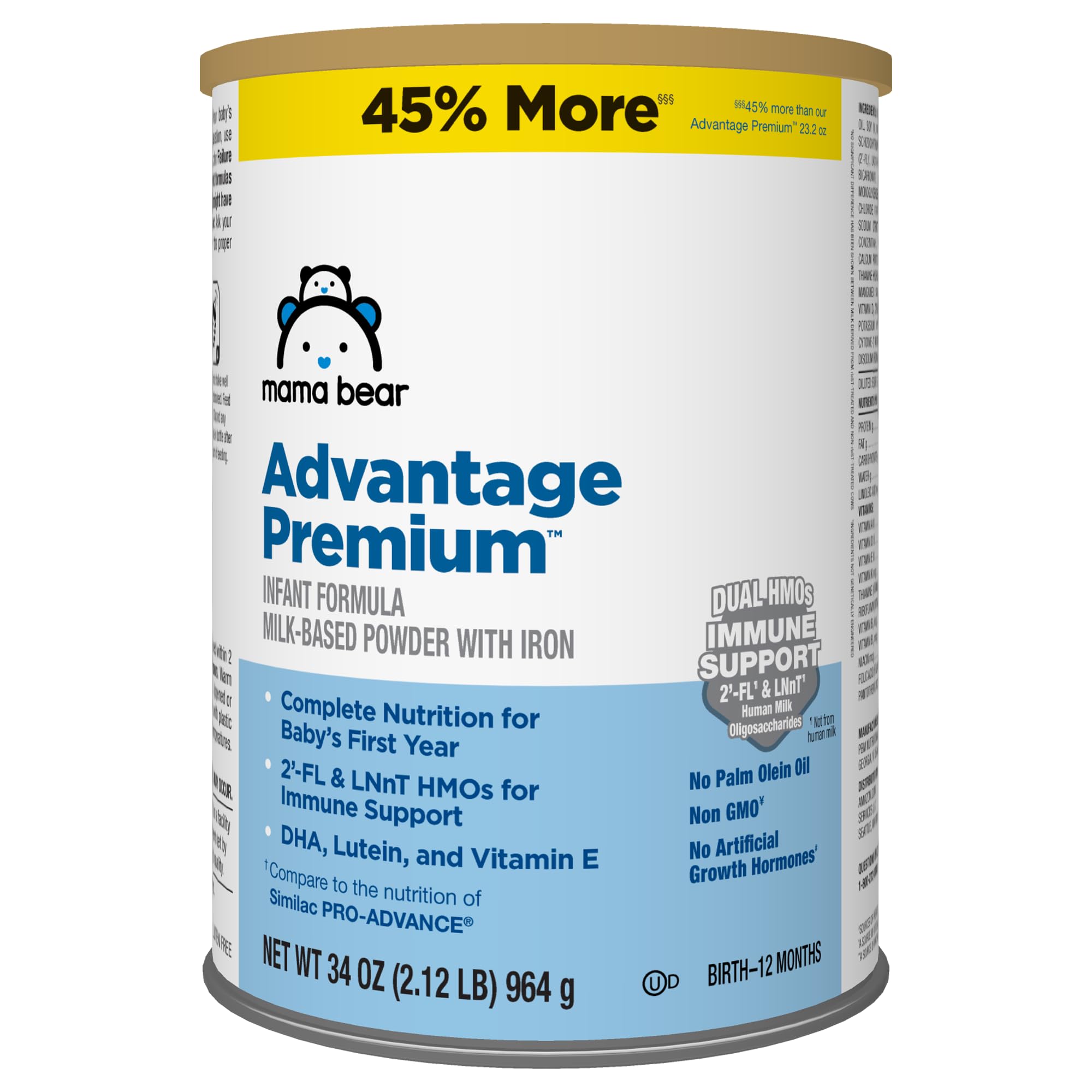
Mama Bear Advantage Premium delivers dual HMOs — 2’-FL and LNnT — at a price point well below Similac Pro-Advance, making it the most cost-effective way to give your infant immune-supporting prebiotics found in breast milk. The 34-ounce canister provides more powder per dollar than almost any other organic-adjacent option on the market, and the formula includes DHA, lutein, vitamin E, and choline for brain and eye development.
This formula is non-GMO, free of artificial growth hormones, and notably free of palm olein oil — a critical spec for parents trying to avoid hard stools. Customer feedback consistently reports seamless transitions from name-brand formulas, with babies accepting the taste within one to two feeds and no increase in gassiness or spit-up. The scoop fits into a built-in holder on the can lid, which keeps preparation fast and hygienic.
The formula uses full lactose rather than reduced lactose, so it behaves closer to breast milk’s carbohydrate profile than “gentle” blends. It is also SNAP eligible, making it a practical staple for families on a tight budget. The main downside is that it lacks the A2 protein base — if your baby is already showing sensitivity to A1 proteins, this may not resolve the issue as well as an A2-only formula.
Why it’s great
- Dual HMOs (2’-FL + LNnT) for immune and digestive support
- 34 ounces per can — excellent per-feed economy
- No palm olein oil; full lactose base
Good to know
- Standard A1/A2 milk blend — not ideal for A2-sensitive babies
- Occasionally out of stock due to popularity
3. Happy Baby Organics Stage 1 A2 Infant Formula

Happy Baby Organics is the only USDA-certified organic formula that also holds EU organic certification, and it is the only major brand that combines both A2 milk and a clinically studied probiotic-prebiotic blend in a single can. B. lactis probiotics plus a prebiotic mix at levels “closest to breast milk among organic brands” according to the manufacturer, which translates to softer, more regular poops and reduced spit-up volume — a pattern confirmed by parents who switched after hypoallergenic formulas worsened reflux.
The formula tailors key nutrient levels as the baby ages, offering Stage 1 (0–12 months) and older stages, which is unusual among organic products that typically standardize across the full first year. It includes DHA at levels matching those found in breast milk, and it is Clean Label Project Certified, meaning it is tested for heavy metals and environmental contaminants. The taste is reportedly less sweet than conventional formulas, and many babies who rejected commercial brands transitioned immediately to this one.
Availability is the primary headache — the listing has been removed from Amazon intermittently, and it is more reliably found at Kroger, Target, or through the manufacturer’s direct auto-ship program. The 22.9-ounce can is smaller than the mid-range options, which means more frequent repurchases for families going through multiple cans per week.
Why it’s great
- Only organic formula combining A2 milk with added probiotics and prebiotics
- Clinically shown to reduce spit-up and improve stool consistency
- Clean Label Project Certified — heavy metal testing included
Good to know
- Inconsistent Amazon stock; best ordered directly from brand
- Smaller can size means faster repurchase cycle
4. Mama Bear Gentle Premium Baby Formula Powder

Mama Bear Gentle is engineered specifically for babies who show signs of lactose intolerance or general digestive distress — it uses partially hydrolyzed whey protein and reduces the lactose content to twenty percent of what is in standard full-lactose formulas. This combination reduces the osmotic load on the gut, which directly decreases gas, crying spells, and the kind of fussiness that keeps parents up all night wondering what went wrong at the last feed.
The formula includes DHA for brain development and 2’-FL HMO for immune support, and it is non-GMO with no artificial growth hormones. Parents report that switching from Enfamil Neuropro Gentlease is almost seamless — babies accept the taste immediately and show reduced bloating within two to three days. The 33.2-ounce can is generous and includes a convenient scoop rest built into the lid, which keeps the preparation process clean.
The trade-off for the reduced lactose is a slightly higher reliance on maltodextrin as a carbohydrate source, which some parents prefer to avoid. Additionally, the formula lacks probiotics — so if your baby was delivered by C-section and needs gut flora support, you may want to pair this with an infant probiotic supplement. For full-term vaginally delivered babies, however, this is one of the most effective “switch-and-fix” options available.
Why it’s great
- Partially hydrolyzed whey plus reduced lactose for rapid relief from gas and crying
- 33.2-ounce can provides good volume per purchase
- Dual HMO immune support despite the gentle protein profile
Good to know
- Uses maltodextrin as filler carbohydrate instead of full lactose
- No added probiotics — may need separate probiotic for C-section babies
5. Similac Organic Infant Formula Ready to Feed
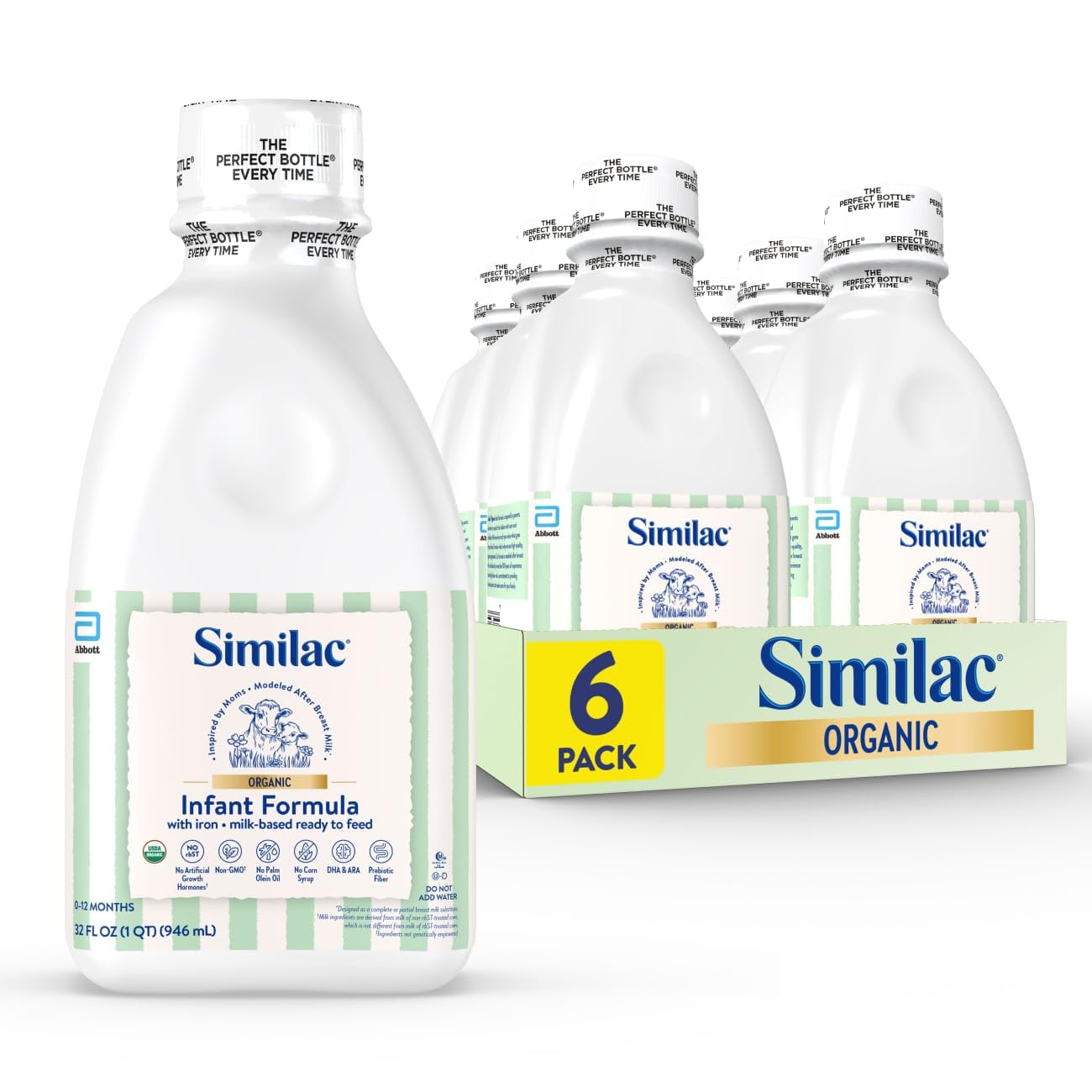
Similac Organic in ready-to-feed liquid form solves two specific problems that powder cannot: it eliminates constipation caused by the powder processing method, and it requires zero mixing, which is a lifesaver for late-night feeds and travel. Many parents who saw their babies struggle with hard stools on powder formula switched to this liquid and saw immediate relief within 24 hours, confirming that the liquid preparation introduces less air and offers a different processing profile that is gentler on immature digestive systems.
Each 32-ounce bottle is USDA-certified organic, non-GMO, and free of palm olein oil, artificial growth hormones, and corn syrup. The formula includes a blend of DHA, lutein, and vitamin E modeled after the nutrient profile of breast milk. Similac is the number one infant formula brand fed in hospitals, so continuity of care is simple if your baby started on Similac in the nursery. The six-pack is heavy (over 14 pounds total shipping weight), so bulk shipping is practical but not particularly lightweight.
The most frustrating limitation is frequent out-of-stock status — the liquid RTF format is popular enough that it sells out quickly, and supply chain gaps leave parents scrambling. Once opened, a bottle must be used within 48 hours, which can lead to waste if your baby is not finishing the full bottle within that window. This is a premium convenience product best used as a supplement to powder feeding or as a dedicated travel/travel-disruption solution rather than an exclusive primary source.
Why it’s great
- Liquid format prevents the constipation often seen with powder formulas
- Zero prep — open and pour for night feeds and travel
- USDA organic with no palm olein oil or corn syrup
Good to know
- Frequently out of stock — requires backup plan
- 48-hour fridge window after opening can cause waste
- Heavy shipping weight; premium cost per ounce
FAQ
Is A2 milk formula worth the higher cost for a baby without known digestive issues?
Why does my baby have constipation on powder organic formula but not on ready-to-feed liquid?
Do I need to add vitamin D drops if my formula already includes vitamin D?
Final Thoughts: The Verdict
For most parents, the best organic baby formula winner is the Baby’s Only A2 Organic Milk because it delivers the digestive benefits of A2 protein without corn syrup or palm oil, and it is produced in small batches in the US with high quality control standards. If you want immune-supporting HMOs at a budget-friendly price, grab the Mama Bear Advantage Premium. And for babies with confirmed reflux or C-section delivery who need both probiotics and A2 protein, nothing beats the Happy Baby Organics Stage 1 despite its availability quirks.