Between six and twelve months, your baby shifts from passive observation to active exploration — rolling, sitting, crawling, and grabbing everything in sight. The right toys during this window do more than entertain; they wire the brain for cause-and-effect reasoning, fine motor control, and spatial awareness.
I’m Emma — the founder and writer behind Baby Bangs. I’ve spent years dissecting developmental toy specs, comparing material safety certifications, and matching play patterns to pediatric milestones so parents don’t have to guess.
This guide breaks down five carefully vetted options to help you find the perfect baby toys 6-12 months that support your child’s growth without overwhelming your space or budget.
How To Choose The Best Baby Toys 6-12 Months
Not every colorful, crinkly, or musical item belongs in your cart. The toys that actually move the needle for a 6-to-12-month-old share three non-negotiable traits: they trigger a specific developmental skill, they survive aggressive mouthing, and they grow with your baby rather than collecting dust after two weeks.
Prioritize Cause-and-Effect Over Passive Entertainment
A toy that responds — a ball that drops through a hole, a button that makes an animal pop up, a roller that glitters when pushed — teaches your baby that their actions produce outcomes. This is the foundation of logical thinking. Toys with lights and music are fine, but the best ones only activate when the baby does something.
Check Material Safety Beyond the Label
Babies this age explore almost exclusively with their mouths. Look for food-grade silicone, BPA-free ABS plastic, and solid untreated wood. “Non-toxic” printed on the box means nothing without third-party testing (CPSIA, ASTM F963). Smooth edges matter more than any aesthetic detail — a sharp corner on a “learning toy” is a hard pass.
Match the Toy to the Mobility Stage
A 6-month-old who can barely sit needs different stimulation than a 10-month-old pulling up to stand. Stationary toys (stacking rings, shape sorters, pull strings) work for early sitters. Rolling toys, push-along toys, and walkers suit the crawler-to-cruiser transition. One toy that spans both stages saves you money and shelf space.
Quick Comparison
On smaller screens, swipe sideways to see the full table.
| Model | Category | Best For | Key Spec | Amazon |
|---|---|---|---|---|
| Plunack 6-in-1 Set | Premium Set | All-in-one sensory variety | 27 pieces, food-grade silicone | Amazon |
| Duchong Pop Up | Cause & Effect | Interactive discovery play | 3 modes, animal sounds & lights | Amazon |
| Qirptey 4-in-1 Set | Sensory Bundle | Teething + stacking + sorting | Silicone & ABS, 4 play modes | Amazon |
| Busy edition Object Permanence | Montessori | Cognitive & fine motor focus | Solid wood, 3 balls, 1.77 in dia. | Amazon |
| Thremhoo Inflatable Roller | Motion Toy | Crawling motivation | 16 in long, glow sequin, rattles | Amazon |
In‑Depth Reviews
1. Plunack 6-in-1 Montessori Baby Toys Set
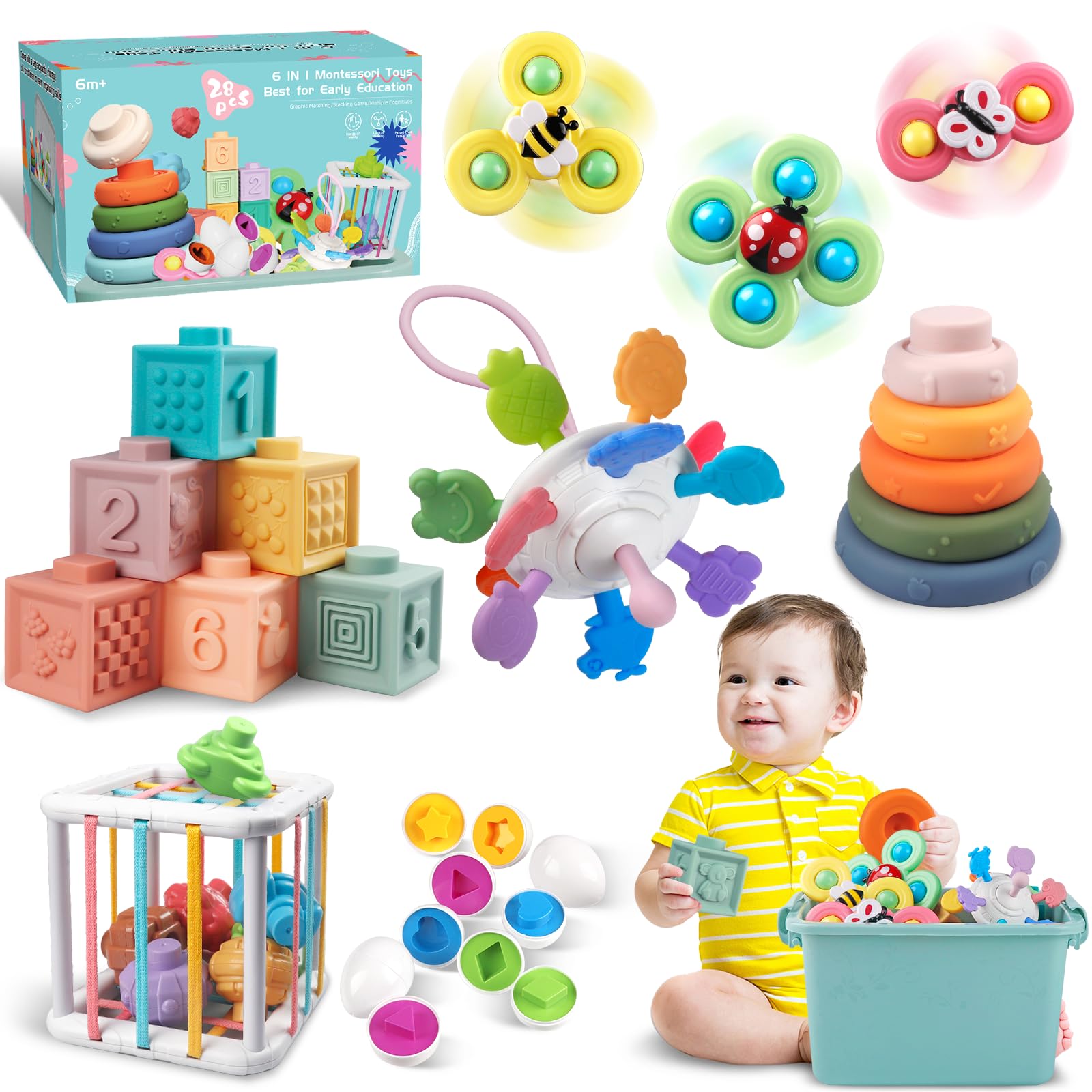
This 6-in-1 set is the closest thing to a complete developmental toolkit you can buy in one box. You get matching eggs, stacking rings, soft blocks, suction cup spinners, a pull-string sensory toy, and a storage bin that doubles as a sensory exploration container — all crafted from food-grade silicone and BPA-free ABS plastic that’s been third-party tested to ASTM F963 safety standards. The silicone withstands 200°C and is dishwasher-safe, a non-negotiable for any toy that will inevitably land in a slobbery mouth.
What makes this set different from smaller bundles is how each piece targets a specific milestone. The stacking rings teach size sequencing. The textured pull strings build pincer grasp — pediatric OTs recommend this exact motion starting at six months. The suction cup spinners stick to highchair trays and bathtub walls, keeping a mobile baby engaged during meals. With 27 total pieces, you get variety without the clutter of six separate boxes.
One review noted the teething ball has flat ends that some babies dislike, but the rest of the set gets played with daily. The included storage bin keeps everything organized for travel or trips to grandparents’ house — a small detail that saves significant frustration.
Why it’s great
- 27-piece set covers stacking, sorting, pulling, and spinning
- Food-grade silicone is dishwasher-safe and teething-friendly
- Certified to U.S. CPSC and ASTM F963 safety standards
Good to know
- Teething ball has flat ends some babies ignore
- Storage bin is functional but not toy-grade durable
2. Duchong Pop Up Toys for 1 Year Old

Pop-up toys are the gold standard for teaching cause and effect, and this Duchong model delivers the concept with three distinct modes. In animal sound mode, each pop-up plays the relevant animal name and sound. Game mode requires following lights to find hidden animals. Quiet mode lets the mechanism work without batteries — useful when you want engagement without electronic noise. The levers, switches, and buttons require different hand movements, so your baby works on varied fine motor patterns rather than repeating the same press.
The ABS plastic construction is smooth and burr-free, and it holds up to the throws and drops that come with a one-year-old’s play style. One reviewer reported their 9-month-old figured it out quickly and stayed engaged. Another noted a year later the toy was still a daily favorite. The sound volume is calibrated to hold interest without grating on adult ears — a subtle but critical detail for sanity.
The flaps can get stuck if a baby pushes too hard, as a few customers observed, and the toy requires batteries (not included). It’s also best suited for babies who can sit independently and reach forward — earlier sitters may need help at first.
Why it’s great
- Three modes keep the toy from getting boring after week one
- Animal sounds and lights reward independent exploration
- Durable ABS plastic survives drops and rough handling
Good to know
- Batteries not included
- Over-enthusiastic pushing can jam flaps temporarily
3. Qirptey 4-in-1 Montessori Baby Toys Set
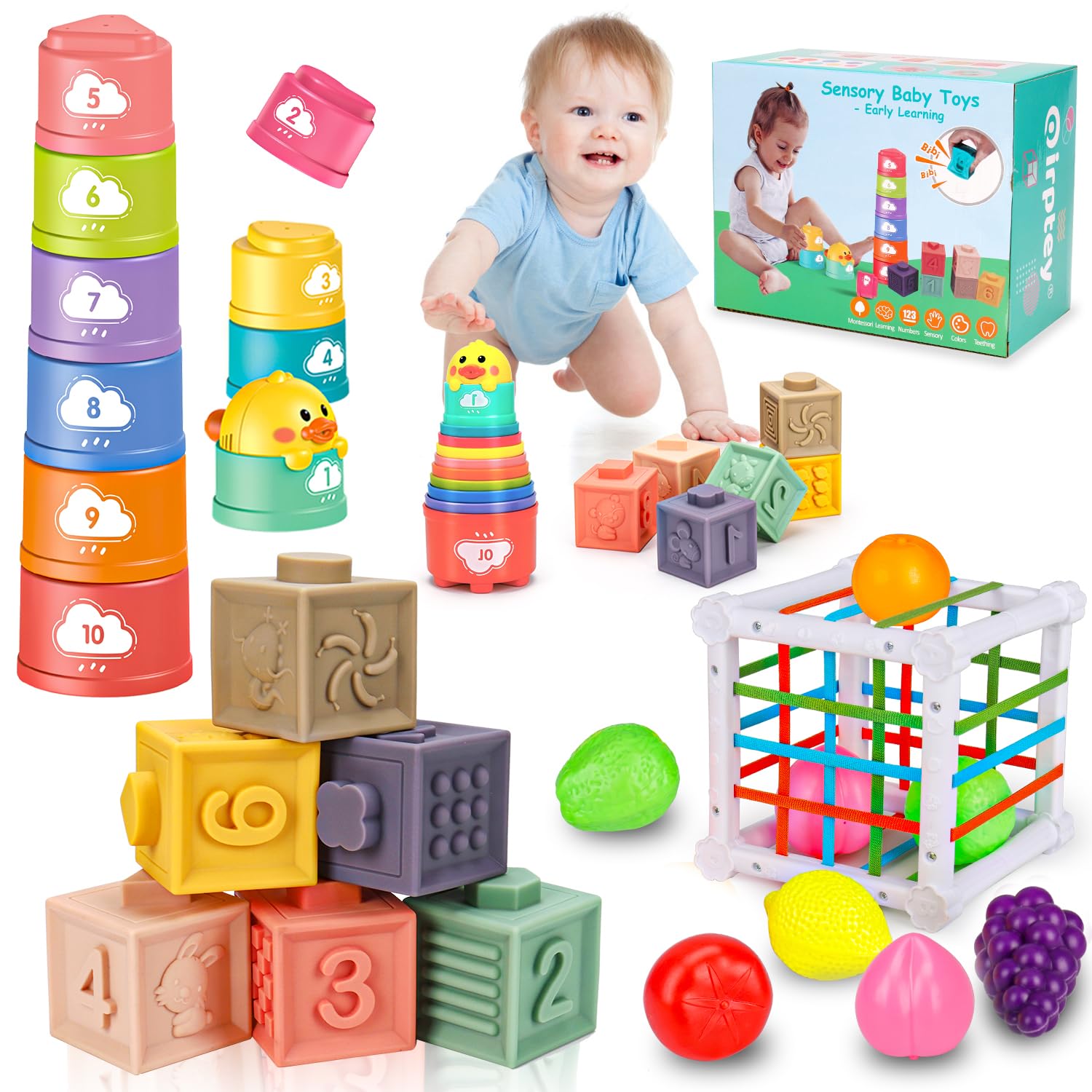
This bundle combines stacking blocks and cups, a shape sorter, and teething toys into one kit — four play modes that target color recognition, spatial awareness, and fine motor development. The stacking cups have embossed animals, numbers, and textures on every surface, turning bath time into a matching game. The shape sorter pieces are designed as fruits (guava, orange, lemon, grape), which adds a naming-and-labeling layer as your baby grows into toddlerhood.
The materials mix premium food-grade silicone (for the teething pieces and blocks) with high-quality ABS plastic (for the shape sorter bin and cups). This hybrid approach works well: the soft silicone soothes sore gums without splintering, while the harder ABS cups stack reliably without collapsing. The pieces are sized appropriately for 6-month-old hands but engaging enough for 18-month-olds, extending the usable lifespan well beyond the narrow 6-12 window.
A few buyers noted the box holding the shape sorter pieces is less durable than the toys themselves — it can crack if handled roughly by an older toddler. The set also runs smaller than some expect from the photos, so check dimensions if you prefer larger blocks.
Why it’s great
- Dual-material design (silicone + ABS) covers teething and stacking
- Fruit-shaped sorter pieces add vocabulary-building potential
- Embossed textures and numbers aid early sensory learning
Good to know
- Storage box is less durable than the toys themselves
- Pieces run slightly smaller than standard stacking cup sets
4. Busy edition Montessori Object Permanence Box
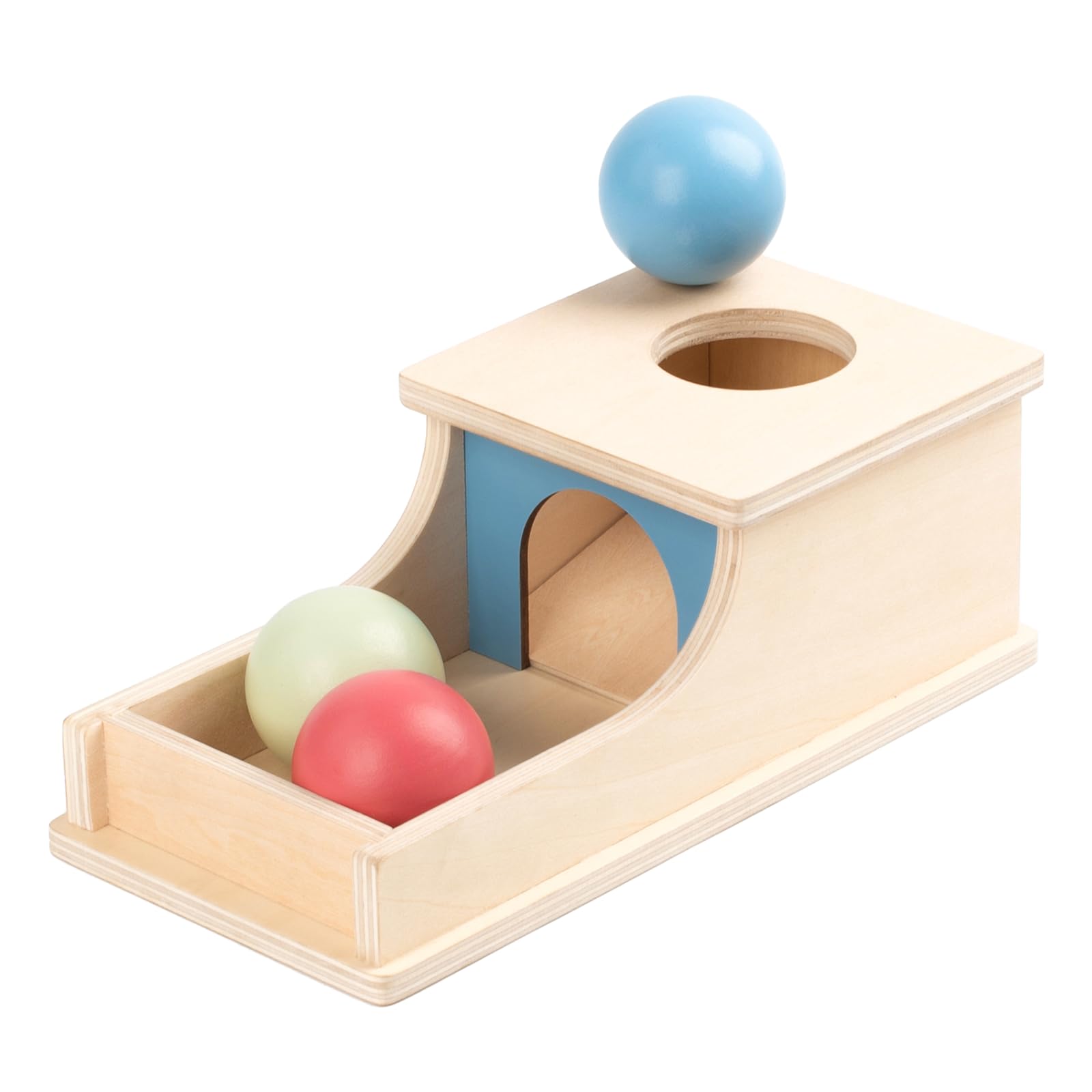
This is a pure Montessori tool — no batteries, no sounds, no colors competing for attention. The concept is simple: a wooden tray with a hole, three wooden balls, and one fundamental lesson. When your baby drops the ball into the hole, it rolls out the front, demonstrating that objects continue to exist even when out of sight. This “object permanence” is the cognitive leap that happens between six and twelve months, and this box nails it with zero distractions.
The wood is smooth and lightweight. The balls measure 1.77 inches in diameter — large enough to pose no choking risk, small enough for tiny hands to grasp. Multiple reviewers confirmed their 6-to-9-month-olds learned the concept quickly and began chasing the balls across the floor, turning the activity into a crawling game. The box sits flat and stable, so early sitters don’t knock it over in frustration.
Clean with soap and water only — alcohol-based wipes strip the paint finish from the balls. A small limitation for such a focused toy, but easy to manage with a damp cloth. If your baby is in the sensitive-stage where mouthing is the primary mode of exploration, this wooden toy is a safer alternative to plastic alternatives with smaller parts.
Why it’s great
- Teaches object permanence with one repeatable action
- Smooth solid wood, no sharp edges or loose parts
- Promotes crawling as babies chase the rolling balls
Good to know
- Paint finish on balls peels if cleaned with alcohol wipes
- Minimalist design may not hold attention for long sessions
5. Thremhoo Crawling & Walking Baby Toy Roller
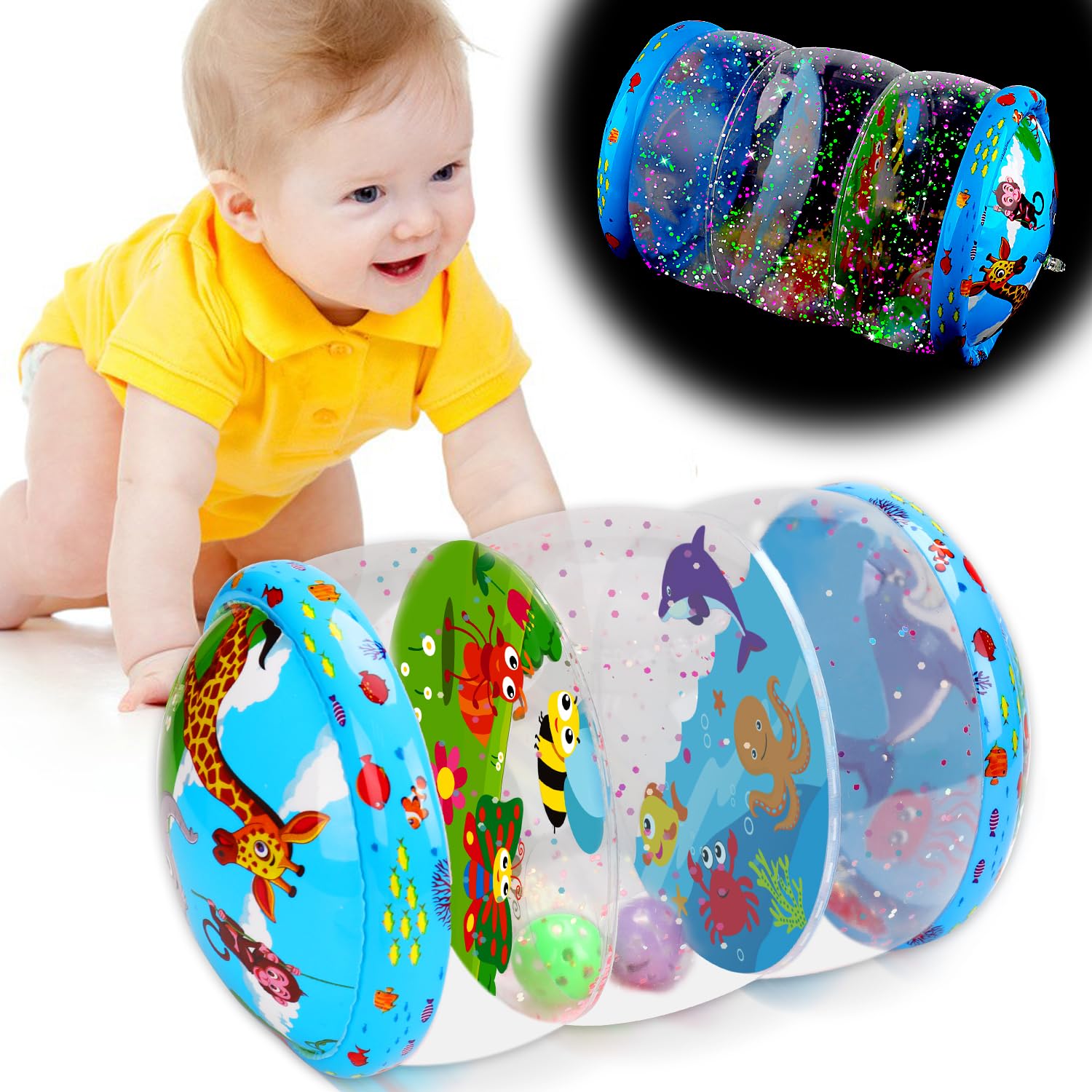
If your baby is a reluctant crawler, this inflatable roller is designed to change that. It measures 16 inches long and contains two rattling balls and hundreds of glow-in-the-dark sequins that shift and shimmer as the roller moves. The visual and auditory feedback triggers the “chase instinct” — babies naturally want to follow the rolling sound and movement, which builds the cross-body coordination needed for efficient crawling.
The plastic is thick enough to hold air for weeks without deflating, and the inflatable design makes it lightweight and fully foldable for travel. The glow effect is real but subtle — it requires direct light exposure before it shines in darkness, so do not expect a bright night-time beacon. The animal prints and colorful panels provide visual contrast that supports early pattern recognition.
A few parents noted their babies lost interest after mastering crawling, so this is a targeted tool rather than a long-term toy. The glow is not dark-activated to the degree some ads suggest, and it is smaller than many expect. However, as a dedicated crawling motivator during that 6-to-10-month window, it works consistently.
Why it’s great
- Rattling balls and sequins naturally trigger crawling pursuit
- Lightweight and foldable for diaper bag travel
- Durable plastic holds air well over repeated use
Good to know
- Glow is subtle, not bright; needs prior light exposure
- Smaller than expected — check dimensions before buying
FAQ
What is object permanence and why does it matter for baby toys?
How many toys does a 9-month-old actually need at once?
Should I avoid plastic toys for babies under 12 months?
Can a baby play with too many light-up or musical toys?
What age do babies start stacking blocks and rings?
Final Thoughts: The Verdict
For most users, the baby toys 6-12 months winner is the Plunack 6-in-1 Montessori Set because it packs 27 pieces of food-grade silicone and ABS plastic into one box that covers stacking, sorting, pulling, spinning, and teething. If you want a focused cause-and-effect toy, grab the Duchong Pop Up. And for a pure Montessori object permanence experience, nothing beats the simplicity of the Busy edition Wooden Box.