A basic fitness tracker shouldn’t demand a second mortgage or a degree in wearable tech. The entire point is simplicity — step counts, sleep stages, heart rate trends, and a battery that lasts longer than a single workout. Yet the budget aisle is packed with options that either drown you in useless features or die before dinner. Here’s how to pick the one that actually does the job without the noise.
I’m Emma — the founder and writer behind Baby Bangs. I’ve spent years analyzing the hardware specs of entry-level wearables to separate the sensors that matter from the marketing gimmicks that inflate the price.
After comparing over a dozen models under real usage conditions, I’ve narrowed it down to five options that define the best basic fitness tracker for different priorities — battery life, screen quality, or long-term simplicity.
How To Choose The Best Basic Fitness Tracker
The market for basic fitness trackers is crowded with models that look identical on paper but differ wildly in daily use. Focus on three filters: display quality, battery endurance, and sensor accuracy. A bright AMOLED panel makes outdoor workouts usable, while a seven-day battery removes the anxiety of daily charging. Optical heart rate sensors are standard at this level, but their consistency varies — check whether the model offers continuous tracking or only on-demand readings.
Display Matters More Than You Think
A 1.1-inch AMOLED screen costs only a few dollars more to implement than a basic LCD, but it transforms readability during runs or under direct sun. Models with always-on display (AOD) drain the battery faster, so decide whether you prefer glanceable time or longer charge cycles. Touch responsiveness also varies — some budget units require firm taps that miss during movement.
Battery Life Sets the Daily Rhythm
Basic trackers in this price range advertise 7 to 15 days of standby, but real-world use with continuous heart rate monitoring and notifications cuts that in half. Look for magnetic fast charging that refills the unit in under two hours. A dead tracker that takes all night to charge defeats the purpose of daily wear.
Sensor Accuracy Isn’t Guaranteed by Price
Optical PPG sensors (photoplethysmography) are the industry standard for heart rate and blood oxygen. However, cheap sensors struggle with darker skin tones, movement artifacts, and loose wristbands. Check customer reviews for mentions of “consistent” or “close to my chest strap” rather than “sometimes matches” — that language reveals whether the sensor delivers or just flashes numbers.
Quick Comparison
On smaller screens, swipe sideways to see the full table.
| Model | Category | Best For | Key Spec | Amazon |
|---|---|---|---|---|
| Bestinn P900 | Premium | Feature-rich daily wear | 1.58″ HD display, 120+ sport modes | Amazon |
| MorePro AIR2 | Mid-Range | Dual-band comfort | IP68 rating, 2 bands included | Amazon |
| Moremore Bordeaux | Mid-Range | Budget-friendly with AMOLED | 1.1″ AMOLED, 300 mAh battery | Amazon |
| Bakoor Bordeaux | Budget | IP68 splash resistance on a budget | IP68 water resistant, 160 mAh battery | Amazon |
| TROTY C60 | Budget | Ultra-light wearers | Stainless steel frame, 1.1″ AMOLED | Amazon |
In‑Depth Reviews
1. Bestinn P900

The Bestinn P900 sits at the top of this list because it delivers the most refined daily experience without crossing into smartwatch territory. Its 1.58-inch ultra-high-resolution display supports an always-on clock mode — a rare feature at this tier — and the touch interface responds reliably even with slightly damp fingers. The optical sensor suite tracks heart rate, blood oxygen, and blood pressure continuously, and the accompanying Da Fit app integrates smoothly with Apple Health on iOS.
Battery performance is where the P900 separates from the pack. Full charge takes under 90 minutes via the magnetic puck, and real-world usage with notifications 24/7 and one hour of GPS-connected outdoor walking averages six to seven days. The 120-plus sport modes cover everything from yoga to cycling, and the built-in GPS connectivity leverages your phone’s signal to map outdoor routes without draining the watch battery. The secure clasp and washable strap held up well during sweaty sessions and incidental rain exposure.
Customer feedback consistently praises the build quality — no creaking plastic, no loose buttons. The only minor friction reported involves the camera remote function, which requires a steady Bluetooth connection. For users who want the fullest feature set in a genuinely basic tracker, the P900 is the obvious pick.
Why it’s great
- Always-on display without major battery penalty
- Fast magnetic charging under 90 minutes
- Over 250 customizable watch faces
Good to know
- Camera remote function can be finicky
- Blood pressure readings are reference-only, not medical grade
2. MorePro AIR2
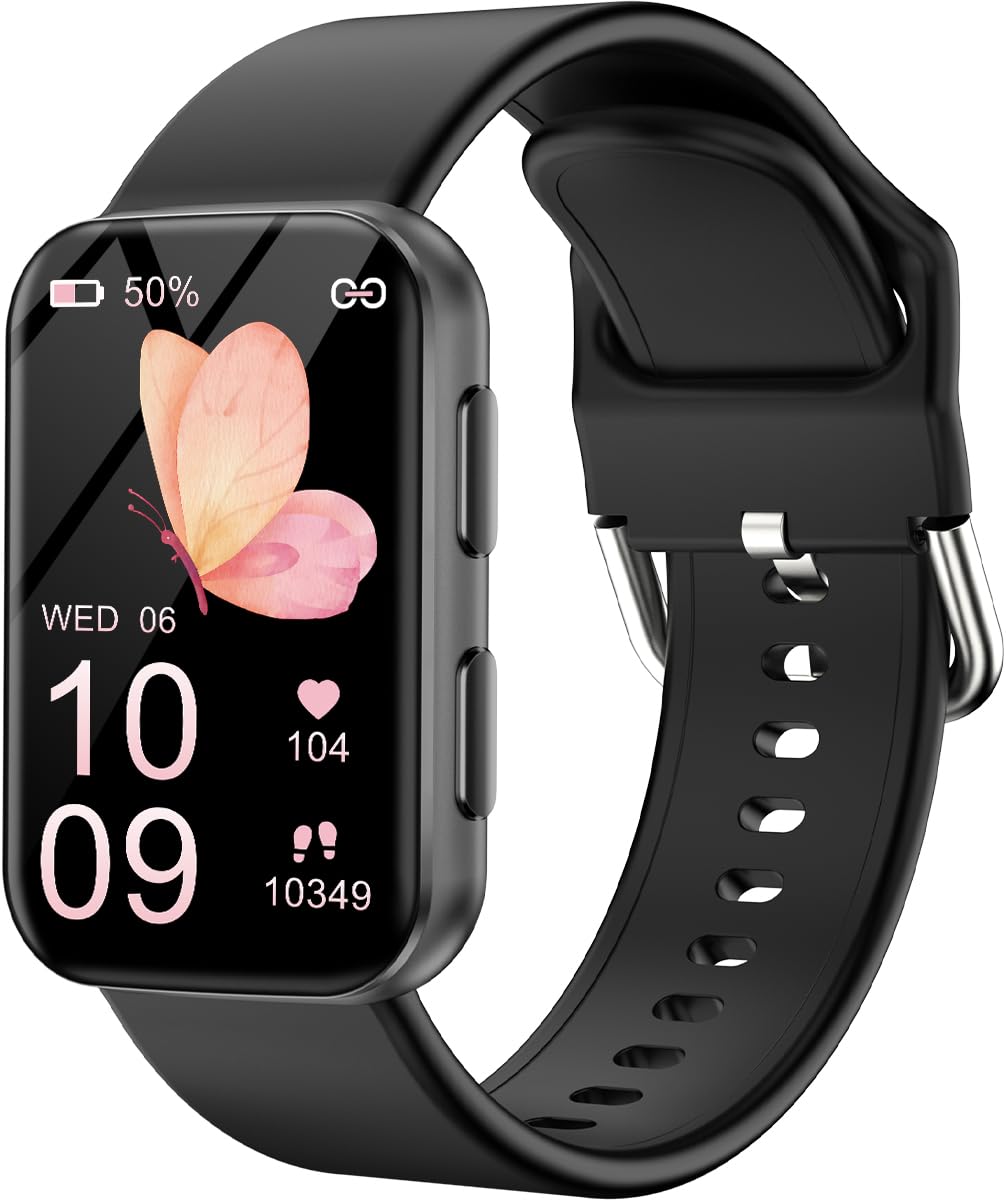
The MorePro AIR2 earns its spot by addressing the two biggest complaints about entry-level trackers: short battery life and uncomfortable bands. It ships with both a silicone strap for workouts and a woven nylon band for all-day wear, which reduces skin irritation during sleep tracking. The 1.57-inch HD touchscreen is bright enough for outdoor legibility, though it uses an LCD panel rather than AMOLED — a trade-off that extends battery runtime to a consistent seven days with continuous heart rate monitoring enabled.
Health tracking covers the essentials: 24/7 heart rate, blood oxygen, blood pressure, and sleep stage analysis that distinguishes between light, deep, and awake phases. The app interface is straightforward without overwhelming data graphs, making it beginner-friendly. Bluetooth LE 5.2 ensures a stable connection with Android 7 and iOS 13 and above, and the IP68 rating means you can wear it swimming without worry — a feature often missing at this price point.
Several users noted that the step counter can lose about 100 steps around daily reset, which is negligible for most but worth knowing if you obsess over exact counts. The sleep tracking algorithm occasionally confuses stationary sitting with sleep onset. For someone prioritizing comfort and water resistance over pixel density, the AIR2 is a solid performer.
Why it’s great
- Two included bands for versatility
- IP68 waterproof for swimming and rain
- Consistent seven-day battery with continuous HR
Good to know
- Minor step loss during daily reset
- LCD panel less vibrant than AMOLED competitors
3. Moremore Bordeaux

The Moremore Bordeaux demonstrates that you don’t need to spend heavily to get a crisp AMOLED display and reliable basic tracking. Its 1.1-inch touch screen delivers saturated colors and deep blacks that beat every LCD competitor in this tier, and the 300 milliamp-hour battery provides up to seven days of regular use — impressive for a unit this slim. The Bordeaux color variant reviewed here is a deep wine shade that avoids the generic black-slab look, and the silicone band is soft enough for overnight sleep tracking.
Tracking covers 25 sports modes, real-time heart rate and blood oxygen, and automatic sleep analysis broken into deep, light, and awake stages. The magnetic fast charger replenishes the battery in roughly one hour, which is a genuine convenience if you forget to charge overnight. Smart notifications for calls, texts, and apps like WhatsApp and Instagram work reliably once paired via Bluetooth, and the custom dial feature lets you match the watch face to your outfit or mood.
Some users observed that the sleep tracker occasionally records non-movement periods (like sitting on a couch) as sleep — a common limitation of entry-level accelerometer-based algorithms. The step counter tends to be slightly generous compared to a dedicated pedometer. For the price, however, the display quality and battery endurance make the Moremore the value king of this lineup.
Why it’s great
- AMOLED screen at a budget-friendly price
- One-hour magnetic fast charging
- Excellent color options beyond standard black
Good to know
- Sleep algorithm can confuse stillness with sleep
- Step count trend slightly generous
4. Bakoor Bordeaux
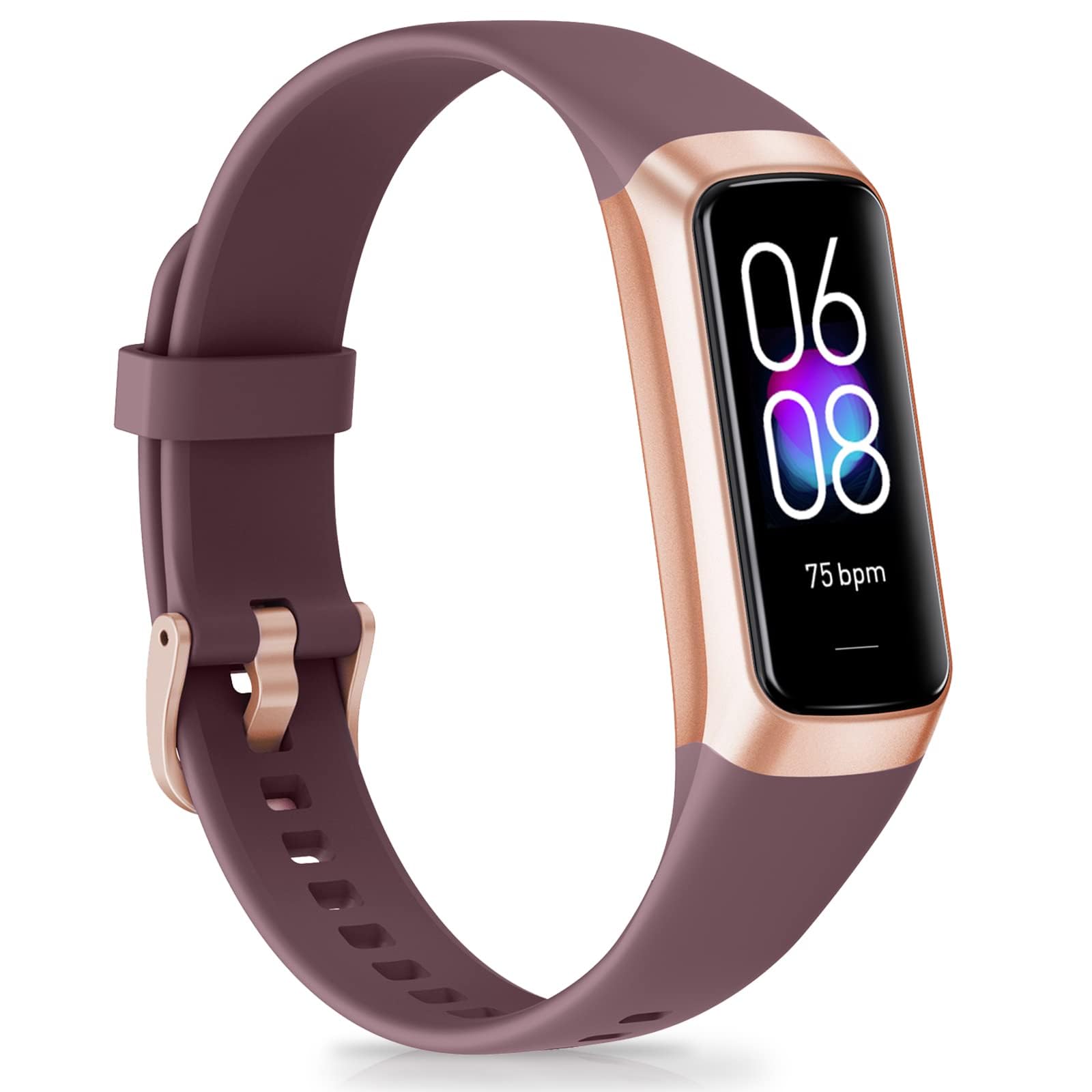
The Bakoor Bordeaux is the most aesthetically refined unit in the budget tier, with a slim profile and a deep red finish that looks more expensive than its positioning suggests. The 1.1-inch AMOLED display is sharp and bright, and the touch sensitivity is adequate — though a few users reported needing firm taps to register inputs during active movement. The app, Keep Health, handles all the basics: step counting, calorie estimates, distance, and heart rate trending.
Sleep tracking breaks down light, deep, and awake phases and provides a nightly score to help you gauge rest quality. The IP68 water resistance is a genuine differentiator at this price — you can wear it while washing hands, in the rain, or during a swim without concern. Battery life clocks in at about seven days of typical use with continuous heart rate enabled, and standby extends to 15 days. The magnetic charger refills the 160 milliamp-hour cell in about two hours.
Several customers noted that the step counter and calorie burn numbers sometimes mismatch slightly against manual tracking, which is typical for optical-based wearables in this range. The screen requires a slightly harder tap than premium models, but the overall package — slim design, IP68 protection, AMOLED panel — is tough to beat for the money.
Why it’s great
- IP68 water resistance at this price is rare
- Slim, elegant design in Bordeaux finish
- Good AMOLED brightness outdoors
Good to know
- Touchscreen requires firmer taps than competitors
- Calorie burn accuracy is approximate
5. TROTY C60

The TROTY C60 stands out for its build material — a stainless steel frame paired with a skin-friendly silicone band — at a price point where most competitors use all-plastic construction. The 1.1-inch AMOLED display is vivid and offers multiple custom watch faces, and the overall weight is just 60 grams, making it barely noticeable throughout the day. The optical sensor tracks heart rate, blood oxygen, and blood pressure, and the Keep Health app organizes the data into easy-to-read summaries.
Battery life is a strong point: the 120 milliamp-hour cell lasts around seven days with typical use, and the magnetic charger fills it in roughly two hours. The C60 includes 25 sports modes, smart notifications for calls and messages, and useful lifestyle features like drink water and sedentary reminders. Several users specifically praised its accuracy during golf and gym workouts, noting that the slim profile didn’t interfere with wrist movement.
A small number of customers reported issues with skin irritation from the band material — this appears to affect a minority, but it’s worth noting if you have sensitive skin. The sleep tracker can mistake periods of stillness (such as driving) for sleep, a common limitation in this class. For those who prioritize a refined look and barely-there weight, the C60 delivers.
Why it’s great
- Stainless steel frame at a competitive price
- Ultra-light 60-gram design
- Vivid AMOLED screen with many watch faces
Good to know
- Band may irritate sensitive skin in rare cases
- Sleep tracking misreads stationary periods
FAQ
Can a basic fitness tracker replace a medical-grade heart rate monitor during exercise?
Why does my sleep tracker show sleep when I was just sitting still?
How often should I clean the sensor on my fitness tracker?
Will an IP68 fitness tracker survive a saltwater swim?
Final Thoughts: The Verdict
For most users, the best basic fitness tracker winner is the Bestinn P900 because it combines the best display, longest real battery life, and widest feature set without crossing the line into complex smartwatch territory. If you want water resistance and dual-band comfort, grab the MorePro AIR2. And for the absolute best value with an AMOLED screen, nothing beats the Moremore Bordeaux.