A ballet slipper that pinches your toes or gaps at the heel ruins your plié before the barre even starts. The wrong sole can make a simple tendu feel like skating on glass, while a poorly placed elastic turns every relevé into a struggle. Getting the right pair means matching fit, sole type, and material to your foot shape and training level, not just grabbing the cheapest or prettiest option.
I’m Emma — the founder and writer behind Baby Bangs. I’ve analyzed dozens of ballet slipper reviews and spec sheets to cut through the sizing chaos and help you find a pair that actually works for your feet.
Whether you are a beginner stepping into your first class or a pro replacing worn-out favorites, choosing the right ballet slippers comes down to understanding how canvas, leather, full soles, and split soles interact with your specific arch and width.
How To Choose The Best Ballet Slippers
The ballet slipper market is surprisingly fragmented. One brand’s size 8 fits like a street 6, while another runs two sizes large. Add in the canvas-versus-leather debate, the full-sole-versus-split-sole fork, and whether you need a drawstring or elastic, and the selection process can feel overwhelming. These four criteria will cut through the noise.
Sole Type: Full Sole vs. Split Sole
A full sole runs continuously from heel to toe, offering more foot support and resistance through the arch. Beginners and young dancers benefit from this design because it strengthens the intrinsic foot muscles and prevents sickling. A split sole, by contrast, has two separate suede patches — one under the heel and one under the ball of the foot. This allows a cleaner arch line and greater flexibility, which more experienced dancers prefer for pointing. If you are early in your training, a full sole builds better fundamentals. If you have strong feet and need articulation, go split.
Material: Canvas vs. Leather
Canvas is breathable, lightweight, and molds to the foot quickly after a few classes. It is ideal for dancers with wider feet because it stretches slightly in width. Leather offers more durability and shape retention, but it requires a longer break-in period and tends to run narrower. Leather slippers also look more polished and last longer per season under heavy rotation. For sweaty feet or barre-only training, canvas wins. For multi-hour rehearsals or growth-spurt durability, leather is the better investment.
Sizing: Never Trust Your Street Shoe Number
Every ballet brand uses its own last. Capezio, Bloch, and So Danca all measure differently. A dancer who wears a US women’s 8 may need a Capezio 9.5, a Bloch 5, or a So Danca 9. The only reliable method is measuring your foot in centimeters and consulting the brand-specific size chart. Most reviews confirm you should ignore your street size entirely and size up or down based on the manufacturer’s grid. Width options (narrow, medium, wide) also vary — some brands offer specific widths; others rely on canvas stretch to accommodate wider feet.
Quick Comparison
On smaller screens, swipe sideways to see the full table.
| Model | Category | Best For | Key Spec | Amazon |
|---|---|---|---|---|
| Bloch Prolite II | Leather Split Sole | Advanced dancers needing arch articulation | Split sole, leather upper | Amazon |
| Capezio Turning Pointe 55 | Canvas Split Sole | Daily practice and pirouette work | Split sole, breathable canvas | Amazon |
| So Danca SD16 Bliss | Canvas Split Sole | Barre class and growing kids | Split sole, no drawstring | Amazon |
| SANGEESON Leather Full Sole | Leather Full Sole | Beginners building foot strength | Full sole, single leather | Amazon |
| Capezio Hanami | Canvas Split Sole | Wide feet needing stretch | Split sole, soft canvas | Amazon |
In‑Depth Reviews
1. Bloch Dance Women’s Prolite II Split Sole Leather Ballet Slipper

The Bloch Prolite II is the gold standard for dancers who prioritize clean arch lines and consistent fit. The split-sole design allows the foot to articulate fully through each tendu and dégagé, and the soft leather upper hugs the metatarsal without gaping at the heel. Multiple reviewers note that the pre-sewn elastic sits comfortably even during long rehearsals, though dancers with very high arches may find the tension too tight initially — the elastic does relax slightly after a few wears.
Sizing is the trickiest aspect here. Bloch uses its own last, so a US street size 8 typically needs a Bloch size 5 or 5.5. The leather runs narrower than canvas counterparts, which means dancers with bunions or wider feet should consider the wide (W) width option. The stark white color works for performances or weddings, but it is not the warm ivory some photos suggest — order expecting pure white.
Durability is strong enough to survive a full season of daily practice without the sole separating or the upper tearing at the pleats. The leather softens gradually, conforming to the foot better than any synthetic blend. If your school requires leather slippers and you have the budget, this is the pair that will last through Nutcracker season and beyond.
Why it’s great
- Superior arch articulation from the split sole
- Soft, durable leather molds to the foot over time
- Available in wide width for bunions or broader feet
- Pre-sewn elastic saves time and sits securely
Good to know
- Runs 2-3 sizes smaller than US street sizing — check the brand chart
- Leather requires a break-in period of several classes
- Color is stark white, not ivory as depicted
2. Capezio Turning Pointe 55 Women Dance Shoe

The Capezio Turning Pointe 55 is built specifically for pirouette-focused dancers. The canvas upper is breathable and lightweight, while the split sole includes a slight pad in the metatarsal area that provides extra grip and control during turns. Reviewers consistently mention that this shoe helps execute fouettés and chainés more smoothly compared to standard Capezio pirouettes, and the difference is noticeable enough to become a favorite for pom and jazz crossover work.
Durability is a strong point — dancers practicing nearly daily report replacing these every 6 to 9 months, which is solid for a canvas slipper. The elastic is strong and holds the heel securely without digging in. Size large fits a women’s 10.5 comfortably, while medium works for size 7. The fabric does soften after a few wears, moving from slightly stiff to flexible without losing its shape entirely.
One minor consideration: the canvas does not offer the same level of foot support as leather. This shoe is best suited for dancers who already have developed arch strength and want a responsive, low-profile slipper for turns and jumps. Beginners may find the split sole less supportive during pliés and relevés at the barre.
Why it’s great
- Metatarsal pad improves pirouette stability and control
- Lightweight canvas upper keeps feet cool during practice
- Strong pre-sewn elastic holds the shoe in place
- Lasts 6-9 months under daily use
Good to know
- Canvas offers less foot support than leather full soles
- Not ideal for absolute beginners needing arch reinforcement
- Size drop between medium and large may leave some feet between sizes
3. So Danca SD16 Bliss Stretch Canvas Split Sole Ballet Shoes

The So Danca SD16 Bliss is the most user-friendly option for dancers who want a no-fuss, quick-on slipper. The stretch canvas upper eliminates the need for a drawstring — you simply pull them on and the double elastic at the ankle keeps everything secure. Multiple verified buyers mention these fit true to size when ordered 1 to 1.5 sizes up from street shoe, making sizing simpler than most ballet slipper brands.
Parents of growing dancers particularly appreciate this model because the canvas stretches a bit in width, accommodating slightly wider feet without pinching. The split sole provides decent flexibility for barre work, and the suede patches offer good traction on both wood and marley floors. The material is also easy to clean — a quick hand wash removes the dark marks that accumulate from studio floors.
Some advanced dancers may find the lack of a drawstring means the shoe cannot be cinched tighter around the instep if it ever stretches out. However, for recreational barre class and growing children who go through 3-4 pairs a season, the simplicity and comfort of the SD16 Bliss outweigh the need for adjustable tension. The sole is reinforced enough for stability without being stiff.
Why it’s great
- No drawstring — simple pull-on design saves time
- Double elastic at ankle provides secure, gap-free fit
- Canvas stretches to accommodate wider feet
- Easy to clean with a quick hand wash
Good to know
- No adjustable drawstring for custom instep tension
- Size 1-1.5 up from street shoe for proper fit
- Canvas may wear out faster than leather under heavy use
4. SANGEESON Leather Full Sole Ballet Shoes for Women

The SANGEESON full sole provides the resistance that beginner feet actually need. Unlike split soles that can mask weak arches, this single leather sole forces the foot to work through each movement, gradually building strength in the metatarsals and instep. Reviewers specifically mention better toe support during battement frappes and less bruising compared to softer slippers they previously used.
The leather construction is smooth and sturdy without pleats that could rub or tear at the big toe. The wide elastic band sits flat across the instep and does not dig in. Sizing runs close to street shoe size — a pleasant surprise in a category where brand sizing is usually wildly different. One reviewer who normally wears a size 9 found the SANGEESON true to size versus needing a 7.5 from another brand. However, the shoe runs on the narrower side, so dancers with wider feet may feel pressure on the pinky toe even after ordering up half a size.
This is not a slipper for advanced turns or pirouettes; the full sole limits foot articulation. But for weekly beginner classes, children first learning tendus, or adult barre enthusiasts who want to strengthen their feet, the SANGEESON delivers reliable support at a very accessible entry point. The leather breaks in over about three classes and then holds its shape well.
Why it’s great
- Full sole builds foot strength and prevents sickling
- Leather holds shape longer than canvas alternatives
- Sizing aligns closer to street shoe than most ballet brands
- Wide elastic band provides comfortable arch hold
Good to know
- Runs narrow — not ideal for wide feet without sizing up
- Full sole limits foot articulation for more advanced movements
- Not designed for high-volume pirouette or pointe prep
5. Capezio Hanami Ballet Athletic Shoe
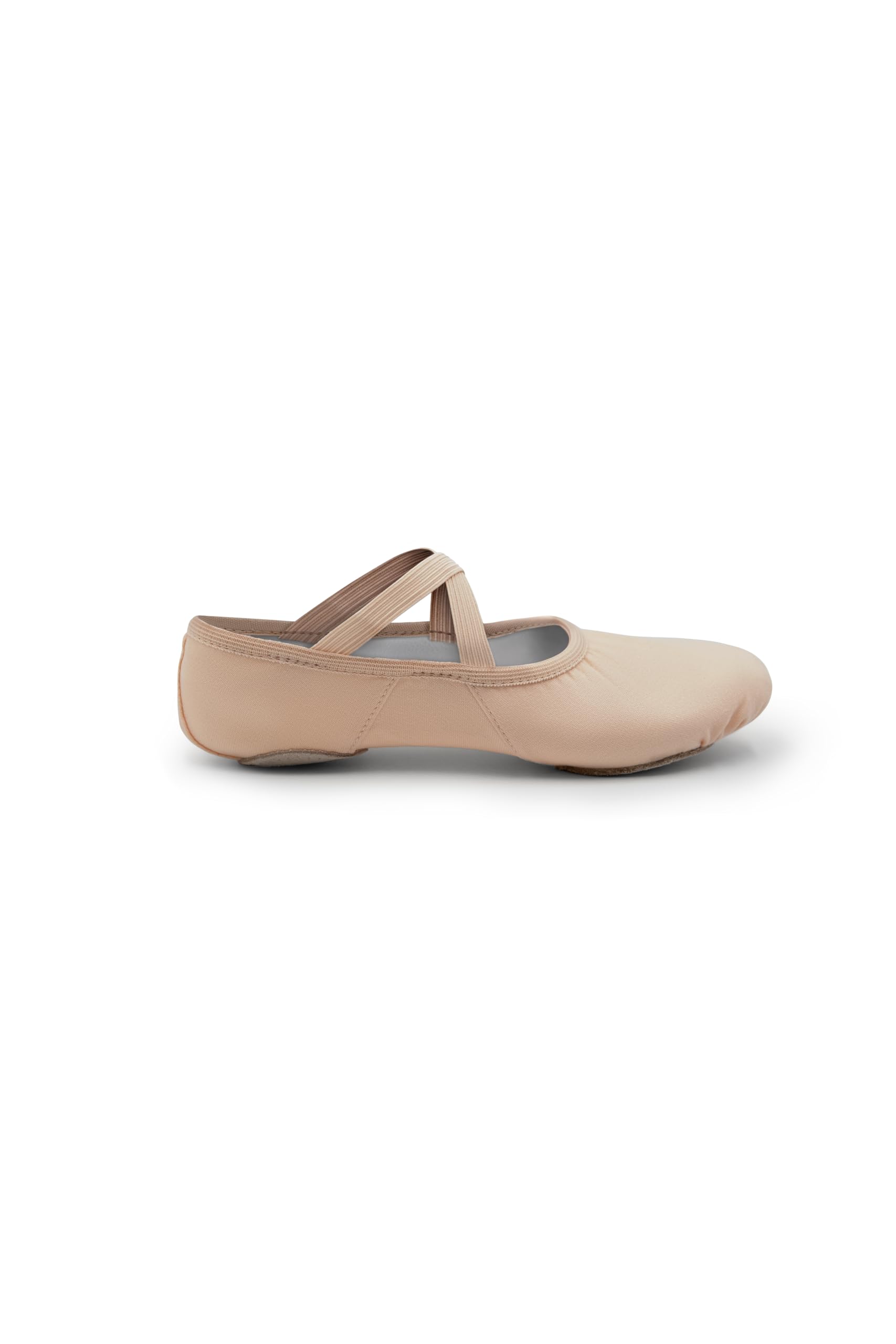
The Capezio Hanami is the canvas split-sole that wide-footed dancers have been waiting for. The canvas material stretches enough to accommodate feet that feel pinched in leather models, yet the split sole still provides the flexibility needed for pointing and rolling through the foot. Multiple reviews confirm this shoe works well for dancers with US women’s size 12 feet and even men’s sizes — a rare find in a category that often stops at 10.
The sizing conversation around the Hanami is the most divided of any slipper in this guide. Some reviewers swear it runs large and recommend going a full size down from street shoe. Others insist it runs very narrow and advise going up 2.5 sizes and selecting the wide width. The safest approach: measure your foot in centimeters, check the Capezio size chart, and if you are between sizes, size up for width rather than down for length. The metatarsal pad is smooth and does not cause irritation even during long sessions.
Durability is a highlight — dancers report years of use before holes develop at the toe or the sole separates. The canvas molds to the foot after just two classes and stays flexible without losing structure. For larger feet, narrow feet that need stretch, or anyone who wants a forgiving split sole that can handle daily wear, the Hanami is a versatile choice that consistently earns high marks for comfort and longevity.
Why it’s great
- Canvas stretches to fit wide and larger foot sizes
- Extremely durable — lasts years before developing holes
- Breaks in quickly after just 2-3 classes
- Smooth metatarsal pad with no irritation
Good to know
- Sizing is inconsistent — some need downsize, others need upsize
- Runs narrow in standard width; wide width recommended
- Canvas may feel too flexible for dancers wanting strong arch support
FAQ
How much should I size up from my street shoe for ballet slippers?
Can I wear canvas ballet slippers if I have wide feet?
How do I clean leather ballet slippers without ruining them?
Why do some ballet slippers have a drawstring and others don’t?
How long do ballet slippers typically last with regular use?
Final Thoughts: The Verdict
For most dancers, the ballet slippers winner is the So Danca SD16 Bliss because it combines a no-drawstring, easy-fit design with durable stretch canvas that works for both adults and growing children. If you want premium leather articulation for advanced training, grab the Bloch Prolite II. And for beginners who need full-sole support to build foot strength, nothing beats the SANGEESON Leather Full Sole.