You know the specific pain: a hard, swollen, buried lump under your jawline or cheek that throbs for days and refuses to come to a head. Standard zit creams and pimple patches are useless at that depth. You need a concentrated formula built to penetrate the dermis and kill the inflammation cycle before the cyst scars.
I’m Emma — the founder and writer behind Baby Bangs. I’ve spent years dissecting clinical ingredient lists, comparing salicylic acid concentrations, sulfur percentages, and delivery systems to find what actually shrinks blind pimples without burning the surrounding skin.
After cross-referencing dermatologist-reviewed actives with real-world user data on deep nodules and hormonal flares, I’ve built a shortlist of the most effective options to guide you toward the best cystic acne spot treatment for your specific breakout pattern.
How To Choose The Best Cystic Acne Spot Treatment
Standard over-the-counter pimple creams target surface-level whiteheads and blackheads. Cystic acne — deep, inflamed nodules under the skin — requires a treatment that penetrates the dermis and reduces inflammation at the root. Picking the wrong formula can worsen irritation and delay healing by weeks.
Check the Active Ingredient and Its Percentage
Salicylic acid at 2% is the maximum strength available without a prescription. It is lipophilic, meaning it dissolves in oil and can dive into clogged pores to break down the debris that fuels a cyst. Sulfur at 10% is another heavy hitter for absorbing excess oil and drying out the deep swelling. For truly buried, painful cysts, look for one or both of these concentrations.
Look for a Delivery System That Penetrates
A gel or liquid that dries into a thin film on the skin stays in contact with the cyst longer than a cream that rubs off on your pillow. Products with “patch-like” technology or film-forming polymers keep the active ingredient pressed against the problem area for hours, which is critical for driving salicylic acid deep enough to reach a nodular cyst.
Avoid Harsh Additives That Cause Contact Dermatitis
Cystic skin is already inflamed and often sensitive. Fragrances, high concentrations of denatured alcohol, or essential oils can strip the moisture barrier and make the swelling worse. A clean, fragrance-free formulation with soothing agents like niacinamide, zinc PCA, or cica helps calm irritation while the active works.
Quick Comparison
On smaller screens, swipe sideways to see the full table.
| Model | Category | Best For | Key Spec | Amazon |
|---|---|---|---|---|
| Murad Deep Relief | Premium | Deep under-surface cysts | 2% Salicylic Acid + Amino Acid Tech | Amazon |
| La Roche-Posay Effaclar | Mid-Range | Cystic-prone oily skin | 1.5% Salicylic Acid + Niacinamide | Amazon |
| Vichy Normaderm SOS | Mid-Range | Sensitive skin with deep swellings | 10% Sulfur + Niacinamide | Amazon |
| Bliss Clear Genius | Budget-Friendly | Everyday cystic maintenance | 2% Salicylic Acid + Zinc PCA | Amazon |
| Origins Super Spot | Budget-Friendly | Speedy drying on smaller cysts | 1.5% Salicylic Acid + Caffeine | Amazon |
In‑Depth Reviews
1. Murad Deep Relief Acne Spot Treatment

Murad’s Deep Relief treatment is built specifically for the worst category of breakouts — the blind, under-surface cysts that hurt to touch and take weeks to disappear. The 2% salicylic acid is the highest legal OTC dose, but what makes this special is the Amino Acid Technology that targets C. acnes bacteria directly. Users report that a dime-sized amount applied morning and night can resolve a deep jawline cyst that has been lurking for ten days within hours of the first application. The liquid formula dries into a sheer, occlusive film that keeps the active pressed against the skin all night.
This product was developed in-house by dermatologists, and the formulation philosophy shows in the safety profile: it is free of fragrances and harsh alcohols, so it reduces inflammation without stripping the moisture barrier. The bottle is small at 1 fl oz, but because the liquid spreads thinly, a pea-sized drop covers multiple breakout zones. Consistent twice-daily use is the key — users who stick with it notice deeper texture improvement across their whole jawline over the course of a month, not just the spot they applied to.
Multiple verified reviews confirm this is effective on hormonal cysts along the cheekbone and jawline, which is the most common presentation of adult female cystic acne. The price is higher than drugstore options, but for nodules that won’t respond to weaker formulas, the concentrated delivery system justifies the cost. It pairs well with a simple moisturizer and a hydrocolloid patch over the dried film for maximum overnight absorption.
Why it’s great
- Penetrates deep blind cysts that other treatments miss.
- Film-forming texture keeps active in contact for hours.
- Fragrance-free — safe for sensitive, inflamed cystic skin.
Good to know
- Higher price point than standard spot treatments.
- Best results require consistent twice-daily use.
- May be too strong for daily use on smaller, surface-level pimples.
2. La Roche-Posay Effaclar Salicylic Acid Acne Treatment

La Roche-Posay’s Effaclar treatment strikes a rare balance: it delivers clinically significant results (a 44% reduction in blemishes and 66% in blackheads within four weeks) while remaining gentle enough for sensitive, reactive skin types. The 1.5% salicylic acid is paired with LHA (a derivative that exfoliates at a slower rate) and Procerad to help fade the dark post-inflammatory marks that cysts often leave behind. The texture is a lightweight, non-greasy gel-cream that absorbs quickly and leaves a matte finish — ideal for oily, cystic-prone skin that breaks out under heavy creams.
This treatment has been tested on rosacea-prone skin and users report that, after a brief initial adjustment period of mild tingling, it calms breakouts without triggering the flushing or burning that stronger formulas cause. The 1.76 oz tube is generous for a spot treatment and can be used as a targeted layer or spread thinly over a breakout-prone zone on the chin or cheeks. The subtle, fresh scent is non-irritating and fades quickly upon application.
For those who need a treatment that also refines texture and prevents future cysts without over-drying, this is the strongest candidate. It performs well under makeup because of its silky, non-sticky finish. The data from clinical testing — visible improvement in eight hours — is rare for a product at this price tier. It is best suited for chronic cystic-prone skin that still needs daily hydration and barrier protection.
Why it’s great
- Clinically proven 44% blemish reduction in four weeks.
- Mattifying finish works well under makeup for daytime use.
- Contains Procerad to fade post-cyst dark marks.
Good to know
- 1.5% SA is slightly weaker than 2% for deep, stubborn cysts.
- Mild initial irritation possible on very sensitive skin.
- Not a film-forming liquid — may rub off more easily at night.
3. Vichy Normaderm S.O.S Acne Rescue Spot Corrector

Vichy’s Normaderm SOS takes a completely different approach from the salicylic-acid-heavy options in this list. Its primary active is 10% sulfur — one of the highest concentrations available without a prescription — which works by absorbing excess oil and drying out the deep, fluid-filled swelling that characterizes cystic acne. Niacinamide and glycolic acid support by calming redness and encouraging gentle exfoliation of the skin surface, respectively. This combination is particularly effective for cysts that are painful but have not yet erupted, as the sulfur can shrink the volume of the nodule within 24 hours.
Users with fair, easily scarred skin report that this treatment reduces swelling and redness without leaving behind a permanent dark spot, which is a major concern with cystic breakouts. The sulfur smell is present but significantly less overpowering than other sulfur formulas — reviewers describe it as light and quickly dissipating. The texture blends into the skin smoothly without a chalky or gritty residue, making it wearable as an overnight spot treatment without ruining pillowcases.
One key data point from long-term users: this treatment works well on sebaceous filaments on the nose and chin when applied thickly overnight every two weeks, though it is minimally effective on fully developed whiteheads. For cystic acne, the sweet spot is applying it the moment you feel the deep, tender lump forming. It is also a solid mid-range option for those whose skin reacts poorly to salicylic acid concentrations above 1.5%.
Why it’s great
- 10% sulfur shrinks deep cystic swelling rapidly.
- Minimal sulfur odor compared to other sulfur treatments.
- Causes less irritation on sensitive skin with a history of scarring.
Good to know
- Less effective on whiteheads or early-stage pustules.
- Glycolic acid may cause a mild tingling on broken skin.
- Requires thick overnight application for best results.
4. Bliss Clear Genius Acne Spot Treatment
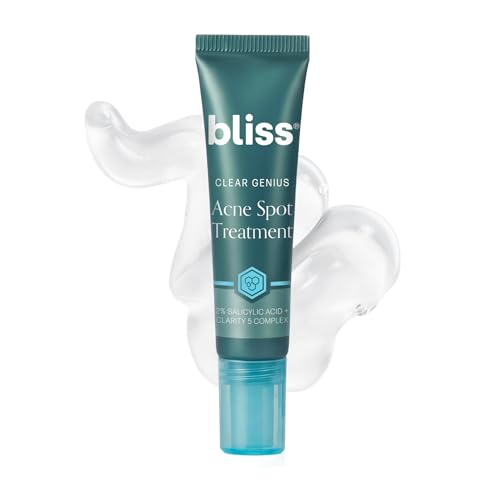
Bliss delivers a maximum-strength 2% salicylic acid formula at a budget-friendly price point, making it the most accessible entry point for anyone dealing with mild to moderate cystic breakouts. The difference between this and the Murad is the delivery system: Bliss uses a more traditional gel vehicle with witch hazel and cica to soothe, rather than a film-forming liquid. For users with combination or oily skin, this gel absorbs quickly and doesn’t leave any visible residue, and it layers well under moisturizer and sunscreen during the day.
The inclusion of niacinamide and zinc PCA sets this apart from other budget options — zinc PCA has mild antimicrobial properties that help prevent the breakout from spreading to adjacent pores, while niacinamide supports a healthy moisture barrier. Users with mature, dry, and sensitive skin report that this treatment clears small blemishes in a single application without the drying or stinging that other 2% SA products cause. The fragrance-free formulation is a strong selling point for cystic-prone skin that reacts poorly to added scents.
It is worth noting that for deeper, more established cysts, this gel lacks the occlusive film that the Murad delivers — some users find it takes two to three days for a buried nodule to shrink, versus the faster action of a patch-like treatment. However, for the price, the combination of 2% SA plus barrier-supporting ingredients is hard to beat. It works best as a daily maintenance treatment for preventing new cysts from forming, rather than as an emergency rescue weapon for a single, massive nodule.
Why it’s great
- Maximum strength 2% SA at a budget-friendly price.
- Niacinamide and zinc PCA soothe and prevent bacterial spread.
- Fragrance-free formula works well for dry and mature cystic skin.
Good to know
- Thin gel vehicle — less effective on deep, buried nodules.
- Some users report mild stinging on freshly popped skin.
- May require two to three days for visible reduction on large cysts.
5. Origins Super Spot Treatment for Acne
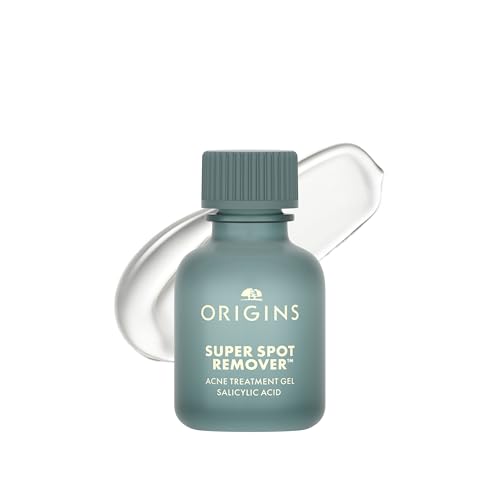
Origins has been producing this spot treatment for years, and it remains a bestseller for a specific reason: it works very fast on surface-level and shallow cysts that have not yet hardened into deep nodules. The 1.5% salicylic acid is paired with caffeine, which is known to constrict blood vessels and reduce puffiness. The clear gel dries quickly into an invisible film that can be worn under makeup without any white cast or flaking — a major advantage for daytime spot correction.
The formula is vegan and free of animal-derived ingredients, and it is designed for normal, combination, and oily skin types. Users who catch a cyst early — during the initial red, tender stage — report that the blemish shows visible improvement in one day and is completely gone in three. The 0.3-ounce bottle is tiny, but a single drop covers multiple pimples, so it lasts for months if you spot-treat only occasional flares. For someone who has one or two cystic breakouts per month, this is a very economical option.
The main limitation is firepower: for a large, deep nodule that has already hardened, the 1.5% SA concentration may not be strong enough to penetrate and shrink the core. Some reviews specifically note that this product works well on hormonal bumps near the chin but fails to resolve the truly painful, buried cysts along the jawline. It is best viewed as a rapid-response tool for mid-grade cysts rather than a full clinical treatment for severe nodular acne. The small bottle can feel pricey per ounce, but the longevity of use offsets that.
Why it’s great
- Dries into an invisible film — perfect for daytime wear under makeup.
- Caffeine helps reduce puffiness and redness quickly.
- Vegan formula; one bottle lasts months for occasional breakouts.
Good to know
- 1.5% SA is insufficient for large, deep, hardened cysts.
- Very small 0.3 oz bottle; lower value per ounce.
- Contains botanical extracts that may irritate extremely reactive skin.
FAQ
Can a spot treatment really penetrate a deep cystic nodule?
Should I use a spot treatment or a pimple patch on cystic acne?
How often should I apply a cystic acne spot treatment without over-drying?
Is salicylic acid or sulfur better for hormonal cystic acne on the jawline?
Final Thoughts: The Verdict
For most users, the best cystic acne spot treatment winner is the Murad Deep Relief because its 2% salicylic acid combined with a film-forming delivery system is the most effective non-prescription solution for deep, painful nodules that other treatments cannot reach. If you want a gentle, multi-tasking option that refines texture and fades dark marks without irritation, grab the La Roche-Posay Effaclar. And for sensitive skin that needs the powerful drying action of sulfur to shrink swelling overnight, nothing beats the Vichy Normaderm SOS.