A stuffy nose in a toddler is a full-family sleep emergency. Nasal congestion that keeps a child awake, cranky, and struggling to eat demands a solution that works fast, tastes acceptable, and carries zero worry about side effects. The wrong decongestant can mean a fight at medicine time or a child who refuses to take the next dose.
I’m Emma — the founder and writer behind Baby Bangs. I’ve spent years combing through pediatric OTC shelves, analyzing active-ingredient profiles, and cross-referencing dosing guidelines to identify which decongestants actually deliver for congested kids without unnecessary additives.
Below I break down the five most effective options for clearing a child’s blocked nose, ranked by ingredient safety, ease of administration, and real-world symptom relief. This is your practical guide to the best decongestant for kids you can buy right now.
How To Choose The Best Decongestant For Kids
Not all congestion is the same. Chest congestion with thick mucus calls for an expectorant like guaifenesin. Nasal stuffiness from a cold or allergies responds better to a saline rinse or a targeted decongestant. Age is the second gate: products approved for 6 months are formulated entirely differently from those labeled for ages 4 and up. Always match the active ingredient to your child’s specific symptom location and age bracket.
Active ingredient and delivery format
Guaifenesin thins mucus so a child can cough it up — useful for chest congestion with a wet cough. Dextromethorphan suppresses the cough reflex itself. For purely nasal blockage, a drug-free saline spray moisturizes dry passages and physically flushes mucus out without any systemic absorption. Delivery format matters just as much: kids who gag on thick syrup often accept a mini-melt packet poured onto the tongue or a twist-off liquid ampule with no flavor.
Additives and long-term safety
Dyes, artificial sweeteners, and high sugar content can cause refusal or mild digestive upset in sensitive children. Look for products that use honey as a natural sweetener or that are labeled dye-free and non-GMO. For daily or repeated use across multiple cold seasons, a preservative-free saline spray poses zero risk of drug interactions or drowsiness and can be used alongside other medications.
Quick Comparison
On smaller screens, swipe sideways to see the full table.
| Model | Category | Best For | Key Spec | Amazon |
|---|---|---|---|---|
| Zarbee’s All-in-One Day & Night | Premium | Pediatrician-backed cold & mucus relief | Honey + Ivy Leaf + Zinc | Amazon |
| Boiron ColdCalm Baby | Premium | Babies 6 months + with runny nose | Single-dose sublingual ampules | Amazon |
| Mucinex Children’s Mini-Melts | Mid-Range | Chest congestion & cough ages 4+ | 100 mg Guaifenesin per packet | Amazon |
| Vicks Sinex Saline Spray | Entry-Level | Drug-free daily stuffy nose ages 1+ | Isotonic saline + aloe mist | Amazon |
| Children’s Dimetapp Cold & Allergy | Entry-Level | Runny nose & post-nasal drip | Brompheniramine + Phenylephrine blend | Amazon |
In-Depth Reviews
1. Zarbee’s Children’s All-in-One Honey Cough Syrup + Mucus, Throat & Nasal Day & Night Value Two Pack

Zarbee’s combines dark honey for cough soothing, ivy leaf extract to help clear mucus, and zinc plus turmeric root for immune and nasal passage support — all in a syrup that’s naturally sweetened with no artificial dyes or alcohol. The two-bottle Day & Night pack switches from straight symptom support during the day to a night syrup with chamomile that gently calms before bed, a smart touch for parents trying to preserve bedtime routine.
Pediatrician-developed and carrying the #1 pediatrician-recommended label among non-prescription kids’ cough syrups, this formula targets ages 6 through 12. The natural grape flavor is sweet (some adults call it “super sweet”) but avoids the medicinal bitterness that causes refusal. Multiple reviews note it’s the only cold medicine safe during pregnancy, which speaks to its clean ingredient profile.
For parents who want a drug-adjacent option that leans on honey and plant extracts rather than synthetic active ingredients, this is the most complete all-in-one system on the list. The night bottle alone justifies the value pack — getting a congested child to sleep through the night is where most OTC products fall short.
Why it’s great
- Day & Night dual formula with chamomile for bedtime
- Natural honey base with no artificial sweeteners or dyes
- #1 pediatrician-recommended kids’ cough syrup brand
Good to know
- Only labeled for ages 6 to 12
- Sweet taste may be too much for some children
- Not designed for acute chest congestion with thick phlegm
2. Boiron ColdCalm Baby 40 Count — Single-Use Drops

Boiron ColdCalm Baby is the only product on this list approved for infants as young as 6 months. Each single-dose ampule contains a clear, tasteless liquid that you twist open and squeeze directly into the child’s mouth — no mixing, no measuring, no weight calculation. The homeopathic formula targets sneezing, runny nose, and nasal congestion without any known drug interactions.
The mess-free delivery is a standout for parents of infants and toddlers who spit out syrups. Because the liquid is absorbed sublingually, it bypasses the taste buds entirely, which explains the consistently high compliance reported in reviews. Parents note visible relief within 15 to 30 minutes for symptoms like cough, sinus pressure, and runny nose.
Each portly pack holds five single-dose ampules, making them easy to stash in diaper bags and with grandparents. The short duration of effects (due to baby-sized dosing) means you may need to re-dose more frequently than with a syrup, but the safety profile for the youngest age group is unmatched here.
Why it’s great
- Safe for infants as young as 6 months
- Twist-off ampule — no measuring, no mess
- Tasteless and dye-free, ideal for picky babies
Good to know
- Homeopathic — effects may be shorter-lived per dose
- Not designed for chest congestion or thick mucus
- Small single-use ampules not for unsupervised handling
3. Mucinex Children’s Chest Congestion Expectorant and Cough Suppressant Mini-Melts

Mucinex Mini-Melts solve the taste-rejection problem differently: instead of a liquid, you pour a packet of orange cream granules directly onto the child’s tongue where they dissolve. Each packet delivers 100 mg of guaifenesin (expectorant to thin mucus) plus 5 mg of dextromethorphan (cough suppressant), making it the most potent dual-action option for chest congestion with a wet cough.
The #1 pediatrician-recommended brand among non-homeopathic OTC products, Mini-Melts are especially effective for kids ages 4 and up. Parents report noticeable improvement within 30 minutes and high acceptance even among children who gag on liquid Mucinex. The single-serve packets are purse- and car-friendly, though the instructions say to pour directly onto the tongue — they do not dissolve well in liquid.
This is the go-to choice when the child has audible chest congestion and a cough that disrupts sleep or daytime activity. The combination of an expectorant and a suppressant in one packet means you don’t have to juggle two separate bottles, though the 5 mg dextromethorphan dose is mild enough to avoid the “medicine head” that heavier adult formulas cause.
Why it’s great
- Dual-action: guaifenesin + dextromethorphan in one packet
- Orange cream flavor dissolves on tongue — no syrup fights
- #1 pediatrician-recommended OTC brand
Good to know
- Only for ages 4 and up
- Does not dissolve well in liquids — use directly on tongue
- Dextromethorphan may not suit all cough types
4. Vicks Sinex Children’s Saline Nasal Spray, Drug Free Ultra Fine Mist with Aloe
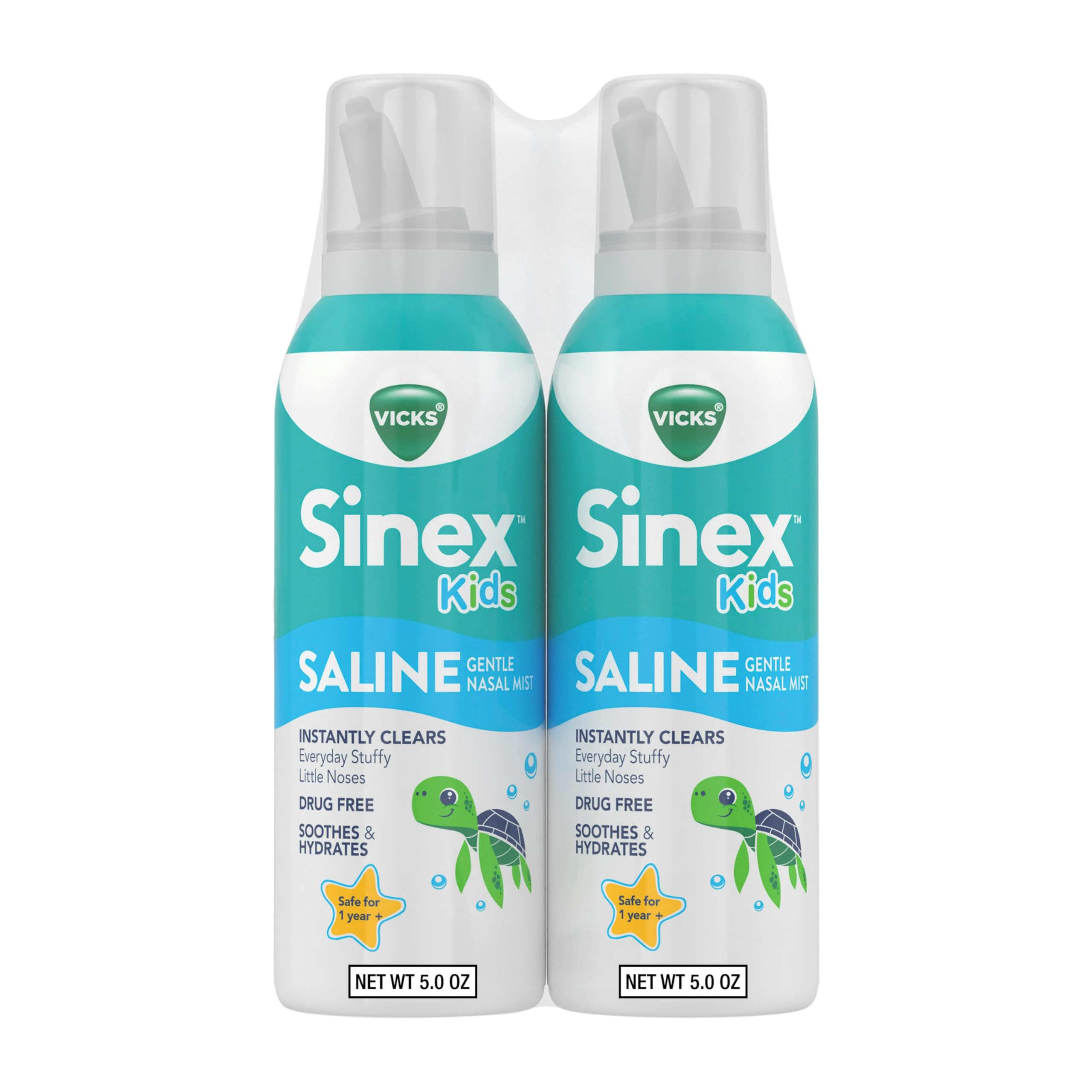
When you want zero active ingredients and zero side effects, Vicks Sinex Children’s Saline Nasal Spray is the answer. This drug-free isotonic solution with a hint of aloe moisturizes dry nasal passages and physically flushes out mucus. It’s approved for children as young as 12 months and can be used daily without building tolerance or causing rebound congestion.
The ultra-fine mist nozzle delivers targeted relief without the aggressive stream of adult sprays, which is critical for a squirming toddler. Parents report using it on infants as young as 4 months on their own judgment (though the label says 12+ months). It works as a pre-feeding rinse for a congested baby who struggles to nurse or take a bottle.
This is the safest long-term solution for seasonal allergies or chronic stuffiness. Because it contains no medication, it can be paired with any other decongestant on this list — use the saline spray to clear the nose first, then follow with a medicated syrup or mini-melt for deeper symptom control.
Why it’s great
- Drug-free — safe for daily use from age 1
- Ultra-fine mist is gentle on sensitive nasal passages
- Can be used alongside other medications
Good to know
- Only treats nasal stuffiness — not chest congestion
- Requires child to tolerate spray administration
- Does not contain a medicated decongestant
5. Children’s Dimetapp Cold & Allergy 8oz

Dimetapp Cold & Allergy has been a household name for decades, and the 8 oz bottle still delivers the same reliable combo of brompheniramine (antihistamine) and phenylephrine (nasal decongestant) that parents have trusted since the 1990s. It specifically targets runny nose and post-nasal drip, making it ideal when a child’s main complaint is clear nasal discharge rather than chest tightness.
The alcohol-free formula has a grape flavor that generations of children have tolerated well. Users report it reduces random nasal drainage enough for a child to sit through a car ride or a classroom without a constant drip. Some adults even use it for their own allergy-related sniffles, which speaks to the balanced formulation strength.
This is a classic for a reason, but it’s worth noting that the antihistamine component can cause drowsiness in some children. Parents should test the first dose on a non-school day. Also, the bottle packaging — a thin plastic bottle — has been reported to leak during shipping if not packed in a box rather than a padded envelope.
Why it’s great
- Proven antihistamine + decongestant combo for runny noses
- Alcohol-free with acceptable grape flavor
- Trusted brand used for over 30 years by many families
Good to know
- May cause drowsiness in some children
- Bottle can leak in transit without box packaging
- Not intended for chest congestion or productive cough
FAQ
Can I give a decongestant to my 8-month-old baby?
What is the difference between mini-melts and liquid syrup?
How do I know if my child has chest congestion versus a runny nose?
Can children take decongestants every day?
Final Thoughts: The Verdict
For most families, the best decongestant for kids winner is the Zarbee’s All-in-One Day & Night Value Pack because it covers both daytime and bedtime relief with a honey-based, dye-free formula that kids ages 6 to 12 actually accept. If you need a solution for a baby as young as 6 months, grab the Boiron ColdCalm Baby drops. For chest congestion with a wet cough in a child age 4 and up, nothing beats the Mucinex Children’s Mini-Melts for quick, melt-away dosing.