Getting a false high reading from a blood pressure monitor at home can spike your anxiety just as much as the real thing. The problem isn’t you — it’s often the cuff size, the sensor quality, or the inflation algorithm. Choosing a dependable at-home blood pressure machine starts with understanding which specs separate a clinical-grade tool from a flashy toy.
I’m Emma — the founder and writer behind Baby Bangs. After analyzing hundreds of user reviews and cross-referencing customer complaints about accuracy drift and cuff fit, I’ve isolated the models that consistently hold their own against a doctor’s office reading.
This guide breaks down the seven most reliable options for home monitoring, from budget-conscious choices to premium trackers with clinical validation. Whether you need irregular heartbeat detection or dual-user memory, here is the definitive list of what matters for the best at home blood pressure machine.
How To Choose The Best At Home Blood Pressure Machine
Most buyers focus on the wrong spec first — screen size or memory slots — when the cuff’s fit range and the algorithm’s clinical backing determine whether your readings are useful or alarming. Here are the three non-negotiable criteria.
Cuff Size and Adjustability
A cuff that is too tight artificially raises systolic readings by 10 to 40 mmHg. The best monitors offer a wide-range cuff (8.7 to 16.5 inches) or include multiple cuff sizes. If your arm circumference exceeds 16.5 inches, look for an XL cuff option or a model that ships with both standard and large cuffs.
Clinical Validation and Accuracy
Look for monitors validated by the British and Irish Hypertension Society (BIHS) or the European Society of Hypertension (ESH). Validation means the device was tested against a mercury sphygmomanometer under controlled conditions. Without this, a machine’s accuracy claim is just marketing.
Memory and Multi-User Support
If you monitor two people, a dual-user mode with separate memory banks (199 readings per user) prevents data confusion. Single-user monitors with 30 to 90 slots are fine for personal tracking, but you will need Bluetooth export to share long-term trends with your doctor.
Quick Comparison
On smaller screens, swipe sideways to see the full table.
| Model | Category | Best For | Key Spec | Amazon |
|---|---|---|---|---|
| Omron Gold BP5360 | Premium | AFib detection + app sync | AFib detection, dual user, Bluetooth | Amazon |
| iHealth Track 550BT | Mid-Range | Smartphone tracking enthusiasts | Bluetooth, Apple Health sync, 99 readings | Amazon |
| Microlife BPM2 | Mid-Range | Clinical accuracy (BIHS AA rated) | BIHS AA rating, 60 reading memory | Amazon |
| Acenis AOJ-30F | Mid-Range | Large screen, three user profiles | 3 users, large color screen, 40-sec reading | Amazon |
| Cocacis U80BH | Budget-Friendly | Extra large cuff (up to 21 inch) | Dual cuffs, 6 inch color display, 2 x 199 memory | Amazon |
| Braun ExactFit 2 | Mid-Range | Gentle inflation, color-coded results | Inflation measurement, 30 memory slots | Amazon |
| Medline MDS4001 | Budget-Friendly | Simple, no-frills tracking | Automatic inflation, 90 reading memory | Amazon |
In‑Depth Reviews
1. OMRON Gold BP5360
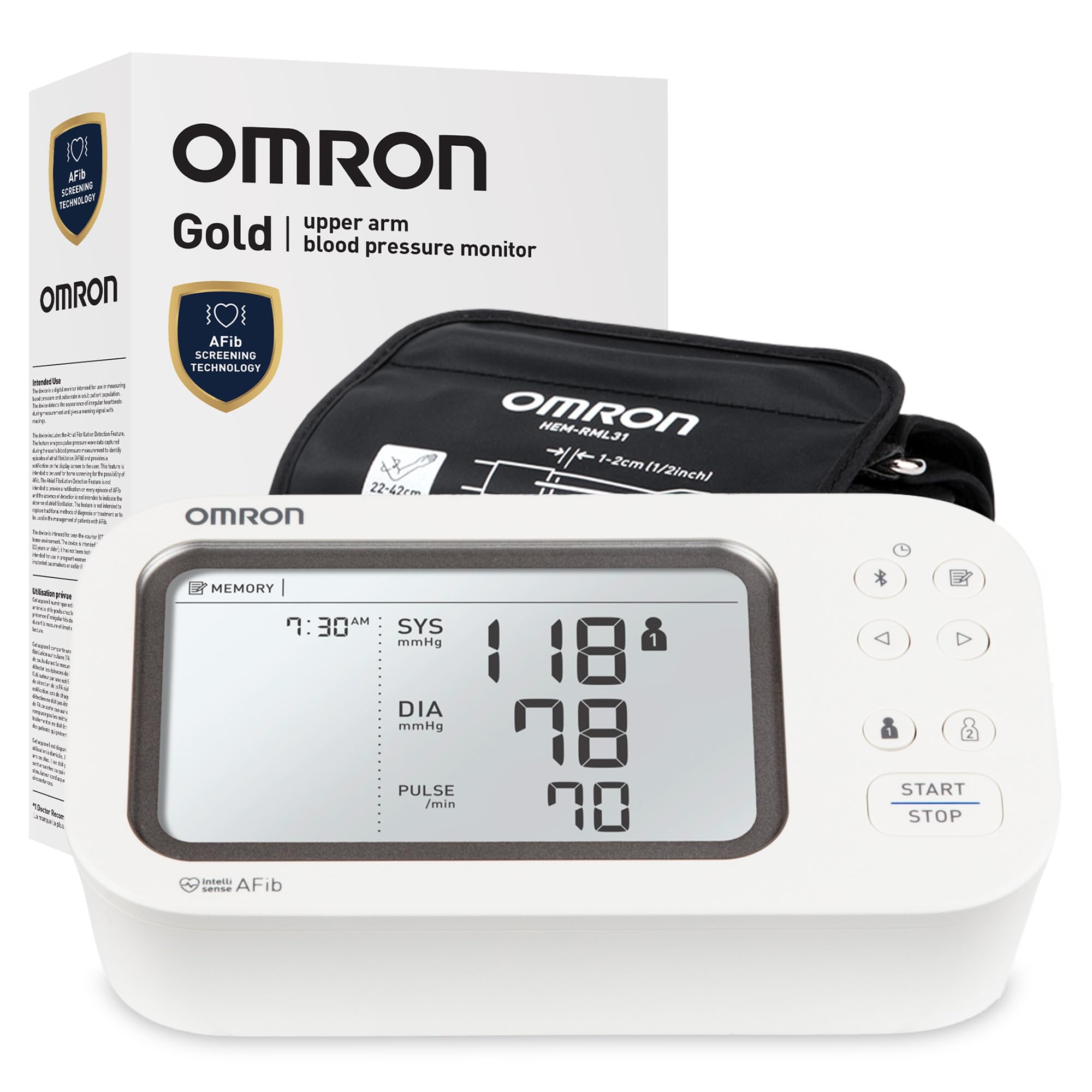
The OMRON Gold is the only monitor in this lineup with dedicated Atrial Fibrillation (AFib) detection during each reading, plus a High Morning Average Indicator that flags morning spikes linked to cardiovascular risk. The wide-range D-ring cuff fits arms 9 to 17 inches, and the Bluetooth sync to Apple Health and Google Fit makes doctor-sharing seamless.
Customer reviews highlight two critical trade-offs: users with pre-existing AFib rhythms report the machine may refuse to give a reading due to its own built-in “Possible AFib” warning. Others praise the consistent accuracy and reliable dual-user memory that automatically sends data to the OMRON connect app.
For anyone who wants clinical-grade data and cloud-based trend tracking without manual logging, this is the reference standard. Just confirm your heart rhythm pattern is compatible before purchase.
Why it’s great
- AFib and morning spike detection built in
- Bluetooth sync with Apple Health and Google Fit
- Two independent user memory banks with auto-sync
Good to know
- May not give a reading for users with existing AFib
- Higher entry cost for the feature set
2. iHealth Track 550BT
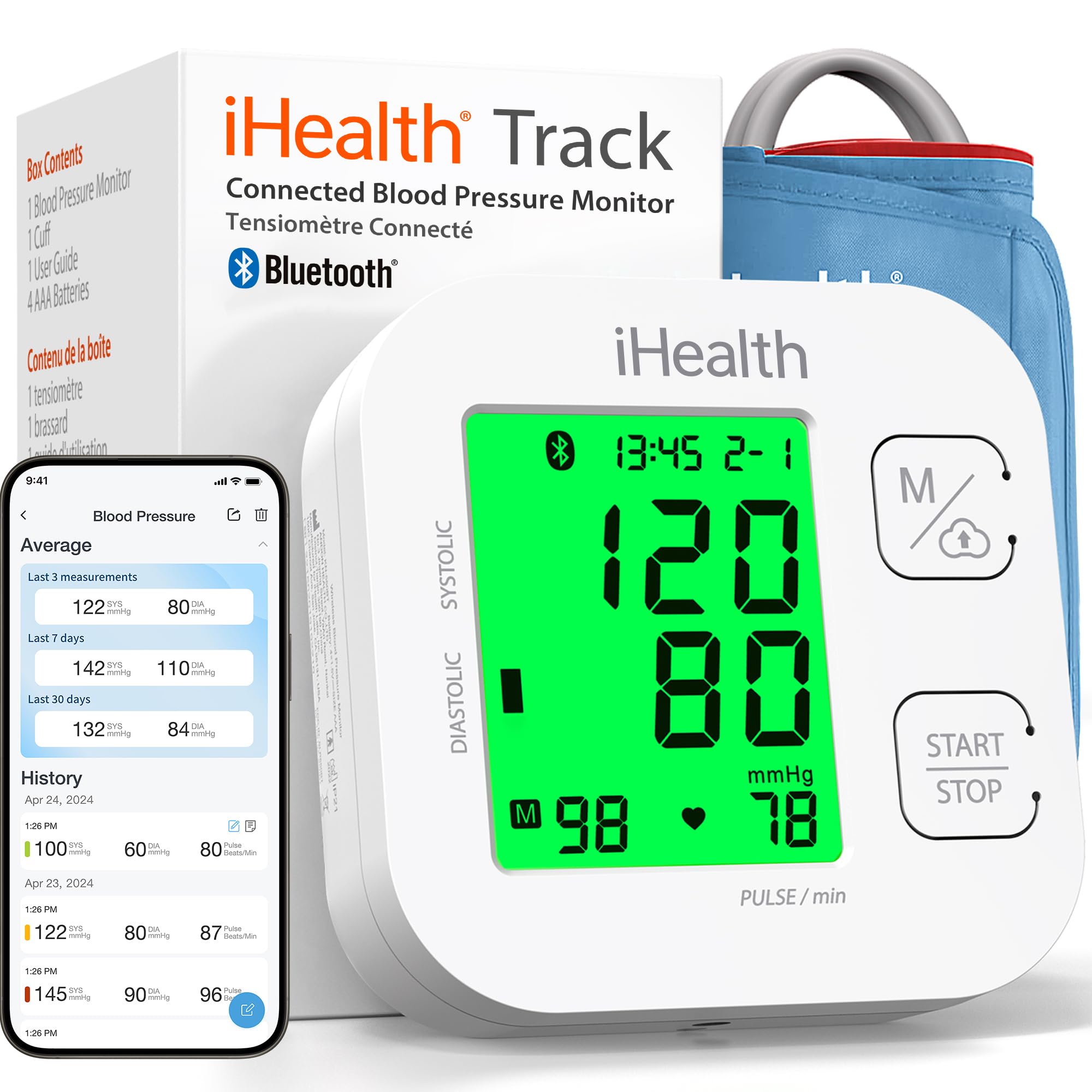
The iHealth Track pairs a clinically validated ESH 2010 performance standard with a color-coded backlit display and Bluetooth sync that pushes unlimited readings to Apple Health. The wide-range cuff (8.7 to 16.5 inches) covers most adults, and the two-button operation is about as simple as home monitoring gets.
Users consistently report readings within a few points of a doctor’s cuff, but the companion app draws complaints for persistent ads and a clunky interface. Most buyers prefer to use the on-device memory (99 readings) and export data manually or rely on Apple Health’s native integration.
If you want reliable smartphone data syncing without paying for Omron’s premium price tag, the iHealth Track delivers sharp accuracy and a large display that seniors can read at a glance.
Why it’s great
- ESH validation with no calibration needed
- Large color-coded backlit display
- Seamless Apple Health integration
Good to know
- App has intrusive ads
- Cuff positioning must be exact for accuracy
3. Microlife BPM2
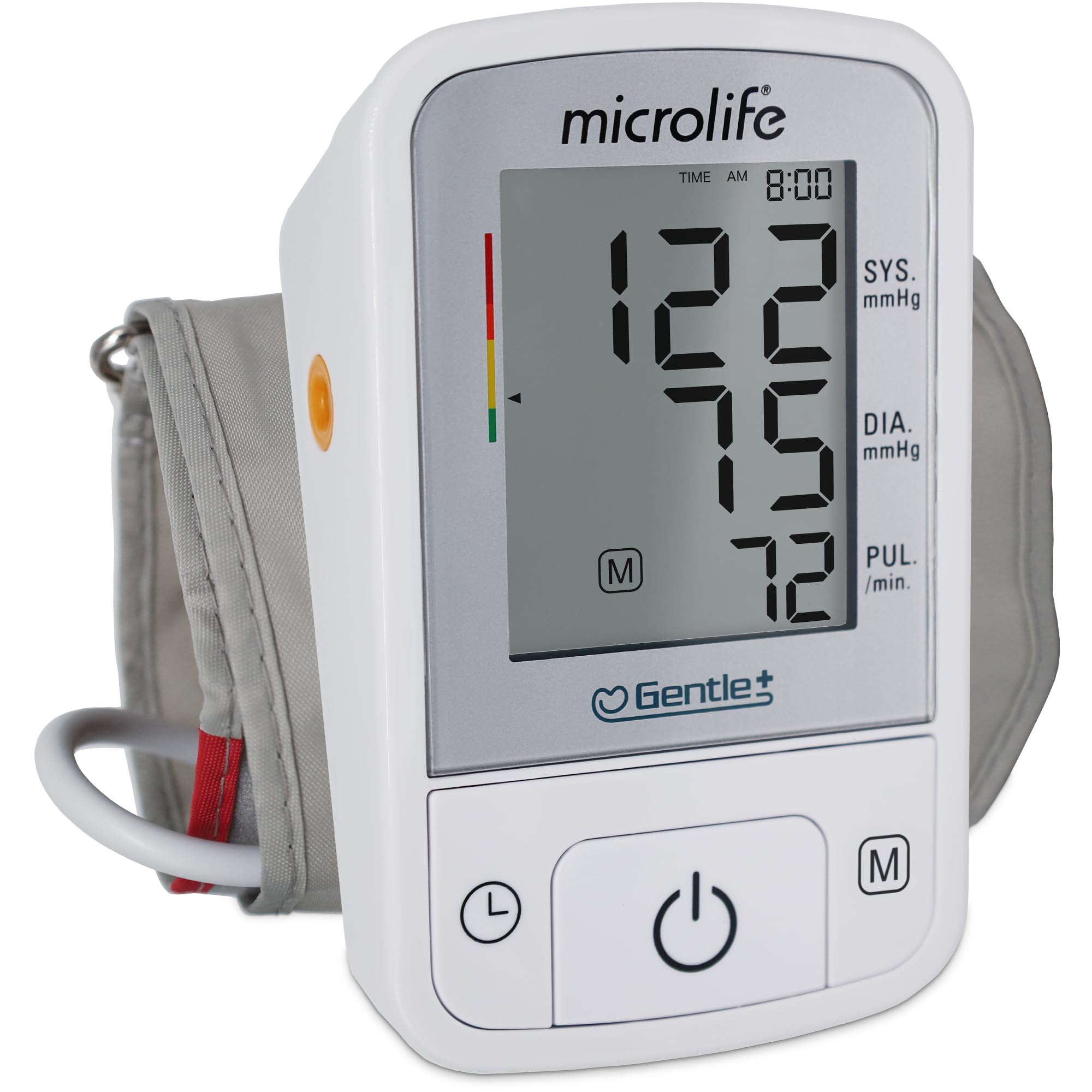
The Microlife BPM2 holds the highest BIHS accuracy rating (AA) and uses Gentle+ Technology that inflates less aggressively than competing cuffs. That makes it a standout for anyone with sensitive arms or who feels anxious during inflation. The wide-range cuff (8.7 to 16.5 inches) fits most adults, and an XL cuff is available separately for larger arms up to 20.5 inches.
Owners consistently praise the build quality — several reviews note units lasting over a decade with reliable readings. The memory stores 60 results and also shows an average across all stored memories, a simple but useful trend feature. The irregular heartbeat detector and hypertension risk indicator add protection without being overly sensitive.
If clinical validation and a gentle user experience matter more than Bluetooth gimmicks, the Microlife BPM2 is a quiet workhorse that will not spike your anxiety while taking your pressure.
Why it’s great
- BIHS AA rating for top accuracy
- Gentle+ inflation reduces discomfort
- Long product track record (many 10-year users)
Good to know
- No Bluetooth connectivity
- XL cuff purchased separately
4. Acenis AOJ-30F
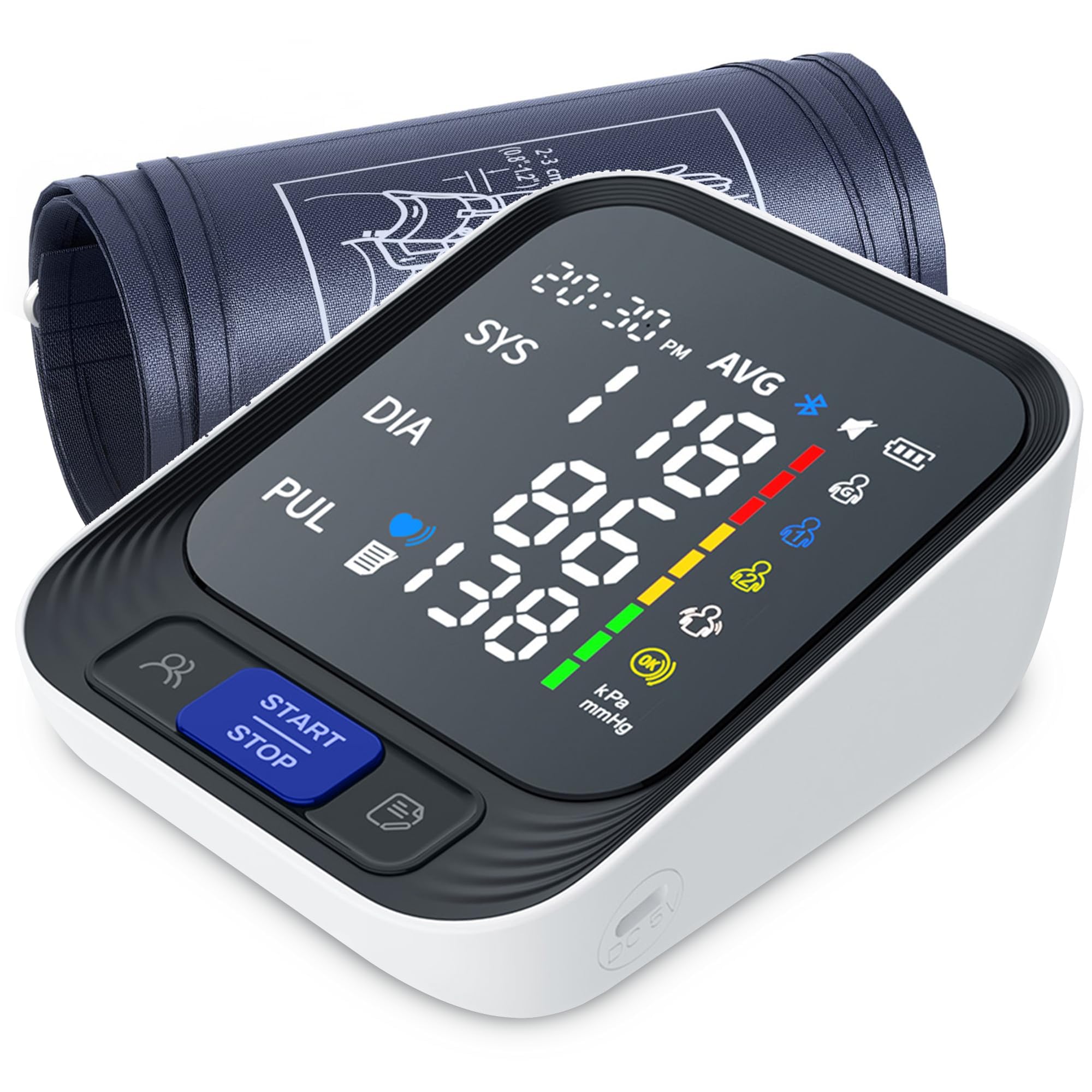
The Acenis AOJ-30F offers a 6-inch HD color screen with large fonts designed for seniors, plus support for three independent user profiles — a rarity at this price point. The adjustable large cuff and one-touch operation deliver readings in about 40 seconds, and the on-screen results include a color-coded WHO indicator.
User reviews consistently mention the clarity of the display and the ease of setup, though a few note that programming the date and time is unintuitive. The device stores up to 199 readings per user, making it a practical choice for households with multiple people tracking daily trends.
For families who need a simple, shared monitor without Bluetooth complexity, the Acenis provides ample memory and a screen that does not require reading glasses.
Why it’s great
- Three independent user memory banks (199 each)
- Large, high-contrast color display
- Comes with both USB-C and battery power
Good to know
- Date/time setup is not intuitive
- No Bluetooth or mobile app
5. Cocacis U80BH
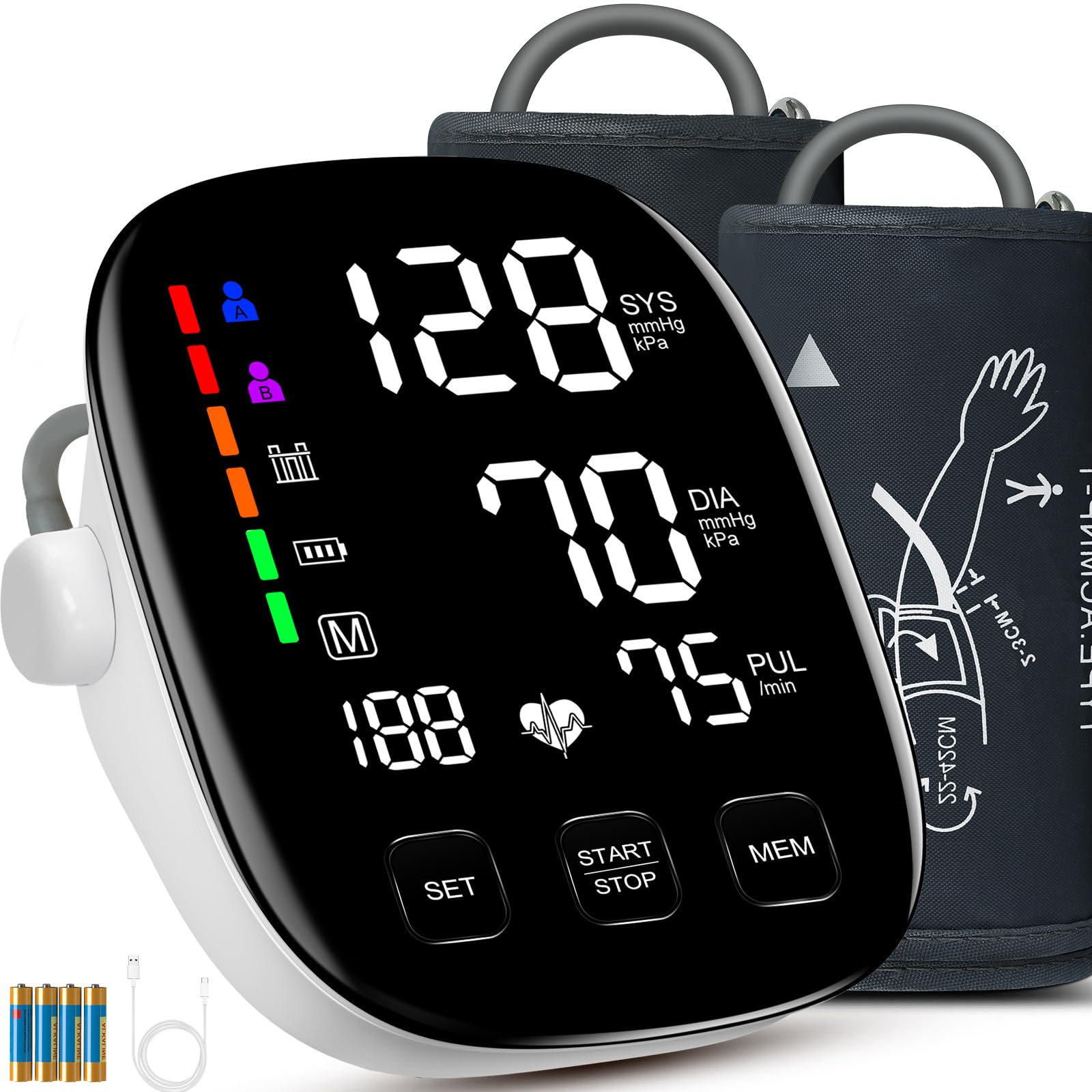
The Cocacis U80BH is the only budget-tier monitor that ships with both a standard cuff (9-17 inches) and an extra-large cuff (13-21 inches) in the box. That dual-cuff setup eliminates the guesswork for households with members at both ends of the size spectrum. The 6-inch HD backlit screen uses color-coded WHO indicators for instant interpretation.
Buyers with larger arms specifically mention finally getting consistent readings after switching from single-cuff monitors. The dual power option (USB-C or 4 AAA batteries) makes it travel-friendly. Some reviewers note that battery life is shorter than expected, but the included USB cable provides a workaround.
If you need a single machine that serves both a petite adult and someone who needs a 21-inch cuff, this is the only package that includes the necessary hardware out of the box.
Why it’s great
- Includes standard and XL cuffs in one box
- Large 6-inch backlit color display
- Dual power (USB-C and batteries)
Good to know
- Battery life is modest
- No clinical validation listed
6. Braun ExactFit 2 BUA4050US
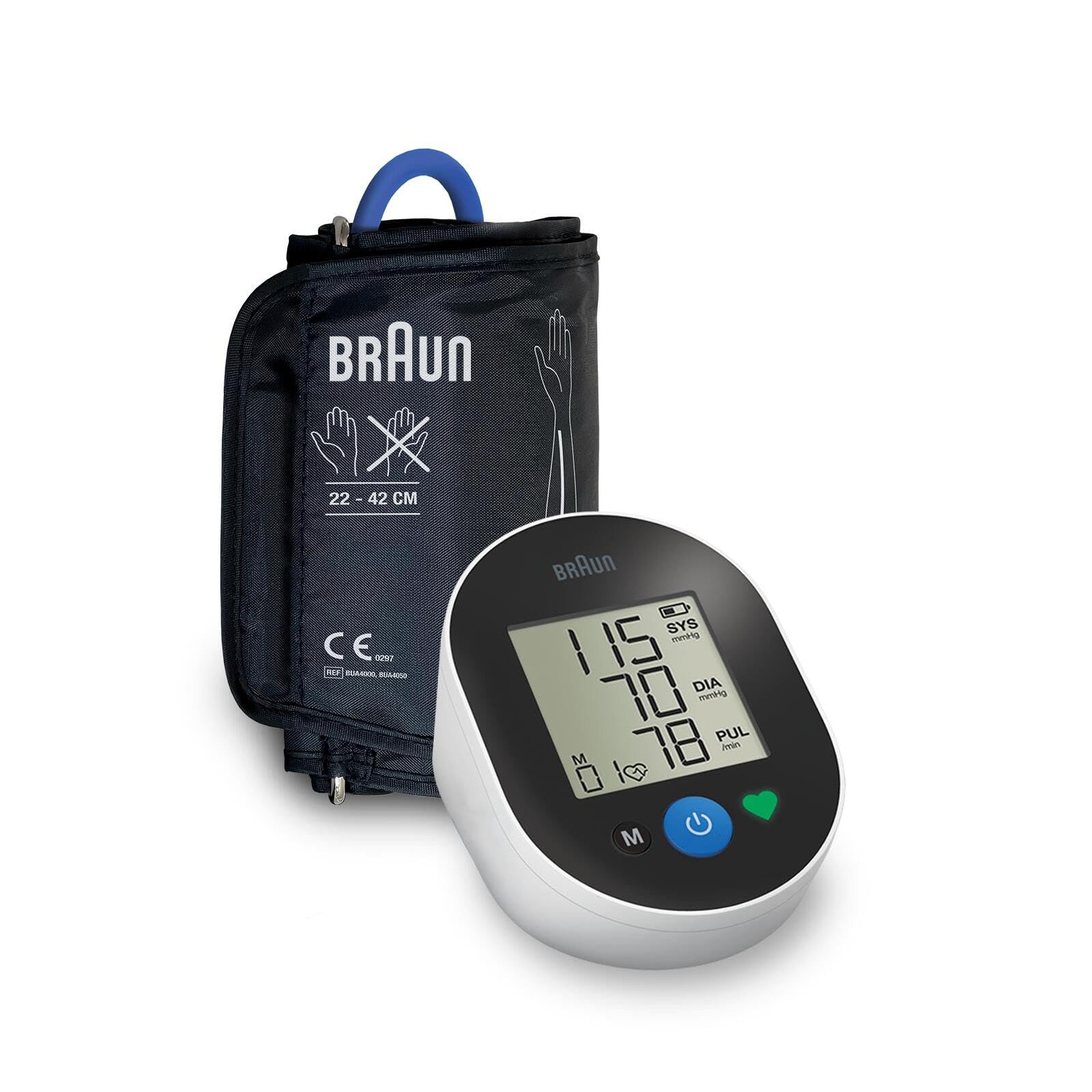
The Braun ExactFit 2 uses an inflation measurement technique — it reads your pressure while the cuff is still inflating and stops tightening as soon as it has the data. That means less squeeze time and a more comfortable overall experience compared to standard deflation-based monitors. The universal cuff fits arms 8.6 to 16.5 inches.
Most users confirm readings are close to what they get at the doctor’s office, and the color-coded indicator (green/yellow/red) simplifies interpretation. A common note is that the unit requires correct cuff placement to avoid error codes, and some buyers were surprised to discover it is a licensed product (Kaz) rather than directly manufactured by Braun.
For anyone who finds typical inflation cycles uncomfortable or triggering, the ExactFit 2’s gentle approach makes daily monitoring easier to stick with.
Why it’s great
- Inflation-based measurement reduces cuff pressure
- Clinically validated for accuracy
- Color-coded indicator for quick reading
Good to know
- Licensed product, not manufactured by Braun
- May show error codes if cuff placement is off
7. Medline MDS4001

The Medline MDS4001 is a no-frills automatic monitor with a proprietary inflation algorithm that customizes pressure levels for each user. The adult cuff fits arms 8.5 to 12 inches — narrower than most competitors, so measure before buying. The one-button operation and memory of 90 recent readings make it straightforward for single users who want a basic log.
Customer feedback is consistently positive about its reliability and battery life, with several reviewers stating they threw away earlier cheap monitors after getting erratic readings, and the Medline solved that. The lack of Bluetooth, color indicators, or multi-user memory keeps the experience simple.
If you only need a basic, trustworthy monitor without any app complexity and your arm circumference is within the 12-inch limit, the Medline is a solid entry-level choice that won’t confuse you with extra features.
Why it’s great
- Simple one-button operation
- Good battery life and durable build
- 90 reading memory for trends
Good to know
- Small cuff range (max 12 inches)
- No color code or Bluetooth
FAQ
How do I know which cuff size I need for my at home blood pressure machine?
Is Bluetooth necessary for tracking blood pressure trends?
Final Thoughts: The Verdict
For most users, the best at home blood pressure machine winner is the OMRON Gold BP5360 because it offers clinical-grade AFib detection and seamless Bluetooth sync with dual-user support. If you want a no-fuss monitor with top BIHS accuracy, grab the Microlife BPM2. And for large arm households needing two cuffs out of the box, nothing beats the Cocacis U80BH.