Every feeding feels like a gamble when your baby suffers from acid reflux. The wrong bottle introduces extra air into the tummy, creating painful gas bubbles that force milk back up moments after the last swallow. A proper anti-reflux bottle uses a carefully engineered venting system to keep the feed vacuum-free, allowing your baby to swallow at their own pace without gulping air.
I’m Emma — the founder and writer behind Baby Bangs. I’ve spent months analyzing the internal vent geometries, nipple flow rates, and material compositions that actually reduce spit-up in reflux-prone infants.
This guide compares five leading designs to help you find the right bottles for acid reflux that minimize air intake and keep your baby comfortable through every feed.
How To Choose The Best Bottle For Acid Reflux
Not every “anti-colic” bottle actually works for reflux. The marketing term gets thrown around loosely, but effective reflux bottles share three non-negotiable design traits. Focus on these specs rather than brand hype.
Internal Vent System vs. External Air Holes
Most bottles cut a slit in the nipple to let air in, but that just trades one problem for another. True anti-reflux bottles use an internal vent tube or bottom-vent channel that routes air above the milk line. This prevents bubbles from mixing into the liquid your baby swallows. The Dr. Brown’s system is the gold standard here — a full internal straw that completely separates air from milk.
Bottle Material and Thermal Behavior
Glass heats more evenly and holds temperature longer without hot spots that can upset a reflux baby’s stomach. PPSU plastic is lighter and unbreakable but doesn’t transfer heat as uniformly. For middle-of-the-night feeds, glass wins on consistency. For on-the-go parents who drop things, PPSU wins on survival.
Nipple Flow Rate and Latch Geometry
Reflux babies need a slow, controlled flow — not a gush. Look for nipples explicitly labeled “slow flow” or “SS” (extra slow). The nipple tip should include a latch guide line or subtle ridge that encourages deep jaw placement, which reduces the frantic sucking reflex that triggers reflux.
Quick Comparison
On smaller screens, swipe sideways to see the full table.
| Model | Category | Best For | Key Spec | Amazon |
|---|---|---|---|---|
| Dr. Brown’s Options+ Glass | Premium Glass | Severe reflux & colic | Internal vent system with 5 pieces | Amazon |
| Gulicola Natural Glass (5 oz) | Premium Glass | Breastfed babies with reflux | Borosilicate glass, 4-piece total | Amazon |
| Pigeon PPSU Wide Neck | High-End Plastic | Active parents & travel | PPSU plastic, research-based nipple | Amazon |
| Gulicola Small Glass (3 oz) | Value Glass | Preemies & small feeds | 3 oz capacity, extra slow nipple | Amazon |
| NUK Smooth Flow Pro | Budget Plastic | Easy cleaning & assembly | One-piece nipple & collar design | Amazon |
In‑Depth Reviews
1. Dr. Brown’s Options+ Narrow Glass Baby Bottles (4 oz, 3 Pack)
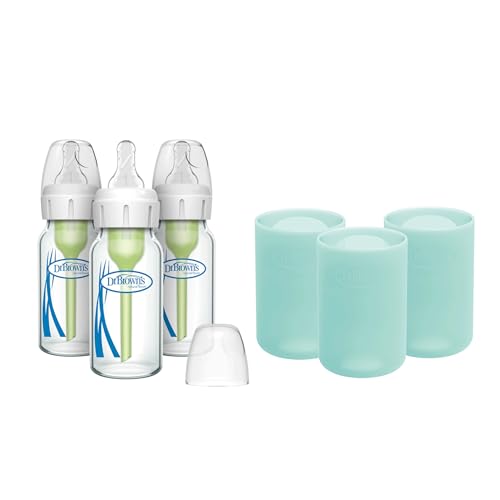
Dr. Brown’s internal vent system remains the most clinically proven design on the market for reducing colic and reflux symptoms. The narrow glass body is heat and thermal shock-resistant, meaning you can pour boiling water directly into it without worrying about shattering. The vent tube sits inside the bottle and routes air above the milk line, so your baby swallows zero bubbles — just liquid. This vacuum-free feeding is the closest mechanical simulation to breastfeeding, and it makes a dramatic difference for babies who spit up after every feed.
The borosilicate glass heats evenly and holds temperature longer than any plastic alternative. That matters for reflux because a sudden cold shock in the stomach can trigger the regurgitation reflex. The silicone sleeve provides grip and a small safety buffer against drops. The narrow neck is slightly easier for small hands to hold compared to wide-neck alternatives, and the nipple shape mimics a latch angle that encourages deep jaw placement.
The trade-off is the five-piece assembly. The vent system requires cleaning the tube, the collar, and the cap separately — it’s more parts than any other bottle on this list. Parents who skip the vent tube cleaning will see performance degrade quickly as milk residue clogs the air channel. But for severe reflux, the extra cleaning minutes are worth the reduction in crying and spit-up.
Why it’s great
- Clinically proven internal vent eliminates swallowed air
- Borosilicate glass resists thermal shock and holds heat evenly
- Consistent flow rate prevents gulping and overfeeding
- Breast-like nipple shape encourages proper latch
Good to know
- Five pieces to clean per bottle, including narrow vent tube
- Glass heavier than plastic for diaper bags
- Vent system loses effectiveness if not cleaned thoroughly
2. Gulicola Natural Glass Baby Bottle (5 oz, 2 Pack)
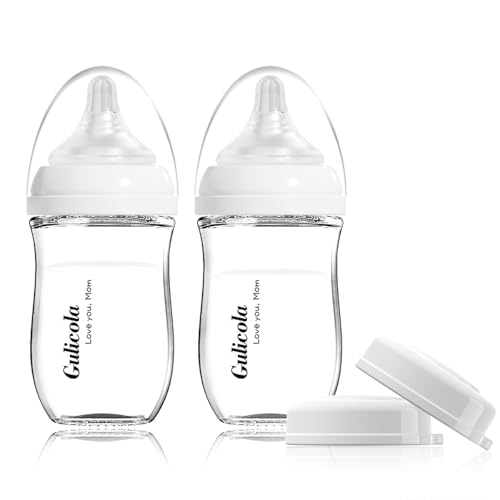
Gulicola took a simpler approach than Dr. Brown’s: fewer parts, a softer nipple, and the same borosilicate glass construction. The 4-piece design (bottle, collar, nipple, cap) eliminates the internal vent tube entirely. Instead, Gulicola relies on anti-colic vents in the nipple itself and an ultra-soft silicone that flexes with the baby’s tongue movement. This keeps the bottle feeling more like a breast and less like a rigid mechanical device.
The nipple includes subtle latch guide points that help a breastfeeding baby transfer the same mouth position to the bottle. Parents who breastfeed during the day and bottle-feed at night report that the Gulicola nipple causes less nipple confusion than harder silicone alternatives. The slow flow rate is genuinely slow — the 5 oz bottle comes with a “small flow” nipple that’s appropriate for 0-3 month olds and prevents the milk stream from overwhelming a newborn’s swallowing rhythm.
The glass durability surprised many reviewers: multiple reports of bottles hitting tile floors from counter height without cracking. The wide neck makes scooping formula powder easier than Dr. Brown’s narrow opening, and the included storage caps double the bottles as milk storage containers. The main downside is brand availability — replacement nipples and collars are harder to find than Dr. Brown’s parts, so buy spares with your initial order.
Why it’s great
- Ultra-soft silicone nipple mimics breastfeeding texture
- Only 4 pieces to clean, no vent tube
- Borosilicate glass survived drop tests on tile
- Includes storage caps to double as milk containers
Good to know
- Replacement parts from smaller brand harder to source
- Nipple vents may clog faster than internal tube designs
- 5 oz capacity requires refills for larger feeds
3. Pigeon PPSU Nursing Baby Bottle Wide Neck (5 oz, 2 Pack)
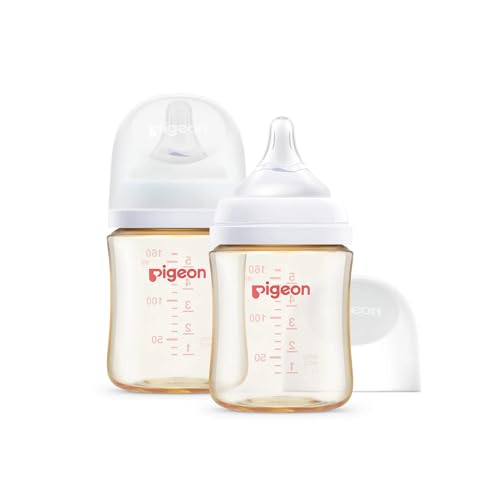
Pigeon invested heavily in research on infant sucking behavior, identifying three natural tongue movements babies use during feeding. The PPSU bottle’s nipple shape and texture directly correspond to those movements, which reduces the frantic swallow reflex that triggers reflux. The SS (super slow) nipple flow is the slowest on this list — slower than Dr. Brown’s Level 1 and definitely slower than the average newborn nipple.
PPSU plastic is the real standout here. It’s a high-heat-resistant polymer that doesn’t contain BPA, BPS, or phthalates, yet it’s virtually unbreakable. For parents who drop bottles in parking lots or have toddlers grabbing at the bottle during feeds, PPSU survives impacts that would shatter glass. It’s also noticeably lighter in a diaper bag, which makes a difference when you’re carrying three bottles and a pump.
The streamlined wide neck is easier to clean than narrow-glass bottles but still requires brushing the internal threads. The nipple includes a latch line that helps position the baby’s lips for an effective seal, reducing the air leaks that happen when a baby’s mouth slips off-center. The trade-off: PPSU doesn’t hold heat as evenly as glass, so milk cools faster during prolonged feeds. For fast eaters this won’t matter, but for slow, reflux-y feeds you might need to warm mid-feed.
Why it’s great
- Unbreakable PPSU plastic for on-the-go durability
- SS nipple is the slowest flow rate available
- Nipple shape based on infant sucking behavior research
- Latch line helps position baby’s lips for effective seal
Good to know
- PPSU doesn’t hold heat as long as glass
- Premium-priced compared to other plastic bottles
- Wide neck still needs brush cleaning for threads
4. Gulicola Small Glass Baby Bottle (3 oz, 2 Pack)
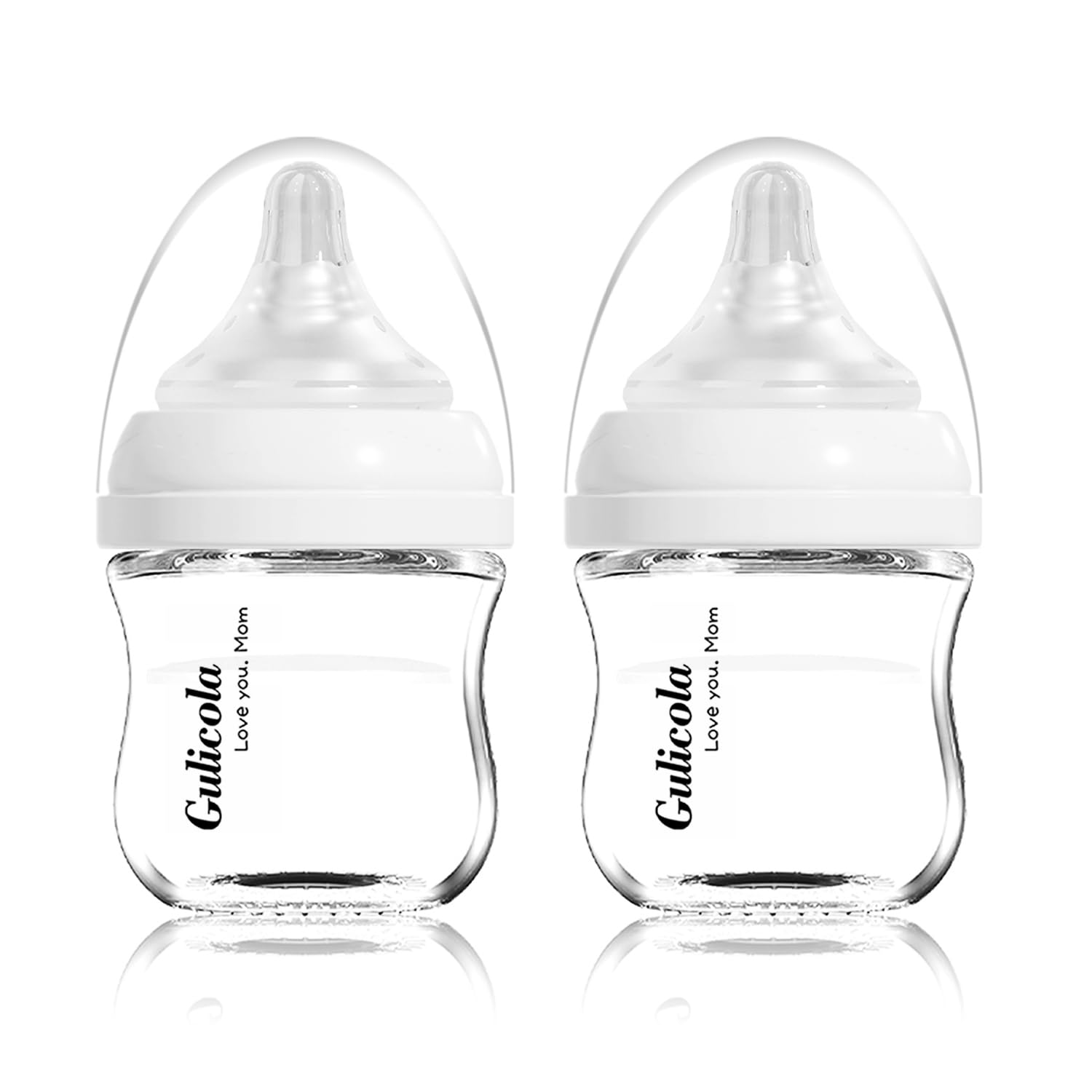
The 3 oz Gulicola is the only bottle on this list specifically designed for preemies and newborns who take very small volumes per feed. At 3 oz, it eliminates the wasted headspace that larger bottles create — less air inside the bottle means less air turbulence during feeding, which translates directly to less swallowed gas. The extra slow flow nipple (designated for 0 months+) meters milk drop by drop, giving a preemie’s immature swallowing reflex time to coordinate.
The borosilicate glass construction is identical to the 5 oz version: thermal shock-resistant, BPA-free, and capable of surviving moderate drops. The smaller volume also means the bottle is physically lighter and easier for a parent to hold during angled feeds, which is critical for reflux babies who need to be fed in a semi-upright position. The wide neck still accepts standard bottle warmer sizes and dishwasher baskets.
Parents of full-term babies may find the 3 oz size too limiting after the first month — you’ll need to refill frequently or buy the 5 oz version for the same baby. The bottle also uses the same nipple-to-collar thread as the larger Gulicola, so parts are cross-compatible if you upgrade later. The smaller brand issue applies here too: replacement collars are harder to find than major brands.
Why it’s great
- 3 oz size eliminates headspace air for small feeds
- Extra slow flow ideal for preemies and newborns
- Borosilicate glass survives drops and heats evenly
- Cross-compatible with larger Gulicola parts
Good to know
- Outgrown quickly by full-term babies
- Replacement parts harder to find than Dr. Brown’s
- Small capacity requires refills for larger feeds
5. NUK Smooth Flow Pro Anti Colic Baby Bottle (10 oz)

NUK’s Smooth Flow Pro simplifies bottle cleaning to the absolute minimum: the nipple and collar are fused into one piece. There’s no separate collar ring to thread onto the bottle — the entire top assembly snaps on and off as a single unit. This eliminates the narrow crevices where milk residue hides and makes middle-of-the-night washing dramatically faster. The one-piece design also reduces the chance of leak-causing assembly errors.
The anti-colic venting system routes air through the collar rather than through an internal tube. This makes the bottle mechanically simpler but slightly less effective than Dr. Brown’s full internal vent. Customer reviews note occasional leaks when mixing formula powder directly in the bottle, especially if you shake vigorously with the straw insertion port open. The 10 oz capacity is the largest on this list, suitable for older babies who take full feeds without needing a refill.
The nipple shape is designed to support a natural latch for breastfed babies, with a soft silicone feel that encourages deep jaw placement. The purple color-coding indicates the anti-colic vent position, but several reviewers reported that the purple collar pieces can warp in bottle warmers, causing intermittent leaks. This appears to be a batch-quality issue rather than a design flaw, but it’s worth inspecting your units immediately after the first warm cycle.
Why it’s great
- One-piece nipple and collar reduces cleaning time
- 10 oz capacity eliminates refills for older babies
- Soft silicone nipple supports breastfeeding latch
- Fewer parts means lower assembly error rate
Good to know
- Occasional leaks when mixing formula in bottle
- Purple collar pieces may warp in bottle warmers
- Venting less effective than internal tube systems
FAQ
Can a different bottle nipple fix my baby’s reflux without changing the bottle itself?
How often should I replace the vent parts in an anti-reflux bottle?
Is PPSU plastic safe for daily use with a reflux baby?
Final Thoughts: The Verdict
For most families, the bottles for acid reflux winner is the Dr. Brown’s Options+ Glass because its internal vent system provides the most complete air-milk separation available, directly reducing the gas bubbles that trigger reflux. If you want a nipple that feels more like breastfeeding and fewer parts to wash, grab the Gulicola Natural Glass (5 oz). And for unbreakable durability during travel, nothing beats the Pigeon PPSU Wide Neck.