Introducing solids to your baby is a milestone—but the mess, the waste, and the worry about what’s actually inside those tiny tubs can quickly turn excitement into stress. You want convenience without compromising on nutrition, and that means finding pouches that deliver real fruits, vegetables, and grains without added sugars or fillers.
I’m Emma — the founder and writer behind Baby Bangs. I’ve spent over a year analyzing the nutritional labels, organic certifications, and texture profiles of the most popular baby food pouches on the market to help parents cut through the marketing noise.
After reviewing dozens of options, I’ve narrowed the field to five standout packs that balance clean ingredients, stage-appropriate texture, and real value. This guide to the best baby food pouches focuses on what actually matters for your little one’s development.
How To Choose The Best Baby Food Pouches
Not all pouches are built the same. A pack that claims “organic” might still pack fruit concentrate, while a stage 2 pouch can be too thin for a baby ready for chunkier textures. Here’s what to check before you add to cart.
Stage Matching (Texture & Age)
Stage 1 pouches are single-ingredient purees (think pear or sweet potato) for first tastes around 4–6 months. Stage 2 blends two or more ingredients and can include slightly thicker purees. Stage 3 offers chunkier textures to encourage chewing, and Stage 4 is for toddlers who are on the move and need more fiber and protein per pouch. Picking the wrong stage can lead to gagging or a baby who refuses to eat.
Organic Certification & Pesticide Residue
Baby digestive systems are more sensitive to pesticide exposure. USDA Organic certification means the fruits, vegetables, and grains were grown without synthetic pesticides, herbicides, or GMOs. A pouch labeled “natural” does not carry this guarantee. For the youngest eaters, organic is the safer baseline.
Added Sugars & Hidden Sweeteners
Many fruit-forward pouches contain concentrated fruit juice or apple puree concentrate that spikes sugar content without adding fiber. Look for pouches that list whole fruits and vegetables first, and avoid any ingredient ending in “concentrate” or “syrup.” Unsweetened blends keep your baby’s palate developing toward real food.
Protein, Fiber & Omega-3 Content
By Stage 3 and 4, your baby needs more than just fruit puree. Pouches with added chia seeds, oats, white beans, or coconut milk provide fiber for digestion and omega-3s for brain development. A pouch with at least 2–3 grams of fiber and 1 gram of protein offers more staying power between meals.
Quick Comparison
On smaller screens, swipe sideways to see the full table.
| Model | Category | Best For | Key Spec | Amazon |
|---|---|---|---|---|
| HAPPYTOT Super Morning | Stage 4 Organic | Dairy-free breakfast on the go | 3g fiber, omega-3s, coconut milk | Amazon |
| Plum Organics Mighty Builder | Stage 3 Organic | Hidden veggies & protein | White bean & chia base | Amazon |
| HAPPYTOT Super Bellies | Stage 4 Organic | Immune & digestive support | 35mg beta-glucan + prebiotic fiber | Amazon |
| Kirkland Signature Organic | Multi-Stage | Budget-friendly bulk buy | No sugar added, 24-count | Amazon |
| Gerber My First Starter Kit | Stage 1 | First tastes & allergy checks | Single-ingredient 2 oz tubs | Amazon |
In‑Depth Reviews
1. HAPPYTOT Organics Stage 4 Super Morning Fruit & Oat Blend
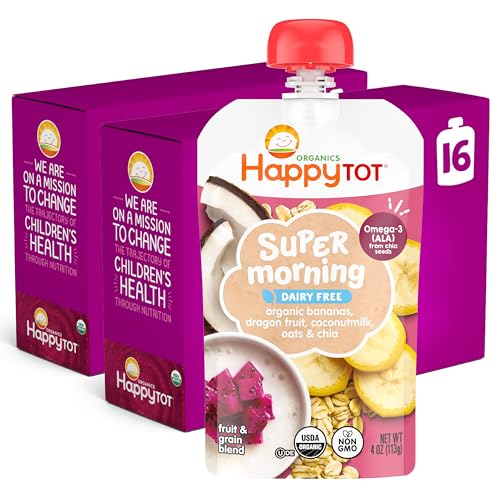
The HAPPYTOT Super Morning pouches solve a real problem for parents of mobile toddlers: a breakfast option that doesn’t require a spoon, a bowl, or 15 minutes of prep. Each 4 oz pouch packs 3 grams of fiber from oats and chia, plus omega-3s from the chia seeds, all suspended in a coconut milk base rather than dairy. That makes this one of the few Stage 4 pouches that works for toddlers with dairy sensitivities while still delivering enough fat and calories to keep a picky eater satisfied through the morning.
The texture is noticeably thicker than standard fruit purees—closer to a thin oatmeal than a smoothie—which reduces the mess factor when your toddler starts squeezing the pouch themselves. The banana, dragon fruit, and coconut milk flavor profile is mildly sweet without any added sugars, relying entirely on the fruit’s natural sweetness. Parents of sensory-sensitive children have noted the consistency is less slimy than pure fruit blends, making it easier for kids who reject smooth textures.
At 16 pouches per pack, the per-pouch cost lands in the mid-zone for organic Stage 4 options. The resealable cap holds up well to being tossed in a diaper bag, and the absence of live cultures means you don’t need to refrigerate until opened, making it genuinely travel-friendly. This is the pouch to grab when you need a nutritionally complete snack that doubles as a meal substitute during travel or illness.
Why it’s great
- Dairy-free coconut milk base suitable for sensitive tummies
- 3g fiber and omega-3s from chia and oats
- Thick texture reduces messy accidents during self-feeding
Good to know
- Stage 4 recommended for 2 years and up
- Some toddlers may find the oat texture too thick
2. Plum Organics Mighty Builder Variety Pack
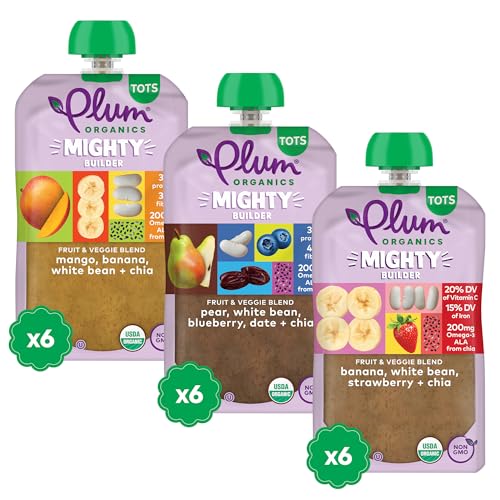
Plum Organics Mighty Builder pouches take a smart approach to toddler nutrition: they hide protein and fiber inside familiar fruit flavors rather than forcing a vegetable-forward taste. The base of each pouch is white bean puree, which delivers a smooth, almost neutral texture that blends seamlessly with mango, banana, blueberry, and strawberry. This is the pouch for parents whose toddler refuses anything green but still needs the satiety that comes from protein and fiber.
The flavor variety in this 18-pack is excellent—three rotating blends that all include white bean and chia, so you’re not stuck with a single profile if your child gets bored. The texture is noticeably thicker than standard fruit pouches, and resealable caps mean no leaking in the diaper bag. Customer reviews consistently highlight that even picky toddlers who reject other pouches will eat these, and parents appreciate the hidden vegetable content without the child knowing.
One distinct advantage over many competitors: the pouch material itself is thicker, which reduces the chance of a toddler squeezing the cap off and painting the car seat. The 4 oz size is appropriate for a snack or a light meal supplement for 12-month-olds and up. The price per pouch is slightly above average for organic toddler food, but the inclusion of white bean and chia as first ingredients justifies the jump in nutritional density.
Why it’s great
- White bean base adds protein without altering fruit taste
- Thicker pouch material minimizes squeeze-induced mess
- 18-pack offers three rotating flavors to prevent boredom
Good to know
- Recommended for 12 months and up
- Slightly pricier per pouch than basic fruit blends
3. HAPPYTOT Organics Stage 4 Super Bellies Fruit & Veggie Puree
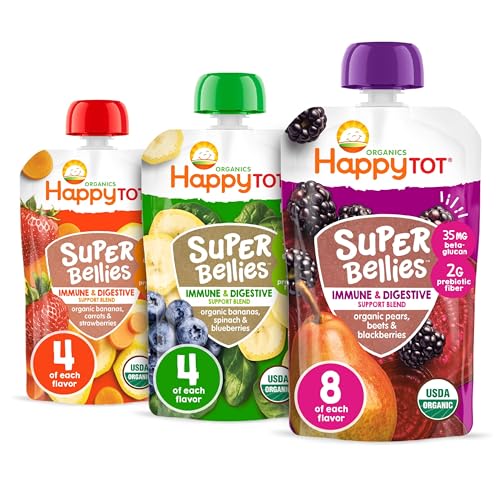
Where the Super Morning pouch focuses on breakfast fuel, the Super Bellies line targets digestive and immune health—two areas that become critical when your toddler starts daycare or group play. Each 4 oz pouch contains 35 mg of beta-glucan (a soluble fiber derived from oats that supports immune function) and 2 grams of prebiotic fiber to feed healthy gut bacteria. This makes it a strategic choice for parents navigating the constant sniffles of the toddler years.
The flavor profile is fruit-forward with subtle vegetable undertones, blending apple, sweet potato, and carrot with berry notes. It’s not as thick as the Super Morning line, but it’s still noticeably more substantial than a straight fruit puree. The 16-count pack is an Amazon exclusive variety, which means you get a wider flavor rotation than the standard retail boxes. Parents of children with constipation issues have reported noticeable improvement thanks to the prebiotic fiber content.
Like all HAPPYTOT products, the Super Bellies pouches are USDA Organic, non-GMO, and made without toxic persistent pesticides. The cap design is the same reliable screw-top used across the brand’s line, and the pouches hold up well to being tossed in a bag. If your toddler is in the stage where they refuse solids when sick but will still take a pouch, the immune-supporting beta-glucan provides a practical health boost that standard fruit pouches don’t offer.
Why it’s great
- Beta-glucan supports immune system function
- Prebiotic fiber aids digestion and regularity
- Amazon exclusive variety pack offers more flavor options
Good to know
- Stage 4 recommended for 2 years and up
- Thinner texture than oat-based competitor
4. Kirkland Signature Organic Fruit & Vegetable Pouches

Kirkland Signature’s organic pouches are the bulk-buy champion for parents who go through pouches faster than they can restock. At 24 pouches per pack, the per-unit cost is significantly lower than boutique organic brands, making it feasible to keep a stash in the diaper bag, the car, and the grandparents’ house without breaking the weekly grocery budget. All pouches are USDA Organic with no added sugar, relying on apple and fruit puree for sweetness.
The flavor lineup includes apple strawberry spinach and apple strawberry yellow carrot, which means your toddler gets a serving of vegetables in every pouch. The texture is a smooth puree—thinner than the bean-based Plum Organics pouches but comparable to standard fruit blends. The easy-open cap is a standout feature for caregivers who struggle with twist-off lids while holding a squirming baby; a simple pull tab releases the seal without requiring fine-motor precision.
The main trade-off for the low cost is nutritional density. The Kirkland pouches are primarily applesauce-based with small amounts of other fruits and vegetables, so they offer less fiber and protein per serving than the HAPPYTOT or Plum Organics options. They work best as a quick snack or a hydration source during travel rather than a meal replacement. The packaging is also less robust than premium brands—pouches can feel slightly thinner, and the caps are not always leak-proof if squeezed aggressively.
Why it’s great
- Low per-pouch cost for organic ingredients
- 24-count pack reduces frequency of reordering
- Pull-tab opening is easier for stressed hands
Good to know
- Applesauce base offers less fiber and protein
- Thinner pouches may leak under pressure
5. Gerber My First Fruits and Veggies Starter Kit
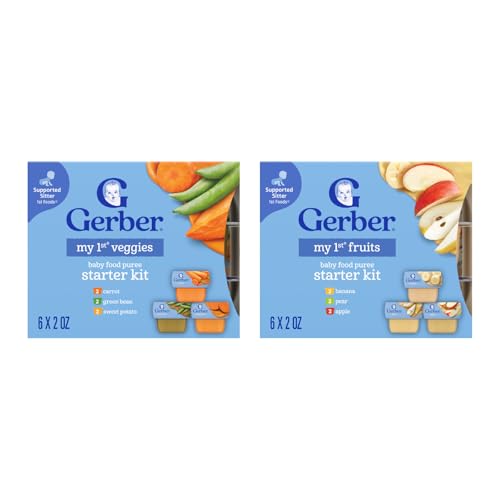
The Gerber My First Starter Kit is designed for the very beginning of the solids journey—those first few weeks when you are introducing single ingredients one at a time to check for allergic reactions. The kit splits into two sampler packs: one with banana, pear, and apple, and another with carrot, green bean, and sweet potato. Each 2 oz tub is small enough that you’re not wasting half a pouch when your baby decides after one bite that they hate sweet potato today.
The format is a tub rather than a squeeze pouch, which is actually more practical for Stage 1 feeding. You spoon-feed from the tub, which lets you control the portion and texture more precisely than letting a baby squeeze a pouch. The puree is smooth and thin, appropriate for babies who have never swallowed anything but milk. The included step-by-step feeding guide is a thoughtful touch for first-time parents who feel overwhelmed by the introduction process.
The trade-off is that these are not organic—Gerber’s standard line sources from conventional farms. For parents who want organic from the first bite, this isn’t the pick. The tubs also lack resealable lids, so any unused portion needs to be transferred to a different container for refrigeration. But as a low-waste, low-commitment way to introduce six common first foods, the Starter Kit is the most practical entry point for new parents navigating the anxiety of early feeding.
Why it’s great
- Small 2 oz portions minimize waste during first tastes
- Six single-ingredient options for allergy checking
- Includes feeding guide for first-time parents
Good to know
- Not USDA Organic
- Tubs lack resealable lids
FAQ
Can I feed my baby pouches past the expiration date?
Are baby food pouches safe for self-feeding a 6-month-old?
Do organic pouches really have fewer pesticides?
How many pouches per day is too many for a toddler?
Can I freeze baby food pouches for later use?
Final Thoughts: The Verdict
For most families, the best baby food pouches winner is the HAPPYTOT Super Morning because it solves the hardest problem—getting a dairy-sensitive, picky toddler to eat a fiber-rich breakfast without a battle. If you want protein-packed purees that hide vegetables behind fruit flavor, grab the Plum Organics Mighty Builder. And for parents buying in bulk for everyday snacking, nothing beats the per-pouch value of the Kirkland Signature Organic pouches.