Low porosity hair resists moisture. The cuticles lie flat and tight, so water, oils, and conditioners bead up on the surface rather than sinking in. The result is a cycle of buildup followed by dryness — a frustrating contradiction that standard clarifying shampoos only make worse. Harsh sulfates strip everything, leaving the hair brittle, while oil-based cleansers add to the residue problem. You need a formula that lifts mineral deposits and styling product residue without breaking the moisture barrier.
I’m Emma — the founder and writer behind Baby Bangs. I’ve spent years comparing formulations across hair types, analyzing ingredient lists for bioavailability, pH balance, and surfactant profiles that respect the cuticle structure of low porosity strands.
Finding the right clarifying shampoo for low porosity hair means identifying cleansers that remove buildup without stripping natural oils or leaving behind waxy residues. This guide breaks down five sulfate-free, pH-balanced options that actually work with tight cuticles instead of against them. Here is my review of the best clarifying shampoo for low porosity hair.
How To Choose The Best Clarifying Shampoo For Low Porosity Hair
Low porosity hair is defined by cuticles that lie flat and overlap tightly. This structure blocks moisture and product penetration. A clarifying shampoo for this hair type must dissolve mineral and product buildup without adding waxy ingredients that sit on the hair shaft. Here are three factors that separate effective formulas from problematic ones.
Surfactant Profile: Mild Cleansing Without Sulfates
Avoid sodium lauryl sulfate (SLS) and sodium laureth sulfate (SLES). These surfactants are too aggressive for low porosity cuticles; they strip the hair of its natural lipids, leaving it rough and prone to hygral fatigue. Look for cocamidopropyl betaine, decyl glucoside, or sodium cocoyl isethionate — these mild cleansers lift buildup without over-expanding the cuticle.
pH and Chelating Agents
Low porosity hair benefits from slightly acidic shampoos (pH 4.5–5.5) that help close the cuticle after cleansing. Chelating agents like EDTA or tetrasodium glutamate diacetate bind to hard water minerals and metal ions, which accumulate easily on low porosity cuticles and cause dullness. Apple cider vinegar and fermented vinegars naturally chelate while balancing scalp pH.
No Heavy Oils, Butters, or Silicones
Coconut oil, shea butter, and dimethicone are common ingredients in “moisturizing” shampoos, but they are pore-clogging for low porosity hair. These substances form a film on the cuticle that prevents water and nutrients from entering. A clarifying shampoo for low porosity hair must exclude these waxes so that the clean scalp and hair can actually accept moisture from the conditioner that follows.
Quick Comparison
On smaller screens, swipe sideways to see the full table.
| Model | Category | Best For | Key Spec | Amazon |
|---|---|---|---|---|
| Nécessaire Rosemary Shampoo | Premium | Daily gentle strengthening | Plant proteins + ceramides | Amazon |
| 107 Clarifying Shampoo | Premium | Fermented vinegar deep scalp clean | 7-year fermented ginkgo vinegar | Amazon |
| Ouidad Water Works | Mid-Range | Curly hair buildup removal | Citrus extracts + camellia | Amazon |
| L’Oreal EverPure Clarify & Restore | Mid-Range | Color-treated low porosity hair | Vitamin C + glycine | Amazon |
| PURA D’OR Apple Cider Vinegar | Value | Budget-friendly detox | ACV + biotin + 15 actives | Amazon |
In‑Depth Reviews
1. Nécessaire Rosemary Shampoo

Nécessaire’s Rosemary Shampoo is a gel-based formula built around pure rosemary oil, plant surfactants, and essential ceramides. For low porosity hair, the absence of sulfates and silicones is critical — the gel texture rinses clean without leaving residue on flat cuticles. The rosemary strengthens, while ceramides reinforce the hair’s natural lipid layer.
Reviews confirm that a small amount produces a rich lather, and users with fine or thinning hair report noticeably fuller, softer strands after consistent use. The fragrance — rosemary paired with mandarin, jasmine, and cedar — dissipates after drying, which avoids clashing with leave-in products. This is a premium-tier option designed for daily use rather than weekly deep-cleans.
The formula is color-safe, hypoallergenic, and non-comedogenic, meaning it won’t clog the cuticle or cause scalp irritation. If your low porosity hair needs a gentle, protein-rich lift without any waxy buildup, this is the most refined daily option on this list.
Why it’s great
- Ultra-mild gel base leaves zero residue on low porosity cuticles
- Plant proteins and ceramides strengthen without weighing down
- Hypoallergenic and color-safe for sensitive scalps
Good to know
- Premium price point compared to drugstore options
- The conditioner requires careful rinsing to avoid buildup
2. 107 Clarifying Shampoo

This purifying shampoo from 107 leverages VIN-H7, a 7-year fermented ginkgo vinegar rich in probiotics, amino acids, and nutrients. The fermented vinegar acts as a natural chelator, binding to hard water minerals and product buildup while its mild acidity (pH 4.5–5.5) helps seal the cuticle. For low porosity hair, this is a targeted approach that exfoliates flakes and buildup without stripping moisture.
Customer feedback highlights its effectiveness for itchy, dry scalps and dandruff. Users with fine curls report less shedding, increased shine, and the ability to extend wash days to three days. The formula excludes parabens, phthalates, and sulfates, and is packaged in 50% post-consumer recycled material, which matters for buyers prioritizing sustainability.
The rosemary scent is refreshing but not overpowering, and the gel texture foams gently — no need to scrub aggressively. If low porosity buildup has led to scalp discomfort or flaking, this premium fermented formula addresses both the scalp health and the cuticle structure simultaneously.
Why it’s great
- 7-year fermented ginkgo vinegar chelates minerals without stripping
- Reduces scalp itchiness, flaking, and dandruff in two weeks
- Sulfate-free and safe for sensitive skin
Good to know
- Must follow with conditioner to re-moisturize low porosity strands
- Premium price point reflects the fermented ingredient process
3. Ouidad Water Works Clarifying Shampoo

Ouidad’s Water Works is formulated specifically for curly and wavy hair types, making it a smart mid-range choice for low porosity curls. Lemon, grapefruit, and orange extracts break down stubborn residues like silicones and heavy creams without stripping the natural moisture. Botanical camellia extract adds a light conditioning touch that prevents the “squeaky clean” dryness typical of standard clarifying formulas.
Multiple reviews note how concentrated the formula is — a small amount lasts months, which offsets the mid-range price per ounce. Users with oily low porosity scalps report that it keeps the scalp fresh without over-drying the ends. The formula is silicone-free, paraben-free, mineral-oil-free, and vegan.
If you have low porosity hair with a curl or wave pattern and need a once-a-week clarifying wash that doesn’t leave hair feeling stripped, this is the proven workhorse. The only caveat is the mild fragrance — if you prefer a stronger clean-hair scent, this may feel understated.
Why it’s great
- Citrus enzymes dissolve silicone buildup without sulfates
- Concentrated gel — a single bottle lasts months
- Vegan and cruelty-free with clean ingredient profile
Good to know
- Light fragrance — not ideal if you want a strong “clean” scent
- Mid-range pricing but concentrated use makes it cost-effective
4. L’Oreal Paris EverPure Clarify & Restore Sulfate Free Shampoo & Conditioner Set

L’Oreal’s EverPure line targets color-treated hair, but its dual-action technology — Vitamin C to remove buildup and glycine to lock in moisture — works well for low porosity hair that also takes color. The sulfate-free shampoo lathers well without expanding the cuticle, while the conditioner provides moisture without heavy butters that cause buildup.
Customer reviews consistently praise this duo for leaving low porosity hair clean, soft, and shiny without the “stripped” feeling. Users with oily low porosity scalps found that the set extended time between washes, as the scalp remained fresh longer. The conditioner is concentrated — a tiny amount is sufficient, and overuse leads to rinsing difficulty.
This set is an excellent mid-range entry point for low porosity hair that faces hard water exposure or styling product residue. The inclusion of antioxidants protects color integrity while the clarifying action keeps cuticles clear. At this price point, it competes strongly against salon-only brands.
Why it’s great
- Vitamin C chelates hard water minerals without harsh sulfates
- Conditioner delivers 2x moisture without weighing hair down
- Vegan, sulfate-free, paraben-free formula
Good to know
- Conditioner requires thorough rinsing to prevent residue on low porosity hair
- Best as a set — using just the shampoo may over-clarify
5. PURA D’OR Apple Cider Vinegar Thin2Thick Shampoo
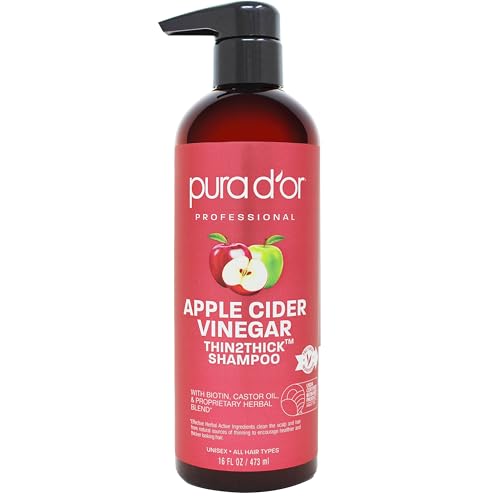
PURA D’OR’s ACV shampoo is the most budget-friendly option here, combining apple cider vinegar with biotin and castor oil in a 15-ingredient blend. ACV gently chelates buildup while the low pH helps seal the cuticle. Castor oil is added for shine, but because low porosity hair resists heavy oils, users should note this may leave a slight film if not rinsed thoroughly.
Customer reports indicate excellent results for dandruff and dry scalp relief — one review noted it cured a child’s scalp issues in two washes. The shampoo produces a good foam (unusual for a sulfate-free formula), and the smell is mild with a subtle vinegar note that fades. Users with locs also report it works well as a residue-free alternative to heavier clarifying products.
If you’re looking for an entry-level clarifying shampoo that won’t break the bank, this is a solid choice. Just be prepared to follow with a lightweight, protein-free conditioner to balance the castor oil content, and rinse thoroughly to avoid any film on low porosity strands.
Why it’s great
- Apple cider vinegar chelates buildup at a budget-friendly price
- Effective against dandruff and scalp itching in just a few washes
- Good lather despite being sulfate-free
Good to know
- Castor oil may leave a film on low porosity hair if not rinsed thoroughly
- Biotin blend may be too heavy for very fine, low porosity strands
FAQ
How often should I clarify low porosity hair?
Can apple cider vinegar shampoo damage low porosity hair?
Should I use protein in low porosity hair?
Why does my low porosity hair feel sticky after clarifying?
Final Thoughts: The Verdict
For most users, the best clarifying shampoo for low porosity hair winner is the Nécessaire Rosemary Shampoo because it delivers a daily-strength, residue-free gel cleanse with plant proteins and ceramides that reinforce low porosity cuticles without stripping. If you want a deep fermented-vinegar scalp reset, grab the 107 Clarifying Shampoo. And for a budget-conscious entry that still removes buildup, nothing beats the PURA D’OR Apple Cider Vinegar Shampoo.