Your salon color was an investment — in time, in money, in the way you feel when you catch your reflection. The wrong shampoo can strip that investment in a matter of washes, leaving you with faded tones, brassiness, and a return trip you didn’t budget for.
I’m Emma — the founder and writer behind Baby Bangs. I analyze wash chemistry, surfactant mildness, and color-retention formulations so you don’t have to decode ingredient labels alone.
This guide cuts through the marketing noise to deliver the straight facts on the best color protecting shampoo for your specific hair type, wash routine, and color-tolerance level.
How To Choose The Best Color Protecting Shampoo
Color-protecting shampoos vary widely in their cleansing power, ingredient bases, and specificity for different color types. The wrong pick can strip vibrancy or leave buildup that dulls your shade.
Surfactant Profile — Sulfate Levels
Sodium Lauryl Sulfate (SLS) and Sodium Laureth Sulfate (SLES) are aggressive cleansers that strip both natural oils and artificial color molecules. The gentlest options use coco-glucoside, sodium cocoyl isethionate, or decyl glucoside — these clean without prying open the hair cuticle where your color lives.
Targeted Color Preservation
Reds and coppers fade fastest due to their larger molecular size. Blondes and grays need blue-violet pigments to neutralize brass. Brunettes benefit from formulas with UV-blocking ingredients like sunflower seed extract. Match the formula’s protective technology to your specific color family.
Scalp Compatibility
Color-treated scalps are often more sensitive. Look for microbiome-friendly certifications, aloe, and plant-based soothing agents if you experience post-color irritation. A shampoo that causes scalp flaking or itching will lead you to wash more aggressively, accelerating color loss.
Quick Comparison
On smaller screens, swipe sideways to see the full table.
| Model | Category | Best For | Key Spec | Amazon |
|---|---|---|---|---|
| BioSilk Color Therapy Shampoo | Premium | Brassiness prevention | Silk protein + rooibos extract | Amazon |
| Naturtint Color Care Shampoo | Premium | High natural ingredient content | 98.8% natural origin | Amazon |
| Biotera Color Care Shampoo | Mid-Range | Microbiome-friendly formula | Microbiome-Friendly Certified | Amazon |
| Mixed Chicks Sulfate-Free Shampoo | Mid-Range | Curly and wavy color-treated hair | Avocado + sweet almond oil | Amazon |
| Nizoral Anti-Dandruff Shampoo | Mid-Range | Color-treated + dandruff control | Ketoconazole 1% | Amazon |
In‑Depth Reviews
1. BioSilk Color Therapy Shampoo
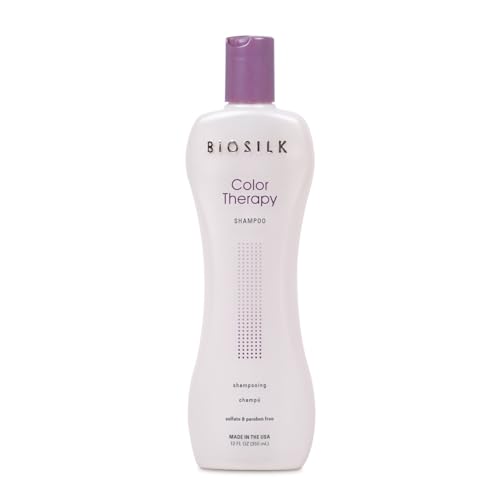
BioSilk pairs silk protein with rooibos and bamboo extract to create a gentle surfactant system that rids hair of impurities without pulling color out of the cuticle. Users with blonde or highlighted hair consistently report reduced brassiness between salon visits, a direct result of the rooibos’s natural color-stabilizing flavonoids.
The 12-ounce bottle delivers impressive mileage — reviewers with completely different hair textures (one fine and straight, one coarse and curly) both report satisfying softness and shine from the same formula. The lather is rich enough for a satisfying wash experience despite the sulfate-free profile.
Apply from roots to ends with lukewarm water and follow with the matching conditioner for maximum color-lock effect. The subtle scent is pleasant without competing with styling products.
Why it’s great
- Effectively prevents brassiness in blonde and highlighted hair
- Works across very different hair textures and types
- Bottle lasts months even with shared household use
Good to know
- Scent may be too subtle for those who prefer strongly fragranced shampoos
- Needs thorough rinsing to avoid residue on fine hair
2. Naturtint Color Care Shampoo
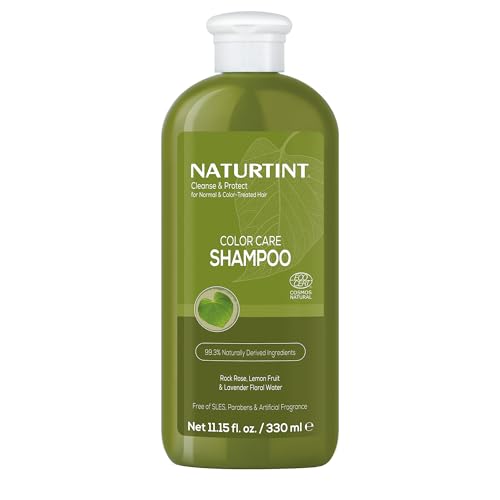
Naturtint’s formula stands out for its plant-enriched composition — 98.8% natural origin ingredients including sunflower seed extract, lemon fruit water, and lavender flower water. Sunflower seed extract is a proven UV absorber that protects color molecules from photo-degradation, making this a strong choice for daily use in sunny climates.
The formula is free from parabens, synthetic fragrance, silicone, SLS, and SLES, which means it cleans gently without disrupting the scalp’s natural barrier. Reviewers with color-treated hair report that their shade retains richness longer, and several noted that switching to Naturtint resolved dandruff issues caused by harsher shampoos.
Pair this with Naturtint’s own home coloring kits for a fully integrated color-care routine. The 12.63-ounce bottle is competitively sized for a premium natural formula at a reasonable per-wash cost.
Why it’s great
- Exceptionally high natural ingredient content with UV-protective sunflower extract
- Eliminates dandruff and scalp irritation for some users
- Safe for daily use on all hair types
Good to know
- Some users find the natural scent unpleasant or too earthy
- Premium positioning may feel overpriced for the bottle size
3. Biotera Color Care Shampoo

Biotera’s Color Care Shampoo is certified Microbiome-Friendly, meaning it’s formulated to preserve the delicate bacterial ecosystem of the scalp — a detail that matters if you experience sensitivity after coloring. The rich lather extends color life through a gentle cleansing matrix that doesn’t over-strip the cuticle.
At 15.2 ounces, this is the largest bottle in the mid-range tier, offering the lowest per-wash cost among the color-protecting options here. Reviewers consistently praise the pleasant, non-strong scent and the way it leaves hair bouncy and moisturized without greasiness. Several noted it works well for non-color-treated hair too.
Users with hard water report needing slightly more product to achieve full lather, but the overall consensus is that this is a reliable, affordable workhorse for maintaining salon color between appointments.
Why it’s great
- Microbiome-Friendly certification supports post-color scalp health
- Exceptional value with a large 15.2-ounce bottle
- Light, pleasant scent that doesn’t interfere with styling products
Good to know
- May require extra product in hard water areas
- Some users with non-color-treated hair find it unremarkable
4. Mixed Chicks Sulfate-Free Shampoo

Mixed Chicks is specifically formulated for colored and chemically treated hair on curly, wavy, and coily textures. The key ingredients — avocado, sweet almond oil, and aloe — work together to mildly cleanse without stripping the natural oils that curls depend on for definition and moisture retention.
The sulfate-free formula doesn’t lather like conventional shampoos, which can take adjustment if you’re used to rich suds. Reviewers with sensitive, frizz-prone skin note that this is one of the few color-safe options that doesn’t cause scalp breakouts or leave hair weighed down. The mild scent is barely there, making it suitable for fragrance-sensitive users.
For best results, focus the shampoo on the scalp and let the suds run through the ends rather than scrubbing the lengths directly. Follow with the matching Mixed Chicks conditioner for a complete color-safe routine.
Why it’s great
- Specifically designed for curly, wavy, and coily color-treated hair
- Moisturizing oils prevent frizz and dehydration
- Safe for very sensitive skin and scalps
Good to know
- Low-lather formula may feel insufficient for users accustomed to rich suds
- Fragrance is very mild, which may disappoint those who prefer scented hair care
5. Nizoral Anti-Dandruff Shampoo

Nizoral is the outlier on this list — a medicated anti-dandruff shampoo with 1% Ketoconazole that is explicitly labeled safe for color-treated, chemically processed, and gray hair. The active ingredient works by killing the scalp fungus that causes dandruff, addressing the root cause rather than just masking flakes.
The manufacturer recommends using it only twice per week, which makes it a supplemental rather than daily color-protecting shampoo. The Ketoconazole formula can be drying with frequent use, so pairing with a rich conditioner is essential for maintaining color-treated hair health. Reviewers report dramatic dandruff elimination after just one or two washes.
For color-treated hair with concurrent dandruff or scalp issues, this dual-action capability is unmatched. The 7-ounce bottle is compact but potent — a little goes a long way when used on the recommended twice-weekly schedule.
Why it’s great
- Clinically proven antifungal action with Ketoconazole 1%
- Explicitly safe for color-treated and chemically processed hair
- Eliminates dandruff and itching rapidly with minimal use
Good to know
- Can be drying; requires conditioner pairing for color-treated hair
- Only recommended for 2 uses per week, not a daily color-protecting shampoo
- Small bottle size may feel less economical for regular use
FAQ
Can I use a color protecting shampoo on non-color-treated hair?
How often should I wash color-treated hair to preserve vibrancy?
Do all color protecting shampoos prevent brassiness in blonde hair?
Can I skip conditioner if I use a moisturizing color protecting shampoo?
What ingredient indicates a shampoo is truly color safe?
Final Thoughts: The Verdict
For most users, the best color protecting shampoo winner is the BioSilk Color Therapy Shampoo because it combines proven anti-brassiness technology with broad texture compatibility and impressive bottle longevity. If you want the highest natural ingredient content, grab the Naturtint Color Care Shampoo. And for color-treated hair that also battles dandruff, nothing beats the Nizoral Anti-Dandruff Shampoo as a twice-weekly supplement.