Your legs throb ten minutes into a run. By mile three, the heaviness settles in your calves, and no amount of stretching shakes that dull ache. Compression socks for exercise exist specifically to counteract this — they support your veins so blood returns to your heart faster, reducing that leaden feeling and cutting recovery time.
I’m Emma — the founder and writer behind Baby Bangs. I’ve spent years analyzing the mechanical performance of sports compression gear, from graduation pressure curves to fabric moisture-transport rates.
After combing through hundreds of reviews and spec sheets, I settled on five strong candidates. This guide breaks down the best compression socks for exercise so you can pick the pair that actually stays up and delivers real pressure.
How To Choose The Best Compression Socks For Exercise
Exercise-specific compression socks serve a different purpose than the ones you wear on a long flight. During movement, your calf muscles need a sock that applies graduated pressure — tighter at the ankle, looser at the calf — to assist venous return without restricting your range of motion. The wrong pair either slides down mid-stride or pinches behind the knee.
Compression Level: The 20-30 mmHg Threshold
Most everyday socks fall into the 15-20 mmHg range, which provides mild support but won’t cut it for high-output exercise. The industry standard for running, hiking, and prolonged standing is 20-30 mmHg. This range delivers enough circumferential pressure to reduce swelling and speed lactate clearance without cutting off circulation during a squat or long run. If you’re new to compression, start at the lower end of this band and work up.
Fabric and Moisture Management
Polyester blends dry quickly but can trap heat. Coolmax and bamboo viscose offer superior wicking properties — they pull sweat away from the skin and keep the microclimate inside the sock dry. This directly reduces blister formation because friction decreases when the skin isn’t wet. Look for socks that list anti-blister or moisture-wicking in the product description; that’s the difference between a soggy sock by mile four and a dry one that feels like a second skin.
Quick Comparison
On smaller screens, swipe sideways to see the full table.
| Model | Category | Best For | Key Spec | Amazon |
|---|---|---|---|---|
| JOBST ACTIVA Athletic | Medical Grade | Clinically accurate 20-30 mmHg | 20-30 mmHg graduated | Amazon |
| Juclise Coolmax Crew | Crew Length | Hiking and blister-prone feet | Bamboo viscose / Coolmax blend | Amazon |
| fenglaoda 8-Pack | Value Pack | All-day wear and rotation | 20-30 mmHg, 8 pairs | Amazon |
| fenglaoda 6-Pack | Multi-Pack | Post-op and pregnancy swelling | Polyester, 6 pairs | Amazon |
| Juclise Coolmax No-Show | No-Show | Running in low-cut shoes | Anti-blister moisture wicking | Amazon |
In‑Depth Reviews
1. JOBST ACTIVA Athletic 20-30 mmHg Compression Socks
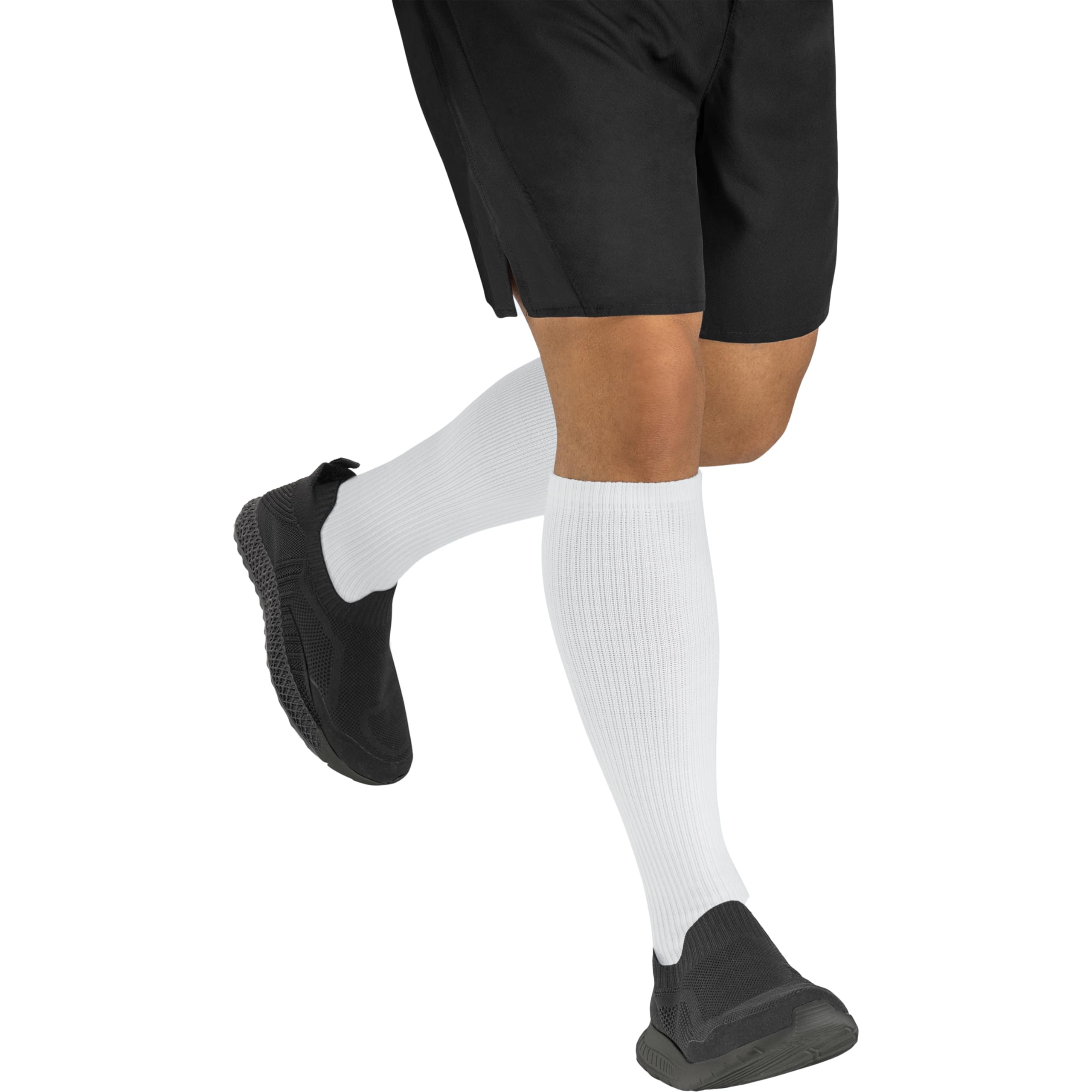
JOBST is the brand your cardiologist recommends, and this ACTIVA Athletic model brings that clinical accuracy to your training kit. The graduated compression is certified at 20-30 mmHg, which means the pressure at your ankle is significantly higher than at your calf — the exact gradient your veins need to push blood upward during a run or heavy squat session. Reviewers consistently mention that the fabric feels medium-weight, not too coarse and not too thin, and that the sock stays up around the calf without rolling or sagging even after hours of walking.
At 6-foot tall, one buyer noted the sock pulled high enough to reach the knee and remained in place during extended town walks. The closed-toe design is reinforced, and the heel pocket is shaped to avoid bunching inside your shoe. Multiple customers who were specifically advised by their doctors to switch to this brand report that the pressure rating is accurate — not inflated marketing speak. This is a single-pair sock, so the unit price reflects the premium materials and medical-grade QC.
Where the ACTIVA falls short is fit consistency across the size chart. A few reviewers found the small too short in the leg while the medium left excess toe fabric, meaning you need to measure your calf circumference and lower‑leg length carefully before ordering. The white color is clean but shows dirt quickly, and the single-pair format makes it less economical if you need a week’s rotation. For runners, hikers, and lifters who want clinically reliable compression, this is the gold standard.
Why it’s great
- True 20-30 mmHg graduated compression verified by medical buyers
- Medium-weight fabric stays up without rolling during exercise
- Reinforced heel and closed-toe design resist friction blisters
Good to know
- Single pair only — higher per-unit cost
- Sizing can be tricky; measure calf length before buying
- White color shows grime after a few runs
2. Juclise Womens Coolmax Bamboo Viscose Compression Running Crew Socks

Juclise took the Coolmax technology and married it to bamboo viscose, and the result is a crew-length compression sock that breathes better than most. The fabric balance — soft against the skin yet sturdy enough to hold its shape — makes this a favorite for hikers, inline skaters, and runners who deal with hot feet. Reviewers praise the arch support and graduated calf compression that feels firm without cutting into the back of the knee. The pad over the ankle bone is a thoughtful touch that reduces abrasion inside boots.
Multiple buyers with bunions and hammer toes reported that the toe box is roomy enough to accommodate those issues without friction. The moisture-wicking performance is backed by real sweat-testing: wearers describe a cooling effect even during sweaty sessions, and the sock dries quickly between wears. The three-pack format (Classic Black, Glacier White, Dusty Pink) gives you a rotation without committing to a single color.
Two important caveats: the socks run slightly small, so if you’re at the upper boundary of the size chart, go up a size. Also, a few users noted that the aqua blue variant fits tighter than the black, suggesting some dye-lot variation. After washing and air drying, there is a small amount of shrinkage — not enough to make them unwearable, but enough to notice. For warm-weather activities and sensitive feet, this is a top contender.
Why it’s great
- Bamboo viscose + Coolmax blend for superior moisture wicking
- Roomy toe box works with bunions and hammer toes
- Ankle bone padding reduces chafing in hiking boots
Good to know
- Runs small — size up if near the upper limit
- Color variants may fit differently (aqua runs tighter)
- Minor shrinkage after first wash and air dry
3. fenglaoda 8 Pairs Compression Socks for Men & Women 20-30 mmHg

When you need a week’s worth of compression without spending a week’s pay, the fenglaoda 8-pack delivers. Each pair is rated at 20-30 mmHg, and the polyester fabric provides a firm but comfortable squeeze that stays consistent throughout the day. Reviewers who rehabbed broken ankles with these socks confirmed that the compression helped reduce swelling and the material held up to repeated wash cycles without pilling or losing shape. The multiple-color assortment makes it easy to match with shorts or scrubs.
What sets this pack apart is the durability. After months of daily wear, buyers report no holes, no loose threads, and no loss of tension. The breathability is acceptable — the polyester wicks moisture adequately, though it doesn’t match the Coolmax bamboo blends in hot conditions. The fit is true to size for most body types, and the heel pocket is well-defined so the sock doesn’t twist during a run. The compression is described as medium-weight by most users, which places it right in the 20-30 mmHg sweet spot.
The biggest drawback is the aesthetic: the colors lean toward plain and functional, not stylish. Some buyers wished for more pattern options or brighter hues. Additionally, putting them on requires a bit of effort — that’s expected with 20-30 mmHg socks, but first-time users might find the initial tug challenging. If you’re looking for a dependable rotation that won’t break after a few washes, this eight-pack is the smart play for mid-range budgets.
Why it’s great
- Eight pairs provide a full week of rotation at a low per-pair cost
- Holds compression after repeated wash cycles without sagging
- Medium-weight 20-30 mmHg suitable for running and all-day standing
Good to know
- Colors are plain and functional — no exciting patterns
- Polyester blend doesn’t breathe as well as Coolmax in heat
- Requires moderate effort to pull on, especially for beginners
4. fenglaoda 6 Pairs Compression Socks for Women & Men

This six-pack from fenglaoda strikes a balance between medical utility and everyday wearability. The compression feels close to 20-30 mmHg according to customer feedback, but the polyester fabric is slightly less intense than clinical brands — which actually makes it easier to put on and take off. Reviewers raved about the socks during pregnancy, post-op recovery, and long nursing shifts, calling them “leg savers” that reduced heaviness and swelling. They also stay up without rolling down, a common complaint with cheaper compression gear.
The range of cute colors and patterns is a genuine differentiator here. Buyers appreciated that they didn’t have to sacrifice style for support, especially when wearing them with shorts or skirts. After many washes, the fabric retains its shape and color, though one reviewer noted the socks are warmer than medical-grade options — a trade-off for the thicker polyester weave. The sizing chart is generous, so if you’re between sizes, ordering up is recommended to avoid a too-tight fit around the calf.
Where these socks lag is in high-heat or high-humidity conditions. The polyester construction holds heat more than Coolmax blends, making them less ideal for summer marathons. A few users also mentioned that the compression feels closer to 15-20 mmHg than the advertised 20-30, so if you need unambiguously firm pressure for deep vein issues, consider a medical brand. But for general exercise recovery, pregnancy swelling, and comfortable all-day wear, this pack delivers solid value.
Why it’s great
- Easier to put on than medical-grade socks while still providing leg support
- Cute patterns and colors for a stylish look
- Stays up without rolling or slipping during activity
Good to know
- Polyester weave runs warmer — not ideal for hot weather runs
- Compression may feel closer to 15-20 mmHg than 20-30
- Size up if your calf measurement is near the upper boundary
5. Juclise Coolmax Bamboo Viscose Compression Running No Show Athletic Socks
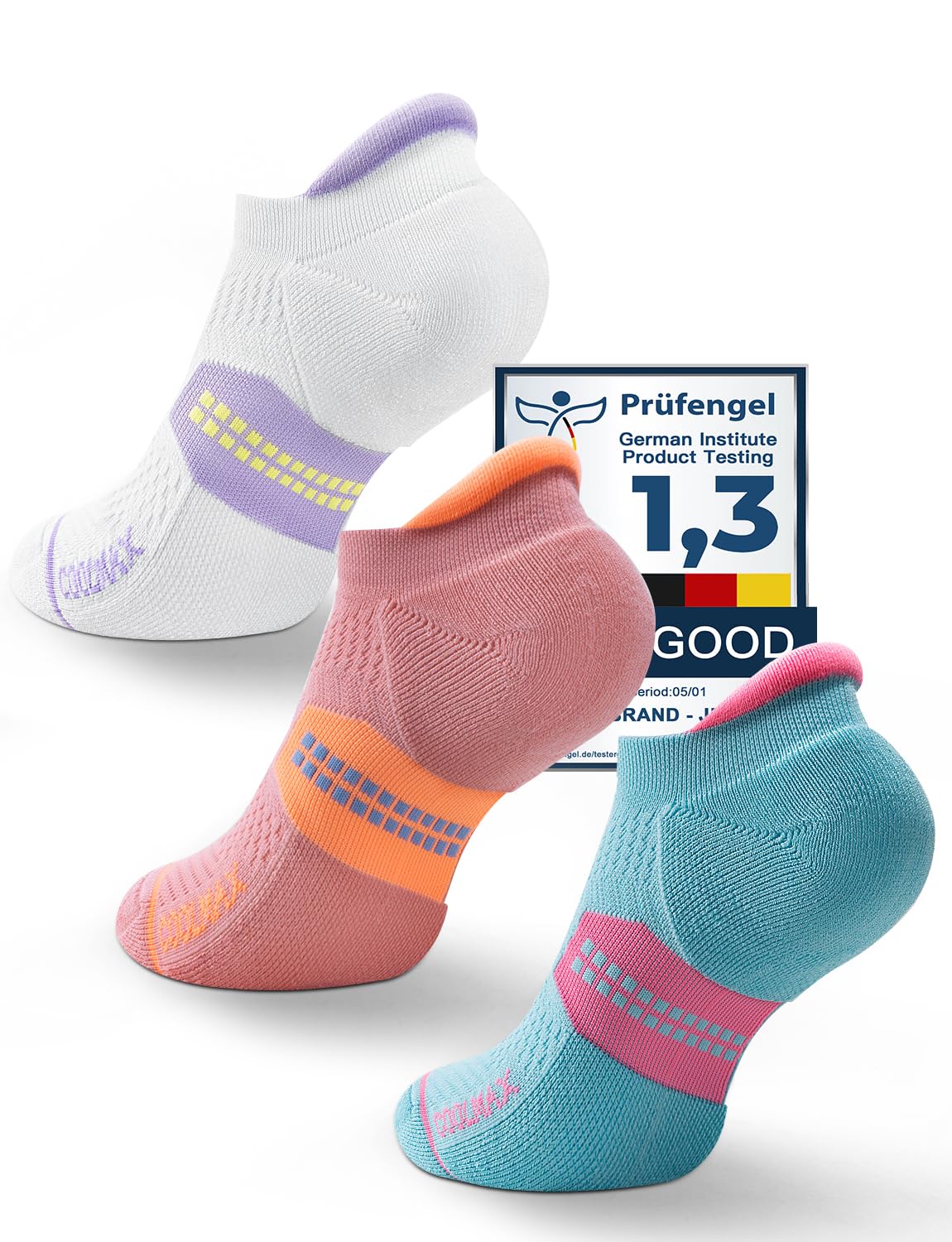
If you hate the feeling of a tall sock peeking out of your running shoe, the Juclise No-Show is the answer. This low-cut option packs light cushioning and bamboo viscose moisture wicking into a package that sits below the ankle line. Reviewers who wear these on the production floor or during long walks confirmed that they keep feet dry and comfortable, with no slipping into the shoe. The three-pack (Bright Lilac, Aqua, Dusty Pink) adds a pop of color without looking overly athletic.
The compression here is lighter than the crew-length versions — think firm support rather than deep squeeze. That makes them ideal for runners who want some arch and calf stabilization without the full 20-30 mmHg experience. The anti-blister performance is strong: the fabric reduces friction at the heel and toes, and the moisture management keeps the skin dry. Multiple buyers noted that the socks fit true to size and didn’t shrink noticeably after the first wash. The light cushion is just enough to absorb impact without making your shoes feel tight.
The main limitation is that these are not true compression socks in the medical sense. If you need 20-30 mmHg for serious swelling or vein issues, these won’t cut it. Also, the no-show design means they don’t provide the same level of calf wrap that a knee-high sock does — so if your primary goal is calf recovery, go with a taller option. But for hot-weather runs, low-top sneakers, and everyday foot fatigue, this is a comfortable, breathable choice.
Why it’s great
- No-show profile fits seamlessly into low-cut running shoes
- Bamboo viscose blends keep feet dry and reduce blister formation
- Light cushion provides impact absorption without bulk
Good to know
- Compression is lighter than medical-grade — not for serious swelling
- No calf wrap means less recovery benefit for the upper leg
- Three-pack only; higher per-pair cost than multi-packs
FAQ
Can I wear 20-30 mmHg compression socks while sleeping after a hard workout?
Why do my compression socks slide down during a run?
How do I care for compression socks so they last more than a few months?
Are no-show compression socks effective for running performance?
Can compression socks help with shin splints?
Final Thoughts: The Verdict
For most users, the compression socks for exercise winner is the JOBST ACTIVA Athletic 20-30 mmHg because it delivers clinically accurate graduated pressure that stays up and performs on runs, hikes, and in the gym. If you want a moisture-wicking crew sock that handles hot feet and sensitive toes, grab the Juclise Coolmax Bamboo Viscose Crew. And for a week-long rotation that won’t bust your budget, nothing beats the fenglaoda 8-Pack.