The moment your heart rate spikes from just standing up, you know blood is pooling in your lower legs. For anyone managing POTS, the right compression garment isn’t about fashion—it’s a functional tool to push venous return back toward the chest and keep you upright without that heavy, throbbing sensation in your calves.
I’m Emma — the founder and writer behind Baby Bangs. I’ve sifted through thousands of customer reviews and technical spec sheets on graduated compression hosiery to isolate which construction variables actually matter for postural orthostatic tachycardia syndrome management.
In this guide, I break down the five strongest contenders on the market today, ranked by fabric durability, graduated pressure accuracy, and real fit feedback from POTS patients. This is your focused, no-fluff reference for finding the best compression socks for pots that actually deliver consistent 20-30 mmHg support through an entire day of standing and shifting.
How To Choose The Best Compression Socks For POTS
POTS management hinges on reducing venous pooling in the lower extremities. Not all compression socks are built to the same standard, and choosing the wrong gradient or length can leave you with inadequate support or painful band marks. Here are the three factors that separate a useful medical garment from a generic leg sleeve.
Graduated Compression — The 20-30 mmHg Baseline
POTS patients typically need a therapeutic 20-30 mmHg rating, meaning the highest pressure is at the ankle and it decreases as the sock moves up the calf. This graduated design actively pushes blood upward rather than just squeezing the entire leg uniformly. Socks labeled 15-20 mmHg are generally too light for significant autonomic pooling, while 30-40 mmHg may be too constrictive for daytime wear without a doctor’s input.
Fabric Composition and Laundering Durability
A blend of nylon and spandex or polyamide and spandex holds its shape better after repeated machine washing than high-polyester mixes. The elastic recovery rate determines whether the compression rating degrades after 20 washes. Look for reinforced heel and toe sections, especially if you plan to wear these socks for 10-plus hours daily.
Fit Accuracy — Calf Circumference and Length
Standard sizing charts separate by shoe size, but calf diameter matters more for POTS users. A band that digs into the posterior knee or slides down within an hour is a sign the sock doesn’t match your leg shape. Measure the widest part of your calf and compare it against the manufacturer’s size grid before ordering a specific length class.
Quick Comparison
On smaller screens, swipe sideways to see the full table.
| Model | Category | Best For | Key Spec | Amazon |
|---|---|---|---|---|
| Bbfrey Medical Compression Socks (3 Pairs) | Premium 3-Pack | All-day clinical wear with sweat-wicking knit | Polyamide/spandex blend, flat toe seams | Amazon |
| fenglaoda 8-Pair Pack | Value 8-Pack | Building a full rotation without overspending | 97% polyester, 3% spandex knit | Amazon |
| Laubawck Compression Pantyhose | Pantyhose Style | Full-leg coverage with tummy panel | 70% nylon, 30% spandex, opaque toe | Amazon |
| Nurse Yard Compression Socks | Mid-Range Single | Nurses and professionals standing 8+ hours | Nylon/spandex, moisture-wicking top band | Amazon |
| Dr. Motion Women’s 6-Pair Pack | Budget Multi-Pack | Cute patterns with everyday comfort | Cotton/acrylic/spandex blend | Amazon |
In‑Depth Reviews
1. Bbfrey Medical Compression Socks (3 Pairs)
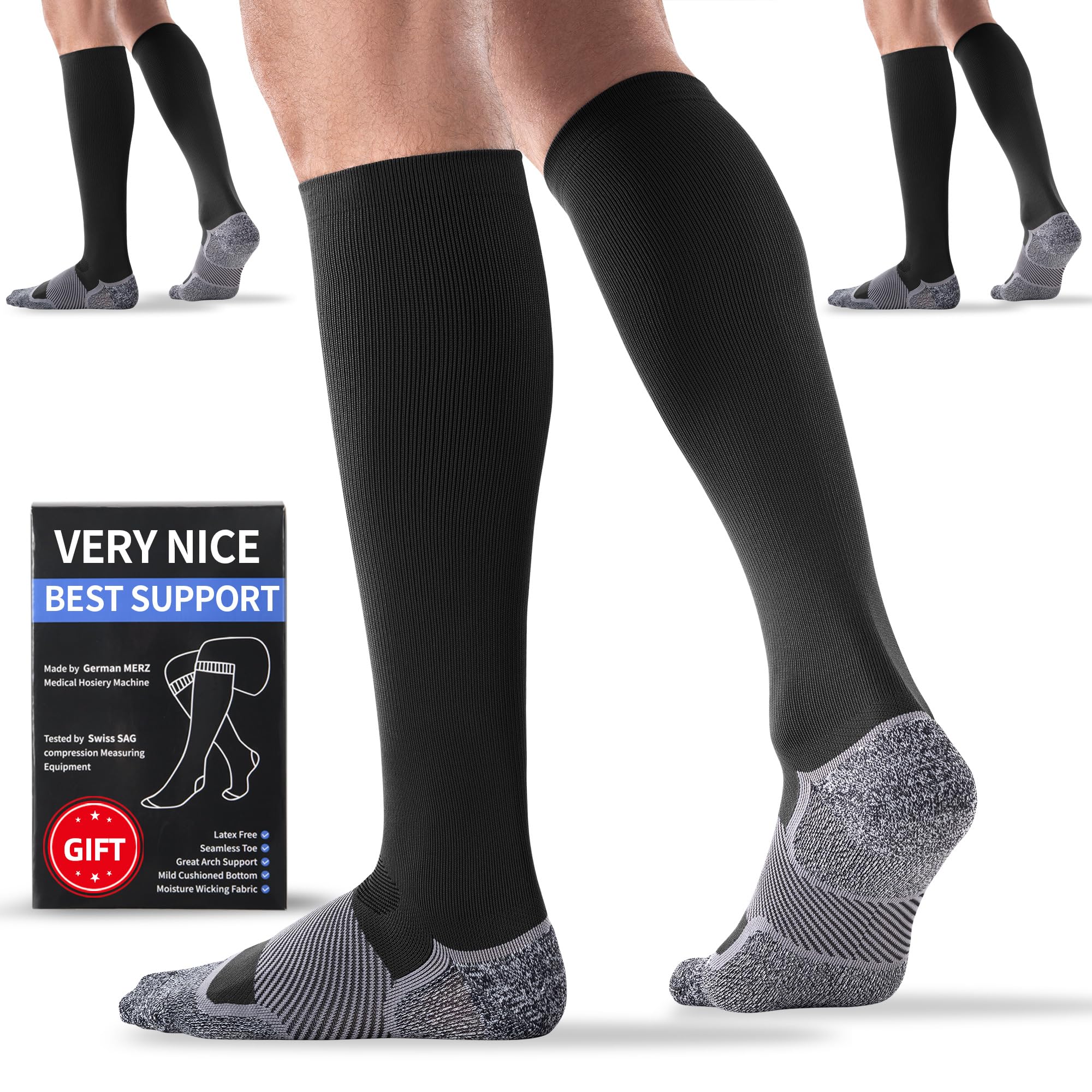
The Bbfrey 3-pack hits the sweet spot between premium construction and enough pairs to rotate through a work week. The fabric blend (54% polyamide, 21% sweat-wicking polyamide, 15% polyester, 10% spandex) provides a four-way stretch that retains its squeeze after repeated machine washing — a critical detail for POTS patients who need consistent 20-30 mmHg support every day without degradation by the third week.
Customer feedback highlights the flat toe seam and roomier foot box, which prevent the pinching that often makes compression socks unwearable for full 12-hour shifts. The graduated pressure profile shows noticeably stronger compression at the ankle with a smooth taper up to the calf band. Users with shoe size 10.5 and calf measurements up to 14.5 inches report the S/M size fits without rolling or top-band digging.
The only practical drawback is the limited color range — you get three pairs in neutral shades, which is fine for clinical settings but not exciting if you want variety. That said, the sweat-wicking polyamide layer keeps skin drier than standard nylon blends, making these a strong daily choice for POTS-related pooling.
Why it’s great
- Flat toe seams eliminate pressure points during long wear
- Sweat-wicking polyamide layer improves breathability for all-day use
- Graduated compression stays consistent after multiple wash cycles
Good to know
- Limited to neutral color options only
- Sizing runs slightly snug in calf for larger circumference measurements
2. fenglaoda 8 Pairs Compression Socks (20-30 mmHg)

If your POTS management plan requires a full weekly rotation without doing laundry every two days, the fenglaoda 8-pack delivers exactly that. Each pair delivers a firm 20-30 mmHg graduated compression that reviewers consistently describe as snug but not painfully tight, with enough stretch to slide on without a donning aid. The fabric is 97% polyester and 3% spandex, which feels breathable and cotton-like against the skin rather than slick or rubbery.
Durability is a standout theme here — customers report the socks hold their shape through dozens of machine washes without developing holes or losing compression integrity. The top band stays in place behind the knee without creeping down, a common failure point in lower-priced multi-packs. With over 16,000 ratings and a 4.5-star average, the fenglaoda set has the largest validation pool in this list.
The polyester-dominant knit does mean slightly less moisture-wicking performance compared to the polyamide-heavy Bbfrey option. Some users also note the color choices are a bit dull — mostly solid tones with no patterns. For POTS patients prioritizing volume and reliability over flashy design, this pack is a solid mid-range anchor.
Why it’s great
- Eight pairs cover a full rotation with minimal laundry frequency
- Breathable cotton-like knit reduces skin irritation during long wear
- Top band stays secure without slipping or leaving deep marks
Good to know
- Polyester fabric holds less moisture compared to polyamide blends
- Color selection is limited to basic solid tones
3. Laubawck Compression Pantyhose (20-30 mmHg)

For POTS patients whose venous pooling extends above the knee or who prefer a single garment instead of layering socks over shapewear, the Laubawck compression pantyhose provides full-leg graduated support up to the waist. The 70% nylon, 30% spandex fabric delivers a true 20-30 mmHg profile from ankle to thigh, with an added tummy control panel that some users find helpful for managing the bloating that can accompany autonomic dysfunction.
Reviewers consistently praise the opaque closed-toe construction, which avoids the uncomfortable toe seam that many open-toe styles create. The high stretch fabric makes donning easier than typical medical-grade pantyhose, though taller users (especially those above 5’10”) note the crotch runs short, requiring periodic adjustment throughout the day. Several POTS and Ehlers-Danlos patients report this style reduces both foot swelling and lower-back fatigue by providing uniform compression across the entire leg column.
The trade-off is that full pantyhose take longer to put on and remove compared to knee-high socks, and the fabric can feel slightly scratchy against bare skin for sensitive individuals. If you need only calf-level support, a knee-high style will serve you better. But for comprehensive pooling management that reaches the thighs, this is the only true full-leg option in this lineup.
Why it’s great
- Full-leg graduated compression from ankle to waist
- Opaque closed toe eliminates seam irritation
- Tummy control panel supports abdominal pooling
Good to know
- Crotch length runs short on taller frames
- Fabric feels slightly scratchy for very sensitive skin
4. Nurse Yard Compression Socks (20-30 mmHg)
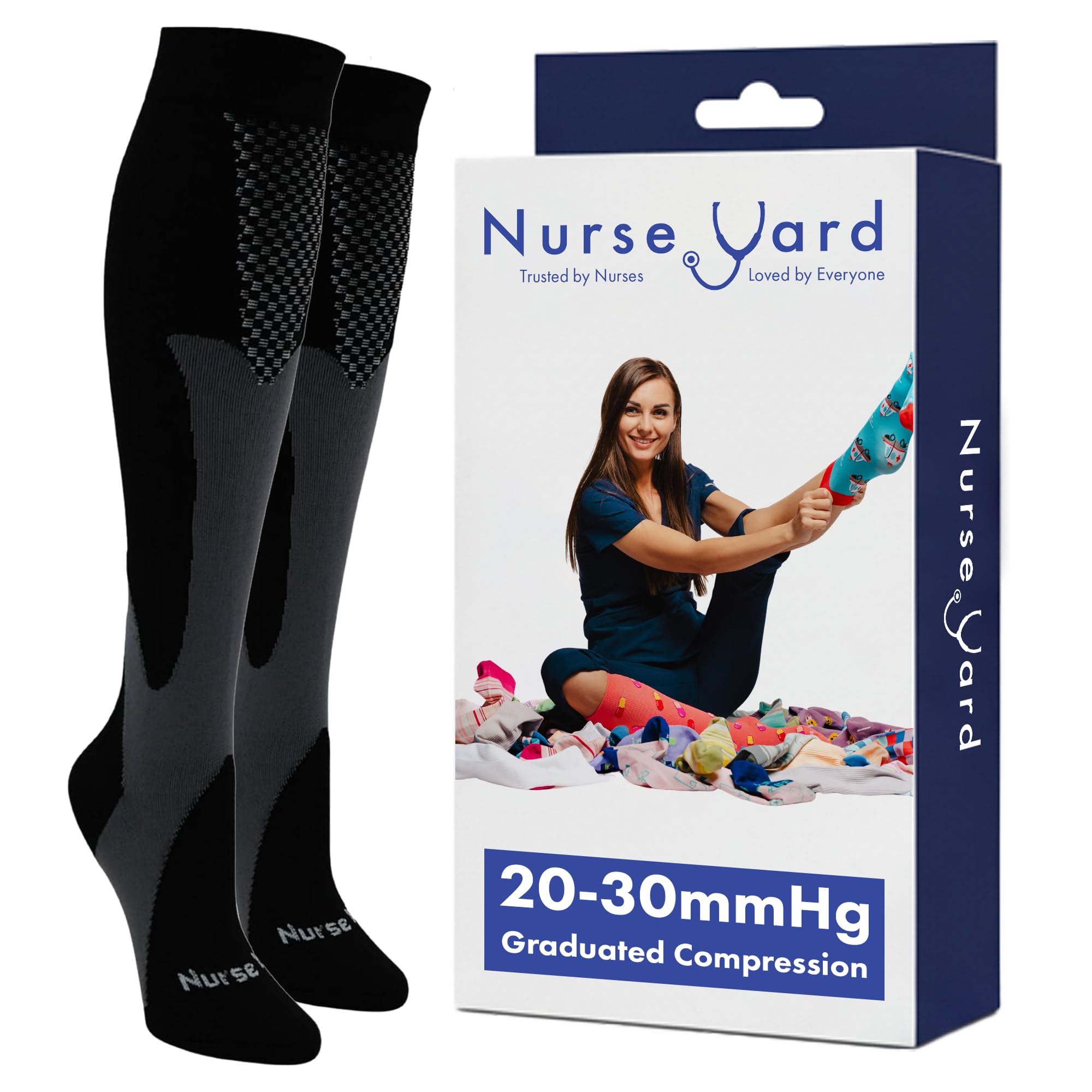
Nurse Yard designed these socks specifically for healthcare workers who stand for consecutive 8-hour shifts, and the construction choices reflect that clinical perspective. The 20-30 mmHg graduated compression is paired with a moisture-wicking top band that prevents that clammy feeling behind the knee, plus reinforced heels and toes that survive the friction of constant walking. The fabric blend of nylon and spandex provides a smooth, athletic-feel surface that reviewers describe as “not hot” even during long shifts.
Users with POTS and standing jobs report a measurable reduction in evening leg heaviness and ankle edema after switching to this brand. The reinforced arch support is a subtle but appreciated addition for those who also deal with plantar discomfort. However, getting these socks on requires some effort — multiple reviewers note the tightness at the top band can feel uncomfortable during the donning process, and a few found the band dug into their calves after several hours.
At a single pair per purchase, the cost per unit is higher than multi-pack alternatives, making rotation expensive if you need five pairs for a work week. But for a single high-performance sock that reliably reduces pooling during long standing sessions, the Nurse Yard delivers clinical-grade results.
Why it’s great
- Moisture-wicking top band keeps the calf area dry all day
- Reinforced heel and toe sections handle high-friction environments
- Measurable reduction in evening edema for standing workers
Good to know
- Single pair purchase requires multiple orders for a weekly rotation
- Top band can feel uncomfortably tight during the donning process
5. Dr. Motion Women’s Compression Socks (6 Pairs)
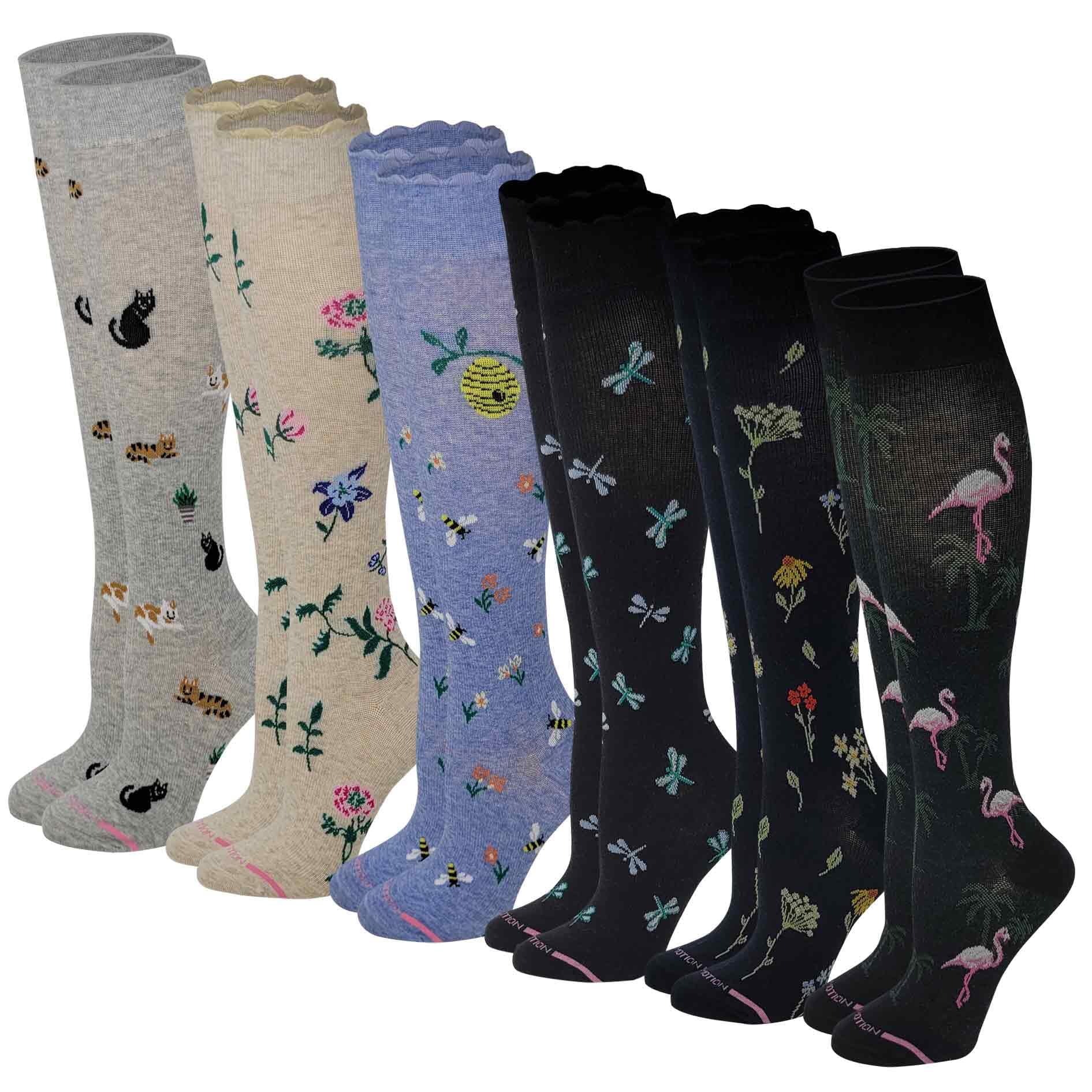
Dr. Motion positions itself as a lifestyle compression sock rather than a strict medical garment, and that personality comes through in the cotton-acrylic-spandex fabric and cheerful pattern designs. The 20-30 mmHg rating is present on the label, though multiple customer reviews note the compression feels lighter than other brands at the same rating — more like a 15-20 mmHg experience. For POTS patients with mild pooling or those who find full therapeutic compression too uncomfortable for all-day wear, this softer squeeze can be a practical middle ground.
The cotton-forward blend is notably softer against the skin than the nylon-heavy alternatives, making these socks easy to wear without sensory irritation. The six-pair pack provides enough variety to rotate through a week with different prints, and the price per pair is among the lowest in this guide. Users with smaller feet (size 5-5.5) report the sock fits without bunching at the toe, and the even distribution of compression prevents the wrinkle lines that can dig into the skin.
The primary limitation for POTS management is the inconsistent compression ceiling — if your doctor specifically requires a firm 20-30 mmHg for symptom control, the Dr. Motion may not deliver enough squeeze. These socks work best as a comfortable daily option for patients whose standing tolerance is already partially managed by medication or lifestyle adjustments.
Why it’s great
- Cotton-soft fabric minimizes sensory irritation for sensitive skin
- Six cute patterns add a mood-boosting element to daily wear
- Low cost per pair makes building a large rotation affordable
Good to know
- Compression feels noticeably lighter than 20-30 mmHg from other brands
- Not suitable for patients who need firm therapeutic squeeze for severe pooling
FAQ
Is 20-30 mmHg the right compression level for POTS?
How many hours should I wear compression socks for POTS each day?
Can I wear knee-high compression socks instead of waist-high for POTS?
Final Thoughts: The Verdict
For most users, the compression socks for pots winner is the Bbfrey Medical Compression Socks (3 Pairs) because the polyamide-spandex blend maintains consistent 20-30 mmHg through repeated wear and the flat toe seams prevent irritation during full-day use. If you want a full rotation without doing laundry every other day, grab the fenglaoda 8-Pair Pack. And for mild pooling where soft fabric comfort and fun patterns matter more than maximum squeeze, nothing beats the Dr. Motion 6-Pair Pack.