A rolled ankle stops everything — the run, the game, the walk to the car. That sudden pop or dull ache signals torn fibers, and the real work begins after the ice pack melts. You need support that mimics the natural lock of healthy ligaments without turning your foot into a cast.
I’m Emma — the founder and writer behind Baby Bangs. I’ve spent years digging into compression density, stabilizer rigidity, and strapping geometry to find which designs actually keep the talus bone in place during lateral movement.
Whether you’re recovering from a grade 1 twist or protecting a chronic weak side, the right brace makes the difference between healing and re-injury. Here is my analysis on finding the best ankle support for sprain recovery and prevention.
How To Choose The Best Ankle Support For Sprain
Selecting the right brace isn’t about picking the tightest one on the shelf. A sprained ankle needs targeted stabilization that limits inversion and eversion without cutting off circulation or restricting normal gait. The wrong design can delay healing or cause new pain in the knee and hip.
Strapping System: The Anti-Roll Architecture
Figure-8 straps that cross over the front of the ankle and wrap under the heel provide the most reliable lateral resistance. This mimics athletic tape by locking the talus in place while still allowing controlled forward flexion. Braces that rely only on a simple lace-up or a single compression band allow dangerous inversion during side-to-side sports motion.
Removable Splints vs. Fixed Stabilizers
Rigid side splints prevent the ankle from rolling past its safe range, which is essential during the acute phase of a sprain. Removable splints give you the flexibility to downgrade support as the ligaments heal, transitioning from a stabilizer to a daily support without buying a second brace. Fixed stabilizers are lighter and lower profile but cannot be adjusted for a changing rehabilitation stage.
Compression vs. Stabilization: Know the Difference
A compression sleeve reduces swelling and provides proprioceptive feedback but offers almost no mechanical resistance against a twist. If your ankle is actively unstable or you’re returning to cutting sports, you need a brace with straps and stabilizers. Use sleeves only for mild swelling or as a recovery tool during low-impact activity.
Quick Comparison
On smaller screens, swipe sideways to see the full table.
| Model | Category | Best For | Key Spec | Amazon |
|---|---|---|---|---|
| McDavid Ankle Brace Ultralight | Premium | High-intensity cutting & jumping | Figure-8 strapping pattern | Amazon |
| AGPTEK Adjustable Lace-Up Brace | Premium | Versatile rehab-to-sport transition | Removable side splints | Amazon |
| DRwelland Brace Side Stabilizers | Mid-Range | Daily stability for weak ankles | Neoprene with adjustable straps | Amazon |
| Shock Doctor Ankle Sleeve Compression Wrap | Mid-Range | Preventative sports support | Multi-directional compression straps | Amazon |
| POWERLIX Legs Compression Support Sleeve | Budget | Swelling reduction & mild support | Graduated compression sleeve | Amazon |
In‑Depth Reviews
1. McDavid Ankle Brace Ultralight
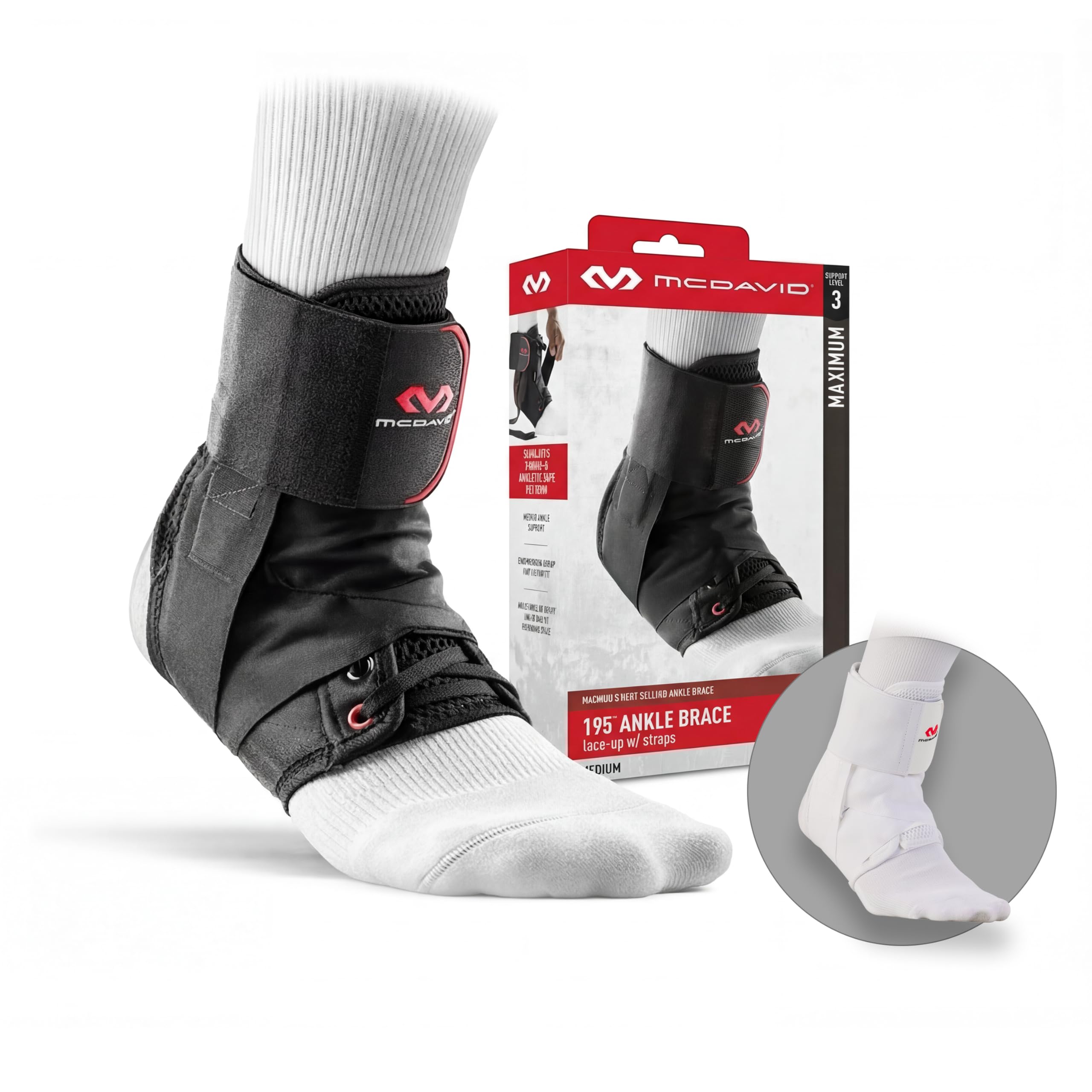
The McDavid Ultralight uses a figure-8 strapping pattern that simulates athletic tape, providing targeted lateral resistance without the bulk of a traditional lace-up brace. In an independent study, athletes wearing this brace had significantly fewer injuries, which aligns with my analysis of its tape-like mechanics. The single-layer polyester build keeps weight minimal, so you don’t feel like you’re dragging a boot through a cut or jump.
Real-world feedback from weekend basketball players and runners confirms that the brace locks the ankle during explosive landings and prevents tweaks even after a misstep. The compression-comfort top strap adds a secure hold without creating pressure points, and the entire system adjusts without unlacing or removing your shoe. This is critical when you need to tighten mid-game without breaking focus.
The trade-off is bulk around the figure-8 straps, which can make fitting into narrow athletic shoes a challenge. Some users with wider feet found it snug, and the lace-and-Velcro combo requires full loosening to take on and off, which is slow for post-game changes. Durability is excellent, with many reporting multiple seasons of use without fraying or strap failure.
Why it’s great
- Figure-8 strapping provides tape-grade lateral stabilization
- Ultra-lightweight single-layer fabric won’t weigh you down
- Adjustable without removing your shoe
- Proven durability across multiple sports seasons
Good to know
- Figure-8 straps add bulk that may not fit in narrow shoes
- Must fully loosen laces to take on and off
- Fit is snug for wide-footed athletes
2. AGPTEK Ankle Brace with Removable Splints
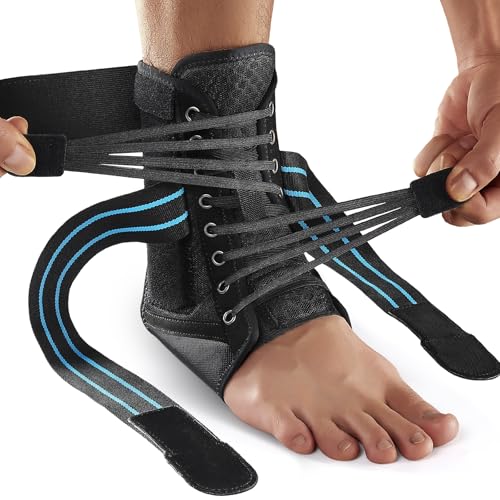
The AGPTEK brace combines removable lateral splints, X-cross compression straps, and a top wrap to deliver 360-degree support that can be dialed up or down. This modular approach lets you keep the splints in for rigid protection during early rehab, then remove them for greater flexibility as you return to sport. The quick-lace system with dual-direction hook-and-loop fasteners secures the brace in seconds, eliminating the hassle of traditional laces.
Users recovering from fractures and Achilles injuries noted this brace outperformed the models provided by their orthopedic surgeons, offering better support and comfort. The honeycomb ventilation zones in the nylon Oxford fabric keep the foot cool during extended wear, and the open heel design prevents irritation during natural movement. It fits well inside running shoes and basketball sneakers without excessive bulk.
The sizing runs small, especially for larger ankle circumferences, so you need to measure carefully and potentially size up. The Velcro attachments at the foot loop can lose grip over time if you’re using the brace daily for months. Some users also reported that the plastic buckle on the top strap is a weak point, requiring a replacement unit after extended use.
Why it’s great
- Removable splints allow you to adjust support level as you heal
- Quick-lace system fastens in seconds without tangled laces
- Breathable honeycomb mesh for all-day comfort
- Many users find it more supportive than doctor-provided braces
Good to know
- Sizing runs small; measure carefully and consider sizing up
- Velcro at foot loop may lose grip with heavy daily use
- Plastic buckle can break under repeated tension
3. DRwelland Ankle Brace with Side Stabilizers

The DRwelland brace is built from high-quality neoprene that wicks moisture while providing consistent compression and heat retention, which helps reduce swelling and improve circulation. It includes adjustable straps that let you target compression at both the arch and the ankle joint, and the side stabilizers prevent inversion and eversion without adding heavy bulk. The neoprene is soft enough to wear against bare skin without irritation.
Users with chronic ankle instability and multiple past sprains report that this brace prevents the ankle from collapsing during walking and light exercise. It works well inside shoes for all-day wear, and the fabric wraps the heel without seams that cause blisters. Several buyers noted it effectively reduced plantar fasciitis pain by stabilizing the heel during sleep.
The plastic buckle on the main strap is a common failure point, with multiple reports of it breaking after a few weeks of use. The Velcro at the foot attachment also loses adhesion over time because it hooks into fabric that wears down. For the price tier, the comfort and stabilizer effectiveness are strong, but the hardware longevity is a clear weakness.
Why it’s great
- Neoprene material provides comfortable compression and moisture management
- Side stabilizers prevent inversion without excessive weight
- Seamless heel wrap reduces irritation during all-day wear
- Effective for both ankle instability and plantar fasciitis relief
Good to know
- Plastic buckle is prone to breaking with regular use
- Velcro at foot loop loses grip as the fabric wears
- Not ideal for high-impact sports; best for daily stability
4. Shock Doctor Ankle Sleeve with Compression Wrap

The Shock Doctor sleeve combines an elastic mesh base with multi-directional compression straps that attach directly to the sleeve, creating a low-profile level 2 brace. This design provides more resistance than a basic sleeve but less bulk than a full lace-up stabilizer, making it a good middle ground for athletes who need support without restricted range of motion. The breathable mesh keeps the foot cool during intense activity.
Gymnasts and volleyball players find the strap system effective for hyper-flexible joints, preventing overextension during dynamic movements. The sleeve fits easily under socks and inside shoes without adding noticeable bulk. Runners recovering from mild sprains report it provides enough support for straight-line running while allowing natural foot strike mechanics.
Durability is a significant concern — the elastic mesh frays and the Velcro straps begin to slip after roughly 15 to 20 sessions of gym use. The sleeve also has a tendency to dig into the Achilles tendon for some users, requiring higher socks as a buffer. This brace is best suited for preventative maintenance and mild sprains, not for active instability where rigid stabilization is needed.
Why it’s great
- Low-profile design fits easily under socks and shoes
- Multi-directional straps provide targeted support without bulk
- Breathable mesh keeps feet cool during high-intensity activity
- Good for hyper-flexible ankles in gymnastics and volleyball
Good to know
- Mesh frays and Velcro slips after about 15 gym sessions
- Can dig into Achilles tendon without a higher sock
- Not suitable for active ankle instability or severe sprains
5. POWERLIX Legs Compression Support Sleeve (Pair)
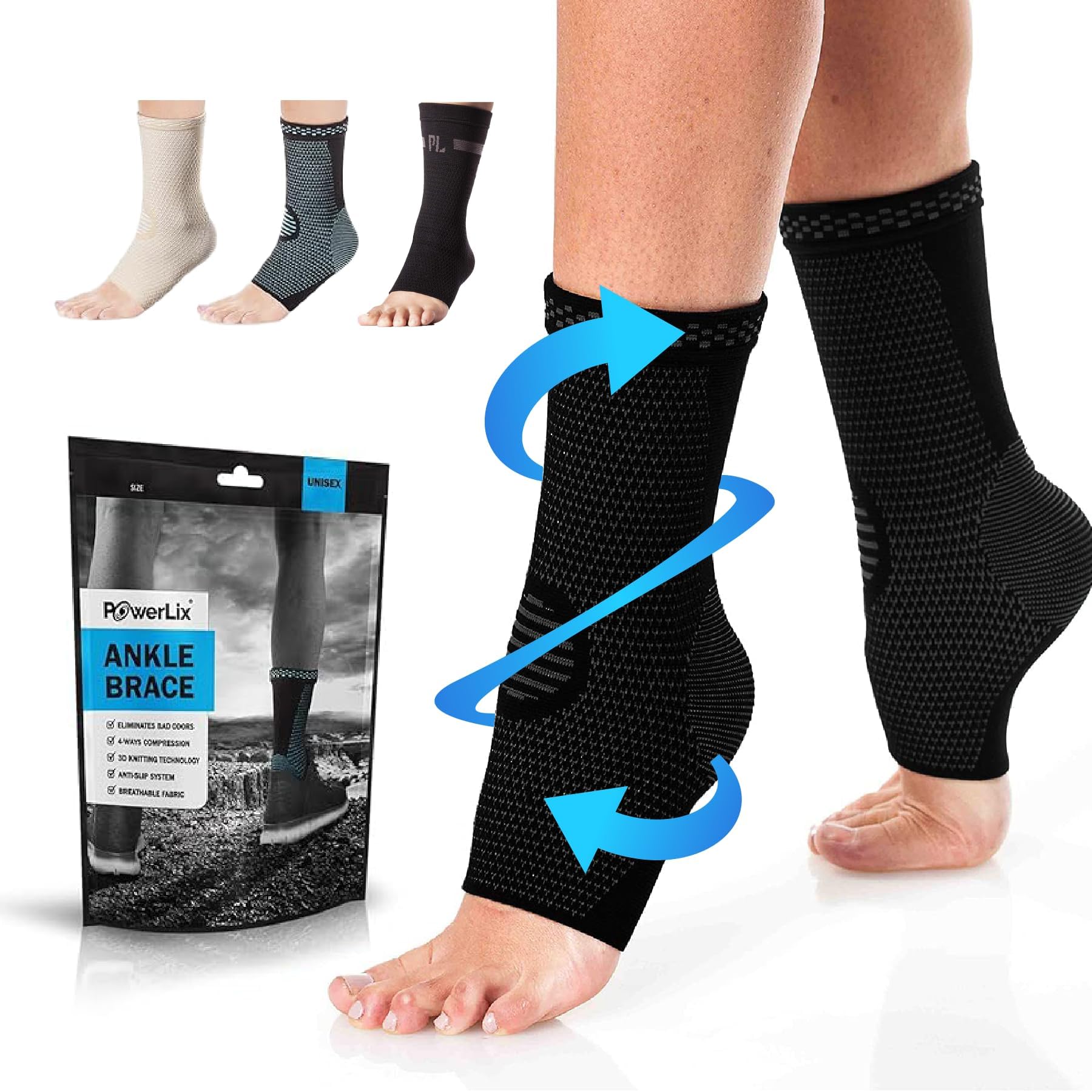
The POWERLIX sleeve delivers consistent graduated compression that reduces swelling and provides proprioceptive feedback for mild ankle issues. It comes as a pair, so you can support both ankles or rotate between washes. The fabric is thicker than many compression socks, providing noticeable pressure that helps with post-surgery edema and chronic swelling from conditions like leaky veins.
Users recovering from torn tendons and bimalleolar fractures find these sleeves invaluable for protecting the ankle during physical therapy and daily walking. They prevent the foot from twisting without restricting range of motion, making them a good tool for early-stage rehab. The sleeves are comfortable enough for all-day wear under socks or with open-back shoes.
This product is not a brace — it offers zero lateral stabilization against inversion or eversion. If your ankle is actively unstable and prone to rolling, this sleeve will not prevent injury. Getting them on can be a struggle due to the high compression, and some users with incisions needed a sock underneath to avoid irritation. Use this for swelling management and mild support, not as a primary sprain brace.
Why it’s great
- Strong graduated compression significantly reduces swelling
- Two-pack provides great value for bilateral support or rotation
- Comfortable for all-day wear under socks or with open-back shoes
- Effective for post-surgery edema and chronic swelling
Good to know
- Zero lateral stabilization; not a brace for unstable ankles
- Difficult to pull on due to high compression level
- Can irritate surgical incisions without a liner sock
FAQ
Can I wear an ankle support for sprain during sports?
How tight should an ankle sprain brace be?
How long should I wear ankle support for a sprain each day?
Is a lace-up or strap brace better for a sprained ankle?
Can ankle supports for sprain prevent future injuries?
Final Thoughts: The Verdict
For most users, the ankle support for sprain winner is the McDavid Ankle Brace Ultralight because the figure-8 strapping provides tape-grade lateral stabilization that active sprains need. If you want removable splints that let you adjust support through rehab, grab the AGPTEK Adjustable Lace-Up Brace. And for daily stability and comfort during light activity, nothing beats the value of the DRwelland Brace with Side Stabilizers.