Every parent wants a formula that mirrors the complex nutrition and gentle digestibility of breast milk. The search is about more than just ingredients—it’s about finding a blend that supports your baby’s developing gut, immune system, and brain without the fussiness, gas, or allergic reactions that can turn feeding time into a struggle.
I’m Emma — the founder and writer behind Baby Bangs. I’ve spent years analyzing infant nutrition research, comparing ingredient panels, and tracking how different formulations impact digestion and immune function to help parents make informed choices.
After thorough side-by-side comparison of ingredients, HMO profiles, protein sources, and customer feedback on digestive tolerance, I’ve narrowed down the options to the five best contenders. Read on for my complete breakdown of the best baby formula closest to breastmilk you can buy right now.
How To Choose The Baby Formula Closest To Breastmilk
Choosing a formula that truly mimics breast milk goes beyond the label. You need to look at the specific components science has identified as crucial for infant development—namely HMOs, protein type, fat blends, and the absence of unnecessary additives. Here is what matters most.
Human Milk Oligosaccharides — The Immune Match
HMOs are the third most abundant solid component in breast milk. They act as prebiotics, feeding beneficial gut bacteria and blocking pathogens. Formulas with dual HMOs (like 2′-FL and LNnT) are structurally closer to breast milk’s immune-supporting profile than single-HMO or no-HMO options. Check the label for these specific compounds.
Protein Source and Hydrolysis Level
The protein base defines digestibility. Intact cow’s milk protein works for most babies, but partially hydrolyzed proteins (gentle formulas) are broken down for easier digestion, mimicking the pre-digested proteins in breast milk. For babies with confirmed allergies, extensively hydrolyzed or amino acid-based formulas are medically necessary and closest to the allergen-free state of breast milk.
Fat and Carbohydrate Composition
Breast milk’s primary carbohydrate is lactose, and its fat blend includes DHA and ARA for brain development. Avoid formulas with palm olein oil, as it can reduce calcium absorption. European standards often restrict palm oil and synthetic additives, making certain imported formulas structurally closer to breast milk’s lipid profile.
Quick Comparison
On smaller screens, swipe sideways to see the full table.
| Model | Category | Best For | Key Spec | Amazon |
|---|---|---|---|---|
| Mama Bear Advantage Premium | Dual HMO | Best Overall breastmilk mimic | Dual HMOs: 2′-FL & LNnT | Amazon |
| Mama Bear Gentle Premium | Gentle Protein | Fussiness & gas relief | Partially hydrolyzed protein | Amazon |
| Holle Goat Milk Toddler Drink | European Goat | Sensitive tummies & purity | Whole goat milk, no palm oil | Amazon |
| Similac Alimentum with 2′-FL HMO | Hypoallergenic | Colic & protein sensitivity | Extensively hydrolyzed + HMO | Amazon |
| Alfamino Infant Formula | Amino Acid | Severe allergies | Amino acid based, MCT oil | Amazon |
In‑Depth Reviews
1. Mama Bear Advantage Premium Baby Formula Powder
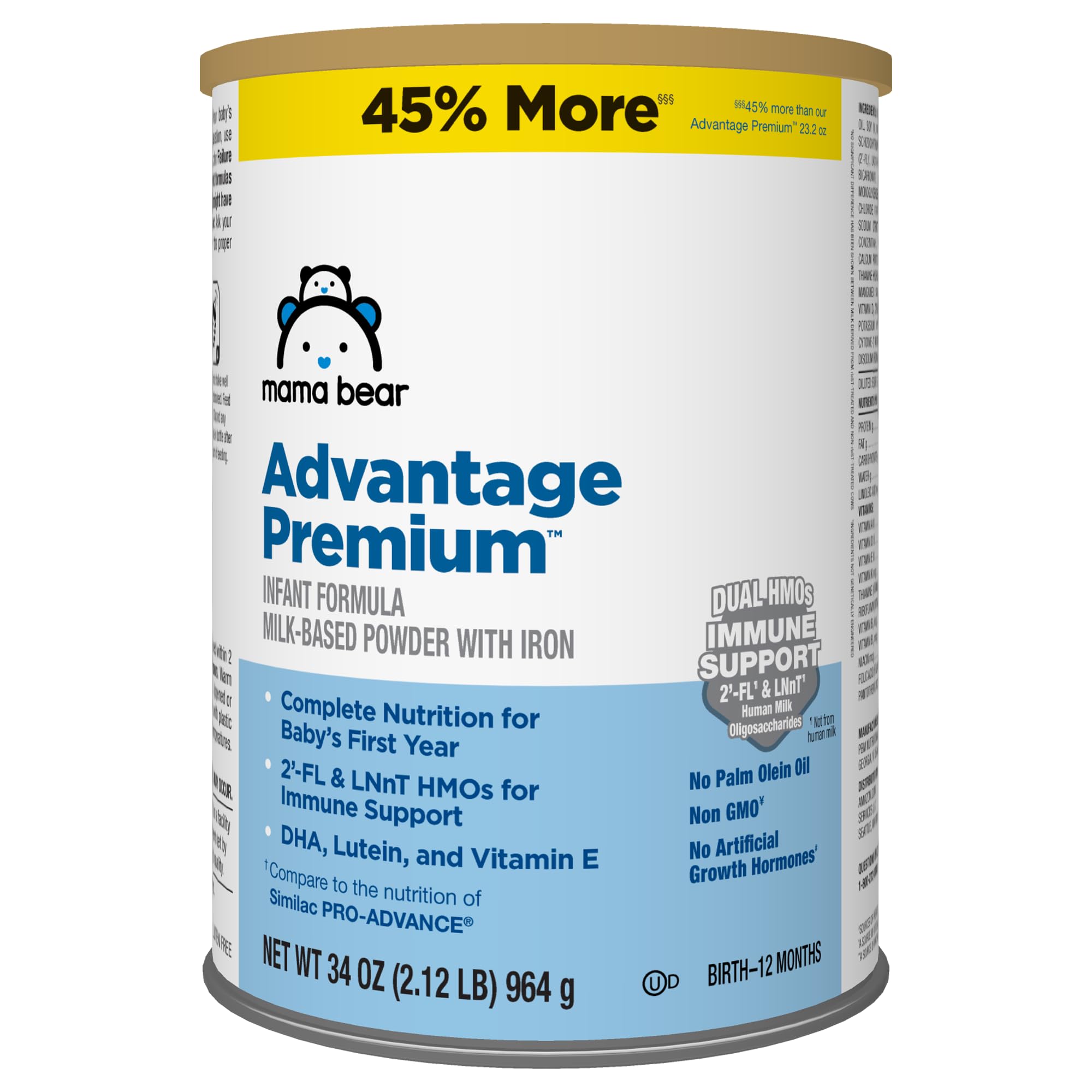
The Mama Bear Advantage Premium powder is the closest you’ll get to breast milk’s immune profile at a non-premium price. It contains both 2′-FL and LNnT HMOs—the same prebiotic oligosaccharides found in breast milk—which directly support the growth of beneficial gut bacteria. This dual-HMO formulation is a significant step beyond standard single-HMO or HMO-free infant formulas.
In addition to the immune-focused HMO blend, Mama Bear Advantage includes DHA, lutein, vitamin E, and choline for brain and eye development. The formula excludes artificial growth hormones, palm olein oil, and genetically engineered ingredients. Parents report seamless transitions from Similac Pro-Advance with no digestive complaints, making this a practical mid-range choice for daily use.
The 34-ounce can provides excellent value, and the formula is SNAP-eligible. The powder mixes cleanly with minimal clumping. For parents looking to match the functional benefits of breast milk—especially the prebiotic immune support—without the steep price of premium hypoallergenic lines, this is the top pick.
Why it’s great
- Dual HMO complex (2′-FL + LNnT) mirrors breast milk’s prebiotic profile
- No palm olein oil, no artificial growth hormones
- Babies transition easily from leading name brands
Good to know
- Contains intact cow’s milk protein, not suitable for confirmed allergies
- Packaging lacks a leveling strip for the scoop
2. Mama Bear Gentle Premium Baby Formula Powder

For babies who struggle with fussiness, gas, and crying after feeds, the Mama Bear Gentle formula uses partially hydrolyzed proteins—meaning the cow’s milk proteins are pre-digested into smaller pieces that are easier on a tender tummy. This mirrors the protein structure in breast milk, which is naturally easier to digest than intact formula proteins.
This formula is fortified with DHA and choline for brain support and includes a gentle immune blend with vitamins and minerals. It is non-GMO, free of artificial growth hormones, gluten-free, and certified kosher. Parents switching from Enfamil NeuroPro Gentlease report babies accept it without hesitation and show reduced gas and spitting up within a few days.
The 21.5-ounce can is a solid value for a gentle formulation. One caveat: the scoop storage built into the can is functional but can let powder sift into the lid area. For babies needing a closer-to-breast-milk digestive experience without a full hypoallergenic prescription, this is a budget-friendly option that delivers.
Why it’s great
- Partially hydrolyzed protein mimics breast milk’s ease of digestion
- Comparable to Enfamil Gentlease at a more accessible price point
- Non-GMO and free from artificial growth hormones
Good to know
- Not suitable for babies with diagnosed cow’s milk protein allergy
- The can design can let powder accumulate around the lid
3. Holle Goat Milk Toddler Drink, Stage 3
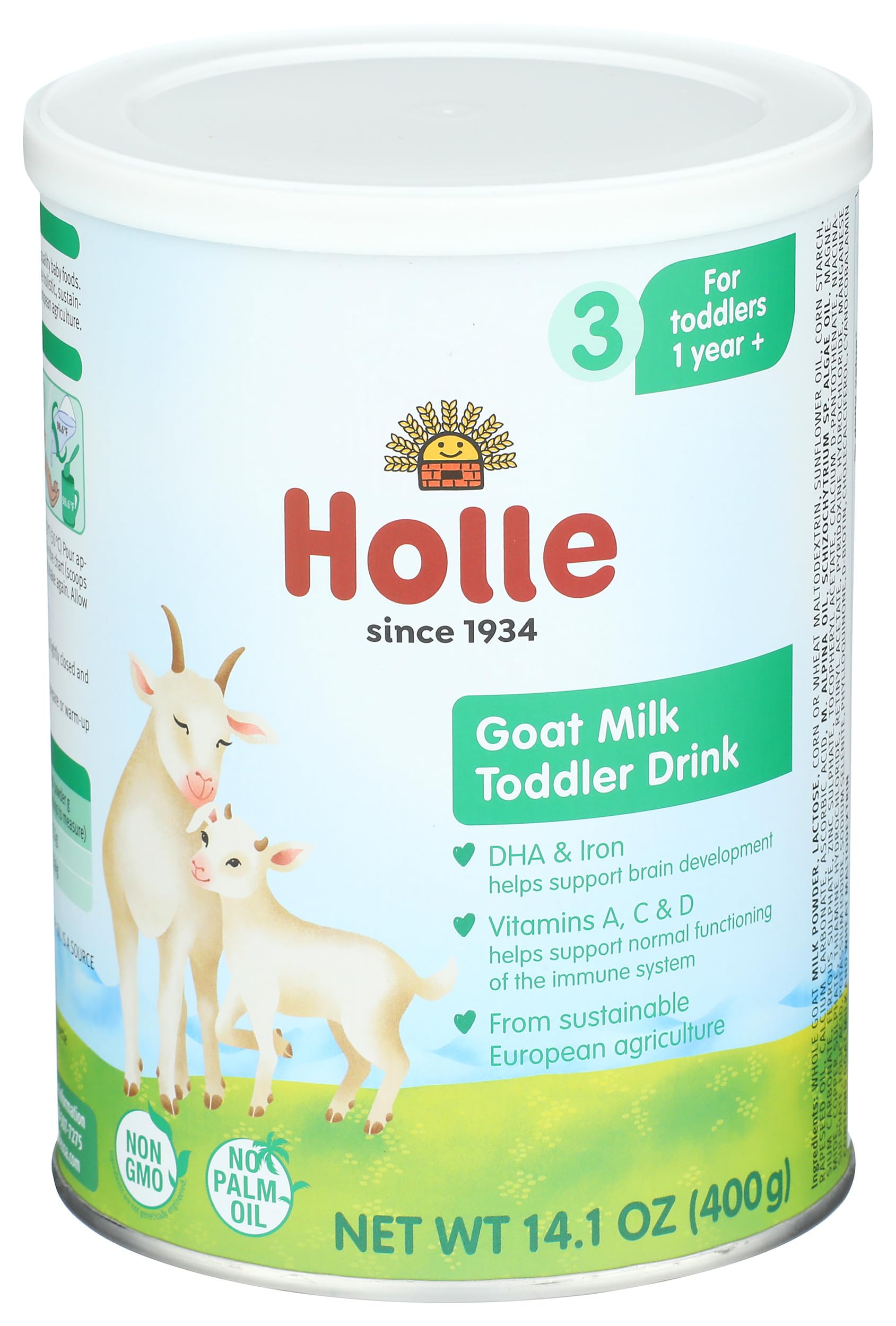
Holle is a European brand that operates under stricter EU organic and purity regulations than US standards, making this formula a strong contender for parents who prioritize ingredient sourcing. The base is whole goat milk powder, which contains a different whey-to-casein ratio than cow’s milk—closer to the protein balance in breast milk—and is often better tolerated by sensitive stomachs.
This formula is non-GMO, contains no palm oil (avoiding the calcium absorption issues associated with palm olein), and includes DHA and iron. It has earned the Clean Label Project Purity Award, meaning it has been tested and found free of heavy metals and other contaminants. Parents report that switching to Holle resolved digestive issues like gas and reflux that persisted with cow’s milk formulas.
Note that this is a Stage 3 formula intended for toddlers aged 12+ months, not infants. The 14.1-ounce can is smaller than typical infant formula cans, and the price is higher per ounce than standard options. For parents wanting a European-certified goat milk formula free from synthetic additives and closer to breast milk’s natural protein profile, it is an excellent premium choice.
Why it’s great
- Whole goat milk base with a protein ratio closer to breast milk
- Clean Label Project Purity Award—tested for heavy metals
- No palm oil and no synthetic additives
Good to know
- Stage 3 formula for toddlers 12+ months only
- Smaller can size with a higher per-ounce cost
4. Similac Alimentum with 2′-FL HMO
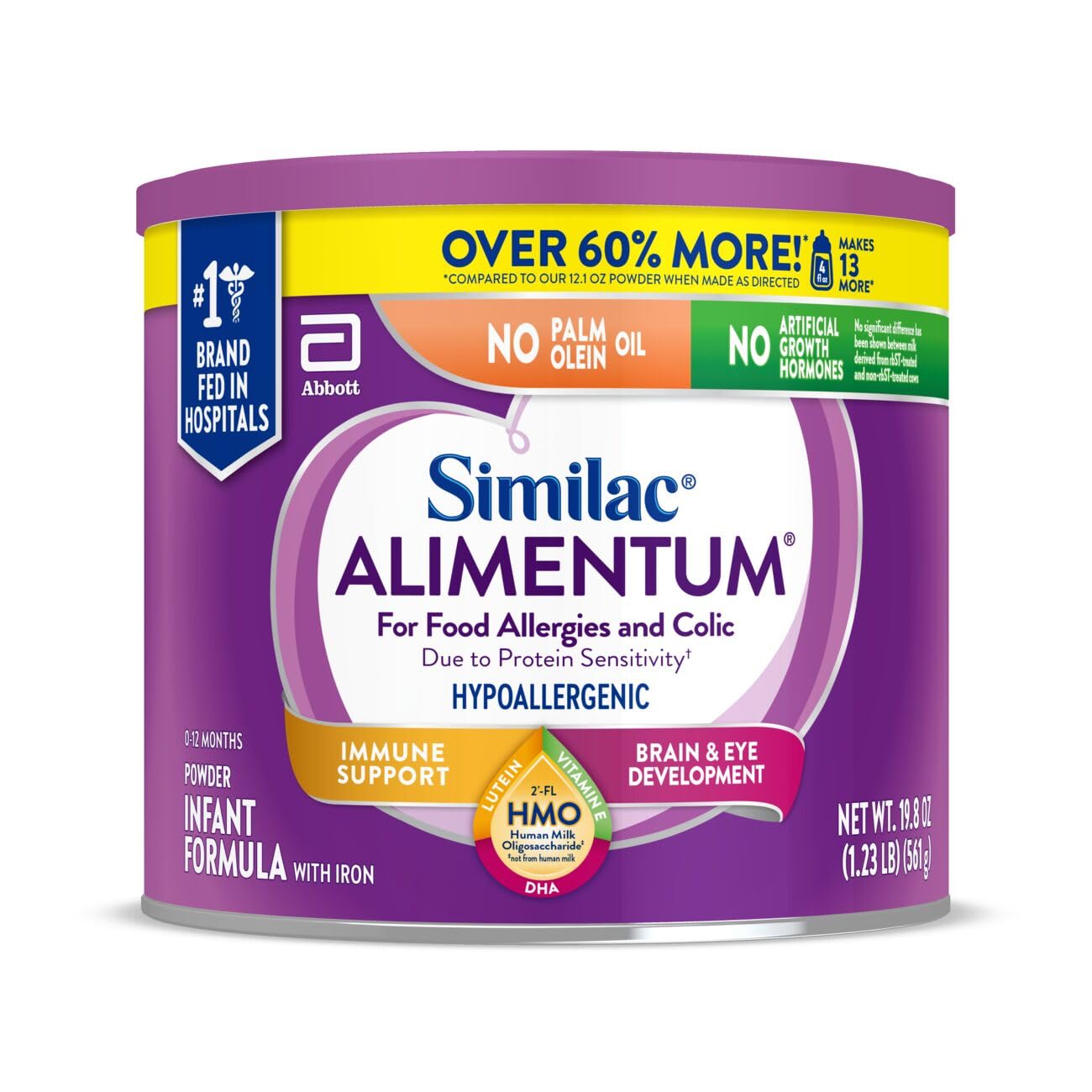
Similac Alimentum is the first and only hypoallergenic formula that combines extensively hydrolyzed proteins with 2′-FL HMO for immune support. The proteins are broken down into tiny fragments to virtually eliminate allergic reactions to cow’s milk protein, making it clinically appropriate for babies diagnosed with food allergies or colic due to protein sensitivity.
In most infants, this formula starts reducing colic symptoms within 24 hours, according to clinical data from Abbott. It is also fortified with DHA, ARA, and lutein for brain and eye development. Parents confirm that babies with CMPA (cow’s milk protein allergy) tolerate this formula well, with no vomiting, bloody stool, or eczema flare-ups after switching from standard formulas.
The 19.8-ounce value can is on the smaller side, and the price is significantly higher than non-hypoallergenic options. Additionally, it contains soy, so it is not suitable for babies with concurrent soy allergies. For parents who need a formula that mimics breast milk’s allergen-free protein state while adding the immune benefits of HMOs, this is the best medical-grade option available.
Why it’s great
- Extensively hydrolyzed protein virtually eliminates allergic reactions
- Only hypoallergenic formula with 2′-FL HMO for immune support
- Clinically shown to reduce colic symptoms within 24 hours
Good to know
- Contains soy, not suitable for soy allergies
- More expensive and smaller can than standard formulas
5. Alfamino Infant Formula
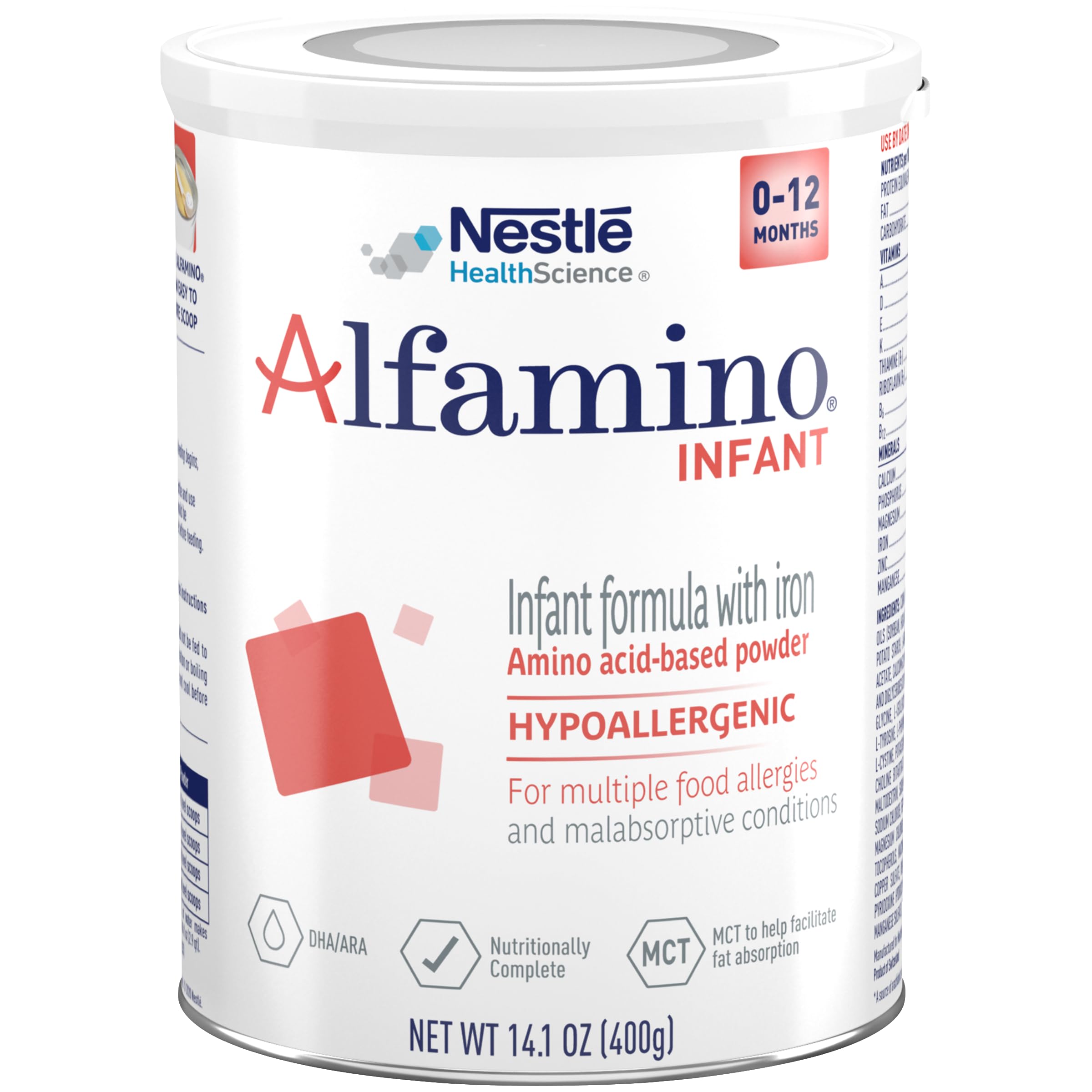
Alfamino is an amino acid-based formula from Nestlé Health Science, designed for the most extreme cases of multiple food allergies and severe malabsorption. Unlike hydrolyzed formulas that still contain small protein fragments, this formula is composed of individual amino acids—the building blocks of protein—making it 100% non-allergenic and the closest possible match to breast milk’s allergen-free state.
It contains a unique fat blend with medium-chain triglycerides (MCT) to facilitate fat absorption in babies with compromised digestive systems, alongside essential nutrients for growth. The formula is lactose-free and gluten-free. Pediatric gastroenterologists and NICU teams frequently recommend Alfamino for babies with NEC history, severe dairy allergies, or conditions causing bloody stool and chronic vomiting that fail to resolve on hydrolyzed formulas.
The 14.1-ounce can is pricey, and this formula must be used under medical supervision. It has a distinct taste that some babies initially reject, though most adapt within a few days. For any baby whose allergies or digestive condition make standard and even hydrolyzed formulas unsafe, Alfamino provides a critical, breast-milk-analogous nutritional source.
Why it’s great
- 100% amino acid based, eliminating all allergenic protein fragments
- MCT oil supports fat absorption in compromised digestion
- Doctor-recommended for severe allergies and NEC recovery
Good to know
- Requires medical supervision for use
- Higher cost and smaller can size
FAQ
How do HMOs in formula actually compare to breast milk HMOs?
Can a baby with a milk allergy use gentle or standard formula?
Is European formula always closer to breast milk than US formula?
Does the fat source in formula matter for brain development?
Final Thoughts: The Verdict
For most users, the baby formula closest to breastmilk winner is the Mama Bear Advantage Premium because it delivers dual HMOs (2′-FL and LNnT) at a reasonable price point without palm olein oil, closely matching breast milk’s immune-supporting prebiotic profile. If your baby needs a gentler digestive experience, grab the Mama Bear Gentle Premium for its partially hydrolyzed proteins. And for severe allergies requiring a fully non-allergenic solution, nothing beats the Alfamino Infant Formula under medical supervision.