Standing still at a desk for hours stiffens the hips, locks the knees, and drains your focus. A quality balance board introduces micro-movements that keep your stabilizing muscles engaged and your energy flowing, turning a static workstation into an active one.
I’m Emma — the founder and writer behind Baby Bangs. I’ve analyzed the structural materials, base designs, and weight capacities of dozens of models to separate the office-friendly tools from the pure fitness gear.
This guide breaks down the seven strongest contenders available now, helping you find the balance board for standing desk that matches your workspace, your body, and your movement goals.
How To Choose The Best Balance Board For Your Standing Desk
Not every board belongs under a desk. Some are built for intense wobble training and lack the subtle motion suited for typing. Before buying, match the board’s movement style to your work habits, your floor surface, and the space you have available.
Base Design: Rocker vs. 360° Pivot
A rocker board curves in one direction, allowing forward and backward or side-to-side tilt. These boards provide a predictable, gentle motion that is easy to use while typing — ideal for long work sessions. A 360° pivot board uses a central fulcrum or a half-sphere base for multi-directional tilt. This style challenges more stabilizer muscles but can feel unstable during focused tasks. For pure desk work, a rocker or a board with adjustable stoppers often wins.
Deck Size and Foot Clearance
A deck under 17 inches long may leave your toes or heels hanging off the edge, which forces awkward posture. Look for a length of at least 20 inches for comfortable foot placement. Also account for the board’s height — a 3- to 5-inch rise might push your desk too high if your chair or keyboard tray lacks adjustment. Measure your clearance before choosing a thicker model.
Floor Grip and Noise
Hardwood and tile floors demand a non-marking, rubber-based bottom that grips without scratching. Carpeted workspaces need a board with a textured underside or bumpers that dig in slightly to prevent sliding. Many boards make squeaking or thumping sounds on hard floors — check user feedback on noise if you share an office space or need quiet during calls.
Quick Comparison
On smaller screens, swipe sideways to see the full table.
| Model | Category | Best For | Key Spec | Amazon |
|---|---|---|---|---|
| FluidStance Plane | Premium Rocker | Silent, premium office movement | 28″ x 12″ deck, 250 lbs capacity | Amazon |
| Gaiam Evolve | Mid-Range Rocker | All-day standing desk comfort | 27″ x 12″ deck, 250 lbs capacity | Amazon |
| StrongTek Professional | 360° Wood Board | Core training & desk use | 17.5″ x 13.5″ deck, 350 lbs capacity | Amazon |
| PROIRON Upgraded | 360° TPE Board | Portable rehab & desk use | 16.34″ diameter, 330 lbs capacity | Amazon |
| Yes4All Foam Wobble Board | Anti-Fatigue Foam | Gentle wobble on hard floors | 20″ x 13.9″ deck, 400 lbs capacity | Amazon |
| Flycoop Balance Board | 3-Mode Wood Board | Adjustable difficulty levels | Adjustable bumpers, 330 lbs capacity | Amazon |
| Giongma 360° Board | XL 360° Wood Board | Large deck, heavy-duty rehab | 23.2″ x 16.4″ deck, 500 lbs capacity | Amazon |
In‑Depth Reviews
1. FluidStance Plane Balance Board

The FluidStance Plane is the gold standard for a reason. Its wide, flat deck — 28 inches long and 12 inches wide — provides ample room for shifting weight side-to-side and front-to-back without feeling constricted. The recycled tire tread top deck offers a high-grip surface that stays secure even in socks, while the recycled plastic base glides silently on tile and provides gentle resistance on carpet. The 250-pound weight capacity covers most users, and the 2.5-inch height keeps your desk ergonomics intact without raising your work surface too much.
Users consistently report that the Plane increases their standing time from under two hours to five or more, simply because micro-movements keep hips and knees from locking up. The board is not designed for challenging balance work — it is meant for fluid, ergonomic movement that does not interfere with typing. The rubber bumpers create natural stopping points, preventing over-rotation and accidental slips. Customer reviews highlight that it alleviates lower back pain from prolonged sitting and feels as natural as skating or surfing while working.
Some users note that the board is not very challenging for those seeking a serious balance workout. The price also sits at the top of the category. However, the 30-day money-back guarantee and USA-based assembly reduce the risk. For a sleek, office-friendly board that prioritizes long-duration comfort over intense wobble, this is the clear leader. The sustainable construction and eco-conscious manufacturing add appeal for environmentally aware buyers.
Why it’s great
- Silent glide on hard floors, no squeaking
- Large standing surface encourages weight shifts
- Made from recycled materials in the USA
- Excellent for extending standing desk sessions
Good to know
- Not designed for high-intensity balance training
- Premium price compared to other options
2. Gaiam Evolve Balance Board
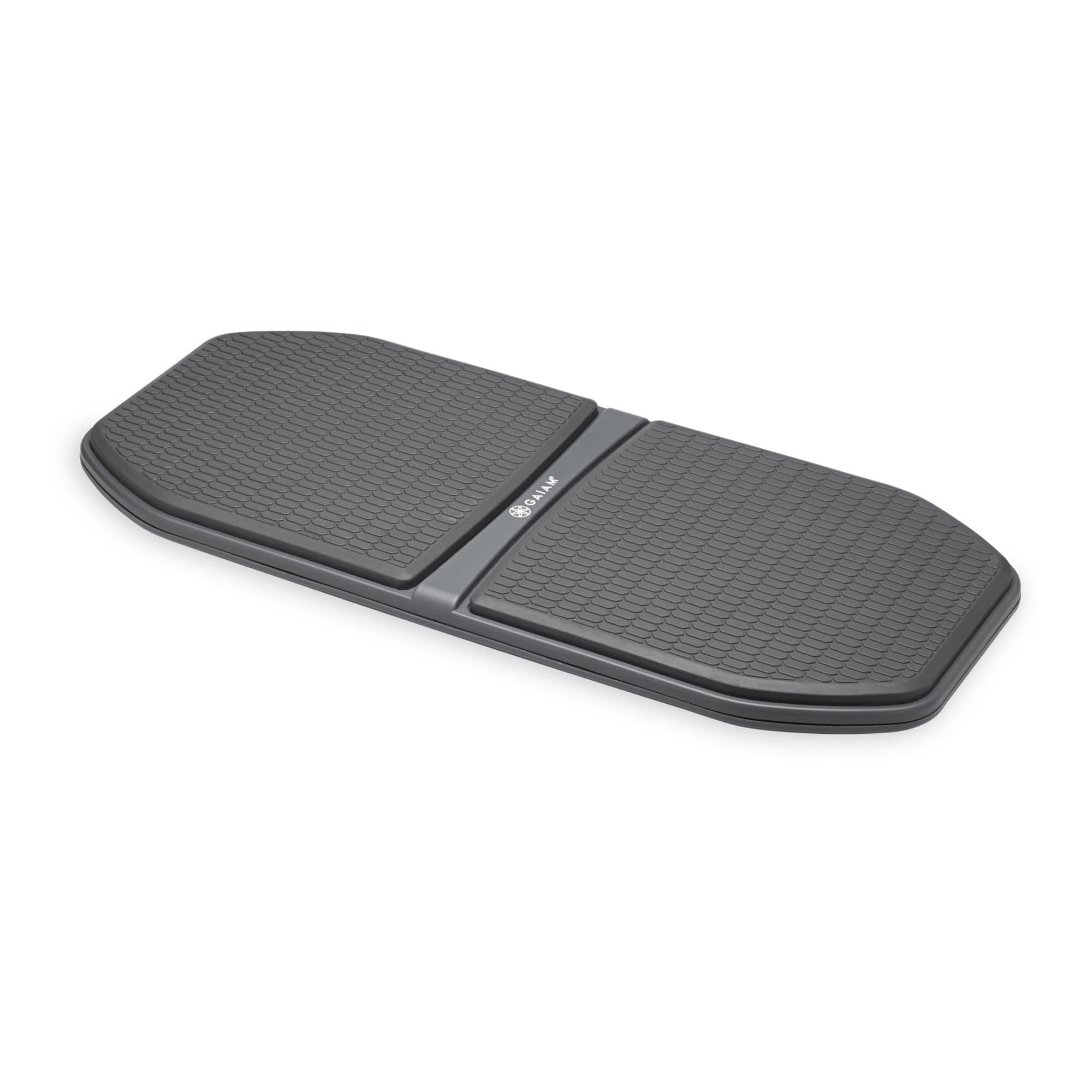
The Gaiam Evolve is purpose-built for the standing desk environment. Its curved bottom allows both forward-backward and side-to-side rocking, promoting neutral ankle positioning. The honeycomb non-slip texture works well on hard floors and carpet without sliding. At 27 inches long and 12 inches wide, the deck accommodates comfortable foot shifting. The 3.65-inch height adds a slight lift, so check desk clearance before buying.
Users praise the board for enabling longer standing sessions by preventing knee locking and reducing lower back fatigue. The lightweight design makes it easy to slide under the desk or carry to another room. Several reviewers mention that the cushion top layer is adequate for four to five hours of standing, and the corner grips prevent wandering on the floor. The 250-pound weight capacity handles most body types, and the simple design requires no assembly.
Some users report that the top cushion layer can peel near the center after a few months of use. A small number also note a loud creaking sound developing around the two-month mark, which can be distracting in a quiet office. The board lacks a massage surface or textured foot stimulation found in some competitors. For a dedicated desk rocker at a mid-range price, the Evolve delivers reliable micro-movement without overcomplicating things.
Why it’s great
- Wide platform allows easy foot repositioning
- Lightweight and portable for home or office
- Smooth bi-directional rocking motion
- Effective at reducing standing fatigue
Good to know
- Cushion layer may peel after extended use
- Some units develop creaking sounds over time
3. StrongTek Professional Wooden Balance Board

The StrongTek board uses a cross-shaped base with a central fulcrum for 360-degree rotation and tilting in all directions. At 17.5 inches long and 13.5 inches wide, the deck is compact but sufficient for shoulder-width stances. The Lauan hardwood plywood construction supports up to 350 pounds and is built to last five to ten years.
Customer feedback highlights that the board reveals leg weaknesses effectively and is often used in physical therapy for knee, ankle, and Achilles rehabilitation. The non-slip surface keeps feet secure, and the 3-inch height is low enough to work with most standing desks. Users over 70 report daily use for balance training, with noticeable improvement in leg stabilizing strength within weeks. The board stores conveniently on its side when not in use.
Several reviewers mention that the four corner edge protectors use cheap adhesive and fall off repeatedly. This is a minor annoyance that does not affect the board’s function. The 360-degree pivot may be too challenging for beginners who want only gentle desk movement — the board requires active balance control. For users who want a board that transitions from desk use to active core training, the StrongTek offers excellent value.
Why it’s great
- Full 360° tilt for comprehensive core work
- Sturdy hardwood supports up to 350 lbs
- Effective for rehabilitation and balance training
- Excellent value for a dual-purpose board
Good to know
- Corner bumper stickers have weak adhesion
- Challenging for beginners wanting subtle motion
4. PROIRON Upgraded Wobble Balance Board

The PROIRON board features a spherical TPE base that allows 360-degree rotation with a tilt angle of up to 22 degrees. The textured bump surface on top prevents slipping and doubles as a mild foot massager. Its 16.34-inch diameter keeps the footprint small, fitting easily under most standing desks. The 12-screw connection between the top and base adds durability, supporting up to 330 pounds.
Users appreciate the lightweight design — just over 2.5 pounds — and the dual handles that make carrying and storage simple. The handles also unlock exercises like push-ups and Russian twists, giving the board versatility beyond desk use. Customers in their 60s and 70s report using the board daily for balance work with positive results. The bump surface provides good traction in socks, though some users note the board is slightly slippery when wet.
A few reviewers mention that the top surface can feel a bit slippery, especially for standing desk use in bare feet or if the feet are sweaty. The spherical base also creates a more challenging wobble than a rocker board, which may be too intense for users who want subtle movement while typing. The TPU base protects floors from scratches but can feel unstable on thick carpet. For a portable, budget-friendly option that doubles as an exercise tool, the PROIRON delivers solid performance.
Why it’s great
- Very lightweight and easy to transport
- Dual handles enable upper body exercises
- Bump surface provides gentle foot massage
- 12-screw construction adds durability
Good to know
- Surface can feel slippery in socks
- 22-degree tilt may be too challenging for desk use
5. Yes4All Wobble Balance Board
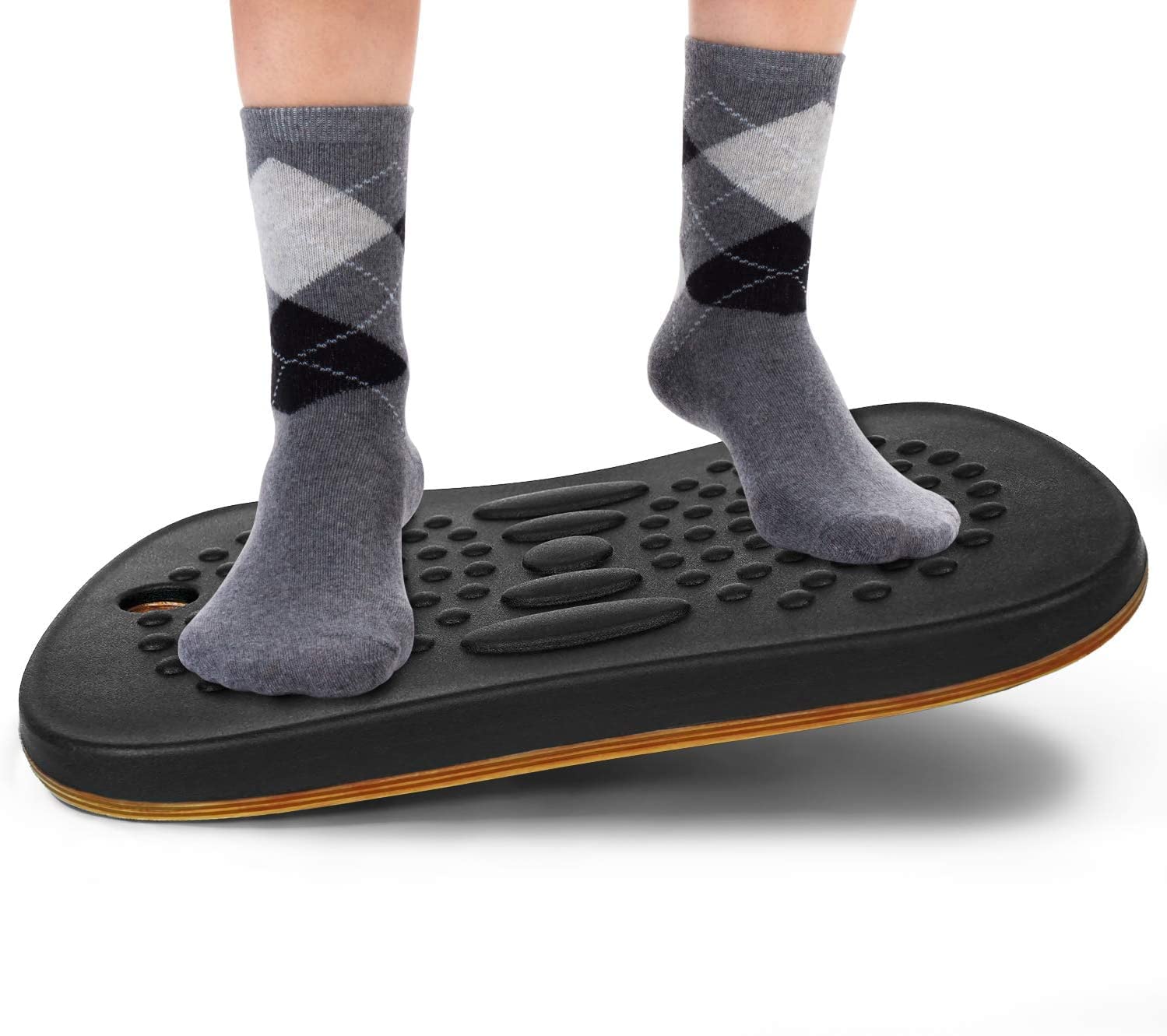
The Yes4All board takes a different approach, using a cushioned foam surface over a wooden core. The pebbled latex top provides a comfortable, non-slip standing experience that many users describe as more pleasant than hard wood surfaces. At 20 inches long and 13.9 inches wide, the deck accommodates both feet comfortably — a key advantage over narrower boards. The anti-slip rubber bottom grips well on concrete, wood, cork, and carpet. With a weight capacity exceeding 400 pounds, this is one of the most accommodating boards on the list.
Customers love the gentle wobble, noting that it is easy enough to use while washing dishes or standing at a computer for hours. The cushioned surface reduces foot fatigue compared to hard plastic or wood boards. The lightweight design (around 5.5 pounds) and carry hole make it easy to move around the home or office. The 1.9-inch height is lower than many boards, meaning less desk adjustment is needed.
Some users find the wobble too easy, describing it more as a slightly wobbly anti-fatigue mat than a true balance trainer. The board does not offer a 360-degree pivot — movement is limited to gentle rocking in one direction. This makes it less suitable for active core training but perfect for subtle, constant motion during work. A few reviewers note that the board feels slightly narrow for taller users. For pure desk comfort with a hint of movement, the Yes4All is a strong choice.
Why it’s great
- Cushioned foam surface reduces foot fatigue
- Large deck fits both feet comfortably
- Very gentle wobble ideal for long desk sessions
- High weight capacity supports large users
Good to know
- Too easy for users wanting a balance challenge
- Limited to unidirectional rocking motion
6. Flycoop Balance Board with Adjustable Stoppers
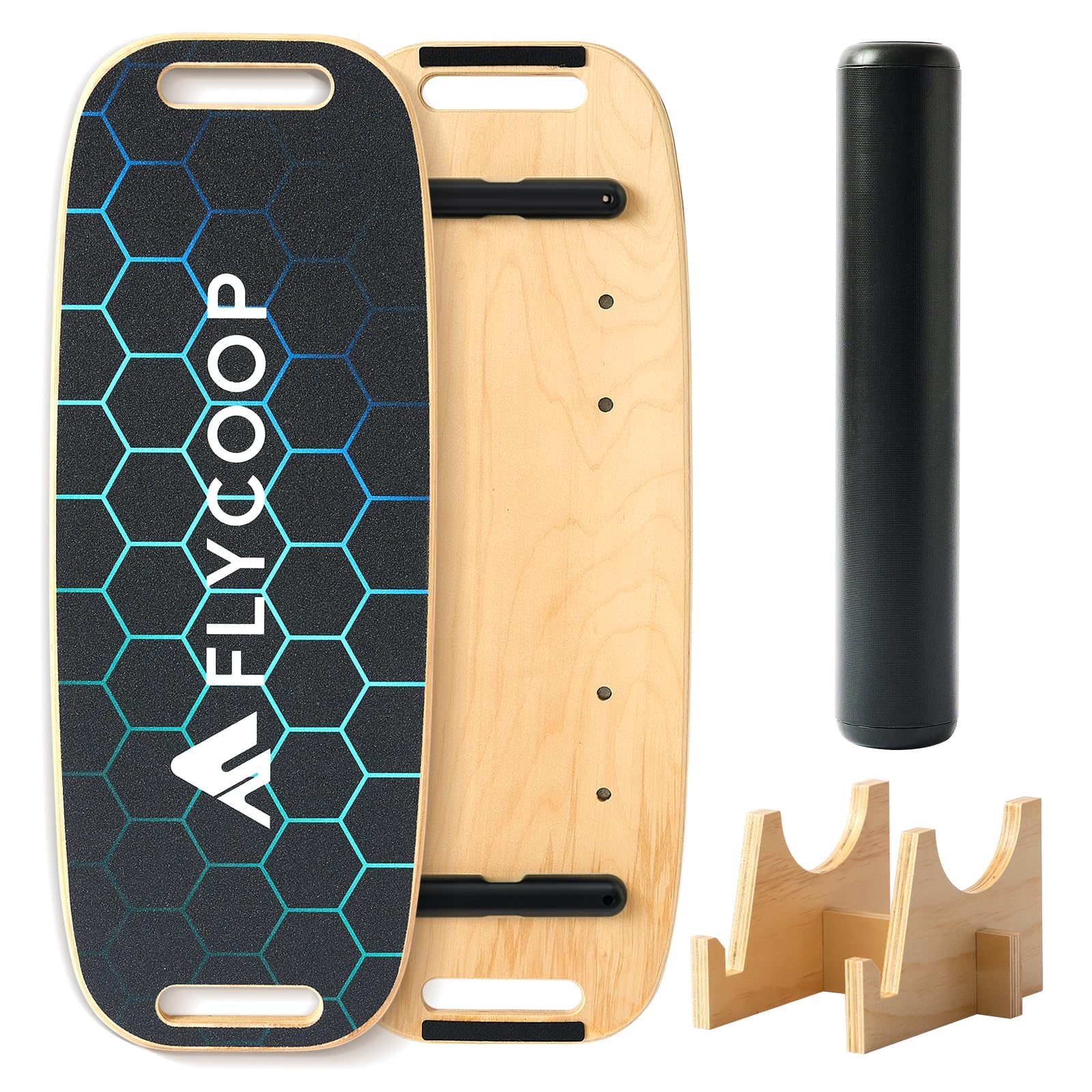
The Flycoop board sets itself apart with three adjustable bumper positions that control the difficulty of the wobble. In the easiest mode, the board offers a gentle rock suitable for desk work. Moving the bumpers inward increases the tilt range, providing a more challenging balance workout. The 15-layer pressed wood construction is sturdy and supports up to 330 pounds. The surface is coated with high-quality sandpaper for a reliable grip, even during intense training sessions.
Users consistently praise the adjustable design for allowing progression from beginner to advanced without needing to buy a new board. The cutout handles on both sides work well for attaching resistance bands or for performing push-ups. The included stand provides convenient storage and keeps the board off the floor when not in use. Customer ratings sit at 4.8 stars, with many calling it a great value for the versatility offered.
The board weighs over 11 pounds, making it heavier than most desk-oriented models. This weight adds stability but reduces portability. The pressed wood construction, while durable, is less moisture-resistant than sealed hardwood. Some users find the grip tape slightly rough for barefoot use. For those who want a single board that grows with their skill level, the Flycoop provides unmatched adjustability.
Why it’s great
- Three adjustable difficulty levels for progression
- Handle cutouts for resistance band exercises
- High 4.8-star average rating from users
- Stand included for convenient storage
Good to know
- Heavier than most desk-focused boards
- Grip tape feels rough without shoes
7. Giongma 360° Rotating Balance Board
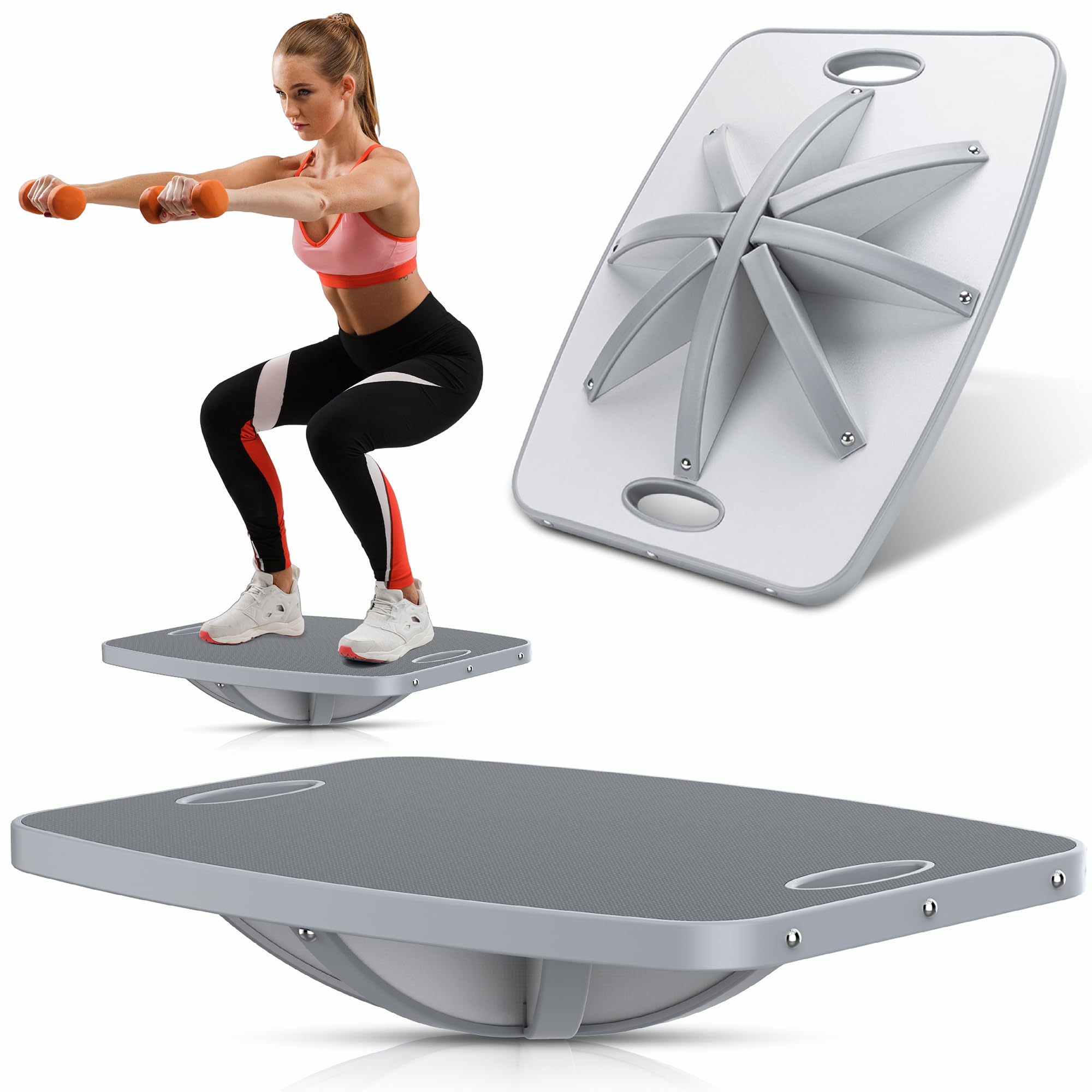
The Giongma board offers the largest deck in this roundup at 23.2 inches long and 16.4 inches wide — plenty of space for even the largest feet to shift comfortably. The 360-degree half-ball base allows tilting up to 25 degrees in any direction, providing a full range of motion. The surface features a high-grade gray linen mask overlay with a silicone pad for grip, creating a premium look and feel. With a 500-pound weight capacity, this board accommodates virtually all adult users.
Users appreciate the robust construction, with many noting it feels solid underfoot and supports heavy users without flexing. The board is frequently used in physical therapy settings for ankle, knee, and hip rehabilitation. The large deck makes it easy to perform exercises like squats, lunges, and planks on the board. The 4.6-inch height is noticeable — users should confirm desk clearance before purchasing. The oval cutout holes at both ends serve as carrying handles.
Some experienced balance board users find the 360-degree tilt too easy, as the large base provides more stability than expected for a pivoting board. The 4.6-inch height may require raising the standing desk or adjusting the chair to maintain proper ergonomics. The board weighs 9 pounds, making it less portable than lighter models. For users who prioritize deck size, weight capacity, and multi-directional movement in a handsome package, the Giongma is a top contender.
Why it’s great
- Extra-large deck fits all foot sizes
- 500-pound weight capacity is category-leading
- Full 360° rotation with 25-degree tilt
- Premium linen and silicone surface texture
Good to know
- 4.6-inch height may require desk adjustment
- Large base provides easier balance than expected
FAQ
Can I use a 360-degree balance board while typing?
Will my balance board damage hardwood or tile floors?
How long does it take to adjust to using a desk balance board?
What is the ideal deck size for a standing desk balance board?
Can I use a balance board on carpet?
Final Thoughts: The Verdict
For most users, the balance board for standing desk winner is the FluidStance Plane because it combines silent operation, a wide stable deck, and sustainable construction into a package that extends standing time without distracting from work. If you want adjustable difficulty that grows with your balance, grab the Flycoop Board with Adjustable Stoppers. And for a budget-friendly option that doubles as a gentle anti-fatigue mat with excellent comfort, nothing beats the Yes4All Wobble Board.