Finding the right legwear for an aging loved one often turns into a frustrating hunt for socks that actually stay up without cutting into the skin or requiring a wrestling match to put on. Thin, fragile skin, reduced mobility, and swelling make standard hosiery a poor fit for elderly legs that need gentle, consistent compression to keep blood moving.
I’m Emma — the founder and writer behind Baby Bangs. I’ve spent years analyzing medical-grade compression wear, comparing fabric blends, graduated mmHg ratings, and closure systems to identify what actually works for seniors with circulation concerns and limited dexterity.
After combing through thousands of user reports and specification sheets, I’ve narrowed the market down to five reliable models that define the modern compression socks for elderly.
How To Choose The Best Compression Socks For Elderly
Selecting compression socks for an older adult requires balancing therapeutic pressure with everyday comfort and easy application. A wrong choice can lead to skin damage, poor compliance, or ineffective treatment, so understanding three key factors helps you make the right call.
Match the mmHg to the Condition
Compression levels are measured in millimeters of mercury (mmHg). For mild swelling or long days on the feet, 15-20 mmHg provides light support without feeling restrictive. If your loved one deals with moderate varicose veins, significant edema, or a history of deep vein thrombosis, the 20-30 mmHg range delivers clinically meaningful pressure. Always consult a doctor before moving above 20 mmHg, especially if diabetes or peripheral artery disease is present.
Prioritize Easy Donning and Doffing
Arthritic hands and reduced grip strength turn tight compression socks into a daily obstacle. Look for designs with back zippers, silicone-free top bands that reduce rolling, or wider calf openings that still hold pressure. Some models come in multi-pack configurations so you can pre-stretch a pair, making morning application faster for the caregiver or the wearer.
Focus on Fabric and Seam Comfort
Elderly skin is thinner, drier, and more prone to irritation. A nylon-spandex or copper-infused knit offers breathability while keeping the weave smooth against the skin. Avoid coarse seams at the toe or any interior tags that can rub. Machine-washable construction is a practical necessity — hand-wash-only fabrics often get skipped, leading to bacterial buildup and loss of compression integrity.
Quick Comparison
On smaller screens, swipe sideways to see the full table.
| Model | Category | Best For | Key Spec | Amazon |
|---|---|---|---|---|
| Bluemaple 6-Pack Copper | Mid-Range | All-day veterans and caregivers | 85% nylon, graduated 15-20 mmHg | Amazon |
| Tarpop 4-Pair Zipper | Mid-Range | Seniors with arthritis or low grip | Back zipper, 20-30 mmHg | Amazon |
| NEENCA Copper (1 Pair) | Premium | Travel recovery and sensitive skin | Copper-infused, 20-30 mmHg | Amazon |
| CHARMKING 8-Pair | Premium | Daily rotation and larger calves | 85% nylon/15% spandex, 15-20 mmHg | Amazon |
| Wakefeet 6-Pair | Budget | High-compression without a prescription | 94% polyester/6% spandex, 20-30 mmHg | Amazon |
In‑Depth Reviews
1. Bluemaple 6-Pack Copper Compression Socks

The Bluemaple 6-pack hits the sweet spot between value and performance, offering proven graduated compression that reduces ankle and calf swelling after long days. Its 85% nylon and 15% polyester blend breathes well, resists itching, and maintains its shape after repeated machine washing — a practical choice for seniors who need a fresh pair every day without hand-washing hassles.
Users consistently report that the socks stay up without sliding or rolling, even during extended wear. The S/M size accommodates women’s size 6-8.5 feet comfortably, and the colorful patterns make the socks feel less clinical. A small percentage of wearers noted a latex-like sensation in the band that caused irritation behind the knee, so a latex allergy should be ruled out before committing to daily use.
Over 79,000 customer reviews hold the rating at 4.5 stars, with the strongest praise around the balance of compression strength and ease of donning. For caregivers looking for a bulk solution that covers the basics — warmth, circulation support, and durability — this pack is the most consistent performer in its tier.
Why it’s great
- Six pairs cover a full week with no daily rewashing
- Soft material with no interior tags or rough seams
- Machine washable with no shrinkage reported
Good to know
- Latex in the band may irritate very sensitive skin
- Initial odor from packaging requires a first wash
2. Tarpop 4-Pair Zipper Compression Socks

The Tarpop 4-pair is built for the senior who struggles with the physical act of pulling on tight socks. A full-length back zipper eliminates the need to wrestle fabric over the heel, and the closed-toe design keeps feet fully covered. Each pair delivers a firm 20-30 mmHg gradient — a level that offers real therapeutic benefit for moderate edema and varicose veins without requiring a custom prescription.
User feedback highlights the smooth zipper action and the fact that the zipper track is positioned away from the skin on most pairs, though a few reviews note the interior flap doesn’t fully prevent the zipper from pressing against the calf. The socks run slightly large, so sizing down for a snug fit is common. One tip shared by experienced users: leave the bottom inch of the zipper closed when starting, then zip the rest for even tension.
With a 4.1-star average from over 700 reviews, the Tarpop is the most practical option for seniors with arthritis, Parkinson’s-related tremors, or general hand weakness. The four-pair quantity provides backup pairs for travel or laundry days, and the zipper design reduces caregiver strain during morning dressing routines.
Why it’s great
- Zipper lets seniors with arthritis apply socks independently
- True 20-30 mmHg compression for moderate medical needs
- Four pairs at a budget-friendly value price
Good to know
- Zipper flap can still press against skin on some units
- 20-30 mmHg feels softer than other brands at the same rating
3. NEENCA Copper Compression Socks
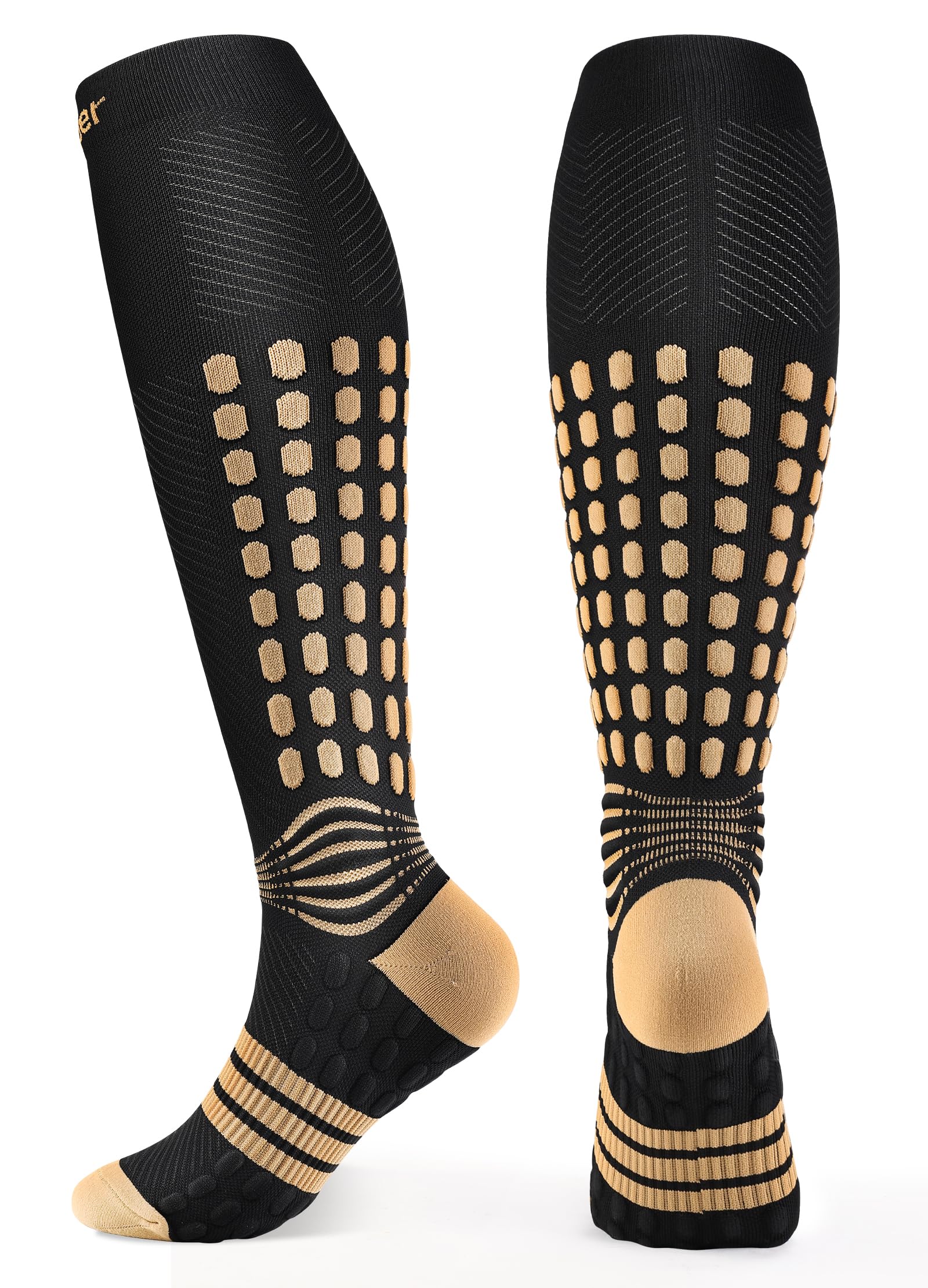
The NEENCA is a single-pair premium sock that prioritizes material quality and consistent pressure distribution above all else. The copper-infused knit offers natural antimicrobial properties, reducing odor and bacterial growth during full-day wear — a meaningful advantage for seniors who keep socks on from breakfast to bedtime. The graduated 20-30 mmHg compression is firm but even, with reinforced heel and toe sections that prevent early thinning.
Healthcare professionals and frequent flyers are the most vocal fans here, reporting zero swelling even after 8-hour shifts or transcontinental flights. The fabric is noticeably smoother against the skin than standard nylon blends, though the medium fit may be too tight for those needing to accommodate bandages or significant foot swelling. The sock stays put without constant tugging, thanks to a well-engineered silicone-free top band.
With strong early reviews and a 5-star rating from early adopters, the NEENCA makes sense for the elderly user who wants one exceptionally well-made pair for dedicated use rather than a rotation of average pairs. The copper infusion means these socks cost more per unit, but the durability and skin-friendly feel justify the premium.
Why it’s great
- Copper fibers reduce odor and bacterial buildup
- Even 20-30 mmHg compression without cutting off circulation
- Reinforced heel and toe resist wear and tear
Good to know
- Single pair only — higher per-pair cost than multi-packs
- Medium may not fit over thick bandages or severe edema
4. CHARMKING 8-Pair Compression Socks

The CHARMKING 8-pack is the highest-volume option on this list, designed for seniors who want a full rotation without running out of clean pairs. At 15-20 mmHg, the compression is lighter and more forgiving — gentle enough for daily wear without creating the intense squeeze that can discourage use among elderly first-timers. The nylon-spandex blend provides excellent stretch recovery, and the socks leave no red indentation marks even after a full day on the feet.
Users with larger calves or longer legs (up to 5’9″) find that these socks reach true knee height without cutting into the thigh. The extra room at the heel and toe reduces pressure on bunions and sensitive spots. However, the fabric lacks any foot padding, so wearing a thin liner sock or cushioned slipper is recommended for anyone who walks extensively on hard floors. Patterns are fun and varied, though solid-color options are less likely to cause skin irritation from stitched designs.
Holding a 4.5-star rating from nearly 89,000 reviews, the CHARMKING is the most vetted product here. The 8-pair count makes it the easiest option for caregivers who manage laundry in bulk, and the mild compression level lowers the risk of over-compression in seniors who don’t require a medical-grade tightness.
Why it’s great
- 8 pairs (16 socks) offer a full two-week rotation
- 15-20 mmHg light compression is ideal for beginners
- Fits a wide range of calf sizes without pinching
Good to know
- No foot padding — less cushion for walking on hard surfaces
- Stitched patterns can cause irritation on very sensitive skin
5. Wakefeet 6-Pair Medical Compression Socks
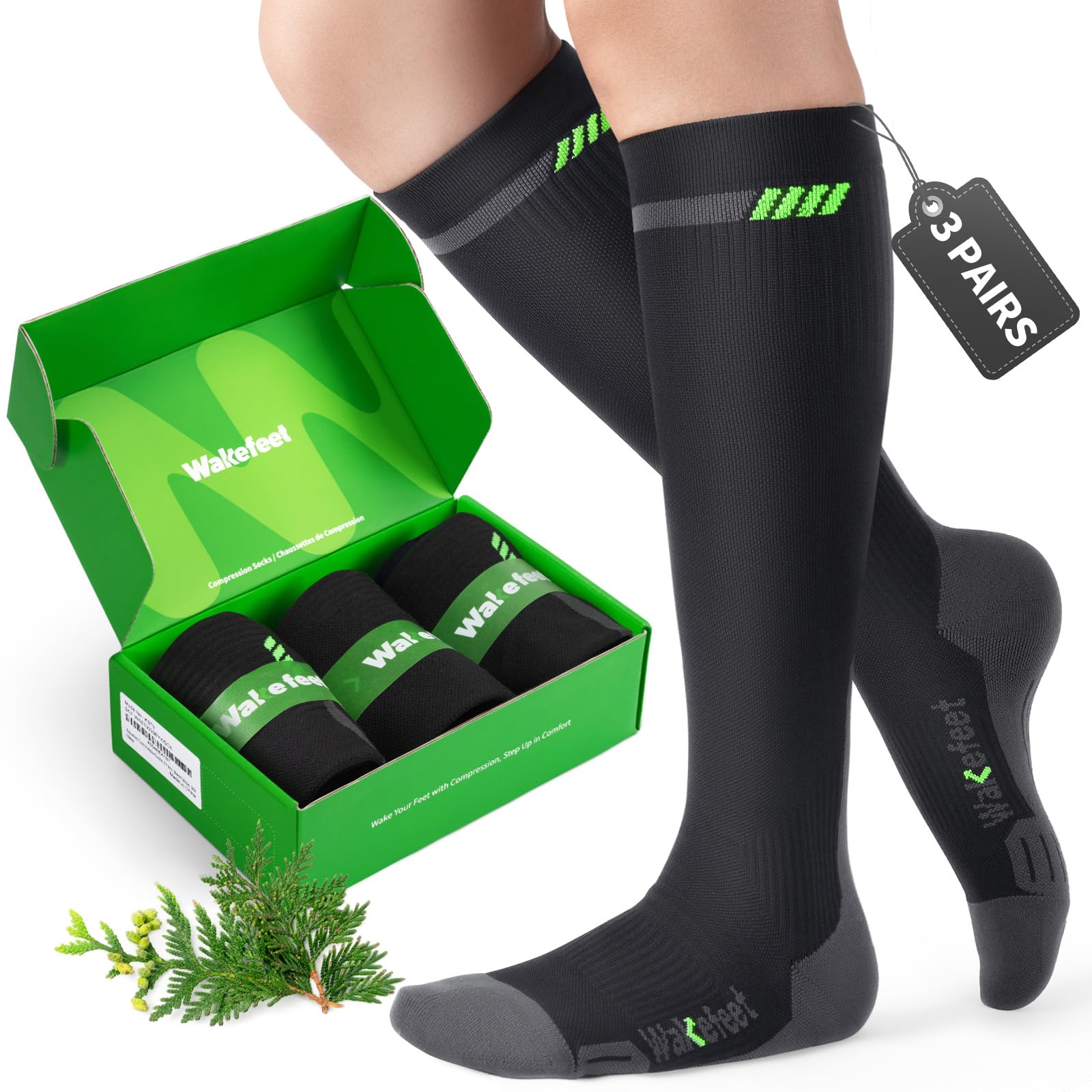
The Wakefeet 6-pack enters the ring as a high-compression budget option, packing a full 20-30 mmHg into each pair without the premium price tag. The polyester-spandex knit is dense and supportive, with users reporting that the socks eliminated lower back pain and leg cramps that other home-care hosiery couldn’t touch. The size chart is notably accurate — most buyers report a glove-like fit when following the ankle-to-calf measurement guide.
Despite the strong compression, the material collects lint and debris during outdoor wear, and the care instructions specify hand wash and drip dry only, which adds friction to the daily routine. That said, several six-month durability reports show the fabric holds its shape and pressure well with proper maintenance. The socks run true to size for both men and women, making them a versatile fit for a couple sharing a rotation.
With a 4.2-star average across over 700 reviews, the Wakefeet punches above its price point for therapeutic tightness. If budget is the primary constraint and a doctor has cleared 20-30 mmHg, these provide the most compression per dollar. Just be prepared for hand washing or risk premature wear in the machine.
Why it’s great
- 20-30 mmHg medical-grade compression at a budget price
- Accurate sizing chart reduces guesswork for orders
- Durable polyester weave holds shape for months
Good to know
- Hand wash and drip dry required — no machine washing
- Fabric attracts lint and debris easily
FAQ
Can compression socks make swelling worse for elderly wearers?
What is the difference between 15-20 mmHg and 20-30 mmHg for seniors?
How do zipper compression socks compare to regular pull-on designs for arthritis?
Final Thoughts: The Verdict
For most users, the compression socks for elderly winner is the Bluemaple 6-Pack because it combines a comfortable 15-20 mmHg gradient, machine-washable care, and enough pairs to cover a full week without laundry. If you want a zippered design for easier donning, grab the Tarpop 4-Pair Zipper. And for a premium single-pair option with copper-infused skin protection, nothing beats the NEENCA Copper.