Leg fatigue kills a good ride faster than a headwind. The wrong sock pinches, slips, or fails to support the calf muscles that drive every pedal stroke. Cycling compression socks solve this — they deliver graduated pressure to improve blood flow, reduce vibration fatigue, and keep your feet dry over long miles. The problem is that the market is flooded with mediocre options that look the part but lack the construction to perform.
I’m Emma — the founder and writer behind Baby Bangs. I’ve spent years analyzing compression wear specifications, from fabric density and knit construction to graduated pressure ratings, to separate genuine performance gear from marketing claims.
This guide breaks down five proven models so you can confidently choose the best cycling compression socks for your riding style, from recovery-focused compression to lightweight race-day options.
How To Choose The Best Cycling Compression Socks
Not all compression socks are built for the repetitive dorsiflexion and plantarflexion of cycling. A sock designed for a flight or a hospital bed lacks the targeted support and moisture management a rider needs. Focus on three areas: graduated compression level, fiber blend, and fit geometry.
Graduated Compression Level (mmHg)
Cycling-specific socks typically range from 15–20 mmHg (mild, good for support and recovery) to 20–30 mmHg (moderate, ideal for serious performance and reducing muscle oscillation). Higher is not always better — too much compression can restrict pedaling range or cause discomfort over a four-hour saddle session. Match the rating to your ride intensity and recovery needs.
Fiber Blend & Moisture Management
Wet feet inside stiff cycling shoes cause hotspots and blisters. Look for nylon-based blends with olefin, spandex, or polyester — these wick moisture, dry fast, and maintain compression elasticity. Avoid cotton-heavy blends; they absorb sweat, lose shape, and create friction. A ribbed upper channel or mesh ventilation panel further improves breathability.
Sock Height & Calf Fit
Cycling socks should reach mid-calf to top-calf without cutting off circulation at the cuff. A wide, stay-put top band prevents slippage during the pedal stroke. Measure your calf circumference against the size chart — many brands offer wide-calf options. Socks that slide down or bunch at the ankle defeat the purpose of graduated compression entirely.
Quick Comparison
On smaller screens, swipe sideways to see the full table.
| Model | Category | Best For | Key Spec | Amazon |
|---|---|---|---|---|
| Swiftwick PERFORMANCE Crew | Premium | Long rides & durability | Olefin moisture-wicking fiber | Amazon |
| JOBST ACTIVA Athletic | Premium | Medical-grade compression | 20-30 mmHg graduated pressure | Amazon |
| PRO Compression Marathon | Mid-Range | Recovery & wide calf | 20-30 mmHg, nylon fabric | Amazon |
| DANISH ENDURANCE Crew | Value | Multi-pack value | 3-pack cushioned sole | Amazon |
| CASTELLI Espresso 18 | Mid-Range | Road & gravel riding | Moisture-wicking, mid-calf height | Amazon |
In‑Depth Reviews
1. Swiftwick PERFORMANCE Crew Cycling Socks

Swiftwick uses a proprietary olefin fiber blend — 84% nylon, 10% olefin, 6% spandex — that sets a new benchmark for moisture management in cycling socks. Olefin is chemically inert and hydrophobic, meaning it does not absorb water but instead transports moisture to the fabric surface for rapid evaporation. Riders consistently report zero hotspots, no blisters, and dry feet even on multi-hour rides in varying conditions, backed by customer reviews of 140-mile backpacking trips with only hand washes between wears.
The moderate arch band compression holds the sock securely against the foot without restrictive tightness, and the upper ventilation channels actively increase airflow to prevent overheating. The reinforced heel and toe construction withstands high-friction zones inside stiff cycling shoes, addressing the common failure point of premature wear. At 7 inches in height, the crew length sits ideally at mid-calf for most riders.
The tight initial fit requires proper sizing — order according to the size chart rather than your shoe size. Some users note that the moderate compression level may feel firmer than expected if you are accustomed to looser socks. Air drying is recommended to preserve the spandex elasticity over the long term. Swiftwick also backs these with a responsive warranty that replaces defective pairs without hassle.
Why it’s great
- Olefin fiber wicks moisture faster than standard nylon or polyester blends
- Reinforced heel and toe deliver exceptional durability for high-mileage riders
- Upper ventilation channels reduce hotspot formation during long rides
Good to know
- Firm initial fit requires careful sizing based on calf circumference
- Moderate compression may feel tight for those used to casual athletic socks
- Premium price point reflects US manufacturing and specialized fiber technology
2. JOBST ACTIVA Athletic 20-30 mmHg Compression Socks

JOBST is a brand recommended by cardiologists and vascular specialists for its calibrated compression accuracy, and the ACTIVA Athletic line brings that same precision to the cycling market. The 20-30 mmHg graduated compression rating is independently verified — a feature that matters when you are relying on the sock for genuine recovery between training blocks or long sportives. The closed toe design provides full coverage without pinching at the seam.
The fabric sits at a medium weight — not so thin that it feels fragile, not so thick that it overheats inside a summer cycling shoe. Riders report that the socks stay in place during walks and rides alike, with a wide top cuff that avoids tourniquet-like tightness. The leg length reaches high enough for the graduated compression to function properly, which is essential: socks that stop below the knee fail to deliver the full pressure gradient that drives venous return.
Fit can be finicky for those at the edges of the size chart. Some users with longer lower legs (17 inches from floor to knee) find the small too short in the leg while the medium feels long in the foot. The compression level is not suited for casual wear if your primary goal is light support. The single-pair packaging also means the upfront investment is higher per unit than multi-pack alternatives.
Why it’s great
- Doctor-recommended brand with verified 20-30 mmHg graduated compression
- Medium-weight fabric balances durability with breathability for all-day wear
- Wide top cuff stays securely in place without restricting circulation
Good to know
- Size transitions between leg length and foot length can be tricky for some body types
- Full 20-30 mmHg compression is intense — not ideal for first-time compression users
- Sold as single pair, making the per-unit cost higher than value-focused packs
3. PRO Compression Running Marathon Socks
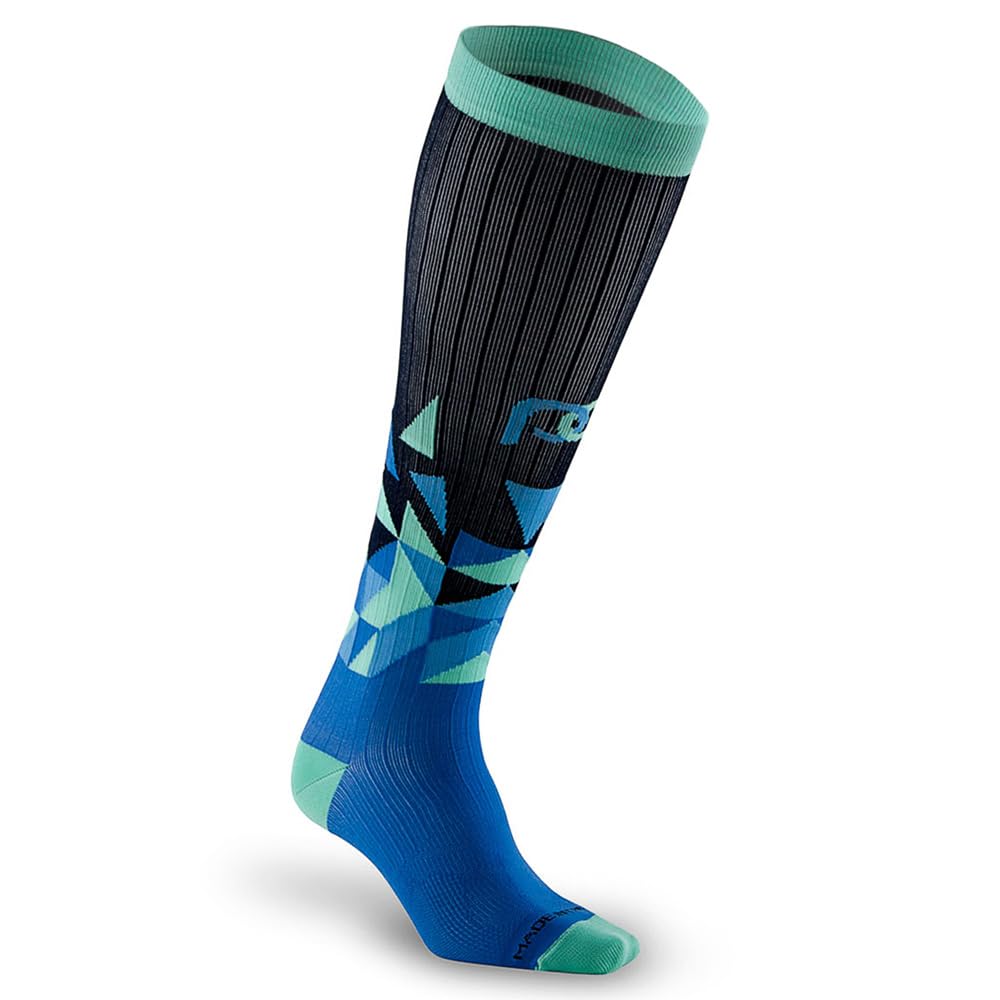
PRO Compression delivers the same 20-30 mmHg graduated compression as the premium tier but at a more accessible price point, making it the go-to option for riders focused on post-ride recovery and swelling management. The poly-nylon fabric construction is lightweight and breathable, with a wide top cuff designed to maximize circulation while staying put during high-intensity efforts. The brand explicitly includes cycling in its sport profiles, and customer reviews confirm performance on both road and mountain bike rides.
The wide calf sizing option is a standout feature — cyclists with larger calves often struggle to find compression socks that fit without rolling down or cutting in. PRO Compression addresses this directly with inclusive sizing that accommodates a broader range of leg geometries. The moisture-wicking properties keep feet dry during rides, and the lightweight build prevents the overheating that can occur with thicker compression fabrics in warm weather.
The socks require a bit of technique to pull on because of the firm compression profile. First-time users should expect a break-in period of a few wears before the material relaxes into its optimal fit. Some color options on Amazon are limited compared to the brand’s direct website. A few users note that the toe box can feel slightly pulled, though this is not a universal complaint and typically resolves with proper sizing.
Why it’s great
- Wide calf option available — rare in this compression tier for cycling-specific socks
- Lightweight poly-nylon fabric breathes well during warm-weather rides
- Effective 20-30 mmHg gradient for accelerating recovery between training sessions
Good to know
- Difficult to pull on initially — takes practice and patience for the first few wears
- Color and pattern selection on Amazon is narrower than the full PRO Compression lineup
- Firm compression may cause mild toe pull sensation in certain sizes
4. DANISH ENDURANCE Crew Cycling Socks

DANISH ENDURANCE has earned the #2 ranking in Men’s Cycling Socks on Amazon with over 8,200 ratings, and for good reason — the 3-pack format delivers consistent quality at a per-pair cost that undercuts nearly every specialist brand. The cushioned sole provides welcome vibration dampening over rough pavement or gravel, and the crew height sits comfortably at mid-calf without creeping down during the pedal stroke. The anatomical fit adapts to both road and mountain bike shoes.
The moisture-wicking performance is strong for a blended fabric construction, keeping feet dry through multi-hour rides. Customers consistently praise the comfort and fit across repeated purchases, with many citing them as the best cycling socks they have ever worn. The availability in both men’s and women’s sizing adds versatility, and the brand is responsive to sizing feedback — experienced riders recommend ordering down one size if you are at the upper end of a range.
Durability is good but not bulletproof. A high-mileage rider reported a toe hole after seven months of 5-6 rides per week, which is reasonable for an entry-level price point but less impressive than the reinforced Swiftwick design. The bright white color shows marks quickly, and machine washing inside out with gentle detergent is required to maintain the fabric integrity. These are not true compression socks — they offer support fit rather than graduated mmHg compression.
Why it’s great
- Outstanding value — three pairs for the price of one premium sock
- Cushioned sole dampens road vibration and adds comfort on long days
- Anatomical fit works for both road and mountain bike shoes without bunching
Good to know
- Support fit rather than graduated compression — not for recovery-focused riders
- Durability is adequate but not exceptional for high-mileage training schedules
- Bright white color shows dirt and stains quickly; needs careful washing
5. CASTELLI Men’s Espresso 18 Sock
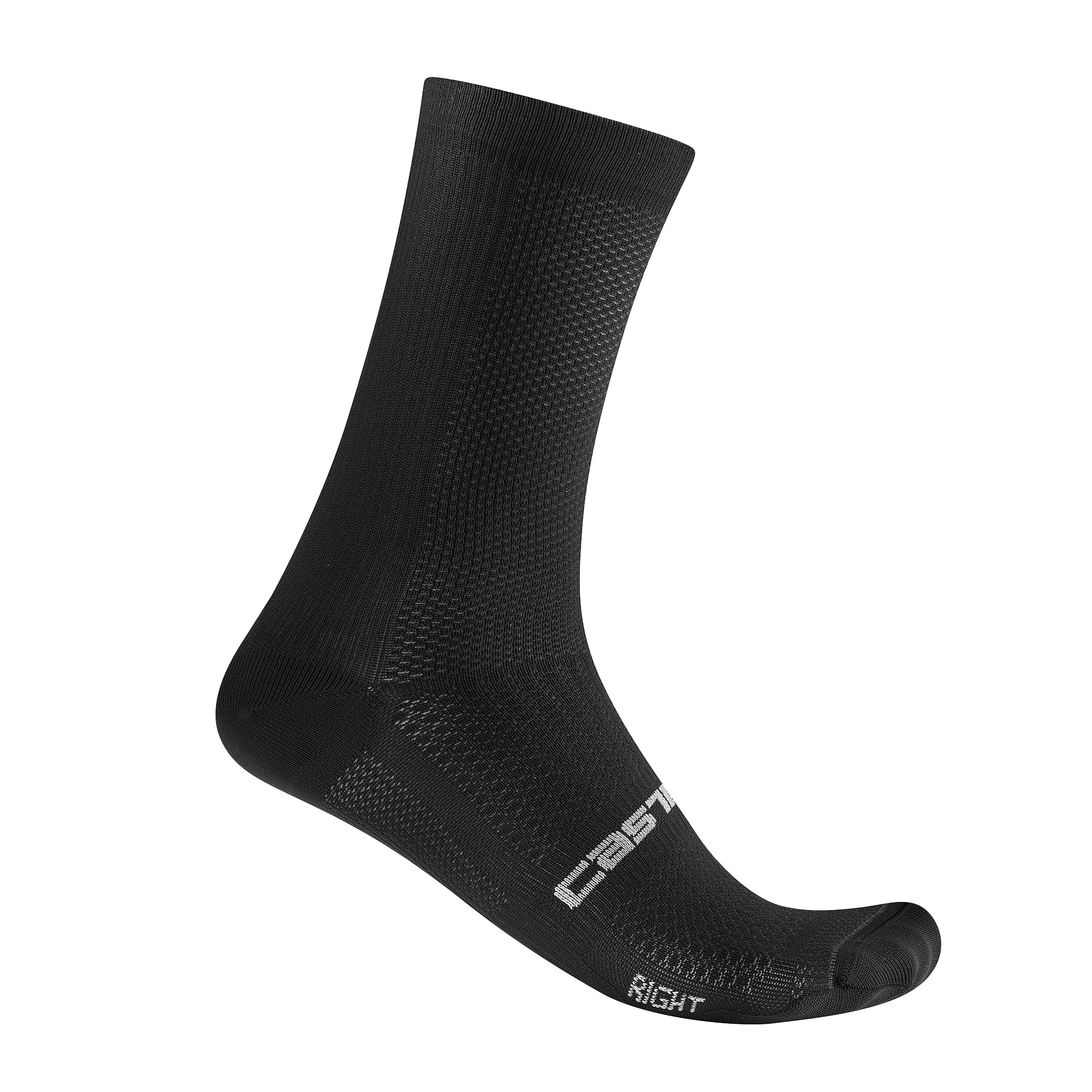
Castelli brings its deep cycling heritage to the Espresso 18, a sock that prioritizes fit and moisture management over flashy branding. The mid-calf height lands in a sweet spot — high enough to provide coverage without hitting the back of the knee during an aggressive aero tuck, and low enough to stay compatible with most leg hair lengths. The fabric blend wicks effectively, and padding is placed in the right zones to keep the foot comfortable through multi-hour efforts.
The construction uses targeted cushioning rather than a full padded sole, which prevents the sock from feeling bulky inside tight-fitting road shoes. Customer feedback consistently highlights the soft, comfortable feel against the skin and the sock’s ability to stay in position without sagging. The clean aesthetic with minimal Castelli branding appeals to riders who prefer understated gear that does not advertise itself.
This is not a compression sock in the medical sense — it lacks a graduated mmHg rating and functions as a performance cycling sock with light support. The sizing runs close to true foot size but the mid-calf height may feel short for taller riders who prefer a taller sock. The single-pair format means you will need to buy multiple packs to stock a week’s worth of rides, which adds up compared to multi-pack options.
Why it’s great
- Targeted padding zones provide comfort without excessive bulk inside road shoes
- Mid-calf height clears aero tuck positions without bunching behind the knee
- Subtle Castelli branding suits riders who prefer a clean, understated look
Good to know
- Not a graduated compression sock — offers support fit rather than mmHg pressure
- Mid-calf height may feel too short for riders accustomed to full-calf coverage
- Sold as single pair, requiring multiple purchases to build a rotation
FAQ
What mmHg compression level is best for cycling?
How tight should cycling compression socks feel?
Can I wear compression socks for both riding and recovery?
Final Thoughts: The Verdict
For most riders, the best cycling compression socks winner is the Swiftwick PERFORMANCE Crew because its olefin fiber delivers unmatched moisture management and the reinforced construction handles year-round abuse. If you need genuine 20-30 mmHg graduated compression for recovery or medical reasons, grab the JOBST ACTIVA Athletic. And for a multi-pack value that performs well on the bike without breaking the bank, nothing beats the DANISH ENDURANCE Crew.