A muddy trail, a sudden downpour, and a snapped tether on your gear load—that’s the moment you realize your camp tool is more decoration than instrument. Most multi-tools and hatchets sold as “camping survival gear” live on shelves, not in the field, because their steel is soft, their handles crack under load, and their sheaths fall apart within a season. The difference between a tool that works and one that wounds comes down to three things: tang construction, blade steel composition, and the balance point of the head or handle.
I’m Emma — the founder and writer behind Baby Bangs. I’ve spent years cross-referencing hardness ratings, handle ergonomics, and real-user field reports to separate the tools that hold up from the ones that fold after a single weekend.
Whether you need to split kindling, dress a deer, or carve a notched stake for a ridge line, the right gear keeps you safe and efficient. This guide walks you through the best camping tools across hatchets, fixed-blade knives, and tactical axes built for real backcountry use.
How To Choose The Best Camping Tools
A good camping tool isn’t a jack-of-all-trades—it’s a master of one job that carries well, bites deep, and doesn’t fail when you torque it. The wrong choice means a snapped handle in a driving rain or a blade that won’t hold an edge through a single deer. Focus on these four factors.
Tang Construction: Full Tang vs. Partial
The metal that runs from blade tip through the handle defines durability. Full-tang construction means the steel runs the entire length and width of the grip—you can see it at the pommel and along the sides. Partial tangs save weight but snap under prying, batoning, or any lateral load. For field dressing, limb chopping, or splitting small logs, full tang is non-negotiable. Check the product images for visible steel at the handle end.
Blade Steel: Edge Retention vs. Field Sharpenability
Steels like 420HC (Buck), 8Cr13MoV (Spyderco), and 5Cr15MoV (Gerber) each trade off hardness for ease of sharpening. 420HC is softer—easy to touch up with a ceramic rod mid-trip but loses edge faster when cutting through bone or abrasive wood. 8Cr13MoV holds longer and resists corrosion better but requires a diamond stone to re-profile a rolled edge. For extended trips without a sharpening kit, go with a steel that balances corrosion resistance and edge retention, like 8Cr13MoV. For quick day hikes where you can pack a small sharpener, 420HC sharpens in seconds.
Handle Material and Ergonomics
Rubberized grips (Dynaflex, TacHide) provide non-slip control in wet, bloody, or gloved hands. G-10 handles (Spyderco Bow River, HX OUTDOORS) add stiffness and weather resistance but can feel slick or cause hot spots without jimping or texture. Hickory handles (Husqvarna) absorb shock and feel warm in cold weather but require periodic oiling to prevent splitting. The right choice depends on whether you’re wearing gloves, working in rain, or making repetitive cuts.
Sheath and Carry System
A sheath that doesn’t retain the blade is a safety hazard. Leather sheaths (Spyderco, Husqvarna) look classic but can stretch and drop the knife or hatchet over time. Nylon and Kydex sheaths (HX OUTDOORS, Gerber) offer positive lock retention and MOLLE-compatible belt loops. For camping tools that ride in a pack or on a belt, Kydex with a passive retention screw is the most secure option—just check that the sheath doesn’t cut into the blade’s edge over repeated insertions.
Quick Comparison
On smaller screens, swipe sideways to see the full table.
| Model | Category | Best For | Key Spec | Amazon |
|---|---|---|---|---|
| Fiskars 28″ Chopping Axe | Premium Axe | Campfire kindling and log splitting | 3.5 lbs, 28″ head, low-friction coating | Amazon |
| Husqvarna Hatchet | Premium Hatchet | One-handed limbing and light chopping | 1.32 lb head, hickory handle | Amazon |
| Spyderco Bow River | Mid-Range Knife | Game dressing and food prep | 4.36″ 8Cr13MoV steel, G-10 handle | Amazon |
| Buck 684 Small BuckLite Max II | Mid-Range Knife | Detail work and small game skinning | 3.25″ 420HC blade, Dynaflex grip | Amazon |
| Gerber Freeman Guide | Value Knife | Light hunting and camp chores | 4″ 5Cr15MoV blade, TacHide grip | Amazon |
| Wakeman Hand Axe Combo | Budget Hatchet | Emergencies and ATV carry | 14″ hatchet with nested saw and fire starter | Amazon |
| HX OUTDOORS Mercenary | Tactical Axe | Multi-role: pry, hammer, chop | G-10 handle, stainless steel, hammer head | Amazon |
In‑Depth Reviews
1. Fiskars 28″ Chopping Axe
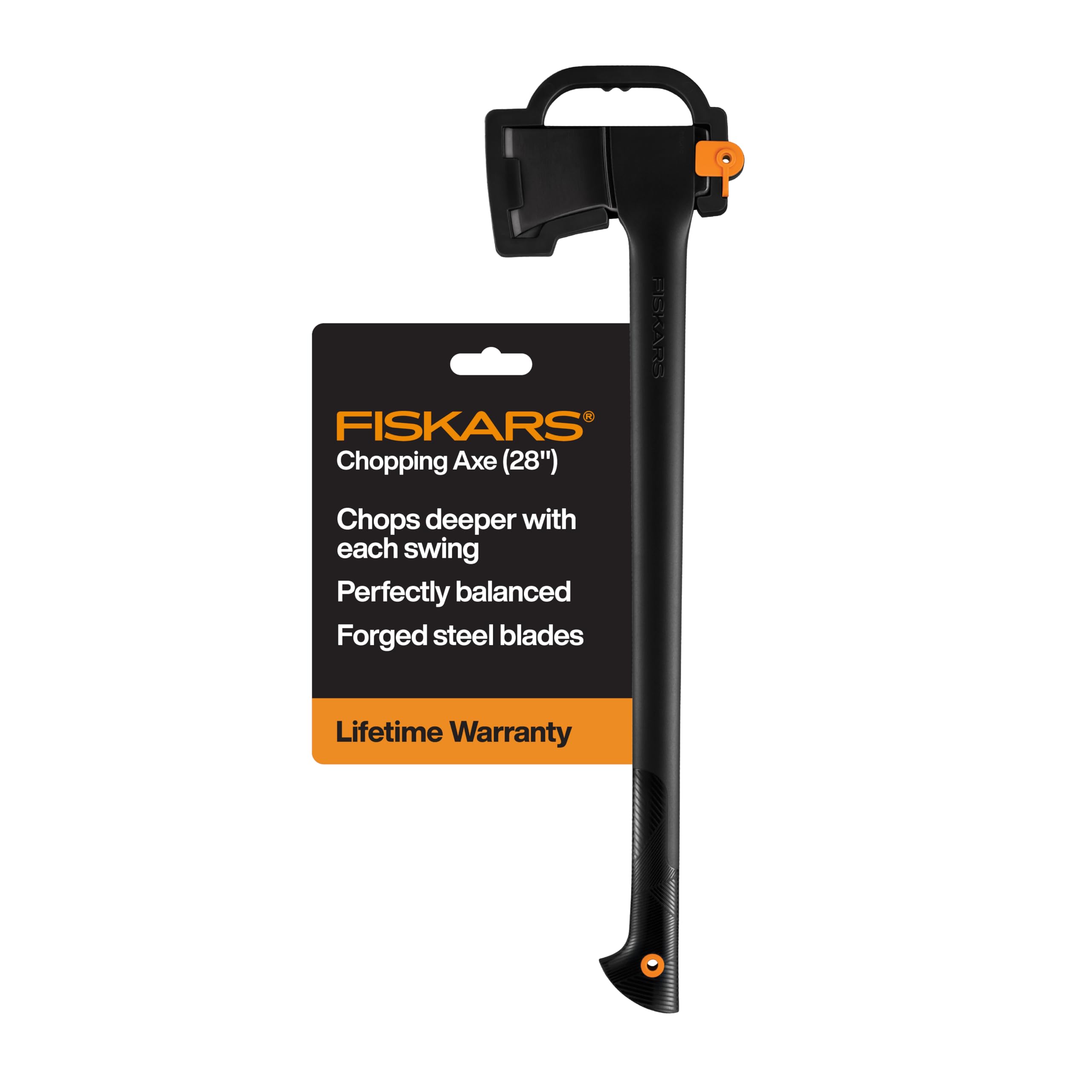
The Fiskars 28″ Chopping Axe hits the sweet spot for campsite prep and backyard splitting. Its 3.5-pound head with a hardened, low-friction coating allows the blade to power through ash, cherry, and beech without wedging—reviewers consistently note zero hand sting thanks to the shock-absorbing handle design. The blade arrives ultra-sharp and holds its edge through extended use, requiring only a file for touch-ups over years of service.
Precision-balanced at 28 inches, this axe delivers maximum force per swing without tiring the user. The low-friction coating prevents the head from sticking in wet wood, a critical advantage when you’re splitting rain-soaked kindling. Reviewers praise its ability to fell small trees and split logs up to ten inches in diameter, making it a solid choice for both car camping and homestead maintenance.
One limitation: the plastic blade guard is flimsy, and the full-length design isn’t pack-friendly for backpackers. The lifetime warranty covers the head and handle, and Fiskars USA customer service is responsive if the edge needs re-profiling. For front-country campers who need one axe that splits, chops, and endures, this is the benchmark.
Why it’s great
- Ultra-sharp blade with low-friction coating prevents sticking
- Excellent shock absorption—no hand sting even on hard wood
- Balanced 28″ length delivers efficient power per swing
Good to know
- Plastic blade guard is not durable for pack carry
- Full length not ideal for backpacking or tight storage
2. Husqvarna Hatchet
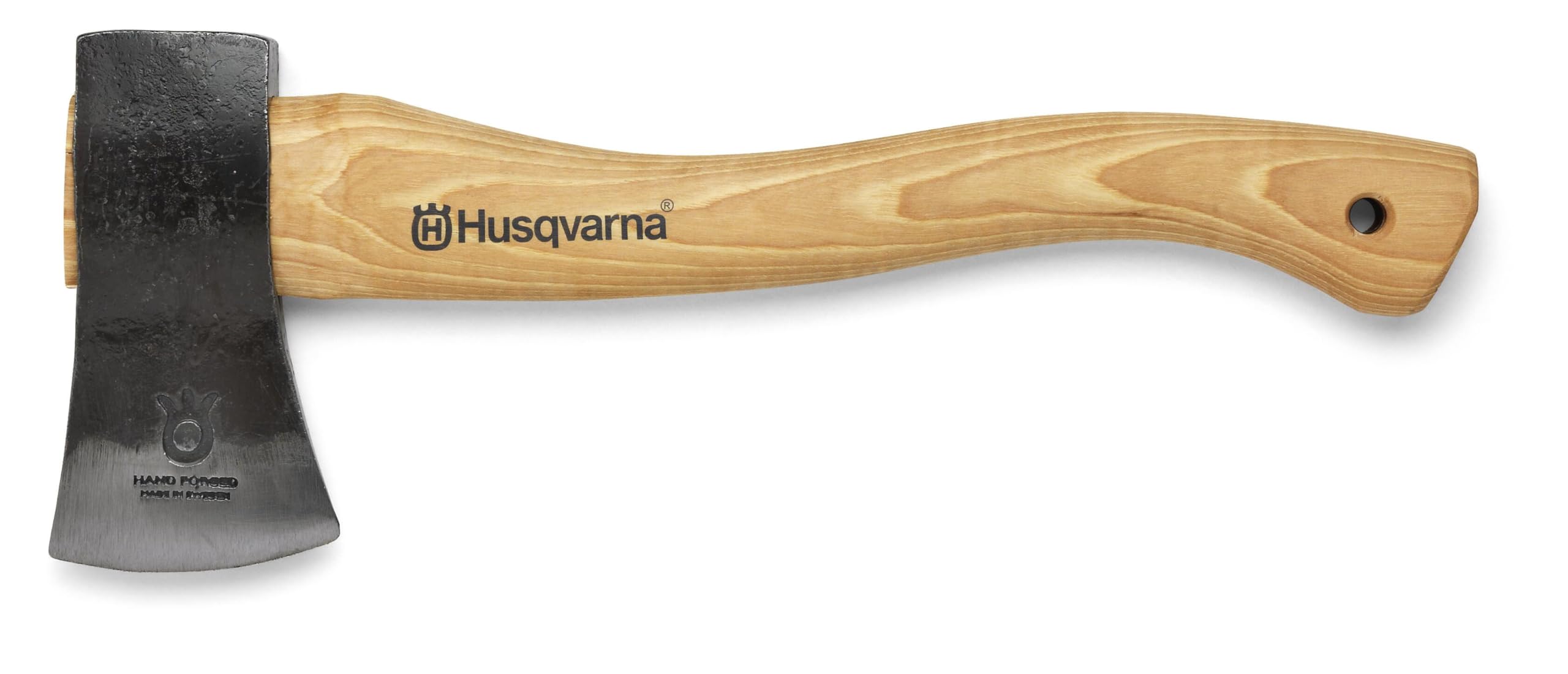
The Husqvarna Hatchet is a hand-forged Swedish hatchet designed for one-handed limbing and light splitting. Its 1.32-pound head is made from Swedish steel and paired with a hickory handle that feels warm and shock-absorbent in gloved hands. Reviewers praise the secure head-to-handle fit and the included leather sheath, though many note the blade arrives with an inconsistent edge bevel that requires file work before first use.
The handle’s tight-grained hickory allows reshaping and oiling for a custom grip—several users refinish it with boiled linseed oil and charring for a weatherproof finish. At 14.97 inches, the hatchet is compact enough for a pack side pocket or belt sheath, and the head weight distribution makes it easy to control for precision cuts on small branches and kindling.
Potential downsides: the leather sheath’s retention is mediocre—the hatchet can slip out during active hiking. The edge needs patient sharpening to reach a shaving-sharp finish, but once dialed in, the steel holds an impressive edge. This is the hatchet for the traditionalist who values Swedish craftsmanship and is willing to spend time tuning the tool to perfection.
Why it’s great
- Hand-forged Swedish steel head with excellent edge geometry after proper sharpening
- Hickory handle absorbs shock and can be customized with oil or char
- Compact 15-inch length fits in most backpack side pockets
Good to know
- Blade arrives dull with uneven bevel; requires filing before use
- Leather sheath has weak retention; hatchet may fall out
3. HX OUTDOORS Mercenary Tactical Engineer Axe
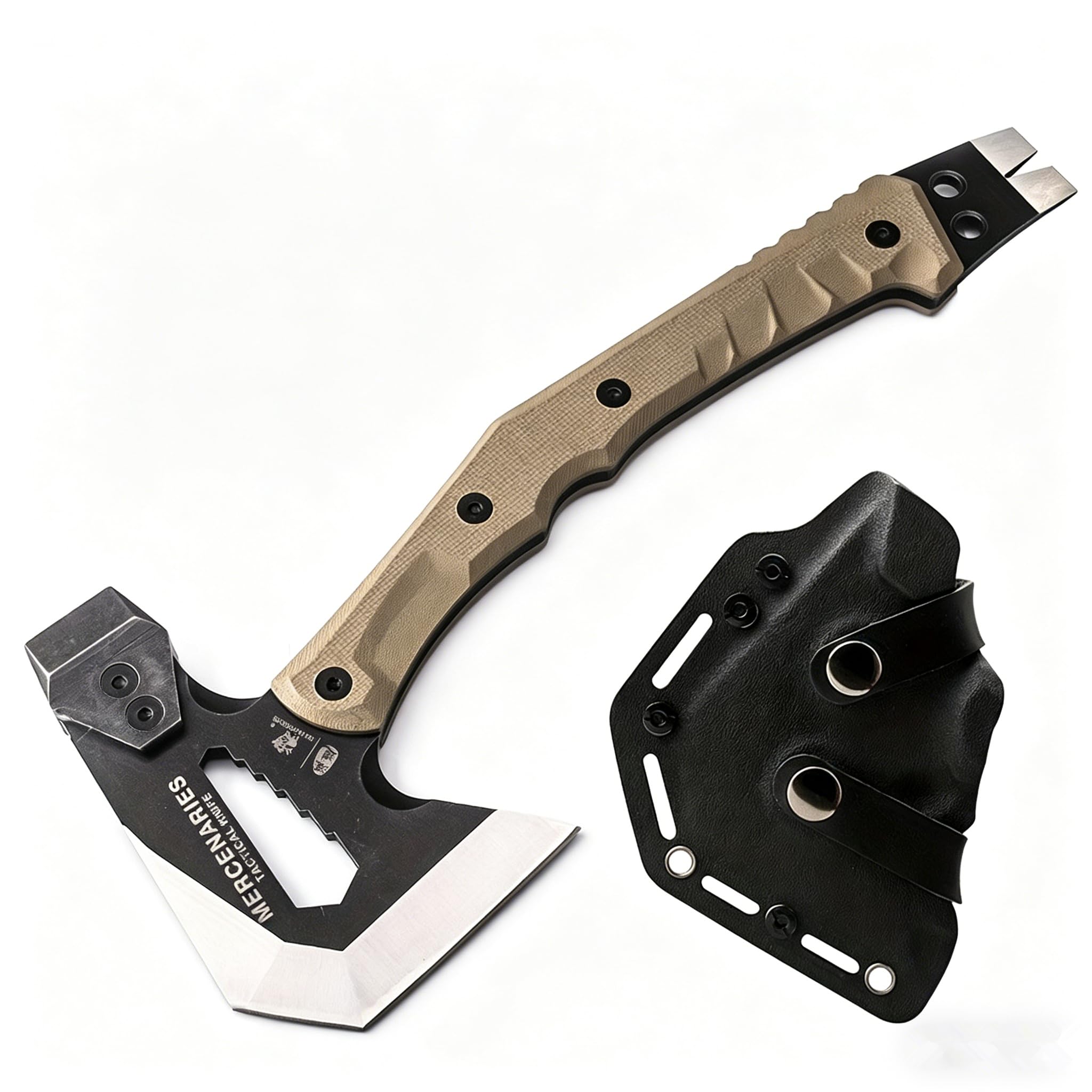
The HX OUTDOORS Mercenary is a full-tang tactical axe built from one-piece 440C stainless steel with a removable hammer pad and a pry bar notch behind the blade. The G-10 handle scales provide a stiff, weather-proof grip, though reviewers with large hands find them slightly skinny. The Kydex sheath includes a MOLLE-compatible belt clip that retains the axe securely—no accidental releases during bushcraft or tactical movement.
The blade arrives razor sharp and holds its edge well against pine, hardwood, and even nails, according to field reports. The hammer face is proportional to the head and works for driving stakes or cracking nuts without chipping. The screw-mounted scales are glued with a resin that reviewers describe as “super glue melted polymer”—the fit is solid but the screws can strip if you disassemble for cleaning.
Ideal for overlanding, tactical kits, or hunting where you need a pry bar, hammer, and hatchet in one compact tool. The blade sharpening angle (approximately 20 degrees) is aggressive for chopping but prone to micro-rolling on hard knots. The removable hammer pad adds versatility but rattles slightly after extended use unless secured with thread-locker.
Why it’s great
- Full-tang 440C steel with integrated pry bar and hammer face
- Kydex MOLLE sheath offers top-tier retention and carry versatility
- Razor-sharp edge requires minimal maintenance for first outings
Good to know
- G-10 handle scales are slick for bare hands and can cause blisters
- Hammer pad may rattle; screws are glued and tough to adjust
4. Spyderco Bow River Fixed Blade

The Spyderco Bow River, designed with master knifemaker Phil Wilson, uses a full-flat-ground 8Cr13MoV stainless steel blade that offers excellent edge retention for its class. The 4.36-inch trailing-point geometry excels at skinning and slicing—reviewers report field dressing a whitetail without needing to touch up the edge. The G-10 handle is contoured for a secure pinch grip, though the scales lack aggressive texture and can feel slick with wet or bloody hands.
The included leather sheath is well-stitched with a belt loop that rides high for concealed carry under a coat. Unlike many leather sheaths, the Bow River’s retention is consistent and doesn’t stretch dramatically over time. The blade is ground thin behind the edge, which makes it an outstanding slicer for rope, meat, and food prep but less suited for heavy batoning through dense wood.
At roughly 5 ounces, the Bow River is light enough for a chest rig or daypack. The G-10 handle is stiff and inert in all weather, but if you push hard on a twist cut, the handle can rotate in the hand due to the lack of jimping. For dedicated hunters and camp cooks who prioritize slicing performance over brute durability, this is the best blade in the mid-range.
Why it’s great
- Full-flat-ground 8Cr13MoV blade holds edge through multiple game dressings
- Leather sheath with secure retention rides high on belt
- Lightweight (5 oz) and ergonomic for extended cutting sessions
Good to know
- G-10 handle lacks texture; can be slippery when wet or bloody
- Thin blade geometry not ideal for heavy batoning or prying
5. Buck 684 Small BuckLite Max II
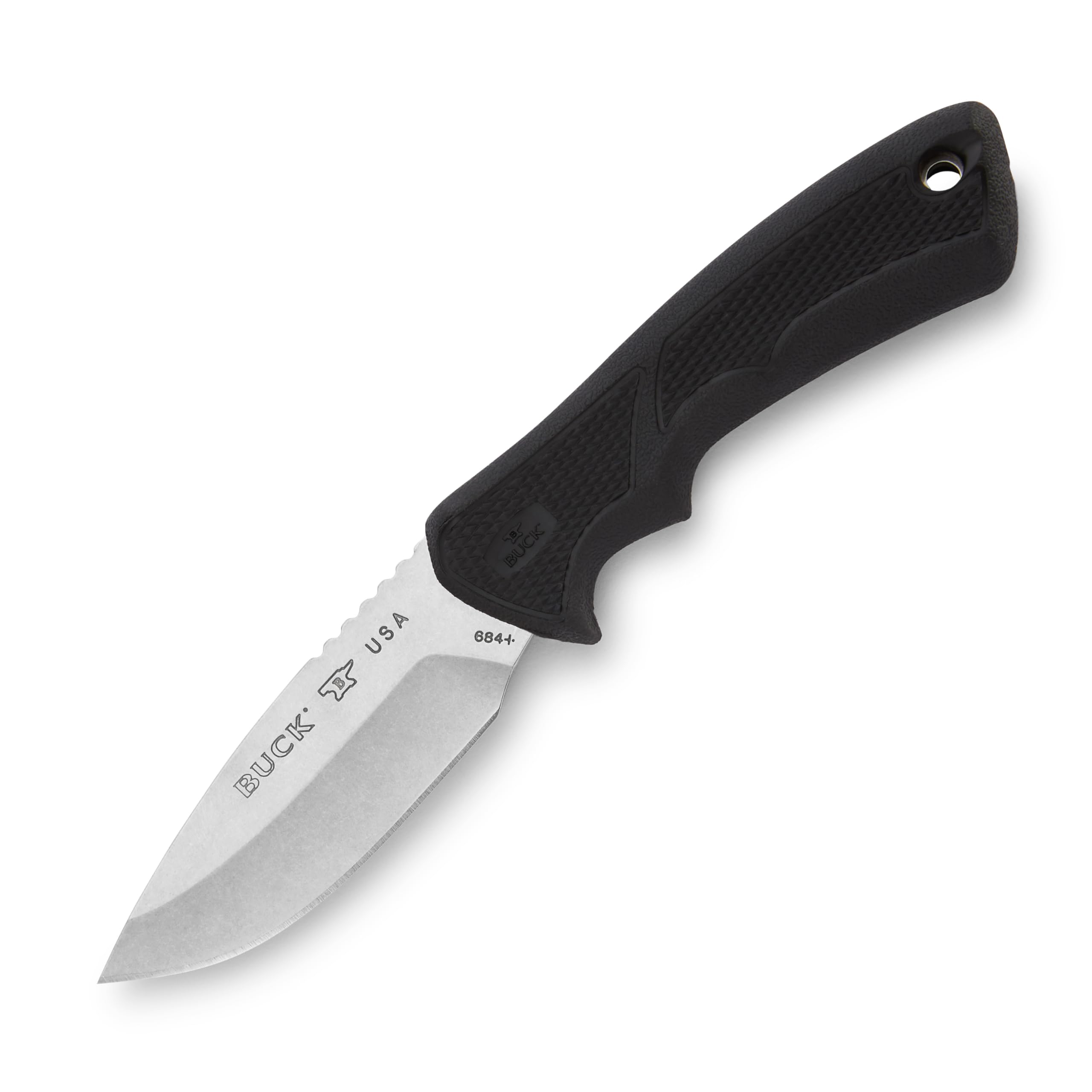
The Buck 684 Small BuckLite Max II packs a full-tang 420HC drop-point blade into a package that weighs only 2.8 ounces. The Dynaflex rubber handle with integrated finger grooves and top jimping delivers a non-slip grip even in wet conditions—no hot spots after extended carving or processing small game. The blade thickness is ideal for detail work like skinning squirrels, cutting cordage, and slicing cheese, with a belly that rolls smoothly through meat.
420HC steel is softer than 8Cr13MoV, meaning it loses edge faster when cutting through bone or abrasive material, but it sharpens back to razor easily with a ceramic rod or diamond stone. The included polyester sheath is the weak link: the “taco” design allows the knife to fall out if the orientation flips, and the foam rubber liner degrades over time as the blade cuts into it. Several users modify the sheath with a binder clip or replace it with a Kydex alternative.
Buck’s forever warranty and USA manufacturing add long-term value. The blade length (3.25 inches) keeps it legal in most jurisdictions for concealed carry. For the budget-conscious backpacker who wants a reliable game knife that sharpens in the field without hassle, the BuckLite Max II is a proven choice. Pair it with an aftermarket sheath for the complete package.
Why it’s great
- Full-tang, USA-made 420HC steel with lifetime warranty
- Dynaflex rubber grip is extremely comfortable and non-slip in wet conditions
- Extremely lightweight (2.8 oz) for pack carry
Good to know
- Polyester sheath has poor retention; knife falls out easily
- 420HC steel requires frequent sharpening during heavy use
6. Gerber Freeman Guide Fixed Blade

The Gerber Freeman Guide offers a full-tang 5Cr15MoV stainless steel blade at an entry-level price point, making it an accessible choice for beginners or as a loaner knife. The blade’s glass-bead finish reduces glare in the field, and the 4-inch plain edge with drop-point geometry handles food prep, light carving, and gutting without issue. The TacHide rubber overlay provides a secure grip even through wet fur and blood, with deep finger grooves that lock the hand into position.
Reviewers consistently praise the Freeman Guide for its value-to-performance ratio—several have used it as their primary hunting knife for multiple deer seasons. However, the 5Cr15MoV steel is the softest in this lineup; it rolls rather than chips on bone contact and requires regular stropping to maintain a shaving edge. The sheath is the most common complaint: the formed nylon has thin belt loops that may tear within a season, and the retention is loose enough that the knife can rattle.
For the price, the fit and finish are solid—no blade-play, centered edge, and a handle that fits medium to large hands well. The lanyard slot allows you to attach a paracord loop for retrieval from a pack. If you’re looking for a budget fixed blade that works out of the box and doesn’t hurt the wallet, the Freeman Guide delivers. Upgrading the sheath with a Kydex custom piece turns it into a dependable daily carry.
Why it’s great
- Full-tang design at a budget-friendly price point
- Rubberized TacHide grip offers excellent traction in wet or bloody conditions
- 4-inch drop-point blade handles most camp and game tasks
Good to know
- 5Cr15MoV steel is soft; edge rolls on bone and requires frequent maintenance
- Nylon sheath has thin belt loops and poor retention
7. Wakeman Camping Hand Axe and Survival Gear

The Wakeman Hand Axe combo bundles a 14-inch hatchet with a nested serrated saw, a magnesium fire starter, and a nylon belt sheath. The alloy steel blade holds an edge longer than expected for this price point—reviewers report cutting trails through oak and pine without the head loosening. The composite handle is contoured around the head for stability, though the plastic carry handle on the sheath is fragile and often snaps off during shipping.
The nested saw works for small branches and limbing, but the teeth often arrive with casting defects that require filing to become effective. The magnesium fire starter is a functional addition, throwing sparks with a striker. The hatchet blade starts sharp enough to split pallet wood and 2-inch tree branches, and the edge maintains decent performance after repeated use—several reviewers compare its build quality favorably to mid-range brands like Fiskars.
The belt clip on the nylon sheath is a clever design for ATV carry, but the sheath’s stitching may fail after a season of abuse. The included carabiner attachment point is practical for backpack loops. For the budget buyer who wants a single tool that covers chopping, sawing, and fire-starting without a heavy investment, the Wakeman combo is a functional starter kit. Just budget time to clean up the saw teeth and reinforce the sheath’s carry handle.
Why it’s great
- Three-in-one tool: hatchet, saw, and fire starter in one compact package
- Alloy steel blade holds an edge surprisingly well for its budget tier
- Nylon sheath with belt clip and carabiner allows versatile carry
Good to know
- Plastic carry handle on sheath snaps off easily
- Saw teeth often require filing to remove casting defects
FAQ
Can I use a camping hatchet to split firewood for a campfire?
What blade shape is best for field dressing deer: drop point or trailing point?
How often should I sharpen a camp knife during a week-long trip?
Are hammer heads on tactical axes useful for driving tent stakes?
Final Thoughts: The Verdict
For most users, the camping tools winner is the Fiskars 28″ Chopping Axe because it balances blade sharpness, weight distribution, and durability at a price that undercuts traditional forged heads. If you need a compact, precision carving and game-processing partner, grab the Spyderco Bow River. And for a multi-role tactical tool that pries, hammers, and chops, nothing beats the HX OUTDOORS Mercenary.