Wet toes, frozen arches, and that bone-deep chill that turns a brisk morning walk into a forced march home. Insulated walking boots are supposed to solve that, but the wrong pair traps sweat, stiffens up in the cold, or leaves you sliding on packed snow. The line between a boot that works and one that fails is measured in grams of insulation, the density of the rubber compound, and the seal around the tongue.
I’m Emma — the founder and writer behind Baby Bangs. Over the last several seasons, I’ve tracked how insulation ratings translate to real-world warmth, how waterproof membranes hold up against repeated freeze-thaw cycles, and which outsole lugs actually bite into ice versus just look aggressive on a spec sheet.
These are the picks that survived cold miles, wet crossings, and sub-zero sidewalks so you can find the very best insulated walking boots for whatever winter throws at you.
How To Choose The Best Insulated Walking Boots
Insulated walking boots are a compromise between warmth, breathability, and mobility. Crank the insulation too high and you sweat; too low and you’re cold by the second mile. The goal is to match the boot’s thermal envelope to your environment and activity level.
Know Your Insulation Weight
Insulation is measured in grams per boot — 200g is fine for light city walking around freezing, 400g handles most single-digit days, and 800g or higher is for standing around in extreme cold. Active walkers generate their own heat, so lower insulation with a good moisture-wicking liner often works better than a high-gram, non-breathable boot.
Waterproofing is Not Optional
Wet insulation is worse than no insulation. Look for a sealed membrane (Omni-Heat, B-Dry, KEEN.DRY) combined with a gusseted tongue and a DWR-treated upper. If the boot can’t keep slush out at the ankle, the insulation rating doesn’t matter.
Traction on Slick Surfaces
Winter walking demands a rubber compound that stays pliable below freezing. Vibram Arctic Grip or similar cold-weather compounds outperform standard rubber on ice. The lug pattern should have multi-directional chevrons for braking and climbing, not shallow nubs designed for dry dirt.
Fit for Winter Socks
You need at least a half-size of extra room for medium-to-heavy wool socks without compressing the insulation. Too tight and the insulation loses its loft; too loose and you’ll blister. Brands like KEEN and Merrell naturally run wider in the toe box, which helps with sock volume.
Quick Comparison
On smaller screens, swipe sideways to see the full table.
| Model | Category | Best For | Key Spec | Amazon |
|---|---|---|---|---|
| KEEN Revel 4 | Premium | Extreme cold & deep snow | Waterproof, Polar insulation | Amazon |
| Oboz Bridger 10″ | Premium | Rugged terrain & all-day hikes | 400g Thinsulate, B-Dry | Amazon |
| The North Face Clyffe | Premium | Urban & light trail in wet cold | Vibram MegaGrip outsole | Amazon |
| KEEN Revel III | Mid-Range | Versatile winter work & walk | Waterproof, roomy toe box | Amazon |
| ROCKY Blizzard Stalker | Mid-Range | Ice fishing & static cold | 1200g insulation | Amazon |
| Kamik Momentum 3 | Mid-Range | Extreme cold with easy on/off | Waterproof, elastic lace | Amazon |
| Columbia Minx Shorty IV | Value | Wide feet & moderate cold | Omni-Heat, lightweight | Amazon |
| Merrell Coldpack 3 | Value | Casual commute & light snow | Waterproof moccasin style | Amazon |
| Columbia Moritza Shield | Budget | Light snow & everyday warmth | Omni-Heat, lightweight | Amazon |
In‑Depth Reviews
1. KEEN Revel 4 Mid Height Polar Insulated Waterproof
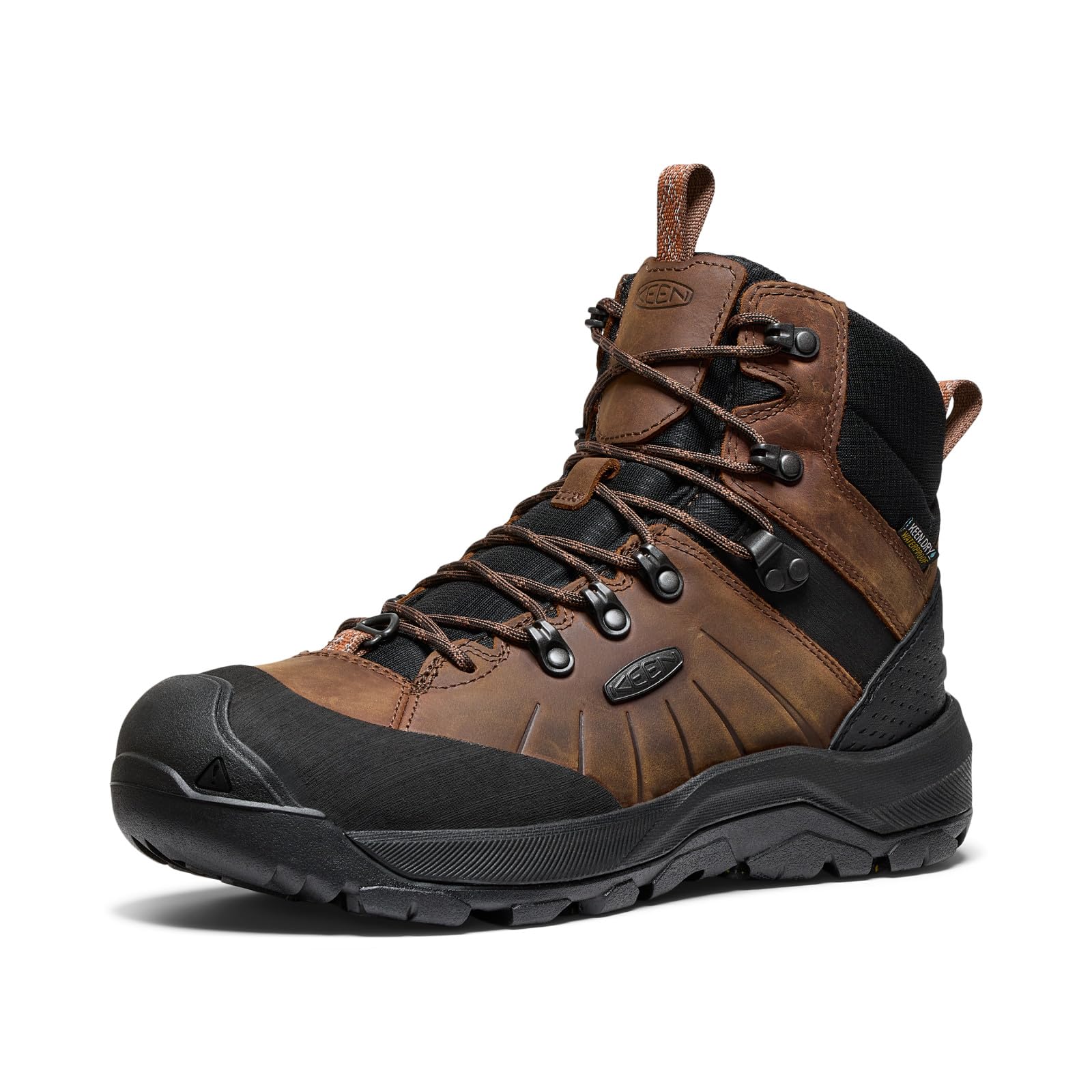
The KEEN Revel 4 is the winter boot that does everything — deep snow, subzero wind chills, icy creek crossings, and still feels good after five straight days of wear. The Polar insulation is heavier than the standard 200g or 400g found in most mid-range boots, yet the boot remains remarkably lightweight thanks to the compressed-foam midsole. Real-world testing on a Colorado 14er in March with -5°F wind chill kept feet dry and warm with zero cold spots.
The KEEN.Dry waterproof membrane is backed by a sealed tongue gusset that blocks slush and puddle water from seeping through the lacing area — a failure point on cheaper boots. The toe box is characteristically wide, which helps fit thick wool socks without pinching toes. Owners with EEE feet reported a true fit, and the rubber outsole grips well on ice and wet rock, performing solidly with snowshoes and traction devices.
The only real trade-off is the snug fit through the midfoot, which some found tight with heavy socks during the first few wears. After a short break-in period, the leather upper conforms well. For anyone facing sustained single-digit temperatures or deep snow, the Revel 4 is the benchmark.
Why it’s great
- Polar insulation handles -5°F with room for thick socks
- Sealed tongue gusset keeps slush out at the laces
- Wide toe box fits EEE feet without cramping
Good to know
- Snug midfoot may require a short break-in period
- Higher insulation weight can feel warm for casual indoor use
2. Oboz Men’s Bridger 10″ Insulated B-Dry Waterproof Hiking Boots

Oboz builds boots around foot health, and the Bridger 10″ is one of the most supportive insulated boots you can buy. The 400g Thinsulate insulation hits the sweet spot for active winter hiking — warm enough for single-digit temperatures without causing sweat buildup during a steep climb. The B-Dry membrane is fully waterproof, and testers reported dry feet after miles through swampy woods and snowmelt.
The outsole uses a proprietary rubber compound with deep, multi-directional lugs that bite into mud, snow, and loose gravel. The 10-inch shaft provides exceptional ankle support for uneven terrain, and the footbed is shaped with a molded heel cup and arch shank that eliminates pressure points right out of the box. Buyers noted the laces stay tied and the boot feels lighter than its height suggests.
The catch is sizing — Oboz runs about a half-to-full size small for most wearers, so ordering up is necessary, especially if you plan to wear thick socks. A few users reported minor delamination near the sole after years of heavy use, but the boot remains functional and easy to glue. This is the premium pick for serious winter hikers.
Why it’s great
- 400g Thinsulate balances warmth and breathability for active hikes
- Molded footbed with arch support eliminates hot spots immediately
- 10-inch height and deep lugs provide excellent ankle and traction support
Good to know
- Runs small; size up a half to full size for winter socks
- Some reports of sole edge wear after multiple seasons
3. The North Face Unisex Adult Clyffe Mid Insulated Waterproof Hiking Boot
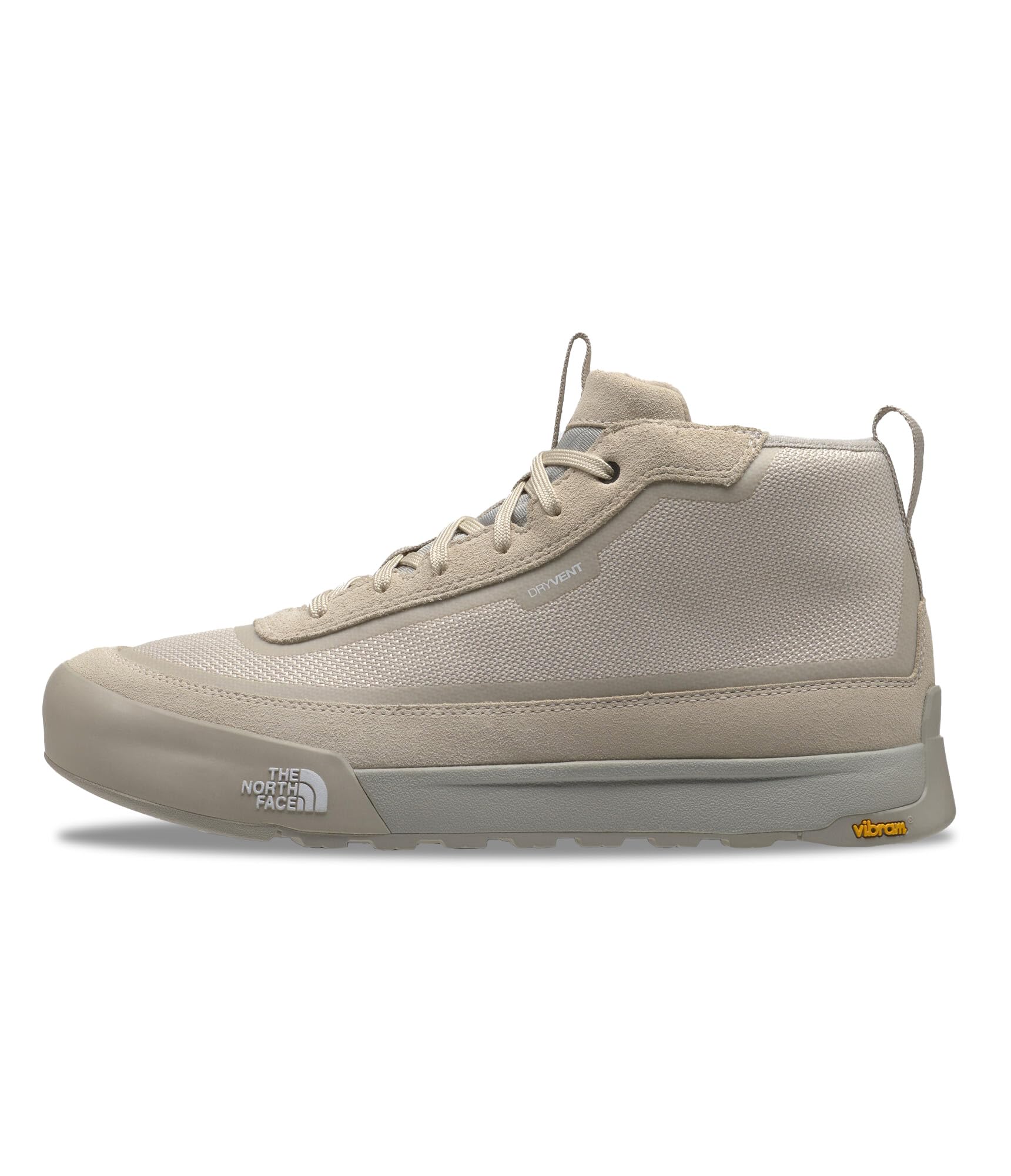
The North Face Clyffe Mid is the hybrid that works for both slushy commutes and weekend trails. The Vibram MegaGrip outsole provides excellent traction on wet grass, slick sidewalks, and compacted snow, making it one of the most slip-resistant boots in this lineup. The unisex sizing and flat platform — similar to a skate shoe’s feel — give it a stable, neutral stride that doesn’t force a raised heel.
Waterproofing is reliable thanks to a sealed membrane, but this boot is not designed for extreme cold. Several buyers noted that while it’s warm enough for typical winter weather around freezing, it lacks the insulation density for single-digit days. The reflective pattern on the upper adds low-light visibility, a practical touch for urban walkers.
Fit is true to size, and the boot works equally well for men and women in the unisex range. The laces tend to loosen and need retying, which is a minor annoyance. For mild-to-moderate winter walking where style and traction matter more than extreme warmth, the Clyffe is a strong option.
Why it’s great
- Vibram MegaGrip outsole is one of the best for wet and icy surfaces
- Flat, stable platform with no raised heel for natural walking
- Reflective details improve visibility in low-light conditions
Good to know
- Not warm enough for sustained single-digit temperatures
- Laces require frequent retying during use
4. KEEN Men’s Revel III Mid Height Waterproof Insulated Hiking Boot
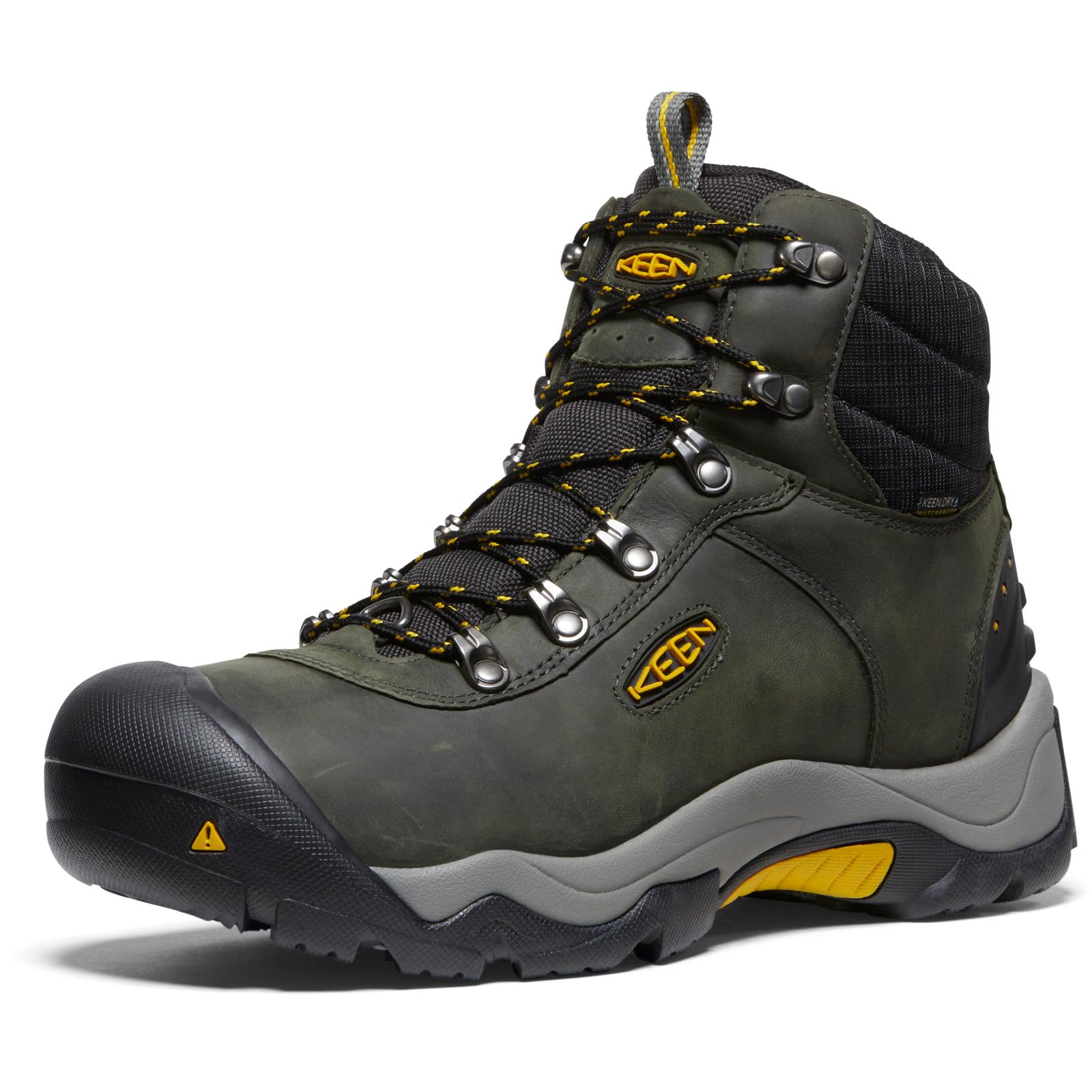
The KEEN Revel III is the previous generation that still outperforms many newer boots at a significantly lower cost. It shares the same KEEN.Dry waterproof membrane and roomy toe box as the Revel 4, with slightly lighter insulation that makes it more comfortable for moderate winter temperatures and higher-output walking. Testers reported it held up for five years of heavy use, including 12-hour work days in winter conditions.
Traction is excellent on snow, and the boot is compatible with Stabilicers and gaiters for deeper or icier conditions. The leather upper is durable with minimal break-in required, and the outsole provides good grip on packed trails and roadside slush. The arch and heel support are noticeably better than most boots in its tier.
The Revel III is not designed for extreme cold like its successor, and the rubber outsole can feel stiffer in subzero temperatures. The heel cup may feel loose for narrow-footed wearers. For anyone who needs a reliable, all-around insulated boot without paying premium prices, the Revel III delivers exceptional value.
Why it’s great
- Proven durability with reports of 5-year lifespan under heavy use
- Compatible with Stabilicers and gaiters for severe ice
- Roomy toe box accommodates thick winter socks
Good to know
- Not as warm as the Revel 4 for extreme cold
- Outsole rubber stiffens in very low temperatures
5. ROCKY Blizzard Stalker Waterproof 1200G Insulated Boot

The ROCKY Blizzard Stalker is a specialist tool for people who stand still in extreme cold — ice fishing, hunting, or working on frozen concrete. With 1200g of Thinsulate insulation, it is the most thermally aggressive boot in this list, tested by users in 6°F conditions with no cold breakthrough. The waterproof construction uses a sealed leather and nylon upper that blocks snow and slush entry.
The outsole provides solid traction on snow and reasonable grip on ice, though it is not a dedicated ice boot. The boot runs a half to full size large, which is intentional to accommodate heavy socks and allow for circulation. The weight is higher than average due to the insulation density, but owners emphasized that it still feels lighter than its burly look suggests.
Durability is strong over two years of regular use, but the metal lace hooks can break under tension — a known weak point reported by multiple users. This boot excels in static cold scenarios but is overkill for moderate walking where you generate your own heat.
Why it’s great
- 1200g Thinsulate keeps feet warm well below zero
- Purpose-built for static cold like ice fishing or outdoor work
- Runs large to fit heavy socks without constriction
Good to know
- Metal lace hooks prone to breaking under tension
- Too warm for active walking in most winter conditions
6. Kamik Momentum 3 Insulated Snow Boots
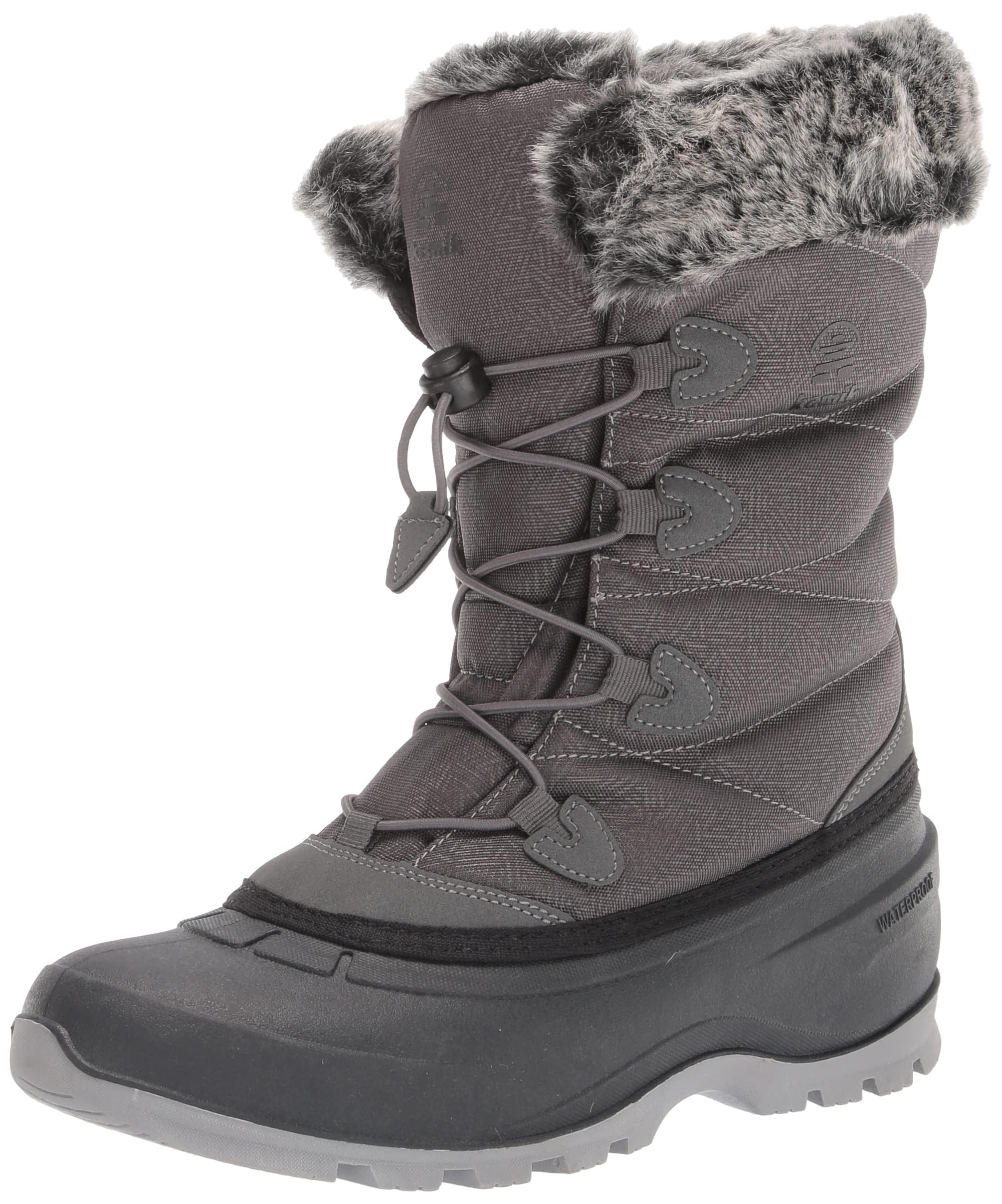
The Kamik Momentum 3 is designed for convenience without sacrificing warmth. The elastic lace system with a drawstring button closure makes it easy to pull on and off — ideal for quick trips outside or for those who struggle with traditional laces. The fleece lining extends to the toes, and the thick rubber sole provides insulation from the ground, though some heat loss was noted between the footbed and the outsole.
Waterproofing is reliable, with a rubber shell that handles deep puddles and wet snow without soaking through. Testers in Alaska reported the boot held up well for walks, dinner outings, and snow machine rides in deep powder. The traction is solid on ice and packed snow, with a thick tread pattern that provides stability.
The fit is true to size, and the boot molds to the foot after a few minutes of wear, but it runs snug for half-sizes. The arch support is minimal — most users replaced the factory insole for better cushioning. This is a great pick for casual winter use where easy on/off and warmth matter more than technical hiking.
Why it’s great
- Elastic lace and drawstring closure for fast on/off
- Fleece lining to the toes for immediate warmth
- Solid rubber shell with good deep-snow waterproofing
Good to know
- Minimal arch support; plan to upgrade the insole
- Tight fit for half-sizes; order up if between sizes
7. Columbia Women’s Minx Shorty IV

The Columbia Minx Shorty IV punches above its position with a surprisingly wide-friendly fit and the same Omni-Heat reflective lining used in Columbia’s premium winter gear. The short shaft height reduces bulk at the ankle, making it easy to slip on and comfortable for long walks — one buyer reported pain-free 3-mile walks in 20°F weather with a swapped-in arch support insole.
Waterproofing is reliable for snow and slush, and the close fit around the ankle and calf prevents snow entry at the top. The lightweight construction makes it feel more like a tall shoe than a heavy boot, which is appreciated by those who walk multiple miles per day. The tread provides good grip on snow and ice, though it requires some caution on pure ice sheets.
The stock insole is very flat, and nearly every user who wore the boot for extended walking replaced it with a supportive aftermarket insert. The boot is sized true, but some wearers went up a full size to accommodate two layers of wool socks. For budget-conscious buyers with wide feet, the Minx Shorty IV is a standout.
Why it’s great
- Omni-Heat reflective lining retains body heat effectively
- Wide toe box and ankle-friendly fit for wider feet
- Lightweight construction for comfortable multi-mile walks
Good to know
- Factory insole is flat; budget for an aftermarket arch support
- Caution needed on pure sheet ice; not a dedicated ice boot
8. Merrell Women’s Coldpack 3 Thermo Moc Waterproof Moccasin
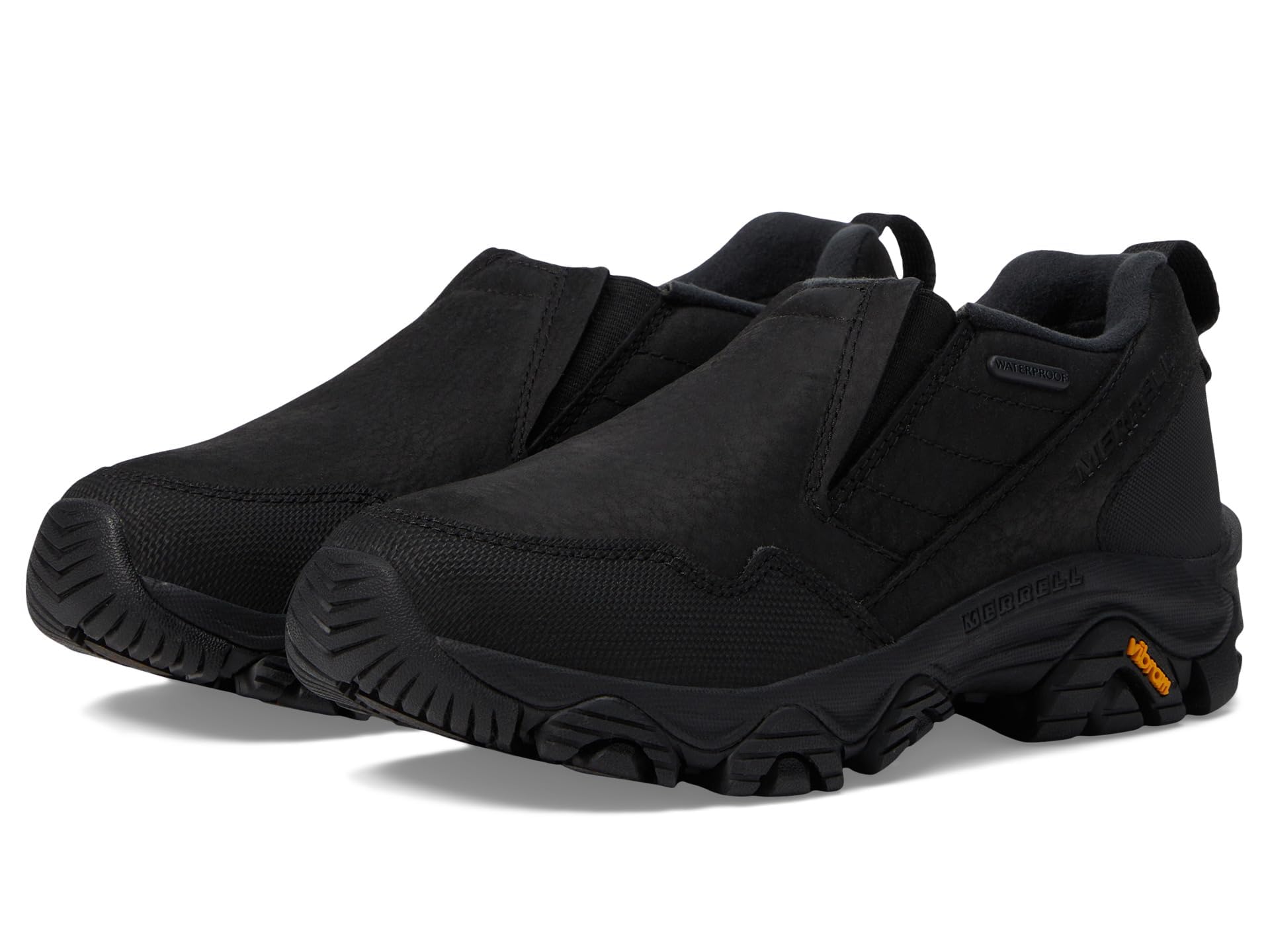
Merrell’s Coldpack 3 Thermo Moc solves the problem of wet, cold feet during the commute without looking like a technical winter boot. The sleek silhouette works for casual offices and wet walkways, while the waterproof construction keeps feet dry in puddles and light snow. The slip-on design is easy to remove at the door, and the traction sole handles icy hills surprisingly well for a moc-casual style.
The insulation keeps feet warm during light snow shoveling and standing on cold floors, and the boot requires zero break-in — comfortable from the first wear even for high arches. Buyers praised the traction on icy slopes during commutes and reported that the boot looks professional enough for business-casual environments. The wide size accommodates heavy winter socks without discomfort.
Durability is the main concern — several users reported leaking after one year of use, which is below the standard for this price tier. The fit is true for thin socks but tight with heavy ones in standard width. As a casual winter slip-on for short outdoor exposures, it works well; for deep snow or extended hiking, look elsewhere.
Why it’s great
- Sleek, office-appropriate silhouette with genuine winter performance
- Zero break-in needed; comfortable right out of the box
- Good traction on icy hills despite the casual moc design
Good to know
- Durability concerns; some units leak after a year of use
- Tight fit with heavy socks in standard width; consider wide size
9. Columbia Womens Moritza Shield Omni-Heat Insulated Snow Boot

The Columbia Moritza Shield is the lightweight entry point that delivers surprising warmth for its low profile. The Omni-Heat reflective lining works well, keeping feet warm in 20°F weather with standard socks, and the waterproof shell handles slush and shallow puddles without leakage. The shock-absorbing foam midsole and sticky rubber outsole provide stable footing on snow-covered pavement.
Users report that the boot is true to size for most foot shapes, though narrow-footed wearers may find the width generous. The versatile style — available in tan and black lace options — fits easily into casual winter wardrobes without looking overly technical. The reinforced toe and ankle support add stability for urban walking and light trail use.
The main drawback is the slightly bulky ankle area, which can feel restrictive for some. The boot is not designed for extreme cold or deep snow — it shines in the 20°F to 30°F range for light daily use. For the price, it offers impressive warmth and traction, but its limitations in severe weather are notable.
Why it’s great
- Omni-Heat reflective lining provides good warmth for moderate cold
- Lightweight construction with shock-absorbing foam midsole
- Sticky rubber outsole provides stable traction on snow
Good to know
- Ankle area feels bulky for some wearers
- Best suited for moderate cold (20°F+) rather than extreme weather
FAQ
Can I wear insulated walking boots in wet snow without getting wet feet?
How much insulation do I need for a daily winter walk?
Do insulated boots run larger or smaller than regular boots?
Final Thoughts: The Verdict
For most users, the insulated walking boots winner is the KEEN Revel 4 because it combines Polar-grade warmth, reliable waterproofing, and comfortable fit for a wide range of winter activities. If you want exceptional build quality and arch support for rugged terrain, grab the Oboz Bridger 10″. And for deep-freeze scenarios where you’re standing still, nothing beats the ROCKY Blizzard Stalker.