That sharp, stabbing pain along your shin after the first mile isn’t something you need to push through — it’s a signal that your foot’s natural shock absorption has failed. Insoles designed specifically for shin splints work by realigning your foot’s arch and dispersing ground impact before it reaches your tibia. The wrong insoles will just cushion the bottom of your foot; the right ones stabilize the entire kinetic chain from heel strike to toe-off.
I’m Emma — the founder and writer behind Baby Bangs. I’ve spent hundreds of hours analyzing how material density, heel cup depth, and arch geometry actually translate into injury prevention for runners and full-time standing workers.
Whether you’re logging weekly mileage or standing nine-hour shifts on concrete, the right pair can mean the difference between limping home and finishing pain-free. This guide breaks down the five best options to help you find the insoles for shin splints that match your specific foot mechanics and activity level.
How To Choose The Best Insoles For Shin Splints
Shin splints are an overuse injury caused by the tibialis anterior muscle pulling away from the shin bone during repetitive impact. The right insole doesn’t just pad your step — it reduces the torque and vibration that aggravates that tendon attachment. Here are the three specs that matter most.
Arch Type & Alignment
Most shin splint sufferers have flat feet or low arches that cause the foot to pronate inward. This rotation twists the tibia and overloads the shin muscle. A medium to high arch support lifts the navicular bone back into neutral, stopping that inward roll. If you overpronate, a rigid orthotic shell does more for you than a squishy gel pad ever will.
Heel Cup Depth & Stability
A shallow heel cup lets your heel slide on impact, forcing your calf and shin to micro-correct with every stride. A deep, U-shaped heel cup locks the calcaneus in place, creating a stable platform that transfers impact energy through the arch rather than up the tibia. Look for a cup depth of at least 8-10mm for running or standing work.
Shock Absorption Material
Foam density dictates how much impact force reaches your lower leg. Open-cell foams compress too easily and bottom out under body weight. PORON or high-rebound PU foams maintain their thickness through thousands of cycles, dispersing ground reaction forces before they travel up the kinetic chain. A firm, resilient base layered with a soft top sheet gives you both support and comfort.
Quick Comparison
On smaller screens, swipe sideways to see the full table.
| Model | Category | Best For | Key Spec | Amazon |
|---|---|---|---|---|
| Psveb Heavy Duty Support | Mid-Range | Heavy users & work boots | Double PORON cushion layers | Amazon |
| PCSsole Plantar Fasciitis | Mid-Range | High-arch runners & walkers | Deep heel cup, rigid arch | Amazon |
| SOF SOLE ATHLETE | Mid-Range | Gym & treadmill use | PU foam & gel combo | Amazon |
| CRUVHEAL Sport Shock | Premium | Aggressive sports & sprinting | Gel heel pad + TPU arch | Amazon |
| CRUVHEAL Running Insoles | Premium | Daily runners & recovery | Gel + TPE arch stabilization | Amazon |
In‑Depth Reviews
1. Psveb Heavy Duty Support Pain Relief Orthotics
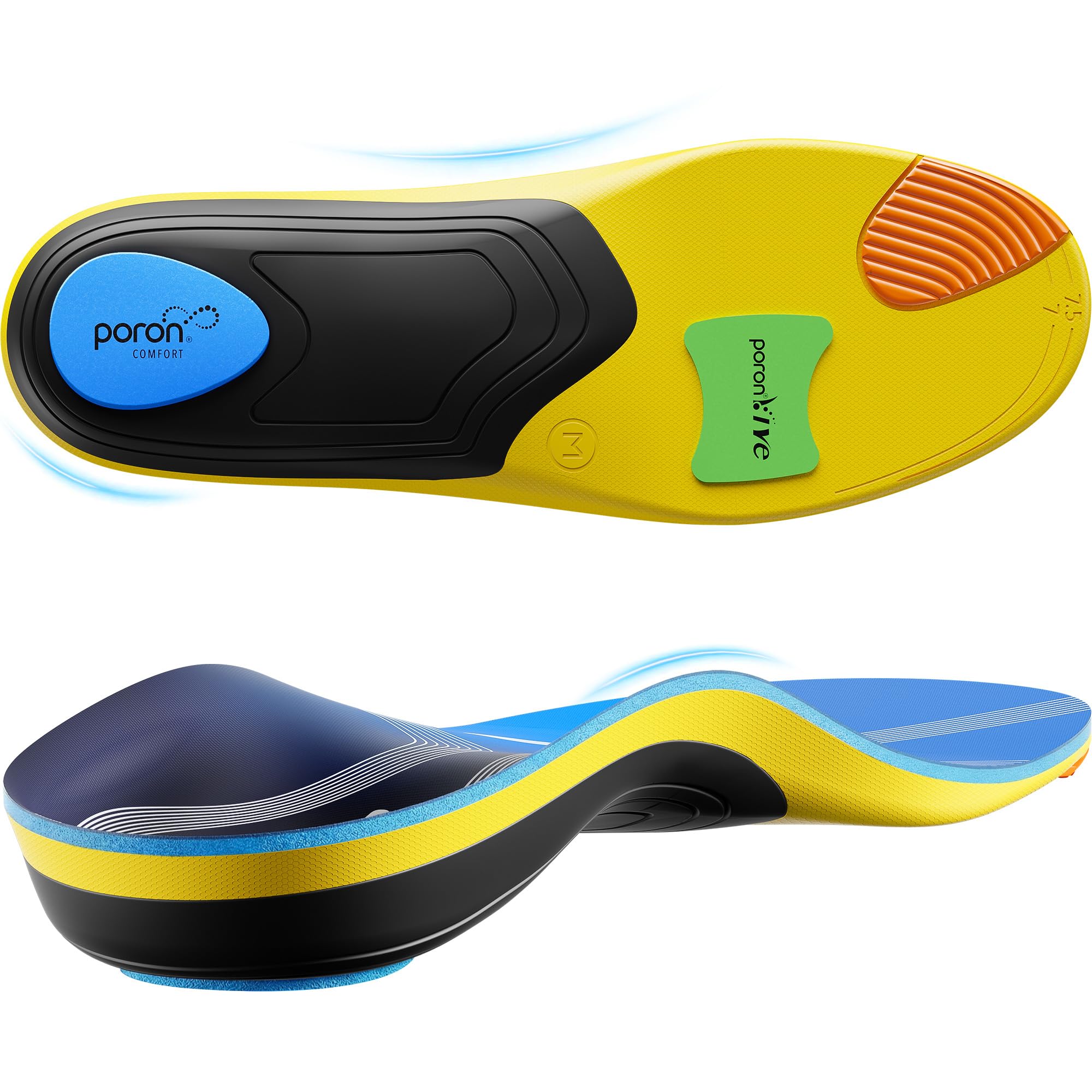
This pair from Psveb uses dual PORON foam layers specifically designed to handle body weights over 230 pounds without bottoming out — critical for shin splint sufferers because a collapsed insole transfers every pound of impact directly to the tibia. The Golden Triangle three-point support system distributes pressure evenly across the forefoot, arch, and heel, reducing the rotational torque that aggravates the shin muscle.
Reviewers report noticeable heel pain relief within days and zero flattening after weeks of 9-to-10 hour shifts on hard flooring. The deep U-shaped heel cup prevents side slippage, locking the calcaneus in place so your calf doesn’t have to micro-correct with every step. At a medium arch height, it hits the sweet spot for most pronators — enough lift to neutralise overpronation without feeling like you’re standing on a rock.
The top layer uses a full PU sheet that is sweatproof and breathable, which matters for long days in work boots or running shoes where moisture breakdown can degrade the foam’s structural integrity over time. They run true to size for standard US men’s 10-11 and women’s 12-13, and trimmable if you need a narrower fit.
Why it’s great
- Double PORON foam doesn’t compress under heavy loads
- Three-point pressure distribution reduces tibial torque
- Breathable, sweatproof top layer prevents foam degradation
Good to know
- Thick build may require looser laces in low-volume shoes
- Medium arch may be too low for severe overpronators
2. PCSsole Plantar Fasciitis Insoles Men Women

The PCSsole insoles are built around a rigid high-arch design that aggressively counteracts overpronation — the primary mechanical driver of shin splints for flat-footed runners. The deep heel cup extends high enough to cradle the calcaneus on both sides, eliminating the lateral rocking that pulls on the tibialis anterior tendon during the stance phase of gait.
One 230-pound warehouse worker reported a 70% reduction in heel and arch pain within a single week, with additional relief in knee and back strain after three months of daily use on concrete. The break-in period is noticeable due to the firm arch support — reviewers describe an initial “odd” sensation that resolves after a few wears as the foot adjusts to the corrected alignment.
These are best suited for people with visibly low arches or a history of diagnosed overpronation. The rigid shell doesn’t have much give, so if you have neutral or high arches already, the PCSsole will feel too aggressive. They fit true to size for most work boots and sneakers, though some buyers had to trim the toe portion for a better fit in shorter shoes.
Why it’s great
- Rigid high-arch design stops overpronation at the source
- Deep heel cup eliminates lateral heel wobble
- Durable construction holds shape after months of heavy use
Good to know
- Noticeable break-in period for unaccustomed feet
- May be too firm for neutral or high-arched runners
3. SOF SOLE ATHLETE Performance Men’s Insoles

The SOF SOLE ATHLETE combines a PU foam base with a gel insert layered from heel through the metatarsal heads, creating a dual-density system that absorbs impact at foot strike and disperses it across the entire footbed. This matters for shin splints because a uniform force spread reduces the peak load concentration that otherwise spikes up the tibia.
Reviewers note that the insole stabilises slight pronation without forcing the foot into an extreme correction, making it a strong option for people whose shin splints are triggered by moderate overpronation rather than severe flat feet.
The trade-off is thickness. The ATHLETE runs on the thicker side, which can crowd the toe box in snug shoes and alter lacing tension. They work best in sneakers, hiking shoes, or cross-trainers with removable sock liners. For low-volume dress shoes or casual loafers, the added volume may create pressure points on the top of the foot.
Why it’s great
- Proven long-term durability — still effective after 10+ years
- PU foam & gel combo balances cushioning with support
- Good for moderate overpronators who need stable correction
Good to know
- Thick build may not fit low-volume or tight-fitting shoes
- Gel layer adds noticeable weight compared to all-foam designs
4. CRUVHEAL Sport Shock Absorbing Insoles

The CRUVHEAL Sport insoles are engineered specifically for impact-intensive sports — the gel pads sit directly under the heel and forefoot strike zones, absorbing the high-frequency vibration that radiates up the tibia during sprinting, jumping, or cutting movements. The non-slip gel heel pad keeps the insole locked in place during explosive lateral shifts, preventing the heel lift that can torque the shin muscle mid-stride.
Runners and soccer referees report that these insoles feel “springy” underfoot without sacrificing stability, providing a noticeable performance boost during acceleration. The deep heel cup and TPU arch bridge create a rigid chassis that resists torsional flex, meaning the insole doesn’t twist under heavy loads — a common failure point in cheaper all-foam designs.
There is a recommended 3-to-7 day adaptation period because the rigid arch and gel pads change your foot’s natural impact pattern. Some users found them slightly bulky in Hokas but a good fit in Skechers and standard athletic sneakers. If your shin splints flare specifically during high-speed or plyometric work, this is the focused tool.
Why it’s great
- Gel pads target heel and forefoot strike zones directly
- Rigid TPU arch resists torsion during lateral movement
- Non-slip heel pad stays locked during explosive cuts
Good to know
- Requires a 3-7 day break-in period
- Bulky fit in some high-volume shoe models like Hokas
5. CRUVHEAL Running Insoles Men Women
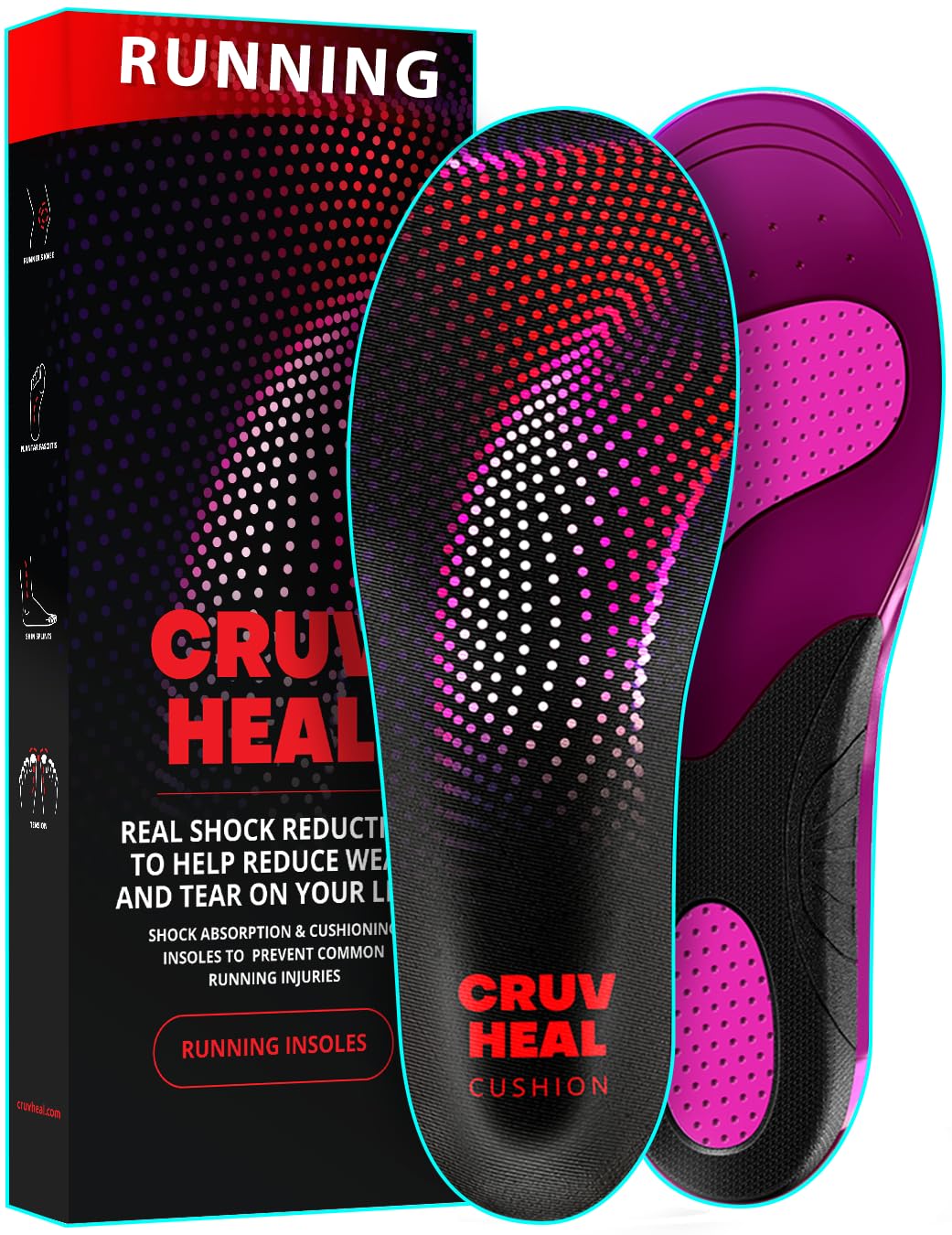
This second CRUVHEAL model swaps the aggressive sport-specific chassis for a more adaptable design suited to daily runners who need continuous shock absorption across varying distances. The gel cushioning runs the full length of the insole, and the TPE arch support provides a medium-height lift that balances pronation control with flexibility — ideal for runners whose shin splints stem from accumulated mileage rather than a single explosive event.
Reviewers with flat feet report effective arch support that eliminated foot pain on longer walks and allowed them to increase distance without the familiar shin tightness creeping back. The U-shaped heel design combined with the non-slip gel heel pad keeps the foot centered through the gait cycle, reducing the micro-instability that causes the tibialis anterior to overwork.
One caveat is that these run narrower than typical insoles — some users found them too tight for wide work boots or spacious running shoes. They’re also heavier than all-foam competitors due to the gel layers. The skin-friendly velvet cover wicks moisture effectively, which helps maintain the gel’s structural integrity through sweaty runs.
Why it’s great
- Full-length gel cushioning disperses impact across the entire stride
- Medium TPE arch supports moderate overpronators effectively
- Moisture-wicking velvet cover preserves gel performance
Good to know
- Narrow fit may not suit wide feet or spacious work boots
- Heavier than all-foam insoles due to gel construction
FAQ
Will insoles cure my shin splints or just mask the pain?
How do I know if I need high arch or medium arch support for shin splints?
Can I use shin splint insoles in my running shoes and work boots interchangeably?
How long does it take to adapt to a rigid orthotic insole for shin splints?
Final Thoughts: The Verdict
For most users, the insoles for shin splints winner is the Psveb Heavy Duty Support because its dual PORON foam maintains structural integrity under heavy loads while the three-point support system reduces the tibial torque that drives shin splints. If you need aggressive overpronation correction, grab the PCSsole for its rigid high-arch shell. And for explosive sport-specific impact absorption, nothing beats the CRUVHEAL Sport Shock with its targeted gel strike pads.