That sharp, pebble-in-your-shoe sensation under the forefoot is the hallmark of metatarsalgia or a pinched nerve (Morton’s neuroma), and standard cushioned insoles often make it worse by letting the bones sink deeper into the sole. The fix isn’t more foam—it’s a raised metatarsal pad that lifts the bone heads to redistribute pressure and stop the nerve from being crushed against the ground.
I’m Emma — the founder and writer behind Baby Bangs. I’ve spent months digging into the material science of foot orthotics, comparing foam densities, pad geometries, and real-world user feedback for the specific issue of forefoot pain.
Whether you’re logging miles on concrete or standing for double shifts, finding the right relief starts with a good pair of insoles for ball of foot pain. Here is the breakdown of the best options available right now.
How To Choose The Best Insoles For Ball Of Foot Pain
Ball of foot pain (metatarsalgia) isn’t solved by softness alone. The key is a targeted metatarsal pad—a raised bump positioned behind the bone heads—that lifts and spreads the metatarsals to take pressure off the nerve or inflamed joint. Here’s what separates a real orthotic from a generic foam slab.
Metatarsal Pad Position and Shape
A pad placed too far forward digs into the toes; too far back does nothing. Look for insoles that clearly state their pad sits proximal to the metatarsal heads (behind the bones, not under them). Some pads are a single dome, others a crescent shape—the latter can be more forgiving for shoes with a lower toe box.
Foam Density and Structure
Gel or memory foam toppers feel soft but compress quickly under body weight, offering no sustained lift. Mid-range and premium options use a dual-density core: a firm polyurethane or EVA base that resists collapse, topped with a thin, moldable layer (like Plastazote) for comfort. If your pain returns after two hours of wear, the foam is bottoming out.
Arch Support for Gait Mechanics
When the arch collapses, the metatarsal bones drop and splay, compounding forefoot pressure. A medium-to-high arch support (dynamic or rigid) can stabilize the midfoot and reduce the load on the ball. Flat-footed users need a more aggressive arch contour; high-arched users may require a neutral or cushioned arch to avoid pressure on the midfoot.
Quick Comparison
On smaller screens, swipe sideways to see the full table.
| Model | Category | Best For | Key Spec | Amazon |
|---|---|---|---|---|
| 10 Seconds Pressure Relief 3030 | Premium | All-day wear & plantar fasciitis | Plastazote memory foam + Poron strike pads | Amazon |
| Cushwork Metatarsalgia Insoles | Mid-Range | Morton’s neuroma & wide feet | Built-in met pad + neutral arch | Amazon |
| Kelaide Metatarsalgia Insoles | Mid-Range | Daily use & shock absorption | Foam + breathable fabric, med arch | Amazon |
| VALSOLE Heavy Duty Support | Mid-Range | Heavy users & high arches | High density EVA for 220+ lbs | Amazon |
| Welnove Running Insoles | Budget | Runners & metatarsalgia relief | Elastic gel forefoot + multi-density foam | Amazon |
In‑Depth Reviews
1. 10 Seconds Pressure Relief 3030 with Metatarsal Pad

This is the most thoughtfully constructed insole on the list for forefoot pain that also demands arch stability. The 10 Seconds unit uses a Plastazote memory foam topper—a heat-moldable material that conforms to your foot’s unique contours after a few wears—bonded onto a firm Poron strike pad foundation. The metatarsal pad is noticeably larger and crescent-shaped, which distributes pressure across a wider surface rather than jabbing the foot with a single dome.
Users with a history of metatarsalgia or post-surgical sensitivity report that the pad’s geometry provides relief within days, absorbing impact that would otherwise land directly on the bone heads. The medium-height arch support is firm enough to prevent the midfoot from collapsing, which indirectly reduces forefoot load over the course of a long walk. Fit is true-to-size for most athletic and casual shoes, though the thickness may crowd a narrow sneaker.
One common note: because the pad is soft and indents over time, some users found the relief diminished after several weeks of heavy daily use. The trade-off is a very comfortable break-in period—no sharp pressure points like harder orthotics create. For those who need an immediate, well-cushioned solution that doesn’t require a podiatrist fitting, this is the gold standard.
Why it’s great
- Moldable Plastazote topper provides a customized fit over time
- Large crescent met pad distributes pressure evenly
- Poron strike pads absorb shock for heel and forefoot
Good to know
- Met pad effectiveness can fade after weeks of heavy use
- Thicker build may not fit low-profile dress shoes
2. Cushwork Metatarsalgia Insoles

The Cushwork insole stands out because its metatarsal pad is positioned with unusual precision—it lifts the neuroma directly without pressing on the tender bone heads themselves. Multiple users with Morton’s neuroma and wide feet (up to 9.5W) report that these insoles outperformed custom orthotics they paid ten times more for. The pad sits just behind the ball, which creates a subtle “ramp” that spreads the metatarsal bones and takes pressure off the interdigital nerve.
The arch support is neutral and firm, which works well for people with standard to slightly high arches. It does not attempt to over-correct flat feet, so if you have severe pronation, you may need additional midfoot support. The insole is surprisingly thin for its stiffness—this lets it fit into sneakers, work boots, and hiking shoes without making the shoe feel tight. The heel cup is medium depth, providing enough stability to reduce over-pronation without digging into the Achilles.
A one-hour break-in period is common, as the met pad feels foreign at first. After that, consistent users report walking pain-free for hours on end, with some noting that their neuroma symptoms essentially disappeared during daily activities. The one drawback: the pad is not adjustable, so if your neuroma sits unusually far forward or backward, this insole may not hit the perfect spot for you.
Why it’s great
- Pinpoint met pad placement relieves neuroma without jamming bones
- Thin enough for most casual and athletic shoes
- Users report custom-orthotic-caliber relief at a fraction of the cost
Good to know
- May require a short adjustment period for the met pad
- Neutral arch is not ideal for severe flat feet
3. Kelaide Orthotics Arch Support Metatarsalgia Insoles

The Kelaide insole is a solid all-rounder that balances metatarsal lift with broad arch support and a breathable fabric top sheet. Its met pad is a moderate dome that provides relief for common metatarsalgia and neuroma, though users with severe neuroma (where the nerve is visibly enlarged) may find it slightly less targeted than the Cushwork unit. The arch support is medium-height and neutral, making it a safe bet for most foot types without over-correcting either flat or high arches.
The construction uses a soft premium foam layer topped with a moisture-wicking fabric that helps reduce heat and friction—a genuine consideration for those who wear insoles for 10+ hours on their feet. The heel cup is moderately wrapped, which provides enough stability for walking and standing but is not as deep as a heavy-duty orthotic. Multiple reviews note a reduction in lower back fatigue after switching to these, which hints at improved gait alignment.
The main feedback from long-term users is that the initial relief is excellent, but some neuroma users found the pain returned after about a month of heavy daily use. This suggests the foam may be compressing over time, reducing the met pad’s lift. For a mid-range option that fits well in most shoes (including MukLuks, casual sneakers, and work boots) and offers immediate comfort, it remains a strong value pick.
Why it’s great
- Effective immediate relief for metatarsalgia and neuroma
- Breathable fabric keeps feet dry during all-day wear
- Helps alleviate lower back pain through improved alignment
Good to know
- Met pad may lose lift over weeks of heavy use
- Not as effective for severe, chronic neuroma
4. VALSOLE Heavy Duty Support Pain Relief Orthotics

While the VALSOLE insole is primarily known for its aggressive arch support designed for heavy users (220+ pounds), it also plays a role in forefoot pain relief by preventing the arch from collapsing, which is a primary driver of metatarsal splay and ball-of-foot stress. The high-density EVA foam base resists compression under heavy loads, meaning the arch support doesn’t flatten out after an 8-hour warehouse shift or a day on concrete floors.
The insole is thick and firm—users report a “spongy yet firm” feel that provides immediate arch lift and shock absorption. For those with high arches, this insole is near-perfect out of the box, requiring no break-in. Flat-footed users should be cautious, as the pronounced arch contour can feel aggressive. The heel cup is deep and wraps securely, which helps stabilize the foot and reduce forefoot pain that stems from over-pronation.
The company that makes them, VALSOLE, has been in the orthotic space for years and uses a mold that has remained consistent. A significant number of repeat buyers report that these are the best insoles they’ve worn in two decades of standing work. The thickness means they will not fit in low-profile shoes like dress shoes or some Adidas models without sizing up, but for work boots, hiking boots, and running shoes, they provide a level of structural support that few competitors match.
Why it’s great
- Extremely durable high-density foam holds shape under 220+ pounds
- Deep heel cup and firm arch provide exceptional stability
- Zero break-in for high-arched users; immediate pain reduction
Good to know
- Too thick for low-profile sneakers or dress shoes
- Aggressive arch may be uncomfortable for flat-footed users
5. Welnove Running Insoles with Metatarsal Pad
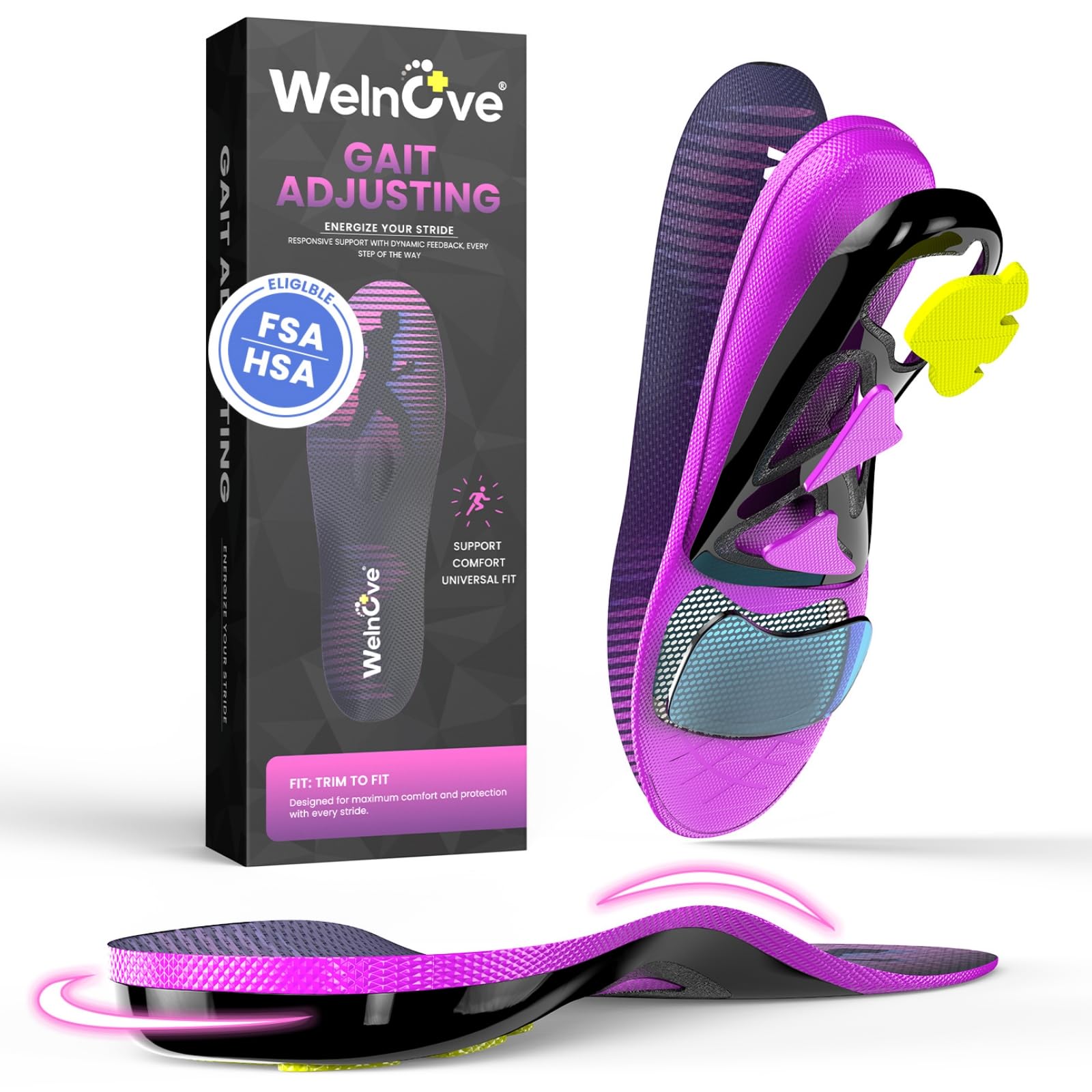
The Welnove insole is an entry-level option that still ticks the essential boxes: a dedicated metatarsal pad, multi-density foam support, and a breathable top layer. The built-in met cushion is an elastic gel insert placed under the forefoot, which provides shock absorption during running and walking. For a budget product, the construction feels well-thought-out—the foam modules are arranged to adapt to different arch heights, offering dynamic support that more expensive models use.
Users with metatarsalgia and neuroma report significant pain reduction, with one reviewer logging nearly 100 miles in a week pain-free after switching to these. The medium arch support works for a broad range of foot types, though it is not as aggressive as the VALSOLE or as specialized as the Cushwork unit. The non-slip gel base keeps the insole from sliding inside the shoe, a common issue with thinner inserts.
The biggest trade-off is longevity. Some users found the met pad provided only “ok-ish” relief compared to premium orthotics, and the overall foam may compress faster under daily heavy use. For a runner or casual walker on a budget, the Welnove offers a genuine met pad at a price that makes them a low-risk first trial. They’re best suited for athletic shoes with a removable liner, and they will fit most men’s and women’s running and hiking footwear.
Why it’s great
- Elastic gel met pad provides immediate shock absorption
- Multi-density foam adapts to different arch heights
- Non-slip base keeps insole secure during running
Good to know
- Foam may compress faster than premium alternatives
- Met pad relief is good but not as targeted as higher-end models
FAQ
Will insoles for ball of foot pain fix my Morton’s neuroma?
How long does it take for metatarsal insoles to start working?
Final Thoughts: The Verdict
For most users, the insoles for ball of foot pain winner is the 10 Seconds Pressure Relief 3030 because its moldable Plastazote topper and precision met pad provide immediate, sustained relief without a harsh break-in. If you want a targeted neuroma fix that rivals custom orthotics, grab the Cushwork Metatarsalgia Insoles. And for heavy-duty standing jobs where arch collapse drives forefoot pain, nothing beats the VALSOLE Heavy Duty Support.