That sharp, pebble-in-your-shoe sensation under the ball of your foot isn’t just annoying — it’s a signal that the metatarsal heads are absorbing more pressure than they’re built for. Without the right support, every step reinforces the cycle of inflammation, making standing, walking, or even light activity feel like a chore.
I’m Emma — the founder and writer behind Baby Bangs. I’ve spent years analyzing foot orthotic designs, from foam density to arch height geometry, and I track how specific materials like PORON and Plastazote perform under real-world pressure loads.
After comparing five leading options on build quality, metatarsal pad placement, and customer-reported relief, I’ve pinpointed the strongest insoles for metatarsal pain you can rely on right now without overpaying.
How To Choose The Best Insoles for Metatarsal Pain
Metatarsal pain isn’t a generic foot ache — it’s a load-distribution problem. The bones just behind your toes take too much force, and the insole’s job is to redistribute that pressure. Here are the three factors that separate a placebo insert from a genuine solution.
Metatarsal Pad Placement and Shape
The pad must sit directly behind the metatarsal heads, not under them. A pad that’s too far forward pushes on the bones; one too far back does nothing. Look for insoles with a defined, raised pad — preferably dome-shaped or teardrop-shaped — that tapers gently rather than cutting into the foot.
Arch Support to Offload the Forefoot
A strong arch acts as a lever, lifting the midfoot and reducing the load on the ball of the foot. Medium-to-high arch support is almost always better for metatarsalgia because it prevents the arch from collapsing and dumping weight forward. Flat or low arch insoles rarely offload the forefoot effectively.
Cushioning Material and Shock Absorption
EVA foam alone compresses quickly and loses its rebound. Premium materials like PORON and Plastazote maintain their shape under repeated impact, absorbing shock without bottoming out. For heavy users or long standing hours, look for dual-layer construction with a resilient base layer and a softer top layer that molds to the foot.
Quick Comparison
On smaller screens, swipe sideways to see the full table.
| Model | Category | Best For | Key Spec | Amazon |
|---|---|---|---|---|
| 10 Seconds 3030 with Met Pad | Premium Cushioned | Metatarsalgia relief & diabetes | Plastazote + PORON | Amazon |
| PowerStep Pulse Plus Met | Premium Orthotic | Morton’s neuroma & running | Metatarsal pad + arch | Amazon |
| Psveb Heavy Duty Support | Mid-Range | 230+ lbs & 9-hour shifts | PORON + PU layer | Amazon |
| OUOKK 3/4 High Arch | Mid-Range | High arches & tight shoes | 30mm arch / TPU | Amazon |
| STSVZORR 220 lbs+ Met Insert | Budget-Friendly | Entry-level metatarsal support | 35mm arch / TPU+EVA | Amazon |
In‑Depth Reviews
1. 10 Seconds Pressure Relief 3030 with Metatarsal Pad

The 10 Seconds 3030 is built around a specific design insight: the metatarsal pad needs to be larger and shaped differently than typical arch-oriented insoles. The raised Plastazote pad sits behind the metatarsal heads, redistributing pressure away from the second and third metatarsals — exactly where most ball-of-foot pain concentrates. The PORON strike pads under the heel and forefoot absorb impact without adding bulk, keeping the insole thin enough for most sneakers and casual shoes.
User reports confirm that this insole reduces the sharp sensation after a short adjustment period, and several long-term users note it outlasts other brands. The Plastazote top layer molds to the unique contours of your foot over the first week, creating a semi-custom fit that gel insoles never achieve. For metatarsalgia and Morton’s neuroma, the targeted pad position makes a real difference compared to generic arch supports.
The only limiting factor is the medium arch height — those needing very high arch support may find it inadequate. Also, trimming to fit is required, and the sizing on the box may not perfectly match your order, so measure carefully. But for pure metatarsal pressure relief, this is the most thoughtfully engineered option available.
Why it’s great
- Dedicated metatarsal pad with unique ergonomic shape
- PORON strike pads absorb shock without bulk
- Plastazote molds to foot for custom-like fit
Good to know
- Medium arch only — not ideal for very high arches
- Requires trimming to fit most shoes
- Sizing on box may differ from size ordered
2. PowerStep Pulse Plus Met Ball of Foot Relief
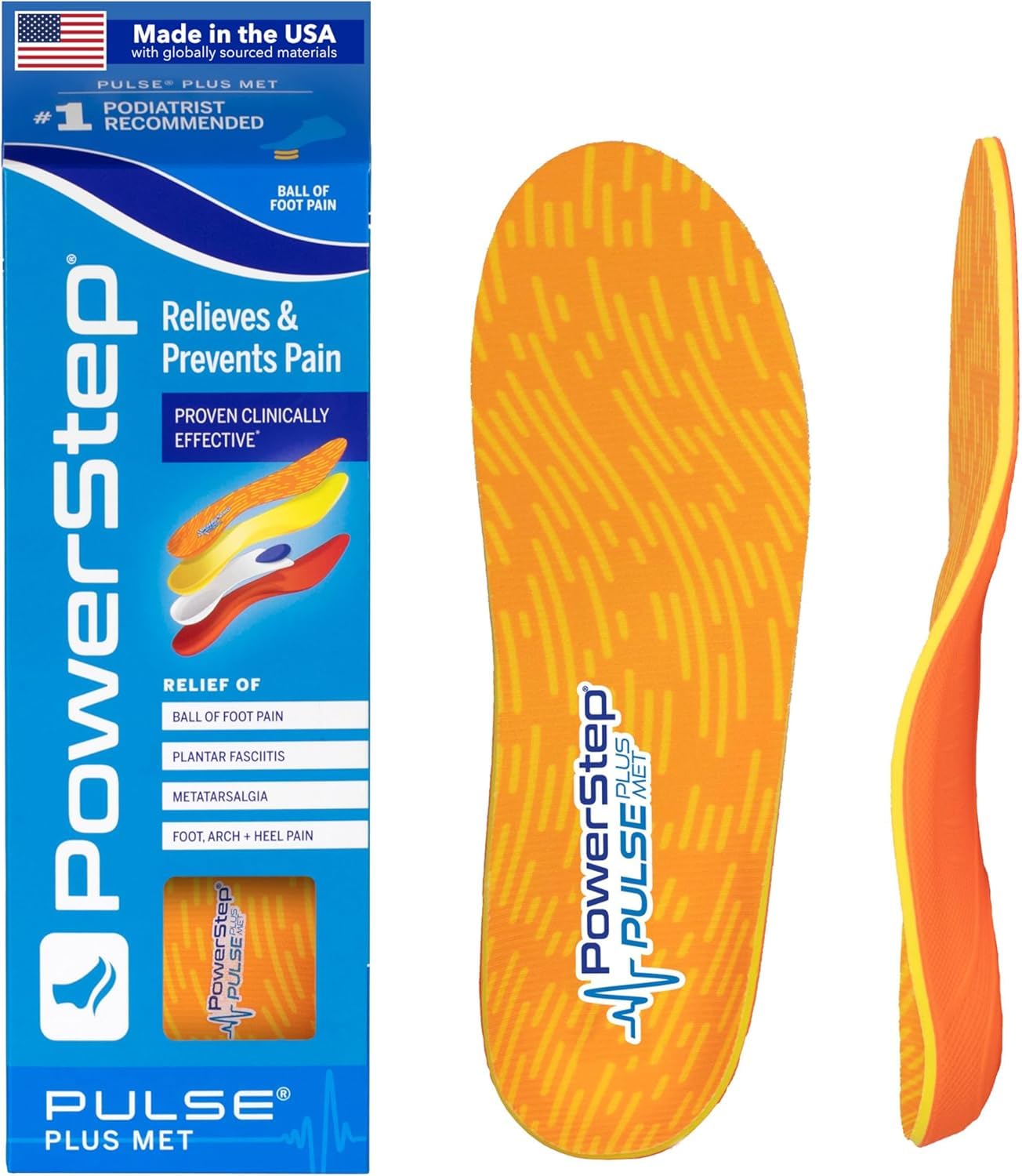
PowerStep is a podiatrist-favored brand, and the Pulse Plus Met shows why. The met pad is integrated into a full-length, total-contact orthotic that supports the arch while lifting the ball of the foot just enough to ease pressure without feeling intrusive. The EVA base provides consistent cushioning across the entire foot, and the odor-control top fabric helps keep things fresh during daily wear.
Users with Morton’s neuroma report that the pad’s placement feels supportive rather than digging in — a common complaint with cheaper inserts that use overly aggressive pads. The insole also holds up well over time; several reviews note the insoles lasted over a year in daily sneakers before needing replacement. The arch support is medium, accommodating a range of foot types without being too rigid.
The main drawback is sizing, especially for larger feet — sizes above 12 may run small, forcing you to order a size up, which is counterintuitive. It’s also a pricier option, though the durability offsets the cost for heavy users. If you want a podiatrist-backed insole that targets both arch and metatarsal support, this is the one.
Why it’s great
- Podiatrist-recommended with proven results for neuroma
- Met pad lifts ball of foot without digging in
- Durable enough for 12+ months of daily wear
Good to know
- Sizing runs small for men’s sizes 12+
- Premium price point
- Single pair per purchase
3. Psveb Heavy Duty Support Pain Relief Orthotics
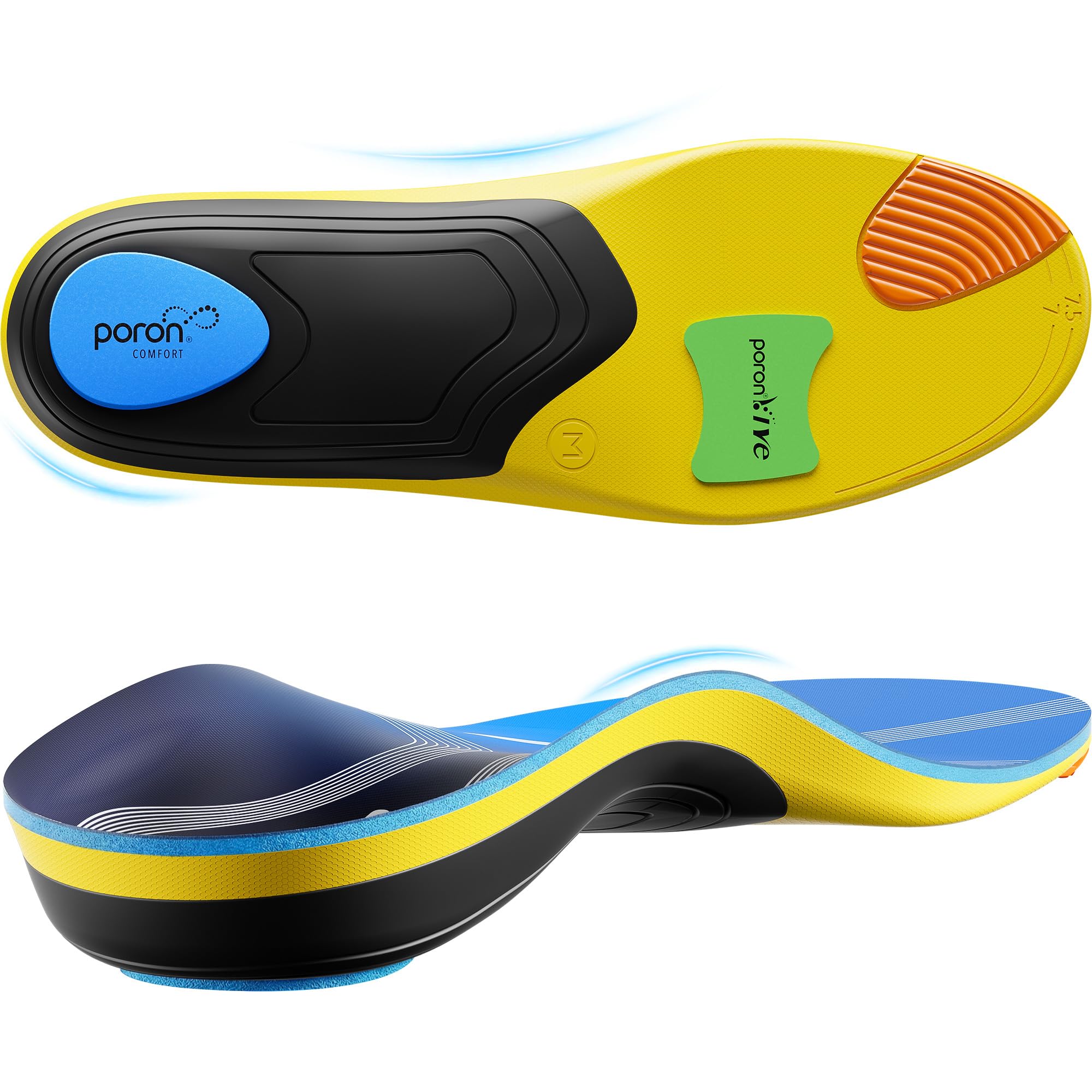
For under twenty-five dollars, the Psveb Heavy Duty insole delivers PORON — a premium material usually found in insoles costing twice as much. The dual-layer PORON provides exceptional shock absorption, and the full PU top layer adds softness without sacrificing durability. The “Golden Triangle” design distributes support across the forefoot, arch, and heel, which helps offload the metatarsal area during long standing periods.
Users weighing over 230 pounds report immediate improvement in heel and ball-of-foot pain, with several noting they could work 9-10 hour shifts on hard flooring without the usual ache. The deep U-shaped heel cup locks the foot in place, preventing slippage that can aggravate metatarsal pressure. It fits true to size with minimal trimming needed for most sneakers and work boots.
On the downside, the insole is thicker than average, so it may not fit low-profile shoes or loafers. Some users with very high arches found the arch support insufficient. But for anyone needing a rugged, long-wearing insole that targets forefoot pain without breaking the bank, this is the standout value pick.
Why it’s great
- PORON cushioning at a budget-friendly price
- Strong heel cup prevents foot slippage
- Holds up for 9+ hour shifts on hard floors
Good to know
- Thick construction may not fit low-profile shoes
- Arch support may feel moderate for very high arches
- Requires removing original shoe insole
4. OUOKK Plantar Fasciitis High Arch Support Inserts

The OUOKK insert takes a different approach — 3/4 length with a 30mm high arch that aggressively supports the midfoot. By lifting the arch, it reduces the load transferred to the forefoot, which indirectly relieves metatarsal pressure. The TPU material provides firm, long-lasting support that won’t collapse, and the 3/4 design leaves toe room for those with longer feet or tight toe boxes.
Reviews highlight that the firmness takes a few days to get used to, but once broken in, the support is transformative for plantar fasciitis and high-arch-related foot pain. Many users report reduced knee and back pain as a bonus. The non-bulky profile means it fits into dress shoes and casual flats more easily than full-length options.
The trade-off is that the metatarsal pad is not as pronounced as dedicated metatarsal insoles. For pure ball-of-foot pain, the indirect arch-based relief works better as a secondary benefit than a primary solution. Also, because it’s 3/4 length, some users find it moves around inside the shoe. If you need high arch support and want to reduce forefoot load without a bulky pad, this is a solid choice.
Why it’s great
- 30mm high arch effectively offloads forefoot
- Thin 3/4 design fits tight shoes
- Durable TPU material lasts 2+ years
Good to know
- Firm feel requires break-in period
- Metatarsal pad less pronounced than dedicated options
- 3/4 length may shift in some shoes
5. STSVZORR 220 lbs+ Metatarsal Insole
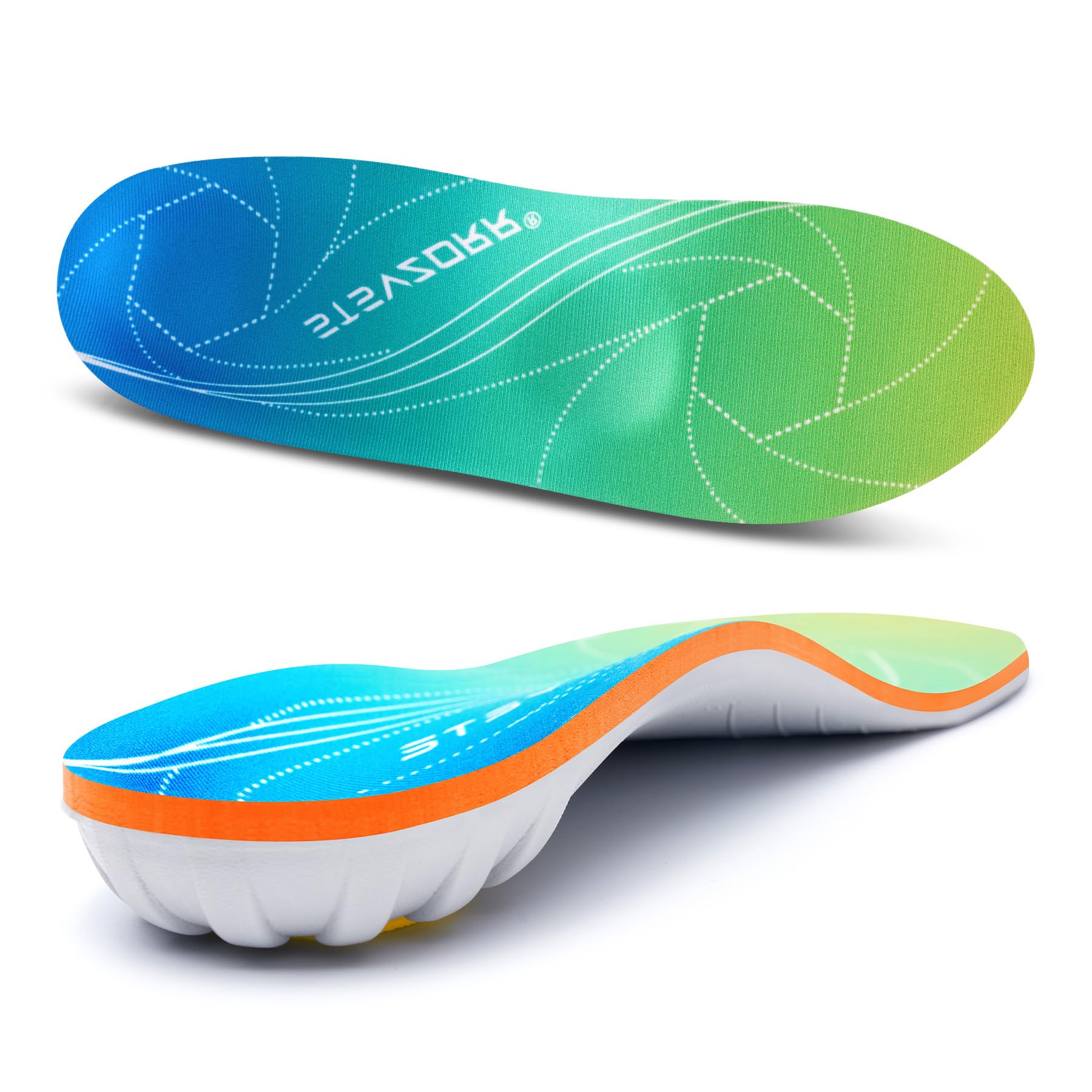
The STSVZORR insole combines a 35mm arch with a metatarsal pad, targeting both arch support and forefoot relief in one budget-friendly package. The TPU base provides firm structural support, while the EVA foam layer adds cushioning. The deep heel cup improves stability, and the non-slip fabric helps reduce heat and friction during long wear.
Initial user feedback is positive — those with plantar fasciitis and metatarsalgia report immediate comfort improvements. Several users noted that the insoles saved expensive shoes that were causing foot pain. The sizing is variable; some sizes fit true while others run small, so careful measurement is essential.
The main concern is longevity. Some users report that after a few weeks, their feet began to slide off the pad, requiring constant adjustment. The materials, while adequate at this price tier, don’t match the rebound properties of PORON or Plastazote. If you’re unsure whether dedicated metatarsal insoles will help, this is a low-risk entry point — but expect to upgrade if you wear them daily.
Why it’s great
- Dual arch pad + met pad for comprehensive support
- Deep heel cup improves stability
- Very accessible entry price
Good to know
- Some users report foot slippage after a few weeks
- Materials lack long-term rebound of premium options
- Sizing inconsistent across sizes
FAQ
Will high arch insoles cure my metatarsal pain on their own?
How do I know if the metatarsal pad is in the right position?
Can I use 3/4 length insoles for metatarsalgia?
Final Thoughts: The Verdict
For most users, the insoles for metatarsal pain winner is the 10 Seconds Pressure Relief 3030 because the Plastazote met pad and PORON cushioning directly address the root cause of ball-of-foot pain. If you want a podiatrist-backed option with long-term durability, grab the PowerStep Pulse Plus Met. And for a rugged value pick that handles heavy loads and long shifts, nothing beats the Psveb Heavy Duty Support.